



Storing your testosterone vials the right way is about much more than just being tidy—it's absolutely essential for protecting the potency and safety of every single dose.
Proper storage boils down to a few simple rules: keep your vials at a controlled room temperature and shield them from direct sunlight. This protects the hormone's chemical structure, ensuring you get the full, intended benefit from your therapy every time you inject.
Why Your Testosterone Storage Method Matters
Getting your storage method right is one of the most fundamental parts of a successful Testosterone Replacement Therapy (TRT) plan. Think of a vial of testosterone like a high-performance engine; it needs specific conditions to run at its best. If you don't meet those conditions, performance drops off. The same exact principle applies here—improper storage can directly sabotage your health and your results.
Temperature extremes are the biggest enemy. Leaving a vial in a hot car on a summer day can literally cook the testosterone molecule, breaking it down and rendering it less effective. On the flip side, if it gets too cold, the hormone can start to crystallize. This makes it a nightmare to draw into a syringe and inject correctly. Light, especially direct sunlight, is another problem, as it can degrade the active ingredients over time.
When storage goes wrong, you can run into a few frustrating issues:
- Reduced Potency: The medication simply becomes less effective. This can lead to inconsistent hormone levels and results that just don't meet your expectations. You might start to feel like your therapy isn't even working anymore.
- Inconsistent Dosing: When testosterone is degraded or crystallized, the concentration of each dose can be thrown off, making it incredibly difficult to maintain the stable levels your body needs.
- Wasted Medication: Any vial that gets compromised has to be thrown out. This means unnecessary costs and an interruption in your carefully planned treatment schedule.
Ultimately, knowing how to store your testosterone vials is about protecting your investment in your health. By keeping them in a stable environment, typically between 68-77°F (20-25°C), you guarantee that the product remains effective from the first dose to the last. This is especially true for common esters like testosterone cypionate. For a deeper dive into how different esters work, you can learn more about what testosterone cypionate is and how its structure influences these storage needs.
Finding the Ideal Temperature for Your Vials
When it comes to knowing how to store testosterone vials, temperature isn't just a friendly suggestion—it's the single most important factor for keeping your medication effective. The gold standard is what we call controlled room temperature, which is a stable sweet spot between 68°F and 77°F (20°C to 25°C). Sticking to this range is absolutely crucial for protecting the hormone’s chemical structure.
Think of your testosterone as being in a delicate balance. Too much heat can actually break down the active ingredient, which means you're getting a weaker dose than you should be. On the other hand, if it gets too cold, the testosterone can "crash" out of its carrier oil and form tiny crystals. While you can sometimes fix this by gently warming the vial, it's a clear sign the medication has been under stress.
Common Temperature Mistakes to Avoid
It’s surprisingly easy for your vials to get pushed outside that safe zone in the real world. A classic mistake is leaving your supply in a car. On a warm day, the inside of a car can rocket to over 120°F in just an hour, causing permanent damage to the hormone.
Even a windowsill can be a problem. Direct sunlight creates a mini-greenhouse effect inside the vial, slowly degrading the testosterone over time. Another trouble spot is the bathroom—the constant steam and heat from showers create a humid, fluctuating environment that’s terrible for almost any medication.
This infographic breaks down how temperature and other factors can mess with your medication's potency.
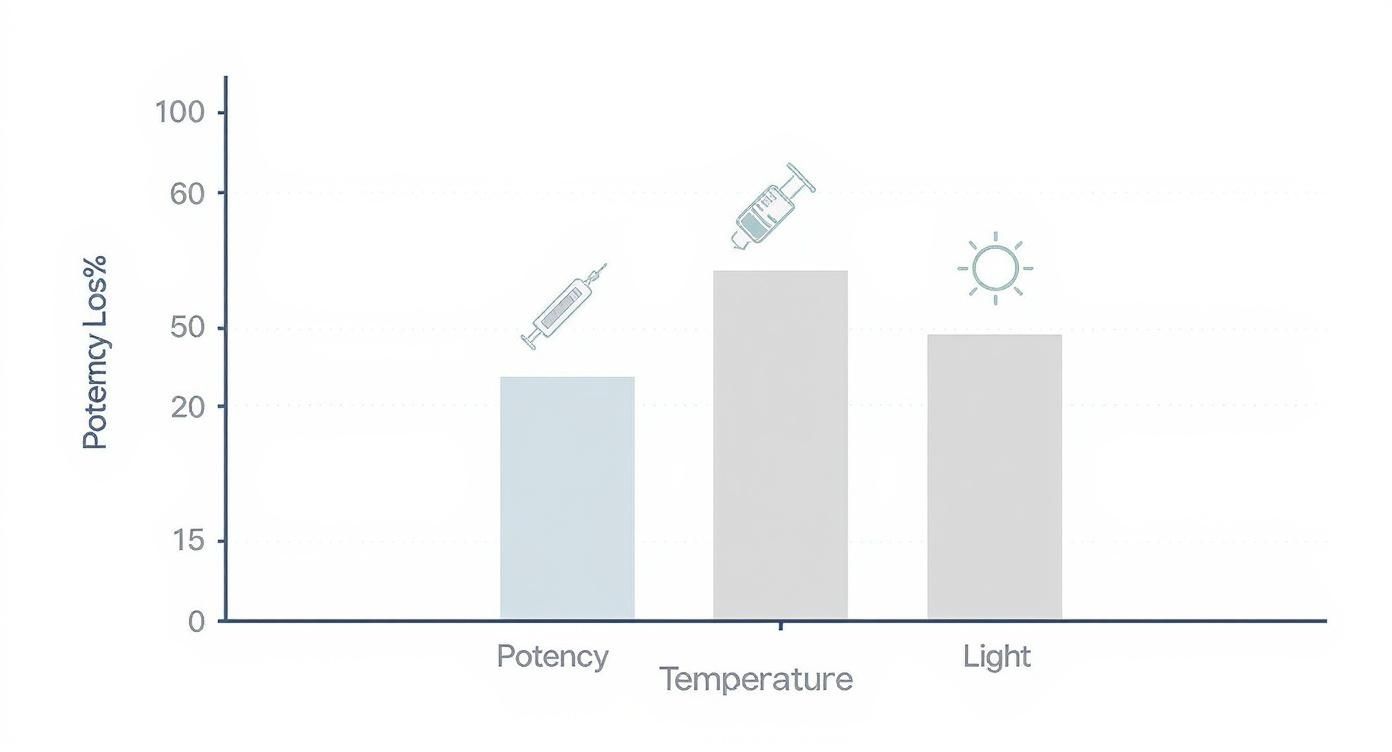
As you can see, temperature swings are a major threat, which is why finding a stable spot is so important for getting consistent results from your therapy.
To make things simple, here’s a quick reference guide for what different temperature ranges mean for your testosterone vials.
Testosterone Storage Temperature Guide
| Temperature Range (°C / °F) | Status | Potential Risks & Actions |
|---|---|---|
| 20-25°C / 68-77°F | Ideal | This is the target range. Keeps the testosterone stable and fully potent. Action: Store here consistently. |
| 15-30°C / 59-86°F | Acceptable | Short-term exposure is generally okay. This is the "excursion" range. Action: If exposed, return to ideal range ASAP. |
| Below 15°C / 59°F | Too Cold | Risk of testosterone "crashing" and forming crystals in the oil. Action: Gently warm the vial to redissolve. |
| Above 30°C / 86°F | Too Hot | Risk of permanent degradation of the active hormone, reducing its effectiveness. Action: Discard the vial; do not use. |
This table shows that while there's a small margin for error, straying too far from the ideal range can have real consequences for your medication.
What to Do About Temperature Exposure
So, what do you do if a vial gets exposed by accident? While that ideal range is pretty narrow, regulatory data allows for brief "excursions" between 59°F and 86°F (15°C to 30°C) without causing significant damage. You can find more details in testosterone cypionate storage requirements from FDA documents.
If you find your vial has gotten cold and you see crystals, don't panic. You can usually fix it by gently warming the vial in your hands or a cup of warm (not hot!) water and then shaking it to get the crystals to redissolve.
The key takeaway here is consistency. Find a spot that stays within that ideal temperature range all day and night. A bedroom closet or a medicine cabinet far from any heat sources is perfect. This simple habit protects your investment and ensures your therapy works as it should.
Protecting Vials from Light and Contamination
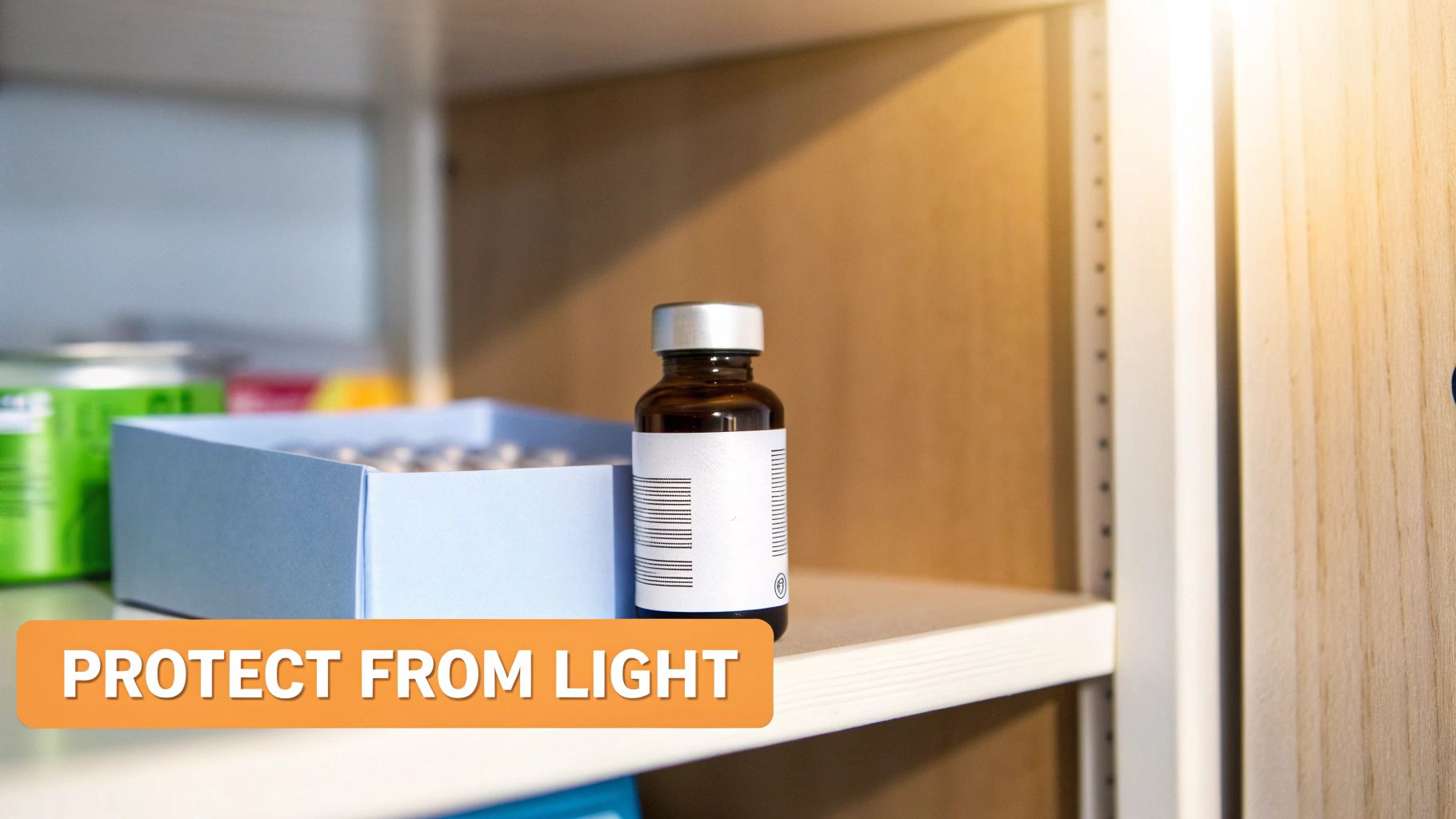
Once you've nailed down the temperature, the next layer of protection is shielding your testosterone from light and keeping it free from contaminants. This is just as important. Light, especially the UV rays in sunlight, can slowly break down the hormone itself. Even bright indoor lights can chip away at the vial's potency if it's left out day after day.
The best defense here is also the easiest: always store your vials in their original box. Think of the cardboard as a perfect, custom-fit shield. It blocks out light and keeps your supply stable. Making this a habit is one of the simplest and most effective things you can do to preserve the quality of your medication.
Keeping Your Medication Sterile
Proper storage is also about preventing contamination, which boils down to where you keep it and how you handle it. The absolute worst spot is the bathroom medicine cabinet. The constant steam and humidity from showers create a perfect breeding ground for bacteria, raising the contamination risk every time you open the door.
A cool, dark, and dry place is what you're looking for. A few prime locations come to mind:
- A drawer in your bedroom dresser.
- The top shelf of a closet.
- A dedicated, lockable medication box kept away from moisture and heat.
These spots tick all the boxes—they protect against light, temperature swings, and humidity all at once. And before you even think about handling a vial, wash your hands thoroughly with soap and water. This simple step prevents you from transferring any bacteria onto the rubber stopper you're about to puncture.
Keep in mind, the rubber stopper on a multi-dose vial is designed to reseal, but it's not invincible. Every puncture creates a tiny opening, a real opportunity for contaminants to sneak in. Keeping both the vial and your hands clean is a non-negotiable part of safe at-home injections.
By combining these practices—using the box, picking a dry spot, and handling everything with clean hands—you create a complete safety system for your medication. It ensures every single dose is just as pure, potent, and safe as it was the day you got it.
Safe Handling and Travel with Testosterone
Storing your testosterone vials correctly is half the battle. The other half? Knowing how to handle them day-to-day and when you're on the move. Getting this right is what ensures every dose is as safe and effective as the first. It all starts with a simple habit: a quick visual check before every single injection.
Each time you prepare a dose, hold the vial up to a light. You’re looking for a perfectly clear, uniform liquid. If you see anything off—cloudiness, a weird color change, or tiny particles floating around—that’s a major red flag. Don't use it. The vial has likely been compromised.
Dealing with Crystallization
One common thing you might see, especially if your testosterone cypionate gets a little too chilly, is crystallization. This is when the hormone temporarily separates from the carrier oil and forms visible crystals. It can look pretty alarming, but don't panic—it's usually an easy fix.
The solution is to gently warm the vial back up. You can roll it between your palms for a few minutes or place it in a cup of warm (not hot!) water. This simple step will safely redissolve the hormone back into the oil without damaging it. It’s worth the effort, too. Regulatory studies show that improper storage, including cold exposure that leads to crystallization, can cause a 10-20% loss in testosterone potency. You can take a closer look at the findings from drug stability trials to see the data for yourself.
Traveling with Your Testosterone Supply
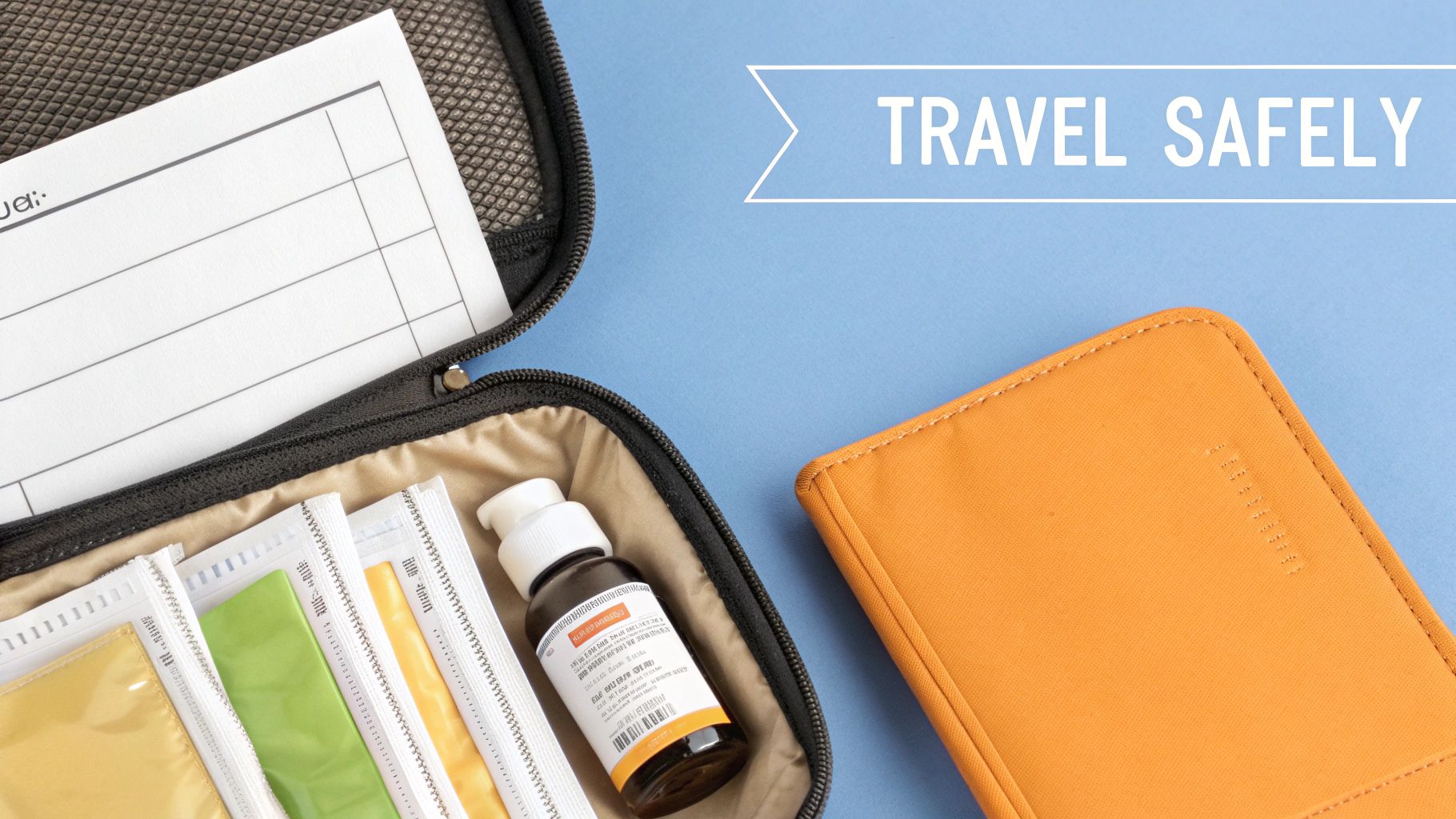
Hitting the road with your TRT supplies just takes a bit of prep work. It's actually pretty straightforward once you get the hang of it. The golden rule: never, ever pack your testosterone or syringes in checked luggage. The extreme temperatures in the cargo hold can ruin your medication, and there’s always the risk of your bag getting lost. Keep everything in your carry-on.
Here’s a quick checklist to make airport security a breeze:
- Keep It Original: Leave your vials in their original pharmacy boxes with the prescription label easy to see.
- Get a Doctor's Note: Always carry a letter from your doctor that explains why you need the medication and supplies.
- Use an Insulated Bag: A small, insulated medication bag is perfect for protecting your vials from temperature swings.
- Declare It: As you approach the security checkpoint, just calmly let a TSA officer know you’re carrying liquid medication.
Following these simple steps will help you move through security without any stress. The key is to be organized and transparent. When you are, the entire process is usually hassle-free.
A little planning goes a long way to ensure your therapy continues without a hitch, no matter where your travels take you. For a refresher on the injection process itself, check out our detailed guide on performing testosterone injections at home.
How to Organize Your Supply and Track Dates
Getting your storage temperature right is half the battle, but how you organize your supply is just as important. A smart system isn’t just about being tidy; it’s about making sure you get the full benefit from every single vial and avoiding the accidental use of expired medication.
The best method is one used by professionals in pharmacies and warehouses everywhere: "first-in, first-out," or FIFO.
It’s simple. When you get a new batch of testosterone, just place the new vials at the back of your storage spot and slide the older ones to the front. This little habit ensures you always grab the oldest stock first, which keeps you from wasting medication and guarantees you’re using it at its peak potency.
Labeling and Expiration Checks
When you're working with multi-dose vials, a permanent marker is your best friend. The very first time you puncture that rubber stopper, write the date directly on the vial's label.
Why is this so critical? Most manufacturers recommend getting rid of a multi-dose vial 28 days after you first use it. This simple step is your best defense against the risk of bacterial contamination.
Always check the printed expiration date on the box the moment you pick it up from the pharmacy. If it’s set to expire soon, don’t be afraid to ask for a batch with a later date. It’s a small, proactive step that can save you a return trip.
Knowing exactly what you have on hand is also crucial if you learn how to get prescriptions delivered directly to you. A well-organized supply makes it easy to see when you're running low so you can time your next delivery perfectly.
Finally, proper disposal is a key part of the process. Never just throw used or expired vials into the regular trash. They should always go into a designated sharps container to keep sanitation workers and others safe from accidental needlesticks.
Common Questions About Storing Testosterone
Even when you follow the main rules, a few specific questions always pop up. Getting those answered is what helps you feel confident managing your therapy and knowing every dose is as safe and effective as the last.
Let’s tackle the big one right away: Can you store testosterone in the refrigerator?
The answer is a hard no. Sticking your vial in the fridge will drop the temperature way below the recommended range. When that happens, the testosterone hormone can start to crystallize out of the carrier oil, making it nearly impossible to draw an accurate dose.
What to Do About Cloudy Vials or Crystals
If you ever pull out a vial and see that it looks cloudy or has tiny crystals floating inside, don't panic. This is almost always a sign it got too cold at some point. You don’t need to throw it away.
You can usually fix this by gently warming the vial. Just roll it between the palms of your hands for a few minutes or place it in a cup of warm (not hot!) water until the solution is completely clear again. Before you use it, hold it up to the light and make sure every last particle has dissolved. If it stays cloudy after you’ve warmed it, it’s better to be safe and discard it.
The best place to keep your testosterone is surprisingly simple: the original box it came in, tucked away in a bedroom closet or a dresser drawer. This is the perfect environment—cool, dark, and dry—and protects it from light and temperature swings without needing any special gear.
Traveling Safely with Testosterone
Flying with your TRT supplies is another common concern, but it’s perfectly legal and safe if you’re prepared. The golden rule is to always keep your vials, syringes, and a copy of your prescription in your carry-on bag. Never put them in checked luggage where they can be exposed to extreme temperatures in the cargo hold or get lost.
To make getting through security a breeze, just follow these simple steps:
- Keep your medication in its original packaging with the pharmacy label clearly visible.
- Bring a letter from your doctor explaining why you need the supplies.
- When you get to the security checkpoint, just let the TSA officer know you have liquid medication.
Answering these common questions helps take the guesswork out of the equation. When you know how to handle these everyday situations, you can manage your TRT with total assurance, preserving the integrity and potency of your medication every step of the way.
At Elite Bioscience, we provide the highest-quality therapies and the guidance you need to use them effectively. For a seamless and supportive TRT experience, explore our services at https://elitebioscience.co.