



When you're looking for the best peptides to increase testosterone, a few names consistently rise to the top: Kisspeptin-10, Gonadorelin, and the powerful combination of CJC-1295/Ipamorelin. These compounds are getting a lot of attention for a good reason. They work with your body's own systems to kickstart hormone production, offering a more nuanced approach than many traditional therapies.
Unlocking Your Potential with Peptides for Testosterone

If you're digging into ways to optimize your health, you’ve probably heard about using peptides to boost testosterone. Unlike introducing synthetic hormones, certain peptides act as highly specific signaling molecules. They talk directly to your body’s hormonal command center, encouraging it to produce more of its own testosterone naturally.
Think of it like tuning a high-performance engine instead of just swapping it out. Rather than forcing an external supply of hormones on your system, peptides gently prompt your internal machinery—specifically the hypothalamic-pituitary-gonadal (HPG) axis—to run more efficiently. This approach helps maintain the body's delicate feedback loops, a key advantage over some older methods.
To give you a quick overview, here's how the leading peptides stack up against each other.
Top Peptides for Testosterone at a Glance
This table provides a quick, scannable summary of the leading peptides for testosterone enhancement, their primary mechanism, and key expected outcomes for easy comparison.
| Peptide Name | How It Works | Primary Testosterone Benefit |
|---|---|---|
| Kisspeptin-10 | Directly stimulates the hypothalamus to release GnRH, the master hormone signal. | Potently boosts natural testosterone production by activating the HPG axis at its highest point. |
| Gonadorelin | Mimics the natural pulse of GnRH, prompting the pituitary gland to release LH and FSH. | Supports testicular function and testosterone synthesis in a manner that follows the body's own rhythm. |
| CJC-1295 / Ipamorelin | Stimulates the pituitary to release Growth Hormone (GH), which has downstream effects on testosterone. | Indirectly supports testosterone by improving sleep quality, recovery, and overall endocrine health. |
Each of these peptides offers a unique path to hormonal optimization, which is a big part of why this field is generating so much excitement.
Why Are Peptides Gaining Popularity?
The interest in peptide therapy is exploding for a couple of big reasons. More and more men are looking for proactive ways to address age-related hormone decline and improve their performance, and peptides offer a sophisticated method that aligns with the body's natural biology.
This shift is driven by a desire for treatments that are both effective and respectful of the body's complex systems. For men dealing with symptoms like fatigue, low libido, and muscle loss, peptides offer a promising path forward. For instance, a groundbreaking peptide like Kisspeptin-10 has shown remarkable results in clinical studies, stimulating the HPG axis to boost natural testosterone by up to 45% in hypogonadal men after just eight weeks. You can explore more about the growing peptide market and its findings.
The core appeal of testosterone-boosting peptides is their ability to work with the body, not against it. They restore and optimize natural function, which can lead to more sustainable and balanced results.
Modern Access to Advanced Therapies
Another factor fueling this trend is much better access through modern healthcare. Telehealth services have torn down the traditional barriers, making it easier than ever to consult with a qualified doctor from the privacy of your own home.
This convenience allows for:
- Personalized Consultations: You can discuss your specific health goals with a physician to see if peptides are the right fit for you.
- Medical Supervision: Your therapy is managed safely and effectively with professional oversight, ensuring proper dosing and monitoring.
- Discreet and Convenient Delivery: Prescribed, lab-tested treatments are delivered right to your doorstep.
This blend of scientific advancement and streamlined access is empowering more men to take control of their hormonal health. By understanding how the best peptides to increase testosterone actually work, you can make an informed decision about unlocking your own potential.
How Peptides Work with Your Body to Boost Testosterone
To really get how peptides can increase testosterone, it helps to think of your body's hormone system as a sophisticated orchestra. Testosterone is one of the lead instruments, but it doesn’t just play a solo. Peptides act as the conductors, guiding the whole ensemble to create a powerful, balanced symphony.
Instead of introducing an external source of hormones—which is like adding a pre-recorded track to a live performance—these peptides send precise signals to your own glands. They prompt your body to create its own testosterone, making sure the production is natural, rhythmic, and perfectly in sync with your unique biology.
This whole process is governed by a critical command chain known as the Hypothalamic-Pituitary-Gonadal (HPG) axis. Think of this axis as the communication superhighway connecting your brain to your testes, orchestrating every step of hormone production.
The HPG Axis: A Simple Breakdown
The HPG axis is a three-part system that works like a well-organized company, with each department playing a vital role.
- The Hypothalamus (The CEO): Tucked away in the brain, the hypothalamus is the starting point. It releases a master signal called Gonadotropin-Releasing Hormone (GnRH).
- The Pituitary Gland (The Manager): This gland gets the GnRH signal and, in response, sends out two key "memos" to the production floor: Luteinizing Hormone (LH) and Follicle-Stimulating Hormone (FSH).
- The Gonads (The Production Team): In men, the testes receive the LH memo and get to work producing testosterone.
Peptides like Gonadorelin or Kisspeptin-10 are designed to interact directly with this axis. They essentially "nudge" the CEO (hypothalamus) or the manager (pituitary gland) to kick off this natural cascade, leading to a bump in your body’s own testosterone output.
The Role of Specific Peptides as Messengers
Different peptides talk to the HPG axis in slightly different ways, giving them unique strengths.
- Gonadorelin acts as a synthetic version of GnRH, that initial signal from the hypothalamus. It mimics the body’s natural, pulsing release of GnRH, prompting the pituitary to dispatch LH down to the testes.
- Kisspeptin-10 works a level higher, stimulating the hypothalamus itself to release more GnRH. It’s like giving the CEO an energy boost to get the whole production line moving.
This "upstream" approach is what really separates peptide therapy from traditional Testosterone Replacement Therapy (TRT).
By stimulating your body's own production mechanisms, peptides help maintain the intricate feedback loops that are essential for long-term hormonal balance. This prevents issues like testicular shutdown, a common concern with direct hormone administration.
Ultimately, this process influences not just your total testosterone levels but also the amount of usable, active hormone in your system. You can learn more by exploring our detailed guide on what is free testosterone and why it's such a critical marker for men's health.
Peptides Versus Direct Hormone Supplementation
Understanding this mechanism highlights the fundamental difference between peptide therapy and conventional TRT. It’s a completely different philosophy.
| Therapy Type | Mechanism of Action | Body's Role |
|---|---|---|
| Peptide Therapy | Sends signals to the HPG axis to stimulate natural production. | Actively produces its own testosterone in response to signals. |
| Traditional TRT | Introduces an external, synthetic source of testosterone directly into the body. | Passively receives hormones, potentially slowing its own production. |
This distinction is crucial. Using peptides to increase testosterone is all about optimization from within. It’s a strategy focused on restoring and enhancing your body’s inherent ability to function at its peak, rather than just patching over the problem with an external solution. By working in harmony with your biology, these compounds offer a sophisticated and supportive path toward achieving your health and performance goals.
Comparing the Most Effective Testosterone Peptides
Navigating the world of peptide therapy means understanding that not all peptides are created equal. Each one has a unique mechanism, a different set of benefits, and an ideal use case. To find the right approach for your specific goals, it’s essential to compare the leading options side-by-side.
This breakdown focuses on three of the most effective and well-regarded peptides for testosterone optimization: Gonadorelin, Kisspeptin-10, and the popular CJC-1295/Ipamorelin stack. We'll explore how each one works, the evidence backing it, and who it's best suited for.
This diagram simplifies the core concept of how these peptides work with your body's own systems.
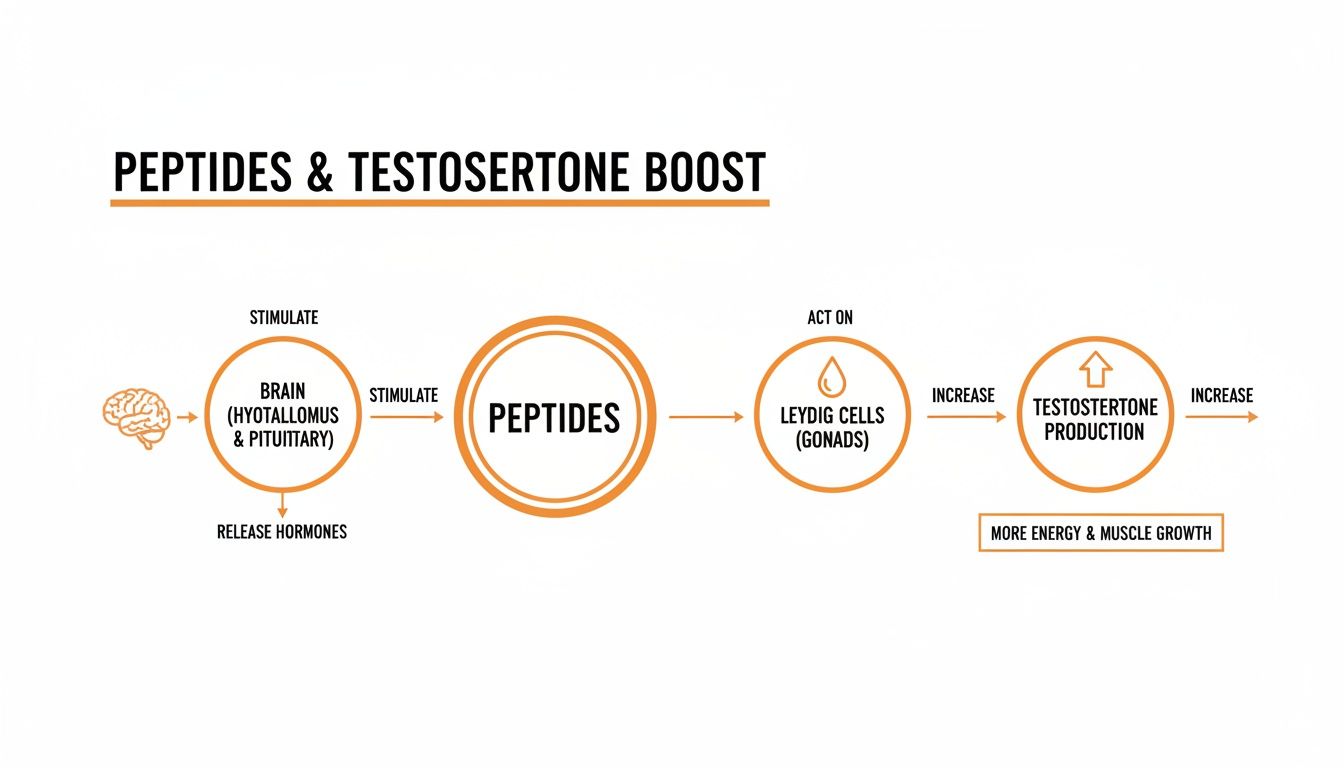
As you can see, the process starts in the brain. Peptides send signals to your glands to ramp up hormone production, which ultimately leads to an increase in testosterone.
Gonadorelin: The Rhythmic Stimulator
Gonadorelin is a synthetic version of Gonadotropin-Releasing Hormone (GnRH), the very first signal in your testosterone production chain. Think of it as a metronome for your pituitary gland, providing a steady, rhythmic pulse that precisely mimics your body’s natural hormonal patterns.
By introducing Gonadorelin in this pulsatile way, it prompts the pituitary to release Luteinizing Hormone (LH) and Follicle-Stimulating Hormone (FSH). That LH signal is what travels to the testes and instructs them to get back to work producing more testosterone.
Best For:
- Primary or Secondary Hypogonadism: It's often used in clinical settings to diagnose and treat low testosterone issues that originate in the pituitary or hypothalamus.
- Restarting Natural Production: It's also a go-to for helping "restart" the HPG axis after it has been suppressed, like after a cycle of anabolic steroids.
Because it so closely mimics the body's natural signaling process, Gonadorelin is considered a highly targeted and bio-identical approach to stimulating testosterone production from the top down.
Kisspeptin-10: The Master Regulator
While Gonadorelin mimics the GnRH signal, Kisspeptin-10 works one level higher up the command chain. It directly stimulates the neurons in the hypothalamus to release GnRH in the first place. If Gonadorelin is the metronome, Kisspeptin-10 is the conductor telling the metronome when and how fast to click.
This makes Kisspeptin-10 an incredibly potent activator of the entire HPG axis. Research has shown it can trigger a robust and sustained increase in LH and, as a result, testosterone. It's a powerful tool for anyone looking to maximize their body’s own hormonal output.
Ideal Use Cases:
- Addressing Low Libido: Thanks to its powerful effect on the reproductive hormonal axis, it is heavily researched for its role in improving libido.
- Potent Testosterone Boosting: For individuals whose HPG axis is healthy but just underperforming, Kisspeptin-10 can deliver a significant boost.
Its ability to act as a "master switch" makes it one of the most exciting peptides currently being studied for men's health optimization.
CJC-1295 and Ipamorelin: The Synergistic Stack
This popular combination takes a different, more indirect route to supporting testosterone. CJC-1295 and Ipamorelin are Growth Hormone Releasing Peptides (GHRPs). They work together to stimulate your pituitary gland to produce more Growth Hormone (GH), but they do so in a very clean, targeted way that avoids many unwanted side effects.
So, how does this help testosterone? Increased GH levels lead to higher levels of Insulin-Like Growth Factor 1 (IGF-1), which is crucial for cellular repair, recovery, and muscle growth. This improved recovery and reduced systemic stress create an optimal environment for your entire endocrine system to function more efficiently.
Better sleep, a well-known benefit of this stack, also happens to be prime time for testosterone production. Studies on CJC-1295, a growth hormone-releasing peptide, show it can indirectly elevate testosterone by 25-40% in aging men. Clinical trials from 2020-2024 involving over 300 participants revealed significant improvements in IGF-1 levels and lean mass gains of 5-8% over 12 weeks. When combined with Ipamorelin, which selectively boosts GH without unwanted cortisol spikes, users have reported testosterone increases of up to 35% and dramatically enhanced athletic recovery. You can dive deeper into the growing field of peptide therapeutics with these market insights.
This Stack is a Favorite For:
- Athletes and Fitness Enthusiasts: The benefits for recovery, sleep quality, and building lean muscle mass are unparalleled.
- Anti-Aging Protocols: GH is often called the "youth hormone" for its powerful role in maintaining tissue health and vitality.
- Overall Wellness: By optimizing the entire endocrine system, it provides a holistic boost that goes far beyond just T levels.
Comparing Peptide Efficacy and Safety Profiles
This comparison table details the efficacy, primary benefits, common use cases, and key safety considerations for the most effective testosterone-boosting peptides.
| Peptide | Testosterone Increase (Clinical Data) | Best For | Key Safety Notes |
|---|---|---|---|
| Gonadorelin | Varies; used to restore baseline levels. | Restarting the HPG axis; diagnosing hypogonadism. | Generally well-tolerated under medical supervision. Continuous (non-pulsatile) use can cause desensitization. |
| Kisspeptin-10 | Can increase T levels by up to 45% in some studies. | Potent, direct stimulation of the HPG axis for T and libido. | Considered experimental; requires careful dosing. Potential for flushing or nausea at higher doses. |
| CJC-1295 / Ipamorelin | Indirectly supports T increases of 25-40%. | Athletes, anti-aging, and overall wellness; improves sleep and recovery. | Very safe profile; Ipamorelin avoids cortisol/prolactin spikes. Minor water retention or injection site irritation possible. |
Ultimately, the choice comes down to your individual health profile and goals. Working with a knowledgeable physician at a clinic like Elite Bioscience is the best way to determine which peptide protocol is right for you, ensuring a safe, effective, and personalized approach to hormone optimization.
Supportive Peptides That Enhance Overall Wellness
While some peptides directly target the testosterone production line, others play a crucial supporting role. Think of your body as a high-performance factory. Peptides like Gonadorelin or Kisspeptin-10 are the managers shouting orders to speed up the assembly line. But what if the factory floor is cluttered, the machinery is stressed, and the power supply is flickering? Production will suffer no matter how loudly the managers shout.
This is where supportive peptides come in. They aren’t focused on giving direct orders to produce more testosterone. Instead, they act as the ultimate maintenance crew, optimizing the entire system so that your body’s natural hormone production can run at peak efficiency. They clean up inflammation, repair wear and tear, and ensure all systems are running smoothly.
By reducing the body's overall burden, these peptides free up critical resources, allowing your endocrine system to perform its job without interference.
BPC-157 The Body Protective Compound
BPC-157, short for Body Protective Compound, is a true system optimizer. Originally discovered in human gastric juice, this peptide has a remarkable ability to promote healing and reduce inflammation all over the body. It’s like having a mobile repair unit that travels to any site of injury or stress, from a torn muscle to an inflamed gut lining, and gets to work.
Its benefits are wide-ranging and foundational for hormonal health:
- Reduces Systemic Inflammation: Chronic inflammation places a massive strain on your body, diverting energy and resources away from non-essential functions like robust hormone production. BPC-157 helps quiet this internal noise.
- Improves Gut Health: The gut-hormone connection is well-established. An unhealthy gut can lead to poor nutrient absorption and systemic inflammation, both of which can tank testosterone levels. BPC-157 is known for its ability to repair the gut lining, creating a better foundation for hormonal balance.
- Accelerates Tissue Repair: Whether it's a nagging joint injury from the gym or general wear and tear, faster recovery means less physical stress on your system.
By tackling these foundational issues, BPC-157 creates an internal environment where your testosterone-producing machinery can finally thrive.
A key player for testosterone optimization is BPC-157, renowned for healing and hormonal support. Animal and human pilot studies from 2019-2025 have demonstrated up to a 28% elevation in testosterone by reducing inflammation and enhancing Leydig cell function in models of hypogonadism, alongside 50% faster recovery in athletes. Discover more insights about the advancements in peptide therapeutics.
TB-500 The Regeneration Specialist
Another powerful supportive peptide is TB-500, a synthetic version of Thymosin Beta-4. This naturally occurring protein plays a vital role in healing and regeneration. If BPC-157 is the all-purpose repair crew, think of TB-500 as the specialist contractor called in for major rebuilding projects.
TB-500 is particularly effective at promoting the growth of new blood vessels, a process called angiogenesis. This is critical for delivering oxygen and nutrients to damaged tissues, dramatically speeding up recovery from injuries to muscles, tendons, and ligaments.
When used as part of a protocol, TB-500 helps manage the physical toll of intense training or chronic conditions. By minimizing downtime and reducing the body's recovery burden, it ensures your system isn't constantly in a state of stress—a known killer of healthy testosterone levels.
Pairing these system optimizers with direct-acting compounds is a sophisticated strategy for anyone seeking the best peptides to increase testosterone. It addresses the issue from both ends—stimulating production while also perfecting the environment in which that production happens. This dual approach often leads to more sustainable and comprehensive results.
A Practical Guide to Safe and Effective Peptide Therapy

Moving from theory to practice with peptides requires a sharp focus on safety and precision. This isn’t about guesswork. Effective peptide therapy is a medically guided process, designed to hit specific targets while sidestepping risks.
Think of it like being a pilot. You wouldn't just jump into a cockpit and hope for the best; you'd run through a detailed pre-flight checklist. Starting peptide therapy is the same—it involves a series of crucial steps to ensure a smooth journey, all under the watchful eye of a qualified medical professional.
One of the first hurdles for many is administration. Most peptides, including those that influence testosterone, are given via subcutaneous injection. It sounds intimidating, but it’s a simple injection into the fatty tissue just under the skin using an extremely small needle. Your healthcare provider will walk you through the process until it feels routine.
Dosing and Cycling Protocols
Proper dosing is the absolute cornerstone of getting this right. Peptides are potent signaling molecules, and the "more is better" mindset is a recipe for trouble. The correct dose is highly individual, depending on the specific peptide, your health profile, your goals, and—most importantly—your lab results. A one-size-fits-all approach just doesn't work.
For example, a protocol using Gonadorelin has to mimic the body’s natural, rhythmic pulse to be effective. In contrast, a CJC-1295/Ipamorelin stack is usually taken once daily before bed to sync up with the body's biggest natural growth hormone surge during sleep. For a deeper dive, check out our guide on CJC-1295/Ipamorelin dosage.
Cycling is a non-negotiable safety strategy. Using peptides continuously without a break can make your body's receptors less responsive, essentially "tuning out" the signal. When that happens, the peptide stops working. A common cycle is five days on and two days off each week, or longer cycles of several weeks on followed by a few weeks off to let your system reset.
The Cornerstone of Safety: Blood Work
You can't manage what you don't measure. This is where comprehensive blood work becomes the foundation of any responsible peptide program. It gives us the hard data needed to build your personalized protocol and track how well it's working over time.
A solid testing protocol always has two phases:
- Baseline Testing: Before you even start, a detailed blood panel gives us your starting point. It’s a clear snapshot of your current hormonal landscape.
- Follow-Up Testing: After a set period, often 8-12 weeks, we run a second panel. This shows us the changes and ensures your levels are moving into the optimal range safely.
Key markers we always monitor include:
- Total and Free Testosterone: To track the direct impact on your primary goal.
- Luteinizing Hormone (LH): To confirm the HPG axis is responding as it should.
- Estradiol (E2): To make sure testosterone isn’t converting excessively into estrogen.
- IGF-1: This is especially critical when using growth hormone-releasing peptides like CJC-1295.
Understanding Potential Side Effects
While the best peptides to increase testosterone have a great safety profile under medical supervision, side effects can happen. They are typically mild and directly related to the dose. Common ones might include a temporary flush, minor irritation at the injection site, or a bit of water retention.
However, certain pre-existing conditions can be red flags. For instance, anyone with a history of hormone-sensitive cancers should avoid therapies that significantly alter their endocrine system. This is precisely why a thorough medical consultation and a transparent health history are mandatory before starting any treatment.
Working with a clinic like Elite Bioscience ensures you have a medical expert guiding you every step of the way, tailoring your protocol to your unique physiology for safe and outstanding results.
How to Get Started with Peptide Therapy
Navigating the path to peptide therapy is more straightforward and private than it’s ever been, but it starts with a critical understanding. Peptides designed to influence testosterone aren't over-the-counter supplements you can grab off a shelf; they are powerful, prescription-only medications. This is a good thing—it’s a safeguard to ensure the treatment is genuinely right for your health needs.
For busy professionals or anyone who values privacy and efficiency, modern telehealth platforms have completely changed the game. This approach cuts through the traditional barriers to specialized care, putting you in direct, confidential contact with medical experts from the comfort of your own home.
The Modern Telehealth Pathway
The journey to starting peptide therapy is designed to be simple, structured, and above all, safe. Every step is medically supervised to ensure you get the right treatment for the right reasons.
- Confidential Health Assessment: Your first move is to complete a secure online health form. This isn't just paperwork; it's a comprehensive look at your medical history, current symptoms, and what you're hoping to achieve. It gives the physician a detailed picture of your starting point.
- Physician Consultation: Next, you'll connect with a licensed doctor for a virtual consultation. This is your one-on-one opportunity to discuss your goals, ask any and all questions, and for the physician to determine if you’re a good candidate for peptide therapy based on your health profile and lab results.
- Personalized Protocol and Prescription: If you're approved, the doctor won't just hand you a generic script. They'll design a protocol tailored to your unique physiology, selecting the best peptides to increase testosterone for your situation and providing precise instructions on dosing and cycling. A valid prescription is then issued.
- Discreet and Secure Delivery: Your prescribed, third-party lab-tested medications are shipped directly to your door in discreet packaging. This protects your privacy and guarantees the quality of the products you receive.
Ensuring a Safe and Effective Start
This medically guided approach is the only responsible way to begin peptide therapy. It ensures that your treatment plan is not only effective but also perfectly aligned with your body’s needs.
The goal is not just to prescribe a peptide but to create a complete, medically supervised plan. This includes a clear understanding of administration, cycle management, and the importance of follow-up monitoring to track progress and ensure long-term health.
Your physician will provide clear instructions on every aspect of your therapy. For extra support, you can also explore resources like our detailed peptide dosage guide, which offers foundational knowledge to help you feel confident as you begin.
This structured, professional process means you can pursue your health goals with total confidence, knowing you have expert guidance every step of the way. With telehealth, accessing these advanced therapies is no longer a complex ordeal but a clear, direct path toward achieving your wellness goals.
Your Questions About Peptides and Testosterone, Answered
When you're exploring something as personal as hormone optimization, questions are a good thing. They’re a sign you’re taking your health seriously. This section tackles some of the most common questions we hear, giving you the clear, straightforward answers you need.
Are Peptides Safer Than TRT?
This is a big one, and the answer isn't a simple yes or no—it's more nuanced. Peptides and Testosterone Replacement Therapy (TRT) work in fundamentally different ways. TRT introduces testosterone directly into your system, which can be highly effective but also tells your body to stop making its own, leading to issues like testicular shutdown.
Peptides, on the other hand, act more like a coach than a substitute player. They send signals to your own body, encouraging it to ramp up its natural hormone production. This approach helps maintain your native hormonal rhythms and avoids shutting down your system.
But "safer" really depends on the individual. The right peptide, the correct dose, and your personal health history are all part of the equation. True safety isn’t about choosing one therapy over the other; it’s about working with a medical professional who can design the right approach for your unique situation.
How Long Until I See Results?
The timeline for results is different for everyone, but there’s a general pattern. Most people first notice the subjective changes—things like waking up with more energy, enjoying deeper, more restorative sleep, or just having a better overall sense of well-being. These improvements often kick in within the first few weeks.
The more measurable, objective results take a bit more time. You can typically expect to see significant changes in bloodwork, along with noticeable gains in muscle mass or a drop in body fat, after about 8 to 12 weeks of consistent use under medical guidance.
The gold standard for tracking progress is follow-up blood work. It gives you and your doctor concrete data on how your body is responding, allowing for precise adjustments to your protocol to get you the best possible outcome.
Can I Combine Different Peptides?
Yes, absolutely. Combining, or "stacking," peptides is a common strategy that can be incredibly effective when done correctly. Since different peptides have different jobs, a well-designed stack can create a powerful synergy, addressing your goals from multiple angles at once.
For example, a physician might create a protocol that combines:
- A direct stimulator: A peptide like Gonadorelin to directly signal the HPG axis to produce more hormones.
- A supportive peptide: Something like BPC-157 to help lower systemic inflammation and speed up recovery.
This creates a comprehensive strategy that not only boosts production but also creates the optimal environment for your body to thrive. But stacking isn’t a DIY project. A safe and effective stack must be designed and monitored by a qualified physician who can ensure it’s perfectly tailored to your health needs.
At Elite Bioscience, our medical team specializes in creating personalized peptide protocols that are both safe and effective. Take our confidential health assessment today to discover if peptide therapy is right for you.