




For most guys on TRT, the best time to inject testosterone is in the morning. This simple strategy syncs your treatment with your body's natural rhythm, which is already set for peak testosterone levels right after you wake up.
Lining up your injection with this natural high point helps keep your energy, mood, and overall sense of well-being on an even keel throughout the day.
Decoding the Best Time to Inject Testosterone

While a morning injection is the gold standard, it’s not some rigid, one-size-fits-all rule. The ideal timing is really a blend of hard science and your personal logistics.
Think of your body as a finely tuned orchestra—your natural hormones follow a daily rhythm. The goal of Testosterone Replacement Therapy (TRT) is to play in harmony with that rhythm, not fight against it.
Aligning with Your Body's Clock
Your internal clock, known as your circadian rhythm, dictates that natural testosterone production hits its peak early in the morning. By scheduling your injection around this time, you’re essentially reinforcing what your body already wants to do.
This synchronization helps you maintain much more consistent hormone levels, sidestepping the dramatic peaks and troughs that can leave you with energy crashes or mood swings.
Research backs this morning-first strategy. For instance, studies have found that weekly morning injections of testosterone cypionate—specifically between 8:00 AM and 11:00 AM—lead to stable serum testosterone levels all week long, effectively mimicking the body's natural cycle. You can read the full research on testosterone timing to dig into the clinical data yourself.
This approach isn't just theoretical; it translates into real-world benefits. Patients often report feeling more "normal" and notice a much smoother experience on therapy when their schedule works with their body instead of against it.
Key Takeaway: Timing your injection to match your natural morning testosterone peak is the most effective way to maintain hormonal stability and get the most out of your therapy.
However, a few other key elements come into play when you’re trying to lock down the best time to inject testosterone. These include the specific type of testosterone ester you’ve been prescribed and, just as importantly, your own lifestyle and schedule.
To nail down your perfect injection time, you need to consider a few moving parts. The table below gives a quick rundown of what matters most.
Key Factors for Injection Timing
| Factor | Why It Matters | General Recommendation |
|---|---|---|
| Circadian Rhythm | Your body naturally produces the most testosterone in the morning. Working with this rhythm promotes stability. | Inject in the morning, ideally between 8 AM and 11 AM, to mimic your body's natural peak. |
| Type of Testosterone | Different esters (like Cypionate or Enanthate) have different half-lives and release rates, which can influence timing. | Most common esters are flexible, but a morning schedule remains the best starting point for stable levels. |
| Personal Schedule | The absolute "best" time is useless if you can't stick to it. Consistency is the most critical factor for success. | Pick a time you can hit reliably every single week without fail, whether it's a weekday morning or weekend. |
Ultimately, finding the right time is about balancing biology with practicality. This guide will walk you through all these factors, helping you find the perfect rhythm for your TRT.
Syncing Your TRT with Your Body's Natural Rhythm
Think of your body's hormone production like a daily energy budget, managed by an internal master clock called the circadian rhythm. This biological timer is what wakes you up, makes you feel sleepy, and, most importantly for us, dictates your hormone levels.
Every single morning, this internal clock triggers a natural surge in testosterone. This isn't random—it's your body's way of giving you the mental and physical horsepower you need to attack the day. As the hours tick by, those levels naturally taper off, signaling your body to wind down for rest and recovery.
When you start TRT, you're adding an external source of testosterone into this finely tuned system. The whole point is to make this new addition feel as seamless as possible, steering clear of the jarring hormonal spikes and crashes that can leave you feeling irritable, anxious, or just plain exhausted.
Working with Your Body, Not Against It
This is precisely why the best time to inject testosterone is almost always in the morning. When you administer your dose at the same time your body is naturally peaking, you're syncing your therapy directly with its established rhythm. You aren't fighting a natural process; you're reinforcing it.
It's like topping off your car's fuel tank before a long road trip instead of waiting until the low-fuel light starts flashing. A morning injection ensures your "tank" is full right from the start, setting you up for stable energy, a balanced mood, and sharper cognitive function all day long.
This synchronization helps smooth out your hormonal curve, preventing the rollercoaster effect that can sometimes plague guys on TRT. Instead of a sharp, unnatural peak followed by a steep drop-off, your levels stay much more consistent, mimicking the gentle rise and fall of a healthy, natural cycle.
A morning injection schedule is the foundation for making TRT feel less like a medical treatment and more like a natural part of your body's daily function.
The Impact of Hormonal Peaks and Troughs
An erratic injection schedule can create harsh hormonal swings. Injecting at night, for example, forces a testosterone peak just as your body is trying to wind down, which can wreck sleep patterns for some guys. On the flip side, waiting too long between doses can lead to a "trough" where your levels bottom out, bringing back all those familiar low T symptoms like fatigue and brain fog.
Sticking to a consistent morning routine helps you sidestep these problems. It creates a predictable pattern your body can adapt to, which is absolutely critical for long-term success and feeling your best on therapy. If you're new to this or second-guessing your current routine, understanding your own baseline is a fantastic first step. You can learn more about how to check hormone levels at home to get a much clearer picture of your body's unique patterns.
Ultimately, lining up your injection with your circadian rhythm does more than just deliver a hormone. It harmonizes your therapy with your own biology, paving the way for a smoother, more effective, and all-around better experience.
How Testosterone Esters Change Your Injection Schedule
Not all testosterone is created equal. The real difference maker is the ester attached to the testosterone molecule—think of it as a built-in timer that controls how quickly the hormone gets released into your system.
Understanding which ester you're using is absolutely critical because it's the single biggest factor dictating your injection frequency. Some esters are like sprinters, delivering a fast and powerful burst of testosterone that fades relatively quickly. Others are more like marathon runners, providing a slow, steady release over a much longer period.
This is exactly why a one-size-fits-all schedule just doesn't work. Those "sprinter" formulations demand more frequent injections to keep your hormone levels from crashing, which makes sticking to a consistent time even more important for stability.
The Sprinters: Short-Acting Esters
When it comes to TRT, testosterone cypionate and enanthate are the most common short-acting esters you'll encounter. They've become popular because they strike a great balance between a steady release and a manageable injection schedule, usually once or twice a week.
With a shorter half-life of around 7-8 days, your body processes them pretty quickly. This means your hormone levels will naturally start to dip as your next shot approaches. Sticking to a consistent morning injection helps smooth out those peaks and valleys as much as possible. If you want to get into the weeds on this popular option, check out our complete guide on what is testosterone cypionate.
This infographic really drives home the idea of working with your body, not against it.
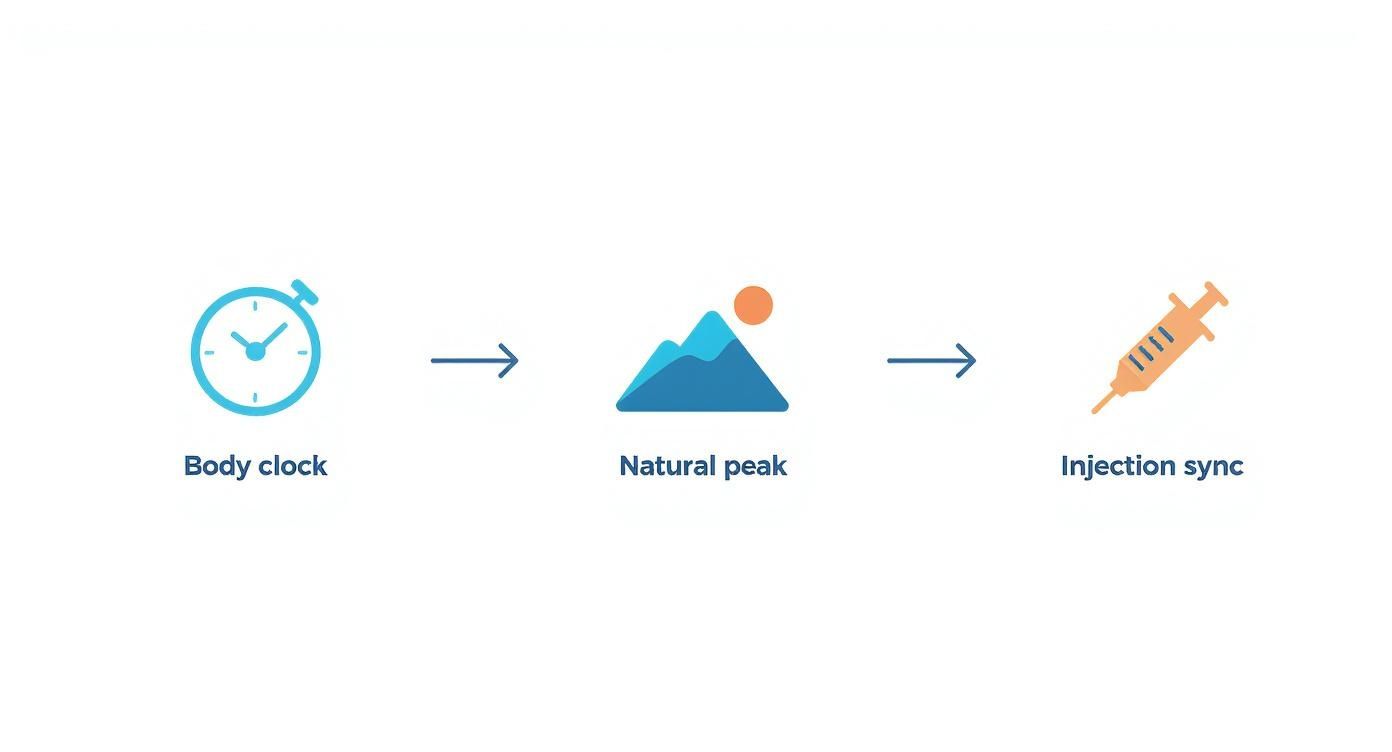
As you can see, the goal is synchronization—aligning your TRT with your body’s own internal clock to support its natural rhythm.
The Marathon Runners: Long-Acting Esters
On the other end of the spectrum, we have the marathon runner: testosterone undecanoate. This long-acting ester has a much longer half-life, which stretches the time between injections to weeks or even months.
Because it releases so slowly and steadily, the exact time of day you inject becomes far less of a factor. Your body is getting a constant, background supply of testosterone that isn't really affected by daily ups and downs. The main priority here isn't syncing with a daily rhythm but simply getting your next dose on the correct date to keep your overall levels from dropping off.
To help you see the differences at a glance, here’s a quick breakdown of the most common esters.
Comparing Common Testosterone Esters
| Testosterone Ester | Typical Half-Life | Common Injection Frequency | Timing Consideration |
|---|---|---|---|
| Testosterone Cypionate | 7–8 days | Once or twice per week | Morning injections are ideal to align with natural circadian rhythm. |
| Testosterone Enanthate | 7–8 days | Once or twice per week | Similar to cypionate; consistent morning timing helps maintain stable levels. |
| Testosterone Propionate | 2–3 days | Every other day or every third day | Very short-acting; consistent daily timing is crucial to avoid fluctuations. |
| Testosterone Undecanoate | 30–34 days | Every 10–14 weeks | Long-acting; the specific time of day is not a primary concern. |
It's clear there's a trade-off: long-acting esters offer convenience, while short-acting esters give you more hands-on control to fine-tune your hormone levels. Your prescription is designed around these unique properties.
This convenience factor has a real impact on how consistently people stick with their protocol. For instance, studies have shown that adherence rates for long-acting testosterone undecanoate can be as high as 82%, a stark contrast to the 40.8% adherence seen with more frequent injections like testosterone cypionate.
Ultimately, the type of ester in your vial is the blueprint for your injection schedule. Knowing whether you have a sprinter or a marathon runner helps you understand the "why" behind your prescribed timing, empowering you to manage your TRT with more confidence and success.
Building a Schedule That Fits Your Real Life
While the science might point to a morning injection as the ideal scenario, let’s be realistic. The absolute best time to inject testosterone is the time you can hit 100% of the time, without fail.
Life is messy. It’s unpredictable. A consistent schedule you can actually stick to will always beat a "perfect" one you constantly miss. The whole point is to make TRT work for you, not the other way around. Your therapy should be taking stress away, not piling more on.
So, forget what works for some guy on a forum. Let's focus on building a sustainable routine that slots right into your life.
Adapting TRT to Your Lifestyle
Your personal schedule is the single most important piece of the puzzle. Do you work the night shift? Your "morning" might be 4 PM. If so, injecting when you wake up—even if it's late afternoon—is the right move. You're still matching the dose to the start of your active day.
Frequent travel can also throw a wrench in things. A little planning goes a long way. If you have an early flight on injection day, you could inject the night before or as soon as you land. Shifting your dose by a few hours is far better than skipping it entirely and sending your hormone levels on a rollercoaster.
Consistency Is King: The number one rule in TRT is maintaining stable hormone levels. A reliable injection schedule is the foundation for making that happen, even if your time isn't the "textbook" morning slot.
Injecting Around Your Workouts
A question that comes up all the time is whether to inject before or after hitting the gym. Honestly? It doesn't make a huge difference in the long run.
Testosterone is released slowly into your system over several days. One workout isn’t going to dramatically change how it's absorbed or how well it works.
Some guys like injecting post-workout when their blood flow is already high. Others find it easier to do it pre-workout as part of their morning routine. The best advice is simple: just pick whichever time is most convenient and stick with it.
For those looking to dial in their technique for total comfort and effectiveness, our guide on how to inject testosterone subcutaneously is packed with detailed, step-by-step instructions that can make the whole process a breeze.
The bottom line is to create a practical, stress-free routine. Set a recurring alarm on your phone, put it on your calendar, and treat it like any other appointment you wouldn't miss. That simple discipline is what separates so-so results from a truly life-changing therapy experience.
How Consistent Timing Maximizes TRT Benefits

When it comes to TRT, your injection schedule isn’t just a minor detail—it’s the engine that drives your results. Think of it like setting a steady rhythm for your body. A consistent, predictable schedule is the single most powerful tool you have for achieving stable hormone levels, which is what actually makes you feel better, faster.
When your body knows exactly when the next dose is coming, it adapts. This predictability smooths out the hormonal peaks and valleys that cause so many frustrating side effects. Instead of being on a rollercoaster of highs and lows, you get to experience a much more stable, even-keeled state of well-being.
This consistency is what unlocks the true promise of TRT. It gives your body the chance to find and hold its optimal hormonal balance, which is the whole point of the therapy in the first place.
The Real-World Impact of a Disciplined Schedule
An erratic injection schedule is the fastest way to sabotage your own progress. When you miss a dose or inject at inconsistent times, your testosterone levels can crash into a "trough" before your next shot. This is when you'll feel those all-too-familiar low T symptoms creeping back in—the fatigue, the brain fog, and the irritability.
On the flip side, a disciplined approach puts you on the fast track. Stable hormone levels are the foundation for every improvement you’re looking for, whether it’s more energy, a better libido, or sharper mental clarity. This isn't just a feeling; it’s a direct physiological response.
For example, the timeline for seeing benefits is directly tied to this stability. Research shows that while you might start to notice improvements in depressive symptoms within 3-6 weeks, it can take up to 3 months for changes in sexual function to fully kick in. A steady injection schedule ensures your levels are solid enough to support these changes effectively. You can dig into the specifics by checking out these testosterone therapy timelines in this NIH review.
Key Takeaway: A consistent injection routine creates hormonal stability. This stability is the key to minimizing side effects like mood swings and maximizing both the speed and significance of your results.
Turning Consistency into a Habit
The goal is to make your injection schedule a non-negotiable part of your routine—as automatic as brushing your teeth. Here are a few dead-simple tips to lock it in:
- Set a Recurring Alarm: Use your phone to set a weekly alarm for your injection day and time. When it goes off, act on it immediately. Don't hit snooze.
- Link It to an Existing Habit: This is called "habit stacking." Do your injection right after something you already do without thinking, like right after your morning shower or while your coffee is brewing.
- Use a Calendar: Whether it’s on your wall or on your phone, mark your injection days. Physically checking off each dose gives you a small hit of accomplishment and reinforces the habit.
By taking full control of your timing, you are directly influencing how good you feel and how quickly you see the positive, life-changing results of your therapy. It is the single most important factor within your control.
Common Questions About Injection Timing
Once you start TRT, a lot of practical questions pop up. You're trying to build a routine, so it's natural to wonder about the "what ifs." Here are some straightforward answers to the questions we hear most often, helping you manage your TRT schedule like a pro.
What Should I Do If I Miss My Injection Time?
First off, don't panic. If you're just a few hours late, take your injection as soon as you remember. A small delay like that won't throw your hormone levels out of whack or change how you feel.
But what if you miss it by a whole day? Your best bet is always to check with your doctor for their specific advice. Most will tell you to inject as soon as you can the next day, and then just get back on your normal schedule the following week.
The golden rule here is to never double your dose to "catch up." Consistency is the goal, but a single missed injection isn't going to derail your long-term progress.
Does It Matter If I Inject on the Same Day Each Week?
Yes, this is a huge deal. For weekly injections like testosterone cypionate, picking a day and time—say, every Sunday morning—and sticking to it is one of the most important things you can do. This discipline creates a predictable, stable rhythm for your hormone levels.
A consistent weekly schedule is your best defense against the dramatic peaks and valleys that can bring back side effects like acne, moodiness, or that all-too-familiar fatigue. Think of your injection day as a non-negotiable appointment with yourself. Setting a recurring alarm on your phone is a simple but incredibly effective way to stay on track.
Should I Split My Weekly Dose into Two Injections?
Splitting your dose is a very popular and effective strategy for achieving rock-solid hormonal stability. For example, instead of one 100 mg injection on Monday, you could do 50 mg on Monday morning and another 50 mg on Thursday morning.
This approach creates smaller, more frequent peaks in your testosterone levels, which can dramatically reduce side effects tied to big hormonal swings. Many guys find that splitting their dose helps them feel much more even-keeled all week long, with fewer energy crashes or mood swings. It does mean more injections, but the trade-off is often well worth it for the smoother ride. This is a great topic to bring up with your doctor to see if it makes sense for you.
Does the Injection Site Change the Best Time to Inject?
Nope. Where you inject—whether it's your glute, thigh (both intramuscular), or stomach (subcutaneous)—doesn't change the ideal time of day. The core principle of aligning your injection with your morning circadian rhythm stays the same no matter the location.
While different injection sites might have slightly different absorption rates, this doesn't change the fundamental timing advice. The most critical habit when it comes to injection sites is to rotate them regularly. This simple practice prevents scar tissue from building up, which can eventually get in the way of proper absorption and cause discomfort. For instance, you could use your left thigh one week, the right thigh the next, and then move to your glutes to give each spot plenty of time to heal.
At Elite Bioscience, we provide the resources and high-quality therapies you need to manage your TRT with total confidence. Take control of your health with a plan designed for you. Explore our tailored TRT packages and get started today.