


Building muscle with testosterone injections isn't about finding a magic shortcut; it's about restoring your body's natural anabolic potential through a powerful, medically supervised process. When prescribed for low testosterone, injections amplify the signals that tell your body to repair and grow muscle fibers after you train. But make no mistake—this isn't a passive process. It works hand-in-hand with dedicated training and smart nutrition.
The Science of Testosterone and Muscle Growth
Testosterone is the primary male sex hormone, but its power extends far beyond reproductive health. It's a potent anabolic agent, meaning it directly drives the growth and repair of tissues—especially muscle.
When you hit the weights, you're creating microscopic tears in your muscle fibers. This is where testosterone steps in and essentially supercharges the repair process.
It gets the job done in a few key ways:
- Boosting Muscle Protein Synthesis: This is the main event. Testosterone binds to androgen receptors inside your muscle cells, directly signaling them to ramp up the production of new proteins—the literal building blocks of bigger, stronger muscles.
- Amplifying Other Anabolic Hormones: It doesn't work alone. Testosterone can also increase levels of other critical growth-promoters like Insulin-like Growth Factor 1 (IGF-1), which adds even more fuel to the muscle-building fire.
- Putting a Stop to Catabolism: The hormone acts as a bodyguard for your hard-earned muscle. It helps block the effects of catabolic (muscle-wasting) hormones like cortisol, tipping the scales firmly in favor of growth instead of breakdown.
This creates a net positive protein balance, which is the biological foundation for hypertrophy.
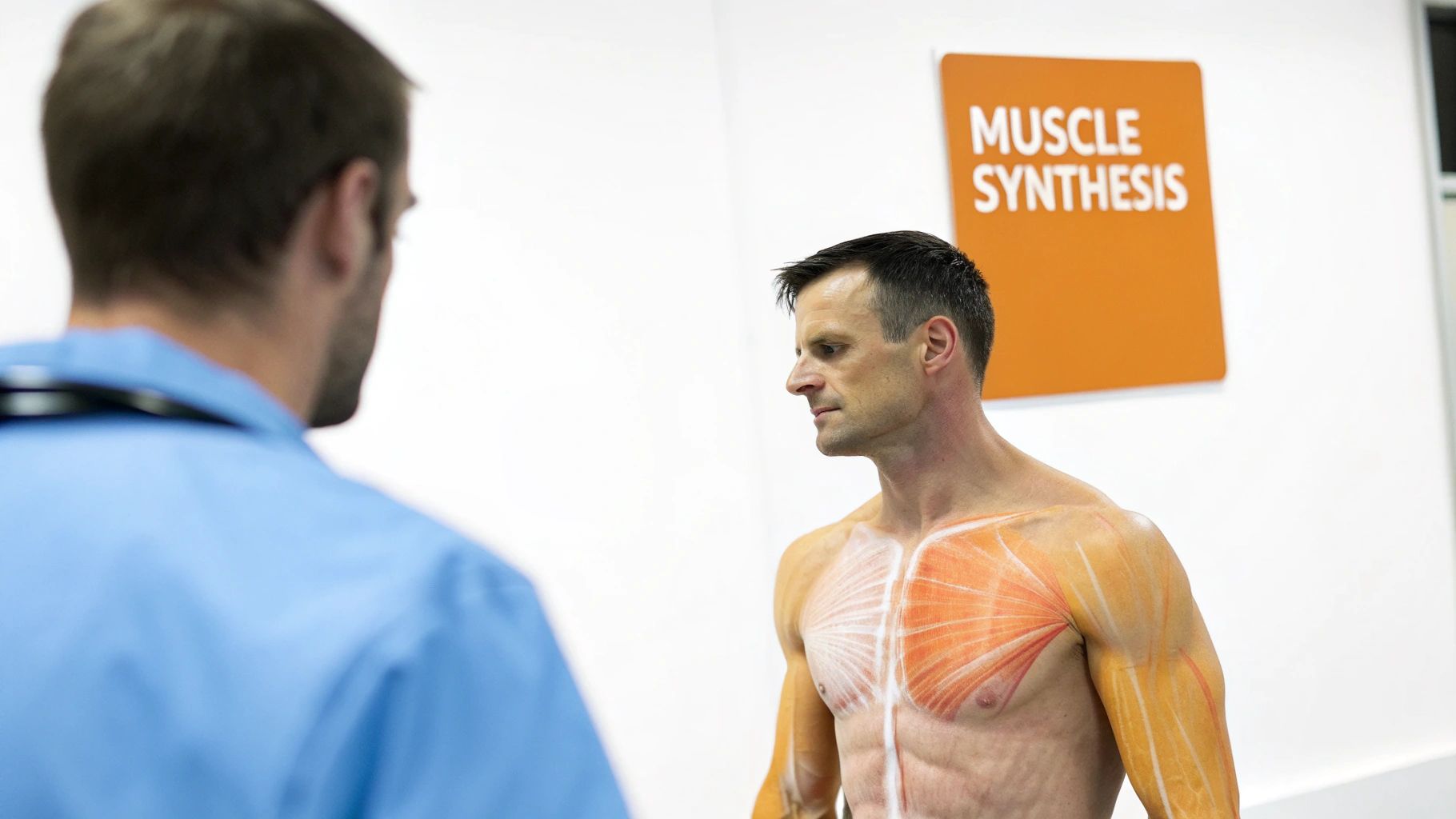
This incredible cascade of events all starts at the molecular level, initiated by testosterone's unique chemical structure interacting with your cells.
Why Injections Are a Potent Delivery Method
When it comes to Testosterone Replacement Therapy (TRT), not all delivery methods are created equal, especially if muscle gain is a key goal. Injections, like testosterone cypionate or enanthate, are often the go-to because of the distinct physiological response they create.
Administering testosterone intramuscularly causes pronounced peaks in blood levels shortly after the injection. This sharp spike delivers a powerful anabolic signal directly to your muscle tissues. In contrast, other methods like gels or patches are engineered for a slower, more consistent release, mimicking the body's natural daily rhythm but offering less of an intense anabolic push.
A comprehensive meta-analysis found that intramuscular testosterone replacement results in an average 5.7% increase in lean body mass, significantly higher than the 1.7% seen with transdermal therapies. This highlights the unique pharmacokinetic advantage of injections for muscle building.
This difference is a big reason why, under medical supervision, building muscle with testosterone injections is often a more direct and powerful approach. You can find out more about the different impacts of TRT on muscle gain from this detailed report on testosterone and body composition.
Therapeutic Use vs. Supraphysiological Dosing
It is absolutely crucial to understand the difference between medically supervised TRT for diagnosed low testosterone (hypogonadism) and the use of supraphysiological (far-above-normal) doses for bodybuilding. The goals, risks, and legal implications are worlds apart.
Therapeutic TRT is about restoring your testosterone levels to a healthy, normal range. This brings your body’s natural ability to build and maintain muscle back online. Supraphysiological use, common in bodybuilding circles, involves doses that push testosterone levels far beyond the natural human limit. While this can trigger rapid and dramatic muscle growth, it also skyrockets the risk of serious health consequences.
This table breaks down the fundamental differences between these two approaches.
Therapeutic TRT vs. Supraphysiological Use for Muscle Building
It's vital to recognize that these two paths are entirely different. One is a medical treatment focused on restoring health, while the other is a high-risk endeavor for extreme physique enhancement.
| Aspect | Therapeutic TRT (Medically Supervised) | Supraphysiological Use (Bodybuilding) |
|---|---|---|
| Primary Goal | Restore hormone levels to a normal physiological range to treat symptoms of hypogonadism. | Maximize muscle hypertrophy and performance enhancement, often for aesthetic or competitive purposes. |
| Dosage | Clinically determined doses (e.g., 100-200 mg per week) to maintain levels within a healthy reference range. | Doses are often significantly higher (e.g., 500 mg+ per week) and are not based on medical necessity. |
| Medical Supervision | Mandatory and continuous, involving regular bloodwork and monitoring for side effects. | Often self-administered without medical guidance, increasing health risks. |
| Health Risks | Manageable and monitored risks, such as changes in hematocrit or estrogen levels. | High risk of severe side effects, including cardiovascular strain, liver issues, and profound endocrine disruption. |
Ultimately, using testosterone for muscle building must be approached with a clear understanding of your goals and a commitment to safety. Therapeutic TRT offers a responsible path to reclaiming your body's potential, whereas supraphysiological use enters a territory with significant and often irreversible health risks.
So, you’re hitting the gym hard but not seeing the results you used to. Is it just aging, or could something else be going on? Before jumping to testosterone injections as a solution for building muscle, we have to start with the most important question: Do you have a genuine medical need?
Testosterone Replacement Therapy (TRT) is a serious medical treatment for a diagnosed condition called hypogonadism. It's not a shortcut for guys just looking to get an edge. Figuring out if you're actually a candidate is a careful process, and it always starts with a conversation with a qualified doctor.
The first step is taking an honest look at your symptoms. While struggling to build muscle is a valid concern, it’s rarely the only sign of clinically low testosterone. Often, other tell-tale signs have been creeping in—symptoms that are easy to brush off as stress or just getting older.
See if any of these sound familiar:
- Persistent Fatigue: We're not talking about being tired after a long day. This is a deep, relentless exhaustion that sleep doesn't seem to fix.
- Reduced Libido: A noticeable nosedive in your sex drive that you can't explain.
- Difficulty with Erections: Trouble getting or maintaining erections.
- Loss of Muscle Mass: You're working out just as hard, but it feels like you're losing ground or can't build muscle like you used to.
- Increased Body Fat: Gaining weight, especially around your midsection, even though your diet and exercise haven't changed.
- Mood Changes: Battling brain fog, finding it hard to concentrate, feeling irritable, or even dealing with symptoms of depression.
If you're nodding along to that list, it's time to get some objective data.
The Diagnostic Deep Dive
A good physician will never prescribe TRT based on symptoms alone. The real proof is in the bloodwork. You'll need a series of blood tests, usually scheduled for the early morning because that's when your testosterone levels are naturally at their peak.
A complete hormone panel gives a much fuller picture than just a single number. It tells a story about how your whole endocrine system is functioning.
Here are the key markers your doctor will be looking at:
- Total Testosterone: This measures every bit of testosterone in your blood, including what's attached to proteins and what's freely available. A level below 300 ng/dL is generally the red flag for low T, though the exact range can vary by lab.
- Free Testosterone: This is the "active" stuff—the testosterone that isn't bound to proteins and is ready for your body to use. This number is often more telling than the total T.
- Luteinizing Hormone (LH) and Follicle-Stimulating Hormone (FSH): These hormones come from your pituitary gland and signal the testes to make testosterone. If your T is low but LH/FSH are also low, it might point to a pituitary issue (secondary hypogonadism). If T is low but LH/FSH are high, it suggests the problem is with the testes themselves (primary hypogonadism).
A responsible diagnosis is a holistic process. A single low testosterone reading isn't enough; reputable clinics will require at least two separate morning blood tests showing consistently low levels, combined with corresponding clinical symptoms, before confirming a diagnosis of hypogonadism.
This careful approach is essential because a low number can sometimes be a symptom of other health problems that need to be addressed first.
Ruling Out Other Causes and Contraindications
A crucial part of the evaluation is making sure low testosterone isn't just a side effect of something else. Conditions like obesity, type 2 diabetes, chronic stress, and even poor sleep can all crush your testosterone production. A thorough physician will explore these possibilities before reaching for a prescription pad.
On top of that, not everyone with low T is a safe candidate for therapy. There are important contraindications—medical reasons why TRT would be unsafe. These include serious conditions like active prostate cancer, certain breast cancers, severe untreated sleep apnea, or an unusually high red blood cell count (polycythemia).
Let's look at a real-world scenario. A 45-year-old man comes in complaining about fatigue and struggling in the gym. His bloodwork shows a total testosterone of 280 ng/dL. Instead of just writing a script for TRT, his doctor also checks his PSA (Prostate-Specific Antigen) and finds it's a bit elevated. That triggers an immediate referral to a urologist to rule out prostate issues before even thinking about hormone therapy.
This is the standard of care. It puts patient safety first, ensuring that any plan to build muscle with testosterone is done responsibly and without putting your long-term health on the line.
How to Pair Training and Nutrition with Testosterone Therapy
Getting medically supervised testosterone injections creates a powerful environment for muscle growth, but the therapy itself doesn't build the muscle for you. Think of it like this: testosterone primes the engine, but you still need to supply the high-quality fuel (nutrition) and hit the gas (training) to actually get moving.
If you skip out on a smart training and nutrition plan, you're leaving the most significant results on the table.
True success comes from the synergy between your therapy, your workouts, and your diet. When these three pieces click, the optimized hormonal environment from TRT amplifies every ounce of effort you put in. You'll see more significant and sustainable gains in lean body mass. This is where your personal commitment becomes the real game-changer.
Designing Your Anabolic Training Plan
With your testosterone levels optimized, your body's ability to recover from and adapt to resistance training gets a serious upgrade. This means you can—and definitely should—train with intensity and consistency to maximize muscle protein synthesis.
The absolute cornerstone of any effective program is progressive overload.
Progressive overload is just a technical term for continually challenging your muscles to do more than they're used to. This doesn't always mean slapping more weight on the bar, though.
You can achieve it in a few different ways:
- Heavier Weight: The classic method—increasing the resistance over time.
- More Volume: Bumping up the number of sets or reps you perform.
- Higher Frequency: Hitting a muscle group more often each week.
- Shorter Rest: Cutting down the rest time between your sets to increase workout density.
For most guys on TRT, a training frequency of three to five days per week strikes the perfect balance between stimulus and recovery. The bulk of your focus should be on big, compound, multi-joint exercises. These are the lifts that recruit the most muscle fibers and trigger the greatest hormonal response.
Squats, deadlifts, bench presses, and overhead presses should be the foundation of your routine.
By focusing on these core compound lifts, you create a systemic anabolic response that isolated exercises just can't match. It's the most efficient way to leverage your optimized testosterone levels to build functional strength and pack on overall muscle mass.
This foundational strength work is the most direct signal you can send your body to use that available testosterone for muscle repair and growth.
Fueling Muscle Growth with Precision Nutrition
Your diet is the other half of the muscle-building equation. Testosterone therapy actually improves your body’s nutrient partitioning, which means more of the calories you eat get shuttled toward building muscle tissue instead of being stored as fat. But you have to give your body the right building blocks in the first place.
First and foremost, you need a modest caloric surplus. To build new tissue, you have to consume a bit more energy than you burn. A good starting point is a surplus of 250-500 calories above your daily maintenance level. This is the sweet spot for promoting lean gains without piling on excess body fat.
Within those calories, protein is king. Protein provides the amino acids your body needs for muscle repair and hypertrophy. A well-supported target for active guys is 1.6 to 2.2 grams of protein per kilogram of body weight (that’s about 0.7 to 1.0 grams per pound).
Finally, don't fear carbohydrates. Carbs are your primary fuel source for intense workouts, and they're critical for replenishing muscle glycogen after you train, which is a huge part of recovery. Timing your carb intake around your training sessions—both before and after—can make a real difference in your performance and recovery. To really dial in your diet, check out our detailed guide on how to improve body composition.
A simple, practical approach to nutrient timing looks like this:
- Pre-Workout: About 60-90 minutes before you train, eat a meal with some easily digestible carbs and protein to fuel your session.
- Post-Workout: Within two hours after your workout, have a meal rich in both protein and carbs to kickstart the recovery and muscle-building process.
This thoughtful integration ensures you're taking full advantage of the anabolic potential your testosterone therapy provides, turning all that hard work in the gym into real, tangible results.
Understanding Dosing Protocols and Injection Techniques
Once your doctor gives you the green light for TRT, the conversation gets practical. Building muscle with testosterone injections isn't about blasting your system with as much as possible; it’s about creating stable, optimal hormone levels that let your body respond and grow. Success hinges on a consistent, medically supervised protocol.
The specifics—how much you inject and how often—are dialed in just for you. Your doctor will look at your baseline lab work, listen to your symptoms, and consider your goals to set a starting dose. Think of this initial prescription as a starting line, not a finish line. It will be fine-tuned with follow-up blood work to make sure your levels land in that sweet spot, the ideal therapeutic range.
Choosing the Right Testosterone Ester
Most testosterone injections use a form of the hormone attached to an ester, a chemical tail that dictates how quickly it's released into your bloodstream. The two heavy hitters you’ll almost always see prescribed are:
- Testosterone Cypionate: This is a slow-acting ester with a half-life of about 8 days. It delivers a steady, reliable release of testosterone, making it the go-to choice for weekly injection schedules.
- Testosterone Enanthate: Nearly identical to cypionate, enanthate also has a half-life of around 7-8 days. Its release profile is so similar that doctors often use them interchangeably, depending on what’s available.
With either one, the goal is to sidestep the hormonal rollercoaster—that classic "peak and trough" cycle where you feel amazing right after your shot and then crash as your levels bottom out before the next one. To smooth things out, many clinicians now recommend splitting the weekly dose into two smaller injections (say, every 3.5 days). This approach better mimics your body's natural rhythm and can seriously cut down on side effects like mood swings or water retention. You can dive deeper into finding your ideal TRT dosage per week.
It’s no secret this treatment has become incredibly popular. From 2000 to 2011, global testosterone sales skyrocketed 12-fold, jumping from $150 million to $1.8 billion. And that trend isn't slowing down. TRT use in the U.S. climbed dramatically between 2018 and 2022, especially among men aged 24 and under (a 120% increase) and those aged 25-34 (an 86% increase). You can see the full breakdown of this surge in testosterone prescriptions here.
Mastering Safe Injection Techniques
The idea of self-injecting can be intimidating at first, but it quickly becomes a simple, routine part of your week. Your provider will walk you through the entire process, but knowing the fundamentals is key to doing it safely and effectively. The two main methods you’ll use are intramuscular and subcutaneous injections.
Key Takeaway: The single most important rule of self-injection is sterile technique. Always. Wash your hands thoroughly, use an alcohol swab on both the vial top and the injection site, and never, ever reuse needles or syringes. This is non-negotiable for preventing infection and keeping your therapy safe.
A little organization makes the whole process smooth and stress-free.
- Gather Your Supplies: Lay everything out. You'll need your vial of testosterone, a drawing needle (18g is common), an injection needle (something smaller, like 23-25g), a syringe, and alcohol swabs.
- Draw the Medication: Clean the vial’s rubber stopper. Pull air into the syringe equal to your dose, inject the air into the vial (this equalizes the pressure), then draw out your prescribed amount of testosterone.
- Switch Needles: Carefully swap the thicker drawing needle for the thinner injection needle. This ensures the needle entering your body is perfectly sharp and sterile.
- Select and Clean the Site: Pick your spot. For intramuscular (IM), the glutes or deltoids are common targets. For subcutaneous (SubQ), the fatty tissue in the abdomen or thigh is perfect. Swab the area with alcohol and let it air dry.
- Inject: For an IM shot, go in at a 90-degree angle. For SubQ, pinch an inch of skin and go in at a 45-degree angle. Push the plunger slowly and steadily, then withdraw the needle and immediately dispose of it in a proper sharps container.
This process is what primes your body for growth. The infographic below simplifies the cycle.
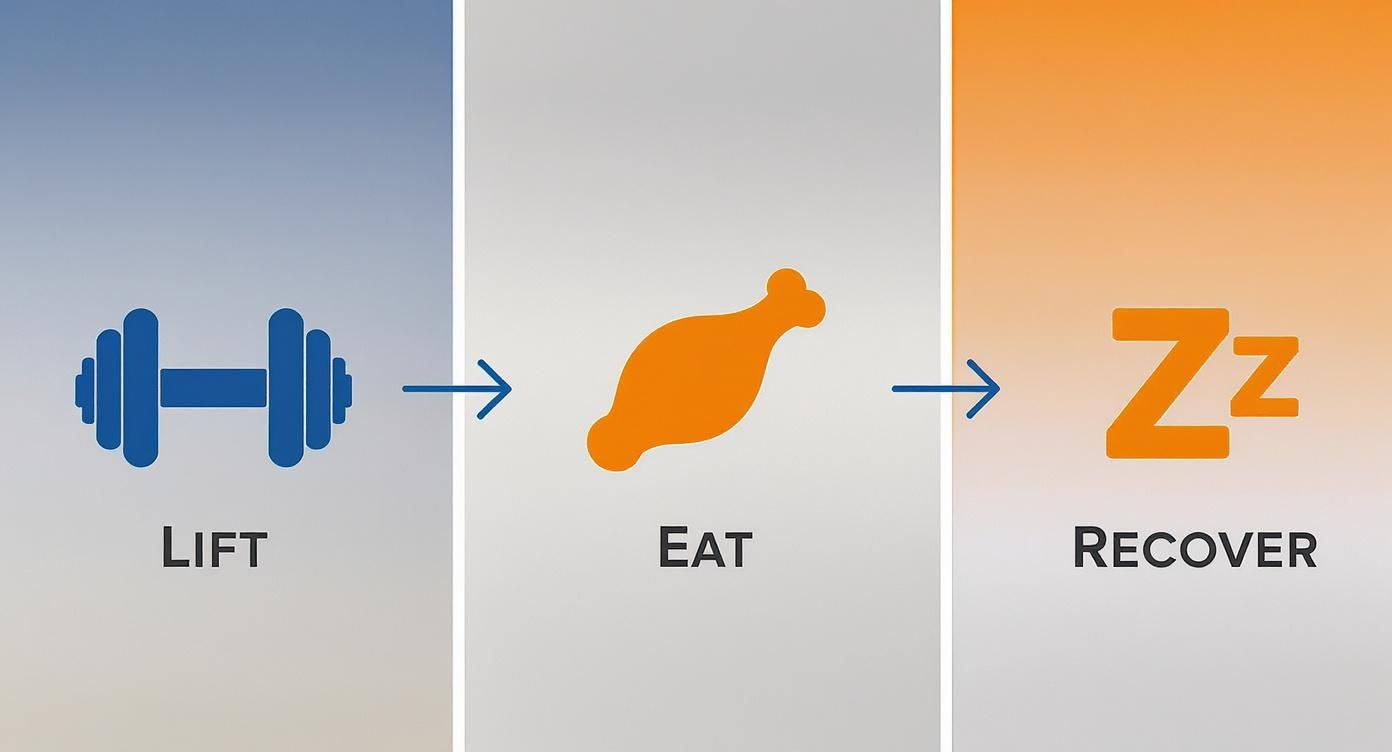
Testosterone therapy supercharges that recovery and growth phase, helping you get the most out of the hard work you put in with lifting and nutrition.
Keeping an Eye on Your Progress and Managing Side Effects
Starting testosterone injections to build muscle is a serious commitment to your health, and like any smart medical plan, it needs careful supervision. This isn't a "set it and forget it" kind of therapy. Consistent monitoring through regular lab work and maintaining an open line of communication with your doctor are the absolute cornerstones of a safe and successful program.
This approach ensures your body is responding exactly as it should while keeping any potential risks in check.
Think of your doctor as your co-pilot. This teamwork allows them to make precise, data-driven adjustments to your protocol, making sure you get all the muscle-building benefits without putting your long-term health on the back burner. It’s like using a GPS on a road trip; these regular check-ins keep you on the fastest, safest route to your destination.
What We're Tracking: The Key Blood Markers
Your progress and safety aren't just based on how you feel—they're measured with objective data from routine blood tests. Your doctor will typically order a comprehensive panel a few times a year to get a crystal-clear picture of how your body is adapting.
Here are the critical markers we pay close attention to:
- Total and Free Testosterone: This is the big one. It confirms your dose is keeping you in that sweet spot—the optimal therapeutic range—without going too high or dipping too low. It’s the primary way we verify the treatment is actually working.
- Estradiol (E2): Testosterone can convert into estrogen in a process called aromatization. While men need some estrogen for good health, if levels creep up too high, you might experience side effects like water retention or moodiness. Monitoring E2 lets your doctor keep this delicate balance in check.
- Hematocrit: Testosterone can ramp up red blood cell production. While this is great for endurance, if your hematocrit gets too high (a condition called polycythemia), it can thicken your blood and increase cardiovascular risk. Regular checks are non-negotiable for safety.
- Prostate-Specific Antigen (PSA): This is a standard screening marker for prostate health. We monitor it as a precaution to make sure the therapy isn’t aggravating any underlying prostate issues.
Your regular blood work is your personal health dashboard. It gives your doctor the essential data needed to fine-tune your therapy, ensuring you stay in that perfect zone where muscle growth is maximized and risks are minimized.
Staying Ahead of Potential Side Effects
While medically supervised TRT is generally very safe, it's smart to be aware of potential side effects. The good news is that most are easily managed and can often be sidestepped with proactive adjustments to your protocol.
Some common, though not guaranteed, side effects include:
- Water Retention and Bloating: This is often linked to elevated estradiol. It can usually be managed by adjusting your injection frequency for more stable hormone levels. Cutting back on sodium can also make a huge difference here.
- Acne or Oily Skin: An uptick in androgens can sometimes cause breakouts, much like during puberty. This is usually temporary and a solid skincare routine is often all that's needed.
- Mood Swings: These tend to pop up when hormone levels are on a rollercoaster. The most effective strategy? Splitting your weekly dose into smaller, more frequent injections to maintain emotional stability.
- Elevated Red Blood Cell Count: If your hematocrit levels climb too high, your doctor will likely advise you to donate blood. It’s a simple and highly effective way to lower your red blood cell volume and protect your cardiovascular health.
For a deeper dive, our comprehensive guide covers the full spectrum of Testosterone Therapy Side Effects and how a skilled physician manages them. In some cases, if lifestyle tweaks aren't enough to control estradiol, your doctor might prescribe an aromatase inhibitor (AI), a medication that reduces the conversion of testosterone to estrogen.
The benefits often go way beyond just muscle. For instance, long-term testosterone therapy in men with hypogonadism consistently leads to better body composition. One 11-year study found that men on testosterone injections lost an average of 20.6% of their initial body weight if they were obese, while an untreated group actually gained weight. You can see how these findings correlated with reduced cardiovascular events and improved mortality on Nature.com.
Ultimately, proactive monitoring is what separates a responsible, health-first approach from a reckless one. It empowers you and your doctor to work as a team, ensuring your journey to build muscle is both productive and sustainable for years to come.
Your Questions About Building Muscle with Testosterone Injections, Answered
Stepping into the world of testosterone therapy can bring up a lot of questions, especially when muscle building is your main goal. Let’s cut through the noise and get straight to the answers for the most common questions we hear from guys considering or already on treatment.
How Fast Will I See Muscle Gains on TRT?
While testosterone definitely creates a powerful environment for growth, building muscle is still a marathon, not a sprint. Most guys on a medically supervised plan start to feel tangible changes in strength and muscle fullness within 4 to 8 weeks. But for significant, noticeable gains in lean mass, you're typically looking at 3 to 6 months of consistent therapy combined with serious effort in the gym and kitchen.
Your timeline really depends on a few key things:
- Your Training: You have to be hitting the weights with a progressive resistance program. The testosterone is there to help you recover and build, but you have to give it a reason to.
- Your Fuel: A proper diet with enough calories and high protein is non-negotiable. You can't build a house without bricks.
- Your Starting Line: If your testosterone levels were in the basement to begin with, you'll likely notice the initial changes more dramatically.
- Your Protocol: The dose your doctor prescribes is designed to get your levels into an optimal range for steady, sustainable results, not a crazy, overnight spike.
Is It Legal to Use Testosterone for Muscle Building?
This is a crucial point, so let's be crystal clear. Using testosterone injections prescribed by a licensed doctor to treat a diagnosed medical condition like hypogonadism (clinically low T) is 100% legal. In that context, benefits like building muscle and getting your strength back are part of the therapeutic outcome of fixing the hormone deficiency.
What's illegal is getting and using testosterone without a valid prescription just to enhance athletic performance or for bodybuilding. In the United States and many other places, that's considered misuse of a controlled substance and comes with serious legal consequences.
The bottom line is simple: Legality comes down to medical necessity. If a doctor diagnoses you with low testosterone and prescribes TRT, you're on the right side of the law. If you get it from an unregulated source, you're not.
Can I Build Muscle with TRT if I Don't Work Out?
Honestly, not really. While TRT on its own can lead to some minor improvements in body composition—maybe a slight bump in lean mass and a drop in body fat—it won't trigger significant muscle growth without the stimulus of resistance training.
Think of it like this: testosterone is the construction crew ready to work, but lifting weights is the blueprint that tells them what to build and where. Without the demand you create by challenging your muscles, the full muscle-building potential of TRT just sits there untapped. You might feel stronger and have more energy, but real hypertrophy requires putting that enhanced recovery and anabolic state to use in the gym.
Will TRT Give Me "Roid Rage" or Make Me Aggressive?
The whole "roid rage" idea is almost entirely tied to the abuse of massive, supraphysiological doses of anabolic steroids. That kind of use can send hormone levels flying to extreme, unstable heights. Medically supervised TRT is a completely different ballgame.
The entire goal of therapeutic testosterone is to bring your levels back into a healthy, normal physiological range. When your dose is managed correctly and your blood work is monitored, TRT is far more likely to improve your mood, get rid of irritability, and boost your overall sense of well-being. It's correcting the very hormonal imbalance that may have been causing those mood issues in the first place. Extreme aggression is simply not a typical side effect of responsible, medically guided therapy.
At Elite Bioscience, we offer a safe, legal, and medically supervised path to optimizing your hormones for better health, performance, and quality of life. If you're ready to find out if testosterone therapy is the right move for you, explore our personalized treatment options.