



PT-141, also known by its clinical name Bremelanotide, is a unique peptide that takes a completely different approach to sexual wellness. Instead of targeting blood flow, it works directly on the brain to enhance sexual desire.
This distinction is critical. Because PT-141 operates on the central nervous system, its dosage has to be carefully managed to hit that sweet spot between therapeutic benefit and neurological effects. Getting a handle on how it works is the first step to finding the right pt 141 peptide dosage for you.
What PT-141 Is and How It Works

To really appreciate why dosing is so important, you need to understand that PT-141 isn’t like other sexual health treatments. Traditional medications for erectile dysfunction (ED), like PDE5 inhibitors Viagra or Cialis, focus entirely on the vascular system. They boost nitric oxide to relax blood vessels and improve blood flow, which helps create a physical erection.
PT-141 plays a totally different game. Think of it less like a mechanical fix and more like a key that turns on specific arousal pathways directly in your brain.
PT-141 is classified as a melanocortin receptor agonist. It binds to specific receptors (MC3R and MC4R) in the hypothalamus—the part of the brain that governs sexual motivation. This interaction triggers a release of dopamine, a neurotransmitter essential for feelings of pleasure and reward.
This is what makes PT-141 a game-changer for conditions where the root issue isn't blood flow, but a simple lack of desire.
Targeting the Source of Desire
Because PT-141 works on the central nervous system, its effects are both psychological and physical. It doesn’t just enable a physical response; it can genuinely amplify libido and sexual motivation.
This makes it a groundbreaking option for:
- Hypoactive Sexual Desire Disorder (HSDD): It's FDA-approved under the brand name Vyleesi® to treat premenopausal women diagnosed with HSDD, a condition defined by a persistent lack of sexual desire.
- Erectile Dysfunction (ED): For men, particularly those who don't get great results from PDE5 inhibitors, PT-141 offers a valuable alternative. It can tackle psychogenic ED (caused by psychological factors) or improve erections when low libido is part of the problem.
Why Precise Dosage is Critical
Since PT-141's mechanism is neurological, finding the right pt 141 peptide dosage is a delicate balancing act. Too little, and you might not feel the desired effects. Too much, and you could run into side effects like nausea, flushing, or temporary blood pressure changes. The goal is always to find the lowest effective dose that gives you optimal results with maximum comfort.
This is exactly why clinicians universally recommend a "start low, go slow" approach, often beginning with a small test dose. The peptide’s effects are highly individual; what works perfectly for one person might be too strong or too weak for another. Understanding this principle is the foundation for using PT-141 safely and successfully.
You can learn more about the broader benefits of peptide therapy in our detailed guide. This background knowledge helps explain why a personalized strategy is so vital for therapies that interact directly with your body’s complex signaling systems.
Finding the Right PT-141 Dosage for You
Figuring out the right PT-141 peptide dosage isn’t a one-size-fits-all deal; it’s a personalized process guided by your healthcare provider. Because PT-141 works directly on your brain chemistry, the perfect dose can vary quite a bit based on your gender, individual sensitivity, and the specific goal you're aiming for. The key is to begin with a conservative dose to see how you feel before finding the sweet spot that delivers results.
This approach is all about ensuring safety and effectiveness, allowing your provider to create a custom protocol that fits your unique needs. Understanding the established guidelines for both men and women is the first step toward a successful treatment plan.
Recommended PT-141 Dosage for Women
For women, the dosing protocol for PT-141 is crystal clear, thanks to its FDA approval for treating Hypoactive Sexual Desire Disorder (HSDD). The commercially available version, Vyleesi®, offers a standardized and well-researched approach.
The approved regimen is straightforward:
- Dose: 1.75 mg is administered with a pre-filled autoinjector.
- Timing: The injection is given subcutaneously (just under the skin) in the abdomen or thigh at least 45 minutes before you anticipate sexual activity.
- Frequency: Use is capped at no more than one dose in a 24-hour period and a maximum of eight doses per month.
This protocol was nailed down through rigorous clinical trials designed to perfectly balance efficacy with safety, specifically to boost sexual desire in premenopausal women with HSDD. Sticking to this medically approved schedule is crucial for minimizing potential side effects while getting the therapeutic outcome you’re looking for.
Common Dosage Protocols for Men
For men turning to PT-141 for erectile dysfunction (ED), particularly when low libido is part of the picture, the dosage guidelines come from clinical use and research rather than a specific FDA approval. This means the approach is a bit more flexible and really emphasizes careful, gradual adjustment.
A typical starting point is a "test dose" of around 1 mg to see how your body reacts, especially when it comes to side effects like nausea. If that goes smoothly, the dose can be fine-tuned. The effective dose range for most men usually lands between 1.5 mg and 2 mg per injection.
This peptide has shown real promise in treating ED, a condition that affects about 20% of adult males over 20 worldwide, with projections showing it could impact 322 million men by 2025. In fact, studies show that 34% of men treated with PT-141 reported significantly better erectile function compared to just 9% in placebo groups, with effects often kicking in within 30 minutes. You can read more about these findings on PT-141 for men.
The Titration Principle: The core strategy for men is to "start low and go slow." This methodical process of gradually increasing the dose lets you find your minimal effective dose—the smallest amount you need to get the desired results without any unnecessary side effects.
This careful adjustment is best done under the supervision of a healthcare provider who can offer guidance based on your feedback. For more information on general dosing principles, our comprehensive peptide dosage guide offers additional valuable insights.
PT-141 Dosage and Administration Quick Reference
To simplify these guidelines, here’s a clear, side-by-side comparison of the typical protocols for men and women. This table is a great quick-glance tool, but always remember that your final treatment plan should be created with a medical professional.
| Patient Group | Administration Route | Typical Starting Dose | Effective Dose Range | Timing Before Activity | Maximum Frequency |
|---|---|---|---|---|---|
| Women (HSDD) | Subcutaneous Injection | 1.75 mg | 1.75 mg (Fixed) | At least 45 minutes | 8 doses per month |
| Men (ED) | Subcutaneous Injection | 1 mg (Test Dose) | 1.5 mg – 2 mg | 30-60 minutes | As-needed, per MD |
Ultimately, whether you're following the FDA-approved protocol for HSDD or a clinically guided regimen for ED, the goal is the same. It's all about achieving a significant improvement in sexual function and desire safely and effectively, with a dosage tailored specifically to you.
How to Safely Administer Subcutaneous Injections
Giving yourself a subcutaneous injection can feel a little daunting the first time you do it, but I promise it's a skill that's easy to master. Think of it like learning anything new—once you walk through the steps a few times, it becomes second nature. This guide is here to walk you through the whole process, from setting up your supplies to the injection itself, so you can feel confident and precise.
First things first, let's talk about your workspace. You'll want to find a clean, organized area. This isn’t just about being tidy; it’s a critical safety step to prevent any contamination. Lay everything out on a sanitized surface so it's all within easy reach.
Here’s what you’ll need to have ready:
- Your PT-141 vial: This contains the lyophilized (freeze-dried) peptide powder.
- Bacteriostatic water: The sterile water you'll use to mix your peptide.
- An insulin syringe: A 1mL syringe with a fine needle is standard.
- Alcohol prep pads: Essential for keeping everything sterile.
- A sharps container: For safely disposing of used needles.
Preparing Your PT-141 Dose
The first step is called reconstitution, which is just a technical term for mixing the powdered PT-141 with bacteriostatic water to turn it into an injectable liquid. Start by wiping the rubber stoppers on both vials with an alcohol pad.
Next, you'll draw the correct amount of bacteriostatic water into your syringe. Inject it slowly into the PT-141 vial, aiming the stream of water against the inside glass wall. This gentle approach prevents you from damaging the delicate peptide molecules.
Do not shake the vial. Instead, just roll it gently between your fingers. The powder will dissolve, and you'll be left with a clear solution. For a complete rundown on best practices, our peptide handling guidelines cover all the essential details on storage and handling.
Once your PT-141 is mixed, it's time to draw your dose. Flip the vial upside down and insert the needle. Pull the plunger back to the exact pt 141 peptide dosage your provider prescribed. It's a good idea to gently tap the syringe to get rid of any air bubbles—this ensures your dose is perfectly accurate.
This chart gives you a clear visual of the typical dosing path, which always starts with a small test dose before moving on to gender-specific protocols.
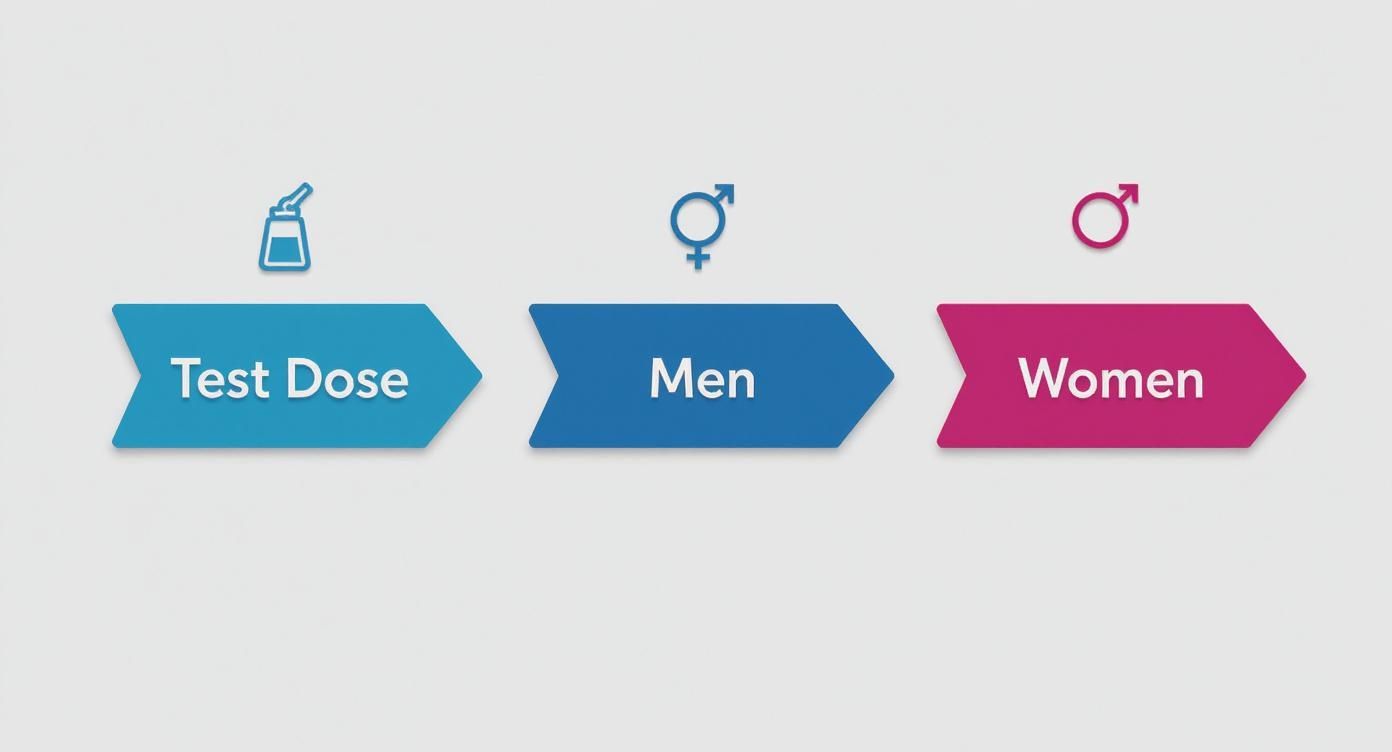
As you can see, starting conservatively is key, and the protocol is then adjusted differently for men and women.
Performing the Injection
Choosing your injection spot is all about comfort and effectiveness. Subcutaneous injections go into the fatty tissue just under the skin. The most common and easiest spots are the abdomen (staying at least two inches away from your belly button), the front of your thighs, or the upper part of your buttocks.
Pro Tip: It's absolutely vital to rotate your injection sites. Using the same spot over and over can cause skin irritation or even a buildup of fat under the skin called lipohypertrophy. By switching up your locations, you let each area recover, which leads to better absorption and a much more comfortable experience long-term.
Here’s a simple, step-by-step breakdown of the injection itself:
- Sanitize the Site: Grab a fresh alcohol pad and clean the area where you plan to inject. Let it air dry completely—don't blow on it or wipe it.
- Pinch the Skin: Gently pinch about an inch of skin and fat with your thumb and forefinger. This lifts the fatty layer up and away from the muscle underneath.
- Insert the Needle: Hold the syringe like you would a dart and insert the needle into the pinched skin at a 45 to 90-degree angle. The angle you use will depend on how much fatty tissue you have; your provider can give you guidance on what’s best for you.
- Administer the Peptide: Slowly and steadily push the plunger all the way down until the syringe is empty.
- Withdraw and Dispose: Pull the needle out at the same angle it went in. Right away, place the used syringe into your sharps container. No exceptions.
After you're done, you can apply gentle pressure to the site with a cotton ball if there's a little bleeding, but don't rub the area. Following these steps ensures your pt 141 peptide dosage is delivered safely and effectively, setting you up for the best possible results from your therapy.
Adjusting Your Dosage for Optimal Results
Figuring out your ideal pt 141 peptide dosage isn't about plugging numbers into a calculator. It’s more like tuning a high-performance instrument—the goal isn't just to hit a standard note, but to find the precise setting that delivers the perfect harmony for you. This careful process of adjustment, known as titration, is the absolute cornerstone of a successful and safe PT-141 protocol.
The guiding principle here is simple but incredibly effective: "start low, go slow." This approach is all about finding that perfect balance between the peptide's benefits and any potential side effects, making sure your experience is both positive and comfortable. It’s built on the fact that everyone's body is different; your unique chemistry, metabolism, and sensitivity all play a role in how you'll respond.
By beginning with a minimal dose, you give your body a chance to get acquainted with PT-141 and provide clear feedback on its tolerance. This methodical ramp-up is the smartest and safest way to unlock the peptide's full potential while keeping unwanted side effects firmly in check.
The Titration Process in Action
Let's walk through what this looks like in the real world. Imagine you're starting PT-141 for the first time with guidance from your healthcare provider. Instead of jumping straight to what's considered a "standard" therapeutic dose, your journey begins with a much smaller, exploratory amount. This initial "test dose" serves a crucial purpose.
Here's how it might play out:
- Initial Test Dose: Your provider might have you start with a very low dose, something like 250-500 mcg (0.25-0.5 mg). The idea here isn't to get the full desired effect but simply to see how your body reacts. You're essentially just checking for side effects like nausea or flushing.
- Observation and Feedback: After this first administration, you'll monitor how you feel. Was there any discomfort? Did you notice any subtle effects at all? This feedback is gold for planning the next step.
- Gradual Increase: If that first dose went smoothly, your provider might suggest a slight increase for the next use, maybe to 750 mcg (0.75 mg). Again, you'll assess the effects and how you feel.
- Finding the Sweet Spot: You'll continue this process over subsequent uses, carefully bumping up the dose until you hit that therapeutic sweet spot—the point where you achieve the desired outcome without any significant side effects. For many people, this ends up being the lowest dose that provides a clear, positive result.
This patient, methodical approach ensures that your final pt 141 peptide dosage is truly personalized. It’s a collaborative effort between you and your clinician, tailored specifically to your body's unique response.
When to Decrease Your Dose
Titration isn't just a one-way street of increasing the dose. It's also about knowing when to pull back. If at any point you experience side effects that are more pronounced than you'd like—even if the dose is working—the right move is to reduce the amount. The ultimate goal is a dose that is both effective and easily tolerated.
While a common starting dose for subcutaneous use has been around 2 mg about an hour before activity, it's often advised to do an initial test at 1 mg to screen for side effects like changes in blood pressure or nausea. The effects of PT-141 can last anywhere from 24 to 72 hours, so it's typically recommended to use it a maximum of twice per week at first. To get a better handle on the clinical data, you can discover more insights on this PT-141 monograph.
Ultimately, adjusting your dose is a dynamic process. Working closely with a healthcare provider allows you to navigate this journey safely, ensuring you land on a pt 141 peptide dosage that helps you achieve your wellness goals effectively and comfortably.
Understanding Potential Side Effects and Safety

With any effective therapy, a clear and honest conversation about potential side effects is non-negotiable. Knowing the safety profile of PT-141 helps you make an informed decision and work with your provider to manage the experience. The goal here is simple: maximize the benefits while keeping any discomfort to a minimum.
Fortunately, most side effects tied to PT-141 are mild and don't stick around for long. Since the peptide works on your central nervous system, most of these reactions are directly linked to that mechanism of action. Knowing what to expect is the first step in managing them well.
Common and Manageable Side Effects
The most frequently reported side effect of PT-141 is, without a doubt, nausea. While some clinical studies have seen it affect up to 40% of users, the feeling is almost always dose-dependent and short-lived. This is exactly why the "start low, go slow" approach is so heavily emphasized.
Other common reactions you might notice include:
- Facial Flushing: A temporary warmth or redness in the face, which often happens as the peptide starts to kick in.
- Headache: Mild headaches can sometimes occur, and they're often linked to subtle changes in blood pressure or just not being hydrated enough.
- Injection Site Reactions: You might see minor redness, itching, or tenderness where you injected, but this usually clears up quickly.
The key takeaway is that these effects are often very manageable. By starting with a lower pt 141 peptide dosage and gradually increasing it, most people find a therapeutic level that works for them without triggering significant discomfort.
Strategies for minimizing these are pretty straightforward. Staying well-hydrated before and after you administer a dose can help with headaches. For nausea, taking an over-the-counter anti-nausea medication about an hour beforehand can make a huge difference.
Important Safety and Contraindications
While most side effects are minor, PT-141 isn't the right fit for everyone. It's crucial to be aware of the more significant safety considerations, with the most important one involving cardiovascular health.
PT-141 can cause a temporary increase in blood pressure and a slight decrease in heart rate. For this reason, it is strongly contraindicated for anyone with:
- Uncontrolled Hypertension: If you have high blood pressure that isn't well-managed with medication, you should not use PT-141.
- Known Cardiovascular Disease: Those with a history of serious heart conditions should also avoid this peptide.
This is precisely why a thorough medical screening with a qualified provider is an absolute must. Your clinician will go over your entire health history to ensure PT-141 is a safe option for you.
For context, the FDA-approved version of bremelanotide, sold as Vyleesi®, is prescribed for premenopausal women with HSDD at a specific dose of 1.75 mg, delivered via nasal spray about 45 minutes before activity. Its use is also capped at eight doses per month—a guideline designed to balance safety and effectiveness.
Off-label subcutaneous protocols, on the other hand, almost always begin with lower test doses. This ensures you tolerate it well before moving up to a full therapeutic amount. To get a better sense of these standards, you can explore detailed information on PT-141 safety and protocols.
Ultimately, a safe and successful experience with PT-141 comes down to professional medical guidance. Being transparent with your provider about your health history and any side effects you experience allows for a treatment plan that is both effective and fully aligned with your well-being.
PT-141 Dosage: Your Questions Answered
Starting any new therapy brings up questions. It's completely normal. Let’s walk through some of the most common inquiries about PT-141, from how fast it works to how it fits into your life. We'll get you the clear, straightforward answers you need.
How Quickly Does PT-141 Start Working?
Most people start to feel the effects of PT-141 within 30 minutes to two hours after taking it. Everyone’s body is a bit different, so the exact timing can vary.
For the best results, we generally recommend administering your dose about 45 to 60 minutes before you plan to be sexually active. This gives the peptide enough time to fully engage with the melanocortin receptors in your brain, essentially "flipping the switch" for arousal and desire right when you need it.
How Long Do the Effects of a Single Dose Last?
Here’s where PT-141 really stands out: its effects are long-lasting. A single PT-141 peptide dosage can remain active for anywhere from 24 to 72 hours.
This extended window is a huge advantage over many traditional ED treatments. It removes the pressure of a tight timeline, allowing for more spontaneity and a natural, unforced experience.
The lasting effect means you’re ready when the moment is right, not just when the medication is. This flexibility is something many users find incredibly valuable because it brings intimacy back to a more natural rhythm.
Can I Combine PT-141 with Other ED Medications?
There is some clinical evidence suggesting that PT-141 can work well with a low dose of a PDE5 inhibitor like sildenafil, potentially creating a synergistic effect. However, this is something you should only do under the direct supervision of a qualified healthcare provider.
Combining these treatments can impact your blood pressure, so professional monitoring isn’t just a suggestion—it’s essential for your safety.
Is It Better to Take PT-141 on an Empty Stomach?
While it’s not a hard-and-fast rule, taking PT-141 on an empty or nearly-empty stomach can help minimize the chance of nausea, which is the most common side effect.
Staying well-hydrated before and after your dose is another simple but effective trick to help keep nausea at bay and make the entire experience more comfortable.
At Elite Bioscience, we provide third-party lab-tested peptides to ensure your therapy is both safe and effective. Explore our tailored treatment options to elevate your health and confidence by visiting https://elitebioscience.co.