


Getting started with testosterone replacement therapy from home is a safe and surprisingly straightforward process, all managed through modern telehealth.Getting started with testosterone replacement therapy from home is a safe and surprisingly straightforward process, all managed through modern telehealth. It lets you get the care you need without having to block off time for weekly clinic visits.
The whole thing revolves around a virtual consultation, lab testing you can do at home or a local facility, and discreet delivery of your medication right to your door. This entire approach is built to protect your privacy and fit seamlessly into a busy life.
Navigating TRT From The Comfort Of Your Home

The idea of managing your health from your living room once felt like something out of science fiction. Today, it’s a reality for millions, especially when it comes to hormone optimization. The move away from traditional, in-person clinic appointments to a provider-managed, at-home model has made TRT more accessible than ever before.
Think of this guide as your roadmap. We’ll walk you through the entire journey—from that initial online health assessment to learning how to confidently administer your own medication. Our goal is to demystify the process and show you how testosterone replacement therapy at home, when overseen by a qualified medical team, is a completely legitimate and effective healthcare choice.
The Rise of At-Home Treatment
Convenience and privacy are the two biggest reasons for this major shift in healthcare. The telehealth boom has empowered men to take a more active role in their wellness without blowing up their daily schedules. It’s a trend backed by a huge increase in prescriptions managed through remote platforms.
The rise in telemedicine has directly impacted TRT accessibility. A national analysis of prescribing patterns in the U.S. revealed dramatic increases between 2018 and 2022, including a 120% rise among men aged 24 and under. You can explore more on these prescribing trends to understand the data.
This isn't about cutting corners; it's about using technology to provide better, more personalized care. With a dedicated medical team guiding you, every single step is designed to be safe, monitored, and effective.
What To Expect From This Guide
We believe a strong partnership between you and your provider is the foundation of any successful treatment plan. Throughout this guide, we'll focus on giving you clear, actionable information so you feel prepared and confident from day one.
You'll learn about:
- The Initial Steps: What really happens during your first virtual consultation and how we handle your lab work remotely.
- Medication Options: Understanding the key differences between common TRT medications that are well-suited for home use.
- Safe Administration: Practical, step-by-step instructions for injections or topical applications, based on what works in the real world.
- Ongoing Care: Why follow-up monitoring is non-negotiable for ensuring your treatment stays safe and perfectly optimized.
Ultimately, our aim is to reassure you that managing your TRT journey from home is not just possible—it’s a clear pathway to reclaiming your vitality on your own terms.
Getting Diagnosed With Low Testosterone Remotely
Taking that first step toward testosterone replacement therapy at home all starts with one thing: an accurate diagnosis. The entire process is handled remotely, kicking off with a detailed health assessment and a one-on-one virtual consultation with a licensed medical provider. It’s a world away from the old-school clinic visits, built for privacy and efficiency without ever cutting corners on medical standards.
Your journey begins with a comprehensive online health evaluation. This isn’t just some generic questionnaire; it’s a deep dive into your medical history, your lifestyle, and the specific symptoms that are bringing you here. Being honest and detailed is crucial at this stage, as it gives your provider the initial framework for understanding your unique health situation.
Your Initial Virtual Consultation
After you complete the health assessment, you’ll connect with one of our medical providers through a secure telehealth platform. This is where the clinical picture really starts to come together. Your provider will discuss the symptoms you’ve reported, honing in on the classic signs of low testosterone.
These conversations often revolve around the persistent issues that drag down your quality of life, such as:
- Constant Fatigue: That bone-deep exhaustion you feel even after a full night's sleep.
- Decreased Libido: A noticeable drop in your sex drive or a decline in sexual performance.
- Unexplained Mood Shifts: Battling irritability, a persistent low mood, or just a general lack of motivation.
- Physical Changes: Finding it harder to build or maintain muscle, or seeing an increase in body fat, especially around your middle.
This is far more than just running down a checklist. Your provider will ask clarifying questions to rule out other potential causes for your symptoms, like chronic stress, poor sleep, or diet. They might ask if your fatigue hits hardest in the morning or if your low mood seems tied to specific events. This detailed dialogue is what ensures they have a complete understanding before ordering any tests.
Coordinating Your Lab Work
Once your provider has determined that your symptoms call for a closer look, the next step is getting comprehensive lab work done. This is the only part of the process that requires a brief, in-person visit, but we make it seamless. Our team coordinates your blood draw at a local partner clinic right in your area, making it as convenient as possible.
You don’t have to worry about finding a lab or figuring out which tests to order. We handle all of it. You just show up for your scheduled appointment, and the results are sent directly and securely to your medical provider for review.
The accuracy of your diagnosis hinges on this blood work. While symptoms provide important clues, only a detailed hormone panel can confirm a clinical diagnosis of hypogonadism and lay the groundwork for a safe and effective treatment plan.
The lab panel we order is much more than a single T-level check. It examines a full spectrum of biomarkers to get a complete, holistic view of your endocrine health. If you're curious about the specifics, you can learn more about how to get a testosterone test online and see exactly what’s involved.
Understanding Your Key Lab Results
When your results are in, your provider will schedule another telehealth call to walk you through them in detail. This is where you get real clarity. They’ll break down what each number means in simple, easy-to-understand terms.
Here are the critical markers they will analyze:
- Total Testosterone: This measures the total amount of testosterone circulating in your blood. It’s a key indicator, but it doesn't tell the whole story on its own.
- Free Testosterone: This is the "unbound" and biologically active testosterone that your body can actually use. Low levels here are often the real culprit behind your symptoms, even if your total T is borderline.
- Estradiol (E2): This is the main form of estrogen in men. It's vital for things like joint health and libido, but it has to be in the right balance with testosterone. If it’s too high, it can cause unwanted side effects.
- Sex Hormone-Binding Globulin (SHBG): This is a protein that binds to testosterone, making it inactive. High SHBG can lead to low free T levels by essentially "locking up" your available testosterone.
Understanding how these values interconnect is empowering. It transforms that vague feeling of "not being yourself" into concrete, actionable data. This evidence-based approach is what allows your provider to make a definitive diagnosis and, if it's the right move for you, recommend a personalized TRT plan you can manage safely from home.
Choosing The Right At-Home TRT Medication
Once a diagnosis of low testosterone is confirmed, the next conversation is about treatment. This is a decision you and your provider make together, and for most guys doing testosterone replacement therapy at home, it comes down to two main options: injectable testosterone or topical gels.
Each has its own pros and cons that can make one a better fit for your lifestyle, budget, and what you’re comfortable with. The goal here isn't to pick a winner but to lay out a real-world comparison. Understanding the day-to-day of each option will help you have a much better talk with your doctor and land on a choice you feel good about.
Testosterone Injections: The Gold Standard
When most people think of TRT, injections are usually what come to mind—and for good reason. Injectable forms of testosterone, like Cypionate or Enanthate, are seen by many clinicians as the gold standard. They’re incredibly effective, predictable, and have been used safely for decades.
A huge advantage is the consistency. Injections give your provider precise control over your dose, which helps keep your hormone levels stable and avoids that "rollercoaster" feeling of peaks and crashes. That stability is everything when it comes to feeling consistently good.
Here’s what to expect:
- Dosing Frequency: Most guys self-administer injections just once or twice a week. That less-frequent schedule is a big win for anyone who doesn’t want another daily task on their plate.
- Absorption: Since the testosterone goes directly into the muscle (intramuscular) or the fat layer just under the skin (subcutaneous), it’s 100% absorbed. There’s no guesswork.
- Cost-Effectiveness: Injections are almost always the most budget-friendly TRT option out there, making long-term treatment much more accessible.
Of course, for some, the main hurdle is the needle. While the thought of it can be intimidating at first, most men find the process is surprisingly simple and painless after a little guidance. Modern needles are super fine, and the injection itself is over in seconds.
Topical Gels: The Needle-Free Alternative
For those who are truly needle-averse or just prefer a simple daily routine, topical testosterone gels are an excellent alternative. You apply these gels directly to the skin, usually on your shoulders or upper arms, where the testosterone is absorbed into your bloodstream.
The biggest draw is how easy and convenient they are. No needles, no drawing from vials—just a quick application each day. This method can also mimic the body's natural daily rhythm of testosterone production a bit more closely, with levels peaking in the morning right after you apply it.
While clinicians often favor injections for their direct delivery, market data shows just how popular gels are for their user-friendly design. In fact, gels and other transdermal options frequently make up over 60% of the product value share in the TRT market, proving that patients really value convenience. You can learn more about these market trends in testosterone therapy to see how different products stack up.
However, gels have their own unique issues to consider. Absorption can be inconsistent and depends on things like your skin type, how much you sweat, and even how well you apply it. The biggest concern, by far, is the risk of transference.
Important Note on Gels: The gel can easily transfer to other people through skin-to-skin contact. You have to be extremely careful to avoid contact with women and children, as accidental exposure can cause serious hormonal problems for them. This means always keeping the application area covered with clothing and washing your hands thoroughly right after you use it.
A Side-by-Side Comparison
Making the right choice really comes down to balancing these practical factors. What’s perfect for one person might be a total dealbreaker for another. Let's break it down into a simple comparison to help you weigh the options before your consultation.
Comparing At-Home TRT Administration Methods
To help you visualize the key differences, here's a direct comparison between testosterone injections and topical gels for at-home use.
| Feature | Testosterone Injections | Testosterone Gels |
|---|---|---|
| Administration | Needle-based injection (intramuscular or subcutaneous) | Topical application to the skin |
| Frequency | Once or twice per week | Daily, usually in the morning |
| Consistency | Highly stable and predictable blood levels | Can fluctuate based on absorption |
| Convenience | Less frequent dosing, but requires preparation | Simple daily routine, no needles |
| Transference Risk | None | High risk of transference to others |
| Cost | Generally more affordable | Typically more expensive |
Ultimately, this is about finding the best fit for your actual life. If you travel a lot or have a crazy schedule, the once-a-week nature of injections might be ideal. If you have a serious needle phobia and a rock-solid morning routine, gels could be the perfect solution—as long as you can manage the transference risk.
Talk through these pros and cons openly with your provider. That conversation will help you select the medication that sets you up for long-term success with your at-home TRT plan.
A Practical Guide To Self-Administering TRT
Alright, your medication has arrived. Now it's time to put your treatment plan into action. The thought of giving yourself a shot or applying a gel might seem a little intimidating at first, but trust me, it quickly becomes a simple, routine part of your week. With a bit of guidance, you'll feel completely in control from your very first dose of testosterone replacement therapy at home.
We'll break this down into two parts: one for injectable testosterone and the other for topical gels. Each method has its own rhythm, but both are incredibly straightforward once you get the hang of it.
This visual shows the simple journey from diagnosis to choosing the right at-home TRT medication for you.
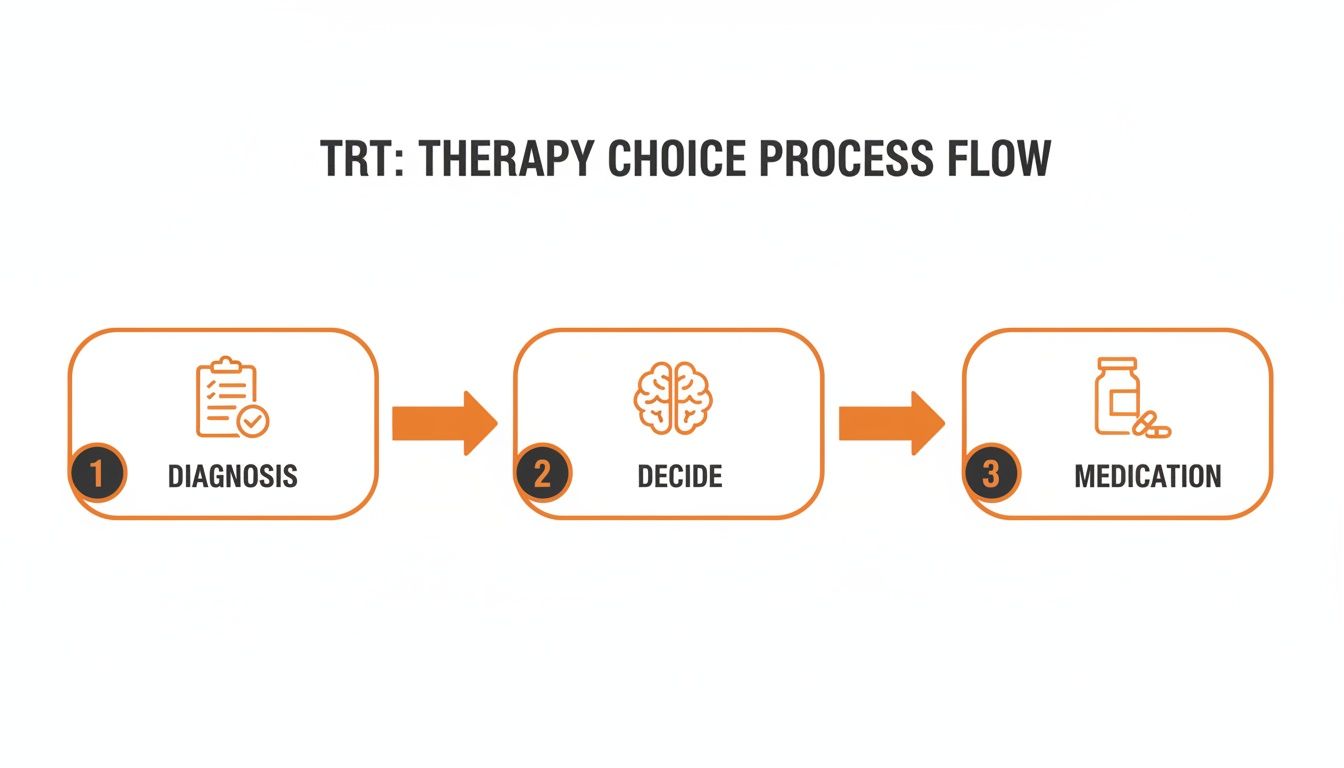
As you can see, after a medical diagnosis, the decision on what kind of medication to use is a key step tailored to your personal needs and lifestyle.
Mastering Testosterone Injections at Home
For a lot of guys, injections are the go-to method. They're highly effective and deliver very predictable results. Whether you’re prescribed an intramuscular (deep into the muscle) or subcutaneous (into the fatty tissue) injection, the basic steps are pretty much the same.
First things first: set up a clean workspace and wash your hands well. Get all your supplies ready—the testosterone vial, a sterile syringe and needle, and a couple of alcohol swabs. Wipe the top of the vial with a swab and let it air dry. Don't blow on it or wipe it.
Next, you'll draw your prescribed dose. Pull the plunger back to your dose mark, stick the needle in the vial, and push the air in. This equalizes the pressure and makes drawing the oil-based testosterone much easier. Then, flip the vial upside down and pull the plunger back to draw your dose into the syringe. Give it a gentle tap to knock any big air bubbles to the top.
Now, you just have to pick your spot.
- For Intramuscular (IM) Injections: The most common and easiest spots are the ventrogluteal (upper outer part of your buttock) or the vastus lateralis (the meaty part of your outer thigh). These are big muscles that can easily handle the medication.
- For Subcutaneous (SubQ) Injections: The fatty tissue on your abdomen (staying a couple of inches away from your belly button) or your love handles are perfect. SubQ injections use a much smaller needle and are often way less intimidating for beginners.
Once you’ve chosen your site, clean it with another alcohol swab. Relax the muscle as much as you can, then insert the needle with a quick, smooth motion—like throwing a dart. Slowly push the plunger to inject the testosterone, wait a beat, and pull the needle straight out. A little pressure with a cotton ball, and you're all done.
Pro Tip: Always rotate your injection sites. Poking the same spot over and over can lead to scar tissue or lipohypertrophy (a hard little lump under the skin), which messes with how your body absorbs the testosterone. Just alternating between your left and right side is an easy way to avoid this.
It’s totally normal to feel a bit sore afterward, especially with your first few IM shots. This usually fades as your body gets used to the routine. For a complete video walkthrough, our guide on self-administering testosterone injections breaks it down even further.
Applying Topical Gels Safely and Effectively
Topical gels are a great needle-free option for TRT, but how you apply them is critical for them to work properly and, just as importantly, safely. The goal is to get maximum absorption for yourself while making sure none of it transfers to anyone else.
The best time to apply the gel is right after a shower once your skin is clean, dry, and warm. This helps open up your pores and can seriously improve absorption.
Squeeze the prescribed amount of gel onto your hand and spread it over the recommended areas—usually your shoulders, upper arms, or abdomen. Don't rub it in like you're putting on sunscreen; just spread it over a large area in a thin, even layer. Let it air dry for a few minutes before you get dressed.
Now for the most critical part of using gels: preventing transference.
- Wash Your Hands Immediately: As soon as you're done applying, wash your hands thoroughly with soap and water to get rid of any gel residue.
- Cover the Application Site: Always wear a shirt that covers the area where you applied the gel. This creates a simple physical barrier.
- Avoid Skin-to-Skin Contact: Be very mindful of close contact with your partner, kids, and pets, especially in the first few hours after you apply it when your skin is absorbing the most.
Accidental exposure can cause some serious health issues in women and children, like unwanted hair growth, acne, or changes in their menstrual cycle. These precautions aren't just suggestions; they are an absolute must for using this medication safely. Following these steps ensures you get all the benefits of your therapy without putting anyone you care about at risk.
Why Ongoing Monitoring Is Not Optional

Starting testosterone replacement therapy at home isn't a "one-and-done" deal where you get a prescription and vanish. Real success and safety come from seeing TRT as an ongoing partnership with your medical provider. This relationship is built on regular check-ins and consistent lab work—and these are absolutely non-negotiable.
Think of it like tuning a high-performance engine. You don't just set it and forget it. You make small, precise adjustments over time based on real data to keep it running at peak performance. Your body is no different, and routine lab work provides the essential data your doctor needs to fine-tune your protocol.
This ensures you get all the benefits of optimized hormones without stepping into risky territory.
Your Typical Monitoring Schedule
Your follow-up care is carefully structured to track your progress and catch any potential issues before they become problems. While your provider will create a schedule just for you, the timeline usually involves a few key checkpoints after you start.
Here’s what you can generally expect:
- The 3-Month Check-In: This first follow-up is crucial. It’s our initial opportunity to see how your body is responding to the medication and make the first round of adjustments. We'll compare your new lab results to your baseline and, just as importantly, discuss how you're feeling.
- The 6-Month Review: By this point, your hormone levels should be stabilizing within the optimal range. This check-in confirms your current dose is working as intended and allows for any small tweaks needed based on your labs and feedback.
- Annual and Ongoing Labs: After the initial optimization phase, you'll settle into a routine of annual or semi-annual lab work. These check-ins make sure your health markers remain in a safe range for the long haul.
This schedule isn't arbitrary. It’s designed to be a safety net, ensuring your at-home TRT journey is managed with the same level of care you'd get in a clinic.
Key Health Markers We Track
When your provider orders follow-up labs, they're looking at much more than just your testosterone levels. We monitor a handful of specific biomarkers that can be affected by TRT, and understanding them helps you see why this is so vital.
One of the most important is your hematocrit, which measures the concentration of red blood cells. TRT can stimulate red blood cell production, and while that’s often a good thing, too much can thicken your blood. Clinical guidelines often flag a hematocrit level over 54% as a concern, which is why we check it at 3 months and then every 6–12 months. This helps us stay ahead of issues like erythrocytosis (having too many red blood cells).
Other critical markers include:
- Prostate-Specific Antigen (PSA): This is a key indicator of prostate health. Your provider will monitor your PSA levels to ensure they stay within a normal range.
- Estradiol (E2): As testosterone levels rise, some of it naturally converts to estrogen. Keeping your estradiol balanced with your testosterone is essential for mood, libido, and avoiding side effects like water retention.
Your lab results are the objective truth of your treatment. How you feel is critically important, but the numbers tell your provider what's happening on a physiological level. This allows for data-driven decisions that prioritize your long-term health.
Dose adjustments are a completely normal and expected part of the process. Your body's needs can change over time, and your lab work is the roadmap that guides those changes. For a deeper dive into what your results mean, check out our guide on how to read lab results. This ongoing collaboration ensures your therapy is perfectly dialed in, keeping you feeling your best while minimizing any potential risks.
Common Questions About At-Home TRT
Stepping into the world of testosterone replacement therapy at home is a big decision, and it’s totally normal to have questions. This is about your health, after all, and you deserve clear, direct answers to feel confident moving forward.
We’ve put together some of the most common questions our providers hear every day. The goal isn't to cover every "what if," but to tackle the core concerns most guys have before they get started.
How Do I Know If I Am A Good Candidate
Figuring out if you’re a good candidate for TRT is more than just feeling "off" or tired. A qualified medical provider looks at two key pieces of the puzzle: your clinical symptoms and what your blood work reveals.
You might be a candidate if you’re dealing with persistent issues like chronic fatigue, a nosediving libido, persistent brain fog, or finding it harder to build or even maintain muscle. But—and this is critical—those symptoms have to be backed up by lab results showing clinically low testosterone. It's the combination of how you feel and what the numbers show that creates the full picture needed for a diagnosis.
Is At-Home TRT As Safe As In-Clinic Treatment
Absolutely. When managed by a licensed medical provider and a reputable telehealth clinic, at-home TRT is just as safe as going to a physical clinic every week. The safety of your treatment isn't about where you administer it; it's about the quality of the medical oversight you receive.
Our protocol for testosterone replacement therapy at home is built on a foundation of safety and precision. It includes:
- A comprehensive initial health screening and diagnosis.
- Prescriptions for high-quality, lab-tested medications.
- Thorough, easy-to-follow guidance on safe self-administration.
- A strict schedule of follow-up lab work to keep a close eye on all your health markers.
This structured approach ensures your treatment is always dialed in, and any potential risks are managed proactively—exactly as they would be in a brick-and-mortar office.
What Are The Most Common Side Effects
While TRT is a safe and effective treatment for most men with a clinical need, it's smart to be aware of potential side effects. The good news is that most are mild and easily managed by working with your provider to fine-tune your dosage.
Some of the more common things guys might notice include:
- Acne or Oily Skin: An uptick in testosterone can sometimes kick your oil glands into a higher gear, a bit like a throwback to puberty.
- Minor Fluid Retention: Some men notice a little puffiness in their ankles or feet, which usually sorts itself out as the body adjusts.
- Injection Site Soreness: It's normal to feel some mild tenderness or see a bit of redness at the injection site. This typically fades within a day or so.
More significant side effects, like an increase in your red blood cell count (hematocrit), are precisely why ongoing lab monitoring is a non-negotiable part of our treatment plan.
Your provider is your partner in managing these effects. Open communication about any changes you notice is key to keeping your protocol fine-tuned and ensuring you feel your best without unwanted issues.
How Quickly Will I See Results
Patience is part of the process, but you'll probably start noticing positive changes sooner than you think. The timeline is a bit different for everyone, but many men report feeling better in specific areas within the first few weeks and months.
Here’s a general idea of what you might expect:
- Weeks 1-4: Improvements in libido, energy levels, and overall mood are often the first benefits to show up.
- Months 1-3: You may start to notice better mental clarity, sharper focus, and more drive for daily tasks and workouts.
- Months 3-6: This is when physical changes, like an increase in muscle mass and a drop in body fat, become more apparent, especially when you pair your therapy with a solid diet and exercise routine.
Just remember, TRT is a marathon, not a sprint. The real goal is to get your hormone levels optimized and stable for long-term health and well-being.
At Elite Bioscience, we're committed to providing a safe, effective, and convenient path to hormone optimization. If you're ready to take the next step and see if our at-home TRT program is right for you, start by completing our confidential online health assessment today. Explore your options at https://elitebioscience.co.