



Tissue repair peptides are a fascinating class of biological messengers that essentially supercharge your body's built-in healing mechanisms. Made of short chains of amino acids, these molecules deliver precise signals that tell cells to rebuild damaged muscle, mend worn-out tendons and ligaments, and calm inflammation.
Think of them as expert project managers for cellular repair, stepping in to organize and speed up the recovery process from the inside out.
Your Body's Blueprint for Healing
Imagine your body's natural recovery process as a huge, complicated construction project. After an injury, your cells need clear instructions to start rebuilding whatever was damaged. This is exactly where tissue repair peptides come in.
They aren't foreign substances; they're synthetic versions of the same signaling molecules your body already uses to manage healing and everyday maintenance. By introducing specific peptides, you’re essentially turning up the volume on the "repair" signals, helping the cellular construction crew work faster and more efficiently.
This targeted approach has made peptide therapy a major focus in both elite athletic recovery and general wellness. The global interest is easy to see in the market's explosive growth. The peptide therapeutics market, which includes these powerful repair agents, was valued at around USD 50.4 billion in 2025 and is projected to hit nearly USD 78.9 billion by 2032. You can discover more insights about the peptide therapeutics market and its expansion, which is driven by the high demand for these kinds of advanced therapies. This growth shows just how much confidence is building around their potential.
To give you a head start, this table breaks down the core ideas we'll be covering. It’s a quick reference guide to the key concepts and specific peptides that form the foundation of this therapy.
Key Concepts in Peptide Therapy at a Glance
| Concept | Brief Description | Relevance to Tissue Repair |
|---|---|---|
| Peptides | Short chains of amino acids that act as signaling molecules, or "cellular text messages." | They give specific instructions to cells to initiate healing, reduce inflammation, and rebuild tissue. |
| BPC-157 | A powerful healing peptide known for its systemic (body-wide) repair capabilities. | Accelerates the healing of muscle, tendon, ligament, and gut injuries by promoting new blood vessel growth. |
| TB-500 | A synthetic version of a naturally occurring peptide that promotes cell migration and regeneration. | Excellent for soft tissue injuries, reducing inflammation, and improving flexibility and recovery time. |
| Collagen Peptides | Peptides that stimulate the body’s own production of collagen, a key structural protein. | Supports the repair of skin, joints, and connective tissues, improving their strength and elasticity. |
| Angiogenesis | The physiological process of forming new blood vessels from pre-existing ones. | Crucial for delivering oxygen and nutrients to injured sites, which is essential for effective healing. |
This table is just a snapshot, of course. As we go deeper, you'll see how these elements work together to create a powerful and targeted approach to recovery. Now, let's explore how these signals actually work on a cellular level.
Peptides as Biological Signals
At its core, a peptide’s job is determined by its unique sequence of amino acids—the building blocks of all proteins. This sequence is like a specific key designed to fit only one lock on a cell's surface, which is known as a receptor.
When a peptide clicks into its receptor, it kicks off a cascade of actions inside the cell. For tissue repair peptides, these actions are all about healing and include:
- Promoting Angiogenesis: This is a big one. It means stimulating the formation of new blood vessels, which act like supply lines to deliver fresh oxygen and nutrients directly to the injured site.
- Reducing Inflammation: They help manage the body's inflammatory response, preventing the kind of chronic pain and swelling that can stall recovery.
- Recruiting Stem Cells: They act like a beacon, attracting the body's own repair cells to the area to speed up the regeneration of muscle, bone, and connective tissues.
By acting as highly specific signaling agents, tissue repair peptides help orchestrate a more coordinated and effective healing response. They don't just mask symptoms; they address the root cause of slow recovery at a cellular level, guiding the body to repair itself more effectively.
Getting this foundational concept is crucial. Unlike broad-spectrum treatments that can have unintended effects, peptides offer a precise way to support recovery. They target the exact biological pathways needed to mend specific tissues, making for a much smarter approach to healing. This guide will walk you through the most common types, how they work, and most importantly, how to approach this therapy safely and effectively.
How Peptides Command Your Body to Heal
Think of your body’s recovery process like a complex construction project. After you get injured, crews of cells are ready and waiting, but they need clear directions to get started. Your body's own peptides act as the site foremen, shouting instructions to begin repairs. When you introduce specialized tissue repair peptides, it’s like bringing in a team of elite project managers who optimize every single step of the job—ensuring it gets done faster and with better materials.
These peptides don't invent new biological processes out of thin air. Instead, they amplify and direct the healing systems you already have. They are simply signaling molecules, like precise biological text messages that bind to specific receptors on your cells. Once that message is received, it triggers a cascade of targeted commands, telling cells exactly how to put the pedal to the metal on healing.
Orchestrating the Cellular Repair Crew
The main job of these peptide project managers is to take control of the injury site's environment, making it perfect for reconstruction. They pull this off through several key mechanisms that work in concert to create a powerful healing response. It’s not just one action, but a coordinated effort to manage the entire repair process from start to finish.
One of their most critical tasks is promoting angiogenesis, which is just a technical term for the formation of new blood vessels. Picture this as building new roads to the construction site. These new blood vessels act as supply lines, delivering essential oxygen, nutrients, and cellular building blocks right to the damaged tissue, which is fundamental for any repair work to succeed.
On top of that, tissue repair peptides are experts at managing inflammation. While a bit of initial inflammation is a necessary signal that an injury has happened, chronic inflammation is like a persistent roadblock, grinding all construction to a halt. These peptides help dial down excessive inflammation, clearing the way for repair cells to get to work without interference.
This diagram helps visualize the core roles of peptides as messengers built from amino acids that drive the healing process.
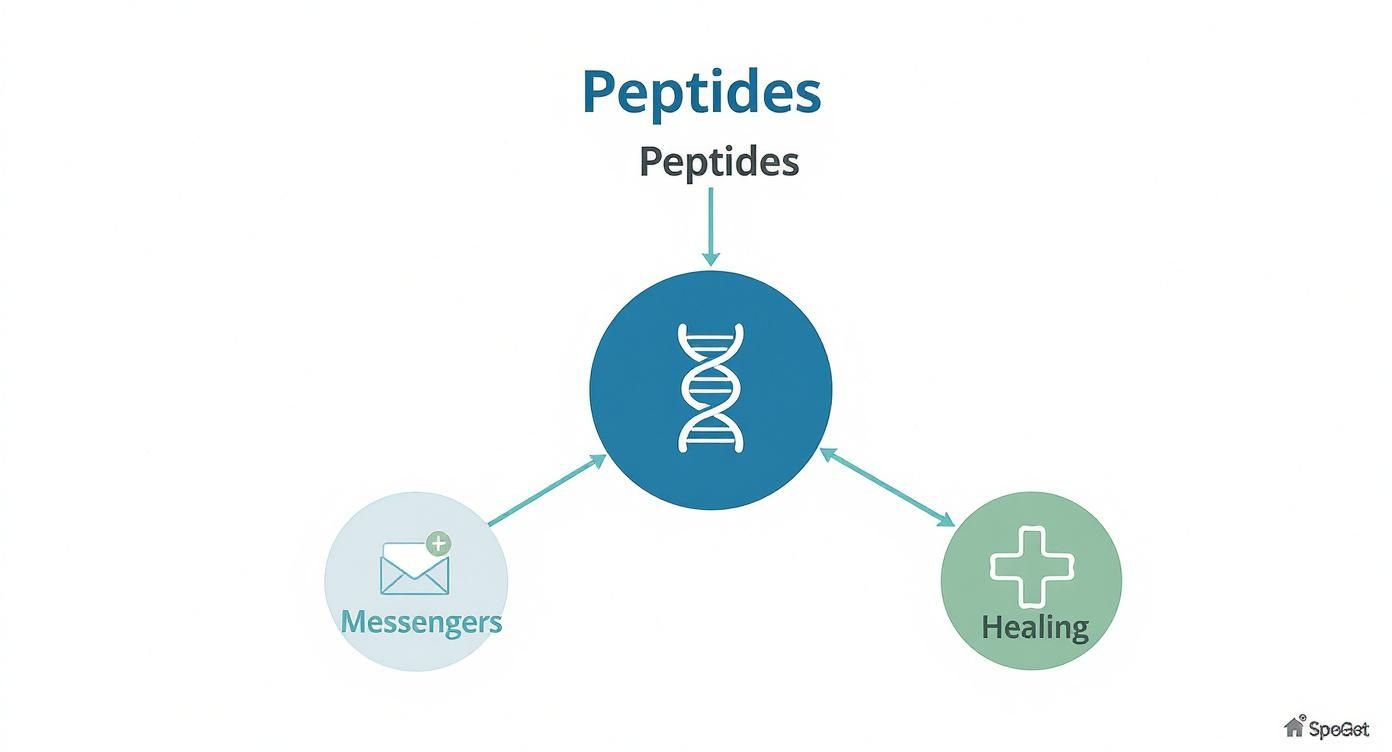
As you can see, their fundamental properties—acting as signals and being made of amino acids—are what directly contribute to their powerful healing capabilities.
Calling in Reinforcements and Protecting the Site
Beyond just managing the environment, tissue repair peptides are brilliant at recruiting the right workers for the job. They send out signals that attract essential repair cells, like fibroblasts, to the injury site. Fibroblasts are the master builders responsible for producing collagen, the structural protein that forms the scaffolding for all new tissue.
- Cellular Recruitment: They act like a flare gun, signaling fibroblasts and other crucial stem cells to migrate to the damaged area.
- Collagen Synthesis: Once on-site, they encourage these cells to produce high-quality collagen, effectively weaving new, strong tissue.
- Cell Protection: They also have cytoprotective effects, which means they help shield existing healthy cells from further damage or stress.
By orchestrating angiogenesis, managing inflammation, and recruiting specialized repair cells, tissue repair peptides create a highly efficient, pro-healing environment. This multi-faceted approach ensures that recovery is not just faster but also more robust, leading to stronger and more resilient repaired tissue.
This coordinated biological strategy is what makes peptide therapy so effective. It doesn't just patch up a problem; it guides your body’s own powerful systems to rebuild tissue from the ground up. Understanding these mechanisms shows why they are such a significant step forward in recovery and regeneration. Now, let’s meet the specific peptides that perform these incredible tasks.
Meet the Most Effective Repair Peptides

Now that we know peptides act like project managers for our cells, let’s get to know the star players in the world of tissue repair. Hundreds of peptides exist, but a select few have earned a serious reputation for their effectiveness and versatility.
Each one has its own specialty, whether it's mending a torn ligament, soothing an angry gut, or rejuvenating tired skin.
This isn’t just some fringe science; it's a rapidly growing field. The global market for bioactive peptides hit USD 2.5 billion in 2023 and is projected to climb to USD 4.6 billion by 2035. That kind of growth, driven by use in the USA, Germany, and India, shows just how much these compounds are being adopted for everything from athletic recovery to advanced wound care. You can explore the full market analysis on bioactive peptides to see the trends behind the numbers.
Let's break down three of the heavy hitters: BPC-157, TB-500, and GHK-Cu.
BPC-157: The Systemic Healer
BPC-157, or Body Protection Compound 157, has earned the nickname "Wolverine" for its incredible, wide-ranging healing powers. It was first discovered in human gastric juice and has shown a remarkable ability to repair a huge variety of tissues—muscle, tendons, ligaments, and even the gut lining and nervous system.
Its main superpower is promoting angiogenesis, which is just a fancy word for building new blood vessels. By speeding up the creation of these vital supply lines, BPC-157 makes sure damaged areas get a constant flow of oxygen and nutrients. That's a must-have for any real repair job. It also calls in fibroblasts, the tiny construction workers that produce collagen to rebuild the structure of injured tissue.
BPC-157 is best known for its systemic effects, meaning it works throughout the entire body, not just at one specific spot. This makes it a game-changer for complex injuries, nagging conditions like tendonitis, or even improving gut health by patching up the intestinal lining.
Because it's such a versatile tool, BPC-157 is a go-to for athletes with stubborn injuries, people recovering from surgery, and anyone looking to speed up the healing of connective tissues.
TB-500: The Regeneration Specialist
TB-500 is the synthetic counterpart to Thymosin Beta-4, a protein that’s naturally found in just about every cell in our bodies. Its core job is to manage cell migration and regeneration, making it a master of healing, particularly in soft tissues.
Think of TB-500 as the ultimate first responder. When an injury strikes, TB-500 signals repair cells to race to the scene and get to work. It also dials down inflammation, which helps cut down on pain and swelling and creates a better environment for healing to take place.
Key benefits of TB-500 include:
- Accelerated Muscle Repair: It helps mend torn muscle fibers more quickly.
- Improved Flexibility: By reducing inflammation and scar tissue, it can increase range of motion.
- Enhanced Endurance: Its ability to support cellular health can contribute to better athletic performance.
TB-500 is especially good for acute injuries like muscle strains, sprains, and tears. While BPC-157 is the champ for repairing the "scaffolding" like tendons and ligaments, TB-500 excels at healing the surrounding soft tissues. This is exactly why they're often used together, tackling an injury from multiple angles for a more complete recovery. For a deeper dive into how these two powerhouses work together, check out our guide on combining BPC-157 and TB-500 for recovery.
GHK-Cu: The Collagen Champion
GHK-Cu, a copper peptide, is the undisputed champion of skin and connective tissue rejuvenation. Made of three amino acids (glycyl-L-histidyl-L-lysine) bonded to a copper ion, this peptide has a huge impact on producing collagen and elastin—the two proteins that give skin its firmness and bounce.
Its approach is two-pronged. GHK-Cu not only ramps up the production of new, healthy collagen but also helps clear out old, damaged collagen from tissues. This "remodeling" process effectively rebuilds the structural foundation of skin and other connective tissues. On top of that, it’s a potent antioxidant and anti-inflammatory, protecting cells from damage and promoting a healthier overall environment.
While it's most famous for its use in anti-aging treatments to reduce wrinkles and improve skin tone, GHK-Cu's benefits also extend to wound healing, stimulating hair growth, and supporting joint health by strengthening cartilage.
To help make these distinctions crystal clear, let's look at how these top-tier peptides stack up against one another.
Comparison of Popular Tissue Repair Peptides
Each of these peptides has a unique role, and choosing the right one depends entirely on your specific recovery goal. The table below gives a quick, side-by-side look at what makes each one stand out.
| Peptide | Primary Mechanism | Best For | Administration Method |
|---|---|---|---|
| BPC-157 | Promotes angiogenesis and recruits fibroblasts to repair structural tissues. | Tendon, ligament, gut, and systemic injuries. | Injectable, Oral |
| TB-500 | Encourages cell migration and differentiation to regenerate soft tissue. | Muscle strains, sprains, and acute soft tissue injuries. | Injectable |
| GHK-Cu | Stimulates collagen and elastin synthesis, remodels connective tissue. | Skin rejuvenation, wound healing, and hair growth. | Injectable, Topical |
As you can see, whether you're dealing with a deep structural injury, an acute muscle tear, or are focused on skin health, there’s likely a peptide that’s a perfect fit for the job. Understanding their specific strengths is the first step toward a smarter, more targeted recovery plan.
What the Research Says About Peptide Therapy
While the personal success stories you hear about tissue repair peptides are compelling, it's the hard science that really provides a solid foundation for their use. The evidence backing peptides like BPC-157 and TB-500 is substantial, but it’s important to understand where that evidence comes from and what it actually means.
A huge chunk of the most persuasive research has been done in preclinical settings—mostly animal studies. These studies give scientists a clear window into how peptides directly affect tissue healing in tightly controlled environments, revealing the biological mechanisms at play.
Findings from Preclinical and Animal Studies
The results coming out of animal research have been overwhelmingly positive. Time and time again, studies involving rodents show accelerated healing across all sorts of injuries after being treated with tissue repair peptides. We’re not talking about minor improvements; the findings often point to a faster, stronger, and more complete recovery compared to the control groups.
For example, multiple studies on BPC-157 have shown it can dramatically speed up the healing of a severed Achilles tendon in rats. The peptide was found to promote the organized, structured formation of new tendon fibers, which led to far greater functional recovery. In a similar vein, research on TB-500 has demonstrated its ability to improve cardiac repair after a heart attack in mice and accelerate wound healing in skin and eyes.
These animal models are so crucial because their physiological processes are very similar to our own, giving us strong clues about how these peptides are likely to work in the human body. They provide the foundational proof of concept that justifies all further investigation.
What About Human Clinical Trials?
This is where it’s important to have a balanced perspective. While the animal data is robust, large-scale, double-blind, placebo-controlled human trials for many of these specific tissue repair peptides are still limited. Getting research on human subjects off the ground is an incredibly complex, time-consuming, and expensive process.
However, the lack of widespread clinical trials doesn't erase the value of the existing science. The extensive preclinical data provides a strong, logical reason for their therapeutic potential. It’s a classic case of clinical practice and real-world results outpacing the slow-moving formal research pipeline. Many functional medicine doctors and specialized clinics use peptides based on this solid preclinical foundation and the positive outcomes they see in their patients.
The key takeaway is this: the scientific basis for tissue repair peptides is strong, built primarily on extensive and consistent results from animal studies. While human research is still an evolving area, the evidence we have points toward a significant potential for boosting the body's natural healing capabilities.
Key Research Highlights Summarized
To put all this into perspective, here are the core findings from the body of research on the most popular tissue repair peptides:
-
BPC-157: Consistently demonstrates powerful healing effects on tendons, ligaments, muscle, and even the gastrointestinal tract in animal models. Its main mechanism seems to be promoting angiogenesis—the creation of new blood vessels that deliver vital nutrients to injured areas.
-
TB-500: Research highlights its critical role in cell migration, differentiation, and inflammation control. Studies show it effectively encourages stem cells to travel to injury sites to begin the repair process, making it particularly effective for muscle and soft tissue damage.
-
GHK-Cu: The scientific literature strongly supports its ability to remodel tissue by stimulating new collagen production while also clearing out old, damaged collagen. This dual-action effect is why it's a major focus in both wound healing and cosmetic skin repair research.
Ultimately, the existing research paints a clear picture of powerful molecules that work in harmony with the body's own systems. While the formal science continues to catch up with real-world application, the evidence we have provides a confident starting point for understanding their incredible value.
Understanding the Safety of Peptides
Whenever you're looking into a new therapy, the first question on your mind should be, "Is it safe?" With tissue repair peptides, the answer is overwhelmingly positive, but it comes with a big condition: they have to come from a reputable pharmacy and be used under the guidance of a medical professional.
When those boxes are checked, peptides are generally very well-tolerated. That's because they're designed to work with your body, mimicking or supporting the biological signals it already uses. Unlike a lot of conventional drugs that can cause a cascade of unintended issues, peptides offer a highly targeted action that keeps the risk of widespread side effects to a minimum. Most people who use them feel little to nothing other than the intended benefits.
Of course, no treatment is completely free of potential side effects, even if they're minor. Knowing what to expect is just part of being responsible and informed.
Common but Mild Side Effects
The side effects reported most often with tissue repair peptides are almost always localized and temporary. Since many peptides are administered with a subcutaneous injection, these reactions are usually tied to the injection itself, not the peptide.
Here's what some people experience:
- Localized Irritation: A little bit of redness, some slight swelling, or an itchy spot right at the injection site is the most common complaint.
- Mild Soreness: You might feel a bit of soreness where you gave the injection, kind of like a tiny bruise.
- Temporary Water Retention: Some peptides might cause a short-term feeling of bloating or water retention as your body gets adjusted.
These effects are almost always minor and clear up on their own in a few hours or by the next day. Using proper injection technique and rotating your injection sites can make a huge difference in preventing them. For a detailed walkthrough, you can review our comprehensive peptide handling guidelines to make sure you’re doing everything correctly and safely.
Key Contraindications and When to Avoid Peptides
While peptides are safe for most, they aren't for everyone. Certain pre-existing health conditions can make using them risky, which is exactly why a thorough medical consultation and screening are non-negotiable. Trying to self-prescribe without a doctor's green light is dangerous because it skips these critical safety checks.
The biggest red flag for many growth-promoting peptides is a personal or family history of cancer. Because these peptides work by stimulating cellular growth to speed up healing, there's a theoretical risk they could also encourage the growth of existing cancerous or pre-cancerous cells.
People with the following conditions should be extremely cautious or avoid peptide therapy altogether:
- Active cancer or a history of cancer
- Pre-cancerous conditions or any undiagnosed growths
- Certain autoimmune disorders
- Severe kidney or liver disease
This really drives home the absolute need for professional oversight. A qualified doctor can look at your full health history, order the right lab work, and figure out if peptide therapy is a safe and smart option for you. Sourcing tissue repair peptides through a legitimate telehealth clinic like Elite Bioscience ensures you get pharmaceutical-grade products and the medical supervision you need for a safe and successful outcome.
How to Get Started with Peptide Therapy Safely

Exploring peptide therapy is a huge step toward taking control of your recovery, but how you start is everything. The internet is flooded with unregulated sites selling so-called "research chemicals," which are a complete shot in the dark. To do this right—and safely—you need a structured, medically supervised approach that puts your health first.
The only correct first step is to talk to a qualified healthcare provider. Modern telehealth platforms have made this incredibly easy, letting you connect with a licensed doctor right from your home. This professional guidance isn't just a box to check; it’s the bedrock of a safe and effective treatment with tissue repair peptides.
The Legitimate Pathway to Peptide Therapy
A real medical provider will never just sell you peptides. They’ll guide you through a thorough process to make sure the therapy is actually right for your specific situation and goals. This pathway is designed to protect you.
It all starts with an initial consultation where you'll discuss your health history, any current injuries, and what you're hoping to achieve. This is your chance to ask every question you have and for the doctor to get a clear picture of your unique needs. After that conversation, the provider will order lab work.
This step is non-negotiable. Blood tests give a detailed snapshot of your current health, flagging any underlying issues and setting a baseline to track your progress. It's a data-driven approach that takes all the guesswork out of the equation.
Only after a careful review of your consultation and lab results will a licensed doctor issue a valid prescription. This prescription is your guarantee that a medical expert has determined peptide therapy is a safe and appropriate option for you.
Pharmaceutical Grade vs. Research Chemicals
Once you have a prescription, the next critical piece is where your peptides come from. This is where the difference between pharmaceutical-grade products and unregulated "research chemicals" becomes a serious matter of safety.
- Pharmaceutical-Grade Peptides: These are sourced from compounding pharmacies that follow strict manufacturing and testing standards. They are guaranteed for purity, potency, and sterility, so you know you're getting a safe and effective product.
- "Research Chemicals": Sold online without a prescription, these products come with no guarantees at all. They often contain impurities, incorrect dosages, or are completely fake, posing serious health risks.
Choosing a provider like Elite Bioscience means you get third-party lab-tested products from licensed pharmacies, delivered discreetly to your door. This completely removes the risk and uncertainty of navigating the gray market. This focus on delivery is driving market growth in related areas; for instance, the cell-penetrating peptide market, crucial for getting therapeutics into cells, is projected to soar to USD 9.02 billion by 2034. You can learn more about the growth of cell-penetrating peptides on Biospace to understand the science behind efficient peptide delivery.
Finally, your provider should also give you clear guidance on how to administer your therapy. A proper protocol includes precise dosing, injection techniques, and a schedule tailored just for you. For detailed instructions, you can check out our comprehensive peptide dosage guide. This ongoing medical oversight ensures you not only start safely but continue to hit your recovery goals effectively and responsibly.
Your Questions Answered
Diving into peptide therapy naturally brings up a few questions. It’s a newer field for many, so getting clear, straightforward answers is the best way to move forward with confidence. Let's tackle some of the most common ones.
Are Tissue Repair Peptides Legal?
Yes, absolutely—tissue repair peptides are legal when you go through the proper medical channels. The key is that they must be prescribed by a licensed healthcare provider after a real consultation, which usually includes necessary lab work.
This process is in place for your safety. It makes sure the therapy is actually right for your specific health needs and goals. Buying peptides from unregulated websites hawking them as "research chemicals" isn't just risky; it completely bypasses the legal and safety protocols designed to protect you. A valid prescription is non-negotiable.
How Should I Store My Peptides?
Proper storage is critical. Get this wrong, and you could render your peptides useless. Before they're mixed (reconstituted), the freeze-dried (lyophilized) powder should be kept in your refrigerator.
Once you’ve mixed them with bacteriostatic water, they become much more fragile. At this point, they must be kept refrigerated at all times. Think of them like a delicate medication—keep them away from extreme heat, freezing temperatures, or direct sunlight, which can break down the amino acid chains and ruin their effectiveness. Just follow the storage instructions from your pharmacy to the letter.
Managing expectations is crucial. Peptide therapy isn't an overnight fix. It’s a gradual process that supports and accelerates your body's own healing systems. Consistency with your prescribed protocol is what truly drives the best results.
When Will I Actually See Results?
This is probably the most common question, and the honest answer is: it varies a lot. The timeline depends on everything from the type and severity of your injury to your personal biology, age, and the specific peptide protocol you're on.
Some people report feeling a difference in pain and mobility within just a few weeks. For others, more significant tissue regeneration and healing might take several months. Patience and consistency with your treatment plan are everything.
Ready to see if peptide therapy is right for you with guidance from medical experts? At Elite Bioscience, we provide a safe, legal, and effective path to recovery. All our products are third-party tested, and every treatment plan is developed with professional oversight. Start your journey with us today.