


For men dealing with clinically low testosterone, TRT can be a total game-changer for weight loss, but it's not a magic pill. Think of it this way: Testosterone Replacement Therapy helps restore the hormonal balance that makes your diet and exercise efforts actually work. This treatment creates the right internal environment for your body to finally let go of stubborn fat and build lean muscle.
The Link Between Testosterone and Stubborn Fat

If you've noticed that losing weight feels like an impossible, uphill battle no matter what you do, declining testosterone could be the invisible anchor holding you back. Low testosterone is like driving a car with the emergency brake pulled. Your metabolism is sluggish, your energy is tanked, and your body stubbornly clings to fat, especially around your midsection. It doesn't matter how hard you hit the gas with diet and exercise; progress is frustratingly slow.
TRT works by releasing that brake. By restoring your testosterone to optimal levels, it allows your body’s metabolic engine to finally run the way it's supposed to. This hormonal "tune-up" doesn't just melt fat away on its own. Instead, it makes your body incredibly responsive to healthy habits, turning your hard work into visible results.
Reversing the Vicious Cycle
Low testosterone often kicks off a vicious cycle that actively promotes weight gain. As testosterone levels fall, muscle mass tends to shrink, which in turn lowers your resting metabolic rate—meaning you burn fewer calories just by existing. At the same time, body fat, particularly the dangerous visceral fat in your abdomen, begins to accumulate.
This extra fat isn't just sitting there; it actively produces an enzyme called aromatase, which converts what little testosterone you have into estrogen. This process hammers your available testosterone even lower, speeding up muscle loss and fat gain. It’s a self-feeding loop that can make weight management feel hopeless.
TRT helps break this cycle by increasing lean muscle mass, which boosts your metabolism, and by directly influencing how your body stores and burns fat. This shifts the hormonal balance back in your favor, making TRT weight loss an achievable goal.
To give you a clearer picture, here’s a quick summary of how TRT directly influences your body's fat-to-muscle ratio.
How TRT Impacts Body Composition at a Glance
| Mechanism | Impact on Your Body | Result for Weight Management |
|---|---|---|
| Increased Muscle Mass | Promotes protein synthesis, helping you build and maintain lean muscle. | A higher resting metabolic rate, meaning you burn more calories around the clock. |
| Reduced Fat Storage | Discourages the body from creating new fat cells, especially in the abdominal area. | Less accumulation of stubborn visceral fat, leading to a leaner midsection. |
| Boosted Metabolism | Directly influences metabolic processes and improves insulin sensitivity. | Your body becomes more efficient at using food for energy instead of storing it as fat. |
| Decreased Aromatase | With less abdominal fat, there's less aromatase enzyme to convert T to estrogen. | Helps break the vicious cycle, preserving more of your active testosterone. |
| Improved Energy/Motivation | Restores energy levels and drive, making it easier to stick to a workout routine. | Better, more consistent exercise habits, which are crucial for sustainable fat loss and muscle gain. |
As you can see, TRT works on multiple fronts to create a hormonal environment that supports a leaner, stronger physique.
Clinical Evidence of Transformation
The impact of restoring testosterone levels isn't just theoretical; it's backed by some serious long-term research.
For instance, a decade-long observational study revealed profound differences between men undergoing TRT for obesity linked to low testosterone and a similar group who went untreated. Men on TRT lost an average of 22.9 kg (about 50.5 pounds), which was a 20.3% reduction in their total body weight over 10 years. In stark contrast, the untreated group actually gained an average of 3.2 kg. You can read the full research about these powerful findings to see the data for yourself.
This evidence makes it clear that TRT is more than a temporary fix. It's a foundational medical strategy that, when managed correctly, supports sustained body recomposition. It provides the hormonal support you need for long-term success, turning frustration into real, lasting progress.
How Testosterone Reshapes Your Body Composition
Testosterone does more than just put a spring in your step; it acts like a master architect for your body, fundamentally changing the blueprints for how you store fat and build muscle. It gets right to the source, re-tuning your metabolism and turning your body into a far more efficient machine. This isn't a random process—it’s a series of targeted biological events that shift your physique from soft and sluggish to lean and powerful.
Imagine your body has two teams of construction workers. One team is lazy and just piles up unused materials as fat. The other team, responsible for building muscle, is understaffed and exhausted. When your testosterone is low, the fat-storing team works overtime. TRT is like bringing in a new site foreman who fires up the muscle-building crew and puts the lazy team to work, creating a dramatic shift in how your body looks and feels.
Igniting Your Metabolic Furnace
One of the most powerful ways TRT helps with weight loss is by reigniting your metabolism. It’s a two-pronged attack: it helps your body burn the fat you already have while making it harder to store new fat. This creates an internal environment where your hard work in the kitchen and the gym finally starts to pay off.
A key part of this is a process called lipolysis, which is just a technical term for breaking down stored body fat into fatty acids that can be used for energy. Healthy testosterone levels basically send a direct signal to your fat cells, telling them to release their contents to be burned as fuel. At the same time, testosterone helps block lipogenesis—the creation of new fat, especially that stubborn visceral fat that collects around your gut.
So, you're not just burning existing fat; you're becoming less likely to store new fat in the first place. This powerful one-two punch is a cornerstone of any successful trt weight loss journey.
The Anabolic Advantage for Muscle Growth
Burning fat is only half the battle. The other side of the coin is building lean muscle, and this is where testosterone’s anabolic (muscle-building) side really shines. Testosterone is absolutely essential for muscle protein synthesis, the process your body uses to repair and grow muscle fibers after you work out.
Think of protein as the bricks needed to build a wall, and testosterone as the foreman directing the crew. Without the foreman on site, the bricks just sit in a pile. But with optimal testosterone levels, those bricks get laid efficiently to build a stronger, denser wall—or in this case, more powerful muscles.
By promoting the growth of lean muscle, TRT gives you a huge metabolic advantage. Muscle is metabolically active tissue, meaning it burns more calories than fat, even when you're just sitting on the couch. Every pound of muscle you add is like installing a small, 24/7 calorie-burning engine.
This metabolic upgrade is what makes long-term weight management sustainable. It’s not just about the number on the scale; it's about reshaping your body into a version of yourself that naturally maintains a healthier weight.
The Recomposition Effect in Action
When you combine increased fat burning with enhanced muscle building, you get what’s known as body recomposition. This is where the real magic happens. You might even find the number on the scale doesn’t drop as fast as you’d expect, but your clothes start fitting better, your waistline shrinks, and the person looking back at you in the mirror is completely different.
Here’s a rough timeline of how that transformation often plays out:
- Initial Phase (Months 1-3): The first thing most guys notice is more energy and motivation. Fat loss starts to kick in, and you might see some early changes in muscle definition.
- Progressive Phase (Months 3-6): This is when muscle growth becomes much more obvious. Fat loss, especially around the midsection, becomes more significant as your resting metabolism starts to climb.
- Sustained Phase (6+ Months): Now you’re seeing substantial changes to your overall physique. That new muscle mass is contributing significantly to your daily calorie burn, making it much easier to stay lean for good.
This gradual reshaping is exactly why TRT isn't some quick fix—it’s a foundational therapy. It corrects the underlying hormonal problem that was holding you back, finally allowing your body to respond the way it’s supposed to and achieve lasting trt weight loss results.
What Clinical Studies Reveal About TRT for Fat Loss
When we move from how TRT should work in theory to how it performs in the real world, the clinical studies give us the hard evidence. For years, researchers have tracked men undergoing testosterone therapy, and the data tells a consistent, compelling story. Bringing testosterone back to healthy levels doesn't just make you feel better; it measurably transforms your body over time.
These studies are what separate medical facts from gym-floor rumors. They show that with proper medical supervision, TRT is a legitimate strategy for men with diagnosed hypogonadism to achieve significant—and, more importantly, sustainable—improvements in their weight and overall health.
Long-Term Studies Show Lasting Results
One of the most powerful takeaways from the research is that TRT's weight loss benefits aren't just a short-term trick. The positive changes build up over time and stick around for years, as long as the therapy continues. This is what sets it apart from fad diets or quick fixes that almost never last.
A landmark long-term study out of Germany is a perfect example. Researchers followed men with testosterone deficiency for up to five years and the results were remarkable. On average, participants lost about 4% of their body weight after just one year, a figure that climbed to over 13% after five years. The average man in the study went from 236 pounds down to 200 pounds.
This data really drives home the point that TRT creates a lasting physiological shift. It’s not about fooling your body into temporary weight loss; it’s about fundamentally changing how your body manages energy and stores fat.
More Than Just Dropping Pounds
Any good TRT weight loss program is about improving body composition, not just making the number on the scale go down. It's about shedding body fat while building or maintaining lean muscle. This is exactly what the clinical evidence points to.
The infographic below breaks down the core benefits seen in these studies, showing how TRT creates a powerful synergy for body recomposition.
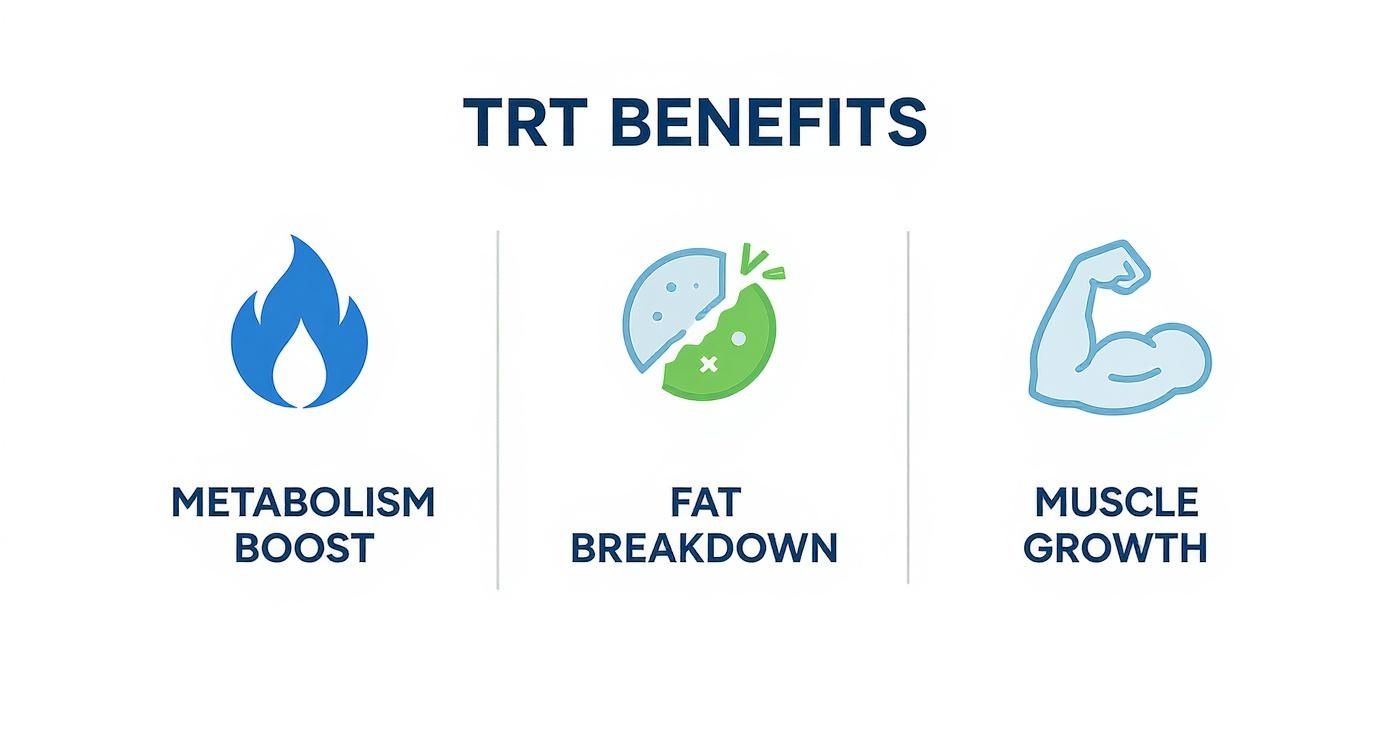
As you can see, the therapy helps fire up your metabolism, encourages the body to break down stored fat, and supports new muscle growth. It’s a complete overhaul of your physical health.
Many studies have also documented a major drop in waist circumference, which is a key sign of reduced visceral fat—that’s the dangerous stuff packed around your internal organs. It's common for men to report losing 3 to 4 inches from their waist over a couple of years of consistent therapy.
This shift is a massive win for your health. Losing visceral fat is strongly linked to a lower risk of metabolic syndrome, type 2 diabetes, and cardiovascular disease. It proves the benefits of TRT go way beyond just looking better.
Key Takeaways from the Research
When you boil down all the clinical data, a few clear patterns emerge that are vital for anyone thinking about TRT for weight management.
- Consistency Is Key: The best results are always seen in men who stick with their treatment protocol long-term. The benefits build on each other month after month, year after year.
- Body Recomposition Is the Real Goal: Success is measured by less body fat and more muscle, not just a smaller number on the scale.
- Metabolic Health Gets a Boost: Beyond weight, TRT consistently improves insulin sensitivity, blood sugar control, and cholesterol profiles in men with low T.
- It’s a Medical Treatment, Not a Shortcut: Every credible study focuses on men with a confirmed medical need for TRT. The therapy works because it corrects an underlying deficiency.
These findings validate TRT as a powerful tool for rebuilding your body. And while it sets the stage for success, it’s also important to understand the full picture. You can learn more by exploring the complete guide to the benefits and risks of TRT in our detailed article. By understanding the science, you can set realistic expectations and see how TRT can become a true foundation for your health journey.
Maximizing Your Results with Diet and Exercise

Starting Testosterone Replacement Therapy is like upgrading the engine in your car. It corrects the hormonal shortfall that made losing weight and building muscle feel like an uphill battle. But even the most powerful engine needs premium fuel and a skilled driver to perform at its peak.
That's where your diet and exercise habits come in. They are the fuel and the driver, turning the potential TRT provides into real, visible results. For anyone serious about trt weight loss and changing their body composition, pairing therapy with a smart lifestyle isn’t just a good idea—it’s essential.
Fueling Muscle Growth with Smart Nutrition
Nutrition on TRT isn't about starving yourself. It's about giving your body the high-quality building blocks it needs to rebuild. With testosterone levels optimized, your body's ability to synthesize protein is firing on all cylinders. Your main job is to supply the raw materials.
A high-protein diet is the foundation. It delivers the amino acids required to repair muscle fibers after a workout and build new, metabolically active tissue. A great target for most men on TRT is about 1 gram of protein per pound of your target body weight.
Think of your body as a construction site that's finally fully staffed and ready to work. Protein is the shipment of bricks and steel arriving every day. If you don't provide enough materials, the crew can't build anything, no matter how motivated they are.
Beyond protein, the focus should be on whole, unprocessed foods that keep your energy stable and your body running clean. Key players include:
- Lean Proteins: Chicken breast, fish, lean beef, eggs, and Greek yogurt.
- Complex Carbohydrates: Oats, brown rice, quinoa, and sweet potatoes to fuel your workouts.
- Healthy Fats: Avocado, nuts, seeds, and olive oil, which are crucial for hormone production.
A small, sustainable calorie deficit is still necessary for fat loss. The game-changer with TRT, however, is that its muscle-sparing effects let you drop fat without sacrificing the muscle you're working so hard to build. For a deeper dive, check out our guide on how to improve body composition with proven strategies.
Building a Stronger Metabolism with Exercise
If diet is the fuel, then exercise is the stimulus that tells your body what to do with it. The ultimate formula for maximizing trt weight loss is a smart combination of strength training and cardio, each playing a vital, complementary role.
Strength training is your top priority. Lifting weights sends a powerful signal to your body: use that protein and testosterone to build muscle. More muscle mass jacks up your basal metabolic rate (BMR), turning you into a more efficient, 24/7 calorie-burning machine.
Focus on the big, compound lifts that give you the most bang for your buck—squats, deadlifts, bench presses, and overhead presses are your best friends here.
Cardio is your fat-loss accelerator. It burns calories directly and boosts your heart health, but you don't need to live on the treadmill. A smart mix of steady-state work (like a brisk walk or jog) and a few high-intensity interval training (HIIT) sessions is more than enough to get the job done.
Sample TRT Body Recomposition Plan
A structured weekly plan is the best way to bring all these pieces together. The sample template below shows how to balance workouts and nutrition to amplify the effects of your TRT protocol.
| Day | Workout Focus | Nutrition Tip |
|---|---|---|
| Day 1 | Upper Body Strength (Push Day) | Have a protein-heavy meal within 90 minutes after your workout. |
| Day 2 | Lower Body Strength (Squat Day) | Fuel up with complex carbs 1-2 hours before you train for sustained energy. |
| Day 3 | Active Recovery or Light Cardio | Focus on hydration and load up on nutrient-dense veggies. |
| Day 4 | Upper Body Strength (Pull Day) | Your post-workout meal should again be rich in protein to kickstart repair. |
| Day 5 | Full Body Workout & HIIT Cardio | On high-intensity days, a slight carb increase can give you an extra edge. |
| Day 6 | Steady-State Cardio (30-45 mins) | Keep protein intake high, even on lighter days, to support recovery. |
| Day 7 | Rest | Let your body recover. Muscle is built during rest, not in the gym. |
This kind of structure creates a powerful synergy. TRT opens the door to hormonal balance, but it's your dedication in the kitchen and the gym that walks you through it, leading to a profound and lasting transformation.
Are You a Candidate for Testosterone Therapy?
While the thought of TRT melting away fat is compelling, it's crucial to get one thing straight: this is a serious medical treatment. It isn't a cosmetic shortcut or a secret weapon for guys who already have normal hormone levels. The whole conversation starts and ends with a single, straightforward question: do you have a clinically diagnosed testosterone deficiency?
Figuring that out is a careful, data-driven process. It starts with spotting the classic symptoms of hypogonadism—the kind of stuff that too often gets brushed off as just part of getting older or living a stressful life.
Plenty of men just accept constant fatigue, a disappearing libido, persistent brain fog, and weight that won't budge as their new normal. But more often than not, these are direct signals that your hormones are out of whack.
The Diagnostic Process Unpacked
Determining if you have low testosterone isn't about feelings or guesswork; it demands hard medical evidence. A qualified physician will never prescribe TRT without first running a comprehensive blood panel to get a crystal-clear picture of your hormonal health.
This diagnostic step is completely non-negotiable. The blood tests look at several key markers to confirm a deficiency and ensure that therapy is both safe and right for your specific situation. These tests almost always include:
- Total Testosterone: This is the big-picture number, measuring all the testosterone circulating in your blood.
- Free Testosterone: This is the number that really matters. It measures the unbound, biologically active testosterone your body can actually put to work. You can dive deeper into this critical marker in our guide to understanding low free testosterone.
- Other Hormones: We also need to check levels of luteinizing hormone (LH), follicle-stimulating hormone (FSH), and estradiol to figure out the root cause of the deficiency.
Only after these tests confirm your levels fall below the established medical threshold can a doctor responsibly consider you a candidate. This is what ensures that any TRT weight loss is the result of correcting a genuine medical need.
Who Should Avoid TRT?
Just as important as finding the right candidates is knowing who isn't a good fit for this therapy. Testosterone replacement isn't for everyone, and certain pre-existing conditions—what we call contraindications—can make the treatment unsafe.
A thorough medical evaluation is designed to screen for these very issues. Generally, men with the following conditions are not candidates for TRT:
- Active prostate or breast cancer
- Certain cardiovascular conditions, like severe, untreated heart failure
- Polycythemia (an abnormally high red blood cell count)
- Untreated severe obstructive sleep apnea
A responsible medical provider will always pair your bloodwork with a full health history and physical exam. This meticulous approach is the only way to guarantee the benefits of therapy will outweigh any potential risks.
For the right population, the evidence is powerful. An investigation published in Nature followed obese men with hypogonadism for up to eight years, finding major drops in both weight and BMI. For example, men with class I obesity lost an average of 16.8% of their body weight, going from 102.6 kg down to 84.1 kg. Discover more insights about these long-term findings to see the full impact.
Ultimately, this careful vetting process makes sure TRT is used correctly—to restore hormonal balance, which in turn unlocks the door to a healthier body composition.
Frequently Asked Questions About TRT Weight Loss

Stepping into the world of Testosterone Replacement Therapy brings up plenty of practical questions. To give you some clarity, we've put together straight, expert-backed answers to the things we hear most often about using TRT for weight management. This should help you get a real-world feel for timelines, long-term effects, and what to expect.
How Soon Can I Expect to See Weight Loss Results with TRT?
While you'll likely notice benefits like better mood and more energy in just a few weeks, the real changes to your body composition take a bit longer. Think of it like laying the foundation for a house before you start framing the walls; your body needs time to recalibrate hormonally before the physical changes really kick in.
Generally, you can expect to see measurable fat loss and muscle gain within 3 to 6 months. As clinical research shows time and again, the most significant results build up progressively. The biggest improvements on a TRT weight loss journey often happen over the first year and keep compounding from there.
Will I Regain Weight if I Discontinue TRT?
Yes, it's almost a certainty. TRT isn't a "cure" but a management strategy for a chronic condition—clinically low testosterone. If you stop the therapy, your body's testosterone will drop back to its previous deficient levels, and the metabolic benefits you've gained will begin to reverse.
This hormonal shift typically leads to a loss of muscle mass, a slower metabolism, and the gradual return of that stubborn body fat. TRT is best viewed as a long-term commitment to your health, and any decision to stop should be made with your doctor to manage the transition as safely as possible.
A common misconception is that TRT "fixes" your body's ability to make testosterone. In reality, it provides the hormone your body is no longer producing sufficiently on its own. Stopping the therapy removes that support system.
What Are the Potential Side Effects of TRT?
Like any effective medical treatment, TRT can have side effects, though they are almost always manageable with proper medical supervision. Some of the potential issues include things like acne, fluid retention, or changes in your red blood cell count.
However, a properly managed protocol from a qualified physician is specifically designed to minimize these risks. Regular blood work and consistent check-ins allow your doctor to fine-tune your dosage as needed and proactively handle any issues that pop up. This is how we ensure your treatment is both safe and effective for your TRT weight loss goals.
Can I Use TRT for Weight Loss if My Testosterone Is Normal?
Absolutely not. TRT is a medical treatment strictly for men diagnosed with hypogonadism, which is the clinical term for low testosterone. It is not a weight loss drug or a performance supplement for guys who already have healthy hormone levels.
Using testosterone when your levels are already in the normal range is not only ineffective but dangerous. It can disrupt your body’s own hormone production, potentially shutting it down, and may lead to serious long-term health problems. A proper diagnosis through comprehensive blood testing is always the mandatory first step.
Ready to see if a personalized approach to your health could work for you? The experts at Elite Bioscience can help determine if TRT is the right path with convenient, discreet telehealth consultations. Visit https://elitebioscience.co to start your journey today.