If you’ve been feeling tired, irritable, or just plain off, the answer might not be in your main hormone numbers but in a more specific metric: low free testosterone. This is the small but mighty fraction of your total testosterone—usually just 1-4%—that’s actually unlocked and available for your body to use right now for energy, mood, and sex drive.
It turns out, understanding this "active" portion is far more important than just knowing your total T number.
What Low Free Testosterone Really Means
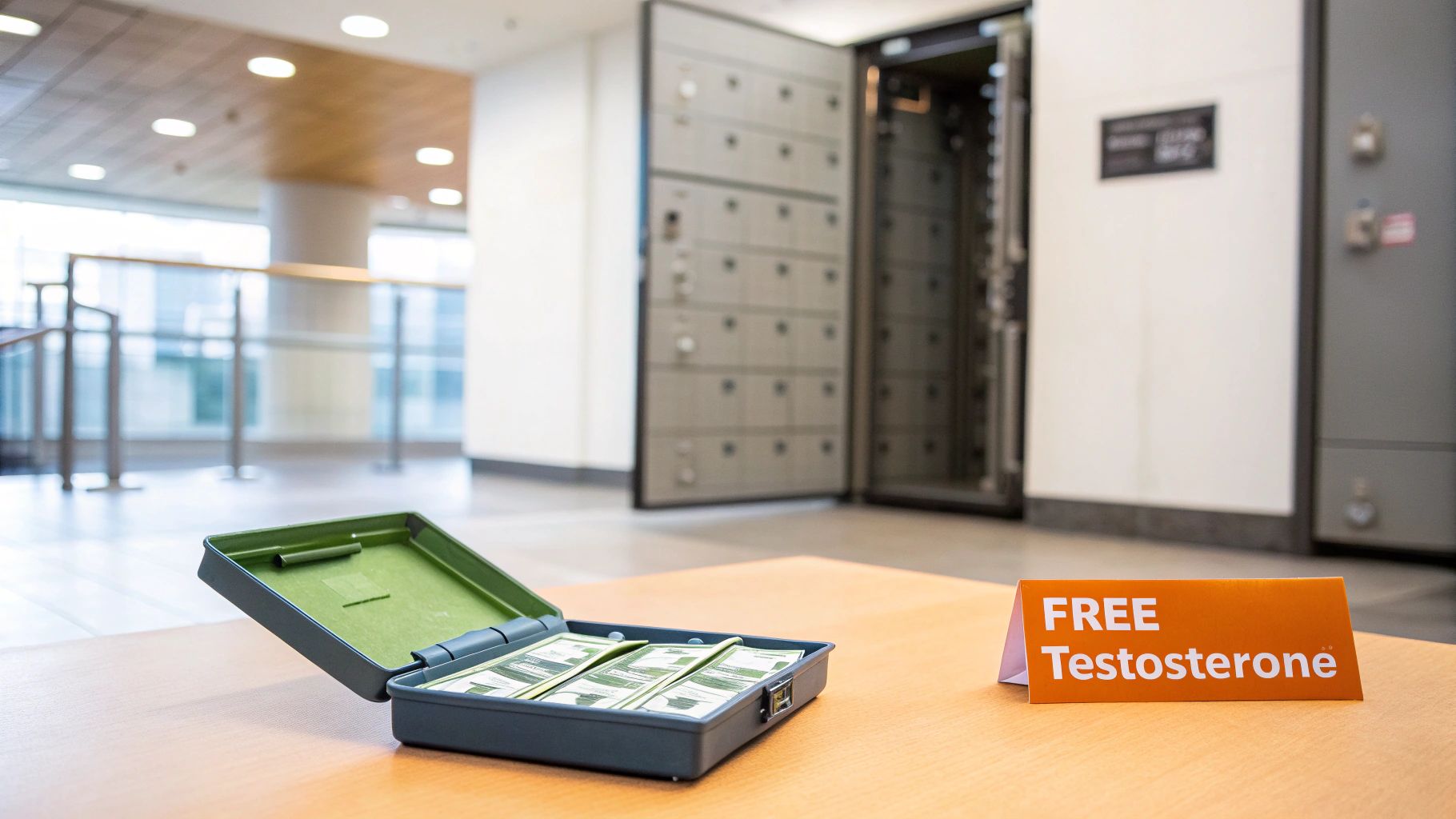
Think of your total testosterone like all the money you have stored in a bank vault. It’s an impressive number on paper, but what really matters for your daily life is the cash you have in your wallet—the money you can actually spend. That accessible cash is your free testosterone.
The rest of your testosterone is "tied up," bound to two main proteins floating around in your blood:
- Sex Hormone-Binding Globulin (SHBG): This protein has a vise-like grip on testosterone, keeping it inactive. Think of SHBG as a security guard that keeps a huge chunk of your hormone reserves locked down tight.
- Albumin: This protein has a much weaker, more temporary hold. Testosterone bound to albumin can break away fairly easily and become active when your body needs it.
The real magic happens with that tiny percentage that isn't bound to either protein. This is your free, unbound testosterone. It’s the portion that’s ready to travel through your body, enter your cells, and directly influence everything from muscle growth and bone density to mental clarity and libido.
Why Total Testosterone Is Only Half the Story
Here’s a frustratingly common scenario: someone gets a lab report showing a "normal" total testosterone level, yet they’re still struggling with all the classic symptoms of low T. How is this possible?
This paradox often happens when their SHBG levels are high. The SHBG effectively locks up most of the available hormone, leading to low free testosterone even when the total number looks fine.
This is exactly why focusing only on the total number can be so misleading. It's like judging a company’s financial health by its total assets without looking at its available cash flow. The actionable, usable resource is what truly determines day-to-day function.
Having sufficient free testosterone is crucial for vitality. It's the hormone that's actively working in your system, supporting metabolic function, cognitive health, and overall well-being. A deficiency here can have a significant impact on your quality of life.
Your hormone levels naturally change throughout your life. Factors like age, diet, and overall health play a huge role, which is why checking a testosterone levels by age chart can give you valuable context. Pinpointing a deficiency in your active hormone is the critical first step toward addressing the root cause of your symptoms and finally getting your energy back.
Recognizing the Signs and Symptoms

The signs of low free testosterone rarely crash in like a tidal wave. Instead, they creep in slowly—a collection of subtle, nagging changes that are all too easy to brush off as just stress, a bad week, or simply getting older. Learning to spot these patterns is the first step to understanding what’s really going on inside your body.
Many people soldier on for months, even years, chalking up these feelings to the daily grind. But when several of these symptoms show up together and refuse to leave, it could be a clear signal that your body’s most active hormones are out of balance.
And this isn't just an issue for older guys. Alarming studies show a steady decline in testosterone levels among younger American men. Between 1999 and 2016, mean total testosterone dropped significantly, and free testosterone in young adults fell by roughly 100 ng/dL every decade. This drop is tied to a higher risk for other health problems, which is why paying attention to the signs is critical at any age. You can dive deeper into these public health implications in recent studies on testosterone decline.
Common Symptoms in Men
For men, the impact of low free testosterone can hit their physical strength, sex life, and mental state hard. These signs often feed into each other, creating a frustrating cycle of fatigue and low motivation.
- Decreased Libido: A noticeable drop in your sex drive is one of the most classic red flags. We're not talking about a brief lack of interest, but a persistent, fundamental shift in your desire.
- Persistent Fatigue: This is a bone-deep exhaustion that a good night’s sleep just can’t fix. It’s an ongoing lack of energy that makes it a struggle just to get through the day.
- Loss of Muscle Mass: You might notice your gym sessions aren't delivering the same results, or you’re losing muscle tone and strength even though you’re staying active.
- Increased Body Fat: A tell-tale sign is more visceral fat, especially around the stomach. This can happen even if your diet and exercise habits haven't changed a bit.
- Erectile Dysfunction: Since free testosterone is directly involved in the process, difficulty achieving or maintaining an erection is a key indicator that something is off.
These physical symptoms rarely travel alone. They're often paired with psychological ones like irritability, mood swings, and a general sense of apathy that can be just as debilitating.
Overlooked Symptoms in Women
Testosterone is just as vital for women’s health, even though it’s present in much smaller amounts. When their free testosterone levels drop, the symptoms can be vague and are often misdiagnosed as signs of perimenopause, menopause, or other hormonal shifts.
Recognizing these signals is crucial for maintaining energy, sharp thinking, and overall vitality.
- Chronic Exhaustion: Just like men, women can experience a profound fatigue and a lack of stamina that gets in the way of everyday life.
- Muted Libido: A major drop in sexual desire and arousal is one of the primary symptoms for women with low free testosterone.
- Cognitive Difficulties: Often described as 'brain fog,' this can show up as trouble concentrating, recalling memories, and maintaining mental clarity.
- Mood Changes: An uptick in feelings of anxiety or depression can be tied to hormonal imbalances, including low free testosterone. You can learn more about the connection between low testosterone and anxiety in our detailed guide.
- Loss of Muscle Tone: It becomes harder to maintain muscle and bone density, which can impact strength and increase the long-term risk of osteoporosis.
The key is connecting these seemingly unrelated dots. By understanding this checklist of symptoms, you can stop guessing what’s wrong and start having a more productive, informed conversation with your healthcare provider.
Uncovering the Causes and Risk Factors
A drop in your active, usable testosterone rarely comes from a single, isolated problem. It’s more often the result of a complex web of genetics, daily habits, and your overall health. Think of it less like a switch being flipped off and more like a dimmer dial slowly being turned down by multiple factors at once.
Getting to the bottom of these drivers is the first real step toward taking control. When you can pinpoint which risk factors might be affecting you, you shift from simply reacting to symptoms to proactively addressing their root causes. This is a bigger issue than many realize; globally, testosterone deficiency is estimated to affect 10-40% of men, and in the United States, that number is between 24-39% for middle-aged and older men. Even when we use stricter criteria—requiring both low levels and symptoms—the number is still around 6%. Alarmingly, about 20% of young men aged 15-39 are also affected, pointing to a growing concern. You can explore more on these global prevalence rates here.
The Inevitable Impact of Aging
The most universal cause is simply the passage of time. As both men and women get older, a two-part hormonal shift naturally unfolds, creating a perfect storm for lower free testosterone.
First, your body's direct production of testosterone begins to slow down. This is a gradual process that usually kicks in around age 30 and continues steadily for the rest of your life.
Second—and just as important—levels of Sex Hormone-Binding Globulin (SHBG) tend to rise with age. Remember SHBG? It’s the protein that grabs onto testosterone and locks it up, making it inactive. So, at the same time you're making less testosterone, more of what you do make is getting taken out of circulation.
This double-whammy means that not only is your total amount of the hormone decreasing, but the percentage of usable, free testosterone is shrinking even faster. This is exactly why a man in his 60s might feel the effects of low active T-levels far more than his total number would suggest.
Lifestyle Factors That Sabotage Your Hormones
While you can't stop the clock, you have a massive amount of influence over the daily habits that can either protect or drain your hormone levels. Many modern lifestyle choices are direct contributors to the problem of low free testosterone.
Poor health habits are a major culprit. Think of them as hormonal disruptors:
- Chronic Stress: Constant stress floods your body with cortisol. This hormone has an inverse relationship with testosterone—when cortisol is high, testosterone production gets suppressed.
- Lack of Quality Sleep: Your body produces the majority of its testosterone while you sleep. Consistently getting less than seven hours a night can throw a major wrench in this critical production cycle.
- Poor Diet: Diets packed with processed foods, sugar, and unhealthy fats can lead to inflammation and insulin resistance, both of which are strongly linked to lower testosterone. Deficiencies in key nutrients like zinc and vitamin D don't help, either.
- Sedentary Behavior: A lack of physical activity, especially resistance training, essentially tells your body that high testosterone levels aren't a priority. Regular exercise is one of the most powerful signals you can send for hormone production.
Underlying Medical Conditions
Beyond aging and lifestyle, certain medical conditions are well-known for their negative impact on free testosterone levels. These issues often create a physiological environment where hormone production is compromised or where SHBG levels get thrown out of whack.
Managing these underlying health problems is often a critical piece of the puzzle when it comes to addressing low T. We've organized some of the most common risk factors into the table below to show how they connect to your hormone levels.
Common Risk Factors for Low Free Testosterone
This table outlines the primary risk factors for developing low free testosterone and explains the mechanism by which they impact hormone levels.
| Risk Factor Category | Specific Examples | Impact on Testosterone |
|---|---|---|
| Metabolic Health | Obesity, Type 2 Diabetes, Metabolic Syndrome | Increased body fat, particularly visceral fat, converts testosterone to estrogen through an enzyme called aromatase. Insulin resistance also disrupts hormone signaling. |
| Organ Function | Liver disease, Kidney disease | The liver is crucial for producing SHBG and clearing hormones. Impaired function can throw SHBG levels out of balance, impacting free T. |
| Hormonal Disorders | Hypothyroidism, Pituitary gland issues | The thyroid and pituitary glands are master regulators of the endocrine system. If they aren't functioning correctly, testosterone production can be significantly reduced. |
| Other Factors | Chronic opioid use, Certain genetic conditions | Some medications and inherited disorders can directly interfere with the body's ability to produce or utilize testosterone effectively. |
By looking closely at these three core areas—aging, lifestyle, and your medical history—you and your doctor can start to piece together the specific reasons behind your symptoms. This creates a clear roadmap for what to do next, whether that means making targeted lifestyle adjustments or pursuing a more detailed medical evaluation.
How Doctors Test and Interpret Your Levels
Figuring out if you have low free testosterone isn't as simple as getting one number from a single blood test. It's more like a detective story, where your doctor gathers specific clues from your bloodwork to build a complete picture of your hormonal health. The real goal is to look past the surface and see exactly how much active, usable testosterone your body actually has on hand.
This diagnostic journey kicks off with a comprehensive blood panel. You might think it's just one test, but a thorough evaluation looks at several key markers that all work together to tell the full story of your free testosterone.
The Core Blood Tests Explained
The most accurate way to pin down your free testosterone levels isn't actually to measure it directly. The direct tests, known as immunoassays, are notoriously unreliable and can give wildly different results from lab to lab. Instead, clinicians trust a much more dependable method: calculated free testosterone.
This calculation isn't a guess; it's a precise formula that uses the results from three critical tests:
- Total Testosterone: This is the big picture. It measures every bit of testosterone in your bloodstream—both the inactive stuff that's bound up and the active stuff that's free. This number is the essential starting point for everything else.
- Sex Hormone-Binding Globulin (SHBG): Think of SHBG as a powerful magnet for testosterone. This test measures how much of this protein is in your blood, tightly locking up your testosterone and making it unusable. High SHBG is a classic reason someone can have normal total T but feel the symptoms of low free T.
- Albumin: This is the other major protein that binds to testosterone, but its grip is much weaker. Measuring albumin helps fine-tune the calculation for a more accurate final number.
By plugging these three values into a scientifically validated formula, your doctor gets a highly precise estimate of your active, free testosterone. This calculated number is the gold standard for getting a reliable diagnosis.
Normal vs. Optimal: What Your Lab Results Mean
When you get your lab results, you'll see your numbers listed next to a "reference range." This range just shows the typical levels found in the general population. But here’s the crucial part: being "in the normal range" doesn't automatically mean your levels are optimal for you.
A common reference range for calculated free testosterone in men is roughly 65 to 190 pg/mL (picograms per milliliter), though this can vary by lab. For women, the range is much lower, typically falling below 10 pg/mL.
If your number is hovering at the low end of normal and you're experiencing symptoms, that's a big deal. A good doctor will interpret your results in the context of your age, your specific symptoms, and your overall health. The goal isn't just to be "not deficient"—it's to help you feel and function at your absolute best.
Ensuring Your Test Results Are Accurate
Getting a reliable reading is everything, and a few simple steps can keep you from getting a skewed result. Your hormone levels naturally change throughout the day and can even be thrown off if you're feeling under the weather.
To make sure your blood test gives a true snapshot of your hormonal health, follow these guidelines:
- Timing is Everything: Testosterone levels peak in the morning. For the most accurate number, schedule your blood draw for sometime between 7 AM and 10 AM.
- Test When Healthy: Being sick with the flu or even a nasty cold can temporarily tank your testosterone production. It’s always best to wait until you've fully recovered before getting tested.
- Fasting May Be Required: Some blood panels need you to fast for 8-12 hours beforehand. Always double-check with your doctor or the lab to make sure you don’t get an invalid result.
This infographic shows the key factors that can chip away at your testosterone levels over time.
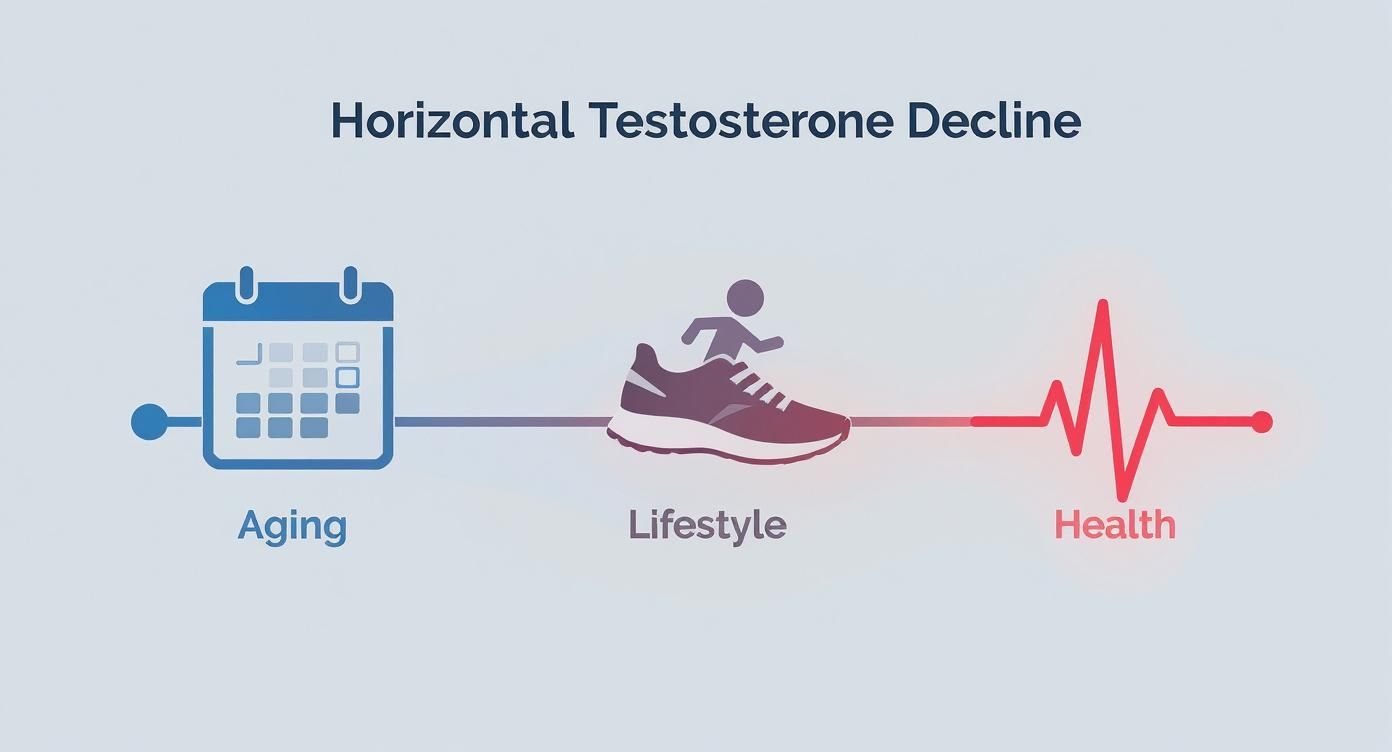
As you can see, aging, lifestyle choices, and underlying health problems all play a role in your hormone levels, which makes getting accurate testing even more critical.
Understanding this process empowers you to have a much more productive conversation with your doctor. If you're looking for a convenient way to start, exploring a home testosterone test can be a practical first step to gather the data you need. Armed with accurate information, you and your doctor can confidently find the right solution for you.
Exploring Your Treatment Options

Getting a diagnosis of low free testosterone isn't the end of the road. It's the starting point for a proactive plan to get your vitality back on track. This journey involves teaming up with your doctor to create a personalized strategy, starting with the foundational habits that govern hormone health and moving toward medical therapies only if they're truly needed.
The best part? You have a surprising amount of control. For many people, the first line of defense is making targeted, evidence-based changes to how they eat, move, and live. These aren't just generic wellness tips; they're specific actions known to encourage healthy hormone production.
Building a Foundation with Lifestyle Changes
Before even thinking about medical options, it’s critical to address the lifestyle factors that directly influence your hormone levels. Think of this as preparing fertile ground—without a solid foundation, other treatments won't be nearly as effective.
- Implement Resistance Training: Lifting weights is one of the most powerful signals you can send your body to produce more testosterone. Zero in on compound movements like squats, deadlifts, and bench presses that recruit multiple large muscle groups. Aim for 2-3 solid sessions per week.
- Prioritize Nutrient-Dense Foods: Your body can't create hormones from nothing. It needs the right building blocks. Make sure your diet is loaded with zinc (found in shellfish, meat, and seeds), magnesium (leafy greens, nuts), and healthy fats (avocado, olive oil), as they are all crucial for testosterone synthesis.
- Optimize Your Vitamin D Levels: Often called the "sunshine vitamin," Vitamin D acts more like a hormone in the body and has strong links to healthy testosterone. If you don't get much sun, have a conversation with your doctor about adding a supplement.
- Master Your Sleep and Stress: Chronic stress floods your body with cortisol, which is testosterone's arch-nemesis. At the same time, poor sleep robs you of the prime-time hours for hormone production. Strive for 7-9 hours of quality sleep and build in stress-management habits like meditation or deep breathing.
For some, simply optimizing these areas is enough to restore their free testosterone levels and make their symptoms a thing of the past. It’s amazing what a big impact these foundational changes can have.
Understanding Testosterone Replacement Therapy
When lifestyle adjustments don't move the needle enough to resolve clinically low free testosterone and the symptoms that come with it, Testosterone Replacement Therapy (TRT) becomes the primary medical solution. The goal of TRT is straightforward: bring your hormone levels back into a healthy, optimal range to relieve your symptoms and improve your quality of life.
TRT isn't a one-size-fits-all fix. It’s a carefully managed medical treatment that requires ongoing monitoring by a qualified physician to ensure it's both safe and effective for you. The therapy works by supplementing your body's natural output with bioidentical testosterone in a controlled, predictable way.
It's crucial to understand that TRT is a treatment for a diagnosed medical condition (hypogonadism), not a shortcut for building muscle or an anti-aging miracle. When used correctly under medical supervision, it can be a life-changing therapy for those who genuinely need it.
There are several ways to administer testosterone, and each comes with its own pros and cons. Your doctor will help you choose the best fit based on your lifestyle, preferences, and how your body responds to treatment.
Comparing Testosterone Replacement Therapy (TRT) Methods
To help you understand what to expect from each option, this table breaks down the most common TRT delivery methods.
| TRT Method | Application Frequency | Pros | Cons |
|---|---|---|---|
| Injections | Weekly or bi-weekly | Highly effective, cost-efficient, and allows for precise dose adjustments. | Requires self-injection, can cause peaks and troughs in hormone levels. |
| Topical Gels | Daily | Provides stable, consistent hormone levels, easy to apply at home. | Risk of transference to others through skin contact, potential for skin irritation. |
| Pellets | Every 3-6 months | "Set it and forget it" convenience, very stable hormone levels. | Requires a minor in-office procedure for insertion, dose cannot be adjusted between insertions. |
| Patches | Daily | Simple daily application, offers consistent hormone delivery. | Can cause significant skin irritation, may not adhere well during exercise or sweating. |
Each method has its place, and the "best" one is entirely dependent on what works for your body and your life.
Exploring Alternative Medical Approaches
For some people, especially men who want to preserve their fertility, standard TRT might not be the best first choice. Traditional TRT can signal the brain to shut down its own testosterone and sperm production, which can lead to infertility.
In these situations, doctors may suggest alternative treatments that kickstart your body's own hormone production system instead of just replacing the end product.
- Clomiphene Citrate (Clomid): This oral medication works by blocking estrogen receptors in the brain. This "tricks" the pituitary gland into releasing more LH and FSH—the key hormones that signal the testes to produce more testosterone and sperm.
- Human Chorionic Gonadotropin (hCG): As an injectable, hCG mimics the action of LH, directly stimulating the testes to ramp up testosterone production. It’s often used by itself or alongside TRT to maintain testicular size and function.
Ultimately, choosing the right path forward is a decision made between you and your healthcare provider. By understanding your full range of options—from powerful lifestyle changes to precisely managed medical therapies—you can create a plan that aligns perfectly with your health profile, personal goals, and long-term well-being.
Your Questions Answered
Once you start digging into hormone health, it’s natural for a lot of practical questions to come up. Navigating the world of low free testosterone can feel like a maze, especially with so much conflicting information online. This section is designed to cut through that noise and give you clear, straight-ahead answers to the most common concerns.
Think of this as a practical guide to help you reinforce what you've learned and make confident, informed decisions about your health.
Can I Just Boost Free Testosterone with Over-the-Counter Supplements?
Walk into any supplement shop, and you'll see shelves packed with "testosterone boosters" making big promises. But the truth is, their effectiveness is often unproven, and they aren't regulated with the same scrutiny as prescription medications. Many of these products are just a mix of basic nutrients like zinc or vitamin D, which are great if you have a documented deficiency but are unlikely to move the needle much for an otherwise healthy person.
The real issue is the lack of transparency. Many supplements hide behind "proprietary blends" with little scientific backing, and some have even been found to contain unlisted or harmful ingredients. It's far safer and more effective to focus on proven strategies like diet, resistance training, and quality sleep. Always talk to a doctor before starting any new supplement—they can’t fix an underlying medical issue and might even interfere with other medications you're taking.
A supplement might fill a nutritional gap, but it can't fix an underlying medical condition. True hormonal optimization starts with an accurate diagnosis and a physician-guided plan, not a bottle of unregulated pills.
How Long Until I Feel Better After Starting Treatment?
Everyone's timeline is a little different. How quickly you start feeling the benefits of treatment depends on the approach you take, your individual health, the severity of your deficiency, and how consistently you stick with the plan.
For those on a medically supervised Testosterone Replacement Therapy (TRT) plan, improvements tend to show up in stages:
- First 3-6 Weeks: The first things people usually notice are a lift in their mood, more stable energy levels, and a return of their libido. These are often the first signs that the therapy is kicking in.
- 3-6 Months: This is when physical changes become more obvious. You might see an increase in muscle mass and a decrease in body fat, especially when you pair the therapy with solid nutrition and consistent strength training.
If you’re taking the lifestyle-only route, progress is more gradual but incredibly sustainable. You can expect to feel noticeable improvements in your energy and overall well-being within a few months of dedicated effort. No matter the path, regular check-ins with your doctor are crucial for tracking your progress and tweaking the plan as needed.
Is TRT Safe, and What Are the Long-Term Risks?
When prescribed for a diagnosed medical need like hypogonadism and closely monitored by a qualified doctor, TRT is generally considered a safe and effective treatment. That said, like any medical therapy, it comes with potential risks and side effects that need to be carefully managed.
Some common side effects can include things like acne, fluid retention, or an increase in red blood cell count (polycythemia), which is why regular blood work is non-negotiable. The debate around long-term risks, especially concerning cardiovascular health and the prostate, is ongoing. However, current evidence doesn't point to an increased risk when therapy is properly managed for men with a clear medical need.
Having a frank, open conversation with your doctor about your personal and family health history is absolutely essential. This dialogue will help you both decide if the benefits of TRT outweigh the potential risks in your specific case.
What Kind of Doctor Should I See About This?
Just starting the conversation is the most important step, and you've got a few great options for where to begin.
Your primary care physician (PCP) is the perfect starting point. They can listen to your concerns, order the initial blood work to get a baseline, and help rule out other conditions that might be mimicking low testosterone symptoms.
From there, depending on the initial results, they might refer you to a specialist for a deeper dive:
- An endocrinologist is a hormone specialist. They are the go-to experts for diagnosing and managing complex hormonal imbalances, including low testosterone.
- A urologist is another excellent choice, especially if your main symptoms are related to sexual health, like erectile function, libido, or fertility.
Ultimately, the best doctor is one who takes your symptoms seriously, is up-to-date on modern hormone testing, and is willing to work with you to find a solution that fits your life.
At Elite Bioscience, we provide direct access to physician-guided therapies tailored to your unique health goals. Our secure platform makes it simple to get a doctor's prescription for TRT, peptide therapies, and injectable vitamins, all delivered discreetly to your door. Take control of your health journey and explore your options with us today.