


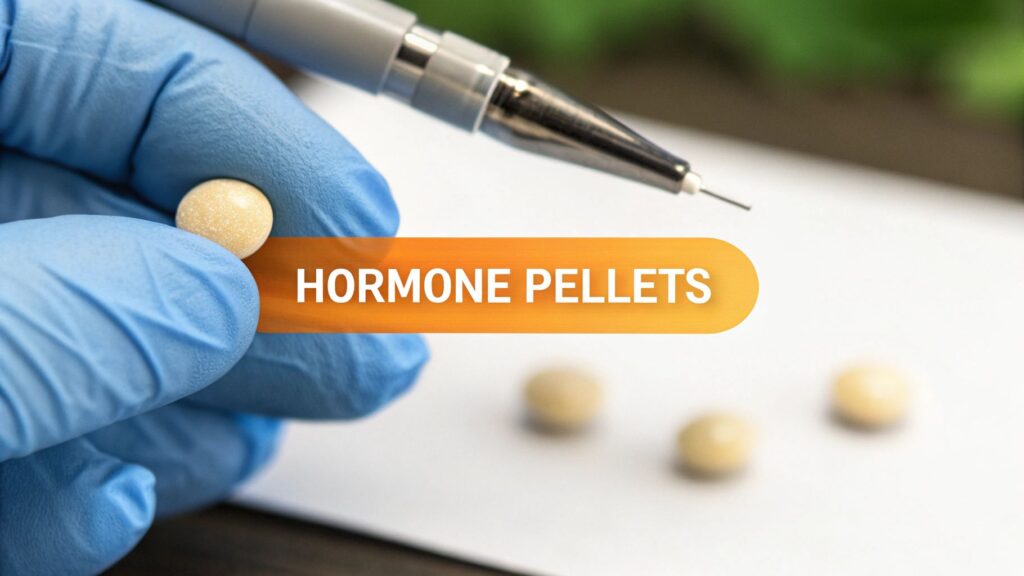
Hormone pellet insertion is a straightforward medical procedure where tiny, custom-compounded hormone pellets are placed just beneath the skin. These pellets, often no bigger than a grain of rice, are designed to release bioidentical hormones at a steady, consistent rate over several months.
This approach offers a stable and long-lasting solution for people dealing with the frustrating ups and downs of hormonal imbalance.
A Steady Approach to Hormone Balance
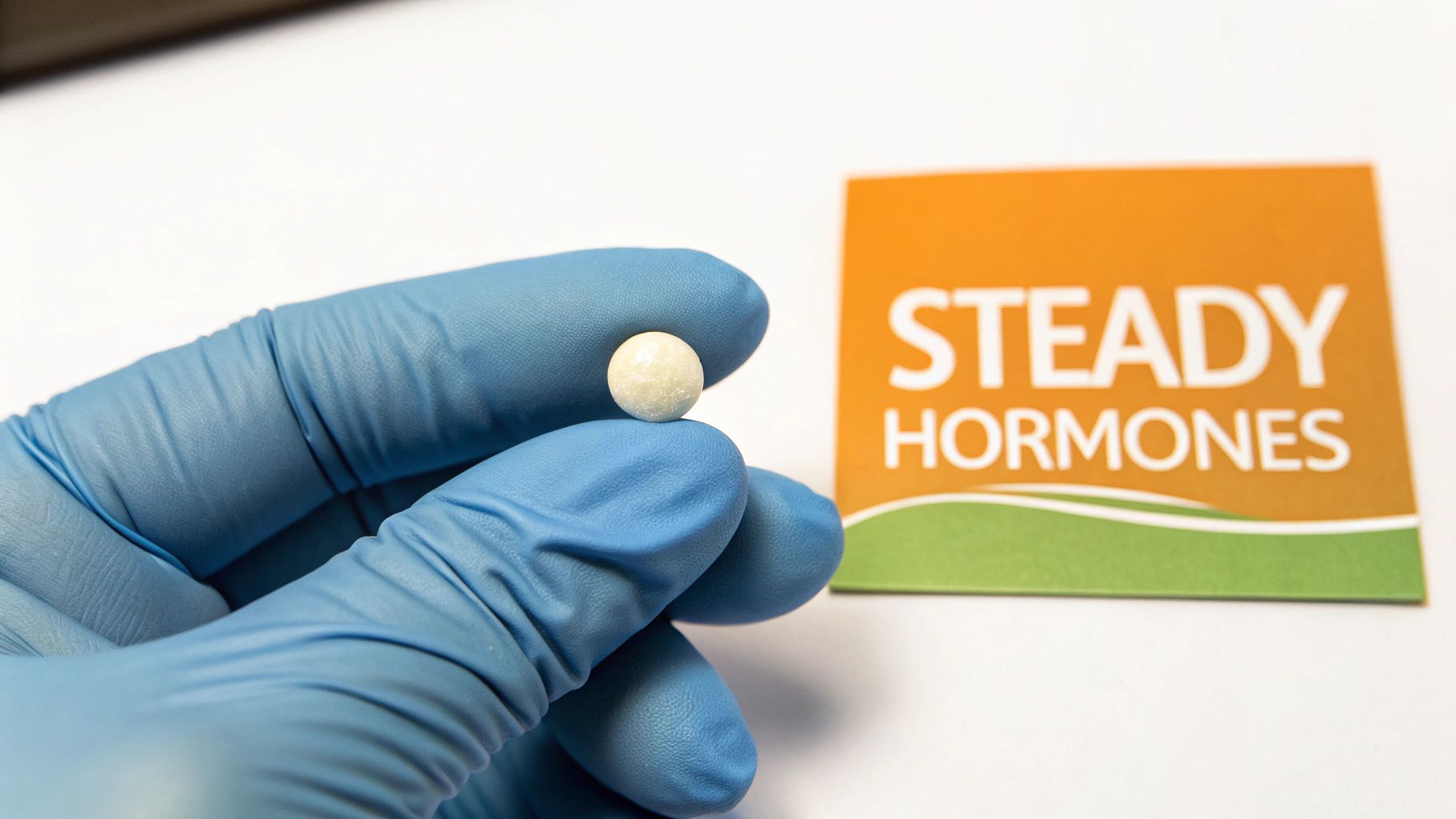
Think of your body’s hormonal system like a rechargeable battery that powers your mood, energy, and overall sense of vitality. Methods like daily creams or weekly injections can sometimes feel like constantly plugging and unplugging a charger, causing noticeable spikes and dips.
Hormone pellet insertion, on the other hand, is more like having a built-in, slow-release power pack. It provides a reliable stream of hormones for months at a time, keeping your levels steady and predictable.
This delivery method is a form of bioidentical hormone replacement therapy (BHRT), which uses hormones that are structurally identical to the ones your body produces naturally. You can dive deeper into the basics in our guide on what bioidentical hormone therapy is. The whole idea is to restore your body’s balance in a way that feels as natural as possible.
The 'Set-It-and-Forget-It' Advantage
More and more, patients are turning to pellet therapy for its incredible convenience and consistency. Instead of having to remember daily doses or weekly appointments, a single, quick in-office procedure can provide symptom relief for three to six months.
This approach is especially helpful for people trying to manage the symptoms of:
- Menopause and perimenopause, like hot flashes, brain fog, and mood swings.
- Andropause (often called male menopause), including low libido and persistent fatigue.
- General hormonal imbalances that lead to poor sleep, weight gain, and low energy.
The market certainly reflects this shift in preference. The global hormone pellet therapy market was valued at around USD 183.66 million in 2023 and is expected to grow to USD 326.68 million by 2030. This growth shows that both patients and doctors are increasingly aware of how effective this therapy can be.
By delivering hormones directly into your bloodstream, this method bypasses the liver and helps you avoid the hormonal "rollercoaster" that can happen with other therapies. The result is more stable moods, consistent energy, and predictable relief.
To give you a clearer picture, here is a quick summary of what this therapy entails.
Hormone Pellet Therapy at a Glance
This table offers a snapshot of the core concepts of hormone pellet insertion, including its purpose, who it’s for, and its key advantages.
| Aspect | Description |
|---|---|
| What It Is | A minor in-office procedure where tiny, custom-dosed hormone pellets are inserted into the subcutaneous tissue, usually in the upper hip or buttock area. |
| Who It's For | Men and women experiencing symptoms of hormonal imbalance, such as fatigue, low libido, mood swings, and other issues related to aging or hormonal decline. |
| Primary Goal | To restore and maintain optimal hormone levels with a consistent, slow-release delivery system that reduces daily fluctuations and improves overall quality of life. |
| Key Advantage | Long-lasting convenience (one procedure every 3-6 months), stable and consistent hormone delivery, and the use of bioidentical hormones for a natural fit. |
In short, it's a modern, low-maintenance approach designed to help you feel your best without the daily hassle.
Could Hormone Pellets Be Right for You?
Deciding on any kind of hormone therapy is a deeply personal journey. The most important first step is understanding if pellet hormone insertion actually fits your life and the symptoms you're experiencing. This isn't just about balancing numbers on a lab report; it’s about solving the real-life frustrations that hormonal imbalances can cause.
For many, these symptoms are more than just a minor annoyance—they're disruptive and persistent. They can slowly chip away at your quality of life, making you feel like a stranger in your own body.
Recognizing the Signs in Women
Hormone shifts, especially during perimenopause and menopause, can bring on a whole host of frustrating symptoms. Hot flashes get all the attention, but the reality is often much broader. You might be a strong candidate if you're constantly fighting unexplained fatigue that no amount of coffee can touch.
Many women also describe a persistent "brain fog" that makes it hard to concentrate, alongside a noticeable drop in libido that affects their relationships and self-confidence. For some, the use of testosterone pellets for women can be a game-changer in regaining mental clarity and vitality.
Think about a post-menopausal woman who has tried everything for her relentless night sweats. They ruin her sleep and leave her exhausted day after day. She’s looking for a stable, long-term solution that doesn't involve a daily pill or a messy cream. Pellet therapy offers a low-maintenance approach that could finally give her the steady relief she’s been searching for.
Common Indicators in Men
Men also go through a gradual decline in hormones, a phase sometimes called andropause. This isn't just a normal part of getting older; it's a specific physiological shift that can hit your energy, mood, and physical strength hard.
Key signs that pellet therapy might be right for you include:
- Persistent Low Energy: A deep, lasting fatigue that doesn't get better with rest.
- Loss of Muscle Mass: Noticing that you're losing strength and muscle tone, even if you’re still working out.
- Decreased Libido: A significant drop in your sex drive and performance.
- Mood Instability: Finding yourself more irritable, anxious, or just lacking your usual motivation.
Imagine a man in his late 40s who feels like he’s lost his edge. He’s tired all the time, it’s harder to recover from workouts, and he just doesn’t feel like himself anymore. For him, pellet hormone insertion could be the key to bringing back the vitality and drive he’s been missing.
The journey to see if you're a good candidate always starts with a detailed consultation and comprehensive lab work. A qualified provider will analyze your hormone levels, listen to your specific symptoms, and go over your medical history to map out a personalized treatment plan.
When Other Therapies Might Be a Better Fit
While pellet therapy is a fantastic option for many, it’s not the only one out there. If you’d rather have a method that can be stopped or adjusted on a dime, daily options like gels or patches might be a better fit. Since pellets are inserted under the skin and dissolve over several months, they can’t be taken out once the procedure is done.
On top of that, anyone who is hesitant about having a minor in-office procedure might feel more comfortable with injections or creams. The best choice always comes down to a mix of your lifestyle, your specific hormonal needs, and your personal comfort level. An open conversation with your healthcare provider is the best way to explore all your options and find the right path forward.
The use of this therapy has grown quite a bit, with women making up a huge part of the market. This is mainly driven by the number of women looking for effective relief from menopausal symptoms, who find that the steady hormone delivery from pellets often leads to fewer side effects compared to oral or injectable hormones. You can discover more about market trends in implantable hormones at Data Insights Market.
The Pellet Insertion Procedure Step by Step
The idea of any medical procedure can sound a little intimidating, but a pellet hormone insertion is remarkably quick and straightforward. Most of the hard work happens behind the scenes with your provider long before you even arrive for your appointment. The insertion itself is a minor in-office procedure designed for comfort and efficiency—it's often over in less time than it takes to finish your morning coffee.
Understanding the whole journey, from first noticing symptoms to finally getting treatment, can make the process feel much more approachable. This visual guide breaks down the initial steps every patient follows.
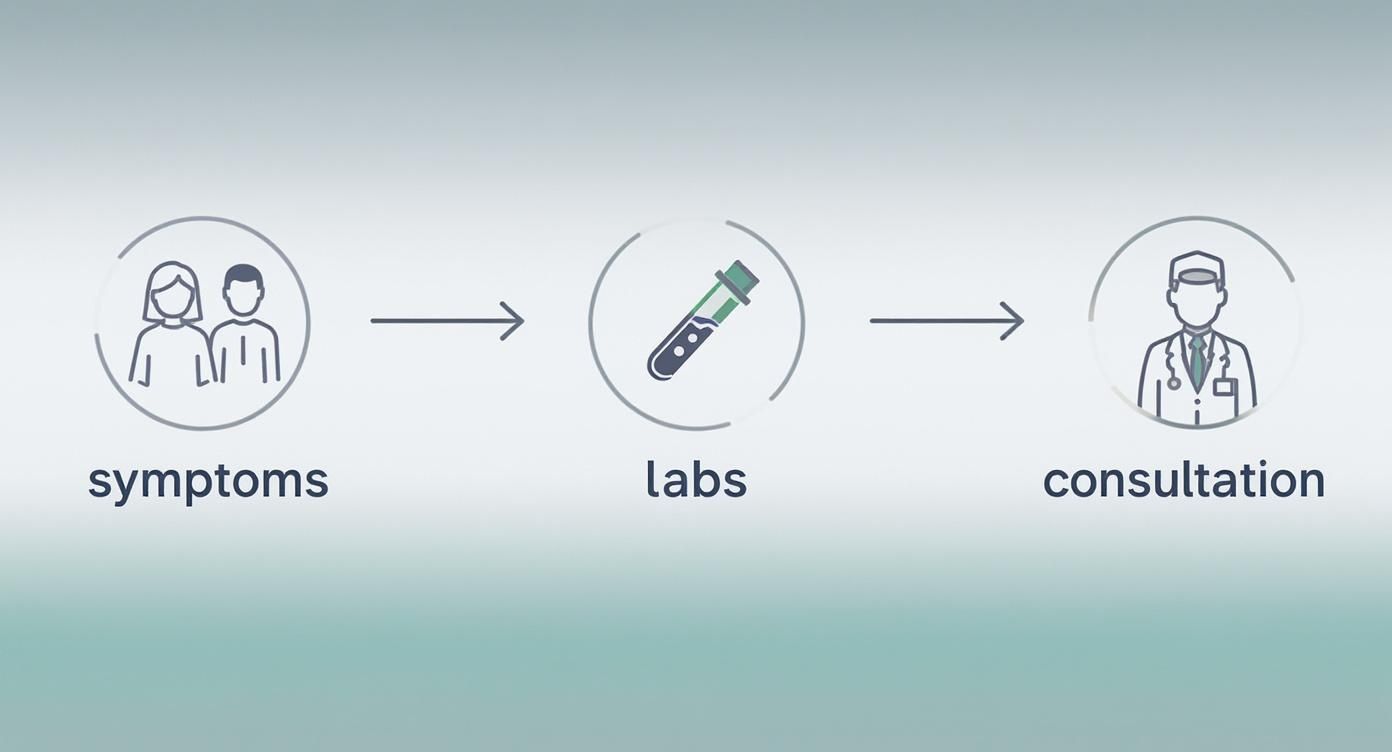
As you can see, it all starts with a conversation about your symptoms, followed by essential lab work and a detailed consultation to map out a plan that’s tailored just for you.
To take the mystery out of the appointment itself, let's walk through the three simple phases: what happens before, during, and after the pellet is placed. This step-by-step look will show you just how simple the entire visit really is.
Preparing for Your Appointment
Honestly, there’s not much you need to do to prepare. Your provider will give you a short list of instructions, which usually includes pausing any blood-thinning medications or supplements like aspirin or fish oil for a few days beforehand. This one small step makes a big difference in minimizing any potential bruising.
On the day of the procedure, just wear comfortable clothing. You'll be lying down for the insertion, so being relaxed is key. Before anything begins, your provider will double-check your custom-compounded pellet dosage and answer any last-minute questions you might have.
Next, they’ll choose the insertion site—usually the upper part of the hip or buttock—and meticulously clean it with an antiseptic solution. This is a crucial step to keep the area sterile and prevent any risk of infection. Your provider will then mark the exact spot, making sure it’s in an area with enough fatty tissue for both comfort and optimal hormone absorption.
During the Insertion Process
Once the site is prepped, the most important step for your comfort begins: a local anesthetic is used to completely numb the area. You might feel a tiny pinch from the numbing shot, but after that, you shouldn't feel any sharp pain at all—just a bit of pressure.
After giving the anesthetic a minute or so to take full effect, your provider makes a tiny incision, typically just a few millimeters long. It's just big enough for the insertion tool, called a trocar, to pass through.
From here, the process moves very quickly:
- Pellet Loading: The pre-determined number of tiny hormone pellets is loaded into the sterile trocar.
- Gentle Insertion: The trocar is gently guided through the small incision into the fatty tissue layer just beneath the skin.
- Pellet Deployment: With the tool in position, your provider carefully releases the pellets into the subcutaneous space.
- Instrument Removal: The trocar is then smoothly withdrawn, leaving the pellets securely in place.
The entire insertion part of the procedure is usually over in just five to ten minutes. And because the incision is so small, no stitches are needed.
The goal is to place the pellets deep enough that you can't feel them under your skin, but shallow enough to ensure a steady release of hormones. Experienced practitioners have this technique down to a science, ensuring consistent placement every single time.
Post-Procedure Care and What to Expect
Right after the pellets are in place, your provider will close the tiny incision with a small piece of sterile medical tape or a steri-strip. Then, a pressure dressing or bandage is applied over the top to protect the area and help keep bruising to a minimum.
You’ll be sent home with clear aftercare instructions, which are really important for proper healing and to make sure the pellets stay right where they need to be. For the first few days, you'll be asked to avoid:
- Strenuous Lower-Body Exercise: This means no squats, lunges, running, or heavy lifting for 3-7 days.
- Submerging in Water: Steer clear of baths, hot tubs, and swimming pools to keep the site clean, dry, and free from bacteria.
Light walking is totally fine and even encouraged. Most people only feel a bit of mild tenderness or see some bruising at the site, which usually fades within a week. With a procedure this fast and minimally invasive, you can get back to your life quickly while the pellets start their work balancing your system from the inside out.
Comparing Pellets to Other Hormone Therapies
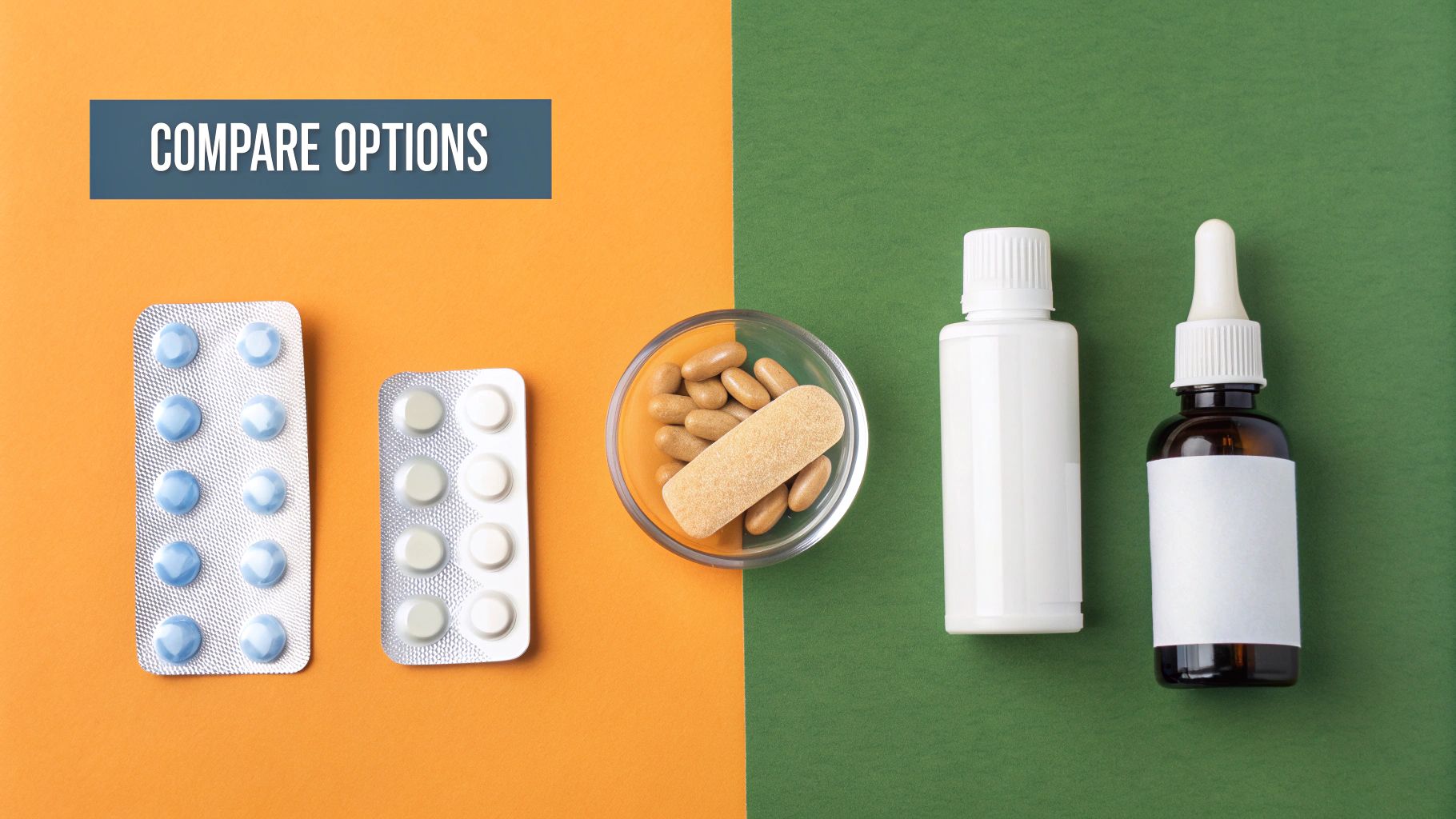
Choosing the right way to take hormone therapy isn't a small decision—it directly shapes your daily life and how you feel. While pellet hormone insertion offers a unique "set-it-and-forget-it" convenience, it’s just one of several solid options out there. The key is understanding how it stacks up against daily or weekly alternatives like creams, patches, and injections so you can find what truly fits your lifestyle.
Each method has its own rhythm, its own pros and cons. The goal is always the same: find a therapy that eases your symptoms and slides seamlessly into your routine.
The Daily Commitment: Creams, Gels, and Patches
Topical treatments like creams, gels, and patches are often where people start. They require a daily commitment—you apply the product to your skin around the same time each day to try and keep your hormone levels stable.
On the plus side, they’re completely non-invasive, and adjusting the dose is simple. If you run into side effects, you can just stop.
But the biggest downside is inconsistent absorption. Things like how much you sweat, your skin type, and even where you apply it can change how much hormone your body actually gets. There's also the real risk of transferring the hormone to a child or partner through skin-to-skin contact, which adds a layer of daily caution.
The Peaks and Valleys of Injections
Hormone injections, usually given weekly or every two weeks, are another common choice, especially for testosterone therapy. They deliver the hormone directly into your muscle, which means you get the full dose every time.
The trade-off, however, is what many call the "hormonal rollercoaster." You might feel fantastic for a few days after the shot, but as your levels start to drop before the next dose, symptoms like fatigue or moodiness can creep back in. This cycle of peaks and troughs is a major reason why many people start looking for the steady consistency that pellets offer.
The Steady Stream of Hormone Pellets
This is where pellet therapy really shines. Instead of a daily chore or a weekly spike and crash, pellets provide a slow, continuous release of hormones over three to six months.
Imagine your hormone levels as a calm, steady river instead of a series of crashing waves. Pellets are designed to create that consistent flow, helping you avoid the dramatic ups and downs that can mess with your mood, energy, and overall sense of well-being.
This consistency is a game-changer, especially for symptoms that feed on hormonal instability, like mood swings and hot flashes. In fact, estrogen therapy with estradiol pellets has become a leading option because this gradual delivery often leads to fewer side effects than oral or injectable forms. You can dive deeper into the market leadership of estradiol pellets by reading this analysis from InsightAce Analytic.
The only real "catch" is the procedure itself. The insertion is a quick, minor visit to the office, but it's a commitment—once the pellets are in place, they stay there until they dissolve.
Hormone Replacement Therapy Options Compared
To make the differences even clearer, this table breaks down how each method compares across the factors that matter most. It gives you a quick, side-by-side look at convenience, hormone stability, and how each option might impact your day-to-day life.
| Delivery Method | Convenience | Hormone Stability | Lifestyle Impact |
|---|---|---|---|
| Pellets | High: One procedure every 3-6 months. No daily tasks required. | Very High: Provides a continuous, steady release of hormones, avoiding peaks and valleys. | Minimal: No daily routine to remember. Requires a few days of activity restriction after insertion. |
| Injections | Moderate: Requires weekly or bi-weekly self-injection or clinic visits. | Low to Moderate: Creates noticeable peaks right after injection and troughs before the next dose. | Moderate: Involves needles and can cause mood fluctuations between doses. |
| Gels/Creams | Low: Requires careful daily application at the same time. | Moderate: Absorption can be inconsistent due to skin type, sweat, and application technique. | High: Risk of transferring hormones to others. Must be incorporated into a daily routine. |
| Patches | Moderate: Patch is changed once or twice a week. | Moderate to High: Generally provides a steadier release than topicals but can be inconsistent. | Moderate: Can cause skin irritation. May peel off with sweat or activity. |
Ultimately, the right choice comes down to you—your preferences, your lifestyle, and your specific health needs. Having an open conversation about all these options with your provider is the best way to make a decision that you feel confident about.
Navigating Costs and Treatment Timelines
When you're thinking about any new therapy, the two questions that always come up are: "What's it going to cost?" and "What's the long-term commitment?" Getting a clear handle on the financial and time investment for pellet hormone insertion is absolutely essential before you dive in.
Let’s pull back the curtain on the typical expenses and map out the entire treatment journey, from your first conversation with a provider to your ongoing maintenance schedule. This will give you a real-world picture of what to expect.
Understanding the Financial Investment
One of the first things to know is that hormone pellet therapy is usually an out-of-pocket expense. While the exact numbers can shift depending on your provider and where you live, the all-in cost for the procedure and the custom-compounded pellets generally falls between $300 to $600 for women and $600 to $1,200 for men per insertion.
Why the price difference? It’s simple, really. Men typically require a much larger dose of hormones, which means more individual pellets are needed to get the job done.
Now for the big question: what about insurance? This is where things get a little complicated. Here’s how coverage usually breaks down:
- Initial Consultation and Lab Work: Good news here. Many insurance plans will cover the preliminary doctor's visits and the blood tests needed to confirm a hormonal imbalance.
- The Pellets and Procedure: The actual pellets and the insertion procedure itself are often not covered. Many insurance carriers view bioidentical hormones as an elective or alternative treatment, so they don't include it in their standard benefits.
Your best bet is always to call your insurance provider directly to get the specifics on your plan. For a broader look at therapy expenses, especially for those paying out-of-pocket, checking out a guide on the cost of TRT without insurance can give you a more detailed perspective.
Mapping Your Treatment Timeline
The journey with pellet therapy is a marathon, not a sprint. It’s all about creating sustained, long-term balance. The good news is that the timeline follows a predictable and straightforward rhythm, designed to keep your hormone levels optimized and steady.
Your treatment plan is a continuous cycle of monitoring and maintenance. The goal is to keep you feeling your best by ensuring your hormone levels remain stable and within their optimal range year-round.
Here’s a step-by-step look at what that timeline actually involves:
- Initial Bloodwork and Consultation: It all starts with comprehensive lab testing to get a baseline reading of your current hormone levels. After that, you'll have an in-depth chat with your provider about your symptoms, goals, and medical history to put together a personalized treatment plan.
- Your First Pellet Insertion: Once your custom-compounded pellet dosage is ready, you'll schedule your first insertion. This quick, in-office procedure is the official starting line for your therapy.
- Follow-Up Lab Work: About four to six weeks after your first insertion, your provider will order another round of blood tests. This is a crucial step. It confirms that your body is responding well to the pellets and that your hormone levels are moving into that sweet spot—the optimal therapeutic range.
- Ongoing Maintenance Insertions: The pellets are designed to last anywhere from three to six months. You’ll schedule your next insertion based on this timeline and, just as importantly, how you’re feeling. This regular cadence is what keeps your hormone levels consistent, avoiding any frustrating gaps in treatment.
Your Questions Answered: What to Expect with Pellet Therapy
Even with all the information, it’s completely normal to have some practical, real-world questions about what getting hormone pellets is actually like. This section is all about giving you straight, honest answers to the things we hear most often from patients, so you can walk into your treatment journey feeling confident and prepared.
We’re going to tackle the specifics head-on, from how the procedure feels to what happens in the days and weeks that follow. My goal is to clear up any uncertainties so you can make a decision that feels right for you.
Is the Pellet Hormone Insertion Procedure Painful?
This is usually the first thing people ask, and I’m happy to say the answer is very reassuring. Most patients report feeling almost no discomfort during the insertion itself. Before we begin, your provider will use a local anesthetic to completely numb the area, which is typically on your upper hip or buttock.
You might feel a quick pinch from that numbing shot—just like any other injection—but that’s about it. Once the area is numb, the most you should feel is a bit of pressure as the provider places the pellets, not any sharp pain.
The incision we make is tiny and doesn't even need stitches; we close it with a small piece of sterile medical tape. It's perfectly normal to have some mild tenderness, a little swelling, or even some bruising at the site for a few days, but this is easily managed with an ice pack and by following your aftercare instructions.
How Long Does It Take to Feel the Effects?
The timeline for feeling the benefits of hormone pellets is a little different for everyone. Things like your own metabolism, your hormone levels when you start, and the specific symptoms you’re trying to address will all influence how quickly you notice a change.
That said, there’s a general pattern that most people experience:
- First Shifts (1-2 Weeks): Many patients start noticing the first positive changes within a week or two. This often shows up as better sleep, a more stable mood, or hot flashes that aren't quite as intense or frequent.
- Full Benefits (3-6 Weeks): The full effects of the therapy usually kick in within three to six weeks. By this point, the pellets have dissolved enough to create a steady, consistent level of hormones in your system, leading to more significant and stable relief from your symptoms.
We'll schedule follow-up lab work a few weeks after your first insertion. This is a crucial step to make sure your hormone levels are in the optimal range and to fine-tune your dose for future treatments if necessary.
What Are the Activity Restrictions After Insertion?
Following the post-procedure care instructions is absolutely vital for proper healing and to make sure you get the best results. To help the insertion site heal correctly and keep the pellet securely in place, you’ll need to follow a few simple activity restrictions for a short time.
For the first three to seven days after your procedure, we’ll ask you to avoid certain activities. This brief downtime is all about letting that tiny incision close up and allowing the surrounding tissue to heal without being disturbed.
The main reason for these restrictions is to prevent the pellet from getting pushed out, or "extruded," before it has a chance to settle in. Following these guidelines carefully is the single best thing you can do to ensure a successful outcome.
During this initial healing window, you’ll want to steer clear of:
- Strenuous Lower-Body Workouts: This means no squats, lunges, running, cycling, or heavy leg days at the gym.
- Soaking in Water: You must avoid bathtubs, hot tubs, swimming pools, and lakes. Keeping the insertion site clean and dry is key to preventing infection.
Normal daily activities like walking are perfectly fine—in fact, we encourage it to promote good circulation. Your provider will give you a detailed list of instructions to make it all easy to follow.
Can the Hormone Pellets Be Removed?
This is a really important point that sets pellets apart from other hormone therapies. Once a pellet hormone insertion is done, the pellets can't be easily removed. They are designed to be bio-absorbable, which means your body will slowly and naturally dissolve them over several months.
This is exactly why that initial, detailed consultation is so critical. A qualified provider will run comprehensive lab work, go over your medical history with a fine-tooth comb, and start you on a conservative, carefully calculated dose. We take this meticulous approach to minimize the risk of any unwanted side effects.
If side effects do occur, they are typically managed by adjusting your dosage at the next scheduled insertion. Unlike with creams or injections where you can just stop, the commitment with pellets is for their full three-to-six-month lifespan. This really underscores the importance of choosing a provider who is highly experienced with this specific form of therapy.
How Often Will I Need a New Insertion?
The long-lasting nature of pellets is one of their biggest draws. One quick procedure gives you a steady stream of hormones for months, freeing you from the hassle of daily gels or weekly shots.
On average, women usually need a new insertion every three to four months. Men, who receive a larger dose, typically find their pellets last longer, requiring a new procedure every five to six months.
Your personal timeline will depend on how quickly your body metabolizes the hormones. Your provider will work with you to establish a regular schedule based on your follow-up lab results and—most importantly—how you feel. The goal is always to schedule your next insertion before your symptoms start to creep back, ensuring you maintain a continuous, seamless level of hormonal balance. This predictable rhythm makes long-term management incredibly simple.
Ready to explore how personalized hormone therapy can help you regain your vitality and feel your best? At Elite Bioscience, we provide convenient, at-home access to high-quality treatments tailored to your unique needs. Start your journey today by completing our confidential health assessment at https://elitebioscience.co.