When it comes to the best peptides for anti aging, a handful of names consistently rise to the top for their proven results. You’ll often hear about GHK-Cu for skin repair, the powerful duo of CJC-1295 and Ipamorelin for system-wide rejuvenation, and BPC-157 for its incredible healing capabilities. These aren't just buzzwords; they represent a targeted way to address aging from the inside out.
Your Guide to the Best Peptides for Anti Aging
Let's cut through the noise. You want to know which peptides actually deliver on their anti-aging promises, and this guide is your roadmap. We’re going beyond surface-level fixes to explore how these intelligent molecules can support everything from deep cellular repair to maintaining cognitive sharpness. This isn’t just about smoothing out a few wrinkles; it's a comprehensive strategy for long-term vitality.

Why Peptides Are Gaining Popularity
At their core, peptides are short chains of amino acids—the fundamental building blocks of proteins like collagen and elastin. Think of them as tiny messengers carrying specific instructions to your cells. As we get older, our body's natural signaling network slows down, which leads to the visible and invisible signs of aging. Peptides step in to restart these critical conversations, telling cells to ramp up production of the proteins that keep us looking and feeling young.
This precise, targeted action is why the demand for peptide therapies is surging. The peptide skincare market alone was valued at USD 2,336.4 million and is projected to hit USD 6,636.9 million by 2033. That’s a compound annual growth rate of over 10%, reflecting a clear shift toward science-backed ingredients that deliver real, measurable results.
A First Look at Key Players
To help you get your bearings, let's categorize some of the most effective anti-aging peptides. Understanding their primary roles makes it much easier to see which ones might align with your personal health goals.
To make this even clearer, the table below breaks down some of the top anti-aging peptides and what they're best known for.
Top Anti Aging Peptides and Their Primary Benefits
| Peptide | Primary Anti Aging Benefit | Best For |
|---|---|---|
| GHK-Cu | Skin Renewal & Repair | Improving skin elasticity, reducing fine lines, and promoting wound healing. |
| CJC-1295/Ipamorelin | Systemic Rejuvenation | Boosting natural growth hormone to improve body composition, sleep, and recovery. |
| BPC-157 | Tissue & Gut Repair | Accelerating healing in joints, muscles, and the gastrointestinal tract. |
| Thymosin Beta-4 | Cellular Repair & Immunity | Supporting tissue regeneration and modulating the immune system for resilience. |
| Sermorelin | Growth Hormone Optimization | Naturally stimulating pituitary function to enhance energy and vitality. |
This table is just a snapshot, but it illustrates how each peptide has a distinct specialty. By targeting the specific biological pathways that decline with age, they offer a proactive way to restore your body’s own ability to heal and function at its best.
This guide will give you a clear overview of these options, helping you understand their unique roles in an effective anti-aging strategy. While peptides are an incredibly powerful tool, they are just one piece of the puzzle. To see how they fit into a complete wellness plan, check out our guide on the best anti-aging treatments. Consider this your starting point for redefining what it means to age well.
To really get why some peptides are hailed as the best for anti-aging, we need to talk about how they actually work. It’s less of a complicated biochemistry lecture and more a story about precise communication. At its heart, peptide therapy is all about restoring clear, efficient messaging inside your body.
Think of your body as a massive, bustling construction site. When you're young, the foreman—your brain and glands—sends out sharp, consistent instructions using messengers like hormones and signaling molecules. The workers, your cells, get these messages and efficiently build and repair structures like collagen and elastin, keeping everything strong and resilient.
But as we get older, this communication network starts to fray. The messages become less frequent, weaker, or just get lost in translation. The cellular workers slow down, and that’s when we see the visible signs of aging: wrinkles, slower recovery from workouts, and less energy. This is where peptides step in.
The Role of Peptides as Cellular Messengers
Peptides act like highly specialized couriers, carrying specific instructions directly to the cells that need them. They are just short chains of amino acids, small enough to navigate the body’s systems and connect with specific cell receptors.
Imagine a cell receptor is a lock, and a peptide is the key. Only the right key (the peptide) can fit into a specific lock (the receptor) to unlock a particular action. This precision is what makes peptide therapy so effective.
Key Takeaway: Peptides don't introduce a foreign substance to force an unnatural change. Instead, they reawaken your body’s own processes, reminding your cells how to perform the rejuvenating functions they were designed for.
This targeted approach is why the global peptides market is getting so much attention. Valued at USD 43.12 billion in 2024, it’s expected to more than double to USD 91.79 billion by 2035. This boom is driven by a growing demand for anti-aging solutions that work by kickstarting the body's own renewal mechanisms. You can read more about the peptide market trends and what it means for the future of wellness.
Unlocking Specific Anti-Aging Functions
Different peptides carry different messages, which lets them target various aspects of the aging process. This functional diversity is what allows for a truly personalized approach to anti-aging.
Here are a few examples of the kinds of instructions peptides can deliver:
- Collagen Synthesis: Some peptides, like GHK-Cu, signal fibroblasts to ramp up production of collagen and elastin—the proteins that give skin its firmness and bounce.
- Hormone Release: Others, such as CJC-1295 and Ipamorelin, prompt the pituitary gland to release more growth hormone, which has a major impact on body composition, recovery, and energy.
- Inflammation Reduction: Peptides like BPC-157 can send signals that calm inflammation and speed up tissue repair in muscles, joints, and even the gut lining.
- Muscle Relaxation: Certain peptides can gently relax facial muscles, helping to soften the appearance of expression lines. They act similarly to neuromodulators but work through a different biological pathway.
This ability to direct cellular behavior makes peptides a foundational tool for addressing aging at its source. Instead of just masking symptoms, they help restore the biological functions that define youth and vitality. The process is gradual and works in harmony with your body, promoting sustainable, long-term improvements in skin health, physical performance, and overall well-being. Once you understand this mechanism, it’s easy to see why choosing the right peptide is so critical for hitting your specific anti-aging goals.
A Deep Dive Into the Top Anti Aging Peptides
Now that we know peptides act like specific text messages for our cells, it’s time to meet the key players. Not all peptides are created equal, and the best peptides for anti aging are the ones with well-documented, targeted abilities to push back against the hallmarks of aging. Let's break down some of the most effective and widely-used options out there.
Think of peptides as messengers carrying specific commands. This simple concept map shows how they work to trigger precise cellular actions.
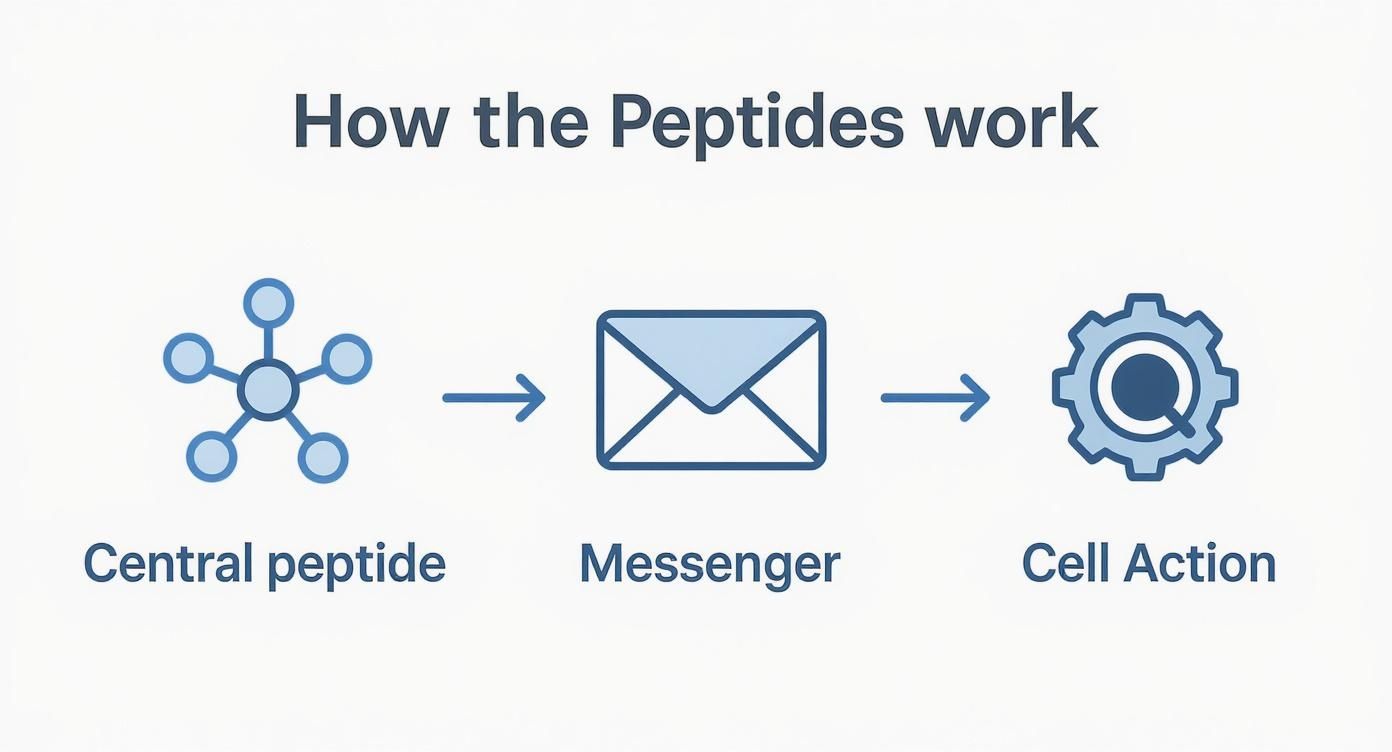
This visual simplifies the process, showing a peptide delivering an instruction that prompts a cell to perform a rejuvenating task, like building fresh collagen.
GHK-Cu: The Skin Regeneration Specialist
GHK-Cu, a unique copper peptide, is famous for its powerful skin remodeling properties. Think of it as a master foreman for your skin's repair crew. It instructs cells to clear out old, damaged collagen and elastin while simultaneously firing up the production of new, healthy proteins.
This dual-action approach makes it incredibly effective for improving skin elasticity, softening the appearance of fine lines, and speeding up wound healing. It also helps calm inflammation, creating a healthier skin environment that’s crucial for getting and keeping those anti-aging results.
CJC-1295 and Ipamorelin: The Ultimate Growth Hormone Duo
The combination of CJC-1295 and Ipamorelin is easily one of the most powerful tools in the systemic anti-aging arsenal. These two work together beautifully, signaling the pituitary gland to produce and release growth hormone (GH) in a natural, rhythmic pulse, just like it did when you were younger.
Why does that matter? Because our natural growth hormone levels drop off a cliff as we age, affecting everything from body composition and energy to how quickly we recover.
- CJC-1295 is a Growth Hormone Releasing Hormone (GHRH) analog that tells the pituitary to make more GH.
- Ipamorelin is a Growth Hormone Releasing Peptide (GHRP) that helps release that stored GH. It also cleverly suppresses somatostatin, a hormone that puts the brakes on GH release.
This one-two punch restores optimized GH levels, which translates to real-world benefits like increased lean muscle, reduced body fat, deeper sleep, and faster recovery from workouts. It’s no wonder that the peptide market, led by growth hormone stimulants, held the highest market share in 2024. In fact, clinical studies show that consistent use of peptide-based products can decrease wrinkle depth by up to 30% and boost skin firmness by 20% in just 12 weeks.
The combination of CJC-1295 and Ipamorelin is so effective because it restores the body's own youthful hormone patterns, rather than introducing synthetic hormones. To understand this peptide combination in greater detail, you can explore our complete guide on CJC-1295 and Ipamorelin benefits.
BPC-157: The Systemic Repair Agent
While many peptides focus on skin or hormones, BPC-157 is a true master of repair. Short for Body Protection Compound-157, this peptide is known for its exceptional ability to accelerate healing all over the body.
It promotes the formation of new blood vessels—a process called angiogenesis—which is vital for getting nutrients and oxygen to damaged tissues. This makes it a go-to for healing nagging injuries in muscles, tendons, ligaments, and even the gut lining. Its systemic anti-inflammatory effects also help quiet chronic inflammation, a key driver of the aging process.
Comparing the Most Common Anti Aging Peptides
To make sense of all these options, it helps to see them side-by-side. Each peptide has a unique specialty, allowing for a highly targeted approach to your personal anti-aging goals. This detailed comparison can help you understand their differences in function, application, and expected outcomes.
| Peptide Name | Primary Mechanism | Key Benefits | Common Administration |
|---|---|---|---|
| GHK-Cu | Stimulates collagen, removes damaged tissue | Skin firmness, wrinkle reduction, wound healing | Topical, Subcutaneous |
| CJC-1295/Ipamorelin | Boosts natural growth hormone release | Fat loss, muscle gain, improved sleep, recovery | Subcutaneous |
| BPC-157 | Promotes angiogenesis & tissue repair | Joint health, gut repair, muscle recovery | Subcutaneous, Oral |
| Thymosin Beta-4 | Supports cell migration & regeneration | Tissue repair, reduced inflammation, immune support | Subcutaneous |
| Sermorelin | Stimulates pituitary GH production | Increased energy, improved vitality, better sleep | Subcutaneous |
Choosing the best peptides for anti aging really comes down to what you want to achieve. Someone focused on skin quality might find GHK-Cu is the perfect starting point. On the other hand, an individual looking to improve body composition and overall vitality would likely see the most powerful results from the CJC-1295/Ipamorelin combination. This targeted approach is the cornerstone of any successful peptide protocol.
The Systemic Benefits of Peptide Therapy
While smoother skin is often the first thing people notice, the real power of peptide therapy is what's happening under the surface. It's about rejuvenating your entire system. The best anti-aging peptides don't just work on a cosmetic level; they send precise signals that target the root causes of aging on multiple biological fronts. This is what truly sets peptide therapy apart.

Think of these intelligent molecules as restoring youthful communication pathways throughout your body. By optimizing how your cells function, they help you turn back the clock from the inside out, leading to widespread improvements in how you look and feel.
Enhancing Skin and Hair Health
The most well-known benefit of anti-aging peptides is their incredible effect on the skin. Peptides like GHK-Cu act as powerful messengers, telling your cells to ramp up collagen and elastin production—the very proteins that give skin its firmness and bounce. This translates to a visible reduction in fine lines and a plumper, more resilient complexion.
But it doesn't stop there. Certain peptides can also breathe new life into hair follicles. By improving microcirculation and calming inflammation in the scalp, they can support healthier, stronger hair growth, tackling age-related thinning right at the source.
Optimizing Body Composition
It's a familiar story: as we get older, our metabolism slows down. This often leads to a gradual increase in body fat and a frustrating loss of lean muscle. Peptides, especially growth hormone secretagogues like CJC-1295 and Ipamorelin, directly push back against this trend.
By prompting your body to release more of its own natural growth hormone, these peptides help:
- Increase Lipolysis: This is the clinical term for breaking down stored fat to be used for energy.
- Support Lean Muscle: They encourage the maintenance and even growth of metabolically active muscle tissue.
- Boost Metabolism: A healthier body composition naturally creates a more efficient metabolic engine.
This shift doesn't just improve your physique; it enhances your overall energy and physical performance, making you feel as good as you look. For a deeper dive into how these molecules work their magic, you can explore the extensive benefits of peptide therapy.
Peptides don't just burn fat or build muscle directly. They restore the hormonal balance that allows your body to regulate its own composition more efficiently, just as it did in your younger years.
Accelerating Physical Recovery
Chronic inflammation and slow recovery from exertion are classic hallmarks of aging. This is where peptides like BPC-157 truly shine, as they are exceptionally skilled at speeding up the body's natural repair mechanisms. They get to work reducing inflammation in joints, soothing sore muscles, and accelerating tissue regeneration after an injury or a tough workout.
For you, this means less downtime, reduced joint pain, and a much-improved ability to stay active—a true cornerstone of longevity.
Supporting Cognitive Function
The brain isn't immune to the aging process, but peptides can offer a powerful line of defense. Certain peptides can cross the blood-brain barrier to provide neuroprotective benefits, helping to shield your brain cells from damage and inflammation.
This cellular support can translate into sharper mental clarity, better focus, and improved cognitive resilience. By fostering a healthier neural environment, these peptides play a key role in maintaining sharp cognitive function well into your later years. This brain-body connection is an essential part of any complete anti-aging strategy.
How to Build a Safe and Effective Peptide Protocol
Jumping into peptide therapy isn't like picking a supplement off the shelf. It demands a smart, calculated approach that’s built around your unique biology and specific goals. Without a solid foundation of knowledge and safety, even the most promising anti-aging peptides can fall flat or, worse, introduce unnecessary risks.
This is where the principles of responsible use become non-negotiable. The aim is to create a plan that delivers powerful results while putting your long-term health first. Think of it less like a sprint and more like building a sustainable wellness strategy for the years ahead.
The Foundation of Any Protocol: Medical Guidance
Let’s be crystal clear: the single most important step in starting peptide therapy is partnering with a qualified medical professional. Self-prescribing is a massive gamble. A protocol that works wonders for one person could be completely ineffective—or even harmful—for another.
A specialist provides the essential oversight needed to navigate this advanced therapy safely. Here’s why that guidance is so critical:
- Accurate Diagnosis: They get to the root cause of your symptoms and determine if peptides are even the right tool for the job.
- Personalized Planning: A provider will factor in your health history, lifestyle, and goals to select the right peptides and dosages for you.
- Ongoing Monitoring: They’ll track your progress and fine-tune your protocol to ensure it stays both safe and effective over time.
Trying to build a protocol without this expertise is like trying to navigate a dense forest without a map or a compass. Your medical provider is your guide, making sure you stay on the right path.
The Role of Diagnostic Blood Work
You can't fix what you don't measure. This is precisely why comprehensive diagnostic blood work is the bedrock of any legitimate peptide protocol. It gives you a clear, data-driven snapshot of your current health, revealing your baseline hormone levels, key biomarkers, and any underlying deficiencies or imbalances.
This information is invaluable. For instance, blood work might show that your natural growth hormone production is lagging, pointing toward a peptide stack like CJC-1295/Ipamorelin. Or it could reveal markers of inflammation that a peptide like BPC-157 could help resolve.
Key Insight: Starting peptides without baseline blood work is pure guesswork. Data-driven protocols designed by a medical expert ensure that the therapy is tailored precisely to your body’s needs, maximizing benefits and minimizing risks.
Sourcing High-Quality Peptides
The source of your peptides is every bit as important as the protocol itself. The market is unfortunately flooded with unregulated suppliers selling products that are impure, under-dosed, or flat-out contaminated. Using these is not just a waste of money—it's a serious health risk.
This is why sourcing from a reputable, medically supervised provider like Elite Bioscience is non-negotiable. High-quality, clinical-grade peptides are:
- Prescription-Based: They are prescribed by a licensed doctor only after a thorough evaluation of your health.
- Third-Party Tested: Every single batch is tested by an independent laboratory to verify its purity, potency, and safety.
- Sourced from Reputable Pharmacies: They are compounded in licensed U.S. pharmacies that adhere to the strictest quality control standards.
Ensuring your peptides meet these criteria is the only way to pursue this therapy with confidence and peace of mind. Without it, you are simply rolling the dice with your health.
Frequently Asked Questions About Anti Aging Peptides
Stepping into the world of peptide therapy always brings up a few practical questions. To give you some clarity, we've put together answers to the most common things people ask about anti-aging peptides. This should help you feel confident and well-informed as you weigh your options.
How Long Until I See Results From Anti Aging Peptides?
Patience and consistency are your best friends here. The timeline really depends on the specific peptide, your own unique biology, and what you're trying to achieve. You're not looking for an overnight fix, but a gradual, lasting improvement.
With skin-focused peptides like GHK-Cu, people often notice better skin texture and hydration within 4-6 weeks. More significant changes, like a visible reduction in fine lines, usually start showing up after about three months of consistent use.
On the other hand, systemic peptides that work on optimizing hormones, like the CJC-1295/Ipamorelin combo, have a different clock. Benefits like deeper, more restorative sleep can kick in within just a few weeks. But the more profound changes—think improved body composition and more energy—typically take 2-3 months to fully emerge as your body adapts.
Can I Use Multiple Peptides at the Same Time?
Yes, you can. This is a common strategy called “stacking,” and it's used to create synergistic effects. Combining peptides allows you to tackle multiple aspects of aging at once. For example, you might stack a repair peptide like BPC-157 with a growth hormone secretagogue to amplify overall recovery and rejuvenation.
But creating a safe and effective stack is a real science. It requires a deep understanding of how different peptides interact with each other.
Stacking peptides should never be a DIY experiment. Always work with a qualified medical professional to design a protocol that lines up with your specific goals and avoids any potential negative interactions.
Are Anti Aging Peptides Safe for Long-Term Use?
The long-term safety of any peptide protocol comes down to one thing: medical supervision. These aren't meant to be used indefinitely without any adjustments. Many protocols are built around cycling, which means using a peptide for a set period—often a few months—and then taking a strategic break.
This approach helps keep your body sensitive to the peptide, ensuring it stays effective while minimizing potential risks. A knowledgeable provider will use regular lab work to keep an eye on your health markers and build a sustainable, long-term strategy that is both safe and effective for your body.
What Is the Difference Between Peptides and HGH?
This is a critical distinction. Human Growth Hormone (HGH) is a large, complex hormone that's administered directly into the body. In contrast, peptides like Sermorelin or Ipamorelin are much smaller molecules known as secretagogues.
Instead of introducing synthetic HGH into your system, these peptides act like precise signals. They simply prompt your own pituitary gland to produce and release its natural growth hormone. This process mimics your body's innate, rhythmic hormonal patterns, making it a far more subtle and regulated way to optimize your GH levels.
Ready to discover if a personalized peptide protocol is right for you? At Elite Bioscience, our medical experts use comprehensive diagnostics to create safe, effective plans tailored to your anti-aging goals. Take the first step toward optimized wellness by exploring our treatment options at https://elitebioscience.co.