




Before you even start Googling “testosterone replacement therapy near me,” the most important work begins right where you are. It’s all about learning to listen to your body and recognizing the signals it’s sending—both the subtle ones and the ones that are impossible to ignore. A lot of guys immediately jump to low libido or fatigue, but the real story is usually much bigger than that.
Decoding the Signs of Low Testosterone
The path to even considering TRT rarely starts with one single, dramatic event. More often, it's a slow, creeping decline in your general sense of well-being that eventually becomes too persistent to brush off. While things like erectile dysfunction get all the attention, many men completely overlook other significant signs that can wreck their quality of life.
Take a hard look at your daily reality. Are you dealing with a constant brain fog that makes it tough to focus at work? Maybe you're finding yourself uncharacteristically irritable, snapping at your family over nothing. Or perhaps that fire you used to have—the motivation to hit the gym or tackle a new project—has just fizzled out, replaced by a feeling of just not caring. These are all classic, yet frequently dismissed, symptoms of low testosterone.
Preparing for a Productive Doctor's Visit
Just walking into a clinic and saying, "I feel tired," is a dead end. To get real answers, you have to show up prepared. That means documenting your experience with specific, concrete examples of how your life has changed.
Make a detailed list of your symptoms and, more importantly, how they’re actually affecting you day-to-day.
- Energy Levels: Don’t just say, "I'm tired." Try this: "I hit a wall every day around 2 PM and need a nap just to finish my workday. That never used to happen."
- Mental Clarity: "Brain fog" is too vague. Explain it: "I keep losing my train of thought in meetings and struggle to find the right words when I’m talking."
- Mood Changes: Be specific. "My patience is shot. I feel a low-grade frustration most of the time and get annoyed by things that never used to bother me."
- Physical Performance: Note what's happening at the gym. "My strength has completely stalled for months, even with consistent lifting, and my recovery time is way longer than it used to be."
On top of that, pull together a complete list of every single medication, vitamin, and supplement you take. This info is critical for any doctor trying to get the full picture. It’s also smart to organize your relevant medical history, like any past diagnoses or major health events you've had.
The Non-Negotiable First Step: Blood Work
Guessing and going off what you've heard from friends isn't enough. The only way to know for sure what’s going on inside your body is through a comprehensive blood panel. This baseline data is the absolute foundation for an accurate diagnosis and any safe, effective treatment plan. A legitimate provider will never prescribe TRT without it.
Your initial blood work needs to go way beyond a simple total testosterone check. Here are the key markers you should insist on:
- Total Testosterone: This measures the overall amount of testosterone in your blood.
- Free Testosterone: This is the critical number. It’s the bioavailable, active testosterone your body can actually put to use. You can learn more about why this matters by understanding low free testosterone and its direct impact on how you feel.
- Estradiol (E2): This is the main form of estrogen in men. Keeping testosterone and estradiol in the right balance is essential for feeling your best.
- Complete Blood Count (CBC): This test checks your red and white blood cells, including hematocrit, which is a vital marker to monitor throughout therapy.
Getting this initial hormonal baseline is the single most important action you can take. It shifts the conversation from guessing about your symptoms to making data-driven decisions about your health. It ensures that any treatment you receive is not only necessary but also perfectly calibrated for you. This is the definitive starting point in your search for testosterone replacement therapy near you.
Local Clinics vs. Telehealth TRT: Which Is Better?
So, you've started searching for "testosterone replacement therapy near me," and now you're at a crossroads. Do you go with a traditional, local clinic, or do you embrace the convenience of a modern telehealth provider?
Each path has its own distinct vibe and caters to different needs, lifestyles, and comfort levels. There’s no single "best" answer here—only the one that’s best for you.
The Case for Local, In-Person Care
There's something to be said for the classic, in-person clinic. For many guys, the ability to sit face-to-face with a physician, shake their hand, and have a direct conversation is invaluable. This model is great for building a strong, traditional doctor-patient rapport.
A huge benefit here is the hands-on physical examination. A local doctor can perform a comprehensive physical, check your prostate, and assess other health markers right there in the room, which some men find far more reassuring than a virtual consultation.
Local providers are often the ideal choice for men with more complex medical histories. If you have pre-existing conditions that require careful, integrated management, having a local doctor who can easily coordinate with your other specialists is a major advantage.
Think of a man with a history of heart issues and diabetes. He’d likely benefit from a local endocrinologist who can manage his TRT while closely monitoring his cardiovascular health and blood sugar, all within the same local healthcare system. The ability to have in-person follow-ups provides an added layer of confidence.
This flowchart helps visualize the first few steps you'll take, whether you choose a local clinic or go the online route.
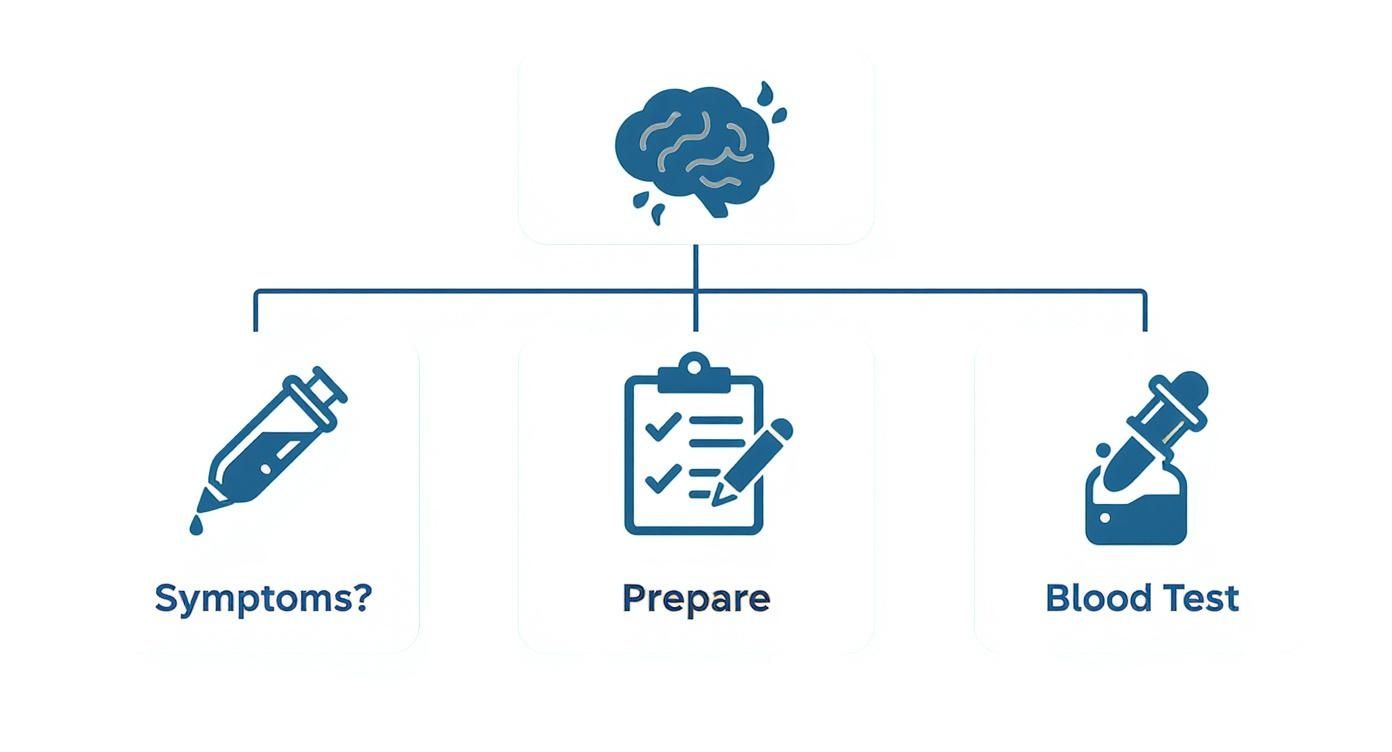
It shows how recognizing your symptoms, preparing for a consultation, and getting blood work done are the foundational moves in tackling low T.
The Rise of Telehealth TRT
On the other side of the coin is telehealth, an option that has exploded in popularity—and for good reason. Online TRT clinics offer incredible convenience, privacy, and access to specialized care, no matter where you live. For many, this model knocks down the biggest barriers to starting treatment.
Imagine a busy professional who travels constantly for work. Scheduling and keeping appointments at a local clinic would be a logistical nightmare. With a telehealth provider, he can have his consultations from a hotel room, get his blood work done at a partner lab in any city, and have his medication delivered directly to his door. It just fits his life.
This digital model has also fueled a massive market shift. Globally, prescriptions for testosterone have hit 11 million, with the biggest growth spurt seen in men aged 35 to 44. This boom is partly driven by the sheer accessibility of online subscription services, which have quickly become a billion-dollar industry.
Telehealth removes geographical limitations, giving you access to top specialists who might be hundreds of miles away. It offers a level of discretion that many men prefer, avoiding awkward waiting room encounters and providing a more private healthcare experience.
This approach streamlines the entire process, from your initial health assessment to your ongoing care. You can find out more about how it all works by exploring some of the best online hormone replacement therapy providers and what they offer.
Comparing Local TRT Clinics and Telehealth Services
To help you choose the best provider type for your needs, this side-by-side comparison focuses on the key factors that matter most, like convenience, cost, and how personalized your care can be.
| Feature | Local In-Person Clinic | Telehealth TRT Provider |
|---|---|---|
| Convenience | Requires travel and scheduled office visits. Less flexible. | Consultations from anywhere. Medication delivered to your door. |
| Access to Specialists | Limited to experts in your immediate geographic area. | Access to a nationwide network of top specialists. |
| Consultation Style | Face-to-face interaction and in-person physical exams. | Virtual consultations via video or phone. |
| Privacy | Involves traditional waiting rooms and in-office interactions. | Highly discreet and private, with no in-person visits. |
| Cost & Insurance | May have higher overhead costs; insurance coverage varies. | Often more affordable with transparent pricing; some accept insurance. |
| Speed to Treatment | Can involve longer wait times for appointments and results. | Typically a faster process from initial consultation to starting treatment. |
| Lifestyle Fit | Best for those with predictable schedules and a preference for traditional care. | Ideal for busy professionals, frequent travelers, or those in remote areas. |
Ultimately, both models can deliver excellent care. The right choice depends on what you value most in a healthcare experience.
Making the Right Choice for You
At the end of the day, the decision between a local clinic and a telehealth service boils down to your personal priorities. There is no universally superior option; it’s about what fits your life.
To help you decide, ask yourself these key questions:
- Lifestyle: Are you constantly on the move, or do you have a stable, predictable schedule? A flexible telehealth model might be a no-brainer for a busy life.
- Comfort Level: Do you genuinely value in-person interaction and a physical exam, or are you perfectly comfortable with virtual consultations?
- Medical Needs: Is your case a straightforward low T situation, or do you have other complex health issues that need integrated, hands-on care?
- Access: Is there a reputable TRT specialist in your town, or would telehealth give you access to a higher caliber of expertise?
By honestly answering these questions, you can confidently choose the path that aligns with your health goals and personal preferences, ensuring your journey with TRT is both successful and sustainable.
How to Vet TRT Providers and Avoid Red Flags
Finding a responsible and knowledgeable provider is the single most important factor for your long-term health and success on TRT. This isn't about finding the cheapest or quickest option; it's about finding a true medical partner who has your back.
As direct-to-consumer men's health websites have exploded in popularity—one study noted a nearly 17-fold increase in visits—it’s more important than ever to know how to separate the real experts from the opportunists. Your goal is to find a provider who sees you as an individual, not just another number on a spreadsheet. Their approach should be completely personalized, driven by data, and focused on your overall well-being—not just a single testosterone level.

Critical Questions to Ask Any TRT Provider
Before you commit to a single clinic, whether it’s a local office or a telehealth service, you need to interview them. A good provider will welcome your questions and give you clear, transparent answers. If they seem evasive, rushed, or dismissive, that’s your first major red flag.
Come to the conversation prepared with a list of questions that get to the heart of their treatment philosophy and safety protocols.
- "What's your approach to dosing and adjustments?" The right answer should involve starting with a conservative dose and making careful, gradual adjustments based on follow-up lab work and your feedback. If they jump straight to a standard "one-size-fits-all" dose, walk away.
- "Which specific lab markers do you test for initially and in follow-ups?" A thorough provider will talk about more than just Total and Free Testosterone. They should be testing your Estradiol (E2), CBC (especially Hematocrit), PSA, and a comprehensive metabolic panel.
- "How do you manage potential side effects like high estrogen or hematocrit?" A competent clinic will have clear, established protocols. This could mean adjusting your injection frequency, considering an aromatase inhibitor (AI) only if absolutely necessary, or recommending therapeutic phlebotomy (blood donation) for high hematocrit.
- "What types of testosterone do you prescribe and why?" They should be able to explain the pros and cons of different delivery methods—like injections (cypionate, enanthate), gels, or pellets—and recommend one based on your lifestyle and needs, not just what they prefer to sell.
A provider’s willingness to openly discuss side effect management is a litmus test for their competence. A clinic that downplays risks or doesn't have a clear plan for monitoring is not a safe choice for your long-term health.
Spotting the Major Red Flags
While you’re asking questions, you should also be on the lookout for warning signs. The TRT space has unfortunately attracted many profit-driven operations that put sales ahead of patient safety. Recognizing their tactics is crucial when you're searching for "testosterone replacement therapy near me."
These red flags should make you stop and reconsider immediately.
The "Cookie-Cutter" Protocol
This is one of the most common signs of a low-quality clinic. They put every single patient on the exact same protocol—for example, 200mg of testosterone cypionate every two weeks—regardless of their baseline labs, age, symptoms, or body weight.
Hormone optimization is deeply personal. Your body is unique, and a responsible provider will craft a protocol tailored specifically to your lab results and how you actually feel.
Prescribing Without a Full Blood Panel
This is a non-negotiable dealbreaker. If a clinic offers to prescribe testosterone based on a simple questionnaire or just a single testosterone test, they are operating far outside the standard of care.
Comprehensive blood work is the foundation of safe and effective TRT. Without it, a provider is just guessing, which can lead to serious health complications down the line. They're flying blind with your health.
Downplaying the Need for Follow-Up Monitoring
Some clinics are great at getting you started on treatment but then become ghosts. They don’t schedule follow-up labs or check-ins to see how you're responding. TRT is not a "set it and forget it" treatment—not even close.
Your body's hormonal balance is dynamic. Regular monitoring is essential to:
- Ensure Efficacy: Confirming that your levels are in an optimal range where you feel your best.
- Manage Side Effects: Proactively catching markers like hematocrit or estradiol before they become a problem.
- Adjust Dosing: Fine-tuning your protocol as your body adapts over time.
A quality provider will have a clear schedule for follow-up blood work, typically at the 3-month mark, and then every 6-12 months after that.
By arming yourself with this knowledge, you can confidently vet any potential provider. You're not just looking for a prescription; you're seeking a long-term partner who will help you safely navigate your health journey and achieve your goals. Don’t settle for anything less.
Breaking Down TRT Costs and Insurance Coverage
Let's talk about the financial side of things. Figuring out the cost is a practical and necessary step when you're searching for "testosterone replacement therapy near me." The price can swing wildly, not just from one provider to another but also depending on the exact treatment plan you and your doctor map out.
It’s not a single price tag. Think of it as a combination of costs for consultations, lab work, and the medication itself.
Your first real investment will be the initial consultation and a comprehensive blood panel. This can run anywhere from a few hundred to over a thousand dollars, all depending on the clinic's fee structure and how deep they go with the lab work. This is not the place to skimp—this initial data is the entire foundation for a safe and effective TRT protocol.
After that, you'll have the recurring expenses, which will be the biggest piece of your long-term budget. These are driven almost entirely by the type of medication you use.
Comparing Medication Costs
The type of testosterone you're prescribed will be the main driver of your monthly costs. Each delivery method comes with a different price point and administration schedule, which has a direct impact on your wallet.
- Testosterone Injections: This is usually the most budget-friendly route. Injections like testosterone cypionate or enanthate are typically done once or twice a week. Even without insurance, the out-of-pocket costs can be pretty low, which makes it a popular choice.
- Transdermal Gels: You apply these to your skin daily. While they're convenient, gels are almost always more expensive than injections. The global TRT market, which some firms value between $2.04 billion and $2.29 billion, is actually dominated by gels—they make up over 60% of prescriptions because they're so easy to use. You can dive deeper into these market trends and their drivers in detailed industry analyses.
- Subcutaneous Pellets: A doctor inserts these tiny pellets under your skin every few months. The upfront cost is easily the highest, but they offer a "set it and forget it" convenience that a lot of guys find appealing, since it eliminates the need to do anything yourself on a regular basis.
On top of the medication, you have to factor in the cost of ongoing lab work, which is non-negotiable for monitoring your health. Most good providers will require follow-up blood tests every three to six months for the first year, then annually after that.
Navigating Insurance for TRT
Getting your insurance to cover testosterone therapy can feel like you're trying to solve a puzzle, but it's definitely possible if you have the right diagnosis and paperwork. The key is knowing what insurers are looking for.
They need to see proof of clinical hypogonadism. That means you need two separate morning blood tests showing low testosterone levels, backed up by documented symptoms.
Many insurance plans have a hard line for what they consider "low," often below 300 ng/dL. If your levels are just hovering above that mark—even with severe symptoms—you might get an initial denial. It's critical that your provider submits meticulous clinical notes that clearly spell out why the treatment is medically necessary.
Don't get discouraged if you're denied at first. An appeal, backed by a strong letter from your doctor explaining the complete clinical picture, can often get the decision overturned. Persistence and proper documentation are your best friends here.
If you're wondering where to even start with this, our comprehensive guide on getting TRT covered by insurance walks you through actionable steps and insights to help you build a solid case.
Comparing Clinic Cost Models
The way you pay often looks different when comparing a traditional local clinic to a modern telehealth service.
Local, in-person clinics are more likely to work directly with insurance, but you’ll still be on the hook for co-pays, deductibles, and anything your plan decides not to cover.
Telehealth providers, on the other hand, frequently use a cash-pay or subscription model. This approach gives you very clear, predictable pricing. You pay a flat monthly fee that usually bundles your medication, consultations, and ongoing support into one cost. While it might seem higher out-of-pocket at first glance, it can sometimes end up being more affordable than dealing with a high-deductible insurance plan, and it completely eliminates surprise bills.
What to Expect From Your Treatment and Monitoring
Starting testosterone replacement therapy is a long-term health partnership, not a one-and-done fix. It's crucial to understand the entire process—from that first conversation with your provider to the ongoing monitoring that keeps you safe and on track. This isn't just about getting a prescription; it's about building a sustainable plan for your well-being.

Your First Steps: The Initial Consultation
Your first appointment, whether in a local clinic or over a video call, sets the stage for everything that follows. Forget a quick chat; this is a deep dive into your health history, current symptoms, and what you actually want to achieve with therapy. A quality provider will want to hear the specifics—how you're feeling and how it's really impacting your day-to-day life.
This initial meeting breaks down into three core parts:
- In-Depth Discussion: Get ready to talk openly about your energy, mood, libido, sleep, and physical performance. Your doctor's job is to connect the symptoms you're describing to the hard data from your first blood panel.
- Physical Examination: If you're at a local clinic, this will be a standard hands-on exam. For telehealth, this might involve some guided self-checks or a review of a recent physical from your primary doctor.
- Goal Setting: You and your doctor need to define what success looks like. Is it more focus at work? More energy to keep up with your kids? Better results in the gym? These goals become the compass for your treatment.
This first visit is where your personalized treatment protocol is born. Based on your labs, symptoms, and goals, your provider will recommend a starting dose and delivery method, clearly explaining the "why" behind their choice.
The Long-Term Management Plan
Getting started with TRT is just the beginning. The real art and science of hormone optimization happen in the continuous monitoring and fine-tuning that comes next. Your body is a dynamic system, and a "set it and forget it" approach isn't just ineffective—it's potentially unsafe. A responsible provider will map out a clear schedule for your follow-up care.
The demand for TRT has exploded, especially in North America, which now accounts for over 80% of the global market. This boom is driven by a better understanding of hypogonadism and the availability of advanced options like gels, injections, and pellets. You can get more details on these trends by exploring the geographic distribution and product segmentation of the TRT market. This context makes one thing clear: standardized, high-quality monitoring is more important than ever.
Your follow-up lab work is the most critical part of your long-term plan. It gives your provider the objective data needed to optimize your hormone levels safely, prevent potential side effects, and confirm the treatment is actually working.
Fine-Tuning Your Protocol
Your protocol isn't set in stone. It will be adjusted based on a combination of your lab results and your personal feedback on how you're feeling. Here’s what a typical monitoring schedule looks like for someone who's been searching for "testosterone replacement therapy near me" and is ready to commit.
Your Monitoring Timeline:
- 3-Month Mark: This first follow-up blood test is critical. It gives the first real look at how your body is responding to the initial protocol and is the first chance to make data-driven adjustments.
- 6-Month Mark: Another check-in helps confirm your levels have stabilized and allows for more fine-tuning based on your feedback.
- 12-Month Mark & Annually: Once you're dialed in, annual or semi-annual blood work becomes the new standard to keep an eye on long-term health markers.
The key here is that a good provider tracks far more than just your testosterone. They’ll be watching your hematocrit (red blood cell concentration), estradiol (E2), and other vital health markers to manage your well-being proactively. By understanding this process, you become an active, informed partner in your own health, working with your provider to hit your goals and stay there.
Common Questions About Finding a TRT Provider
Even after you've done your research, pulling the trigger on TRT can bring up a lot of "what if" questions. That's completely normal. You might be wondering about the timeline, what to expect with side effects, or if you can ever stop. Getting straight answers to these practical concerns is what helps you move forward with confidence.
One of the first things men ask when they start searching for "testosterone replacement therapy near me" is simple: when will I start feeling like myself again?
How Quickly Will I Feel the Effects of TRT?
The timeline for TRT is different for every guy. It’s definitely not an overnight fix, but some of the best improvements show up pretty quickly. Most men report a noticeable lift in their mood, mental clarity, and energy levels within the first 3 to 6 weeks. Libido usually gets a solid boost in that same initial window, too.
The more significant physical changes, however, require a bit more patience. You’ll likely start to see real improvements in muscle mass and a drop in body fat after about 3 to 6 months of consistent therapy. A good provider will be right there with you, using your feedback and follow-up labs to dial in your protocol for the best possible results.
Managing Common Side Effects of TRT
Look, any medical treatment that actually works is going to have potential side effects, and TRT is no exception. The key is working with a provider who’s proactive about monitoring for them, not just waiting for problems to pop up. Some common side effects can include things like acne, a bit of fluid retention, or an increase in your red blood cell count (hematocrit).
A sharp provider will spot these things early on during your regular blood work. The good news is they are almost always manageable with small tweaks to your protocol. For instance, a slight adjustment to your testosterone dose or how often you inject can often clear up acne or fluid retention. If your hematocrit creeps up too high, it can usually be brought back in line just by donating blood.
Your most powerful tool here is open, honest communication with your doctor. Never hesitate to bring up any changes you're feeling or seeing. A proactive approach is always the safest and most effective way to manage your health on TRT.
Can I Stop TRT After Starting?
Yes, you can absolutely stop TRT, but it’s critical to do it under a doctor’s supervision. When you’re on therapy, your body’s natural testosterone factory essentially shuts down because it’s getting an external supply.
If you just stop cold turkey, you’re setting yourself up for a nasty hormonal crash. This can bring all of your original low T symptoms roaring back, sometimes even worse than before. A knowledgeable doctor can walk you through what’s known as "Post-Cycle Therapy" (PCT). This involves using specific medications, like HCG or Clomid, to safely and effectively reboot your body’s own testosterone production, making the transition off TRT much smoother.
Does Insurance Typically Cover Testosterone Therapy?
Navigating insurance for TRT can be a real headache, and coverage depends entirely on your specific plan and diagnosis. Many insurance companies will cover treatment, but only if your blood work shows clinically low testosterone and you have well-documented symptoms to match.
The catch is that many policies have incredibly strict definitions of "low," sometimes requiring a total testosterone level below 300 ng/dL on more than one test. It is crucial to have your clinic verify your benefits before you start so there are no financial surprises. As an alternative, many modern telehealth clinics run on a straightforward cash-pay model, which completely eliminates the hassle of fighting with insurance for approvals.
Ready to take control of your health with a team that prioritizes safety, transparency, and personalized care? At Elite Bioscience, we make the process clear and convenient. Our telehealth model connects you with expert providers who design a treatment plan specifically for you, with medication delivered discreetly to your door.
Start your confidential health assessment today by visiting Elite Bioscience.