


The easiest way to understand the difference between BPC 157 and TB500 is to think about their scope. BPC 157 is a localized repair agent; it zeroes in on specific injury sites like a torn tendon or a strained ligament. In contrast, TB500 provides systemic, body-wide support, promoting overall tissue regeneration and calming inflammation everywhere. It’s why they’re so often used together—to get the benefits of both targeted healing and broad recovery support.
An Introduction to Healing Peptides BPC 157 and TB500
In the world of regenerative medicine, few compounds stir up as much conversation as BPC 157 and TB500. While both peptides aim to kickstart the body's natural repair processes, they come from different origins and work through entirely separate biological pathways. Getting to know their individual strengths is the first step to seeing their potential, both on their own and when combined.
Defining the Key Players
BPC 157 (Body Protective Compound 157) is a synthetic peptide chain, a lab-made version of a protein discovered in human gastric fluid. Its claim to fame is its powerful ability to protect and heal cells, especially in soft tissues that are slow to mend on their own.
TB500, on the other hand, is a synthetic piece of Thymosin Beta-4, a protein that’s naturally present in almost all human and animal cells. It’s a master regulator of cell migration, differentiation, and inflammation control, making it a central figure in healing throughout the entire body. You can explore more about various tissue repair peptides in our detailed guide.
The core distinction comes down to their approach: BPC 157 is the "specialist" you call for a specific, localized injury. TB500 is the "general contractor" managing the system-wide repair and inflammation control project.
Understanding Their Status
It is absolutely critical to remember that both BPC 157 and TB500 are considered experimental compounds. Despite a growing mountain of preclinical research, neither is approved by the FDA for human use. This reality is especially stark with BPC-157, which shot to prominence based almost entirely on compelling animal studies.
Researchers have indexed hundreds of records on it, but a systematic review of 36 relevant studies found that 35 were preclinical. Only one was a clinical trial, which shines a bright light on the huge gap between what we see in the lab and what has been proven in humans. This context is essential for anyone thinking about these peptides.
| Feature | BPC 157 | TB500 (Thymosin Beta-4 Fragment) |
|---|---|---|
| Primary Origin | Derived from a protein in gastric juice | Synthetic version of a naturally occurring protein |
| Mechanism Focus | Localized: Promotes angiogenesis at injury site | Systemic: Enhances cell migration body-wide |
| Main Targets | Tendons, ligaments, gut lining, nerves | Muscle, skin, heart, and systemic inflammation |
| Regulatory Status | Experimental; Not FDA-approved | Experimental; Not FDA-approved |
How Each Peptide Activates Healing Pathways
To really get why combining BPC 157 and TB500 is so effective, you have to look under the hood at their distinct biological machinery. While they’re both famous for speeding up recovery, they don’t work the same way or target the same systems. Don't think of them as competitors; see them as two highly specialized experts working on the same project—your body's repair.
BPC 157 is like a dedicated field medic, rushing directly to the site of an injury to perform triage and start repairs on the spot. TB500, on the other hand, is the system-wide logistics coordinator, managing resources, directing cellular traffic, and making sure the entire healing environment is optimized for recovery. Understanding these unique roles is the key to appreciating their combined power.
BPC 157: The Localized Repair Specialist
BPC 157's primary strength is its ability to work with pinpoint precision right at the injury site. It doesn't just mask symptoms; it actively rebuilds the foundational structures of damaged tissue through several key mechanisms.
Its most important function is promoting angiogenesis—the creation of new blood vessels. When a tendon or ligament is torn, blood supply is often cut off, which is a major reason these injuries heal so painfully slow. BPC 157 directly stimulates the formation of new capillaries, restoring the flow of oxygen and nutrients needed for reconstruction.
This peptide also boosts the expression of growth hormone receptors in localized tissues. This action makes the injured area far more receptive to the body's natural growth and repair signals, effectively amplifying the healing cascade exactly where it’s needed most. You can find a deeper dive into these mechanisms in our guide to BPC 157 the ultimate recovery peptide.
Finally, BPC 157 delivers powerful cytoprotective effects, meaning it literally protects cells from harm. It stabilizes cellular integrity and shields tissues from secondary damage caused by inflammation or oxidative stress, creating a safer, more stable environment for repair to take place.
TB500: The Systemic Healing Coordinator
While BPC 157 is busy working locally, TB500 takes a much broader, systemic approach. Its main job is to mobilize the body's repair crews and manage the overall inflammatory response, influencing healing on a body-wide scale.
TB500’s core function is to upregulate a protein called actin, which is a fundamental building block for cell structure and movement. By increasing actin levels, TB500 makes repair cells like stem cells and fibroblasts more mobile, allowing them to travel more efficiently to injury sites anywhere in the body.
This leads directly to its second major benefit: promoting stem cell migration and differentiation. TB500 essentially acts as a signaling beacon, guiding these progenitor cells to damaged areas where they can transform into the specific cell types needed for repair, whether that’s muscle, skin, or blood vessel tissue.
If BPC 157 is rebuilding the brick-and-mortar of a damaged building, TB500 is managing the supply chain and directing the construction crews to the site. One handles the direct repair, while the other ensures the resources and workforce are available system-wide.
TB500 is also a potent anti-inflammatory agent. It helps modulate the inflammatory response, preventing it from becoming chronic and destructive. This systemic calming effect reduces pain and swelling across the entire body, not just at one isolated injury point.
Here’s a simple breakdown of their primary actions:
BPC 157's Localized Actions:
- Direct Angiogenesis: Builds new blood vessels right at the injury to restore blood flow.
- Growth Hormone Receptor Upregulation: Makes damaged tissue more sensitive to healing signals.
- Targeted Cytoprotection: Protects cells from further damage in a concentrated area.
TB500's Systemic Actions:
- Actin Upregulation: Improves the mobility of all cells involved in the repair process.
- Stem Cell Migration: Guides repair cells from elsewhere in the body toward multiple injury sites.
- Broad Anti-Inflammatory Effect: Reduces inflammation throughout the entire body.
When you put them together, the combination of BPC 157 and TB500 gives you a powerful dual-action approach. BPC 157 gets to work immediately on the localized damage, while TB500 optimizes your entire body's internal environment to support and sustain that repair process, leading to more complete and efficient healing.
BPC 157 vs. TB500: Which One Is Right for Your Injury?
Once you understand how BPC 157 and TB500 work on their own, the next step is putting them head-to-head. A direct comparison shows their subtle but critical differences, which is essential for figuring out which peptide best fits your recovery needs—or if a combined approach makes more sense. The real distinction isn't just what they do, but how and where they do it.
While both peptides have shown impressive regenerative potential in animal research, their public profiles and the body of evidence behind them are different. BPC-157 has a much larger volume of published preclinical studies. In contrast, TB-500's research, though less extensive, consistently highlights major gains in wound healing. Studies on TB-500 frequently report 20–60% improvements in key metrics like the rate of wound closure or the density of new capillaries in treated subjects versus controls. You can find more details in research that examines BPC 157 and TB 500 efficacy and safety on globalrph.com.
Therapeutic Target and Scope of Action
The single biggest difference between BPC 157 and TB500 comes down to their scope of action. BPC 157 is best thought of as a localized repair agent. It focuses its power right at the injection site or the specific area of injury. This makes it a fantastic tool for targeted problems like a torn tendon, a strained ligament, or focused inflammation in the gut.
TB500, on the other hand, operates on a systemic level. After administration, it travels throughout your entire body, spreading its anti-inflammatory and cell-mobilizing benefits everywhere. This makes it the better choice for widespread inflammation, injuries in multiple locations, or conditions that need a body-wide healing boost rather than a pinpointed fix.
This decision tree helps visualize how the type of injury guides the choice between a localized or systemic peptide.
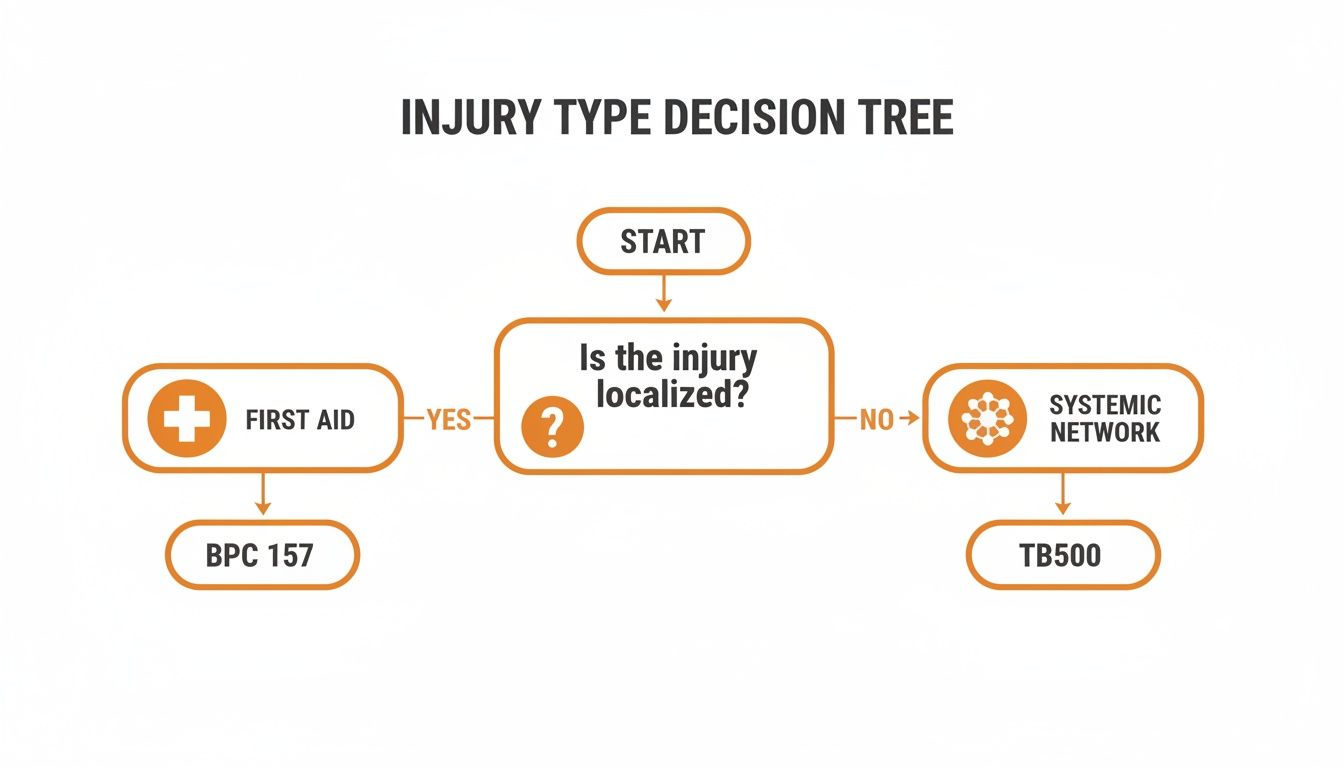
As the graphic shows, the logic is straightforward: for a single, isolated injury, BPC 157 is the go-to. For systemic issues impacting the whole body, TB500 is the more logical starting point.
Primary Tissue Affinity
Each peptide also seems to have a preference for certain types of tissue, which helps narrow down their best uses even further.
BPC 157 has a strong affinity for connective tissues. It shines when it comes to repairing tendons, ligaments, and the gut lining. Its ability to promote angiogenesis (the formation of new blood vessels) is a huge advantage for these tissues, which naturally have low blood flow and are notoriously slow to heal.
TB500 has a broader reach, with a significant impact on muscle tissue, skin, and even cardiac cells. Its key role in upregulating actin makes it highly effective for muscle recovery, minimizing scar tissue, and enhancing overall cellular mobility and flexibility.
Key Insight: Think of it like this—if you’re dealing with a classic case of tennis elbow (tendonitis), BPC 157 is the specialized tool for that specific job. But if you're battling post-workout muscle soreness across your entire body and generalized inflammation, TB500 offers a much more fitting, widespread solution.
Functional Roles in Healing
While both peptides help you heal, they play very different roles in that process. BPC 157 is a direct builder. It actively triggers the formation of new blood vessels and makes local tissues more receptive to growth factors, getting directly involved in the physical reconstruction of the damaged site.
TB500 is more of a facilitator or project manager. It doesn't build the new tissue itself, but it ensures that the "workers"—like stem cells and fibroblasts—can get to the job site quickly and efficiently. By improving cell migration and taming systemic inflammation, it creates the perfect environment for your body's own repair crews to work their magic.
For a quick summary, this comparison table breaks down the main differences.
BPC 157 vs TB500 Key Differences at a Glance
This table offers a scannable overview comparing the core characteristics, mechanisms, and ideal applications for both BPC 157 and TB500.
| Feature | BPC 157 | TB500 (Thymosin Beta-4 Fragment) |
|---|---|---|
| Scope of Action | Localized: Acts primarily at the site of injury. | Systemic: Circulates and acts throughout the body. |
| Primary Tissues | Tendons, ligaments, gut, nerves. | Muscle, skin, heart, connective tissue. |
| Main Mechanism | Promotes angiogenesis and growth hormone receptors. | Upregulates actin, enhances cell migration. |
| Inflammatory Role | Reduces inflammation locally at the injury site. | Provides a broad, systemic anti-inflammatory effect. |
| Best Use Case | Acute, specific injuries (e.g., torn ACL, tendonitis). | Widespread inflammation, muscle recovery, multiple injuries. |
Ultimately, choosing between BPC 157 and TB500—or deciding to use them together—boils down to the nature of your injury. For a single, well-defined problem, BPC 157 delivers the focused, intensive support you need. For broader, system-wide recovery challenges, TB500's global reach is unmatched. This fundamental difference is the key to making an informed decision.
Combining BPC 157 and TB500 for Synergistic Effects
While BPC 157 and TB500 are each impressive healing agents on their own, the real conversation in regenerative circles is about what happens when you use them together. This strategy, known as "stacking," has become a go-to for advanced recovery protocols.
The idea is straightforward: why force a choice between a localized repair specialist and a systemic healing coordinator when you can get both working in sync? This approach is all about creating a therapeutic synergy, hitting a complex injury from every possible angle for a more complete and rapid recovery.
The logic behind combining BPC 157 and TB500 is to merge their unique strengths. BPC 157 brings targeted, on-the-spot repair, while TB500 offers broad, body-wide support. Together, they form a powerful healing protocol that tackles both the immediate damage and the underlying systemic issues that can drag out the healing process.
The Therapeutic Rationale for Stacking
Stacking these two peptides isn't about just doubling down on healing; it's about orchestrating a multi-layered response to injury. Think of BPC 157 as the first responder arriving directly at the scene to stabilize the area, rebuild damaged structures, and get blood flowing again.
At the same time, TB500 is working in the background like a logistics manager, controlling the body's overall inflammatory response and dispatching cellular repair crews from all over the system to the site of injury.
This dual-action strategy is especially powerful for complex injuries. Take a severe ankle sprain, for example, where you’ve got damage to ligaments, tendons, and the surrounding muscle tissue.
BPC 157's Role: It would be administered near the ankle to directly trigger angiogenesis in the torn ligaments and accelerate tendon repair, focusing its potent regenerative power on the most heavily damaged structures.
TB500's Role: It circulates systemically to bring down inflammation and swelling throughout the entire joint, improve flexibility, and help the strained muscles recover more efficiently.
In this scenario, BPC 157 is rebuilding the foundation, while TB500 makes sure the whole area stays functional, flexible, and free from the chronic inflammation that so often stalls healing. For those looking into comprehensive recovery strategies, our guide on the best peptide stack for muscle growth can be a valuable related resource.
The synergistic effect is the key takeaway. BPC 157 provides the "what" (direct tissue repair), while TB500 enhances the "how" (systemic support and cellular mobility). This combination addresses not just the injury itself but the entire biological environment needed for optimal healing.
Common Stacking Protocols and Cycling
While any protocol needs to be tailored to the individual, a common approach involves administering both peptides at the same time over a set cycle. Because BPC 157 acts locally and TB500 acts systemically, they don’t compete for resources; they perfectly complement one another.
A typical cycle might last anywhere from four to eight weeks, followed by a break to let the body recalibrate. During a cycle, both peptides are often administered daily or every other day. One crucial point of administration: BPC 157 and TB500 should never be mixed in the same syringe. Each peptide has a distinct molecular structure and pH, and mixing them can degrade their stability and ruin their effectiveness.
Balanced Perspective and Professional Guidance
It's vital to keep a level head when considering a BPC 157 and TB500 stack. While the theory behind the synergy is solid and backed by a mountain of anecdotal reports, these protocols are still considered experimental. The overwhelming majority of data comes from preclinical animal studies, not large-scale human clinical trials.
The potential upsides are compelling, particularly for athletes or anyone dealing with stubborn, slow-healing injuries. The combination could theoretically cut down recovery times, manage pain more effectively, and result in stronger, more resilient tissue repair. However, the lack of standardized, FDA-approved protocols means users are navigating this space with very limited formal guidance.
This is why professional oversight is non-negotiable. Consulting with a clinician who is experienced in peptide therapy is absolutely essential to discuss your specific injury, health history, and recovery goals. A professional can help you decide if this combination is appropriate, guide you on sourcing from reputable compounding pharmacies, and help establish a protocol that puts safety first. Stacking BPC 157 and TB500 offers a promising strategy for next-level recovery, but it must be approached with caution, education, and expert medical supervision.
Administration Protocols and Safety Guidelines
Knowing how to properly administer peptides like BPC 157 and TB500 is just as crucial as understanding what they do. Since these are still considered experimental compounds, there’s no room for error when it comes to safety, sterility, and correct handling. This guide will walk you through common practices and safety points to help you have an informed discussion with a qualified healthcare provider.

Let's be clear: this information is purely for educational purposes and is not a substitute for professional medical advice. A clinician should be the one to determine your specific dosing and protocol after a complete health evaluation.
Reconstitution: The First Step
BPC 157 and TB500 don't arrive ready to use. They come as a lyophilized (freeze-dried) powder and must be reconstituted with bacteriostatic water first. This simple process brings the peptide back to life, turning it into a liquid for injection.
Here’s a quick overview of how it works:
- Gather Your Supplies: You'll need the peptide vial, a vial of bacteriostatic water, alcohol swabs, and a mixing syringe.
- Sterilize Everything: Clean the rubber stoppers on both vials thoroughly with an alcohol swab. This is a critical step for preventing contamination.
- Draw the Water: Use the syringe to draw up the prescribed amount of bacteriostatic water. A common volume is 1-2 mL, but this can change depending on the concentration you need.
- Inject Slowly and Carefully: Gently insert the needle into the peptide vial. Angle it so the water trickles down the side of the glass instead of spraying directly onto the powder. This helps protect the delicate peptide chains from damage.
- Mix Gently: Do not shake the vial. Shaking can destroy the peptide’s structure, rendering it useless. Instead, gently roll it between your palms or swirl it until the powder fully dissolves.
Once it's mixed, the peptide solution must be stored in the refrigerator to keep it stable and potent.
Administration Methods: Subcutaneous vs. Intramuscular
There are two primary ways to administer these peptides: subcutaneous (SubQ) and intramuscular (IM) injections. The best method usually depends on the specific peptide and what you're trying to achieve.
Subcutaneous (SubQ) Injections
This is the most common method for both BPC 157 and TB500. It involves injecting the peptide into the fatty layer just under the skin, which allows for a slow and steady release into the bloodstream. For BPC 157, a SubQ injection near the injury site—like close to a sore shoulder or knee—is often recommended to concentrate its healing effects locally.
Intramuscular (IM) Injections
IM injections send the peptide directly into the muscle tissue, which means it gets absorbed much faster. This method is less common for these peptides but might be used in specific cases under clinical supervision, especially for treating a severe muscle injury.
Critical Safety Note: Never mix BPC 157 and TB500 in the same syringe. Each peptide has a different molecular structure and pH. Combining them can cause them to break down, making them ineffective and potentially unsafe. Always draw and administer them in separate syringes, even if you’re injecting them in the same session.
Typical Dosing Ranges and Potential Side Effects
It's vital to remember that there are no FDA-approved dosages for BPC 157 or TB500. The ranges below are based on preclinical studies and anecdotal reports from practitioners.
- BPC 157: Doses typically fall between 250 to 500 micrograms (mcg) per day, often split into two separate injections.
- TB500: This peptide is usually dosed higher, anywhere from 500 mcg to 1 milligram (mg) per day, or in larger amounts administered a few times a week.
Side effects are generally mild and infrequent. The most common issues are temporary irritation, redness, or a bit of discomfort at the injection site. Less common effects might include changes in energy levels or mild nausea.
Because there are no long-term human studies, the full safety profile is still unknown. For this reason, starting with a lower dose to see how you tolerate it is a smart harm-reduction strategy. The only way to ensure your safety and design a proper protocol is by working with a healthcare professional.
Navigating the Murky Waters of Sourcing and Legality
Before you even think about using BPC 157 and TB500, you need to get one thing straight: their legal and regulatory status is a minefield. Neither of these peptides is approved by the Food and Drug Administration (FDA) for any human use. That means they can't be legally sold or marketed as a dietary supplement or medical drug.
This is why you'll almost always see them sold with the infamous "for research purposes only" or "not for human consumption" disclaimer. It's a legal loophole that allows chemical supply companies to sell these compounds without breaking federal law, but it shifts all the responsibility—and all the risk—directly onto you, the buyer. You're operating in a gray market, and that demands a serious dose of caution.
The Problem with "Research Chemicals"
Regulatory bodies are well aware of the buzz around these peptides. In the world of competitive sports, organizations like the World Anti-Doping Agency (WADA) have slammed the door shut, placing both BPC 157 and TB500 on their Prohibited List. This isn't just because of their potential to enhance performance; it's a direct response to the glaring lack of human safety data.
Despite this, public curiosity is exploding. From mid-2024 through 2025, online search interest for "BPC-157" and similar peptides skyrocketed, with some datasets showing search index values nearly doubling. This demand fuels a massive, unregulated online market where quality control is often a fantasy. You can find more data about peptide market trends on accio.com.
That "research chemical" label isn't just a suggestion; it's a giant red flag. It’s a clear signal that the vial in your hand has not been through the brutal, rigorous testing required to ensure a product is safe, pure, and effective for humans. Buying from these vendors is a gamble, plain and simple.
The High Stakes of Unregulated Sourcing
Rolling the dice on an unregulated online vendor for BPC 157 and TB500 is a dangerous game. Without any real oversight, you have absolutely no guarantee that what's on the label is what's in the vial.
Here’s what you’re risking:
- Purity Problems: The vial could contain a tiny fraction of the active peptide advertised, making it useless. You're paying for a dud.
- Contamination: These products can be loaded with nasty extras like heavy metals, bacteria, or other chemical junk left over from a sloppy manufacturing process.
- Flat-Out Fakes: The powder in your vial might be a different peptide entirely—or worse, just chalk dust with no active ingredient at all.
There's only one way to sidestep these dangers: work with a licensed medical provider who sources exclusively from reputable, regulated compounding pharmacies. These pharmacies operate under strict quality and purity standards, which means you get a product that's safe, accurately dosed, and actually is what it claims to be. It's the only responsible way to approach peptide therapy.
Common Questions About BPC 157 and TB500
When you're looking into peptide therapy, the practical details are what matter most. Let's cut through the noise and address the real-world questions that come up when using BPC 157 and TB500.
How Quickly Will I See Results?
This is probably the most common question, and the honest answer is: it depends. The timeline for results varies a lot based on your body and the specific injury you're dealing with. Some people report feeling subtle shifts in pain and mobility within the first week or two.
But for deep, structural tissue repair—like a torn ligament or a nagging tendon issue—the process is a marathon, not a sprint. You'll likely notice more significant, meaningful improvements after about four to six weeks of consistent use. That's because real healing, like cellular regeneration and building new blood vessels, simply takes time.
What’s the Right Cycle Length?
There's no single "magic" cycle length, as the protocol should always be tailored to your recovery goals and guided by a clinician. A typical cycle for tackling a specific injury usually runs between four and eight weeks.
This timeframe is generally enough to give the peptides time to support the most critical phases of tissue healing. Once you complete a cycle, it's standard practice to take a break of equal length. This lets your body normalize before you and your doctor decide if another round is necessary.
It's important to remember that chronic, long-standing injuries might need longer or even multiple cycles to get you where you want to be. Always work with a healthcare provider to map out a duration that makes sense for your situation.
Can I Inject Both Peptides at the Same Time?
Yes, you can absolutely administer both BPC 157 and TB500 in the same session, but here’s the critical rule: they must never be mixed in the same syringe. These are two different molecules with their own unique structures and stability.
The proper way to do it is to draw each peptide into a separate syringe. You can then inject them one after the other. For a localized injury, BPC 157 is often injected subcutaneously near the site, while TB500 can be administered in a different area, like the abdomen, for its systemic effect.
At Elite Bioscience, we connect you with licensed medical professionals and provide access to high-quality, third-party tested therapies. Explore our tailored peptide and wellness solutions designed for both safety and effectiveness. Learn more at elitebioscience.co.