


That nagging sense of worry or irritability you’re feeling? It might be more than just stress from a tough week. We're now seeing a clear link between anxiety and low testosterone, where a hormonal shortfall can show up as real psychological distress. This guide will walk you through that connection, covering the symptoms, how doctors figure it out, and what you can actually do about it.
Unpacking the Connection Between Anxiety and Low Testosterone
Have you ever felt like you're running on fumes, both physically and mentally? It’s easy to blame constant worry, a short fuse, or zero motivation on a demanding job or the chaos of daily life. But what if the real problem is deeper—something physiological? The link between our hormones and mental health is incredibly strong, and for a lot of men, that unexplained anxiety is a direct signal of declining testosterone levels.
This isn't just a hunch; it's grounded in solid science. The relationship between testosterone and anxiety is well-documented, with studies showing that men struggling with anxiety disorders often have significantly lower testosterone than their peers. The connection is all about how testosterone interacts with key brain chemicals like dopamine and serotonin, which are crucial for keeping your mood stable and your emotions in check. When T levels drop, that delicate chemical balance can get thrown off.
Why the Symptoms Overlap
One of the biggest hurdles in getting to the bottom of this is how much the symptoms of anxiety and low testosterone look alike. This confusion can leave you spinning your wheels, treating the psychological symptoms while the root hormonal issue goes completely ignored. It’s like trying to fix a flickering light by changing the lampshade when the problem is really in the wiring.
Here’s a look at the common symptoms that show up in both conditions:
- Irritability and Mood Swings: Feeling on edge or having your mood swing at the drop of a hat is a classic sign of both anxiety and a hormonal imbalance.
- Difficulty Concentrating: That "brain fog" making it hard to focus can come from the mental burnout of anxiety or the cognitive impact of low T.
- Poor Sleep Quality: Racing thoughts from anxiety can definitely rob you of sleep, but low testosterone also messes with your natural sleep cycles, leaving you exhausted.
- Decreased Libido: While low sex drive is famously tied to low T, don't underestimate how much chronic stress and anxiety can tank your libido, too.
To make this clearer, here’s a quick-glance table showing how these symptoms line up, overlap, or stand alone.
Anxiety vs Low Testosterone Key Symptom Overlap
| Symptom | Primarily Anxiety | Primarily Low Testosterone | Overlapping Symptom |
|---|---|---|---|
| Panic Attacks | ✔️ | ||
| Muscle Loss | ✔️ | ||
| Irritability | ✔️ | ||
| Fatigue | ✔️ | ||
| Gynecomastia | ✔️ | ||
| Poor Sleep | ✔️ | ||
| Excessive Worry | ✔️ | ||
| Brain Fog | ✔️ | ||
| Low Libido | ✔️ | ||
| Erectile Dysfunction | ✔️ |
This table really highlights the diagnostic challenge. Because so many key indicators like fatigue, poor sleep, and low libido are shared, it's easy to misattribute the cause without proper testing.
The crucial takeaway is that your mental state and hormonal health are not separate entities. They are deeply interconnected, and an imbalance in one area can create significant problems in the other.
Since testosterone levels naturally dip as we get older, figuring out what's normal for your age is a critical first step. You can learn more by checking out our guide to testosterone levels by age, which can give you some valuable perspective. Simply recognizing this link is the first real step toward finding a solution that tackles the true cause of your distress.
How Testosterone Influences Your Brain and Mood
Think of your brain’s mood regulation system as a complex symphony orchestra. Neurotransmitters like serotonin and dopamine are the lead musicians, responsible for feelings of well-being, motivation, and calm. In this picture, testosterone is the conductor, making sure every instrument plays in harmony to create a balanced emotional state. When testosterone levels are where they should be, the conductor is sharp, and the music is beautiful.
But when testosterone levels drop, it’s like the conductor has gotten tired or distracted. The signals get muddled, the timing is off, and the once-harmonious orchestra descends into a chaotic mess. This is exactly how anxiety and low testosterone are connected on a neurological level. A hormonal dip directly messes with the brain chemicals that are supposed to keep you calm and resilient.
Your Brain's Fear Center on Overdrive
Deep inside your brain, there's a tiny, almond-shaped structure called the amygdala. This is your primal fear and emotional command center. It’s the part of your brain that screams "DANGER!" when you face a threat, kicking off the fight-or-flight response. Testosterone plays a massive role in keeping the amygdala from going rogue.
When testosterone is low, the amygdala can become hyperactive. It starts seeing everyday, non-threatening situations as major dangers, keeping you stuck in a constant state of high alert. This physiological state is what you experience as generalized anxiety—that nagging feeling of dread or worry that seems to have no clear cause.
At the same time, the prefrontal cortex—the logical, rational part of your brain that handles decision-making and emotional control—loses some of its influence. Low testosterone makes it harder for the prefrontal cortex to calm down the over-revving amygdala. You might know you shouldn't be worrying, but you just can't seem to shut off the anxious thoughts.
This infographic shows how these two conditions—one hormonal, one psychological—are often intertwined.
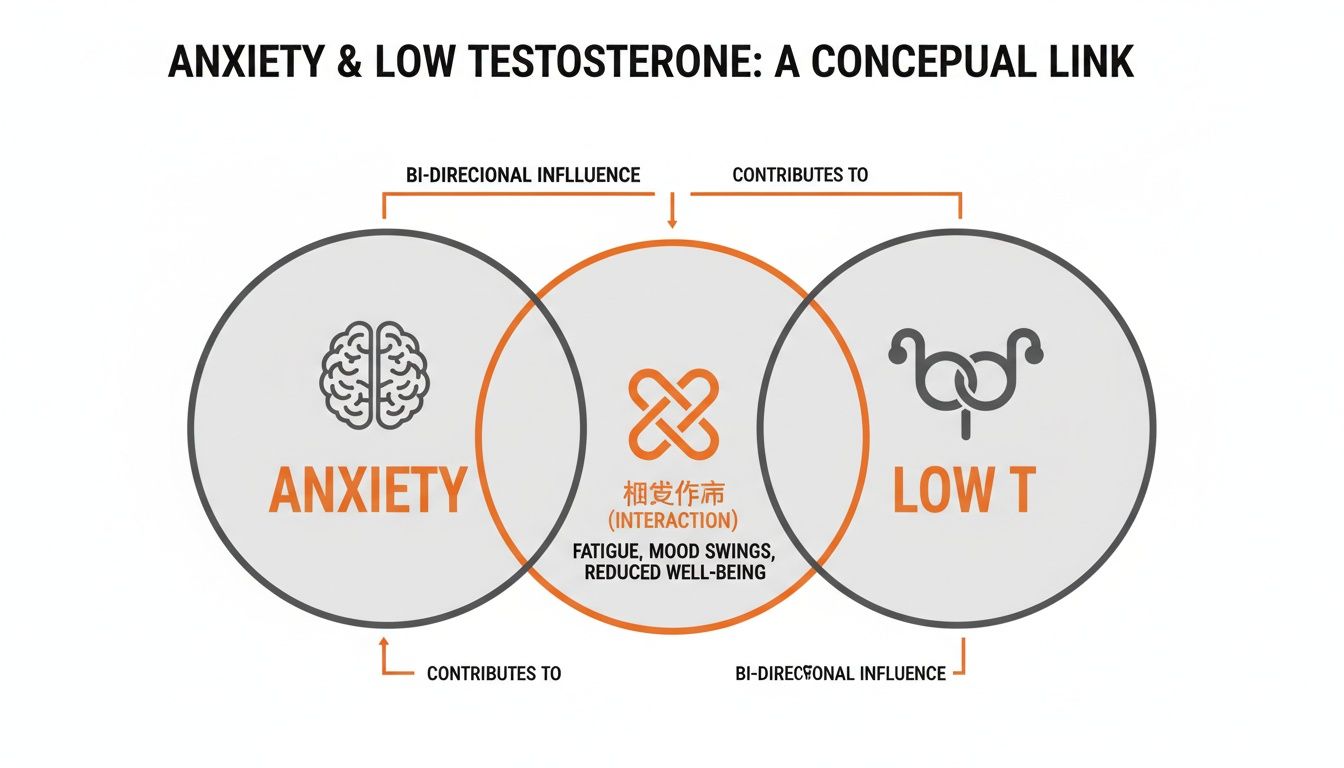
The image makes it clear that while anxiety and low T are separate issues, their symptoms and the biological pathways behind them can seriously overlap.
The Cortisol Connection
Another key player in this whole dynamic is cortisol, often called the "stress hormone." Chronic stress and anxiety keep your cortisol levels cranked up. The problem is, cortisol and testosterone have an inverse relationship—when cortisol goes high, it actively shuts down testosterone production.
This creates a vicious cycle that can feel impossible to escape:
- Low testosterone makes you more vulnerable to stress and anxiety.
- Your increased anxiety triggers the release of more cortisol.
- The elevated cortisol further lowers your testosterone levels.
- The even lower testosterone makes your anxiety and stress worse.
This downward spiral can throw everything off, from your energy levels to your ability to think clearly, often leading to persistent brain fog. If you're struggling with mental clarity, understanding what causes brain fog can offer more insight into this frustrating symptom. Breaking this cycle usually means tackling both the hormonal imbalance and the psychological stress.
The key takeaway is that your feelings of anxiety may not be "all in your head." They could be a direct result of a tangible, measurable hormonal imbalance that is disrupting your brain's natural ability to regulate mood and manage stress.
Getting a Clear Diagnosis From Your Doctor
Figuring out what's really going on can feel like a huge hurdle, especially when you're already wrestling with anxiety. But knowing what to expect from your doctor can turn that feeling of uncertainty into a clear path forward. Getting a solid diagnosis isn't a guessing game; it's a structured process designed to find the real source of your symptoms so you get the right help.
It all starts with a detailed conversation. Think of your doctor as a detective trying to piece together a complex puzzle—your health. You'll need to be ready to talk openly about your symptoms, including your mental state, energy slumps, sleep quality, and sex drive. They’ll also dig into your lifestyle, from diet and exercise to stress levels and any medications you're on, since all these things can throw testosterone out of whack.

The Crucial Blood Tests Explained
After that initial chat, the next step is a simple blood test. This isn't just one measurement; it's a comprehensive snapshot of your hormonal health. Your doctor will schedule it for the morning, usually between 7 a.m. and 10 a.m. That’s because your testosterone levels peak early in the day, giving the most accurate reading possible.
Your doctor is looking for two key numbers that tell the whole story:
- Total Testosterone: This is a measure of all the testosterone floating around in your blood. Think of it like the total amount of gas in your car's tank—it gives you a good overall picture, but it doesn’t tell you how much fuel is actually getting to the engine.
- Free Testosterone: This measures the testosterone that's unbound and biologically active, ready for your body's cells to use. This is the "usable" fuel. It’s entirely possible to have normal total testosterone but low free testosterone, which can absolutely cause the symptoms of anxiety and low testosterone.
Getting both of these numbers is non-negotiable for an accurate diagnosis. It ensures your doctor sees the complete picture, not just a single, potentially misleading, piece of data.
Your blood test results provide the objective data needed to connect your subjective feelings of anxiety and fatigue to a potential physiological cause. It’s the critical step that separates guessing from knowing.
Ruling Out Other Conditions
A huge part of any good diagnostic process is making sure we’re not confusing low T with something else. Symptoms like fatigue, mood swings, and brain fog are incredibly common across many different health issues, so your doctor will perform a differential diagnosis. It’s the medical equivalent of checking all possible suspects before zeroing in on the most likely culprit.
Your doctor will likely run tests to rule out other conditions that can mimic low testosterone and trigger anxiety, including:
- Thyroid Disorders: Both an underactive (hypothyroidism) and overactive (hyperthyroidism) thyroid can completely torpedo your energy and mood.
- Vitamin Deficiencies: Low levels of key nutrients, especially Vitamin D and B12, are notorious for causing crushing fatigue and cognitive problems.
- Depression: While low testosterone can certainly cause depressive symptoms, primary depression is its own clinical diagnosis that has to be considered.
- Medication Side Effects: Certain prescriptions, including some antidepressants, opioids, and corticosteroids, are known to suppress testosterone production.
By carefully and methodically ruling out these other possibilities, your doctor can be confident that low testosterone is the root issue that needs addressing. This thoughtful approach ensures your treatment plan is targeted, effective, and, most importantly, right for you. It’s the final piece of the puzzle to getting a clear answer and starting on the path to feeling like yourself again.
Finding the Right Treatment Path for You
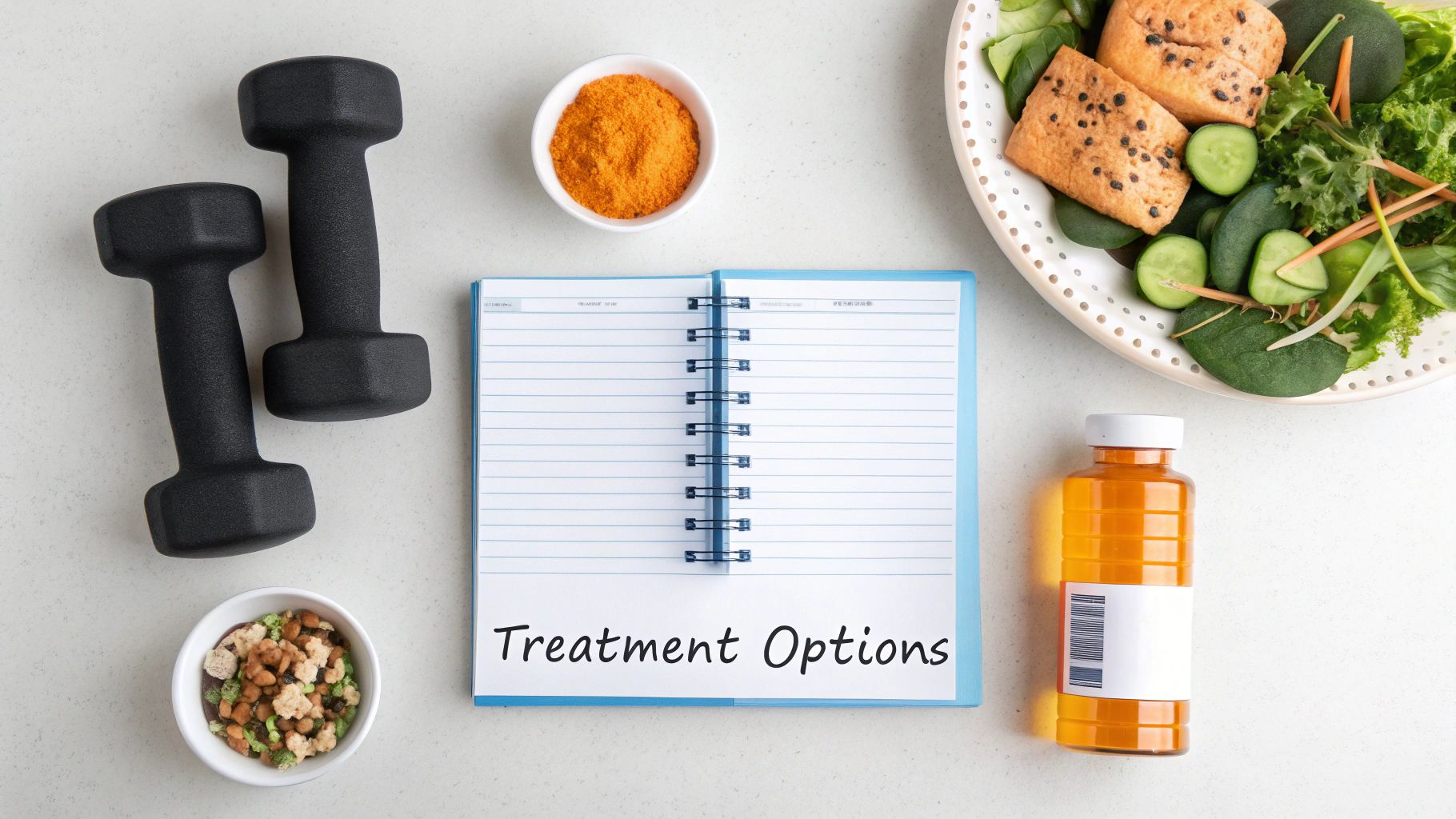
Getting a low testosterone diagnosis can be a strange mix of relief and uncertainty. On one hand, you finally have an answer—a real, biological reason for the anxiety, fatigue, and lack of drive. But on the other hand, what's next?
The good news is there isn't just one road forward. The most effective approach is almost always a combination of strategies, starting with the powerful, foundational habits you can start building today.
Think of it like tuning a high-performance engine. Before you start messing with specialized fuel additives, you have to make sure it's getting the basics right: premium fuel, regular oil changes, and proper maintenance. For your body, this means creating a healthy environment where your hormones can thrive. These lifestyle shifts are powerful on their own and can make any medical treatments you might need later far more effective.
Building Your Foundation with Lifestyle Changes
Before we even talk about medical options, we have to address the core factors that directly impact both testosterone and anxiety. These aren't just suggestions—they are proven, non-negotiable strategies that can create real, measurable change in how you feel, both mentally and physically.
One of the most potent natural testosterone boosters is targeted strength training. We're talking about big, compound exercises that recruit multiple muscle groups—think squats, deadlifts, and bench presses. These movements trigger a much stronger hormonal response than isolated exercises. This kind of training not only helps rebuild muscle mass that can decline with low T but also acts as a fantastic outlet for pent-up stress and anxiety.
What you eat is just as crucial. Your body can't produce testosterone out of thin air; it needs the right raw materials. Make sure your diet is packed with these key nutrients:
- Zinc: An absolute must-have for testosterone synthesis. You can find it in oysters, beef, and pumpkin seeds.
- Vitamin D: Often called the "sunshine vitamin," healthy Vitamin D levels are tightly linked to optimal testosterone production.
- Healthy Fats: Cholesterol gets a bad rap, but healthy fats from sources like avocados, nuts, and olive oil provide the essential backbone needed to create steroid hormones—including testosterone.
Finally, you have to get a handle on stress. Chronic stress floods your body with cortisol, a hormone that is a direct enemy of testosterone. When cortisol is high, testosterone is suppressed. Period. Integrating stress-management practices like mindfulness, meditation, or even just a consistent daily walk can bring cortisol down, giving your testosterone a fighting chance to recover.
Addressing Anxiety with Targeted Therapy
While getting your testosterone back on track can fix the physiological driver of your anxiety, you may have also built up mental habits and thought patterns that won't just disappear on their own. This is where psychotherapy, especially Cognitive Behavioral Therapy (CBT), becomes an invaluable part of your toolkit.
CBT is a practical, no-nonsense approach that teaches you to identify, challenge, and reframe the negative thought loops that keep anxiety going. It’s like having a coach for your brain, giving you concrete skills to manage anxious feelings as they arise. For a man dealing with the dual challenge of anxiety and low testosterone, CBT helps break that cycle of worry, even as you work on fixing the underlying hormonal problem.
Therapy and hormonal treatment are not an "either/or" choice. Combining them creates a powerful synergy, addressing both the biological roots and the psychological symptoms for more comprehensive and lasting relief.
Medical Interventions and Testosterone Replacement Therapy
When lifestyle changes and therapy aren't enough to get your hormone levels where they need to be and your symptoms are still holding you back, it might be time to discuss medical options. This could range from anti-anxiety medications (anxiolytics) to the most direct solution for low T: Testosterone Replacement Therapy (TRT).
TRT is exactly what it sounds like: supplementing your body’s natural production to bring your testosterone levels back into a healthy, optimal range. For many men, this is a game-changer. Restoring testosterone can lead to dramatic improvements in mood, a sharp decrease in anxiety, more energy, clearer thinking, and a renewed sense of confidence. The goal of TRT isn’t to push your levels to superhuman heights, but simply to return you to the balanced, vital state you’ve been missing.
But let's be clear: TRT is a significant medical decision that comes with potential risks and side effects that you need to discuss thoroughly with your doctor. These can include an increase in red blood cell count, oily skin or acne, and potential impacts on fertility. That’s why consistent monitoring through regular blood work is a non-negotiable part of any responsible TRT program—it ensures your treatment is both safe and effective. If you’re ready for a deeper dive, you can learn more about the complete range of low testosterone treatment options available.
Your journey back to feeling like yourself starts with a personalized plan. The most successful treatment approaches combine different strategies to address your unique health profile, symptoms, and goals.
Below is a table comparing these different avenues. It's designed to help you see how each piece of the puzzle fits into a complete wellness strategy.
Comparing Treatment Approaches for Anxiety and Low Testosterone
| Treatment Approach | Primary Target | Potential Benefits | Key Considerations |
|---|---|---|---|
| Lifestyle Changes | Both | Improved T production, reduced anxiety, better overall health, enhanced effects of other treatments. | Requires consistency and long-term commitment. Results are gradual. |
| Psychotherapy (CBT) | Anxiety | Develops coping skills, reframes negative thoughts, provides long-term mental resilience. | Requires active participation and can take time to show results. Does not directly raise T. |
| Anxiolytics | Anxiety | Rapid relief from acute anxiety symptoms. | Can have side effects (drowsiness, dependency). Does not address the underlying cause of low T. |
| TRT | Low Testosterone | Directly restores hormone levels, reduces anxiety, boosts energy, improves mood and libido. | Requires medical supervision, ongoing monitoring, and has potential side effects. |
This comparison makes it clear that a holistic approach is often the most powerful. You might start with lifestyle changes and therapy, and then, if needed, integrate TRT under medical guidance. Ultimately, the right path is the one you create in partnership with your doctor—a strategy that respects your body's needs and helps you get back to feeling your best.
Your Practical Action Plan to Move Forward
Knowledge is a great starting point, but action is what creates real change. You now have a solid grasp of the deep connection between anxiety and low testosterone, but what do you actually do next? This roadmap is designed to turn that understanding into a clear, concrete plan, guiding you from where you are now to a place of proactive control over your health.
The first step doesn't even require a doctor's appointment. It starts with a simple, honest self-assessment. Take some time to actually write down what you're experiencing day-to-day. Don't just think, "I'm tired"—get specific. Is it a "can't drag myself out of bed" kind of fatigue, or is it more of a "hit a wall at 3 p.m." slump? Make notes on your mood, energy levels, mental fog, and sex drive.
This personal log isn't for self-diagnosis. Think of it as a powerful tool that will make your future conversation with a doctor incredibly productive. Walking in with specific examples helps your healthcare provider see the full picture, not just a generic list of symptoms.
Finding the Right Medical Partner
Once you've got your notes, it's time to find the right professional. Not every doctor specializes in hormonal health, and finding someone who really gets it is critical for an accurate diagnosis and an effective treatment plan.
Your two best bets are typically:
- An Endocrinologist: This is a hormone specialist. They are the experts in diagnosing and treating complex hormonal imbalances, including low testosterone.
- A Men's Health Clinic or Specialist: These clinics, including many telehealth providers, are laser-focused on issues like low T and related men's health concerns. They are often highly experienced in Testosterone Replacement Therapy (TRT).
Your primary care physician is a great place to start for a referral, but don't ever hesitate to seek out a specialist directly if you feel your concerns aren't being fully heard.
Remember, you are your own best advocate. Seeking a second opinion or finding a specialist who truly understands the nuances of hormonal health is a sign of empowerment, not a lack of trust.
Preparing for Your First Appointment
Walking into your appointment prepared can make all the difference. Your goal is to have a collaborative, effective discussion that leads to a clear plan forward.
Here’s a quick checklist to help you get the most out of your visit:
- Bring Your Symptom Log: Share your detailed notes on fatigue, mood swings, brain fog, and any other specific issues you’ve been tracking.
- List All Medications and Supplements: Some prescriptions and even over-the-counter supplements can mess with testosterone levels.
- Be Ready to Discuss Your Lifestyle: Be open and honest about your diet, exercise habits, sleep quality, and stress levels.
- Prepare Your Questions: Don't be shy. Ask about specific blood tests (like the difference between "total" and "free" testosterone), the pros and cons of different treatments, and what a long-term plan would look like.
This level of preparation ensures nothing gets overlooked and shows your doctor you're serious about getting to the root of the problem. Your journey back to feeling like yourself starts with these decisive, well-informed actions. When you combine professional medical support with your own commitment to a healthier lifestyle and mental health care, you create the most powerful strategy for reclaiming your vitality. You're now equipped to move forward with confidence.
Your Questions Answered
When you're dealing with the tangled web of anxiety and low testosterone, a lot of questions come up. Let's cut through the noise and get you some straight answers based on real clinical experience.
Can Treating Low Testosterone Completely Cure My Anxiety?
While getting your testosterone levels right can dramatically reduce—or even get rid of—anxiety symptoms for a lot of guys, it's rarely a single "cure." It's better to think of your hormones as a critical piece of your mental health puzzle. If a hormonal imbalance is the main driver of your anxiety, then Testosterone Replacement Therapy (TRT) can feel like a life-changing breakthrough.
But anxiety is often a multi-headed beast. If things like chronic stress, deep-seated psychological patterns, or lifestyle habits are also in the mix, you'll get the best results with a combined approach. Fixing the hormonal foundation with TRT makes everything else—like therapy or stress management—far more effective. It’s like clearing the static on a radio so you can finally hear the music clearly.
How Long Until I Feel Less Anxious After Starting TRT?
Everyone's timeline is a little different, but most men start noticing positive shifts in their mood, energy, and overall sense of well-being within the first 3 to 6 weeks of TRT. This initial phase often brings more motivation and less of that on-edge irritability.
For the more significant, stable relief from persistent anxiety, you're typically looking at the 3 to 6-month mark. This longer runway gives your hormone levels time to fully stabilize and allows your brain chemistry to adapt. It’s a gradual process, so patience and consistency are your best friends here.
It's absolutely crucial to keep an open line of communication with your doctor during this period. They may need to fine-tune your dosage to find that sweet spot for your mind and body, ensuring you get the best possible outcome.
Are There Natural Ways to Boost Testosterone?
Absolutely. The lifestyle choices you make every day have a powerful and direct impact on both your testosterone and your anxiety. While they might not replace medical treatment for clinically low T, they are the non-negotiable foundation for your hormonal health.
Here are four proven strategies you can start today:
Hit the Weights: Compound exercises that recruit large muscle groups are fantastic for signaling your body to produce more testosterone. Think squats, deadlifts, overhead presses, and rows. This kind of training is also an incredible outlet for stress.
Fuel Your Body Right: Your body can't build hormones out of thin air. Make sure your diet is loaded with key nutrients like zinc (found in beef, oysters, and pumpkin seeds), vitamin D (from sunlight and fortified foods), and healthy fats (from avocados, nuts, and olive oil).
Make Sleep a Priority: Your body does most of its testosterone production during the deep stages of sleep. Getting a solid 7-9 hours of quality, uninterrupted sleep each night is one of the most effective things you can do for your hormonal balance.
Manage Your Stress Head-On: Chronic stress floods your system with cortisol, a hormone that actively slams the brakes on testosterone production. Practices like meditation, deep breathing, or even just a daily walk in nature can help lower cortisol, dial down anxiety, and give your testosterone a chance to recover.
Can Anxiety Itself Cause Low Testosterone?
Yes, this is a two-way street that can create a frustrating, vicious cycle. When you're stuck in a state of chronic anxiety, your body is in a prolonged stress response. This means your adrenal glands are constantly pumping out the stress hormone, cortisol.
Here's the problem: cortisol and testosterone have an inverse relationship. When cortisol is high, it sends a signal to your body to dial back testosterone production. This means your constant state of worry could be actively contributing to the very hormonal imbalance that's making your anxiety worse.
It creates a downward spiral:
- Chronic anxiety raises cortisol.
- High cortisol suppresses testosterone.
- Lower testosterone makes you even more susceptible to anxiety and stress.
Breaking this cycle usually requires attacking it from both sides: using therapy and stress-management techniques to address the anxiety, while also taking steps—whether natural or medical—to support healthy testosterone levels. This dual approach is often the key to lasting relief.
At Elite Bioscience, we provide the resources and treatments to help you restore your hormonal balance and reclaim your mental well-being. If you're ready to move from uncertainty to action, explore our personalized therapy options.
Discover Your Path to Hormonal Balance with Elite Bioscience