
The connection between anxiety and testosterone is more direct than most people realize. When this key hormone is low or out of balance, it can seriously mess with your brain chemistry. The result? You might find yourself feeling irritable, constantly on edge, or just unable to handle stress the way you used to.
The Hidden Link Between Your Mood and Hormones

It’s a feeling many men know but can't quite put their finger on—that nagging, low-level anxiety that doesn’t seem tied to anything specific happening in your life. You snap for no real reason or feel overwhelmed by things that once rolled right off your back.
This isn't just about "having a bad day." It could be a clear signal that your body's hormonal foundation is shaky.
Think of testosterone as your brain's built-in emotional stabilizer. When levels are where they should be, you can navigate life's inevitable ups and downs with resilience and a sense of calm. But when those levels drop, you start to feel every single bump in the road, leaving you vulnerable to a constant state of worry and unease.
Why Hormones Are So Crucial for Mental Health
This isn't just a hunch; it's backed by solid biological evidence. Studies consistently show that men with testosterone levels in the lowest 10th percentile report significantly higher anxiety scores on standardized tests compared to men with healthier levels.
This connection is a big deal, especially when you consider that over 3 million American men are diagnosed with hypogonadism (clinically low testosterone) every year. It’s a huge, often-missed piece of the men's mental health puzzle. To dig deeper, you can explore how low T affects anxiety and acts as a natural buffer against feelings of fear and panic.
This guide is designed to give you a clear roadmap. We're going to break down:
- The actual science of how testosterone works in your brain.
- The confusing, overlapping symptoms of anxiety and hormonal imbalance.
- Practical, actionable steps for getting a proper diagnosis and finding real solutions.
Armed with this knowledge, you can go from feeling frustrated and in the dark to feeling empowered and back in control of your health.
Your mood isn't just in your head—it's deeply tied to your body's chemistry. Understanding that a hormonal imbalance could be the true source of your anxiety is the first step toward finding lasting relief.
How Low T and Anxiety Impact Your Day-to-Day Life
When low testosterone fuels your anxiety, the effects aren't just limited to your mood. They spill over into every part of your life, from your performance at work to your relationships at home and your overall sense of well-being.
Living in a constant state of anxiety is draining. It kills your motivation, fogs up your thinking, and makes it hard to find joy in the things you once loved. This isn't a character flaw or a personal failing—it's a physiological problem that needs a real, medical solution. This article will help you make sense of your symptoms and learn about the options available to restore your balance.
The table below gives you a quick snapshot of how testosterone levels can shape your daily experience.
How Testosterone Levels Impact Your Daily Mood
| Symptom Area | Effects of Low Testosterone | Effects of Balanced Testosterone |
|---|---|---|
| Mood Regulation | Increased irritability, mood swings, and a persistent "on-edge" feeling. | Stable moods, improved emotional resilience, and a sense of calm. |
| Confidence | Self-doubt, social anxiety, and a general lack of assertiveness. | Enhanced self-esteem, greater social confidence, and a feeling of being in control. |
| Motivation & Drive | Apathy, procrastination, and a loss of interest in goals or hobbies. | Increased drive, ambition, and a proactive approach to challenges. |
| Stress Response | Easily overwhelmed by daily stressors; prolonged feelings of worry. | Better ability to handle pressure and bounce back quickly from stressful events. |
| Cognitive Function | "Brain fog," difficulty concentrating, and poor focus. | Mental clarity, sharp focus, and improved cognitive performance. |
Looking at these side-by-side, it's easy to see how getting your hormones in check is about far more than just physical health—it's foundational to your mental and emotional well-being.
How Testosterone Influences Your Brain Chemistry
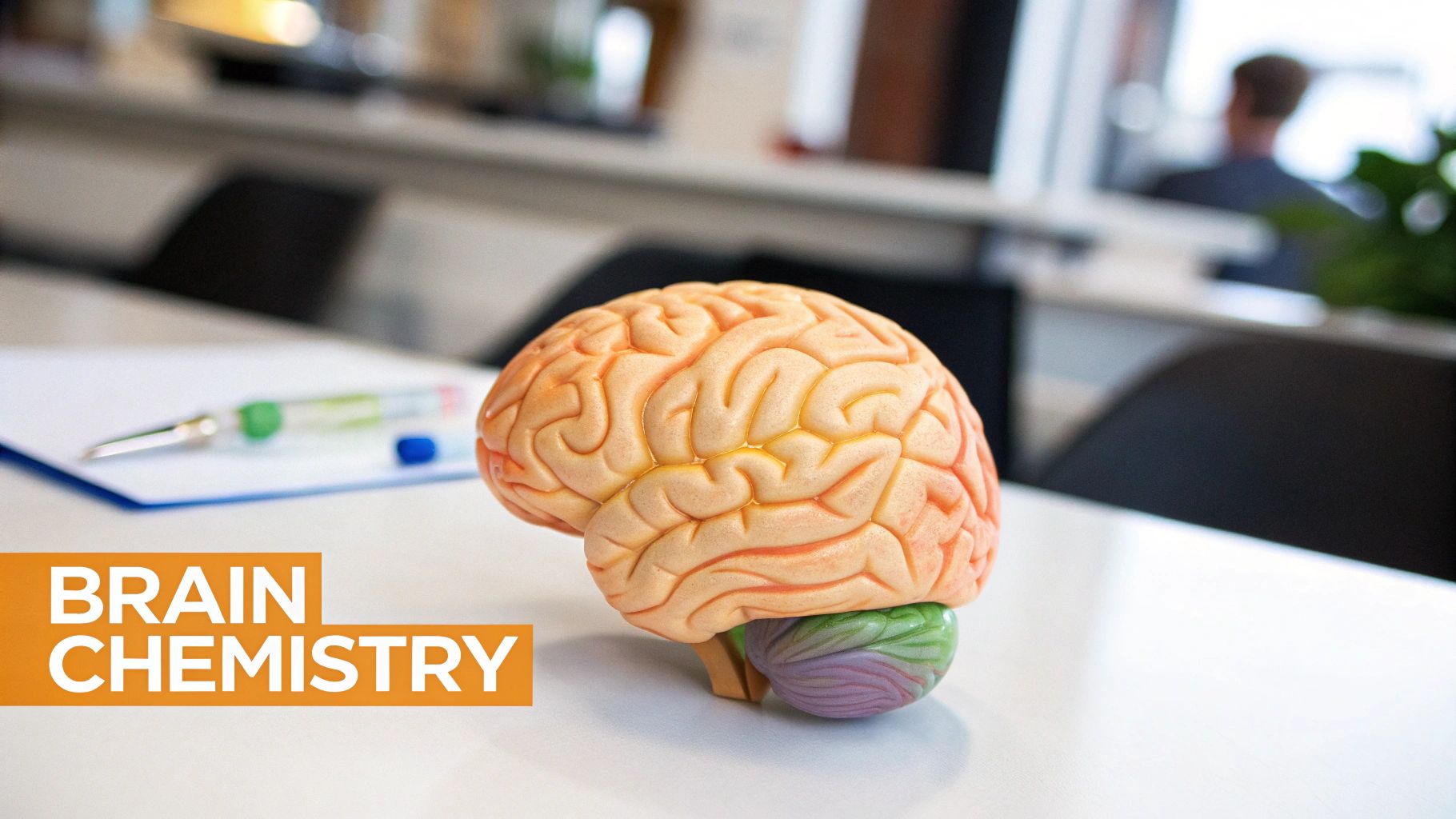
To really understand the connection between testosterone and anxiety, we have to go deeper than just surface-level mood swings. The relationship is built right into your brain's complex chemistry, where testosterone acts as a powerful regulating force. It's much more than a hormone for building muscle or fueling libido; it’s a crucial manager of your neurological health.
Imagine your brain’s most important neurotransmitters—serotonin (the mood stabilizer) and dopamine (the reward chemical)—as a finely tuned orchestra. Testosterone is the conductor. When the conductor is confident and in control, the result is beautiful, harmonious music. But if the conductor is weak or missing, the orchestra falls into disarray, creating a chaotic jumble of anxiety and unease.
This isn't just a convenient metaphor. Testosterone physically interacts with the parts of your brain that are responsible for processing emotions.
The Brain’s Emotional Command Center
Two areas of the brain are especially sensitive to testosterone levels: the amygdala and the hippocampus. These aren’t just obscure biological terms; they're the command centers that dictate your emotional responses every single day.
The Amygdala: Your Fear Hub. This almond-shaped bundle of neurons is your brain’s internal alarm system, constantly scanning for threats and processing fear. Healthy testosterone levels help keep the amygdala's reactions appropriate, preventing it from sounding the alarm over minor stressors. When testosterone is low, this system becomes hyper-sensitive, kicking you into a fight-or-flight state over things that shouldn't feel so overwhelming.
The Hippocampus: Your Mood and Memory Regulator. This region is essential for learning, memory, and regulating your mood. Crucially, it provides context for your fears. For example, it’s the part of your brain that reminds you the big presentation you’re nervous about isn't actually a life-or-death situation. Low testosterone weakens the hippocampus, making it much harder to calm the amygdala's fear signals and contributing to a chronic state of anxiety.
A hormonal imbalance can physically alter your brain's wiring. Low testosterone leaves you more vulnerable to stress and less able to bounce back, reinforcing why hormonal health is so fundamental to mental well-being.
This imbalance also messes with your ability to think clearly, especially under pressure. That "brain fog" and difficulty concentrating that so often come with low T are a direct result of this neurological disruption. For a closer look at this symptom, check out our guide on what causes brain fog.
New Discoveries in Hormonal Anxiety
We're constantly learning more about how deep this connection runs. It’s not just some vague association; scientists can now see the direct, mechanical link at a cellular level.
For instance, recent research has pinpointed a specific pathway that helps explain how low testosterone can fuel anxiety. A groundbreaking 2023 study uncovered a direct neural link involving a receptor in the hippocampus called TACR3. Researchers found that low testosterone messes with the brain’s ability to adapt and rewire itself under stress—a process known as synaptic plasticity.
This is a huge deal, especially because we know that mutations in the TACR3 gene cause a condition that severely limits testosterone production while also triggering anxiety and depression in young men. You can dig into the specifics of these anxiety and testosterone findings on neurosciencenews.com.
Discoveries like this help explain why restoring testosterone levels can have such a profound and positive impact on mental health. It’s not about masking symptoms; it’s about fixing a core physiological problem that starts deep within your brain's chemistry. Understanding this science helps reframe anxiety, moving it from a personal failing to a potential symptom of a treatable medical issue. When your hormones are balanced, your brain has the tools it needs to manage stress effectively, letting you finally feel like yourself again.
Connecting the Dots: When Physical and Mental Symptoms Collide
Low testosterone rarely shows up with a single, blaring alarm bell. It’s more like a slow leak—a collection of small, nagging issues that are all too easy to explain away.
Feeling irritable? Must be a tough week at work. Dragging yourself through the day? Probably didn't sleep well. Libido taking a nosedive? Just stress. But what if they aren't separate problems? What if they're all connected?
When you start to see these seemingly random issues as a pattern, a much clearer picture emerges. The link between anxiety and testosterone isn't just a mental state; it's a full-body experience where physical exhaustion and mental strain amplify each other. Learning to spot these "symptom clusters" is the first step toward getting real answers.
This way of thinking helps you zoom out. Instead of playing whack-a-mole with individual symptoms, you can start looking for a single root cause—like a hormone imbalance—that could be driving everything.
The Mental and Emotional Cluster
This is often where the first whispers of a problem begin, but they’re also the easiest to dismiss as stress or burnout. When testosterone levels fall, your brain’s ability to regulate mood and emotion can take a direct hit. The result? You just feel… off.
Look for these common signs:
- A Constant Hum of Anxiety: This isn't just pre-presentation jitters. It's a persistent, low-grade worry that follows you around, a sense of unease or dread without a clear source.
- Irritability on a Hair Trigger: Suddenly, small frustrations feel like massive roadblocks. You might find yourself snapping at family or feeling uncharacteristically impatient with colleagues over minor things.
- Persistent Brain Fog: It feels like you're trying to think through molasses. You might struggle to focus, have trouble recalling names or facts, or find that making simple decisions feels overwhelming.
- Vanishing Motivation: The drive you once had to hit the gym, tackle a new project, or even enjoy your hobbies seems to have evaporated, leaving a feeling of apathy in its place.
It's crucial to understand that these aren't signs of a personal failing or a lack of willpower. They are real, physiological responses to a chemical shift in your brain, making it almost impossible to feel like your normal, capable self.
Think of it like trying to run a high-performance computer with a low battery. Everything still works, but it's slow, glitchy, and prone to crashing. When testosterone is low, your brain—your mood, focus, and drive—is constantly running in power-saver mode.
The Physical Symptom Cluster
While the mental symptoms can be disruptive, the physical signs are often what finally convince men that something is truly wrong. These are tangible changes you can see and feel, things you can’t just chalk up to a bad day. The connection here is direct: when you feel physically drained or weak, it naturally makes you feel more vulnerable and anxious.
This cluster is marked by:
- Deep, Unshakeable Fatigue: This isn't normal tiredness. It’s a profound, bone-deep exhaustion that a good night's sleep can't fix. You might wake up feeling just as wiped out as you were when you went to bed.
- Losing Ground at the Gym: Despite putting in the work, you might notice your strength declining, muscle definition fading, or that it takes way longer to recover from workouts than it used to.
- An Increase in Body Fat: Low testosterone can mess with your metabolism, often leading to stubborn fat gain, especially around the stomach and chest.
- Aches and Pains: Some men also report a general increase in joint pain or a feeling of being physically run-down.
The Sexual Health Cluster
For many men, changes in sexual function are the most alarming symptoms—and the clearest signal that hormones are at play. Because our sexual health is so deeply tied to our confidence and sense of self, any disruption here can pour fuel on the fire of anxiety and self-doubt.
The main symptoms to watch for are:
- Plummeting Libido: A significant drop in your interest in sex is one of the classic hallmarks of low testosterone.
- Erectile Dysfunction (ED): Trouble getting or maintaining an erection can be a direct consequence of the hormonal imbalance.
- Fewer Spontaneous Erections: A decline in morning or nighttime erections is another tell-tale sign that shouldn't be ignored.
When you start experiencing symptoms from all three of these clusters at once, it’s a powerful clue. It suggests you're dealing with something more fundamental than just stress or the normal effects of aging. This combination is your body's way of signaling a potential hormonal issue, and it's a very good reason to talk to a doctor and get a proper diagnosis.
Getting a Clear Diagnosis for Your Symptoms
Pinpointing your symptoms is a huge first step, but it’s only half the battle. To really get to the bottom of what’s happening with your body and mind, you need hard data. That means getting a clear, professional diagnosis, starting with a comprehensive blood test that measures the key markers tied to the complex relationship between anxiety and testosterone.
This isn't just about confirming a gut feeling. It’s about getting a precise blueprint of your hormonal health. A simple lab test can finally connect the dots between that lingering anxiety, persistent fatigue, and other strange symptoms, moving you from a place of uncertainty to a clear path forward.
What a Comprehensive Blood Panel Really Tells You
When you get tested for low testosterone, a quality panel goes way beyond a single number. Think of it like a full diagnostic check on your car—you wouldn’t just glance at the fuel gauge. To get the whole story, you’d look at the oil pressure, engine performance, and electrical systems. A proper hormone panel works exactly the same way.
Here’s what a good workup will typically measure:
- Total Testosterone: This is the big-picture number, showing the overall amount of testosterone in your blood. It gives a broad overview, but it doesn’t tell you what your body is actually able to use.
- Free Testosterone: This is the good stuff—the unbound, biologically active testosterone that does all the work. It’s a much more accurate indicator of how you actually feel and function day-to-day.
- Sex Hormone-Binding Globulin (SHBG): This protein acts like a sponge, binding to testosterone and making it unavailable. You can have high total T, but if your SHBG is also high, very little of it is free and active.
- Estradiol (E2): This is the primary form of estrogen. The ratio of testosterone to estradiol is absolutely critical for men's health. When it's out of whack, it can trigger mood swings, anxiety, and even fat gain.
The goal isn’t just to land somewhere in a massive “normal” lab range. It’s to find your optimal levels—the zone where you feel your best, with sharp mental clarity, steady energy, and emotional resilience. A skilled clinician interprets your results based on your specific symptoms, not just the numbers on a page.
How to Prepare for Your Blood Test to Get Accurate Results
To make sure your blood test gives the most accurate snapshot of your hormone levels, timing and preparation are everything. Testosterone levels naturally rise and fall throughout the day, always peaking in the morning.
For that reason, it’s best to:
- Schedule your test early in the morning, ideally between 7 AM and 10 AM, when testosterone is at its highest.
- Fast for about 8-12 hours before the test. This means nothing but water.
- Get a full night of sleep beforehand, because a single night of bad sleep can temporarily tank your testosterone levels.
Following these simple steps helps eliminate the variables that could throw off your results, giving you and your doctor the clearest possible data to work with.
The flowchart below helps visualize how different clusters of symptoms—mental, physical, and sexual—can point toward a potential hormonal root cause and guide the diagnostic process.
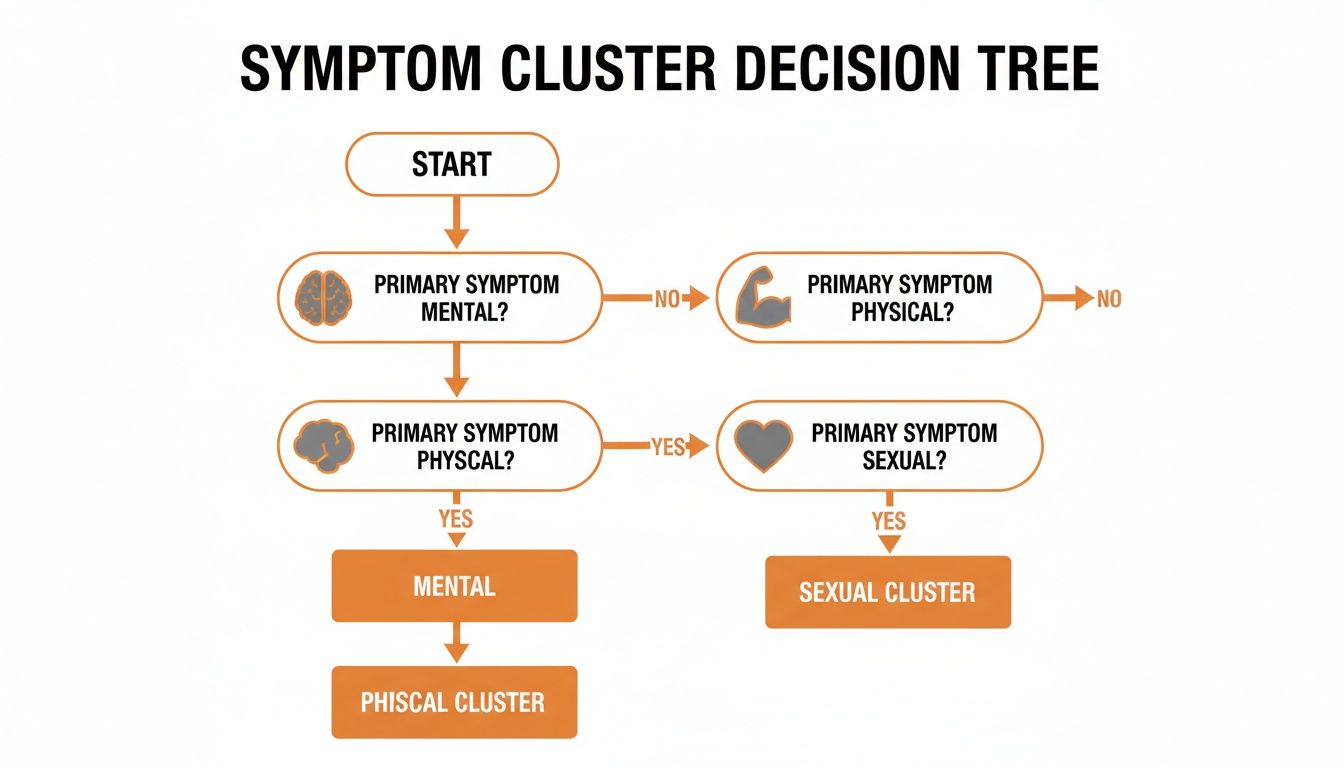
As you can see, when symptoms cross over into all three categories, it’s a very strong indicator that a hormonal evaluation is the right next step.
Getting Tested Is Easier Than Ever with Telehealth
Fortunately, getting a diagnosis isn't the ordeal it used to be. Modern telehealth clinics have knocked down many of the old barriers to getting expert help. Now, you can consult with a doctor online, get a lab order sent to a facility right in your neighborhood, and receive a professional diagnosis without ever having to juggle multiple in-person appointments.
This modern approach puts you back in the driver's seat, letting you get answers quickly and discreetly. If you want an even more direct path, you can even look into at-home testing options. See if that's the right fit for you by checking out our guide on how to check hormone levels at home.
Finding the Right Treatment Path for You
So, your bloodwork is back, and it looks like a hormonal imbalance is playing a role in your anxiety. What's next? The goal now is to build a plan to get your levels back where they should be. This isn’t about chasing a quick fix, but rather developing a complete strategy that pairs medical treatment with smart, foundational lifestyle habits.
For low T, the primary medical path is Testosterone Replacement Therapy (TRT).
TRT does exactly what the name implies: it supplements your body’s own testosterone to bring your levels back into an optimal range. Think of it like a car engine running on low oil—everything rattles, strains, and just doesn't perform right. Topping it off restores smooth, quiet, and efficient function. In the same way, TRT can help your body and mind run smoothly again, often having a profound calming effect on anxiety.
Understanding Your TRT Options
TRT isn't a one-size-fits-all solution. You and your doctor will need to decide on a delivery method that fits your lifestyle, personal preferences, and how your body metabolizes the hormone. Each route has its own unique set of pros and cons.
Here’s a quick overview of how the most common TRT delivery methods stack up against each other.
A Quick Look at TRT Delivery Methods
| Method | Administration Frequency | Pros | Cons |
|---|---|---|---|
| Injections | Weekly or bi-weekly | Most cost-effective; predictable dosing; no risk of transfer to others. | Requires self-injection; can create hormone peaks and troughs. |
| Topical Gels | Daily | Non-invasive; convenient daily routine; provides very stable hormone levels. | Risk of accidental transfer to others; must be applied to clean, dry skin. |
| Patches | Daily | Provides a steady, continuous release of testosterone. | Can cause skin irritation at the application site for some individuals. |
Choosing the right method is all about having an open conversation with your healthcare provider about what works for you. If you want to get into the nitty-gritty of each option, check out our detailed guide on the Testosterone Replacement Therapy pros and cons.
Lifestyle Pillars That Amplify Your Results
While TRT is an incredibly effective tool, it works best when it's part of a bigger picture. Think of it this way: your daily habits are the foundation of your hormonal health. Trying to fix your hormones without addressing them is like building a house on a shaky foundation—it just won’t hold up.
A modern approach to hormone optimization is a partnership between medical science and personal responsibility. TRT provides the necessary hormonal lift, while your lifestyle choices create the ideal environment for your body and mind to thrive.
Focusing on these four areas can make a world of difference.
Nutrition: What you eat provides the raw materials for hormone production. A diet built around healthy fats, quality proteins, and key micronutrients like zinc and Vitamin D is essential. Cut back on processed foods and sugar, which can throw your hormones out of whack.
Exercise: Resistance training, like lifting weights, is one of the best ways to naturally signal your body to produce more testosterone. It’s also fantastic for managing cortisol, the stress hormone that works against testosterone.
Sleep: This is non-negotiable. Your body produces most of its testosterone while you sleep. Aiming for 7-9 hours of quality, uninterrupted sleep every night is crucial for both hormonal balance and keeping anxiety in check.
Stress Management: Chronic stress floods your system with cortisol, testosterone's direct enemy. Finding healthy ways to decompress—whether it's meditation, deep breathing exercises, or just a walk in the woods—helps keep cortisol levels down and supports your mental well-being.
When you combine a medically supervised TRT program with these intentional lifestyle improvements, you create a powerful synergy. You're not just treating a number on a lab report; you're actively building a more resilient body and a calmer mind for the long haul.
Common Questions About Testosterone and Anxiety
When you're trying to figure out what's going on with your hormones, a lot of questions come up. And when anxiety is part of the picture, you need clear, straightforward answers you can trust. Let's tackle some of the most common things men ask when they're thinking about how testosterone might be tied to their anxiety.
Can TRT Completely Cure My Anxiety?
This is usually the first thing men want to know. The short answer is that for men whose anxiety is genuinely driven by low testosterone, Testosterone Replacement Therapy (TRT) can feel like a night-and-day difference. It can dramatically dial down anxiety, and for some, it resolves it completely.
But it's crucial to think of TRT as a powerful tool, not a magic bullet for every type of anxiety out there.
Think of it this way: if your house has a cracked foundation (low T), you're going to see cracks in the walls (anxiety). You can keep patching the drywall, but the problem will keep coming back. Fixing the foundation with TRT can make the whole structure sound again. Many men on a properly managed protocol report a profound sense of calm and resilience they haven't felt in years. The irritability just… fades.
That being said, anxiety can stem from all sorts of things—life stress, psychological patterns, or other health issues. TRT works wonders when it's addressing the actual hormonal root of the problem. For many, it's the core piece of a puzzle that might also include a healthier lifestyle or other mental health support.
How Long Until I Feel a Difference in My Anxiety?
Everyone's body is different, but the good news is that the mental and emotional shifts often show up faster than the physical ones. While patience is important, you can expect a general timeline.
Many guys start to notice an initial lift in their mood, energy, and focus within the first 3 to 6 weeks. It's often subtle at first—a little less brain fog, a bit more drive. This is a great sign your body is responding.
The more significant, stable relief from anxiety tends to build over 2 to 3 months. This is when your hormone levels really start to stabilize, and your brain chemistry adjusts to this new, healthier normal. It takes a little time for your system to recalibrate.
The key is consistency. Stick with your prescribed protocol and keep an open line of communication with your doctor. Giving your body the time it needs to adapt is what leads to the best results.
What Are the Real Risks of TRT?
Any effective medical treatment has potential side effects, and TRT is no exception. It's completely normal to be cautious, but understanding how these risks are managed by a good doctor can put your mind at ease. This is exactly why professional medical supervision is non-negotiable.
A reputable and experienced medical provider will perform a thorough health screening before starting therapy and will require regular blood work to monitor your hormone levels, red blood cell count, and other important health markers. This proactive monitoring ensures your treatment is optimized for maximum benefit while minimizing any potential risks.
The most common side effects are well-understood and manageable. They can include things like:
- Acne or oily skin: Much like what you might have experienced in your teens.
- Fluid retention: Sometimes causes a bit of temporary swelling.
- Changes in red blood cell count: Your doctor monitors this to keep it in a healthy range.
These are precisely the things a good clinician looks for in your follow-up lab work. It allows them to make small tweaks to your protocol, ensuring you stay in that optimal hormonal sweet spot safely and effectively.
Is It Normal Anxiety or Low Testosterone Anxiety?
This is a big one. Telling the difference between everyday stress and a deeper hormonal problem is the key to finding the right solution. Luckily, there are some pretty clear clues.
"Normal" anxiety is usually tied to something specific. You have a huge deadline at work, a financial issue, or a family conflict. You can point to the source of the stress, and when that situation resolves, the anxiety tends to ease up.
Hormonal anxiety just feels different. It's often described as a constant, "free-floating" sense of dread or irritability that doesn't seem to be connected to anything. You feel on edge or overwhelmed for no reason you can pin down, which is incredibly frustrating.
The biggest tell-tale sign is when anxiety shows up with a whole crew of other low testosterone symptoms. If that's happening, it's a massive red flag that your hormones are likely the culprit.
Ask yourself if your anxiety is showing up alongside:
- Deep, unexplained fatigue that no amount of sleep can fix.
- Persistent brain fog or trouble concentrating.
- A total loss of motivation or competitive drive.
- A noticeably lower libido or other issues with sexual health.
When you see that specific cluster of symptoms—mental, physical, and sexual—it's way more than just a bad week. It's a clear signal that your body's systems are out of whack, and getting a proper diagnosis is the only logical next step to feeling like yourself again.
At Elite Bioscience, we provide clear, straightforward paths to understanding and optimizing your hormonal health. If you're ready to get answers and explore solutions that address the root cause of your symptoms, our team is here to help. Take control of your well-being today by exploring our clinically supervised therapy options.