
If you’ve been looking for ways to speed up your weight loss, you’ve probably stumbled upon B12 injections. Let's get straight to the point: vitamin B12 injections are not a magic weight loss drug. Their real job is to fix a deficiency that can drain your energy and mess with your metabolism, making it that much harder to stick with a healthy diet and exercise plan.
The Real Story Behind B12 Injections and Weight Loss

It’s so important to set the right expectations from day one. A lot of clinics promote B12 shots as a metabolic booster, but their true value is in getting your body back to its normal baseline when a deficiency is dragging you down.
Think of it this way: it’s less like adding premium fuel to a high-performance engine and more like changing the spark plugs on a car that’s struggling to even start.
If your body already has all the B12 it needs, adding more won't supercharge your metabolism or melt fat away. Your system will just get rid of the excess. The connection between b12 injections and weight loss is indirect, and it really only comes into play for people who don't have enough to begin with.
Correcting Deficiencies to Support Your Goals
The real magic happens when you correct an underlying B12 deficiency. A lack of this critical vitamin can cause symptoms that directly sabotage any weight management efforts.
We're talking about things like:
- Persistent fatigue that makes the thought of a workout feel impossible.
- A sluggish metabolism because your body can't convert food into energy efficiently.
- General weakness that keeps you from being physically active.
By fixing the root problem, B12 injections can give you back the energy you need to finally stay consistent with your diet and exercise routine. Despite their popularity as a weight loss aid, the science backs up this more targeted role. In fact, top medical authorities like the Mayo Clinic state there is no solid evidence that B12 injections help with weight loss unless a person has a documented deficiency.
The Key Takeaway: B12 injections support weight management by fixing a problem, not by adding a superpower. They help bring your body back to a normal, functional state so you can effectively pursue your health goals.
Understanding this difference is crucial. Our comprehensive guide to vitamin injections for weight loss explores a variety of supportive therapies, but the goal is always the same: to make sure your body isn’t working against you because of a nutritional gap.
Alright, let’s break down how vitamin B12 actually fuels your body’s engine. Before we can connect the dots between B12 shots and weight loss, you have to understand what this vitamin does at a cellular level.
Think of your metabolism as a complex, high-performance engine. B12 isn't the gasoline itself, but it acts like the critical spark plug. It’s what ignites the fats and carbohydrates from your food, turning them into energy your body can actually use.
Without that spark, the whole system gets sluggish. Your body struggles to tap into the energy locked inside your meals, which can leave you feeling drained and slow down your metabolic rate. This is B12’s core job—it's a vital partner in the metabolic processes that keep your engine humming along.
The Oxygen Delivery System
One of B12’s most important jobs is helping your body produce healthy red blood cells. Just imagine these cells as a fleet of tiny delivery trucks, hauling oxygen from your lungs to every single tissue and organ, including your muscles.
When your B12 levels are where they should be, your body can build strong, efficient red blood cells that get oxygen where it needs to go. This is directly tied to your energy. Everything from thinking clearly to having the stamina for a workout depends on a solid oxygen supply.
Your muscles need a steady stream of oxygen to burn calories and power through exercise. When a B12 deficiency messes with red blood cell production, that whole delivery network breaks down, making any physical activity feel like a monumental effort.
A shortage of healthy red blood cells leads to a condition called megaloblastic anemia, which brings on a profound sense of fatigue and weakness. This is how a B12 deficiency can directly sabotage your motivation and ability to stay active, making weight management feel like an impossible uphill climb.
Keeping Your Nerves and Signals Firing
Beyond energy and oxygen, vitamin B12 is absolutely essential for keeping your nervous system in good shape. It helps build and maintain the myelin sheath, which is a protective coating that wraps around your nerve fibers. The best way to picture it is like the insulation on an electrical wire.
Good insulation ensures nerve signals—the messages zipping from your brain to your body—travel quickly and accurately. When B12 levels drop, this protective sheath can wear thin, causing slower, less reliable communication.
This can show up as brain fog, weird tingling sensations, or even problems with balance. By making sure your nervous system is firing on all cylinders, B12 helps maintain the strong mind-body connection you need for a healthy, active life. Getting this function back on track is a huge reason why correcting a deficiency can make you feel so much better.
When B12 Deficiency Halts Your Progress
A vitamin B12 deficiency is like an invisible anchor, weighing you down right when you’re trying to move forward with your health goals. It’s a subtle but powerful barrier that can leave even the most motivated person feeling completely stuck. When your body doesn't get enough B12, the entire system slows down, and you feel the effects in every part of your day.
This isn’t just about feeling a little tired. A true deficiency creates a cascade of symptoms that directly sabotage your ability to maintain a healthy lifestyle. The deep, persistent fatigue makes a morning workout feel impossible, while the brain fog can make something as simple as planning healthy meals feel overwhelming. This is where the connection to weight management becomes so clear—it's about removing these fundamental obstacles.
Recognizing the Symptoms of Low B12
The signs of a B12 deficiency are sneaky; they often get mistaken for the general stress of a busy life, which makes them incredibly easy to overlook. But when these symptoms become chronic, they can seriously stall your progress and chip away at your quality of life.
The table below outlines the common symptoms that might point to a deficiency, along with the groups of people who are most likely to experience them.
Symptoms and Risk Factors for Vitamin B12 Deficiency
| Common Symptoms of B12 Deficiency | Populations at Higher Risk |
|---|---|
| Persistent Fatigue: A deep, unshakable tiredness that doesn't improve with rest. | Vegans and Vegetarians: B12 is found almost exclusively in animal products. |
| Muscle Weakness: Difficulty with physical tasks that used to feel easy. | Older Adults (50+): Stomach acid production decreases with age, impairing B12 absorption. |
| Brain Fog: Trouble concentrating, remembering things, or thinking clearly. | Individuals with Digestive Conditions: Crohn's, celiac disease, or atrophic gastritis interfere with nutrient absorption. |
| Pale or Jaundiced Skin: A sign the body is struggling to produce enough healthy red blood cells. | People Who've Had Gastrointestinal Surgeries: Procedures like gastric bypass can permanently alter absorption. |
| Numbness or Tingling: Sensations of "pins and needles," especially in the hands and feet. | Individuals on Long-Term Medications: Certain drugs, like metformin for diabetes, can affect B12 levels. |
Recognizing yourself in this table is a strong signal that it's time to talk to a healthcare provider. When you're dealing with these issues, the energy required for exercise and meal prep simply isn't there. For a closer look at your specific needs, learning about the process of testing for vitamin deficiency is a crucial first step.
The diagram below shows the direct line from having sufficient B12 to producing the energy needed for a healthy, active life.
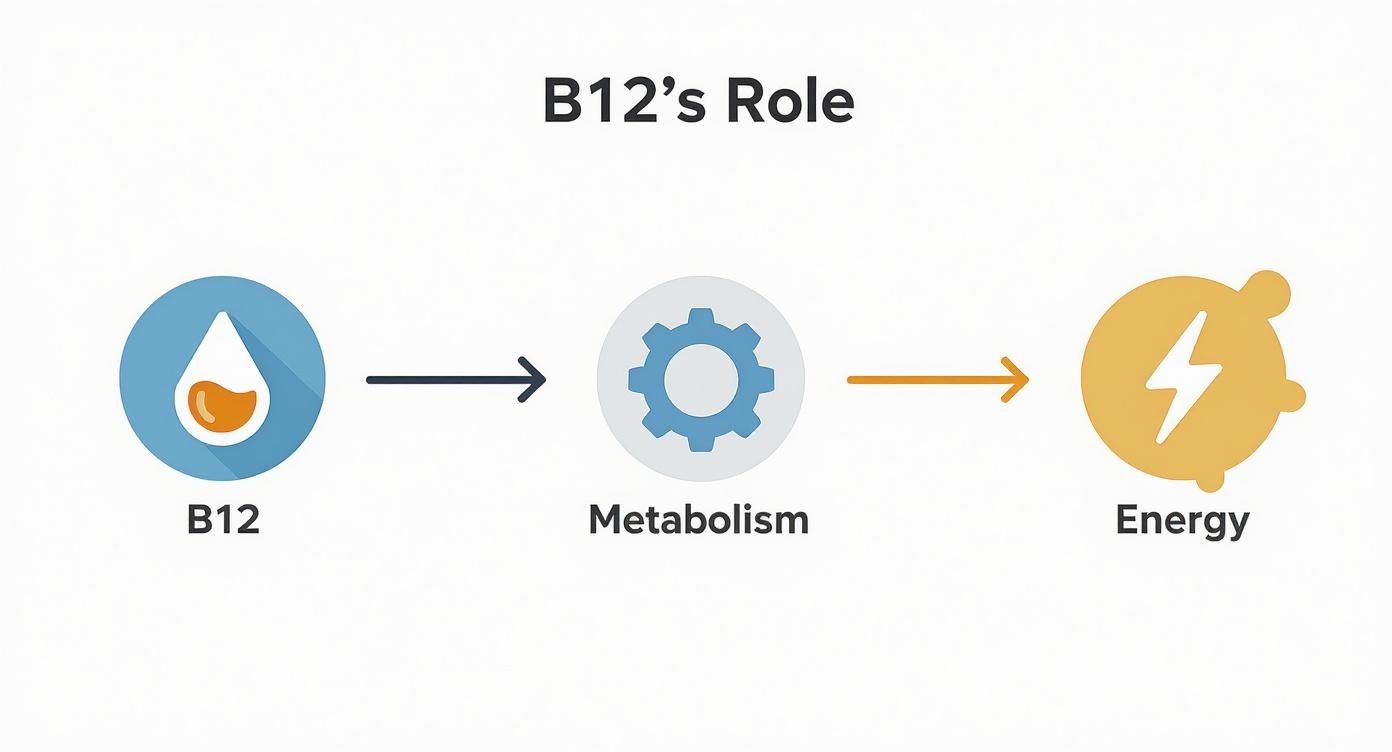
This visual highlights a key takeaway: B12 is a foundational piece of your metabolism, which in turn fuels your body's entire energy output.
Who Is Most at Risk?
Certain groups are far more susceptible to developing a B12 deficiency due to their diet, age, or underlying health conditions. Understanding these risk factors is key to identifying a potential problem before it becomes a major roadblock.
For these individuals, B12 injections are not a weight loss shortcut; they are a necessary medical treatment to restore normal bodily function. Correcting the deficiency can replenish energy levels and clear the path to successfully pursuing a healthier lifestyle. The goal isn't just to lose weight, but to regain the vitality needed to make it happen.
Who Actually Needs B12 Injections?
Let's draw a clear line in the sand: B12 injections are a specific medical tool, not some universal wellness booster. The only people who truly benefit are those with a medically confirmed vitamin B12 deficiency, something you can only discover through a blood test.
For this group, the injections can feel like a game-changer. By bringing B12 levels back to a healthy baseline, they tackle the root cause of the fatigue and sluggish metabolism that come with a deficiency. This surge of restored energy is often the key that unlocks a more active, vibrant lifestyle.
The Deficiency Difference
Think of your body's B12 levels like the oil in your car. If the oil is critically low, topping it up is essential for the engine to run properly. But if the oil is already at the full mark, pouring in more won't make the car go any faster—it'll just spill out. The same principle applies here.
Someone with normal B12 levels isn't going to get a "supercharged" metabolism from extra doses. Your body is incredibly efficient; it takes what it needs and gets rid of the rest. This is why B12 injections and weight loss are only linked when you're fixing a pre-existing problem.
A blood test is the only reliable way to know where you stand. Guessing based on symptoms can be misleading, as fatigue and brain fog have dozens of potential causes. B12 injections are a medical intervention, not a casual supplement.
Why More Isn't Better
When a true B12 deficiency is corrected, people often report a noticeable boost in energy and better metabolic function, which can indirectly support their weight management goals. For the roughly 15% of the population with confirmed low B12, filling this nutritional gap can have a meaningful impact.
However, for the other 85% with normal levels, extra injections offer no proven weight loss benefit. You can find more details on how B12 supports fat loss in deficient individuals, but the key word is deficient.
This is exactly why proper medical guidance is so important. A healthcare provider can analyze your lab results to see if a deficiency is the real roadblock holding you back. Without that confirmation, you’re just trying to fix a problem that doesn’t exist, which is a surefire way to be disappointed with the results.
Getting B12 Injections Safely: The Role of Telehealth

Let’s be clear: getting B12 injections isn’t like grabbing a bottle of vitamins off the shelf. Because they are a legitimate medical treatment, safety and professional oversight are completely non-negotiable. Sourcing these injections from anywhere other than a licensed medical provider opens the door to serious risks, like getting the wrong dosage or, even worse, a contaminated product.
Even when they’re administered correctly, it’s smart to know about the potential for mild side effects. Most are temporary and minor, but having professional guidance means you’ll know exactly what to expect and when you should reach out for advice.
A Modern Path to Medical Oversight
Fortunately, getting expert medical care is more convenient than ever before. Telehealth has torn down many of the old barriers, offering a secure and efficient way to connect with qualified doctors right from your own home. This modern approach is perfect for exploring if B12 injections and weight loss support are a good fit for you.
A virtual consultation lets a licensed doctor perform a thorough review of your health history, talk through your symptoms, and order the necessary lab work to actually check your B12 levels. This step is absolutely crucial for a safe and effective outcome.
A proper medical evaluation is the only way to confirm a deficiency and determine the right course of action. Telehealth makes this essential step accessible, ensuring your treatment plan is based on data, not guesswork.
This personalized evaluation is what guarantees that if you are a candidate for B12 injections, you'll receive a prescription that is safe, appropriate, and specifically matched to your body's needs.
How Telehealth Ensures Safe and Proper Use
The entire telehealth model is built around patient safety and convenience. It provides a responsible pathway to address potential deficiencies without ever cutting corners on the quality of care.
Here’s a look at how it works:
- Comprehensive Health Review: Your doctor will go over your full medical history, current medications, and lifestyle factors to get a complete picture of your health.
- Lab-Based Decisions: A treatment plan is only prescribed after a blood test confirms a B12 deficiency. This ensures the therapy is truly medically necessary.
- Personalized Prescription: If injections are recommended, the dose and frequency are customized to your specific lab results and health goals.
- Ongoing Support: You’ll have direct access to medical professionals to ask questions and monitor your progress throughout your treatment.
This structured process guarantees that you receive care that is both effective and responsible. To see how it all comes together, you can learn more about scheduling an online doctor consultation to discuss your wellness goals with a qualified professional. It’s the safest first step toward restoring your energy and supporting your health journey.
Building a Sustainable Weight Management Plan
While fixing a B12 deficiency can definitely give you your energy back, it’s time to get real about what truly moves the needle for long-term health. Think of B12 injections as a supporting player, not the star of the show. Their job is to make sure your body is firing on all cylinders, ready for you to do the real work of building powerful, lasting habits.
Sustainable weight management isn't about finding a quick fix. It's about creating a lifestyle that actually works for you. The most successful plans are built on proven pillars that go far beyond any single vitamin, giving you a realistic strategy to hit your goals.
The Four Pillars of Lasting Success
Lasting results come from nailing the fundamentals, day in and day out. Instead of chasing a magic bullet, building strength in these four key areas will create a solid foundation for your health journey. This is what makes the connection between B12 injections and weight loss truly meaningful.
-
Nutrient-Rich Diet: This isn't about restriction; it's about fueling your body right. Focus on whole foods like lean proteins, colorful vegetables, fruits, and healthy fats. These foods give you the essential nutrients you need to thrive and help you feel full and satisfied, which naturally cuts down cravings for processed junk.
-
Consistent Physical Activity: Find movement you genuinely enjoy. Seriously. Whether it's brisk walking, dancing, lifting weights, or hiking, consistency is way more important than intensity. Aim for a mix of cardio and strength training to build muscle and give your metabolism a healthy boost.
-
Prioritizing Quality Sleep: Sleep is the unsung hero of weight management. Skimping on it can throw your hunger hormones out of whack, ramp up cravings, and drain your motivation to exercise. Aim for 7-9 hours of quality rest per night. It’s non-negotiable.
-
Effective Stress Management: Chronic stress can quietly sabotage your efforts by cranking up cortisol levels and encouraging emotional eating. We've all been there. Weave stress-reducing activities like meditation, yoga, or just spending time in nature into your routine to keep your mind and body in balance.
The Big Picture: B12 injections can help ensure your body has the energy to actually pursue these pillars. They remove a potential roadblock, but the journey itself is powered by the daily choices you make with your diet, exercise, sleep, and stress.
Common Questions About B12 Injections
When you’re thinking about whether B12 injections are a good fit for you, it’s only natural for some practical questions to pop up. Let's cut through the noise and give you some clear, straightforward answers to the things people ask most.
How Often Would I Need B12 Injections for a Deficiency?
There’s no one-size-fits-all schedule here; the frequency of your B12 shots depends entirely on how severe your deficiency is, as determined by your doctor. A typical plan kicks off with a "loading" phase to get your body's depleted stores back up to speed quickly. This might mean getting injections every few days for a week or two.
Once your levels are back in a healthy range, you'll shift to a maintenance schedule. For most people, this works out to a single injection once a month to keep things stable. But this schedule isn't a suggestion—it must be prescribed by a healthcare provider who is looking at your specific lab results and overall health.
Are B12 Injections More Effective Than Pills?
The best way to get your B12 really comes down to why your levels are low in the first place. For anyone with absorption issues—like those with pernicious anemia or certain gastrointestinal conditions—injections are hands-down the better choice. They deliver B12 directly into your bloodstream, completely bypassing a digestive system that just can't absorb the vitamin properly from food or pills.
However, if you don’t have any trouble with absorption, high-dose oral supplements or sublingual (under-the-tongue) tablets can also work quite well to raise your B12 levels. Only a qualified medical professional can look at your health history and lab work to figure out the right approach for your body's unique needs.
The choice between injections and pills isn't about which is "better" in general, but which is better for you. It's a medical decision based on your body's ability to absorb this essential nutrient.
Will I Feel an Instant Energy Rush After an Injection?
It's really important to set realistic expectations here—a B12 shot is not like a jolt of caffeine. If you are truly deficient, you won’t feel an instant "rush." What you will notice is a gradual improvement in your energy, mood, and mental clarity over several days and weeks. This happens as your body puts the new B12 to work producing healthy red blood cells and repairing nerve function.
On the flip side, if your B12 levels are already healthy, you probably won't feel any different at all. Your body will simply flush out the extra vitamin it doesn't need, which is exactly why getting tested first is so important.
At Elite Bioscience, our telehealth model ensures you get a proper medical evaluation to determine if B12 injections are right for you. We provide safe, effective, and personalized care from the comfort of your home. Learn more about our vetted injectable vitamin therapies by visiting https://elitebioscience.co.