You’re probably here because pellet therapy sounds appealing for a very human reason. You want steadier energy, better sleep, improved libido, fewer mood swings, or relief from symptoms that have started to affect work, relationships, and how you feel in your own body. But you also don’t want surprises. You want the convenience people talk about, without learning the hard way what can go wrong.
That’s the right mindset.
Bioidentical pellets can be helpful in carefully selected patients. They can also cause side effects, and some of those side effects are predictable. In practice, the difference often comes down to dosing, product quality, patient selection, follow-up, and how quickly a clinician responds when early warning signs show up. That’s especially important in a telehealth setting, where convenience should never mean less oversight.
Navigating Your Hormone Journey Understanding Bioidentical Pellets
For many patients, the appeal of pellets is simple. They don’t want a daily routine that they’ll forget, and they don’t want the ups and downs they associate with some other delivery methods. They want something that fits a busy schedule and feels less intrusive once it’s in place.
Pellets are one way to deliver bioidentical hormones, meaning hormones that are chemically structured like the hormones your body makes. If you’re new to the topic, this overview of bioidentical hormones is a useful starting point. The delivery system is different from a cream, gel, pill, or injection because the hormone is placed under the skin and released over time rather than taken or applied repeatedly.

Why patients ask about side effects first
That question matters more than marketing language. A responsible hormone discussion starts with trade-offs.
Pellet therapy can offer convenience and a steadier release pattern. At the same time, once a pellet is inserted, you can’t stop applying it the way you can stop a cream or skip an injection. That means side effects can feel more frustrating if the initial dose isn’t a good fit.
Patients usually want clear answers to a few practical questions:
- What am I most likely to notice early on
- Which symptoms are annoying but manageable
- Which symptoms suggest the dose is wrong
- What would require urgent medical attention
- How does remote monitoring help if I’m not in the office every week
Those are the questions that matter in real life.
Clinical perspective: Good informed consent doesn’t talk patients into treatment. It helps them decide whether the convenience of pellets matches their risk tolerance and monitoring preferences.
What a balanced decision looks like
A balanced decision doesn’t treat pellets as automatically good or bad. It asks whether they fit you. The right candidate understands that symptom improvement and side effect management are connected. The same steady release that many patients like also means early planning is critical.
That’s why a careful discussion of bioidentical pellets side effects should cover more than a symptom list. It should explain how pellets work, why side effects happen, what can be managed remotely, and when a patient should be seen in person right away.
How Bioidentical Hormone Pellets Work in Your Body
The word bioidentical often causes confusion. The easiest way to think about it is a lock-and-key model. Your hormone receptors are the locks. A bioidentical hormone is designed to fit those locks in the same basic structural way as your own natural hormone.
That doesn’t mean side effects disappear. It means the molecule is familiar to the body. Dose, timing, balance, and delivery method still matter.

The pellet itself
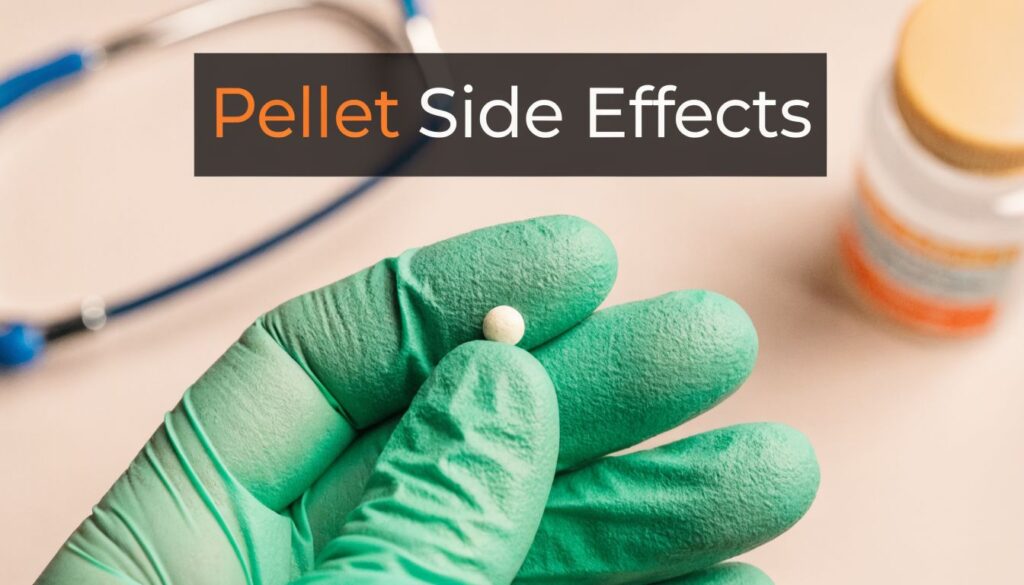
A pellet is a small solid form of hormone placed under the skin by a clinician. After insertion, the hormone is released gradually into the bloodstream over time. Patients often choose this route because it reduces the burden of daily or frequent dosing.
The best mental model is a drip-irrigation system. A garden hose turned fully on gives a burst. Drip irrigation gives a slower, steadier supply over time. Pellets are meant to work more like the second model.
That steady-release pattern is one reason some patients feel more even on pellets than on methods that create noticeable highs and lows.
Why delivery method changes the side effect pattern
Delivery method doesn’t just change convenience. It changes what kind of side effects tend to show up and how manageable they are.
With pellets, there are two broad categories to think about:
- Procedure-related effects, such as tenderness, bruising, or irritation where the pellet was inserted
- Hormone-related effects, such as acne, mood changes, breast tenderness, bloating, bleeding changes, or hair changes if the dose or hormone balance isn’t right
The “drip” analogy is helpful here. A steady release can reduce sharp fluctuations, but if the dose is too high for the individual patient, that steady release can maintain symptoms you don’t want.
A short explainer can help if you want to see the mechanics visually.
What patients often misunderstand
Patients sometimes assume “steady” means “side-effect free.” It doesn’t. It means the hormone delivery is less stop-and-start than some other methods.
That can be an advantage when the dose is appropriate. It can be a disadvantage when it isn’t, because you’re not making day-to-day adjustments at home.
| Aspect | What pellets do well | Where caution matters |
|---|---|---|
| Convenience | No daily application | Less flexible once inserted |
| Release pattern | More consistent hormone delivery | A poor dose can persist |
| Adherence | Helpful for patients who forget daily treatment | Requires follow-up rather than self-adjustment |
| Monitoring | Works best with scheduled review and symptom tracking | Problems are easier to miss if communication is weak |
A useful way to think about pellets is this. They reduce the work of daily dosing, but they increase the importance of getting the starting plan right.
A Full Spectrum of Bioidentical Pellets Side Effects
Bioidentical pellets side effects don’t all belong in one bucket. Some happen at the insertion site. Some happen because your body is adjusting. Others suggest the hormone exposure is too high or not balanced correctly for your physiology.
The most helpful way to review them is from least severe and most common-feeling to more consequential concerns.
Insertion site effects
These are the side effects patients often notice first because they happen where the pellet is placed.
Common short-term issues can include:
- Soreness or bruising in the area after insertion
- Mild swelling or firmness around the site
- Skin irritation as the tissue heals
- Occasional infection or extrusion, meaning the pellet works its way back out
These effects matter because patients sometimes misread them. A little tenderness can be expected after a procedure. Increasing redness, drainage, warmth, worsening pain, or fever deserves quicker attention.
In practical terms, aftercare matters. Friction, intense lower-body activity too soon, poor wound care, and delayed reporting of early infection symptoms can all make a manageable issue harder to fix.
Adjustment symptoms after starting therapy
Some patients feel a transition period after insertion. That doesn’t automatically mean the treatment is failing. It may mean the body is responding to a new hormone level or ratio.
Symptoms in this category can include:
- Bloating
- Breast tenderness
- Headaches
- Moodiness or irritability
- Fatigue
- Spotting or cycle disruption in some women
These symptoms should always be interpreted in context. Timing matters. Severity matters. Whether they improve, plateau, or worsen matters even more.
Dose-related androgenic effects
This is the group that deserves particularly careful counseling, especially in women. When pellet dosing pushes hormone levels higher than intended, androgenic side effects can appear.
A review of pellet studies reported 30% amenorrhea in 531 women treated with 2 to 5 subdermal pellets, and also described androgenic effects including acne, hirsutism, headaches, and nervousness in another study of 38 women. The same review noted that higher doses can risk voice changes, mood swings, and weight gain, according to the peer-reviewed review of compounded hormonal pellet evidence.
What androgenic side effects can look like
These symptoms aren’t all equally serious, but they are clinically important because they can signal overexposure:
- Acne or oilier skin
- Increased facial or body hair
- Scalp hair shedding in susceptible patients
- Mood changes
- Weight fluctuations
- Voice deepening
- Changes in menstrual pattern
- Clitoral enlargement in women in more severe androgen excess states
The reason clinicians take these symptoms seriously is that some are more reversible than others. Mild acne after a dose adjustment is one thing. Voice changes deserve faster attention.
Practical rule: If a symptom suggests androgen excess and it’s progressing rather than fading, don’t “wait it out” without clinician input.
Longer-term and higher-risk concerns
Hormone therapy discussions should include serious risks even when they’re not the most common thing a patient will feel day to day. Depending on the formulation, dose, and patient risk profile, concerning outcomes can include blood clots, stroke, heart disease concerns, gallbladder disease, and hormone-sensitive cancer concerns. Those aren’t reasons to panic. They are reasons to screen carefully and avoid casual prescribing.
For patients, the key question isn’t “Can any side effect happen?” Almost any treatment has a risk profile. The more useful question is, “How early will we catch a problem, and how quickly can the plan change?”
What side effects are often manageable
Many pellet side effects become more manageable when they’re identified early, documented clearly, and treated as clinical feedback rather than ignored. That often includes local wound irritation, mild acne, temporary bloating, breast tenderness, or early mood changes.
What doesn’t work is guessing. Patients do best when they keep a symptom log, note timing, and report changes promptly instead of waiting until the next pellet cycle.
Understanding the Causes of Pellet Side Effects
When side effects happen, patients often assume their body has “rejected” the therapy. Usually, the explanation is less dramatic and more useful. Side effects often point to a mismatch between the patient, the dose, the formulation, or the follow-up process.
Dose is often the first place to look
The most common clinical problem is simple. The dose doesn’t fit the individual.
Pellets can be attractive because they release hormone steadily, but that same feature leaves less room to adjust once inserted. If the starting dose is too aggressive, patients may develop acne, mood changes, bleeding changes, breast tenderness, or signs of androgen excess. If the dose is too low, they may get little benefit and still feel disappointed enough to think pellets “don’t work.”
That’s why conservative prescribing matters. In practice, it’s usually easier to build upward carefully than to deal with an over-treated patient who is stuck waiting for the pellet’s effect to decline.
Balance matters, not just the number
Hormones don’t act in isolation. Symptoms often reflect a relationship problem, not just a single-hormone problem.
A patient can have symptoms from:
- An estrogen-androgen imbalance
- A progesterone issue in women who need endometrial protection
- Differences in metabolism and clearance
- Sensitivity to one formulation even when another route was tolerated better
- A mismatch between symptom goals and the chosen delivery method
This is one reason one-size-fits-all pellet protocols create trouble. Two patients can start with similar complaints and respond very differently to the same insertion strategy.
Compounding quality and oversight are real concerns
Pellet side effects aren’t only about physiology. Product quality and oversight matter.
An FDA inspection of compounded bioidentical hormone therapy records found significant adverse events linked with pellet use, including 2,335 pellet extrusions, 529 cases of cellulitis, 154 breast cancer reports, 37 heart attacks, and 31 strokes, as summarized in the National Academies discussion of compounded bioidentical hormone therapy. That same discussion highlights a major practical issue. Compounded formulations aren’t subject to the same oversight as FDA-approved drugs, and pharmacies don’t report side effects to the FDA in the same way manufacturers of approved drugs do.
Those numbers don’t prove every pellet is unsafe. They do show why clinicians should not treat compounded pellet therapy casually.
Why telehealth can help when it’s done properly
Remote care gets criticized when it becomes a shortcut. Used correctly, it can improve side-effect management because communication is easier and faster.
A solid telehealth model gives patients a defined path for:
| Monitoring need | Why it matters |
|---|---|
| Detailed intake | Identifies risk factors before treatment starts |
| Accessible messaging | Lets patients report early symptoms before they escalate |
| Structured lab review | Helps connect symptoms with dosing decisions |
| Follow-up scheduling | Prevents “set it and forget it” hormone care |
In a careful remote practice, the benefit isn’t less supervision. It’s that supervision becomes easier to access between major appointments.
The safest pellet plan is rarely the most aggressive one. It’s the one with the cleanest screening, the clearest dosing rationale, and the fastest response when symptoms shift.
Pellet Side Effects Compared to Gels Creams and Injections
Patients don’t just choose a hormone. They choose a delivery problem they’re willing to live with. That is the essential comparison.
Some people want the freedom to stop quickly if they dislike a treatment. Others care more about consistency and convenience. Neither approach is wrong. The better choice depends on your symptom pattern, your schedule, your tolerance for maintenance, and how comfortable you are with a dose that can’t be changed day by day.

If you’re comparing routes broadly, these hormone replacement therapy options help frame the decision.
Pellets
Pellets offer a steadier release pattern and low day-to-day burden. That’s their main advantage. Patients who don’t want to remember a cream or schedule frequent injections often find this attractive.
The trade-off is reduced flexibility. If you develop side effects, there isn’t a simple “stop today” option. You manage the consequences while the pellet continues releasing hormone.
Typical side-effect pattern:
- Local procedure effects
- Dose-related systemic effects that may linger
- Less daily variability, but less day-to-day control
Gels and creams
Topical therapy appeals to patients who want more control. You can usually stop or adjust under clinician guidance more quickly than with pellets. That flexibility can be very helpful in patients who are sensitive to hormonal shifts.
The downside is inconsistency. Skin absorption can vary, and some patients never feel stable on topicals because day-to-day application and absorption aren’t perfectly predictable. There’s also the practical issue of transfer to partners, children, or others if application instructions aren’t followed carefully.
Typical side-effect pattern:
- Skin irritation
- Variable symptom control
- Potential transfer risk
- Greater ability to adjust quickly
Injections
Injections are often effective, but they commonly create a very different feel from pellets. Patients may notice a “peak and trough” experience. They feel energized or strong after the injection, then less so before the next dose. Some patients tolerate that well. Others feel emotionally or physically less steady.
That fluctuation can shape the side-effect profile. Mood shifts, irritability, or symptom cycling may reflect the dosing rhythm rather than the hormone itself.
Typical side-effect pattern:
- Injection site pain or irritation
- More noticeable highs and lows
- Practical flexibility in changing dose or interval
- Requires comfort with repeated administration
Pills
Oral therapy remains common in some settings, but it has its own considerations. The hormone passes through the digestive system and liver first, which can affect how the treatment behaves in the body and whether it’s the right fit for a particular patient.
Patients who prefer a familiar daily routine sometimes like pills. Others don’t want another daily medication or want to avoid that route entirely depending on their clinical situation.
Side-by-side decision view
| Method | Main strength | Main weakness | Best for patients who value |
|---|---|---|---|
| Pellets | Convenience and consistency | Harder to reverse quickly | Low maintenance |
| Gels and creams | Flexible adjustment | Variable absorption and transfer concerns | Control |
| Injections | Clear dosing changes possible | Peaks and troughs can be felt | Potency with adjustable scheduling |
| Pills | Familiar daily use | Route-specific limitations | Simplicity of routine |
The most important point is this. Bioidentical pellets side effects are not just about the hormone. They’re about what happens when that hormone is delivered in a way that is highly convenient but less flexible.
Proactive Steps to Minimize and Manage Side Effects
The best side-effect strategy starts before the first pellet is inserted. Once a patient understands that, the whole process becomes safer and less stressful.
A modern telehealth workflow can be highly beneficial. Patients often report symptoms in real time more readily through a secure digital system than they do when they’re waiting weeks for an in-person visit. That kind of access doesn’t replace clinical judgment. It supports it.
Start with rigorous screening
Good screening is not paperwork for its own sake. It tells you whether pellets are appropriate at all.
A careful start includes:
- Symptom review that separates hormone-related concerns from sleep, stress, thyroid, medication, or lifestyle issues
- Medical history review focused on clotting risk, cardiovascular history, cancer history, liver concerns, and prior hormone responses
- Baseline lab work interpreted in context, not treated as a stand-alone answer
- Medication and supplement review because interactions and overlapping symptoms are common
- Discussion of priorities so the treatment route matches the patient’s actual lifestyle

Patients who want a remote intake can review how to start hormone replacement therapy through a structured online process.
Use a conservative dosing mindset
What works in real practice is usually less dramatic than what patients expect. Start thoughtfully. Reassess. Escalate only when the symptom response and safety picture support it.
What doesn’t work is chasing a “feel amazing fast” promise with an aggressive first insertion. That approach is one of the easiest ways to create avoidable bioidentical pellets side effects.
One telehealth-based option patients may encounter is Elite Bioscience, which uses remote screening, clinician review, and third-party lab tested products within its digital care model. In any telehealth clinic, those same principles matter more than branding. Clear intake, documented dosing rationale, and reachable clinician support are what reduce avoidable problems.
Monitor like a clinician, not like a consumer
Patients often think monitoring means waiting to see if they feel better. Real monitoring is more specific.
Useful follow-up includes:
- Symptom tracking by timeline, not vague memory
- Targeted lab follow-up when clinically indicated
- Review of side effects alongside benefits
- Route reconsideration if pellets are clearly not the right fit
A symptom journal should note:
- When the symptom started
- Whether it’s improving or worsening
- Any bleeding, skin, mood, sleep, or libido changes
- Any local wound changes
- Anything urgent such as chest pain or shortness of breath
Patients do better when they report a small concern early than when they wait for a “big enough” problem.
Red flags that need prompt medical attention
Some symptoms should not sit in a portal message for days. They need urgent evaluation.
Seek prompt medical care for:
- Chest pain
- Shortness of breath
- Signs of stroke, such as sudden weakness, facial droop, trouble speaking, or confusion
- Rapidly worsening redness, drainage, or fever after insertion
- Heavy or concerning bleeding
- A sudden severe neurologic symptom
- A significant allergic-type reaction
These situations aren’t for observation alone. They need immediate medical judgment.
Your Questions About Pellet Side Effects Answered
Are pellet side effects permanent
Usually, many side effects are not permanent, especially milder issues like acne, bloating, breast tenderness, or temporary mood changes. The main caveat is that some androgenic effects deserve faster attention because they may be less reversible if allowed to progress. If a symptom feels structurally different, such as a voice change, don’t wait casually for the next routine follow-up.
How long do adjustment symptoms last
There isn’t one universal timeline. Some patients notice a short adjustment phase, while others don’t. What matters most is the trend. A symptom that steadily improves is different from one that persists or worsens. In telehealth care, timely messaging and symptom logs become especially helpful because clinicians can respond to trajectory, not guesswork.
Do pellets cause weight gain
They can be associated with weight fluctuations in some patients, but weight change is not simple. Hormones can affect fluid balance, appetite, sleep, training recovery, and body composition. Stress, sleep debt, diet changes, and other medications often contribute too. If weight changes occur after pellets, the right response is evaluation, not assumption.
Are pellets safer because they’re bioidentical
“Bioidentical” describes structure. It doesn’t eliminate risk. Delivery method, product quality, dose selection, and follow-up still determine a large part of the safety picture. A poorly monitored bioidentical plan can still create side effects.
What should I discuss with my clinician before starting
Bring up the points that shape safety:
- Your personal and family history
- Any past reaction to hormones
- Whether you want flexibility or convenience most
- How you’ll report side effects between visits
- What symptoms would trigger a dose change or route change
- What urgent symptoms require immediate care
When are pellets the wrong choice
Pellets may be the wrong choice when a patient wants easy reversibility, has a history suggesting greater sensitivity to dose changes, or needs a route with tighter short-term control. In those situations, a gel, cream, injection, or another plan may fit better.
The strongest hormone plan is rarely the one that sounds easiest in an ad. It’s the one that fits your biology, your schedule, and your ability to stay in close communication with your clinician.
If you’re considering pellet therapy and want a structured, medically supervised way to evaluate whether it fits your goals, Elite Bioscience offers a telehealth pathway for hormone care with clinician review, remote monitoring, and clear next steps for getting started.