Yes, taking testosterone can make you gain weight, but it's almost always the right kind of weight. For most men on Testosterone Replacement Therapy (TRT), the number on the scale goes up because of an increase in lean muscle mass—not unwanted body fat. That difference is the single most important thing to understand.
Clarifying Testosterone and Your Body Weight
When you first start TRT, it's easy to get fixated on the scale. Seeing that number climb can be alarming, especially if one of your goals was to finally get leaner. But that initial gain is often the first sign that the therapy is doing exactly what it's supposed to do.
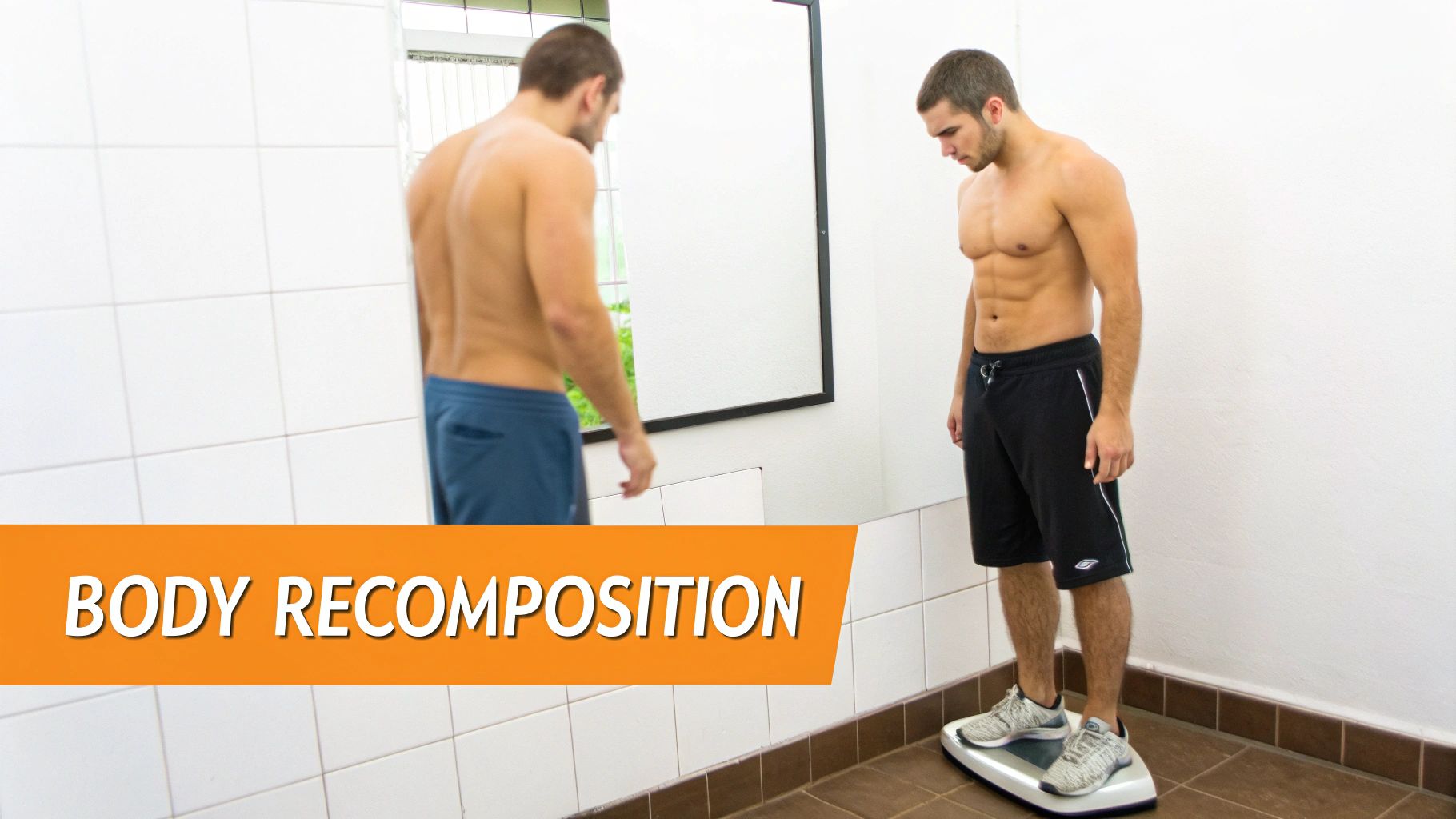
The key concept here is body recomposition. This is the powerful process of building muscle and losing fat at the same time, and it's something testosterone excels at.
Think about it like this: a pound of muscle is much denser than a pound of fat. Imagine a small, compact brick versus a big, fluffy pillow—they might weigh the same, but they take up very different amounts of space. Gaining five pounds of solid muscle can make you look dramatically leaner and more toned, even if the scale says you're "heavier." Your clothes will start fitting better, your physique will look more athletic, and your metabolism will get a serious boost.
What to Expect When You Start TRT
When you begin your journey with TRT, the weight changes you see can come from a few different places. It's really helpful to know what's going on so you don't misinterpret the signals your body is sending.
Here's a quick look at the different types of weight changes you might notice in the early stages.
Initial Weight Changes When Starting TRT
| Type of Weight Change | What It Is | Is It a Concern? |
|---|---|---|
| Muscle Gain | Testosterone directly stimulates protein synthesis, building new, dense muscle tissue. | No. This is the primary goal and a clear sign the therapy is working. |
| Water Retention | Your body may temporarily hold onto extra water as your hormones adjust. This can add a few pounds quickly. | Usually not. This effect typically resolves on its own within a few weeks. |
| Fat Loss | Increased muscle mass boosts your resting metabolism, helping you burn more fat over time. | No. This is a positive long-term effect, though it's often masked by muscle gain at first. |
Understanding these different factors helps put the numbers on the scale into proper context.
Early on, you'll likely experience a few things happening at once:
- A rapid increase in muscle mass: Testosterone is the body's primary anabolic hormone. It tells your cells to start building tissue, especially muscle.
- Temporary water retention: As your hormonal environment shifts, it's common to hold onto a bit of extra water for the first few weeks. It feels like a small weight jump but is usually short-lived.
- A boost in your metabolism: All that new muscle you're building is metabolically active. It burns calories just by existing, turning your body into a more efficient fat-burning engine in the long run.
This isn't just a theory; it's a well-documented outcome. The initial weight gain from muscle is a hallmark of successful therapy, paving the way for lasting fat loss and a stronger physique.
A landmark clinical study illustrates this perfectly. Researchers found that after only 10 weeks of treatment, men on TRT gained a significant amount of weight—around 4.5 kg (nearly 10 pounds), on average.
But here’s the crucial part: almost all of that gain—about 4.2 kg—was from new fat-free mass. That means muscle and other lean tissues. You can read the full research about these powerful body composition findings to see the data for yourself.
How Testosterone Builds Muscle, Not Fat
Think of your body like a construction site. Testosterone is the project foreman, barking orders and making sure everything gets built correctly. When your T levels are low, the foreman is off-site. The project grinds to a halt, materials get piled up and stored improperly (as fat), and not much actual building (muscle growth) happens.
When you start on Testosterone Replacement Therapy (TRT), it’s like the foreman just showed up with a bullhorn and a fresh set of blueprints. Testosterone doesn't just nudge muscle growth along; it actively kickstarts a process called muscle protein synthesis. This is the core mechanism your body uses to repair tiny muscle tears from exercise and build new, stronger muscle fibers in their place.
With your testosterone levels back in the optimal range, your body gets incredibly good at using the protein you eat as literal building blocks for muscle. This powerful anabolic signal shifts your body's entire metabolic focus from storing energy to actively building new tissue.
The Science of Anabolic Signaling
So, how does this "foreman" actually tell your body what to do? Testosterone molecules bind to specific docking stations on your muscle cells, known as androgen receptors. Think of it like a key fitting into a lock. Once that connection is made, it triggers a chain reaction inside the cell that directly ramps up muscle growth.
This is exactly why so many guys on TRT say they feel stronger and notice changes in the mirror, sometimes even before they've seriously ramped up their gym routine. Their body's hormonal environment is finally set up for growth. Of course, you still have to do the work. While TRT provides the blueprint, you need to supply the building materials (protein) and the stimulus (exercise) to really see what's possible.
This powerful muscle-building effect isn't just theory; it's backed by solid research. Reviews of clinical studies on men undergoing TRT consistently show that the initial weight gain is almost always quality muscle. One major review found that men gained an average of 4.4 pounds of lean muscle in just six months. That’s a clear demonstration of how effectively testosterone can spark protein synthesis and reshape your body. You can discover more insights about these TRT findings on HoneHealth.com.
This all leads to a crucial point that completely reframes the question of whether testosterone causes weight gain.
Why Muscle Weight Is a Game Changer
Let's be clear: not all weight is the same. A pound of muscle is much denser and takes up less space than a pound of fat. Picture a small, heavy dumbbell in one hand and a big, fluffy pillow in the other. They might weigh the same, but the dumbbell is far more compact.
That’s precisely what’s happening in your body.
- Muscle is Dense: Gaining five pounds of muscle will actually make you look leaner and more toned because it occupies less physical space.
- Fat is Bulky: Gaining five pounds of fat, on the other hand, will make you look softer and bigger because it takes up so much more volume.
By shifting the focus to muscle growth, TRT helps you build a leaner, more athletic physique, even if the number on the scale goes up a bit at first. This is body recomposition at its best.
Better yet, this new muscle isn't just for looks. It's metabolically active tissue, which means it burns calories 24/7, even when you're just sitting on the couch. Every pound of muscle you add acts like a small engine, constantly humming along and boosting your resting metabolism. This is why that initial muscle gain on TRT is so important—it lays the groundwork for more efficient and sustainable fat loss later on. You're not just adding weight; you're building a more powerful metabolic machine.
The Long Game: How TRT Helps You Lose Fat
While the initial weight gain from muscle is a great sign, the real magic of Testosterone Replacement Therapy (TRT) happens over the long haul. Optimizing your testosterone levels does more than just build a stronger frame; it turns your body into a far more efficient fat-burning machine. This is where the initial investment in muscle really starts to pay off for your health and physique.
This metabolic shift doesn't happen overnight, of course. It's a gradual process that plays out over months and years, fundamentally changing how your body handles energy. Instead of being quick to store calories as fat, your body learns to burn them for fuel, all thanks to that new, metabolically active muscle tissue.
Boosting Your Metabolic Engine
One of the most powerful long-term effects of TRT is its impact on insulin sensitivity. A simple way to think about insulin is as a traffic cop for the nutrients you eat. When your cells are sensitive to insulin, this cop efficiently directs sugar (glucose) from your blood into your muscle cells to be used for energy.
But when testosterone is low, cells can become resistant to insulin's signals. The traffic cop's directions get ignored, creating a traffic jam of sugar in your bloodstream. Your body's only solution is to store that excess sugar as fat, especially around your midsection.
By bringing testosterone back to healthy levels, TRT helps your cells listen to insulin again. The traffic cop is back in control, making sure nutrients are used to fuel your muscles instead of being packed away as unwanted fat. This makes it much harder to gain fat and a whole lot easier to lose it.
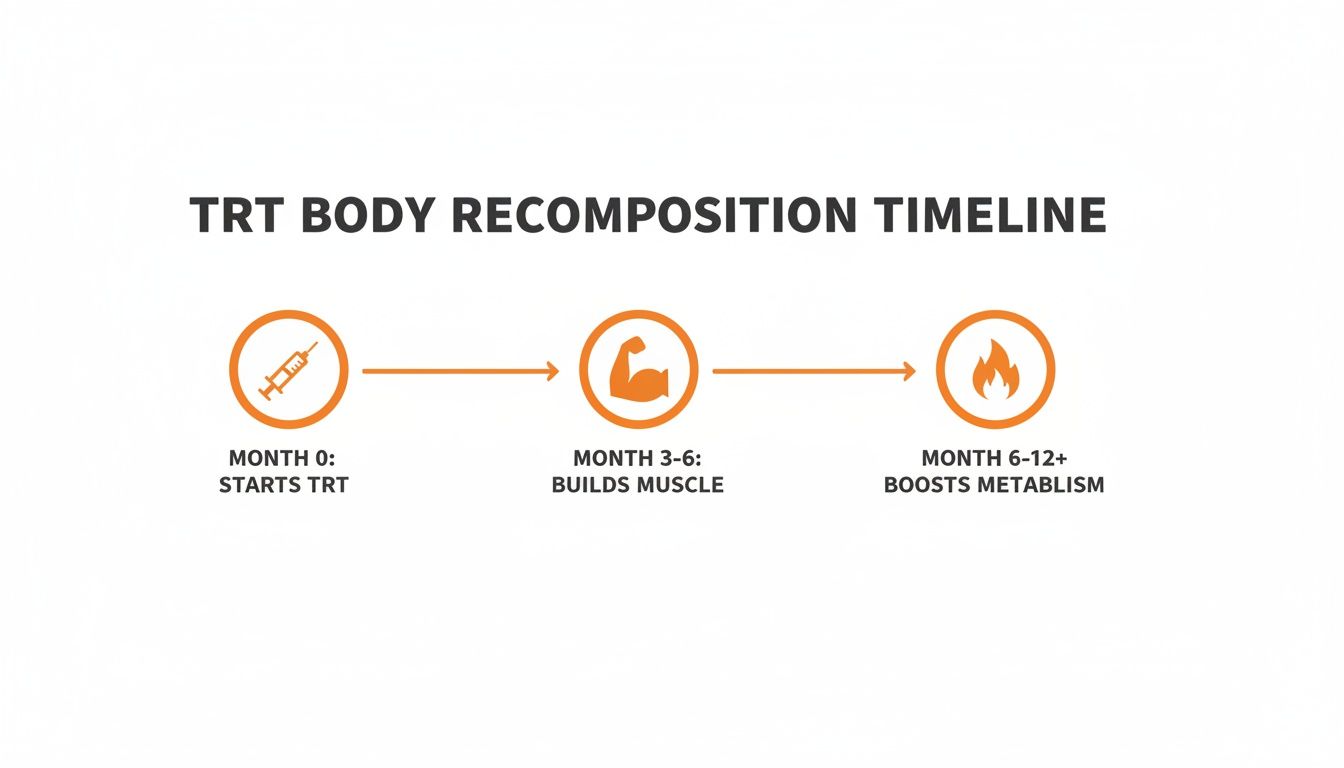
The timeline above shows how TRT first focuses on building muscle before shifting gears to long-term metabolic enhancement. The key takeaway is that the muscle you gain early on becomes the engine for sustained fat loss down the road.
To better understand this journey, let's look at how the effects of TRT evolve.
TRT Effects on Body Composition Over Time
| Timeframe | Primary Effect on Scale Weight | Primary Change in Body Composition |
|---|---|---|
| Initial Phase (First 3-6 Months) | Potential slight increase or stabilization | Rapid increase in lean muscle mass, some water retention. |
| Long-Term Phase (6+ Months) | Gradual but steady decrease | Sustained fat loss, particularly visceral fat, as metabolism improves. |
As you can see, the number on the scale in the first few months doesn't tell the whole story. The long-term trend is what truly matters for your health.
Targeting Dangerous Visceral Fat
It's important to know that not all fat is created equal. The soft, pinchable stuff under your skin (subcutaneous fat) is very different from visceral fat—the dangerous, inflammatory fat that wraps around your internal organs. Low testosterone is strongly linked to an increase in this harmful type of fat.
The great news is that TRT is particularly good at targeting and reducing these visceral fat stores. As your body composition improves and muscle mass grows, your metabolism kicks into a higher gear and starts burning through this deep abdominal fat. This isn't just about looking better; reducing visceral fat drastically lowers your risk for serious health problems.
Reducing visceral fat is one of the most important health benefits of long-term testosterone therapy, leading to a smaller waistline and a healthier internal environment.
This targeted fat loss isn't just theory; it's backed by solid research. One landmark observational study followed men with testosterone deficiency and found that TRT led to profound and sustained weight loss. Before starting treatment, the average man in the study weighed 236 pounds.
After therapy, the average weight dropped to just 200 pounds—a remarkable loss of 36 pounds. This wasn't some quick fix, either. The fat loss was continuous, with a reduction of about 4% after one year, which grew to over 13% by the fifth year. You can learn more about these TRT weight loss findings and see how consistent therapy drives lasting change.
So, while you might gain some good weight on the scale at first, TRT is setting you up for significant, healthy fat loss in the long run. The answer to "can taking testosterone make you gain weight?" becomes more nuanced: it helps you gain the muscle you need to lose the fat that really matters.
Managing Unwanted Weight Gain on Testosterone

While most of the changes you'll see on Testosterone Replacement Therapy (TRT) are exactly what you’re hoping for, it's smart to know what can cause unwanted results. Seeing the scale tick up with fat instead of muscle can be incredibly frustrating, but the good news is that these issues are almost always manageable once you pinpoint the cause.
To get the lean, strong physique you're after, you need to stay ahead of three main culprits behind undesirable weight gain. If you tackle them proactively, you can make sure your therapy is working for your goals, not against them.
The Role of Water Retention
One of the very first things many guys notice after starting TRT is a sudden jump on the scale, often accompanied by a "puffy" or bloated feeling. This is almost always due to water retention, a temporary side effect as your body gets used to the new hormonal environment. Testosterone can affect how your kidneys handle electrolytes like sodium, causing you to hold onto a bit more fluid at first.
Don't panic—this is a common and usually short-lived phase. For most people, the extra water weight disappears within the first few weeks as the body finds its new balance. The best thing you can do is stay well-hydrated. It sounds counterintuitive, but drinking plenty of water actually helps your system flush out excess sodium and fluid, which reduces the bloat.
Navigating an Increased Appetite
As your testosterone levels rise, so does your metabolism. You're building new muscle, and your body needs more energy to fuel that process. The natural result? A roaring appetite. Your internal engine is suddenly running a lot hotter, and it's demanding more fuel to keep going.
This is where you have to be mindful. It's all too easy to mistake that ravenous hunger for a free pass to eat whatever you want. But if you start taking in more calories than your body needs for muscle repair and daily activity, you’ll start storing fat, which undermines the very reason you started therapy.
A few simple strategies can help keep this in check:
- Prioritize Protein: Protein is your best friend here. It provides the building blocks for muscle and is incredibly satiating, keeping you feeling full much longer than a meal loaded with simple carbs.
- Eat Nutrient-Dense Foods: Fill up on the good stuff—lean meats, vegetables, and healthy fats. These foods pack a nutritional punch and control hunger without loading you up on empty calories.
- Track Your Intake: You don't have to do it forever, but tracking your food for a week or two can be an eye-opener. It gives you a clear picture of your habits and helps you make smarter choices.
Getting a handle on how hormones affect your weight is a big topic. If you're interested in a deeper dive, you can learn more about managing hormonal weight gain in our comprehensive guide.
The Problem with Estrogen Conversion
This is arguably the biggest reason for unwanted fat gain on TRT: estrogen conversion. Through a natural process called aromatization, your body converts some testosterone into estrogen to keep your hormones balanced. The problem arises when this conversion goes into overdrive, usually because the testosterone dose is too high.
When estrogen levels climb too high in men, they trigger signals to store more body fat—specifically around the chest, stomach, and hips. High estrogen also makes water retention worse, contributing to that soft, puffy look that's the exact opposite of what you’re trying to achieve.
High estrogen is a primary saboteur of body recomposition goals on TRT. It actively promotes fat storage and can negate many of the positive effects of testosterone.
This is precisely why proper medical supervision is non-negotiable. Regular blood work is the only way for your doctor to see what's happening with both your testosterone and estrogen levels. With that data, they can make precise tweaks to your protocol. If estrogen is creeping up, they might adjust your dose or add a medication to help manage the conversion process.
So, when we ask, "can taking testosterone make you gain weight?" in a negative sense, it almost always comes back to these three factors. By managing water retention, being smart about your increased appetite, and working with a doctor to keep estrogen in check, you can ensure your TRT journey is a successful one, focused on building quality muscle and shedding unwanted fat.
Your Strategy for Optimal Body Recomposition

Think of testosterone therapy as laying down the blueprint for a stronger, leaner physique. But a blueprint is just a plan—it's your lifestyle choices that are the skilled labor needed to actually build the house. TRT essentially upgrades your body's engine; now you need to give it premium fuel and a reason to perform. This is your playbook for getting the absolute most out of your therapy.
The real goal here isn't just gaining or losing weight. It's about body recomposition: the art of building lean muscle while shedding body fat at the same time. With a smart strategy, you can amplify the muscle-building signals from testosterone and hit the accelerator on fat loss, leading to a profound physical change. These tips are your roadmap to working with your therapy, not against it.
Fuel Your Body for Muscle Growth
With your metabolism firing on all cylinders and a powerful anabolic signal running through your system, your body is primed for growth. This means your nutritional needs have shifted. You now have an incredible opportunity to turn food into functional muscle tissue instead of unwanted fat, but only if you supply the right building materials.
The single most important nutrient in your new arsenal is protein. It provides the amino acids your body needs for muscle protein synthesis—the very process that testosterone puts into overdrive. Without enough protein, it’s like asking a construction crew to build a skyscraper without any steel. It’s just not going to happen.
For most active men on TRT, a good target is around 1 gram of protein per pound of your ideal body weight.
To hit that number consistently, make sure you’re getting high-quality, lean protein with every meal.
- Lean Meats: Think chicken breast, turkey, and lean cuts of beef or pork.
- Fish: Salmon, tuna, and cod are packed with protein and healthy omega-3 fats.
- Dairy and Eggs: Greek yogurt, cottage cheese, and whole eggs are protein powerhouses.
- Plant-Based Options: Don't forget lentils, beans, tofu, and quality protein powders.
Beyond protein, your total calorie intake is crucial. You need a modest calorie surplus to build new muscle, but going overboard will lead to fat gain. On the flip side, you need a slight deficit to lose fat. Figure out your maintenance calories, then adjust up or down slightly depending on your main goal right now.
The Non-Negotiable Role of Resistance Training
If nutrition is the fuel, resistance training is the spark that ignites muscle growth. While TRT can improve body composition on its own, pairing it with consistent strength training is how you unlock truly exceptional results. Lifting weights creates microscopic tears in your muscle fibers, and testosterone acts like the foreman on a construction site, directing the repair process to build them back bigger and stronger.
You don’t have to become a gym rat, but a structured routine is a must.
A well-designed resistance training program is the most powerful tool you have to capitalize on testosterone’s muscle-building signals. It tells your body exactly where to put those extra resources to work.
Your workouts should be built around big, compound movements that hit multiple muscle groups at once. These are the most efficient exercises for building overall strength and size.
- Squats: The undisputed king of lower-body exercises.
- Deadlifts: A total-body movement for building raw strength.
- Bench Press: The classic upper-body builder for your chest, shoulders, and triceps.
- Overhead Press: The key to developing strong, broad shoulders.
- Rows and Pull-ups: Essential for building a thick, powerful back.
Your focus should be on progressive overload—the simple principle of gradually increasing the weight, reps, or sets over time. This constant challenge is what forces your muscles to adapt and grow. Aim for 2-4 strength training sessions per week for significant progress. If you're new to lifting, think about working with a coach to nail down safe and effective form. For a deeper dive, you can learn more about how to improve body composition in our detailed guide.
Optimize Your Lifestyle Factors
Finally, don't ignore the foundations of good health that support everything else. High-quality sleep is non-negotiable; it's when your body releases growth hormone and does most of its muscle repair. Skimping here will absolutely sabotage your efforts in the gym. Aim for 7-9 hours of quality sleep per night.
Staying hydrated is also vital. Water is essential for transporting nutrients, keeping your joints healthy, and making sure your metabolism is running smoothly. Even slight dehydration can hurt your performance and recovery, so keep that water bottle handy.
By combining TRT with smart nutrition, consistent training, and healthy habits, you create a powerful synergy. You ensure that when people ask, "can taking testosterone make you gain weight?" the answer is a resounding "yes"—the right kind of weight.
Why the Scale Doesn't Tell the Whole Story
So, let's get back to the big question: does taking testosterone make you gain weight? The simple answer is yes—and for most guys, that’s a good thing. The initial weight gain you see on TRT isn't a red flag; it's the very first sign that you're building a stronger, leaner foundation.
This entire journey is about body recomposition, not just dropping pounds. Hopping on the scale gives you a single, often misleading number. It has no clue how to distinguish between dense, calorie-burning muscle and fluffy, unhealthy fat. It also can’t account for the temporary water weight that almost everyone experiences when starting therapy.
Look Beyond the Numbers
Instead of getting hung up on a number that can jump around daily, it's far more useful to tune into the real signs of progress. These are the clues that tell you your body composition is genuinely improving:
- How your clothes fit: Are your pants getting looser in the waist but maybe a bit snugger around the thighs and shoulders? That’s a classic sign you're swapping fat for muscle.
- Your energy levels: Do you have more gas in the tank throughout the day?
- Your strength in the gym: Are you pushing more weight or getting through workouts with more intensity than you could before?
These are the metrics that actually paint a clear picture of your success. If you want to get a more precise handle on these changes, you can learn more about how to measure body composition with tools that give you the full story.
Ultimately, the goal of TRT isn’t just to change a number. It's to build a more powerful, energetic, and resilient version of yourself.
That initial muscle gain is what revs up your metabolism for the long haul, making it easier to burn fat down the road. When you shift your focus from the scale to the real-world changes you can see and feel, you start to appreciate the incredible transformation you’re actually making.
TRT and Your Weight: What to Expect
Starting Testosterone Replacement Therapy (TRT) is a big step, and it's natural to have questions about what comes next. Once you get past the initial decision, practical concerns start to pop up. How long until I see results? How does this affect different people? Let's tackle some of the most common questions to give you a clear, realistic picture of the road ahead.
The big one on everyone's mind is, "Will taking testosterone make me gain weight?" It’s a simple question with a nuanced answer. Let's break down what happens in the first few weeks and months.
How Quickly Will I See Weight Changes on TRT?
Changes to your weight on TRT happen in stages. You won't step on the scale one day and see a completely new number, but you will notice gradual shifts as your body gets used to its new normal.
- First 2-4 Weeks: One of the first things you might notice is the scale ticking up slightly. This is almost always due to water retention. As your hormones rebalance, your body can temporarily hold onto a few extra pounds of fluid. Don't sweat it; this is a normal adjustment phase that typically resolves on its own.
- First 3-6 Months: Here's where the real changes start to kick in. You'll likely begin to see and feel measurable gains in muscle mass and strength. The number on the scale might not change much—it could even go up—but your body composition is heading in the right direction. You're swapping out fat for dense, metabolically active muscle.
The first few weeks on TRT are all about hormonal adjustment, which can cause some temporary water weight. The real body recomposition, with noticeable muscle gain, usually starts showing up within the first few months of consistent treatment.
This timeline is a great reminder that patience is key. The initial scale readings don't tell the whole story.
Does Testosterone Cause Weight Gain in Women?
This is a really important distinction to make. While this guide is focused on men dealing with testosterone deficiency, the hormonal landscape for women is a completely different ballgame. Testosterone is a crucial hormone for women's health too, but it's present in much smaller amounts.
When women undergo testosterone therapy, it's for different reasons and at significantly lower doses—often to help with energy, libido, or bone density, not for building large amounts of muscle. If a woman on testosterone therapy experiences unwanted weight gain, it could be a red flag that her dose is too high and is causing side effects. The goals and approach are fundamentally different and require a specialist's guidance.
Can I Gain Muscle on TRT Without Working Out?
Technically, yes—but it's like owning a Ferrari and only driving it to the grocery store. Research has shown that simply optimizing your testosterone levels can lead to a modest increase in muscle and a decrease in fat, even without a gym routine. TRT creates an anabolic (muscle-building) environment in your body.
However, if you really want to see what you're capable of, resistance training is non-negotiable. Lifting weights is the signal that tells your body where to build that new muscle. Think of TRT as providing the high-quality building materials and the expert construction crew; exercise is the foreman pointing them to the job site. Without that direction, you're leaving most of your potential gains on the table.
At Elite Bioscience, we provide the medically supervised therapies you need to reclaim your vitality. Our expert team helps you navigate every step of your journey, ensuring your treatment is optimized for your unique goals. Start your confidential health assessment today and discover how our tailored TRT programs can help you build a stronger, leaner future.