So, can vitamin B12 actually help you lose weight? While it's not some magic fat-burning pill, its role in your body's energy production is absolutely essential for managing your weight effectively.
Think of it this way: B12 is the spark plug for your body's metabolic engine. Without it, the fuel you get from food can't be properly converted into energy your body can actually use.
The Real Link Between Vitamin B12 and Weight Loss
Many people are on the hunt for a silver bullet for weight loss, and vitamin B12 often gets tossed into the conversation. The truth is, the connection isn't about B12 directly melting away fat. It's about creating the right conditions inside your body for weight loss to even be possible.
A healthy, efficient metabolism is the foundation of any successful weight loss plan. Vitamin B12 is one of the key nutrients that keeps this entire system humming along.
When your B12 levels are where they should be, your body can efficiently break down the carbohydrates and fats you eat and turn them into ATP (adenosine triphosphate). ATP is the fundamental energy currency that powers every single one of your cells. If you don't have enough B12, this whole energy-conversion process gets sluggish. This can lead to fatigue and a slower metabolism, which can stall weight loss or even contribute to weight gain.
How a B12 Deficiency Can Sabotage Your Weight
For anyone who is actually deficient in vitamin B12, getting their levels back to normal can feel like a night-and-day difference. This is where the strongest connection to weight management really lies.
Restoring your B12 levels can make a huge impact:
- Boost Your Energy: When your cells are producing energy properly, you'll naturally feel more energetic and ready to tackle a workout.
- Support Your Metabolism: A well-oiled metabolic machine is better at burning calories and using stored fat for fuel.
- Improve Overall Well-being: A deficiency can cause symptoms like brain fog and extreme tiredness. Fixing it makes it much easier to stick with a healthy diet and exercise routine.
This isn't just a theory; we see it in the data. One large-scale nationwide study looked at over 9,000 U.S. adults and found a clear link. People with the highest levels of vitamin B12 in their blood had a significantly lower risk of obesity than those with the lowest levels. This connection held true even after researchers accounted for other lifestyle factors. Discover more insights about these findings.
So, the real question isn't just "Can vitamin B12 help weight loss?" A better question is, "Could a B12 deficiency be holding my weight loss back?"
If your levels are already normal, taking extra B12 probably won't move the needle much. But for the many people who are running low, addressing that deficiency is a critical first step toward getting their metabolism in top shape and finally seeing progress on their weight management goals.
To put it all together, let's break down exactly what B12 does for the key metabolic functions related to weight.
Vitamin B12's Role In Weight Management At A Glance
| Metabolic Function | How Vitamin B12 Contributes | Impact on Weight Management |
|---|---|---|
| Energy Production | Acts as a crucial cofactor in converting carbohydrates and fats into usable energy (ATP). | Provides the physical energy needed for exercise and daily activity, which are essential for burning calories. |
| Fat Metabolism | Aids in the breakdown of fatty acids so they can be used for energy rather than stored. | An efficient fat metabolism can help reduce fat storage and promote the use of existing fat reserves for fuel. |
| Red Blood Cell Formation | Essential for producing healthy red blood cells, which carry oxygen to muscles and tissues. | Proper oxygenation prevents fatigue and improves stamina, allowing for longer and more effective workouts. |
| Nervous System Health | Supports nerve function and mood regulation. A deficiency can lead to fatigue, weakness, and mood changes. | Better mood and reduced fatigue can improve motivation and consistency with diet and exercise plans. |
Ultimately, while B12 isn't a direct weight loss supplement, its role in keeping your body’s fundamental systems running smoothly is undeniable. Without it, you’re trying to run a race with the emergency brake on.
How B12 Fuels Your Metabolism for Fat Loss
To get to the bottom of whether vitamin B12 can actually help with weight loss, we first need to pop the hood and look at how your body's engine works. Think of your metabolism as a sophisticated power plant. The food you eat—specifically fats and carbohydrates—are the raw fuel, but they're useless in their original form. They have to be converted into energy your body can actually use.
This is where vitamin B12 comes in. It acts as a key "spark plug" in the conversion process. Its main job is to be a co-factor—a necessary helper molecule—that helps transform those fats and carbs into ATP (adenosine triphosphate). ATP is the high-energy currency that powers literally everything your body does, from flexing a muscle to firing a neuron.
When you don't have enough B12, that entire energy production line gets sluggish and inefficient. The raw fuel (calories) starts backing up, unable to be converted properly. This is the biological reason a B12 deficiency often leads to that bone-deep fatigue and a general feeling of sluggishness. Your body just isn't using its fuel effectively, which can indirectly lead to it being stored as fat instead.
The Oxygen Connection to Better Workouts
But B12's role doesn't stop at energy conversion. It's also absolutely critical for something that directly impacts your ability to exercise and burn fat: making healthy red blood cells.
Think of these cells as your body’s internal oxygen-delivery fleet. They grab oxygen from your lungs and rush it out to every tissue, especially your muscles when you're working out.
- Sufficient B12: Helps you produce plenty of healthy, efficient red blood cells. Your muscles get a steady supply of oxygen, which boosts your endurance and lets you push harder for longer.
- Low B12: Can lead to fewer or misshapen red blood cells, a condition known as anemia. This effectively starves your muscles of the oxygen they need, which is why you might feel weak or get tired way too quickly during exercise.
This flowchart shows how all these pieces fit together, connecting vitamin B12 directly to effective weight management.
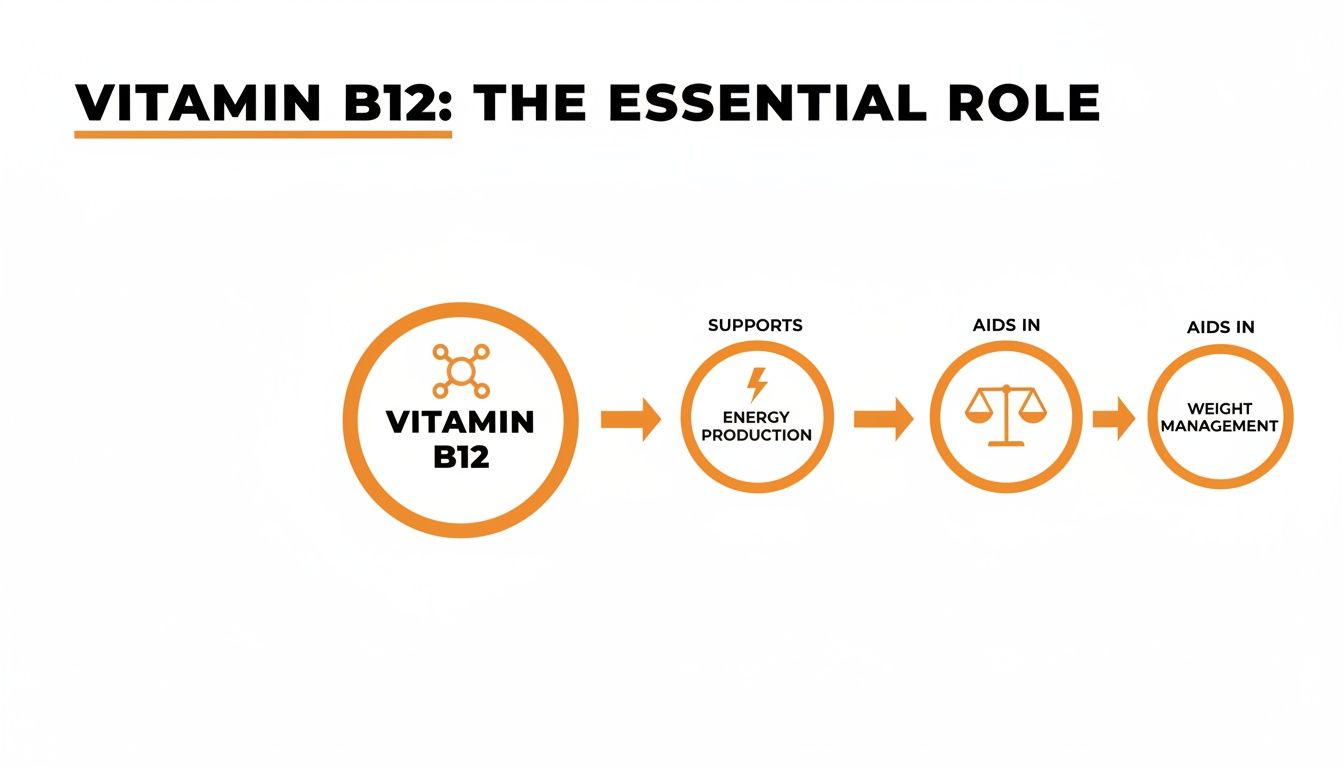
As you can see, B12 is at the very start of the process. It helps create usable energy, which then fuels the metabolic activity needed to manage your weight.
By making sure your body has enough B12, you're essentially giving it the right tools for the job. It means you can tackle your workouts with more energy, last longer, and burn more calories as a result. B12 isn't a magic fat-burning pill, but it creates the ideal internal environment for your diet and exercise efforts to truly make a difference.
Who Really Needs B12 for Weight Loss?
The idea that a vitamin can just melt away pounds is tempting, but B12 isn't a magic bullet for everyone. Its real power is unlocked for a very specific group: people who are actually deficient in this crucial nutrient. For them, it’s less about adding a "booster" and more about fixing a core problem that's throttling their metabolism.
Think of it like trying to drive a car with the handbrake on. You can floor the gas pedal, but the engine is fighting against itself, and you won’t get very far. Restoring B12 levels when you're deficient is like releasing that brake—it finally allows the engine to work the way it was meant to.
But if your B12 levels are already where they should be? Adding more is like putting extra air in a tire that's already full. It won’t make the car go faster and provides zero extra benefit for weight loss. The key, then, is figuring out who is most likely running on empty.
Groups at Higher Risk for B12 Deficiency
Certain lifestyles, health conditions, and even age can make it much harder for your body to get or absorb enough vitamin B12. If you fall into one of these categories, you’re far more likely to see a real impact on your energy levels and weight loss efforts by addressing a potential deficiency.
Vegans and Vegetarians: B12 is found almost exclusively in animal products like meat, fish, and dairy. This simple fact puts anyone on a strictly plant-based diet at a very high risk of becoming deficient without supplementation.
Older Adults: As we get older, our stomachs naturally produce less acid. This acid is essential for breaking B12 away from the protein in food so it can be absorbed. This makes absorption far less efficient, even if you’re eating enough B12-rich foods.
Individuals with GI Conditions: People with conditions like Crohn's disease, celiac disease, or atrophic gastritis often have damage or inflammation in their digestive tract that directly interferes with nutrient absorption.
People Who Have Had Bariatric Surgery: Weight loss surgeries like gastric bypass fundamentally alter the digestive system. This can dramatically reduce the body’s ability to pull key nutrients, including B12, from food. For these individuals, supplementation isn't just a good idea—it's often a lifelong necessity.
Observational data consistently links low vitamin B12 levels to higher body mass index (BMI) and obesity. One analysis of 976 individuals, which supported findings from a larger study of over 9,000 people, showed that those with low B12 were far more likely to be overweight or obese. In fact, some studies show that adults with obesity can have B12 levels as low as 277 pg/mL, a stark contrast to the 1164 pg/mL often seen in healthy individuals, which can impact fat metabolism.
For these at-risk groups, correcting a deficiency can feel like flipping a switch. It helps get the metabolic engine firing on all cylinders again, providing the energy needed to exercise and stay active. The crippling fatigue and brain fog that often come with low B12 can make sticking to a weight loss plan feel impossible.
If you suspect your levels might be low, it’s crucial to recognize the warning signs. You might be interested in learning more about the symptoms of vitamin B12 deficiency. Ultimately, fixing a deficiency is a foundational step that makes every other weight loss effort you undertake far more effective.
Choosing Your B12 Method: Oral vs. Injectable
So you're looking to add vitamin B12 to your routine. The first big decision you'll face is how to take it. Should you go for a simple pill or an injection? This isn't just about personal preference—it's about biology. How your body absorbs B12 makes all the difference, and the right delivery method can be a game-changer for getting results.
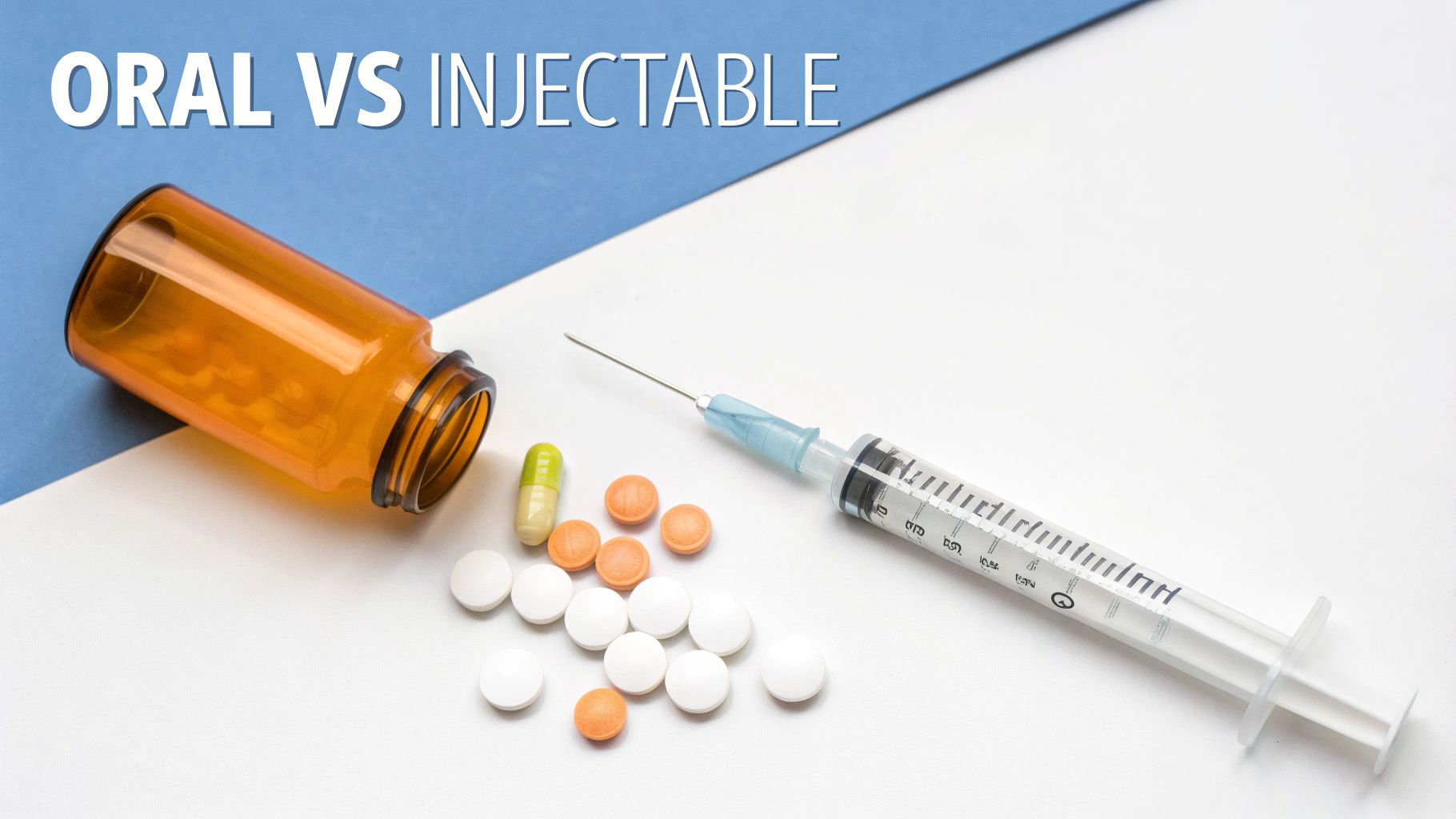
Think of taking an oral B12 supplement, like a pill or gummy, as sending a package through the regular postal service. It has to make a long, complicated journey through your entire digestive system. Along the way, stomach acid and enzymes try to unwrap the B12 so it can be absorbed, but a lot of it can get lost or damaged before it ever reaches its destination.
B12 injections, on the other hand, are like a special courier that delivers the package directly to your doorstep. The shot bypasses the digestive system chaos and sends the vitamin straight into your bloodstream. This means 100% of the B12 is immediately ready for your body to use. This is a concept called bioavailability, and it's a huge deal.
Understanding Absorption and Bioavailability
For a lot of people, that "postal service" route through the gut just doesn't work well. This is particularly true for older adults, anyone with gastrointestinal issues like Crohn's disease, or people who've had bariatric surgery. These factors can seriously cripple the body's ability to pull B12 from food or oral supplements.
For these groups, taking oral B12 can be like trying to fill a leaky bucket—most of what you pour in never makes it to the bottom. Injectable B12 completely solves this problem, ensuring every last drop gets where it needs to go.
This makes injections the far superior choice for anyone who needs to correct a deficiency quickly and reliably.
To help you figure out what's best for you, let's break down the key differences. Understanding the pros and cons of B12 injections vs oral supplements is the first step toward making an informed choice for your health.
Oral B12 Supplements Vs Injectable B12: A Comparison
Choosing between a daily pill and a periodic shot comes down to your unique physiology and goals. This table breaks down what you can expect from each.
| Feature | Oral B12 (e.g., Pills, Gummies) | Injectable B12 (e.g., B12 Shots) |
|---|---|---|
| Absorption Rate | Low and unpredictable; absorption is highly dependent on your gut health. | Nearly 100%; it bypasses the gut and goes directly into your bloodstream. |
| Speed of Action | Much slower. The vitamin has to be digested and processed before it can work. | Rapid. Effects can often be felt within days because it's available for use immediately. |
| Effectiveness for Deficiency | Often insufficient for people with severe deficiencies or absorption problems. | The gold standard. It's the most reliable way to quickly correct a B12 deficiency. |
| Convenience | Very convenient. You can find them over-the-counter and take them easily at home. | Less convenient. It requires a prescription and must be given by a professional (or yourself, after training). |
| Cost | Typically more affordable per dose and easy to find for daily maintenance. | Higher upfront cost per shot, but can be more cost-effective for fixing a serious deficiency. |
Ultimately, while oral supplements are great for general maintenance in healthy individuals, B12 injections are the clear winner for anyone dealing with absorption issues or needing a fast, powerful boost.
Integrating B12 into a Complete Weight Loss Plan
It’s easy to get caught up searching for that one magic bullet for weight loss, but the truth is, vitamin B12 works best as a powerful supporter, not a solo act. Real, lasting progress happens when you pair healthy B12 levels with the proven cornerstones of a healthy lifestyle.
Think of it like building a house. You could have the most advanced electrical wiring (that’s your B12), but without a solid foundation (diet), sturdy walls (exercise), and a solid roof (sleep), the whole structure just isn't sound. The goal is to bring B12 into the picture to amplify the results of everything else you're doing, creating a powerful synergy for success.
Using B12 to Fuel Your Fitness
One of the first things people notice when they correct low B12 levels is a real jump in their energy. This isn't just about feeling less tired—it's about having the actual fuel you need to get moving.
When your metabolism is firing on all cylinders, you can:
- Extend Your Workouts: That extra bit of stamina might mean adding another 10 minutes to your run or one more set to your weightlifting. Over time, that adds up to a lot more calories burned.
- Increase Daily Activity: You might find yourself naturally taking the stairs instead of the elevator or heading out for a walk on your lunch break. This boosts your non-exercise activity thermogenesis (NEAT), which is a huge factor in your daily calorie burn.
- Improve Recovery: A well-oiled machine repairs itself more efficiently, meaning you bounce back faster and are ready for your next workout sooner.
This energy boost is exactly how vitamin B12 can help weight loss—it gives you the ability to stay consistent with the physical activity needed to create a calorie deficit. For more tips on getting the most out of your supplements, check out our guide on the best time to take vitamins.
Amplifying Nutrition and Metabolism
A good diet gives your body the raw materials it needs, and an efficient metabolism, supported by B12, is what puts those materials to work. When your body can properly convert food into energy, it's far less likely to store those extra calories as fat.
Emerging evidence hints at B12’s supportive role when paired with lifestyle changes. One 2023 study showed a modest 2-3% rise in resting metabolic rate after 12 weeks of supplementation, potentially helping participants burn more calories even at rest. Learn more about B12 and its link to metabolism.
This holistic approach is what truly matters. B12 isn't a substitute for a balanced diet and regular exercise, but it can absolutely be the catalyst that makes all your hard work more effective and your results more significant.
When It's Time to Talk to Your Doctor About B12
It's tempting to jump on the B12 bandwagon, especially with promises of a metabolism boost. But self-diagnosing and starting a supplement regimen—particularly with something as potent as B12 injections—is a risky move. Getting a professional opinion isn't just a formality; it's a crucial step for your safety and for getting real results.

Before even asking if can vitamin b12 help weight loss for you, the first and most important question is: do you actually need more of it? Your body has ways of telling you when something's wrong, and learning to spot the signs of a deficiency is the first step.
Spotting the Red Flags of Low B12
If any of these symptoms have become a persistent part of your life, it's a clear signal to book an appointment with your doctor. They could be signs that your B12 levels are running low:
- Unshakeable Fatigue: Not just feeling tired, but a deep, lasting exhaustion that sleep just doesn't seem to touch.
- Brain Fog and Memory Slips: Are you having trouble concentrating? Forgetting things more often? This kind of cognitive fuzziness can be a clue.
- Weird Neurological Feelings: Strange sensations like pins and needles, numbness, or tingling, especially in your hands or feet.
- Visible Physical Changes: You might notice your skin looking unusually pale or even jaundiced (yellowish). A sore, inflamed tongue or feeling unsteady on your feet are also common signs.
A blood test is the only way to know for sure. Guessing won't cut it. Your doctor can order a simple test to measure your B12 levels, which takes all the guesswork out of the equation and points to the real issue.
This is why a doctor's visit is so vital. A professional can officially confirm if you have a deficiency, figure out why it's happening (is it your diet, or is your body struggling to absorb it?), and recommend the right form and dose just for you. This tailored guidance ensures you're making a safe, informed choice for your health, not just taking a shot in the dark.
Still Have Questions? Let's Clear Things Up
When you're sorting through information about supplements and weight loss, it's easy to get lost in the details. Let's tackle some of the most common questions people ask about vitamin B12.
How Quickly Will I Feel a Difference After a B12 Shot?
This really comes down to where you're starting from. If you're seriously deficient in B12, you could feel a welcome lift in your energy and mental focus in as little as 24 to 72 hours. It can be that fast.
But for someone with a milder shortage, it might take a few weeks of regular shots to notice a real shift. The big advantage of an injection is that it bypasses digestion and goes straight to work, giving your body an immediately available supply for crucial tasks like making energy and new red blood cells.
Can I Get Enough B12 From My Diet Alone?
For a lot of us, absolutely. A diet that includes plenty of meat, fish, eggs, and dairy usually provides all the B12 you need. But for some, getting enough from food alone is a real struggle.
- Plant-Based Eaters: If you're vegan or vegetarian, you're at a much higher risk for deficiency. B12 simply isn't found naturally in plant foods.
- Age and Gut Health: As we get older, our ability to absorb B12 from food often declines. The same goes for anyone with digestive conditions that interfere with nutrient absorption.
For people in these groups, supplementing isn't just a good idea—it's often a necessity for staying healthy.
Are Vitamin B12 Injections Safe?
Yes, they are considered very safe when they're given by a professional. Vitamin B12 is water-soluble, which is a key safety feature. Your body just takes what it needs and flushes out any extra through your urine, so it doesn't build up to toxic levels.
This is why B12 shots are such a trusted way to correct a deficiency. The important thing is to have them administered by a qualified healthcare provider who uses the right dose and proper sterile technique. This just about eliminates any risk of side effects or infection. As with any treatment, it's always smart to talk to your doctor first.
The main thing to remember is that B12 therapy isn't a magic bullet. Its real power is unlocked when it's addressing an actual need in your body. Figuring out if vitamin B12 can help you with weight loss starts with understanding your own unique health profile.
At Elite Bioscience, we're here to give you the guidance and tools to take control of your health right from home. Check out our medically supervised vitamin and peptide therapies to find out how you can better support your wellness goals.
Explore our programs