The biggest difference between peptides and steroids really comes down to how they work and how specific they are. Peptides are short strings of amino acids that function like precision signaling molecules—think of a key designed to fit one specific lock, triggering a single biological process. On the other hand, steroids are powerful, broad-spectrum hormones that systemically alter gene expression across many different tissues, more like a master key that can open multiple doors at once.
Understanding The Core Differences

While both peptides and steroids often come up in conversations about health optimization and performance, they are fundamentally different classes of compounds. Understanding this distinction is the first step toward making a smart decision for your health goals. Steroids are synthetic or natural compounds that directly mimic hormones like testosterone, whereas peptides are designed to stimulate your body's own natural processes.
This core functional difference has massive implications for everything from their intended use to their safety profiles and legal status. Steroids introduce synthetic hormones that can bypass and often suppress your body's own systems, leading to potent but potentially disruptive results. Peptides, however, work by encouraging your own glands to produce hormones or by triggering specific cellular actions, which tends to yield more gradual and targeted results.
Quick Comparison Peptides Vs Steroids
To simplify this complex topic, it helps to see the main differentiators side-by-side. The following table breaks down the essential attributes of each, giving you a clear snapshot of how they operate and where they diverge. This overview sets the stage for a deeper dive into their specific mechanisms and applications later on.
| Attribute | Peptides | Steroids |
|---|---|---|
| Composition | Short chains of amino acids | Synthetic hormone-based compounds |
| Mechanism | Stimulate natural pathways; bind to cell surface receptors | Directly mimic or replace hormones; alter gene expression |
| Function | Highly specific signaling for recovery, metabolism, hormone release | Broad systemic effects for muscle mass, strength, performance |
| Common Uses | Tissue repair, metabolic health, anti-aging, hormone optimization | Testosterone Replacement Therapy (TRT), anti-inflammatory treatment |
| Regulation | Varies; many are prescription-only for therapeutic use | Anabolic steroids are controlled substances; legal only with prescription |
| Side Effect Profile | Generally milder, often localized (e.g., injection site irritation) | Can be severe; risks of liver damage, cardiovascular strain, hormonal suppression |
The key takeaway is precision versus power. Peptides offer targeted action with a more favorable safety profile, while steroids deliver powerful systemic changes that come with greater risks and stricter regulations.
Ultimately, choosing between them—or understanding when one is more appropriate than the other—depends entirely on your individual health status, goals, and medical needs. The rest of this guide will delve into these differences, helping you understand the nuances of each option.
How Peptides And Steroids Work in The Body

To really get the difference between peptides and steroids, you have to go down to the cellular level. Their molecular structures are completely different, which means they take entirely separate paths to get their jobs done. The real story starts with how they talk to our cells.
Anabolic steroids are small molecules that are lipid-soluble, or fat-soluble. This nifty feature lets them slip right through the fatty outer membrane of a cell, almost like a ghost passing through a wall. But their journey doesn't stop there.
Once inside, they travel straight to the cell’s nucleus and bind directly to androgen receptors. This action has a profound impact, directly influencing the cell’s DNA and altering gene transcription. In simple terms, they tell the cell to kick processes like protein synthesis into high gear—a powerful, direct command that changes how the cell functions at its very core.
The Steroid Broadsword: A Systemic Impact
Because steroids can get into almost any cell and rewrite its genetic to-do list, their effects are incredibly widespread and systemic. Think of a steroid as a broadsword—it’s powerful and makes sweeping changes, but it lacks any real precision. This explains why they are so potent for building muscle but also come with a long list of potential off-target side effects.
This broad action is why steroids can impact multiple organ systems all at once, from the liver and heart to the entire endocrine system. The very mechanism that makes them so effective is also the source of their biggest risks.
A steroid's power comes from its ability to bypass external signals and directly rewrite a cell's to-do list. This systemic approach is effective for broad changes like increasing muscle mass but carries a high risk of unintended consequences across the body.
The fundamental difference with peptides lies right here, at this cellular entry point. Peptides are generally larger and aren't fat-soluble, which means they can't just waltz through the cell membrane. They have to communicate from the outside.
The Peptide Scalpel: A Targeted Approach
Peptides act more like highly specific messengers. They function like a key designed to fit one single, unique lock—a specific receptor located on the surface of a cell.
When a peptide binds to its designated receptor, it doesn't actually go inside. Instead, it triggers a chain reaction, a signaling cascade, within the cell. This cascade carries a very precise message, instructing the cell to perform a specific task, like producing more collagen, releasing growth hormone, or starting tissue repair. For a closer look at their specific applications, you might be interested in our guide on what peptides are used for in bodybuilding.
This targeted action is a crucial point of difference. Unlike the systemic impact of steroids, peptides are built for precision. This specificity is why we're seeing a growing demand for targeted therapies in medicine.
Clinically, this means peptides can fine-tune physiological systems with a much lower risk of causing systemic side effects. Industry analyses show that branded peptides made up about 69.2% of peptide revenues in 2024, driven by this high efficacy and specificity. The market is projected to exceed USD 67.9 billion by 2034.
This core difference in how they work—direct, systemic gene alteration versus targeted, external signaling—is the main reason peptides and steroids have such different applications, safety profiles, and clinical outcomes. One is a tool for a systemic overhaul, while the other is an instrument for precise biological adjustments.
Clinical Uses and Real-World Applications
The theoretical differences between peptides and steroids really come to life when you see how they’re used in the real world. While both can be powerful tools for health optimization, their applications are almost never interchangeable. The right choice always comes down to the specific goal, the underlying medical need, and the outcome you're aiming for.
Steroids, especially anabolic-androgenic steroids like testosterone, are the bedrock of established medical treatments like Testosterone Replacement Therapy (TRT). Their main clinical job is to correct diagnosed hormonal deficiencies, a condition known as hypogonadism.
For a man struggling with the classic symptoms of low testosterone—crushing fatigue, a nonexistent libido, brain fog, and muscle loss—TRT is designed to bring his hormone levels back into a healthy, functional range. It fixes a systemic problem by supplying the foundational hormone his body is no longer making enough of.
Steroids: Restoring a Foundational System
Think of your body's hormonal system as the foundation of a house. If that foundation cracks (hypogonadism), you're going to see problems all over the structure. TRT works by repairing that foundation directly, which helps bring the entire system back into balance.
This is a powerful, broad-spectrum intervention. The goal isn't just to pack on muscle or get an energy boost; it's to rebuild the hormonal environment needed for overall health and well-being. Success here is measured by symptom relief and restored blood markers, not just by what you see in the mirror.
Peptides: Targeting Specific Functions
Peptides, on the other hand, are used for much more targeted and specialized jobs. Instead of rebuilding the whole foundation, they act like specialized tools brought in to fix specific issues within the house—like a plumber fixing a leaky pipe or an electrician upgrading the wiring in one room.
This targeted action opens the door to a huge range of applications that go way beyond what traditional steroid therapy can do. Each peptide is engineered to trigger a very specific biological response.
Here are a few real-world scenarios that show just how diverse their uses are:
- Accelerated Injury Recovery: An athlete dealing with a stubborn tendon or ligament injury might use a peptide like BPC-157. This peptide is known to promote angiogenesis (the creation of new blood vessels) and cellular repair right at the injury site, which can dramatically shorten healing time.
- Metabolic Health and Fat Loss: Someone struggling with stubborn body fat or looking to improve their metabolic function could be a candidate for a peptide like sermorelin. Sermorelin encourages the body to produce its own growth hormone naturally, which helps optimize metabolism and promote fat loss without introducing a synthetic hormone.
- Anti-Aging and Skin Health: For those focused on aesthetic and wellness goals, peptides like GHK-Cu are used to kickstart collagen production. This can lead to better skin elasticity, fewer fine lines, and a more youthful appearance by targeting the specific cells responsible for skin structure.
The core difference in application is clear: Steroids like testosterone are prescribed to correct a widespread hormonal deficiency. Peptides are prescribed to achieve a precise physiological outcome, such as accelerating healing, boosting growth hormone, or enhancing skin quality.
The scenarios where each is appropriate are completely different. A 45-year-old man with clinically low testosterone is a clear candidate for TRT to address his systemic hormone deficiency. Meanwhile, a 30-year-old woman who wants to improve her skin's collagen content would be a much better fit for a targeted peptide protocol. These two therapies solve completely different problems.
To give you a clearer side-by-side view, this table breaks down how peptides and steroids are applied to achieve different health and wellness goals.
Use Case Comparison: Peptides Vs. Steroids
| Goal | Example Peptide Protocol | Example Steroid Protocol | Primary Mechanism |
|---|---|---|---|
| Correct Low T | N/A (Peptides don't replace testosterone) | TRT (Testosterone Cypionate) | Replaces missing foundational hormone |
| Injury Repair | BPC-157 & TB-500 | Anavar (Oxandrolone) – off-label | Signals cellular repair at site vs. Systemic anabolic effect |
| Fat Loss | Semaglutide or Sermorelin | Clenbuterol (not a steroid but used similarly) | Targets metabolic pathways/GH vs. Stimulant effect |
| Anti-Aging | GHK-Cu, Epitalon | N/A (Steroids are not used for this) | Stimulates collagen, lengthens telomeres |
| Muscle Growth | CJC-1295 + Ipamorelin | Testosterone, Deca-Durabolin | Pulses natural GH vs. Direct anabolic signaling |
This comparison shows just how specialized peptide therapy can be. Steroids provide a powerful, systemic effect, while peptides offer a precise, targeted approach to achieving very specific outcomes.
This specificity is what makes peptide therapy so versatile. You can explore a more detailed breakdown of these targeted outcomes and learn more about the benefits of peptide therapy in our dedicated guide. Understanding these specialized uses is key to appreciating the true difference between peptides and steroids in a clinical setting.
Comparing Safety Profiles and Potential Risks

When you get down to it, the conversation about peptides versus steroids always comes back to one thing: safety. Their fundamental differences in how they work inside the body lead to dramatically different risk profiles. This isn't a minor detail—it's the most critical factor for anyone considering these kinds of therapies.
Steroids bring broad, systemic power, but that power comes with a significant list of potential health complications. In sharp contrast, the highly targeted nature of peptides generally offers a much better safety profile with side effects that are typically milder and far more manageable. Understanding this distinction is everything when deciding which approach might be right.
The Systemic Risks of Anabolic Steroids
Anabolic steroids are powerful because they operate like a master switch, altering gene expression across countless tissues all at once. It’s an effective but blunt instrument. This widespread impact is exactly why they carry such a high potential for adverse effects that can hit multiple organ systems simultaneously. This is why proper medical supervision is non-negotiable.
The most common concerns that come with steroid use include:
- Cardiovascular Strain: Steroids can throw your cholesterol levels out of whack, lowering HDL ("good" cholesterol) while raising LDL ("bad" cholesterol). Over time, this shift seriously increases the risk of atherosclerosis, high blood pressure, and other major heart problems.
- Liver Toxicity: Oral anabolic steroids are notoriously hepatotoxic, meaning they put immense strain on the liver and can cause significant damage. This risk is a primary reason why injectable forms are almost always preferred in clinical settings like TRT.
- Hormonal Suppression: When you introduce external hormones, your body’s natural production shuts down. This can lead to issues like testicular atrophy and create a dependency, often requiring a carefully managed post-cycle therapy protocol to get your system back online. To really grasp these outcomes, it helps to understand the full picture of TRT benefits and risks.
These risks make it crystal clear why anabolic steroids are controlled substances, only legally available with a prescription for a diagnosed medical need. Attempting to use them without clinical oversight is a gamble with your long-term health.
The Targeted Safety Profile of Peptides
Peptides change the safety equation completely because of their incredible specificity. Think of them like a key designed to fit a single lock. They bind to specific receptors on the surface of cells to trigger one precise biological action. This targeted approach dramatically minimizes the unintended, off-target chaos commonly seen with steroids.
The primary safety advantage of peptides stems from their precision. Because they are designed to perform one specific job, they are far less likely to cause the systemic disruptions associated with broad-spectrum hormonal compounds like steroids.
This doesn't mean peptides are totally risk-free, but their side effects are usually much milder and more localized. In fact, the most common issues are often related to the injection itself rather than any kind of systemic toxicity.
Typical peptide side effects might include:
- Localized injection site reactions, like temporary redness, swelling, or minor irritation that fades quickly.
- Mild water retention or bloating, which usually resolves as your body adjusts to the therapy.
- Occasional lightheadedness or flushing, especially with peptides that influence hormone release or blood pressure.
The Critical Role of Purity and Supervision
Here’s the bottom line: the safety of any peptide protocol depends entirely on two things: product purity and medical supervision. The market is flooded with unregulated, "research-only" products that can be contaminated, under-dosed, or completely fake. Sourcing your peptides from a licensed medical clinic that uses reputable compounding pharmacies is the only way to guarantee you're getting a pure, safe, and accurately dosed product.
Ultimately, while peptides are generally considered much safer than anabolic steroids, "safer" does not mean "risk-free." Proper dosing, careful monitoring, and professional guidance are non-negotiable for getting the results you want without compromising your health. This is the key difference between a legitimate therapeutic protocol and a risky experiment.
Navigating The Legal and Regulatory Landscape
Understanding the legal status of peptides versus steroids is just as critical as knowing their biological effects. The regulatory worlds these two compounds live in are miles apart, and that difference says a lot about their history, use, and safety. This legal distinction directly shapes how they’re prescribed, where they come from, and who can use them safely.
Anabolic steroids are in a clear-cut, highly restrictive legal box. In most developed nations, including the United States, they are classified as controlled substances. This isn't a gray area; their possession, sale, and use are strictly governed by law.
From a legal standpoint, the only way to get anabolic steroids is with a valid prescription from a doctor to treat a diagnosed medical condition, like clinical hypogonadism. Any use outside of that specific medical context is considered illegal and comes with serious legal consequences.
The Nuanced World of Peptide Regulation
In sharp contrast, the legal landscape for peptides is far more nuanced. Most peptides are not classified as controlled substances, which puts them in a completely different regulatory space. Physicians often prescribe specific peptides for a range of therapeutic goals, sometimes for "off-label" uses that are backed by clinical evidence but haven't yet been formally approved for that exact purpose.
This gives clinicians a greater degree of therapeutic flexibility, allowing them to design targeted peptide protocols for things like injury recovery, metabolic health, or immune support. However, this flexibility comes with a critical warning.
The only legitimate and safe way to obtain therapeutic peptides is through a licensed medical clinic. This ensures the protocol is prescribed by a doctor, the product is sourced from a regulated compounding pharmacy, and the dosage is both pure and accurate.
Trying to buy peptides from unregulated online websites is a huge gamble. These products have no quality control, which means you could be injecting something contaminated, dosed incorrectly, or completely fake. It completely erases their safety advantages over other compounds.
How History Shaped Today's Laws
The starkly different legal frameworks we see today were shaped by history. Synthetic anabolic-androgenic steroids first appeared in the 1930s and were widely adopted by athletes for non-medical use by the 1950s. This long and well-documented history of misuse is what led to the strict regulations we have now.
Peptide therapies, on the other hand, only started to become commercially significant in the late 20th century. Since then, the market has exploded into a multibillion-dollar industry. This modern growth reflects a major shift in medicine—moving away from broad-spectrum hormones toward highly targeted peptide signaling. This trend is especially strong in countries like the U.S., Canada, and Australia, where patients are actively seeking safer, more precise therapies. You can dig deeper into this market shift and its legal implications in this report on the peptide industry.
Ultimately, professional medical guidance is the bottom line. The legal and safety frameworks are there to protect you. They ensure that any therapy you undergo—whether it’s TRT or a specialized peptide protocol from a provider like Elite Bioscience—is managed responsibly, effectively, and with your long-term health as the number one priority.
How to Choose The Right Option for Your Goals
Figuring out whether peptides or steroids are the right fit isn't about which one is "better" in a general sense. It's about picking the right tool for a specific job. The decision comes down to your health goals, your unique biology, and what level of risk you're comfortable with. To make a smart choice, you have to move past the hype and focus on a clear, medically guided strategy.
For anyone dealing with a clinically diagnosed hormone deficiency, like hypogonadism, medically supervised Testosterone Replacement Therapy (TRT) is still the gold standard. In these cases, the objective is to fix a systemic hormonal problem, and directly replacing the missing hormone is the most direct and effective path forward.
Situational Recommendations
On the other hand, if you're chasing very specific benefits without wanting to overhaul your entire hormonal system, a targeted peptide protocol is usually the more sensible choice. Peptides are like precision instruments, built for particular tasks, which makes them perfect for goals where a system-wide intervention isn't necessary or wanted.
- For Targeted Injury Repair: If you’re trying to recover from a nasty ligament or tendon injury, a peptide like BPC-157 offers localized healing support without the broad side effects that come with a systemic anabolic steroid.
- For Metabolic Optimization: To improve body composition or metabolic function, peptides that encourage your body's natural growth hormone release, like sermorelin, offer a much more controlled and physiological approach than using powerful fat-burning compounds.
- For Anti-Aging and Skin Health: Peptides such as GHK-Cu are designed to stimulate collagen production directly. Steroids offer no direct benefit here and would be completely inappropriate for this goal.
This decision tree helps visualize how your primary goal should point you toward either a standard medical prescription or a more specialized, off-label protocol under a physician's guidance.
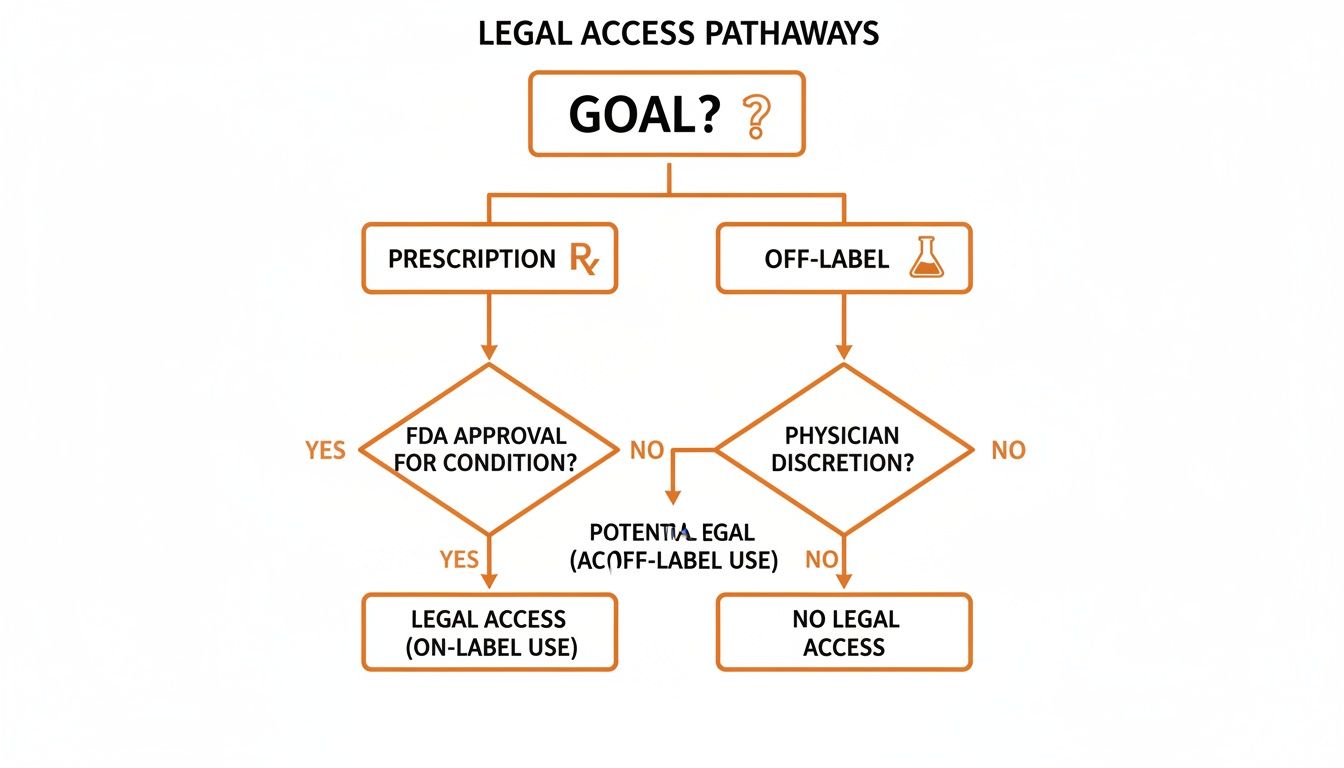
The key takeaway here is that legitimate access to both steroids and peptides demands professional medical oversight, whether it's for a standard prescription or a customized therapeutic plan.
Making The Final Decision
It's also important to realize these therapies aren't always mutually exclusive. In some comprehensive treatment plans, a patient on TRT might also use a specific peptide to tackle a separate issue like joint pain or slow recovery. This just drives home the central message: personalization is paramount.
From a market standpoint, peptides and steroids are now in very different places. The peptide therapeutics market is on track to hit $100 billion by 2034, with telehealth and online clinics becoming a major part of how people access them. Projections show "online drug stores" growing at a 5.5% CAGR through 2034, which confirms that digital clinics like Elite Bioscience are becoming the new standard for obtaining prescriptions. You can read more about the growth of the peptide market.
Your final decision should never be made in a vacuum. It must be based on comprehensive lab work, a thorough medical evaluation, and an open discussion about your goals with a qualified healthcare professional who can weigh the benefits and risks for your unique situation.
Answering Your Key Questions
When you're exploring powerful therapeutic options, it's natural to have questions. Let's clear up some of the most common ones we hear about peptides and steroids, moving beyond the myths to give you the facts.
Are Peptides A Type Of Steroid?
Not at all. This is a common point of confusion, but they are from completely different families of compounds. Peptides are short chains of amino acids, the very building blocks of proteins. Think of them as your body's natural signaling system—highly specific "text messages" that tell cells exactly what to do.
Steroids, on the other hand, are synthetic versions of hormones, built from a cholesterol backbone. They mimic hormones like testosterone to produce broad, systemic effects. Their chemical structure, how they work, and their legal status are worlds apart from peptides.
Can Peptides And Steroids Be Used Together?
In a medically supervised setting, yes, they can. For instance, a man on Testosterone Replacement Therapy (TRT) to correct a diagnosed deficiency might also use a peptide like BPC-157 to help heal a specific tendon injury. The TRT addresses the systemic hormone issue, while the peptide provides targeted repair signals.
However, this isn't something to experiment with. Combining these powerful compounds without expert medical guidance is a recipe for unpredictable side effects and can throw your hormones into chaos. A clear clinical reason must drive any decision to stack these therapies, and it absolutely requires a healthcare professional's oversight.
Any combined therapy should be the result of a specific health goal and thorough diagnostic testing. It's a nuanced strategy that demands expert management to be both safe and effective.
Which Is Better For Muscle Growth?
If the goal is rapid and significant muscle growth (hypertrophy), anabolic steroids deliver a much more direct and powerful punch. They work systemically to rewrite gene expression, forcing a dramatic spike in protein synthesis that leads to massive gains.
Peptides that influence growth hormone, like CJC-1295, can certainly support lean muscle development, but their effect is more moderate and supportive. They work by fine-tuning the body's own anabolic machinery rather than introducing a powerful synthetic hormone. It really comes down to a trade-off: the speed and scale of results you're aiming for versus the risk profile you're willing to accept.
Do Peptides Have Fewer Side Effects Than Steroids?
Generally speaking, yes, and it's not even close. Peptides are well-known for their superior safety profile, with side effects that are typically fewer and much milder than those associated with anabolic steroids. This comes down to their targeted nature—they are designed to do one specific job without creating a ripple effect across the entire body.
The most common side effects from peptides are often minor and localized, like some temporary irritation at the injection site. Anabolic steroids, because of their broad and powerful impact, come with a much longer list of potential risks, including serious cardiovascular strain, liver toxicity, and a complete shutdown of your natural hormone production.
Of course, the safety of any compound ultimately depends on its purity, the dosage used, and proper medical supervision.
Ready to see how a professionally guided therapy plan could help you meet your specific health goals? The experts at Elite Bioscience are here to offer guidance grounded in clinical evidence and tailored to your unique biology. Learn more and get started today.