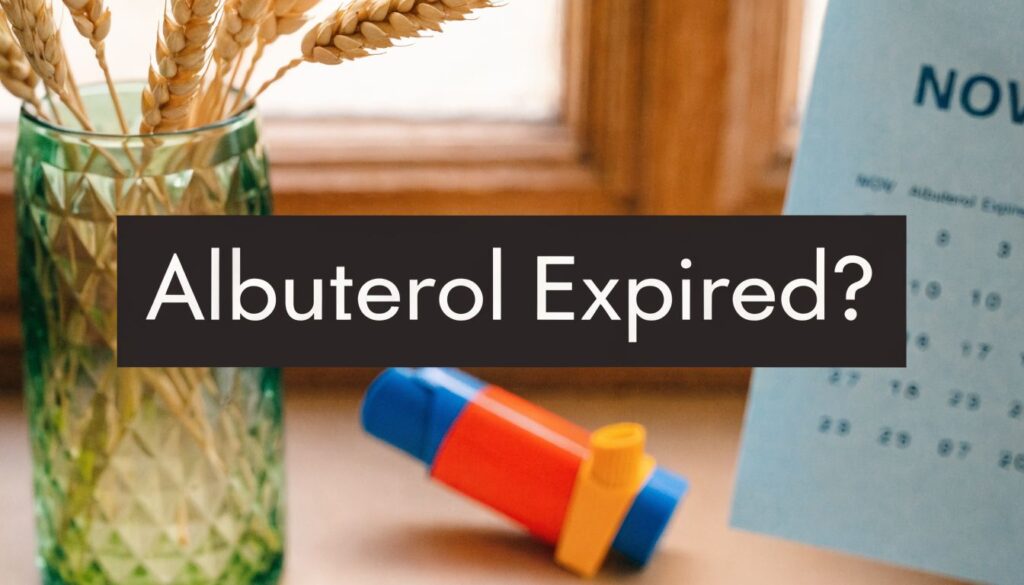
Yes, albuterol expires. In practice, that usually means declining potency, not that the medicine suddenly becomes poisonous, and the biggest risk is that an expired inhaler may not work well enough when you need fast relief.
A lot of people end up here the same way. You pick up your rescue inhaler, check the date, and realize it expired months ago. Maybe it's been sitting in a gym bag, a nightstand, or the car door pocket. Maybe you haven't needed it in a while, which felt like a good thing until now.
The important distinction is simple. Expired albuterol is mainly a reliability problem. If you use it during wheezing, chest tightness, or a flare that's building fast, the concern isn't that the inhaler will poison you. The concern is that it may deliver less active medication than you expect, and that can delay proper relief.
That's why I tell patients to think about expired albuterol in two separate questions:
- Is it likely to hurt me? Usually, the bigger issue isn't toxicity.
- Can I trust it in an urgent moment? That's the main problem.
If you've ever had trouble staying current with medications because life gets busy, refill timing slips, or symptoms come and go, improving your medication adherence habits matters more than many individuals realize. Rescue medication only helps if it's current, accessible, and ready when your breathing changes.
The Critical Question About Your Expired Inhaler
If you're asking does albuterol expire, the practical answer is yes, but the printed date doesn't mean the inhaler transforms overnight into something dangerous. It means the manufacturer is no longer guaranteeing full labeled performance past that point.
That difference matters because people often assume two extremes. One group thinks, “It's expired, so it must be toxic.” The other thinks, “It still sprays, so it's fine.” Neither view is reliable enough for a rescue medication.
Potency matters more than panic
With albuterol, the practical danger is usually treatment failure. During an asthma flare or sudden bronchospasm, you need a medication that opens the airways predictably. If the dose delivered is weaker than expected, symptom relief may be incomplete or slower than you need.
Practical rule: An expired inhaler is concerning because it may underperform, not because it suddenly becomes a poison.
That's why a calm response is better than a fearful one. If you discover an expired inhaler and you're not having symptoms, the next step is straightforward. Replace it. Don't wait until you're short of breath to discover your backup plan is weak.
A simple way to think about risk
When I explain this in practice, I keep it plain:
- If you're stable right now: Replace the inhaler promptly and keep a current one available.
- If you're in a true emergency and it's the only option: Using the expired inhaler may be better than using nothing at all.
- If it was stored poorly: Confidence drops fast, even before the date becomes the main issue.
- If symptoms aren't improving: Don't keep repeating a failing plan. Get urgent medical care.
People want a yes-or-no answer, but rescue medication doesn't work that way. The right question isn't only whether it expired. It's whether you can trust it under pressure.
What Medication Expiration Dates Really Mean
Medication expiration dates are often misunderstood. They're best viewed as the end of the period in which the manufacturer guarantees the drug will meet its labeled standards for potency and quality when stored as directed. They are not a universal signal that the product instantly becomes unsafe the next day.
A useful example comes from broader drug stability research. A K Health review of expiration evidence describes the FDA's landmark stability study conducted for the military, which found that 90% of more than 100 drugs remained safe even more than 15 years past their written expiration dates. That finding changed how many clinicians think about expiration dates. It suggested that these dates are often conservative quality benchmarks, not hard cliffs where medications suddenly become harmful.

What the date does tell you
The expiration date still matters. It tells you the company stands behind the product up to that point under defined storage conditions. That's an important standard, especially for medications used during urgent symptoms.
Think of the date as a guarantee window, not a spoilage alarm.
The printed date is the end of guaranteed performance, not proof that the medication has become toxic.
That's why pharmacists and clinicians don't dismiss expiration dates, even while recognizing that many drugs remain chemically stable beyond them. The issue is certainty. Once a medication moves past its labeled date, you lose the clean assurance that it will perform exactly as intended.
Why that matters more for rescue medication
For a daily vitamin, a small potency decline may not feel urgent. For a rescue inhaler, reliability matters much more. You may only need albuterol occasionally, but when you do need it, you usually need it quickly and with confidence.
Here's the practical distinction:
| Question | What expiration usually means |
|---|---|
| Has the medicine become poisonous? | Usually, that's not the main concern discussed with expired albuterol |
| Can the manufacturer still guarantee full potency? | No, not once it's past the labeled date |
| Should you rely on it as your primary rescue inhaler? | No, because guaranteed performance is gone |
So yes, expiration dates can be conservative. But conservative doesn't mean irrelevant. It means the date is designed to protect you by defining the period of assured quality, especially for medicines where timing and effect matter.
How Albuterol Potency Declines Over Time
Albuterol doesn't stop working all at once. It degrades gradually, and that gradual decline is why people get confused. An inhaler may still puff, still taste normal, and still seem usable, while the medication inside is no longer as dependable as it was when fresh.
A review on inhalation device expiration guidance explains that albuterol inhalers undergo chemical degradation through hydrolysis and oxidation. It also notes that manufacturers commonly base expiration dating on accelerated stability testing at 40°C/75% relative humidity. Under optimal storage, that same review states that nearly all albuterol products retained more than 90% of listed potency for over 15 years post-expiration.

The date is only part of the story
That sounds reassuring, but there's a catch. Those strong stability results depend heavily on good storage conditions. Room temperature, protection from light, and avoiding moisture all matter. Once an inhaler lives in a hot car, a humid bathroom, or near a heat source, the chemistry changes faster.
That's why two inhalers with the same expiration date can have very different real-world reliability.
- Well stored inhaler: More likely to retain useful potency longer
- Heat-exposed inhaler: More likely to degrade early
- Humidity-exposed inhaler: More vulnerable to reduced performance
- Frequently carried loose in bags or cars: Harder to trust because environmental exposure adds up
Inhaler performance is about more than spray
Patients often tell me, “It still sprays, so I thought it was okay.” That's understandable, but a visible spray doesn't confirm full drug potency. The device may still release something while the active ingredient has lost some strength over time.
If an inhaler has been stored badly, I worry about that more than a date alone.
That's also why expired albuterol can feel deceptively normal. It may still produce a puff and may still help somewhat. But rescue medication has to do more than “something.” It has to work well enough when your lungs are tight and the margin for delay is small.
Why storage habits often decide the outcome
If you want one practical takeaway from the science, it's this: storage often predicts usable potency better than casual assumptions about the printed date. The inhaler in a bedside drawer is not the same as the inhaler forgotten in a glove compartment through seasonal temperature swings.
So when people ask does albuterol expire, I answer yes. But I also ask where it's been kept, whether it's been opened for a long time, and whether they'd bet their breathing on it.
Assessing the Safety Risks of Using Expired Albuterol
The central safety issue with expired albuterol is not poisoning. It's under-treatment during respiratory distress. If you're short of breath and reach for your rescue inhaler, you need enough active medication to open the airways quickly. Anything less can put you in a more dangerous situation.

A Medical News Today discussion of the emergency use question notes that the critical threshold for clinical efficacy in an emergency is at least 85% to 90% potency. It also points out that a 1-year-expired inhaler is likely 90%+ potent, while the risk calculus changes for a 5-year-expired inhaler because lot-to-lot variability exists and confidence drops as age increases.
The real emergency trade-off
This is the part many articles skip. In real life, people sometimes have only an expired inhaler available. In that situation, the question becomes risk versus benefit.
Here's the practical framework I use:
| Situation | Practical concern |
|---|---|
| Recently expired and well stored | More likely to provide meaningful relief, though not guaranteed |
| Several years expired | Harder to trust in an acute event |
| Stored in heat, sun, or humidity | Confidence falls regardless of date |
| No current inhaler and active breathing trouble | Using the expired inhaler may be more reasonable than using nothing while seeking help |
That doesn't make expired inhalers ideal. It means emergency decisions are sometimes imperfect. A less reliable inhaler may still be worth using when the alternative is no bronchodilator at all.
What doesn't work
People often try to reassure themselves with weak signals. These aren't dependable:
- “It still makes a sound.” The canister can actuate without proving full potency.
- “I only use it rarely.” Low use doesn't preserve medication if storage has been poor.
- “It's just a little expired.” Maybe. But “a little” isn't the same as guaranteed.
- “It helped last time.” Partial relief once doesn't prove reliable performance during a worse flare.
Here's a useful visual primer on what rescue inhalers do and why dependable response matters in practice.
What I'd consider reasonable in a last-resort moment
If someone has an expired inhaler and no replacement in the middle of active symptoms, I'd think about three things fast:
- How old is it? A recently expired inhaler is different from one that has sat for years.
- How was it stored? Cool, dry, and protected is very different from car heat and bathroom humidity.
- Are symptoms responding? If relief is weak, slow, or absent, that's not the time to keep hoping.
Use the expired inhaler if it's your only option in an emergency, but don't mistake “better than nothing” for “good enough.”
The bottom line is firm. The main hazard of expired albuterol is not toxicity but failure at the exact moment you need reliable bronchodilation. That's why replacement isn't just housekeeping. It's part of asthma safety.
Proper Storage and Handling to Maximize Inhaler Lifespan
If you want your inhaler to stay dependable for as long as possible, storage matters every day, not just when the expiration date approaches. A Poison Control review of albuterol use and safety considerations notes that most albuterol inhalers expire about one year after being issued from the pharmacy or removed from foil packaging. It also states that products such as ProAir RespiClick and Ventolin HFA are considered safe for use for 12 to 13 months after opening, or until the expiration date, whichever comes first.

Where people shorten inhaler life by accident
Most damage happens through routine habits:
- Bathroom storage: Humidity isn't your friend.
- Car storage: Heat and temperature swings are rough on inhalers.
- Windowsills or direct sun: Light and heat accelerate decline.
- Loose carry without a plan: Bags, lockers, and gym compartments can expose the canister to changing conditions.
If you handle temperature-sensitive products in other parts of medicine, the same logic applies here. Good medication handling practices are often less about complicated rules and more about avoiding preventable stress from heat, light, and moisture.
What to do instead
A reliable routine is simple:
- Keep it at consistent room temperature. Pick one location you can remember and access quickly.
- Protect it from sunlight. A drawer, cabinet outside the bathroom, or another cool indoor spot works better than open surfaces.
- Track when it was opened. For many people, the opening date is more useful day to day than the printed carton date.
- Check the dose counter. An unexpired inhaler isn't helpful if it's empty.
A rescue inhaler should be current, reachable, and stored like you expect to need it unexpectedly.
A practical storage checklist
Use this short checklist every few weeks:
| Check | What to look for |
|---|---|
| Date | Is it at or near expiration? |
| Opening timeline | Has it been open for about a year or longer? |
| Storage history | Any time in cars, bathrooms, or direct sun? |
| Counter status | Are there doses left? |
| Accessibility | Could you grab it quickly during symptoms? |
In this context, good intentions matter less than habits. The inhaler that protects you is the one that's current, stored properly, and available when your breathing changes fast.
When to Replace and How to Dispose of Albuterol
There's a point where trying to stretch an inhaler stops being practical. If you're wondering whether to replace it, the answer is usually yes when there's any doubt about reliability. Rescue medication is not where you want uncertainty.
Replace it when trust drops
Get a new inhaler if any of these apply:
- It has reached the expiration date. That's the clear cutoff for guaranteed quality.
- It has been open for roughly its expected use window. If it has been out of packaging or in active use for a long period, replace it even if you rarely used it.
- The dose counter is low or at zero. People often mistake remaining spray for remaining medication.
- It was stored badly. A glove box, bathroom cabinet, or other harsh environment is reason enough to lose confidence.
- You needed it recently and response seemed weak. Don't troubleshoot a rescue inhaler during the next flare.
Don't keep old inhalers as false backup
Many patients keep expired inhalers in drawers, travel bags, or cars “just in case.” That creates a dangerous illusion of preparedness. If your backup is old, heat-exposed, or nearly empty, it may fail exactly when you count on it.
A better system is simple:
- Keep one current primary inhaler where you normally need it.
- Keep one current backup in a second predictable location if your clinician recommends it.
- Remove expired units from active rotation so you don't grab the wrong one under stress.
Dispose of it responsibly
Albuterol inhalers are pressurized devices, so they shouldn't be treated like ordinary household trash without checking local disposal instructions. The safest practical step is to ask your pharmacy how your area handles inhaler disposal or whether a medication take-back option is available.
If no take-back option is offered, follow the product labeling and local waste guidance. Don't puncture the canister, don't burn it, and don't leave expired inhalers mixed in with current medication.
Old rescue inhalers cause trouble when they stay in circulation long after they've stopped being trustworthy.
If you do one thing today, check every rescue inhaler you own. Look at the expiration date, the opening timeline, the dose counter, and where it's been stored. If there's doubt, replace it. If you've had trouble keeping prescriptions current or coordinating refills, talk with your pharmacist or prescribing clinician before the next urgent need. For readers already managing prescription therapies through telehealth, it also helps to understand how refill and prescribing workflows are handled for other medications, such as this overview of an online prescription process for HCG, because access logistics often determine whether people end up relying on expired medication.
If you're looking for a reliable telehealth partner for hormone, peptide, and wellness therapies, Elite Bioscience offers an efficient online clinic experience with physician oversight, lab-tested products, discreet delivery, and support designed to help patients stay current with prescribed treatment plans.