Yes, estrogen can absolutely help with hair loss. Think of it as a natural bodyguard for your hair follicles. It works by keeping your hair in its growth phase longer, which translates to thicker, stronger, and fuller-looking hair. When those estrogen levels take a dip, that protective effect fades, and more hair shifts into the shedding phase.
The Connection Between Estrogen and Your Hair
To really get to the root of hair loss, you first have to understand what estrogen is doing behind the scenes. Your hair follicles are like tiny, individual hair-producing factories. Estrogen acts like the on-site manager, making sure the production line runs smoothly and for as long as possible.
When your estrogen levels are where they should be, the hormone extends the anagen phase—the active growing stage for each hair strand. This means a higher percentage of your hair is actively growing at any given time, creating that feeling of density and fullness. In simple terms, estrogen tells your follicles, "Keep going!" and holds off the signal to rest and eventually shed.
How Your Hair Growth Cycle Works
Every single hair on your head goes through a three-stage cycle, and estrogen influences each step of the journey:
- Anagen (Growth Phase): This is the main event where your hair is actively growing. With healthy estrogen levels, this phase can last anywhere from two to eight years.
- Catagen (Transitional Phase): A very short pit stop, lasting just two to three weeks, where the hair follicle starts to shrink and growth comes to a halt.
- Telogen (Resting Phase): The follicle takes a break for about two to four months. At the end of this phase, the old hair is shed to make room for a new one to begin its own anagen phase.
When estrogen levels drop, the anagen phase gets cut short. This pushes more follicles into the telogen (resting) phase way too early. The result is a noticeable increase in shedding and an overall thinning of your hair. It’s not so much that your hair is falling out more aggressively—it's that the growth periods just aren't long enough to keep up.
Estrogen's most critical job for your hair is to run defense against androgens (like testosterone) on the scalp. By holding hair in the growth phase, it prevents these male hormones from shrinking the follicles, which is a primary cause of pattern hair loss.
To help you visualize this, here’s a quick breakdown of how estrogen levels impact each phase of the cycle.
Estrogen's Impact on the Hair Growth Cycle
| Hair Cycle Phase | Effect of High Estrogen | Effect of Low Estrogen |
|---|---|---|
| Anagen (Growth) | Prolongs this phase, keeping more hair growing for a longer period. | Shortens this phase, leading to less time for hair to grow. |
| Catagen (Transition) | Delays the entry into this phase, maintaining hair density. | Accelerates the entry into this phase. |
| Telogen (Resting/Shedding) | Reduces the number of follicles in this phase at any given time. | Increases the number of follicles entering this phase, leading to more shedding. |
As the table shows, maintaining optimal estrogen levels is key to keeping the growth-to-shedding ratio in a healthy balance.
The Science Behind Estrogen's Protective Role
The link between estrogen and healthy hair isn't just an observation; it's backed by solid science. Researchers have consistently found that estrogen plays a protective role, especially for women dealing with female pattern hair loss (FPHL). The drop in estrogen that occurs during menopause, in the postpartum period, or from certain medications is often directly linked to increased hair shedding as follicles are triggered to enter the resting phase.
This hormonal dance is exactly why so many women report major changes in their hair during different life stages. Understanding what’s happening with your hormones is the first step toward finding a real solution. If you're noticing changes in your hair and suspect hormones are the culprit, it helps to be aware of other potential symptoms. You can learn more about the common signs of low estrogen in our detailed guide.
How Hormonal Imbalance Triggers Hair Thinning
Hair loss can feel like a complex puzzle, but for many women, a major piece of that puzzle is a simple shift in their hormonal balance. It’s not just about having low estrogen; it’s about the delicate relationship between estrogen and other hormones, especially androgens (male hormones like testosterone).
Think of your hormones as a finely tuned orchestra. When every instrument is in sync, the result is beautiful harmony—and in this case, healthy hair. But when estrogen, a key conductor, starts to fade out, the androgen section can get a little too loud.
This imbalance is the real troublemaker. Estrogen acts as a natural guardian for your hair follicles. When its levels drop, that protective shield weakens, leaving your follicles more susceptible to the effects of androgens, particularly a potent one called dihydrotestosterone (DHT).
The Role of DHT in Hair Loss
DHT is the primary villain behind a common type of hair loss known as androgenetic alopecia, which you might know as female pattern hair loss. This hormone has a nasty habit of binding to receptors in your hair follicles, kicking off a process called miniaturization.
Essentially, DHT orders the follicle to shrink. With each hair cycle, the follicle produces a hair that's a little finer, a little shorter, and a little lighter in color. Eventually, it just gives up and stops producing hair altogether. This is why you typically see gradual thinning, not sudden bald patches.
This hormonal shift is precisely why hair loss becomes more common during specific life stages when estrogen takes a nosedive:
- Menopause and Perimenopause: This is the classic example. As the ovaries slow down, estrogen production plummets, leaving hair vulnerable.
- Postpartum: After you give birth, the sky-high estrogen levels of pregnancy suddenly drop, often triggering a period of dramatic (though usually temporary) hair shedding.
- Certain Medical Conditions: Issues like Polycystic Ovary Syndrome (PCOS) can create an environment where androgens are dominant, which often contributes to hair loss.
This map helps visualize how estrogen’s presence—or absence—directly affects your hair's health.
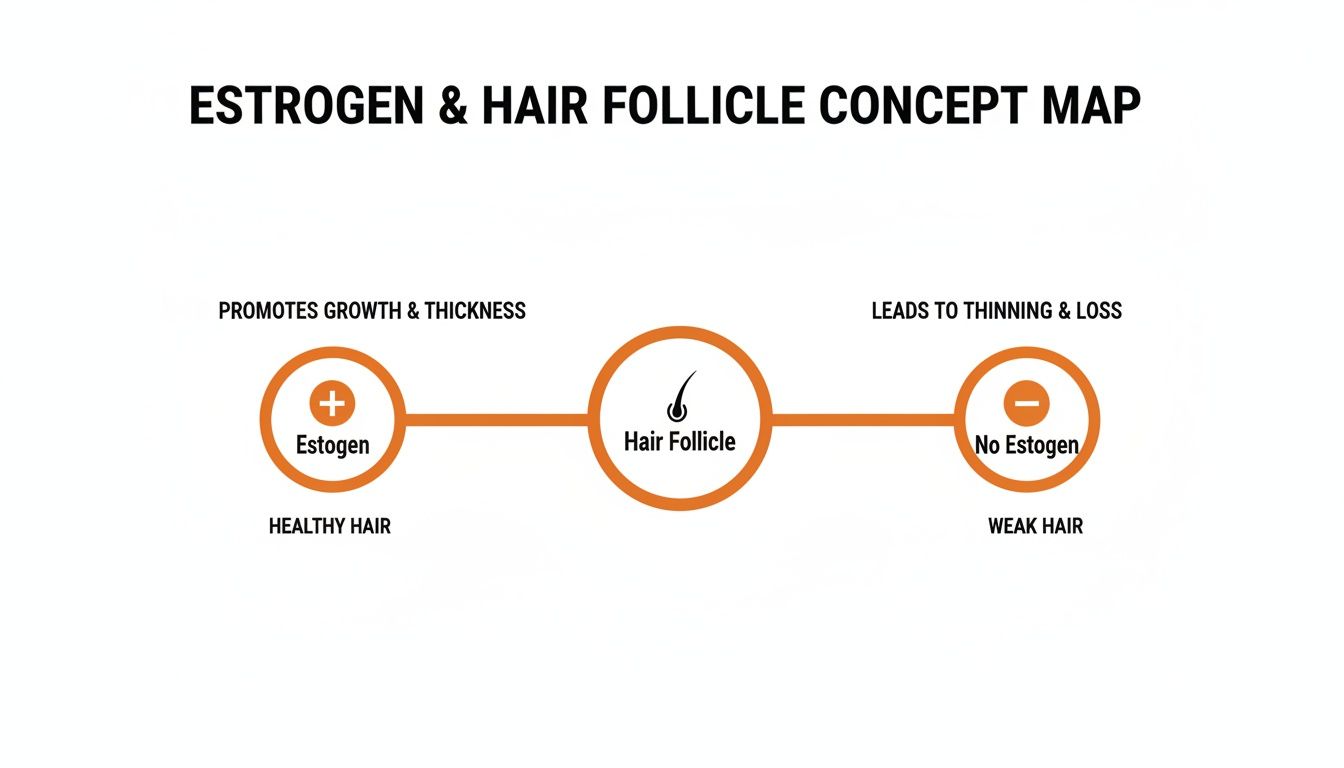
As you can see, when estrogen is on the scene, it creates a healthy environment for growth. When it's gone, follicles are left exposed and start to thin.
Rebalancing Hormones to Protect Hair Follicles
So, how do we fight back? The key is to restore that hormonal balance. By bringing estrogen levels back up, you can effectively push back against DHT's damaging influence on your scalp. This protective effect helps keep your hair in its growth phase for longer, which is crucial for maintaining thickness and density.
The science backs this up. One important study showed that a combination of ethinyl estradiol (a synthetic estrogen) and an anti-androgen significantly increased the percentage of hairs in the anagen (growth) phase after just one year. The treatment also showed a trend toward thicker hair shafts, directly proving how estrogen can foster healthier, more robust hair. You can read the full study to see how estrogen impacts the hair cycle firsthand.
Ultimately, answering "does estrogen help hair loss?" means looking at the bigger hormonal picture. Once you understand that hair thinning is often caused by an imbalance where androgens gain the upper hand, it becomes crystal clear why restoring estrogen can be such a powerful strategy. It rebuilds your hair's natural defense system, giving your follicles a fighting chance to thrive again.
Using Estrogen Therapy to Combat Hair Loss
Once you realize a hormonal imbalance is likely behind your thinning hair, the path forward becomes much clearer. If a drop in estrogen has left your hair follicles exposed and vulnerable, then bringing those levels back up can be a powerful counter-measure. This is exactly where estrogen-based treatments like Hormone Replacement Therapy (HRT) come in, aiming to restore your body’s natural hormonal harmony.
The strategy is pretty straightforward: reintroduce estrogen’s protective benefits to the scalp. Think of it as rebuilding a hormonal shield that keeps androgens like DHT from shrinking your follicles. This kind of intervention can halt the thinning process, fortify the hair you still have, and foster a healthier environment for new strands to grow.
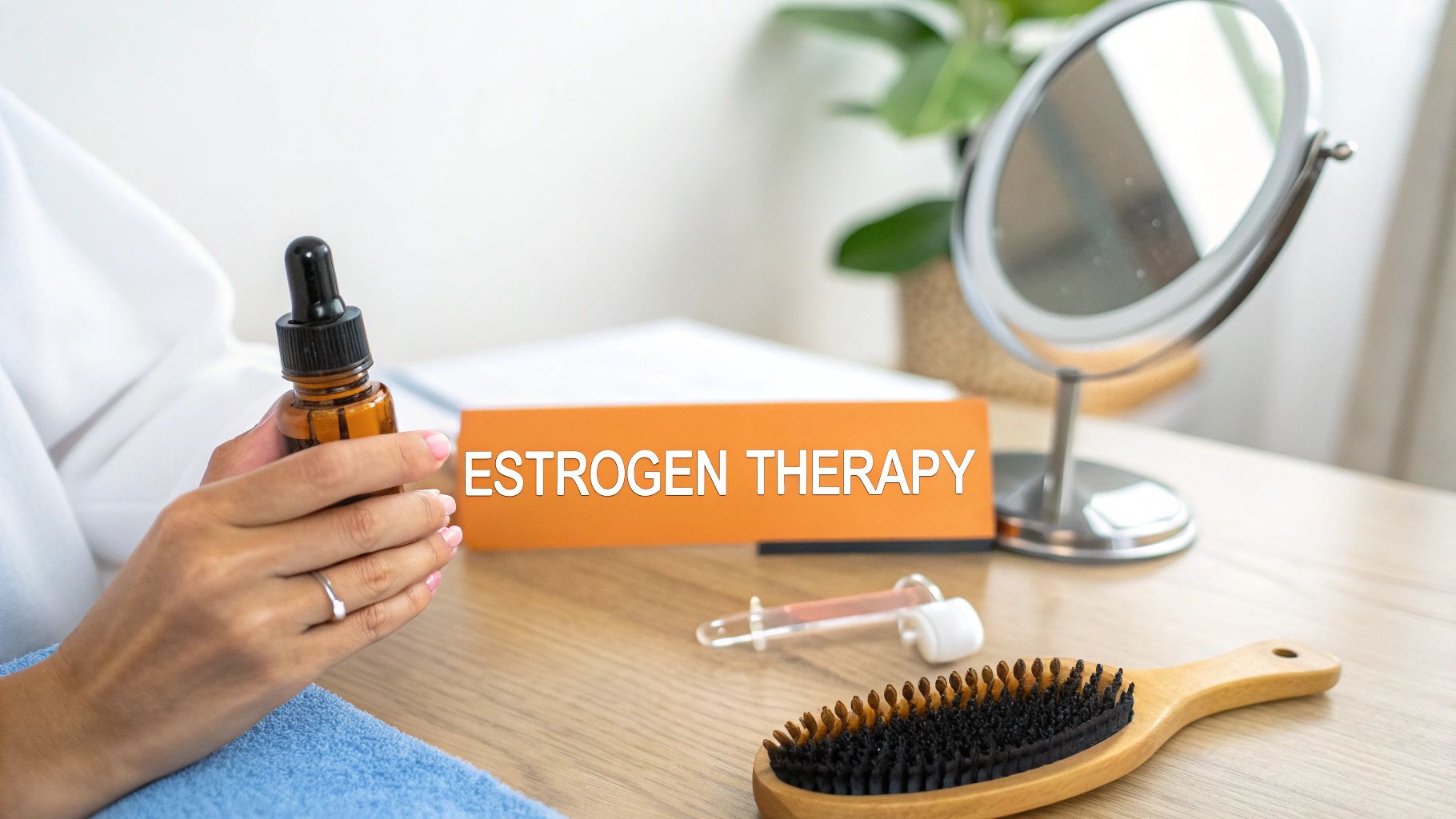
How HRT and Estrogen Therapies Work
Hormone Replacement Therapy is a medically supervised treatment that supplements the hormones your body is no longer producing enough of. When it comes to hair loss, the mission is to boost estrogen levels back to a place where they can effectively push back against androgens and get the hair growth cycle back on track.
This approach tackles the problem at its very root instead of just masking the symptoms. When estrogen is reintroduced, it immediately gets to work on extending the anagen (growth) phase of the hair cycle. This means more of your hair stays in that active growing stage for a longer period, which leads to noticeable improvements in fullness and density over time.
Estrogen therapy isn't a one-size-fits-all solution; it can be administered in several different ways:
- Systemic HRT: Delivered as pills, patches, or gels, this method circulates hormones throughout your entire body. It's often prescribed to manage a wide array of menopausal symptoms, and hair restoration is frequently a welcome side effect.
- Topical Estrogen: These are specialized solutions or creams applied directly to the scalp. This targeted approach delivers estrogen right where it’s needed—at the hair follicles—with very little absorption into the rest of the body.
- Bioidentical Hormones: Derived from plants, these hormones are molecularly identical to the ones our bodies produce naturally. Many people prefer this option because it feels more aligned with their body's chemistry. You can learn more about what bioidentical hormone therapy is to see if it’s a good fit for you.
From Clinical Studies to Real-World Results
The idea that estrogen can help fight hair loss isn't just a theory—it’s backed by solid clinical evidence. Study after study has shown that when women undergo HRT, many see a significant drop in shedding and a real increase in hair density.
For example, one clinical evaluation looked at women on HRT with estradiol. After just six months, they saw significant improvements in thinning hair at the front of their scalps. The therapy didn't just boost hair growth; it actually improved how strongly the hair was anchored to the scalp.
This kind of scientific validation gives us confidence that real, visible results are possible. The crucial part, however, is that these treatments must be managed by a medical professional who can customize the therapy to your specific hormonal needs. With the right, personalized approach, restoring your hormonal balance can bring back the stronger, fuller hair you've been missing.
Navigating the Safety of Estrogen Therapy
While estrogen therapy can be a game-changer for hormonal hair loss, it’s not something to jump into without a solid understanding of its safety profile. Like any powerful medical treatment, it carries potential side effects, which is why having a healthcare professional in your corner is non-negotiable.
Think of your doctor as your co-pilot on this journey. They’ll map out a plan based on your unique health history, current medical status, and specific hormonal needs. The goal is always to use the lowest dose that gets the job done—in this case, restoring your hair—while keeping any potential side effects to a minimum. This carefully tailored approach is what makes hormone therapy both safe and effective.
Understanding Potential Side Effects
Many people use estrogen therapy without any major issues, but it's smart to know what you might experience. The side effects can depend on whether you’re using a systemic treatment (like pills or patches that affect your whole body) or a topical one (applied right to the scalp).
Some of the more common side effects can include:
- Bloating or water retention
- Breast tenderness or swelling
- Headaches or shifts in mood
- Nausea
Systemic HRT is also associated with more serious, though much less common, risks, like an increased chance of blood clots or certain cancers. This is exactly why a thorough medical screening beforehand is so critical. Your doctor will walk you through your personal risk factors to help you decide if estrogen therapy is the right path for you.
The bottom line is this: personalized medical supervision is paramount. A doctor will dig into your individual health profile to make sure the treatment is designed just for you, maximizing the good stuff while keeping any risks in check.
Who Should Be Cautious
Estrogen therapy isn't a one-size-fits-all solution. If you have a personal or strong family history of certain health issues, it might not be the best option.
You’ll want to be particularly cautious if you have a history of:
- Breast, uterine, or ovarian cancer
- Blood clots (like DVT or pulmonary embolism) or stroke
- Significant liver disease
- Any unexplained vaginal bleeding
Being completely open about your medical history with your provider is the single best thing you can do to ensure your treatment plan is safe. To get a better feel for what those first conversations look like, our guide on how to start hormone replacement therapy is a great resource.
Alternative and Complementary Treatments for Hair Loss

While estrogen therapy can be a game-changer for many, it’s not the only tool in the toolbox. The world of hair restoration is vast, and sometimes the best results come from combining different approaches or choosing an alternative that aligns better with your personal health needs.
Think of it like building a team. You wouldn’t want a team full of quarterbacks, right? Similarly, tackling hair loss from multiple angles with treatments that work in different ways can create a much stronger defense against thinning.
Minoxidil: The Growth Stimulant
You've almost certainly heard of this one, probably by its brand name, Rogaine. It's one of the most common over-the-counter treatments for a reason: it works. But it works very differently from estrogen.
Minoxidil is a vasodilator, which is a fancy way of saying it opens up the blood vessels. Picture it like this: if your hair follicles are getting a trickle of nutrients from a tiny garden hose, minoxidil widens that hose into a fire hydrant. This surge of blood, oxygen, and nutrients can jolt sleepy follicles back into action and keep your hair in its growth (anagen) phase for longer.
Minoxidil doesn’t mess with your hormones or block DHT. It simply focuses on creating a healthier, more nourishing environment right at the scalp, making it a fantastic partner to hormonal treatments like estrogen.
Anti-Androgens: Blocking the Root Cause
If high androgen levels are the villain in your hair loss story, then anti-androgen medications are the heroes that can swoop in to save the day. These are prescription drugs designed to stop androgens, like DHT, from harming your hair follicles.
- Spironolactone: A go-to prescription for female pattern hair loss, spironolactone essentially puts up a "Do Not Disturb" sign on your hair follicles. It blocks the receptors that DHT would normally bind to, preventing it from triggering the shrinking process.
- Finasteride: Though more widely used for men, doctors sometimes prescribe finasteride off-label for women. It tackles the problem one step earlier by blocking the enzyme that turns testosterone into the super-potent DHT in the first place.
These medications act like bodyguards for your follicles. One study on oral anti-androgens was incredibly promising, finding that 88% of women either saw their hair improve or at least stopped losing more hair. It’s a direct and powerful way to address the hormonal side of the equation.
To make sense of how these different treatments stack up, it helps to see them side-by-side.
Comparing Popular Hair Loss Treatments
This table breaks down some of the most common options to help you see how they differ in their approach and who they might be best for.
| Treatment | How It Works | Best For | Requires Prescription |
|---|---|---|---|
| Estrogen Therapy | Rebalances hormones to protect follicles from androgens. | Women with hormonal hair loss, especially during menopause. | Yes |
| Minoxidil (Rogaine) | Increases blood flow to the scalp to stimulate follicles. | General hair thinning in both men and women. | No (Topical) |
| Spironolactone | Blocks androgen receptors on hair follicles. | Women with androgenetic alopecia or PCOS-related hair loss. | Yes |
As you can see, there's no single "best" treatment—it all depends on the root cause of your hair loss.
Often, the most powerful strategy is a combined one. Using a hormonal treatment like estrogen to fix the underlying issue while also using a growth stimulant like minoxidil to boost the visible results can give you the most comprehensive and effective plan for getting your hair back.
Your Top Questions About Estrogen and Hair Loss, Answered
When you're exploring hormonal treatments for hair loss, it's natural to have a lot of questions. Let's walk through some of the most common ones I hear from patients to give you the clarity you need to move forward.
Can Birth Control Pills With Estrogen Really Help With Hair Loss?
They absolutely can, particularly for women whose hair loss is driven by high androgen levels, which is common in conditions like PCOS. The estrogen in combination birth control pills helps keep your hair in its growth phase longer.
What's more, some of the progestins used in these pills can also block androgens from affecting your scalp. But—and this is a big but—not all progestins are created equal. Some can actually mimic androgens and make hair loss worse. That's why it's so important to talk to a doctor who can prescribe the right formula for your specific hormonal profile.
How Long Until I See Results From Estrogen Therapy?
When it comes to hair, patience is a virtue. The hair growth cycle is a slow and steady process. Typically, you can expect to notice a decrease in shedding and maybe some early signs of regrowth within three to six months of starting your therapy.
Real, noticeable improvements in thickness and density usually take longer, often up to a year or more. The key is consistency. Stick with your treatment plan and keep up with your doctor's appointments to get the best outcome.
A great first sign that things are working is simply seeing less hair in your brush or in the shower drain. Don't get discouraged if you don't see a full head of new hair in a few months—stabilizing the shedding is the first critical step.
Is Topical Estrogen as Good as Oral HRT?
Applying estrogen directly to the scalp is a fantastic way to target the hair follicles right where they need help, and it minimizes how much of the hormone gets absorbed into the rest of your body. It can definitely improve hair density in the treated areas.
But is it as effective as systemic HRT, like pills or patches? That really depends on you and the underlying cause of your hair loss. If the issue is a body-wide hormonal imbalance, systemic HRT might have a more powerful, comprehensive effect. A doctor can help you weigh the pros and cons to figure out which route makes the most sense for your health and your hair goals.
If I Stop Taking Estrogen, Will My Hair Fall Out Again?
More than likely, yes. Think of estrogen therapy as a shield protecting your hair follicles from whatever hormonal imbalance was causing the thinning. If you stop the treatment, you’re essentially removing that shield.
Once the estrogen's protective influence is gone, androgens can start affecting the follicles again, often pushing them back into the shedding phase. The hair loss you were working to correct will probably return. It's crucial to have a conversation with your healthcare provider before stopping or changing your therapy so you can map out a plan for your hair's long-term health.
At Elite Bioscience, we provide medically supervised hormone therapies to help you address the root cause of your concerns. Take the first step towards restoring your balance and confidence by exploring our treatment options today. Learn more by visiting our website: Elite Bioscience.