
Human Chorionic Gonadotropin, better known as HCG, is a prescription hormone that plays a crucial role in men’s health. It helps support your body's own testosterone production, prevent testicular shrinkage, and preserve fertility.
While many people associate HCG with pregnancy, its function in men is entirely different. For men on Testosterone Replacement Therapy (TRT), HCG is a vital tool because it mimics the natural signals your body uses to make its own hormones.
What Is HCG and How Does It Benefit Men?
Let's break down how this works. Imagine your body's hormone production system is like a factory. Your brain is the manager, and your testicles are the factory workers. The manager (brain) sends a signal called Luteinizing Hormone (LH) down to the workers (testicles), telling them to get busy and produce testosterone.
When a man starts TRT, his body starts receiving testosterone from an outside source. Seeing plenty of testosterone available, the brain-manager thinks its job is done and stops sending LH signals. The factory workers, with no instructions, shut down production. This shutdown leads to testicular shrinkage (atrophy) and can impact fertility.
This is where HCG comes in. It acts as a perfect stand-in for that LH signal. HCG goes directly to the testicles and tells them to keep working, even when the brain has gone quiet. This direct command keeps your internal "factory" operational, which is essential for maintaining testicular health and function while on TRT.
The Core Benefits of Using HCG
By directly stimulating the testes, HCG delivers a few very specific and important benefits for men, especially those on a hormone optimization plan. Think of HCG as a support therapy designed to prevent the common side effects of TRT.
Here’s what it can do for you:
- Prevent Testicular Atrophy: Because TRT can shut down your natural production, it often causes testicular shrinkage. HCG keeps the testes active, helping them maintain their normal size and volume.
- Preserve Fertility: Keeping the testicular factory running means sperm production can continue. This is a critical factor for any man on TRT who wants to keep the option of having children open.
- Support Natural Hormone Pathways: HCG stimulates the Leydig cells inside the testes to produce testosterone and other important hormones. This helps you feel more well-rounded and can improve libido and overall well-being. To dive deeper into this topic, you can read your guide to understanding low free testosterone.
To summarize the key applications of HCG for men, the table below provides a quick overview of its primary goals and how it achieves them.
HCG for Men At a Glance
| Application | Primary Goal | Mechanism of Action |
|---|---|---|
| Use with TRT | Prevent testicular atrophy & preserve fertility. | Mimics Luteinizing Hormone (LH) to directly stimulate the testes. |
| Monotherapy | Treat low testosterone in some men. | Boosts the body's own testosterone production without external T. |
| Fertility | Stimulate sperm production. | Promotes spermatogenesis by keeping testicular pathways active. |
This table highlights how HCG is a versatile tool used to maintain the body's natural hormonal functions, whether alongside TRT or, in some cases, as a standalone treatment.
In essence, HCG doesn’t replace testosterone itself; it restarts the body’s own engine for producing it. This makes it a vital complementary therapy rather than a replacement for TRT. It addresses the cause of shutdown, not just the symptom of low T.
The Science of How HCG Restores Hormonal Balance
To really get how HCG works for men, you first need to understand your body's own hormonal command center: the Hypothalamic-Pituitary-Testicular Axis, or HPTA. The best way to think about it is as a three-part communication system that keeps your testosterone levels in check.
First, your hypothalamus (in your brain) acts as mission control. It sends a signal to your pituitary gland, which is like the field commander. The pituitary then releases a crucial messenger called Luteinizing Hormone (LH). LH travels down to the testes—the testosterone factories—and tells specialized cells called Leydig cells to start producing testosterone.
It's a beautifully balanced system.
How TRT Disrupts the System
When you start Testosterone Replacement Therapy (TRT), your brain senses high levels of testosterone coming from an outside source. Thinking its job is done, mission control (the hypothalamus) shuts down the signal chain. This creates a negative feedback loop: the pituitary stops releasing LH, and the testosterone factories in the testes grind to a halt.
Without that LH signal, the Leydig cells go dormant. This shutdown is what causes common TRT side effects like testicular atrophy (shrinkage) and a drop in fertility. Your natural HPTA system, which is essential for these functions, goes quiet. This is exactly where HCG for men comes into play.
HCG Steps In to Get Things Moving Again
HCG essentially acts as a stand-in for that missing LH signal. Its molecular structure is so similar to LH that the receptors on the Leydig cells can't tell them apart. When you administer HCG, you're bypassing the dormant signals from the brain and giving the testes a direct order to get back to work.
This "LH mimicry" accomplishes a few critical things:
- It restarts intratesticular testosterone (ITT) production. This is key for sperm production and maintaining testicular size.
- It prevents atrophy. By keeping the testicular machinery running, HCG helps prevent the shrinkage that often happens when the natural signals fade.
- It supports overall hormonal health. HCG helps maintain other important hormonal pathways within the testes that influence libido, mood, and your general sense of well-being.
The main takeaway is this: HCG doesn't just add more hormones. It restores a vital biological function by keeping your natural systems online, preventing the shutdown that TRT would otherwise cause.
This graphic gives a great visual breakdown of how HCG delivers these benefits.
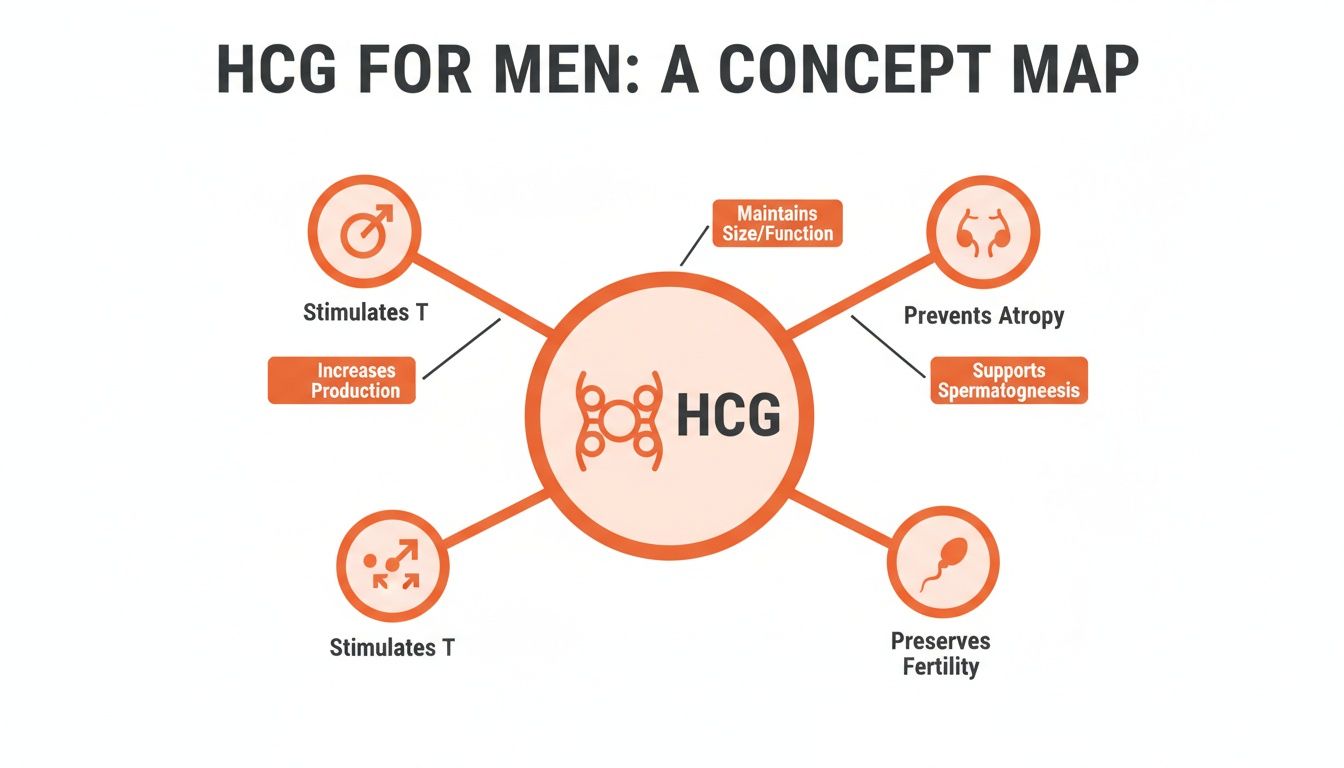
As you can see, HCG's primary job is to directly fire up testosterone production right inside the testes, which in turn helps prevent atrophy and preserve fertility.
And the science backs this up. Clinical trials have repeatedly shown HCG's ability to maintain intratesticular testosterone (ITT) even while a man is on TRT. One landmark study was particularly eye-opening: men on weekly testosterone injections without HCG saw their intratesticular testosterone levels plummet by a staggering 94%.
But when another group received small doses of HCG alongside their TRT, their ITT levels stayed right within the normal, healthy range. If you want to dive into the details, you can read the research on HCG and testosterone levels for yourself. It’s a powerful demonstration of just how well HCG counteracts the suppressive effects of testosterone therapy.
How Doctors Actually Use HCG for Men
It's one thing to understand the science, but it’s another to see how HCG therapy actually works in a clinical setting. So, what are the real-world reasons a doctor would prescribe HCG for men? It turns out there are a few key scenarios, each targeting a specific hormonal challenge.
These applications aren't just theoretical—they solve common problems men face with low testosterone and fertility, offering a targeted tool that can dramatically improve health and quality of life. Let’s break down the three most common uses.
Keeping Everything Working During TRT
By far, the most common reason a man gets a prescription for HCG is to use it alongside his Testosterone Replacement Therapy (TRT). When you start TRT, your body gets its testosterone from an external source, so the brain thinks, "Great, we're all set," and stops sending the signal to your testicles to make their own.
This shutdown leads to two of the biggest downsides of TRT: testicular atrophy (shrinkage) and a steep drop in sperm production, which impacts fertility.
HCG steps in to fix this problem directly. Since it acts just like the Luteinizing Hormone (LH) your brain is no longer sending, it tells the testes to stay on the job, even while the rest of your system is getting testosterone from your therapy. This creates a best-of-both-worlds scenario:
- TRT delivers the testosterone you need for energy, mood, muscle, and overall well-being.
- HCG keeps your own testicular machinery humming along, maintaining size and preserving fertility.
For any man on TRT who’s worried about testicular shrinkage or wants to keep the door open for having children down the road, adding HCG is standard practice.
Think of it this way: TRT is like having a food delivery service bring you meals every day. Your kitchen staff (the testes) sees this and decides to go on vacation. HCG is the manager who comes in and says, "Nope, keep the ovens on and stay prepped," ensuring the kitchen never shuts down.
Kicking Your Own System Back into Gear
Sometimes, HCG is used all by itself as a monotherapy to treat low testosterone. This approach is specifically for men with something called secondary hypogonadism. In simple terms, this means the testicles are perfectly capable of making testosterone, but the brain isn't sending the right signals to tell them to do it.
Instead of just giving you testosterone, HCG monotherapy aims to restart your body's natural production. By providing that missing LH signal directly to the testes, HCG gives them the "go" signal they've been waiting for. This is often a great option for younger men or anyone who prefers to avoid TRT if possible.
The goal here is to restore your body’s own hormonal rhythm without creating a reliance on external testosterone. Studies show it works well, with men often reporting not just better T levels but a real improvement in libido and erectile function, too.
Rebuilding Fertility After It's Been Shut Down
Another powerful use for HCG is restoring fertility, especially for men whose sperm production has been halted by long-term TRT or the use of anabolic steroids. When the body's natural hormone signals have been offline for a while, sperm count can plummet, sometimes to zero.
HCG is often the first tool doctors reach for to restart spermatogenesis (the process of making sperm). It provides a strong, direct signal to the Leydig cells in the testes, which ramps up the production of intratesticular testosterone—a critical ingredient for sperm creation.
This therapy can be incredibly effective at "waking up" a dormant reproductive system. In fact, some research shows that sperm counts can rebound dramatically, increasing by over 800% in just three to six months.
For men who are coming off TRT or taking a break to start a family, HCG provides a clear, proven path to restoring their natural fertility and helping them achieve their family-planning goals.
Your Guide to HCG Dosing and Administration
Getting comfortable with how HCG is dosed and administered is the first step toward feeling confident in your therapy. Your doctor will tailor a protocol specifically for your health needs, but most HCG strategies for men are built on a few key principles.
The whole idea is to find your "sweet spot"—a dose that effectively stimulates the testes without sending things into overdrive. A licensed physician is the only one who can help you dial that in safely.
Common Dosing Strategies
HCG dosing isn't a one-size-fits-all deal. It's carefully adjusted based on why you're using it, and the approach can be quite different depending on the goal.
When using HCG alongside TRT, for instance, the strategy is usually "low and slow." We're aiming to mimic the body's natural, gentle hormonal signals to keep everything online.
For TRT Support: Most men on TRT are prescribed 250 to 500 IU of HCG, injected two to three times per week. The goal here isn't to crank up testosterone production on its own but simply to prevent testicular shrinkage and maintain baseline function.
For Fertility or Monotherapy: If the main objective is kick-starting sperm production or using HCG as a standalone treatment, higher doses are usually needed to provide a stronger stimulus. These protocols can vary widely depending on a man's individual response.
Dosing protocols can involve subcutaneous injections several times weekly, with regimens varying from 1,500 IU to 6,000 IU per injection depending on individual clinical goals. For men with confirmed testosterone deficiency, consistent therapy typically leads to normalized testosterone levels within about three months. Discover more insights about HCG treatment timelines on goodrx.com.
How to Administer HCG Injections
For many men, the thought of self-injection is a bit daunting at first. The good news is that administering HCG is a simple, quick, and virtually painless process once you get the hang of it.
HCG is almost always given as a subcutaneous injection. This just means the medication goes into the fatty layer right under the skin, not deep into the muscle. We use a tiny insulin syringe with a very fine, short needle, which makes it far more comfortable than you might imagine.
The most common spots to inject are:
- The Abdomen: Gently pinch an inch of skin about two inches away from your belly button.
- The Thigh: The fatty outer part of your upper thigh is another easy-to-reach spot.
- The Glute: The upper, outer area of the buttock also works well.
Our clinic provides step-by-step instructions to make sure you're comfortable. If you ever need a refresher, our detailed guide on how to self-inject testosterone covers very similar techniques.
Preparing and Storing Your HCG
HCG is a delicate hormone and needs to be handled correctly to stay effective. It usually comes as a freeze-dried powder (lyophilized) that you have to mix with bacteriostatic water before you can use it.
Mixing HCG
Your kit will include a vial of HCG powder and a vial of sterile water. Following your doctor's instructions, you’ll use a syringe to draw up the water and slowly inject it into the powder vial. The key is to let it dissolve gently—never shake the vial, as this can damage the hormone molecule.
Proper Storage
Once it's mixed, HCG must be refrigerated. A reconstituted vial will stay potent for about 30 to 60 days, depending on the brand and how it's stored. Before mixing, just keep the powder in a cool, dark place away from light.
Benefits and Timeline: What to Realistically Expect
So, you're starting HCG therapy. The big questions are always: "What will it do for me?" and "How fast will it work?" It’s a fair question. The good news is that the benefits of HCG for men are very real, and they tend to show up on a fairly predictable schedule. Of course, everyone’s body is different, but we can map out a general timeline based on your goals—whether you're using it to support TRT, boost fertility, or as a standalone treatment.
Let's break down what you can expect into three key areas: physical changes, hormonal balance, and fertility.
Physical and Hormonal Improvements
If you're using HCG alongside TRT, one of the first things you'll notice is that it helps maintain testicular size. This is a big deal for a lot of guys. TRT alone can cause the testes to shrink because it shuts down your body's natural signal to them. HCG steps in and keeps them active, preventing that atrophy right from the get-go.
Beyond that, many men just feel better when HCG is part of their protocol. They report more stable moods, a better sense of well-being, and often a stronger libido. Think of it this way: TRT raises your overall testosterone levels, but HCG keeps your internal factory running, which produces a whole host of other hormones that contribute to that feeling of vitality.
By mimicking your body’s natural Luteinizing Hormone (LH), HCG keeps the testicular machinery from going dormant. It’s not just about preventing physical changes; it's about supporting the complex hormonal symphony that dictates your mood, energy, and sexual health every single day.
The Timeline for Fertility Restoration
For men whose main goal is fertility, patience is key. HCG is fantastic at restarting sperm production, especially if it's been suppressed by TRT, but it’s not an overnight fix. It takes time for the body to get the assembly line for spermatogenesis back up and running.
Based on the clinical evidence, you should expect to wait three to six months before seeing significant improvements in sperm count and motility. That's the realistic window to start looking for meaningful changes on a semen analysis report.
And the results can be truly incredible. We have solid research showing just how effective HCG can be. One landmark study on men who were on testosterone found that HCG therapy led to a massive rebound in spermatogenesis. The average total sperm count shot up from 18.0 million to 146.9 million after just a few months—that's an 816% increase. Even more impressively, the total motile sperm count (the ones that can actually get the job done) jumped from 1.1 million to 66.9 million, a staggering 5,981% improvement. You can dig into the specifics by reading the full research on HCG and sperm production improvements.
These numbers aren't just statistics; they represent a proven pathway for men looking to restore their fertility. It gives you a clear and realistic timeline for what to expect on your journey.
Navigating Potential Side Effects and Safety

Any effective hormone therapy requires a clear-eyed look at the potential side effects. The good news is that when used correctly under a doctor's care, HCG for men is considered very safe and generally well-tolerated. The goal isn't just to stimulate your body's hormone production, but to manage the entire process responsibly.
Most issues are minor and temporary. For instance, it's not uncommon to see a little redness, mild itching, or some discomfort right at the injection site. These usually fade quickly as your body gets accustomed to the routine.
Understanding Estrogen Conversion
The main side effect we watch for with HCG therapy is an increase in estrogen, specifically a hormone called estradiol. Now, HCG doesn't directly cause this. It’s a downstream effect of HCG doing its job—which is telling your testes to ramp up testosterone production.
Here’s what happens: as your testes make more testosterone, an enzyme called aromatase gets to work converting some of it into estradiol. A certain amount of estrogen is crucial for men’s health; it plays a role in bone density, brain function, and even libido. The problem arises when levels get too high.
If your estradiol climbs beyond the optimal range, you might start noticing things like:
- Water retention or a bloated feeling, particularly in your midsection.
- Mood swings, irritability, or just feeling more emotional than usual.
- Acne breakouts or suddenly oily skin.
- Gynecomastia, which is the technical term for developing male breast tissue.
Think of it like this: HCG turns the testosterone "faucet" back on inside the testes. Aromatase is like a drain that diverts some of that flow into an estrogen "bucket." A little is fine, but if the faucet is running strong and the drain is too efficient, the bucket can overflow.
This is exactly why trying to manage HCG therapy on your own is a bad idea. A qualified doctor will keep a close eye on your hormone levels through routine blood work, ensuring everything stays perfectly balanced.
Monitoring and Management
Regular lab testing is the foundation of safe and effective HCG therapy. Your clinical team will regularly check your testosterone and estradiol levels, which allows them to spot any potential imbalances before they cause symptoms. This data is what allows for precise, personalized adjustments to your treatment plan.
If your estradiol does start to creep up, your doctor has a straightforward solution. They can prescribe a medication called an aromatase inhibitor (AI), such as anastrozole. This medication works by partially blocking the aromatase enzyme, which slows down the conversion of testosterone to estrogen and brings your levels back into a healthy range.
This proactive approach is key. It ensures you get all the benefits of HCG for men without having to deal with the unwanted side effects of a hormonal imbalance.
How to Start HCG Therapy the Right Way
Thinking about HCG therapy? The first and most important step is doing it safely and legally. Human Chorionic Gonadotropin is a powerful prescription medication, which means you absolutely must avoid unregulated online pharmacies and black-market sources.
The only legitimate path is through a qualified physician who understands the nuances of men's health. This isn't just about following rules; it's about protecting yourself from dangerous counterfeit products and incorrect dosing that could do more harm than good.
The Medically Guided Process
Getting started is a lot more straightforward than you might think. The whole process is designed to get a complete picture of your unique hormonal situation before a single prescription is written.
Here’s what that looks like:
- Confidential Health Consultation: It all begins with a private conversation with a licensed physician. This is your chance to openly discuss your symptoms, review your health history, and talk about your goals for HCG therapy.
- Comprehensive Lab Work: Next, your doctor will order a simple blood test. This isn't guesswork; it provides the hard data needed to see your exact hormonal baseline, including crucial markers like testosterone and estrogen.
- Personalized Treatment Plan: With your lab results and consultation in hand, the medical team can design a plan just for you. If HCG is a good fit, they'll map out the precise dosage and schedule to get you the best possible results.
Following these steps isn't optional—it's the only way to ensure you receive a safe, effective, and legal therapy tailored to your body's specific needs.
If you're ready to see what a personalized plan could look like for you, you can learn more about how to start hormone replacement therapy with our team of experts.
Common Questions About HCG for Men
Got questions? You're not alone. Here are some quick, straightforward answers to the things most guys want to know about HCG therapy. We'll cut through the confusion so you can get a clear picture of what HCG can (and can't) do for you.
Can I Use HCG by Itself to Treat Low T?
Yes, in the right circumstances, HCG can absolutely be used as a standalone treatment for low testosterone. This is often called HCG monotherapy.
This approach works best for men with secondary hypogonadism. That's just a clinical way of saying your testicles are perfectly capable of making testosterone, but they aren't getting the right "go" signal from your brain. HCG steps in to act as that missing signal, directly telling the testes to ramp up natural testosterone production. It's a great option for men who want to fix low T symptoms without jumping straight to TRT.
Will HCG Boost My Sperm Count?
For many men, this is one of HCG's biggest benefits. In fact, preserving or restoring fertility is one of the primary reasons HCG is prescribed in the first place. When you're on TRT, your brain stops sending the signals that trigger sperm production, which can cause your count to drop.
HCG effectively overrides this shutdown, keeping the testicular machinery running and maintaining sperm production.
Studies consistently show that using HCG can significantly improve sperm count, with noticeable results often seen within 3 to 6 months. It’s a cornerstone for both protecting fertility during TRT and for kickstarting it again later on.
What's the Difference Between HCG and Clomid?
Good question. Both HCG and Clomid (clomiphene citrate) can be used to increase testosterone and improve fertility, but they go about it in completely different ways. Imagine your body's hormone system is a chain of command.
- HCG bypasses the chain of command and goes straight to the source. It directly stimulates the testicles, mimicking the natural hormone (LH) that tells them to produce testosterone.
- Clomid works way upstream at the command center—the brain. It tricks your brain into thinking estrogen levels are low, which prompts it to send out more of its own natural LH and FSH to get the testicles working.
Because HCG provides a more direct, powerful signal to the testes, it often produces a stronger and more immediate testosterone response.
At Elite Bioscience, our goal is to provide medically supervised hormone therapies that are tailored to your specific health needs. If you're wondering whether HCG is the right fit for you, our expert team is here to provide clarity and guidance.
Start your confidential health assessment today with Elite Bioscience