Hormonal weight gain happens when your body's delicate chemical balance gets thrown off. These imbalances mess with your metabolism, hunger cues, and where you store fat, leading to weight gain that just won't budge with normal diet and exercise. It's not a willpower problem—it's a biochemistry problem. And while that sounds intimidating, it's a challenge we can absolutely tackle once we know what we're looking at.
The Hidden Reason You May Be Gaining Weight
Have you ever tracked every calorie and religiously hit the gym, only to watch the scale creep up? It’s maddening, and you’re not imagining it. When weight gain feels like a mystery, it's often your body's way of telling you that something deeper is going on. This isn't a personal failure; it's a signal that your internal communication network is out of whack.
Think of your body as a complex orchestra, with your hormones as the conductors. Each one has a specific job, from managing your blood sugar to handling stress. When they all work in harmony, your metabolism hums along beautifully. But if just one conductor—like insulin, cortisol, or your thyroid—starts giving the wrong cues, the entire performance falls apart. The result? Hormonal weight gain, a real and incredibly stubborn physiological issue.
Key Hormonal Players at a Glance
Getting a handle on which hormones are involved is the first step toward getting back in control. Hormonal imbalances are far more common than you might think and are a major driver of obesity worldwide.
For example, the World Health Organization notes that global obesity rates are higher in women (40%) than in men (35%). This gap points directly to the powerful role of female sex hormones. Conditions like Polycystic Ovary Syndrome (PCOS), which is tied directly to insulin resistance, are a perfect illustration of how hormones can take the driver's seat on weight.
To make sense of this complex system, here's a quick look at the main conductors in your body's metabolic orchestra. This table is a handy reference for understanding how each one can affect your weight.
Key Hormones and Their Impact on Weight
| Hormone | Primary Role | Effect of Imbalance on Weight |
|---|---|---|
| Insulin | Manages blood sugar and energy storage. | High levels promote fat storage, especially around the midsection. |
| Cortisol | Manages the body's stress response. | Chronically high levels can increase appetite and central body fat. |
| Estrogen | Regulates the female reproductive system. | Low levels (menopause) can shift fat storage to the abdomen. |
| Thyroid Hormones | Controls the body's metabolic rate. | Low levels (hypothyroidism) slow metabolism, causing weight gain. |
| Testosterone | Builds muscle mass and supports metabolism. | Low levels in both men and women can lead to muscle loss and fat gain. |
While many people associate these hormonal shifts with life stages like menopause, it's crucial to know that they can affect anyone, at any age. For example, understanding how low testosterone in women impacts weight gain can be a game-changer for many who are struggling to find answers.
Meet the Hormones That Influence Your Weight
If you've ever felt like your body is working against you in your weight loss efforts, you're not wrong. Sometimes, the issue isn't just about calories or willpower; it’s about chemistry. The real "conductors" of your metabolic orchestra are your hormones, and when they're out of tune, the whole system can fall into disharmony.
Let's get to know the key players in hormonal weight gain. Understanding what they do—and what happens when they go rogue—is the first step to getting your body back on your side.
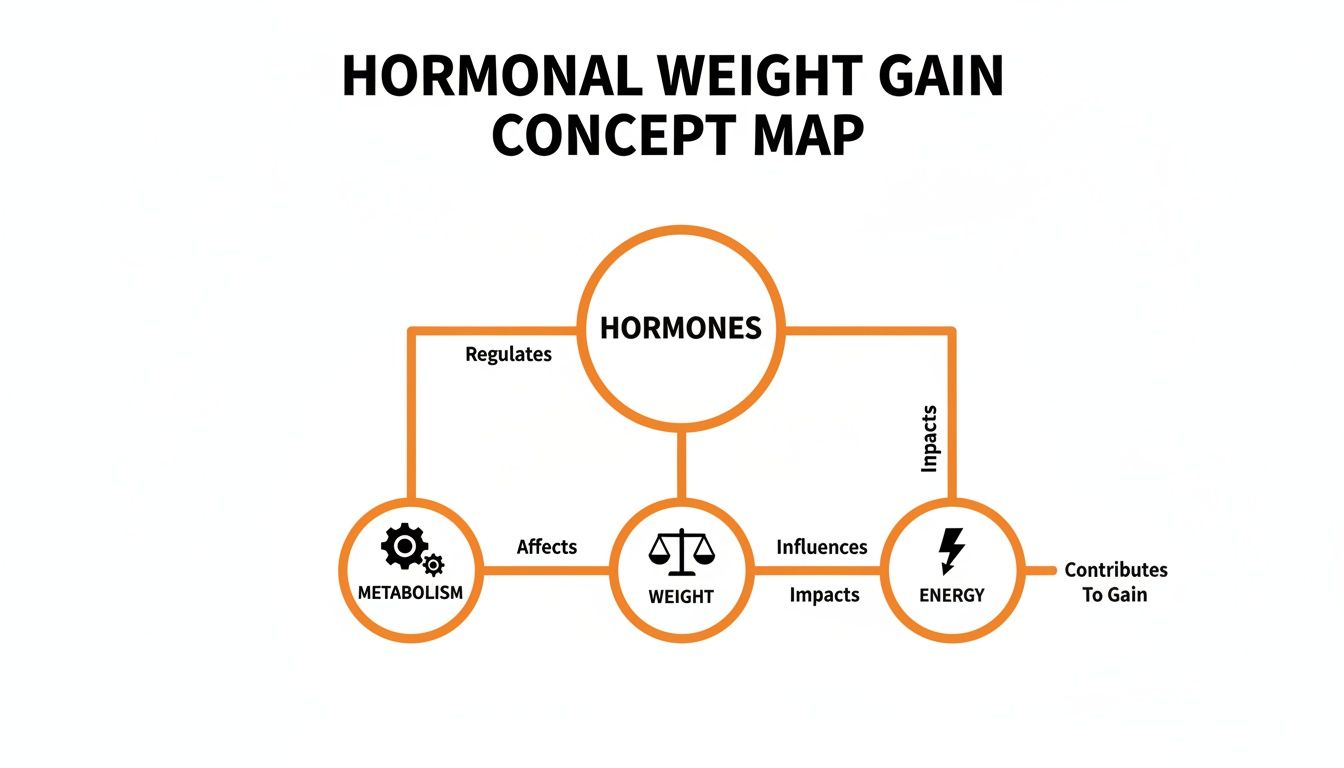
This map really drives home how interconnected everything is. An imbalance in one hormone can trigger a domino effect, throwing off your energy, metabolism, and ultimately, your weight.
Insulin: The Fat-Storage Manager
Think of insulin as your body’s energy traffic cop. After a meal, as sugar (glucose) enters your bloodstream, insulin’s job is to direct it into your cells to be used for immediate fuel. It's a brilliant and efficient system.
But what happens when there's a constant traffic jam of sugar from processed foods and refined carbs? Your cells start to ignore the signal, like they’re tired of hearing the same old command. This is insulin resistance. In response, your pancreas doubles down, pumping out even more insulin to get the job done.
With insulin levels chronically high, your body is stuck in a one-way communication loop: "Store fat! Store fat!" It becomes incredibly difficult to lose weight because you’re trapped in storage mode instead of fat-burning mode, especially around your midsection.
Cortisol: The Stress-Fat Hormone
Cortisol is your body's built-in alarm system. It's fantastic in a real emergency, flooding you with energy to handle a short-term threat. The problem is, our modern lives—with constant work deadlines, financial worries, and relentless pings from our phones—keep that alarm bell ringing 24/7.
This chronic stress leads to perpetually high cortisol levels, which can wreak havoc on your body. It triggers powerful cravings for high-fat, sugary "comfort foods" and, crucially, signals your body to store fat right where you don't want it: deep in your abdomen. This visceral fat is more than just a nuisance; it's a metabolically active organ that poses serious health risks.
It's vital to understand that managing stress isn't a luxury—it's a biological necessity for weight management. Chronic stress physically rewires your body to hold onto weight.
The Thyroid: Your Metabolism’s Thermostat
Your thyroid gland is essentially the thermostat for your body's metabolism. It releases hormones (T3 and T4) that control the speed at which you burn calories. When it’s functioning properly, your metabolic engine hums along efficiently.
But if your thyroid is sluggish—a condition known as hypothyroidism—it's like turning that thermostat way down. Your entire metabolism slows to a crawl. The result? Unexplained weight gain, persistent fatigue, and brain fog, even when you’re eating well and exercising. It’s an uphill battle to burn calories when your internal furnace is barely lit.
Estrogen and Progesterone: The Body-Shaping Duo
In women, the delicate dance between estrogen and progesterone is fundamental to how and where the body stores fat. Before menopause, estrogen tends to direct fat storage toward the hips and thighs. But as women approach midlife, this balance shifts dramatically.
Menopause is a notorious trigger for hormonal weight gain. As estrogen levels drop, fat storage patterns change, and insulin sensitivity often worsens. Research from the World Obesity Federation shows that during this transition, women gain an average of 2.2 kg (~5 lbs), and 20% gain over 4.5 kg (~10 lbs). This shift favors fat accumulation around the abdomen, a key factor in rising hypertension rates.
Progesterone is the other half of the equation. It has a natural diuretic effect that helps reduce water retention. When progesterone is low compared to estrogen (a common scenario called estrogen dominance), it can lead to frustrating bloating and weight gain that feels impossible to shake.
Testosterone: The Muscle Builder
While it's often labeled the "male" hormone, testosterone is crucial for both men and women. Its primary role in metabolism is building and maintaining lean muscle. Because muscle burns more calories at rest than fat does, healthy testosterone levels are a cornerstone of a healthy metabolic rate.
Unfortunately, testosterone levels decline with age in both sexes.
- For Men: A significant drop means less muscle, more body fat (especially that dangerous visceral fat), and a sluggish metabolism that makes weight gain feel inevitable.
- For Women: Low testosterone also contributes to muscle loss and fat gain, often leading to that "softening" of body composition many women notice as they get older.
By seeing how these specific hormones operate, you can start to connect the dots behind your own struggles. It’s often not a matter of trying harder, but of understanding the complex biochemical signals that need to be brought back into balance.
Symptom Checker: Hormonal Imbalance vs. Other Causes
Is that stubborn weight gain due to hormones, or is something else at play? Sometimes it's hard to tell. This table breaks down common patterns to help you spot the difference between weight gain likely caused by hormonal shifts and weight gain from more straightforward lifestyle factors.
| Symptom Pattern | Likely Hormonal Weight Gain | Likely Lifestyle-Related Weight Gain |
|---|---|---|
| Location of Weight Gain | Concentrated around the abdomen, hips, or thighs; sudden changes in fat distribution. | Generally distributed all over the body. |
| Onset and Speed | Appears suddenly or is resistant to diet/exercise, often linked to life stages (menopause, high stress). | Gradual increase over time, directly correlating with changes in diet or activity levels. |
| Accompanying Symptoms | Fatigue, mood swings, brain fog, sleep problems, skin issues (acne), hair loss, changes in libido. | Generally feeling well, just heavier. No other significant systemic symptoms. |
| Cravings | Intense, specific cravings for sugar, salt, or fatty foods that feel uncontrollable. | General increase in appetite or cravings linked to habit, boredom, or social situations. |
| Response to Diet/Exercise | Minimal to no weight loss despite consistent, significant effort with diet and exercise. | Weight loss occurs predictably when calories are reduced and/or activity is increased. |
Keep in mind, this is just a guide. Many factors can overlap, but if your experience aligns more with the "Hormonal Weight Gain" column, it's a strong indicator that it's time to look deeper than just your diet.
How to Get a Clear Diagnosis
If you suspect your hormones are behind your weight struggles, you're already halfway there. But suspicion isn't a diagnosis. Getting a definitive answer is the only way to move past the guesswork and find a solution that actually works. This isn't about chasing a magic bullet; it's about systematically gathering the right information to see what's truly going on inside your body.
Start by Playing Detective
Your journey to a diagnosis begins before you ever see a doctor. The first step is to become an expert on your own symptoms. For a few weeks, keep a simple journal and track more than just your diet.
Note your energy levels, mood shifts, sleep quality, and any physical changes you've noticed. This simple log turns vague feelings like "I'm always tired" into concrete data. That data is gold for a medical professional, helping them spot patterns that point directly to a potential hormonal culprit.

Unlocking the Answers with the Right Blood Tests
After you’ve documented your symptoms, the next step is targeted testing. A comprehensive blood panel is the gold standard for diagnosing a hormonal imbalance. You can’t fix what you can’t see. A knowledgeable doctor will order a specific set of tests to assess the key players in your metabolic health.
Here are the most essential tests for getting to the bottom of hormonal weight gain:
-
Full Thyroid Panel (TSH, Free T3, Free T4): This is non-negotiable. A simple TSH test isn't enough; you need to see the full picture, including the active hormones (T3 and T4) your body can actually use. This gives a complete view of your metabolic "engine."
-
Sex Hormone Panel (Estrogen, Progesterone, Testosterone): This test checks the levels of your primary sex hormones. Imbalances here—like low testosterone in both men and women or skewed estrogen-to-progesterone ratios in women—are a direct cause of stubborn fat gain and muscle loss.
-
Insulin and Glucose Markers (HbA1c): An HbA1c test gives you a three-month snapshot of your average blood sugar. It's the most reliable way to spot insulin resistance, a state where your body becomes a fat-storage machine, making weight loss feel impossible.
-
Cortisol Levels: Since cortisol ebbs and flows, this is often checked through saliva or blood at specific times of the day. The results can reveal if chronic stress has your body stuck in high-alert mode, which directly leads to more belly fat.
A proper diagnosis isn't just about finding one number that’s out of range. It’s about seeing how the entire hormonal system is working together. A full panel lets your doctor connect the dots between how you feel and what your biochemistry is doing.
A Modern, Streamlined Approach to Getting Answers
Getting these crucial tests is easier now than it has ever been. Telehealth has completely changed the game, removing old obstacles like scheduling hassles and long waits at the doctor's office. You can now consult with a medical expert right from your home.
The process is straightforward: an initial online consultation to go over your symptoms, followed by an order for blood work at a lab near you. Figuring out where to start is often the biggest hurdle, but you have options. It can be helpful to learn more about how to check hormone levels at home to understand what the process looks like.
Once your lab results are ready, your provider will walk you through them, explain what everything means, and build a personalized plan. This puts you in the driver's seat, armed with the precise answers you need to finally address the root cause of your weight gain.
Proven Strategies to Rebalance Your Body
Knowing the why behind your weight gain is a huge first step, but the real power comes from taking action. Getting your metabolism back on track isn’t about one single solution; it’s a two-part strategy that addresses both your daily habits and any underlying hormonal chaos. Think of it as creating a supportive environment for your body to heal and find its equilibrium again, blending smart lifestyle choices with targeted medical support when it’s needed.

This process isn't a quick fix. It's about making sustainable changes that get your body’s internal communication system working for you, not against you. Let's walk through the proven strategies that can help you get a handle on hormonal weight gain and bring your metabolic health back into alignment.
Lifestyle and Nutrition Adjustments
Before we even talk about medical options, we have to get the foundation right. The choices you make every day—what you eat, how you move, how you sleep, and how you handle stress—are sending constant signals to your endocrine system. Nailing these fundamentals can make a world of difference in your body's hormonal conversation.
First up: taming cortisol with serious stress management. Chronic stress is a direct pipeline to belly fat storage. Building daily stress-reduction practices into your routine can bring those cortisol levels down and give your whole system a chance to calm down.
- Mindful Movement: Think yoga or tai chi. These activities aren't just exercise; they combine physical movement with the deep breathing that’s been proven to lower stress hormones.
- Daily Meditation: It doesn’t have to be a huge time commitment. Even just 10-15 minutes of mindfulness meditation can help regulate your stress response, making you less reactive to life’s daily curveballs.
- Prioritize Downtime: You have to actively schedule time to relax, enjoy a hobby, or simply do nothing. This isn't a luxury—it's a biological necessity for hormonal health.
Next, you need to treat sleep like it's a non-negotiable prescription. Skimping on sleep messes with ghrelin and leptin, the two key hormones that manage hunger and fullness. The result? Intense cravings and a tendency to overeat. Aim for 7-9 hours of quality, uninterrupted sleep every night to keep these appetite regulators working properly.
Finally, let’s adjust your nutrition to support your hormones. The goal is to improve insulin sensitivity and give your body the raw materials it needs to thrive.
- Embrace Fiber and Protein: A diet packed with protein, healthy fats, and high-fiber veggies is your best friend. It helps keep your blood sugar stable, which means your insulin levels stay nice and steady.
- Reduce Sugar and Refined Carbs: These are the main culprits behind blood sugar spikes, which tell your body to store fat and can worsen insulin resistance over time.
- Incorporate Strength Training: Building lean muscle is one of the most powerful things you can do for your metabolism. Muscle burns more calories than fat, even when you're just sitting on the couch. Try to get in two or three sessions a week.
"Instead of obsessing over calorie counts, focus on eating whole foods while limiting your intake of ultra-processed ones. This shift in mindset from restriction to nourishment is fundamental for long-term hormonal balance and weight management."
Targeted Medical Treatments
For a lot of people, lifestyle changes are a fantastic start, but they might not be enough to fix a significant hormonal imbalance on their own. When your body's hormone production is truly out of sync, medical therapies can provide the correction you need, making all your hard work with diet and exercise finally pay off.
This is where getting a precise diagnosis is absolutely critical. Based on your blood work, a medical professional can recommend therapies tailored to your specific hormonal profile, getting you away from a one-size-fits-all approach that rarely works.
Hormone Replacement Therapy (HRT) and TRT
For men and women dealing with age-related hormonal decline, Hormone Replacement Therapy (HRT) and Testosterone Replacement Therapy (TRT) are well-established, effective treatments.
-
HRT for Women: If you're in perimenopause or menopause, replacing declining estrogen and progesterone does more than just help with hot flashes. It can help shift fat storage away from your midsection, improve your insulin sensitivity, and preserve muscle mass, which makes managing your weight so much easier.
-
TRT for Men: For men with clinically low testosterone, TRT can be a complete game-changer. Restoring testosterone to optimal levels helps you build lean muscle, boosts your metabolic rate, and reduces the accumulation of dangerous visceral fat.
Innovative Peptide Therapies
Peptide therapies are an exciting development in managing metabolic health. These are simply short chains of amino acids that act like highly specific messengers in your body, targeting functions related to metabolism and fat loss without broad side effects.
Think of them as a way to fine-tune specific pathways. For example:
- Sermorelin: This peptide encourages your body to produce more of its own natural growth hormone, which in turn helps increase muscle mass and reduce body fat.
- AOD-9604: This is a modified piece of human growth hormone that zeroes in on fat cells, telling them to release their stored fat (a process called lipolysis) without affecting your blood sugar or growth.
These therapies, prescribed by a doctor, offer a very targeted way to support your body's fat-burning and muscle-building systems. For those looking for more foundational support, learning how to balance hormones naturally can provide additional strategies that work beautifully alongside any treatment plan. By combining these proven approaches, you create a powerful, multi-layered strategy to finally get the upper hand on hormonal weight gain.
Personalized Support for Your Health Journey
Trying to navigate hormonal weight gain on your own can be an incredibly frustrating and lonely experience. But here’s the thing: you don’t have to figure it out alone.
Understanding why the weight is showing up is half the battle. The other half is finding a solution that’s actually designed for your unique body, not a generic, one-size-fits-all plan that rarely works for complex hormonal issues.
This is where a modern approach to wellness can completely change the game. Telehealth platforms now bridge the gap between the symptoms you’re experiencing and the targeted, effective care you need—all from the comfort of your own home. It’s a way to get real answers without the traditional hassles of scheduling and rushed in-person appointments.
Finding a True Partner in Your Health
When you’re looking for help, you need more than just a prescription. You need a partner—a team that puts your safety, the quality of your treatment, and your overall experience first. The goal is to get the support you need without adding more stress to your life.
The process should feel simple, discreet, and built around you.
- Confidential Consultation: It starts with a secure online health assessment. This is where a medical professional gets to know your specific symptoms and what you’re hoping to achieve.
- Precise Diagnosis: Based on that initial conversation, they’ll order targeted lab work to get an accurate snapshot of what’s happening with your hormones.
- Personalized Treatment Plan: A doctor then reviews those results and designs a therapy plan specifically for you.
- Discreet Home Delivery: Your therapies are shipped directly to your door in private packaging, complete with clear, easy-to-follow instructions.
This kind of patient-first model puts you back in the driver's seat. It's all about getting access to high-quality, tested therapies through a process that respects your privacy and actually fits into your life.
Tailored Therapies for Specific Goals
Treating hormonal weight gain effectively is all about precision. Once the lab work points to a clear diagnosis, specialized therapies can be used to address the root cause, helping your body get back to its natural balance and fire up your metabolism again.
For example, men who are gaining fat due to low testosterone can see a huge difference with Testosterone Replacement Therapy (TRT). When testosterone levels are brought back into an optimal range, it helps rebuild lost muscle. That new muscle then boosts your metabolic rate, which helps burn off that stubborn fat, especially around the midsection.
Peptide therapies offer another highly specific way to support metabolic health, for both men and women. Think of peptides as tiny signaling molecules that give your body targeted instructions—like regulating your appetite, stimulating fat breakdown, or preserving lean muscle. It’s a way of fine-tuning your body’s systems without the broader effects of some other treatments.
In the end, it comes down to finding a provider you can trust, one who truly understands the nuances of hormonal health. When you connect with experts who offer tested, high-quality therapies through a convenient and private process, you can finally move past the frustration of unexplained weight gain and start feeling like yourself again.
Frequently Asked Questions
When you're trying to figure out hormonal weight gain, it's natural to have a lot of questions. We've put together some straightforward answers to the things we hear most often, so you can feel more confident about what's going on and what steps to take next.
How Long Does It Take to See Results After Starting Hormone Therapy?
This is probably the number one question people ask, and the honest answer is: it depends. Everyone’s body is different. Your starting hormone levels, your individual metabolism, and how closely you stick to your new lifestyle habits all play a huge role.
That said, many people start to feel better pretty quickly—often noticing more energy and a better mood within the first few weeks. But visible changes, like losing weight or seeing a shift in body composition, usually take a bit longer. You should generally plan on 3 to 6 months to see significant progress.
It all comes down to consistency. Think of your hormone therapy as the foundation, but diet and exercise are the pillars that hold everything up. Working with your provider to track your progress and tweak the plan as you go is what really gets you to the finish line.
Can I Manage Hormonal Weight Gain with Diet and Exercise Alone?
Sometimes, yes. If you’re dealing with a mild imbalance, dialing in your nutrition and fitness can make a world of difference. For example, cutting back on sugar can have a direct, positive impact on insulin sensitivity. Likewise, consistent strength training is a great way to naturally support healthy testosterone levels for both men and women.
But let's be realistic. If you have a more significant issue, like clinical hypothyroidism or seriously low testosterone, lifestyle changes alone probably won't be enough to fix the underlying problem. In those cases, diet and exercise are still absolutely critical, but they act as powerful partners to medical treatments that get your hormones back in a healthy range. The most successful, long-term results almost always come from a combined approach.
Is Hormonal Weight Gain Only a Problem for Women?
Absolutely not. This is a common misconception. While hormonal shifts related to menopause and PCOS are well-known culprits for women, men are definitely not immune.
The most frequent cause for men is the natural, age-related drop in testosterone—sometimes called "andropause." Low testosterone leads directly to a loss of muscle, a slower metabolism, and that frustrating increase in belly fat. Men are also just as susceptible to insulin resistance and high cortisol, both of which pack on the pounds. For men with these symptoms, Testosterone Replacement Therapy (TRT) is a well-established and incredibly effective solution.
Are Peptide Therapies Safe for Weight Management?
When they are prescribed by a knowledgeable medical provider and come from a high-quality, reputable source, yes, peptides have a very strong safety record. At their core, peptides are just small chains of amino acids that our bodies already use as signaling molecules.
Certain peptides can help fine-tune metabolism, control appetite, or support growth hormone production—all things that help you build a healthier body. Because they're designed to work with your body’s own systems, they are typically tolerated very well. The key is to make sure any peptide you use is third-party lab tested for purity and potency. This is non-negotiable; it’s the only way to guarantee you’re getting a safe and effective treatment.
Ready to stop guessing and start addressing the root cause of your weight gain? The medical team at Elite Bioscience can help you get the clear diagnosis and personalized treatment plan you need. Take our confidential health assessment today to begin your journey toward hormonal balance and lasting results. Learn more and get started at elitebioscience.co.