So, how do peptides actually work? At their core, peptides are sophisticated cellular messengers, delivering very precise commands to your body's cells.
Think of them as a perfectly cut key designed for a unique lock. When a peptide (the key) finds and binds to its specific cellular receptor (the lock), it unlocks a specific biological process. This could be anything from triggering muscle repair to ramping up collagen production in your skin.
Unlocking Your Body's Potential with Peptides

Your body is an incredible communication network, constantly buzzing with signals that manage everything from your metabolism to your immune system. Peptides—short chains of amino acids—are the molecules carrying these vital messages, orchestrating the countless functions that keep you operating at your best.
These tiny communicators are naturally made by your own cells and are absolutely fundamental to life. They carry the instructions that help cells coordinate, regulate metabolic processes, and fight off invaders. When we use peptide therapy, we are essentially supplementing the body's natural signaling system with carefully designed peptides that mimic or enhance these commands to achieve specific health outcomes.
The Power of Precise Signaling
What makes peptides so effective is their incredible specificity, which is a world away from many broad-acting medications that can cause a cascade of unintended side effects. Peptides are engineered to interact with just one type of cellular receptor. This targeted approach is the essence of how peptides work—it allows them to produce powerful results with minimal disruption to other bodily systems.
For example, specific peptides are designed to:
- Signal the pituitary gland to release more growth hormone for better recovery and repair.
- Instruct skin cells (fibroblasts) to produce more collagen, improving skin firmness and elasticity.
- Help optimize metabolic pathways to encourage the body to burn fat for energy.
This precision is exactly why peptide therapy has become such a foundational tool in modern wellness and performance medicine. It offers a much more controlled and intelligent way to influence your body's own biology.
The core mechanism is beautifully simple: peptides act like the body's own signaling molecules, binding to cell receptors to initiate very specific responses. This can mean regulating hormones, repairing tissue, or fine-tuning metabolism.
To give you a clearer picture, think of peptides as delivering different types of commands to your cells. This table breaks down their functions with some everyday analogies.
Understanding Peptide Actions at a Glance
| Peptide Function | Everyday Analogy | Biological Outcome |
|---|---|---|
| Growth Hormone Release | A manager telling a team to start a project. | Stimulates the pituitary gland to produce more GH, aiding muscle growth and repair. |
| Collagen Synthesis | An architect providing blueprints to a construction crew. | Signals skin cells to build new collagen and elastin fibers, improving skin texture. |
| Metabolic Regulation | A traffic controller directing cars to a new route. | Influences pathways for fat metabolism, helping the body use stored fat for fuel. |
| Immune Modulation | A security chief dispatching guards to a specific area. | Helps regulate the immune response, reducing inflammation or boosting defenses. |
This ability to issue targeted commands is what makes peptides so effective for a wide range of wellness goals.
The growing recognition of their potential is clear. The global peptide therapeutics market is on track to grow from an estimated USD 52.59 billion in 2025 to USD 87.21 billion by 2035, with North America being a major driver of this demand.
Once you grasp this fundamental "lock and key" mechanism, it's easy to see how these tiny messengers can unlock major improvements in your health. To see how this science is applied, check out our in-depth guide on what is peptide therapy. It's the perfect next step to understanding which peptides can help you achieve your goals, safely and effectively.
The Cellular Lock and Key: How Peptides Talk to Your Body
To really get a feel for how peptides work, you have to picture a constant conversation happening at the cellular level. We often use the "lock and key" analogy, and for good reason—it’s a near-perfect description of what's actually going on. Your cells are covered in millions of tiny receptors, and each one is specifically shaped to receive a particular message.
A peptide’s secret sauce is its amino acid sequence. This unique structure is like the distinct pattern of ridges on a key, designed to fit perfectly into its matching cellular receptor—the lock. When the peptide finds its match and binds to it, it's like a key turning in a lock. This simple action unlocks a specific command, telling the cell exactly what to do next.
This incredible specificity is why peptides can have such targeted effects. A peptide meant to help burn fat isn't going to accidentally dock with a receptor that tells your hair to grow. This precision is a huge advantage, as it dramatically reduces the chance of unwanted side effects that can come with less targeted compounds.
Different Signals for Different Jobs
Not every cellular message needs to be broadcast across the entire body. Some are just whispers between neighbors. Peptides are masters of communication, using different signaling styles depending on how far the message needs to go. This flexibility lets the body manage everything from large-scale hormonal shifts to tiny, localized tissue repairs.
There are three main ways peptides get their message across:
- Endocrine Signaling (The National Broadcast): This is for long-distance communication. Peptides are released directly into the bloodstream, traveling far and wide to reach distant target cells. A great example is a growth hormone secretagogue, which journeys to the pituitary gland to signal the release of growth hormone throughout the body.
- Paracrine Signaling (Neighbor-to-Neighbor): Think of this like passing a note to the person sitting next to you. A cell releases peptides that only act on the cells immediately surrounding it. This is absolutely critical for localized jobs like healing a cut, where regenerative peptides tell nearby cells to start rebuilding.
- Autocrine Signaling (A Little Self-Talk): Sometimes, a cell needs to give itself instructions. It releases a peptide that binds to its own receptors. This self-regulation allows a cell to control its own growth, change its function, or kickstart a specific task.
This elegant signaling network ensures the right message lands in the right place at precisely the right time. Whether it’s a body-wide signal to build muscle or a pinpoint command to repair a tendon, peptides are the expert messengers making it happen.
The potential here is massive, which is why the peptide therapeutics market was valued at USD 117.77 billion in 2025 and is on track to hit USD 246.28 billion by 2032. The core mechanism driving this growth? In over 70% of cases, it's the binding of G-protein coupled receptors—a direct result of this powerful lock-and-key model. You can dive deeper into these trends in this peptide therapeutics market research report.
Why This Precision is a Game-Changer
When you understand these signaling methods, it becomes clear how peptides can deliver such accurate results. If you’ve sprained an ankle, you don’t need your whole body to go into healing mode; you need a focused effort right at the site of the injury.
This is where regenerative peptides like BPC-157 truly shine. They use that localized, paracrine (neighbor-to-neighbor) signaling to get the job done. They trigger the formation of new blood vessels—a process called angiogenesis—right where you need it, flooding the damaged tissue with oxygen and nutrients to speed up repair, all without bothering unrelated parts of the body.
This intelligent, precise communication is the bedrock of modern peptide therapy. It’s what allows us to design wellness strategies that work in harmony with your body’s own sophisticated biology.
Now that we’ve covered the basic “lock and key” biology of peptides, let’s get into the exciting part—what these tiny but mighty messengers can actually do for you. The world of peptide therapy is incredibly diverse, with different compounds engineered to achieve very specific goals.
Think of it like a toolkit. You wouldn't use a hammer to turn a screw, and similarly, you wouldn't use a skin-focused peptide to build muscle. Understanding their categories helps you pick the right tool for the job.
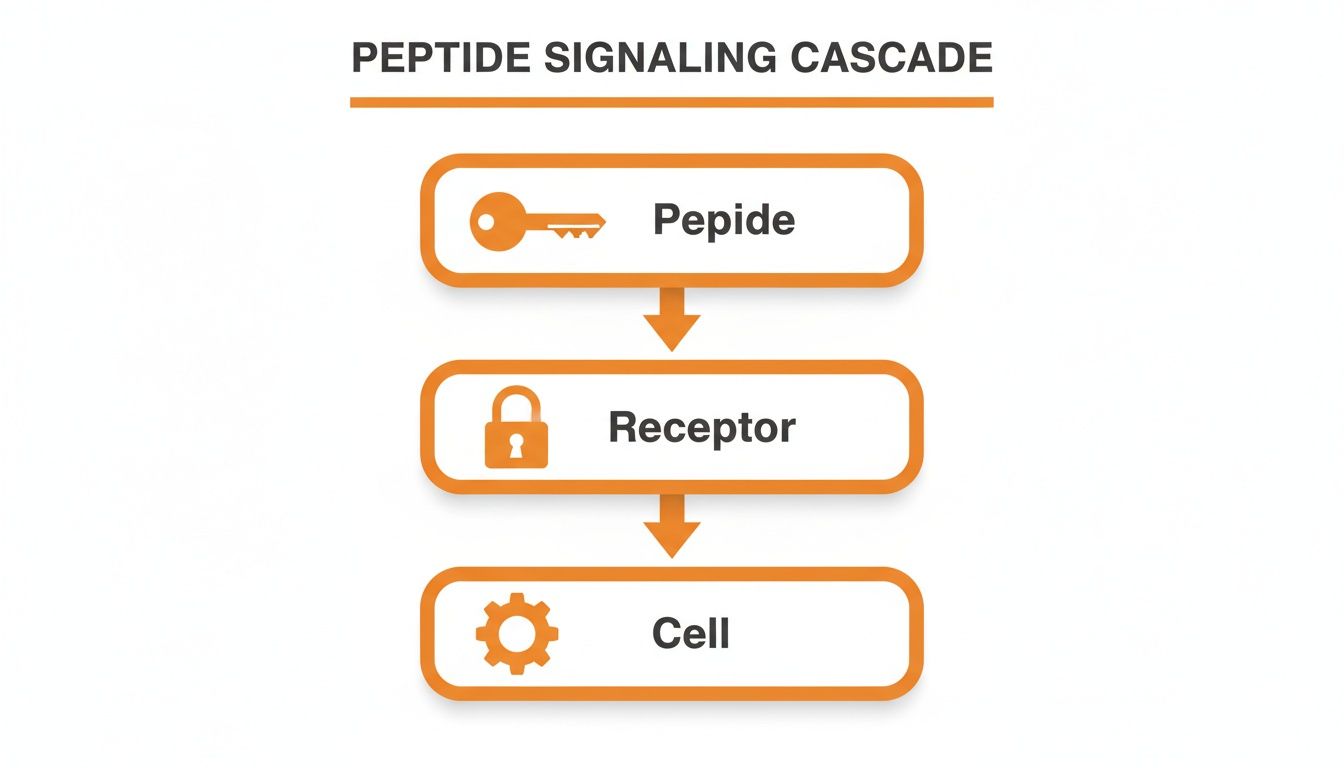
This diagram shows just how precise peptide action is. The right "key" (the peptide) has to find the exact "lock" (the receptor) to kickstart a specific cellular function. This targeted approach is what makes the results so predictable.
To give you a clearer picture of the peptide landscape, the table below breaks down the most common classes, their primary functions, and who they're best suited for.
Common Peptide Classes and Their Primary Goals
| Peptide Class | Example Peptides | Primary Goal | Ideal For |
|---|---|---|---|
| Growth Hormone Secretagogues | Ipamorelin, CJC-1295 | Lean Muscle Growth & Recovery | Athletes, bodybuilders, individuals seeking enhanced performance and anti-aging benefits. |
| Regenerative Peptides | BPC-157, TB-500 | Injury Repair & Healing | Anyone recovering from sprains, strains, or post-surgical trauma; those with chronic joint pain. |
| Metabolic Peptides | Semaglutide, Tirzepatide | Fat Loss & Blood Sugar Control | Individuals focused on weight management, improving metabolic health, and reducing appetite. |
| Cosmetic Peptides | GHK-Cu, Argireline | Skin Rejuvenation & Collagen Production | People looking to reduce wrinkles, improve skin firmness, and achieve a more youthful complexion. |
This table is just a starting point, but it illustrates how each peptide class is designed to address a unique aspect of health, from physical performance to aesthetic improvements. Now, let's dive deeper into each category.
Growth Hormone Secretagogues For Muscle And Recovery
One of the most sought-after categories is Growth Hormone Secretagogues (GHS). These aren't synthetic growth hormones. Instead, they cleverly signal your own pituitary gland to produce and release more of its natural growth hormone (GH).
Think of them as a gentle nudge, encouraging your body's own systems to perform at their peak. Peptides like Ipamorelin and CJC-1295 are standouts here, often used by athletes for a few key reasons:
- Promote Lean Muscle Growth: Higher GH levels kickstart protein synthesis, the core process for building new muscle tissue.
- Speed Up Recovery: GH is absolutely essential for repairing tissues that get broken down during intense workouts, helping you get back to training faster.
- Improve Sleep Quality: These peptides are known to promote deeper, more restorative sleep—which is prime time for your body’s repair and growth processes.
By working with your body’s endocrine system, not against it, GHS peptides offer a powerful way to optimize both recovery and body composition. For anyone serious about building strength, exploring the best peptides for muscle growth will give you an even more detailed look at how this works.
Regenerative Peptides For Healing And Repair
Next up are the healers. Regenerative peptides are superstars when it comes to speeding up the repair of nagging injuries to tendons, ligaments, muscles, and even skin.
BPC-157 (Body Protection Compound-157) is easily the most well-known peptide in this class. Its secret lies in promoting angiogenesis—the creation of new blood vessels. This process is like building new roads directly to an injury site, delivering a fresh supply of oxygen and nutrients needed for repair.
This targeted action is perfect for dealing with a specific sprain or tear without creating systemic effects throughout the body.
You can think of BPC-157 as a specialized construction crew that's dispatched directly to a damaged site. It brings all the materials needed to rebuild and reinforce the structure, making it stronger and more resilient than before.
This makes it a go-to for anyone recovering from athletic injuries, chronic joint pain, or even post-surgical healing. Its bonus benefits of reducing inflammation and supporting gut health only add to its reputation as a versatile healing agent.
Metabolic Peptides For Fat Loss And Energy
Metabolic peptides are all about fine-tuning your body's engine. They are designed to influence how your body stores and burns energy, helping to shift your metabolism toward fat burning while improving insulin sensitivity.
The most famous examples today are GLP-1 Receptor Agonists like Semaglutide and Tirzepatide. These peptides mimic a natural hormone that does three critical things: it helps manage blood sugar, it slows down how quickly your stomach empties (making you feel full longer), and it tells your brain you're not hungry. This three-pronged attack makes them incredibly effective for weight management.
The impact of these compounds is undeniable. The global peptide market is projected to more than double, expanding from USD 84.2 billion to USD 162.4 billion by 2035. A huge driver of this growth is the rise of chronic conditions like diabetes, which affected a staggering 537 million adults globally in 2021. With hundreds of new peptides in clinical trials, this field is just getting started.
Cosmetic Peptides For Skin Health
Last but not least, we have cosmetic peptides, which focus on rejuvenating the skin from the inside out. These peptides send signals to your skin cells (called fibroblasts) to ramp up production of collagen and elastin.
These two proteins are the scaffolding that gives your skin its firmness, structure, and bounce. As we get older, our natural production of collagen and elastin drops off, leading to wrinkles and sagging skin.
Peptides like GHK-Cu can help turn back the clock by directly telling your cells to get back to work building more collagen. The result is improved skin texture, a visible reduction in fine lines, and a healthier, more youthful glow.
The Real-World Benefits of Peptide Therapy
Knowing the science is one thing, but what really matters is how those tiny cellular commands translate into results you can actually see and feel. This is where peptide therapy moves beyond theory and into your daily life.
By sending highly specific messages, peptides help steer your body toward better performance, quicker recovery, and an overall sense of vitality. That "lock-and-key" idea we talked about stops being a concept and starts feeling like less soreness after the gym, seeing tighter skin in the mirror, or just having more gas in the tank. Each benefit is a direct outcome of a specific peptide delivering the right message to the right place.
Building Lean Muscle and Enhancing Strength
For anyone serious about fitness, putting on lean muscle and bouncing back from tough workouts are the name of the game. This is where Growth Hormone Secretagogues (GHS) like Ipamorelin and CJC-1295 really shine. They don't flood your system with synthetic hormones. Instead, they gently nudge your own pituitary gland to release more of your body's natural growth hormone.
This natural boost in GH creates the perfect internal environment for muscle growth. It fires up protein synthesis, which is the core process of repairing the micro-tears in your muscles and building them back stronger. The result isn't just bigger muscles—it's a real improvement in strength and physical capacity, helping you blow past old plateaus.
Accelerating Recovery and Tissue Repair
Whether you're nursing a nagging sports injury, healing up after surgery, or just dealing with achy joints, getting back on your feet quickly is key. Regenerative peptides like BPC-157 are masters of this process. Their job is to get in there and jump-start your body's own healing mechanisms right at the site of the damage.
BPC-157 is especially good at promoting angiogenesis—the creation of new blood vessels. This is like building a superhighway directly to the injured area, rushing in the oxygen and raw materials needed to rebuild tissue fast.
Think of it this way: your body's normal healing process is like a slow, dripping faucet of repair materials. BPC-157 turns that into a firehose, dramatically cutting down the time it takes for tendons, ligaments, and muscles to heal.
Ultimately, that means less downtime and a faster, stronger return to the activities you love.
Supporting Fat Loss and Metabolic Health
Getting to a healthy body composition often boils down to how efficiently your metabolism is running. Peptides such as Semaglutide work by imitating the natural hormones that control our appetite, blood sugar, and fat storage. They send clear signals to your brain that dial down cravings and make you feel full sooner and for longer.
At the same time, they help your body manage glucose more effectively, preventing the blood sugar spikes that tell your body to store fat. By fine-tuning your metabolism this way, they encourage your body to burn its existing fat stores for energy. This leads to meaningful, sustainable fat loss that supports your broader health goals.
Rejuvenating Skin and Boosting Collagen
When it comes to anti-aging, cosmetic peptides like GHK-Cu provide a powerful, science-backed approach that works from the inside out. As we get older, our natural production of collagen and elastin—the proteins that give skin its firmness and bounce—starts to drop off. GHK-Cu sends a direct signal to your skin cells, telling them to get back to work and produce more of these crucial building blocks.
This targeted instruction leads to real, visible changes in your skin's health and appearance:
- Reduced Fine Lines: Rebuilding the skin's underlying support structure helps smooth out fine lines and wrinkles.
- Improved Firmness: More collagen means your skin regains some of that youthful plumpness and resilience.
- Enhanced Texture: The overall surface of the skin becomes smoother with a healthier glow.
This isn't just a surface-level fix. It's about rejuvenating the skin's foundation for results that many creams and serums can't deliver on their own. By understanding how peptides work, you can see they’re not just supplements—they’re precision instruments for unlocking your body's true potential.
How to Navigate Peptide Therapy Safely and Effectively

Getting a handle on how peptides work is just one part of the story. Knowing how to use them the right way is what really matters for getting the results you want without compromising your health. It’s easy to get lost in the sea of peptide options out there, but here's the reality: not all of them are created equal. The quality and source of your peptides are absolutely non-negotiable.
Because peptides are such precise messengers, their purity is everything. If they’re full of contaminants or formulated incorrectly, you might see no results at all, or worse, have a bad reaction. This is exactly why your first and most important step should always be working with a reputable medical provider.
The Gold Standard: Third-Party Lab Testing
When you hear that a product is third-party lab tested, it means an independent laboratory—one with no skin in the game—has put it under the microscope. This unbiased check is the best way to confirm you’re getting a high-quality peptide.
These tests lock in two critical details:
- Purity: The analysis confirms the vial contains exactly what it’s supposed to, without any unwanted extras like bacteria, leftover chemicals from manufacturing, or other contaminants.
- Potency: This test makes sure the concentration is accurate. It verifies you're getting the precise amount of the active ingredient required to have the intended effect.
Without this level of testing, you’re basically taking a shot in the dark. Trustworthy providers will always have these lab reports, often called Certificates of Analysis (CoAs), ready for you to see. It’s all about transparency and giving you confidence in what you’re using.
Navigating peptide therapy successfully begins with an unwavering commitment to quality. Third-party testing isn't just a bonus feature—it is an essential safeguard that separates legitimate medical therapies from the risks of the unregulated market.
Administration, Dosing, and Cycling
How you get a peptide into your body is a huge factor in whether it works. The goal is to choose a method that maximizes bioavailability—that’s the term for how much of the peptide actually makes it into your bloodstream to get the job done.
The most common methods include:
- Subcutaneous Injections: This is the go-to for most peptides that need to work throughout the body, like growth hormone secretagogues. An injection into the fatty layer just under the skin allows the peptide to be absorbed slowly and steadily, which creates consistent signaling.
- Topical Creams: Perfect for cosmetic peptides like GHK-Cu, applying a cream delivers the compound right where it's needed—the skin cells—to kickstart local collagen production.
- Oral Capsules/Nasal Sprays: These are less common because most peptides get broken down by digestive enzymes. However, some have been specially designed for oral or nasal delivery to target specific issues.
Dosing and cycling are just as crucial, and they’re definitely not a DIY project. Dosing is tailored to you—your body weight, your goals, and your unique health profile. A "cycle" is the planned period of time you use a peptide, followed by a necessary break. This rest period is key to preventing your body's receptors from becoming less responsive.
This is precisely where professional medical guidance is essential. A qualified doctor will design a protocol just for you, outlining the right peptide, the correct dose, the best way to administer it, and a safe cycling schedule. For a deeper dive into best practices, our peptide handling guidelines offer vital information on preparation and storage. This expert oversight takes all the guesswork out of the process, ensuring your journey is both safe and effective.
Your Partner in Optimized Health
Getting a handle on the science of how peptides work is a huge first step. But what comes next? You need a trusted partner to guide you through the process safely. Let's be honest, the wellness world can feel like the Wild West, but getting high-quality, medically supervised peptide therapy is actually more straightforward than ever, thanks to telehealth.
This puts you right in the driver's seat of your own health journey. It all kicks off with a simple, private online health evaluation. This gives our licensed medical team the full picture of your unique body, your health history, and what you’re trying to achieve—whether you're an athlete aiming for a new personal best or someone just looking to feel more vibrant and slow down the clock.
A Personalized Path to Wellness
After your evaluation, you'll connect with a U.S.-licensed doctor who lives and breathes peptide and hormone therapies. This isn't some cookie-cutter plan. Your doctor will design a protocol specifically for you, choosing the right peptides at the right dosages to get you to your goals safely and effectively.
This medical oversight is what makes all the difference. It means your plan is built on real clinical expertise, not guesswork or the risky advice you might find floating around online.
Once your plan is set, everything else is seamless. Your prescribed peptides are prepared in a sterile lab and shipped right to your door in discreet packaging. It’s the perfect blend of at-home convenience and medical-grade quality, opening up advanced wellness to just about everyone.
This whole patient-first model really boils down to three key things:
- Safety First: A licensed physician prescribes and monitors every single protocol. Plus, all our products go through rigorous third-party lab testing to confirm they are pure and potent. No exceptions.
- Personalized Care: Your treatment plan is yours and yours alone. It’s designed from the ground up to hit your specific health targets with precision.
- Convenience and Discretion: From the online chat with your doctor to the package that shows up at your home, the entire experience is built to fit quietly into your life.
Take Control of Your Health Today
Here at Elite Bioscience, we're all about giving you a secure, effective, and transparent way to optimize your health. Our team of medical experts is here to walk with you every step of the way, making sure you have the confidence and support you need to feel your absolute best.
We close the gap between complex science and easy-to-access care, empowering you to unlock your body's true potential. Whether you want to build strength, slash recovery time, or just boost your overall vitality, it all starts with a simple, confidential consultation. Explore our goal-oriented solutions and see how a personalized peptide protocol can help you find a whole new level of well-being.
Common Questions About How Peptides Work
When you start digging into the science of peptide therapy, a few questions always seem to pop up. Getting straight answers is the first step to making a smart decision about your health. Let's tackle some of the most common things people ask about how peptides actually work in the real world.
How Long Until I See Results?
This is usually the first question on everyone's mind. The honest answer? It really depends. The time it takes to see and feel a difference is based on which peptide you’re using, your own unique biology, where you're starting from, and how consistent you are with your protocol.
Some benefits show up fast. For instance, peptides designed to improve sleep can make a difference within just a few nights. But for the bigger, more visible changes, patience and consistency are your best friends.
- Muscle Growth & Strength: Building new muscle tissue doesn't happen overnight. You might notice you're recovering faster from workouts within a few weeks, but seeing real changes in muscle size usually takes 2-3 months of steady use, along with solid training and nutrition.
- Fat Loss: While some metabolic peptides can help with appetite control pretty quickly, noticeable fat loss is a slower burn. You'll typically see measurable progress over several weeks to a few months.
- Skin Rejuvenation: Firing up your body's collagen engine is a long-term project. Your skin might feel more hydrated early on, but seeing a visible reduction in fine lines generally takes anywhere from 3-6 months.
The big takeaway here is that peptide therapy isn't a magic bullet. Think of it as a strategic investment in your body's long-term health and performance. Consistency is what separates those who get great results from those who don't.
Are Peptides Safe and Legal?
A crucial question with a two-part answer. First, let's talk legality. Peptides are legal in the United States when a licensed medical doctor prescribes them for a specific therapeutic reason. Buying them from sketchy online sources without a prescription is not just a bad idea—it can be downright dangerous.
Now for safety. Your safety is all about the quality of the product. The market is flooded with peptides, and they are definitely not all created equal. The only way to be certain you're getting a safe and effective product is to work with a provider who uses third-party lab testing to verify the purity and potency of their peptides. That independent verification, combined with a doctor's oversight, is the foundation of a safe peptide therapy plan.
Can I Combine Different Peptides?
Yes, you can. Using multiple peptides at the same time is a common practice known as "stacking." The goal is to get synergistic effects, where different peptides work on complementary pathways in your body to deliver more complete results than any single one could on its own.
However—and this is a big one—this should only ever be done under the direct supervision of a physician who knows what they're doing. A qualified doctor will understand the intricate ways peptides interact and can design a safe, effective stack that’s built around your specific health goals. Trying to mix and match on your own is a recipe for unwanted side effects or, at best, wasted effort.
At Elite Bioscience, we offer a secure, medically supervised approach to peptide therapy. Our licensed physicians develop personalized protocols using only the highest-quality, third-party tested peptides to help you reach your wellness goals safely. Start your confidential health evaluation today and see what a professionally designed plan can do for you.