If you've been battling stubborn weight gain, feeling tired all the time, or dealing with unpredictable mood swings, the root cause might just be high estrogen. The good news is you don't have to live with it. You can start bringing your levels back into balance naturally by focusing on a few key areas: what you eat, how you move, and how you manage stress. These aren't just quick fixes; they're the foundation for reclaiming your hormonal health and feeling like yourself again.
Understanding High Estrogen and Its Impact on Your Health
When people talk about "high estrogen," they're usually referring to a state of estrogen dominance. This simply means your estrogen levels are too high in relation to your other hormones, especially progesterone. It’s a common problem that affects both men and women, and it can throw a major wrench into your daily life. This isn't just about feeling a bit off—it's a real imbalance that can mess with your metabolism, drain your energy, and fog up your thinking.
Imagine your hormones are a finely tuned orchestra. If one instrument, like estrogen, starts blaring, it drowns everything else out and ruins the harmony. This kind of hormonal chaos is often kicked off by modern lifestyle habits, many of which are completely within our power to change.
Common Signs of Estrogen Dominance
While everyone's experience is a little different, there are some classic red flags to watch for. Spotting these signs is the first step toward getting things back on track.
- Stubborn Weight Gain: Do you find yourself gaining weight around the hips, thighs, and belly? Fat cells can actually produce and store estrogen, creating a frustrating cycle.
- Persistent Fatigue: This isn't just being tired. It's a deep-seated exhaustion that sleep doesn't seem to fix, often because of how estrogen impacts your adrenal and thyroid glands.
- Mood Swings and Irritability: Estrogen has a big influence on mood-regulating brain chemicals like serotonin. When it's out of balance, your emotions can feel like they're on a rollercoaster.
- For Women: Think irregular or heavy periods, constant bloating, and tender breasts.
- For Men: This can show up as a lower sex drive, the development of breast tissue (gynecomastia), or even erectile dysfunction.
Knowing what’s really going on inside your body is crucial. Trying to solve the problem without a clear picture is just guesswork.
Grasping the root causes of your symptoms makes any strategy you implement far more effective. It shifts your approach from simply treating symptoms to addressing the underlying imbalance.
Fortunately, you have a lot of say in the factors that drive estrogen up. Take your liver, for instance. It's your body's main filter, responsible for breaking down used-up estrogen so it can be eliminated. If your liver is bogged down by a poor diet or too much alcohol, it can't do its job properly, and that excess estrogen gets sent right back into circulation.
Then there's stress. Chronic stress keeps your cortisol levels high, and your body will always prioritize making this "stress hormone." The problem is, it often does this by "stealing" the building blocks for progesterone. When progesterone drops, you can end up with estrogen dominance even if your estrogen levels aren't technically off the charts.
This is why pinpointing your unique hormonal status is so important. Comprehensive testing, like the DUTCH hormone test, can give you the precise data you need to understand your body's specific requirements. Armed with that knowledge, you can start using the practical, science-backed strategies we're about to cover to truly restore your health.
Transform Your Diet to Naturally Lower Estrogen
When it comes to rebalancing your hormones, the food you eat is hands down the most powerful tool you have. We're going beyond generic advice like "eat clean." Certain foods contain specific compounds that actively help your body metabolize and get rid of excess estrogen, putting you back in the driver's seat of your own health.
This isn't about some restrictive, complicated meal plan. It’s about making smart, targeted additions and swaps that give your body’s natural detoxification systems—especially your liver—the support they need. A happy, efficient liver can break down used estrogen and get it ready for removal.
Prioritize Cruciferous Vegetables
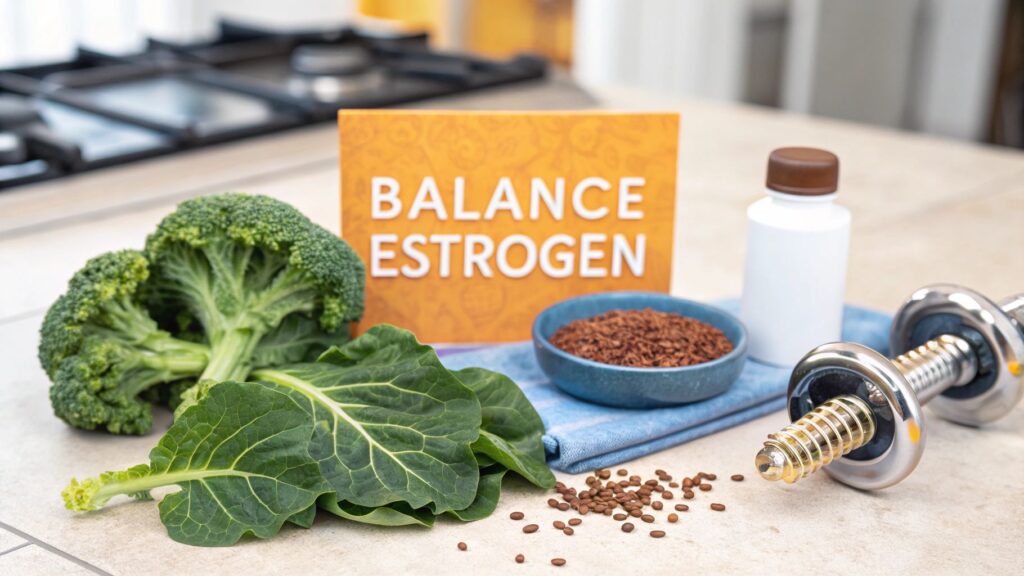
One of the single best things you can do is start loading your plate with cruciferous vegetables. Think broccoli, cauliflower, kale, brussels sprouts, and cabbage. This family of powerhouse plants is rich in a compound called indole-3-carbinol (I3C), which your body cleverly converts into diindolylmethane (DIM).
DIM is a true rockstar for hormone health. It essentially guides estrogen down healthier metabolic pathways in the liver, encouraging the creation of beneficial estrogen metabolites over the more potent, problematic ones. Simply adding a side of steamed broccoli or a kale salad to your daily meals gives your body these crucial building blocks.
If you're wondering whether high estrogen is affecting you, the symptoms can be pretty telling.
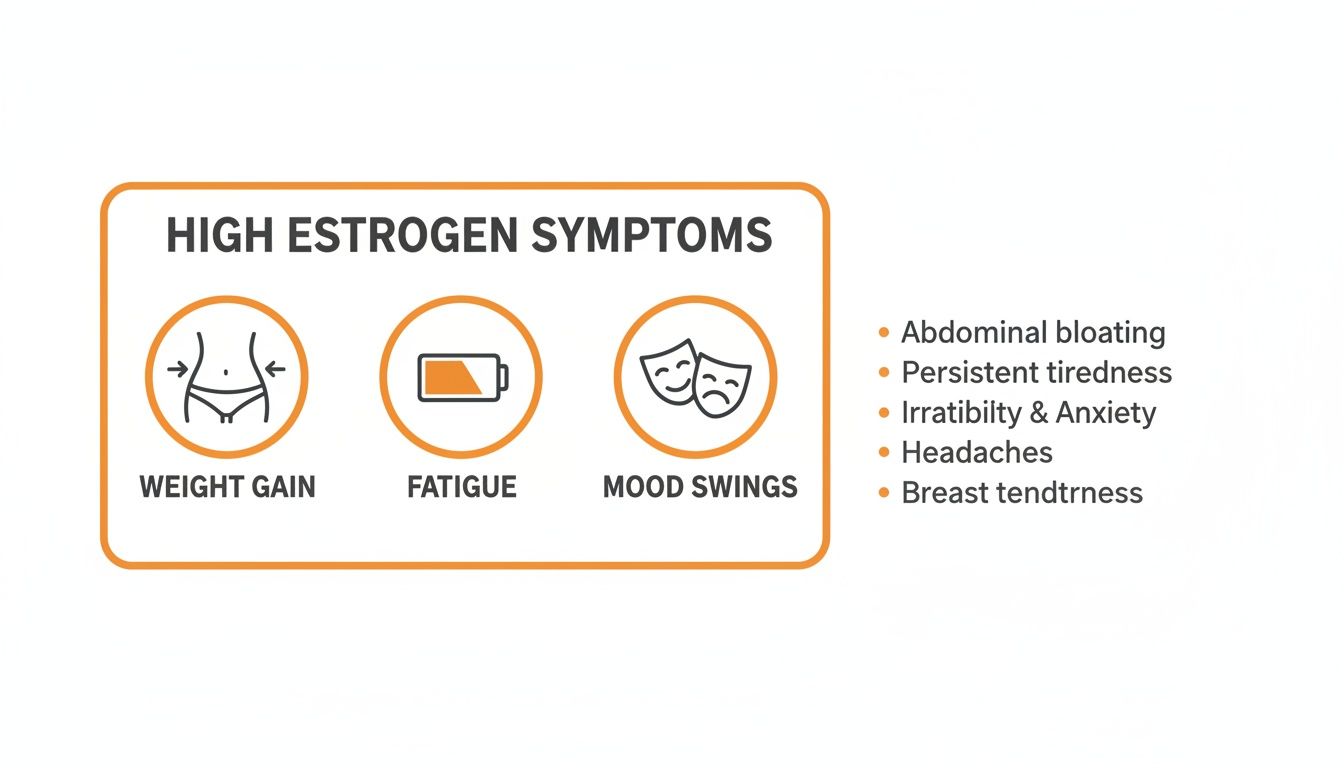
As you can see, issues like stubborn weight gain, persistent fatigue, and mood swings are classic signs of a potential hormonal imbalance.
Embrace the Power of Fiber
Fiber is another non-negotiable for anyone looking to lower estrogen. Think of it as your digestive system’s dedicated cleanup crew. After your liver processes estrogen, it sends it to the gut to be eliminated.
High-fiber foods, particularly soluble fiber from sources like oats and flax, bind to this estrogen in your digestive tract and make sure it actually leaves your body. Without enough fiber, a good chunk of that estrogen can get reabsorbed right back into your bloodstream—a process called enterohepatic circulation—which completely undoes all the hard work your liver just did.
A simple mindset shift can make a huge difference. Don't just think about what to remove from your diet; focus on what powerful, hormone-balancing foods you can add.
The impact here is significant. One study found that women who adopted a high-fiber, plant-based diet saw their estrogen levels drop by an incredible 40% compared to those who didn't change their eating habits. This happened without any medication, just by using fiber to escort excess estrogen out of the body.
Strategic Food Choices for Lower Estrogen
Small, consistent changes can create a massive ripple effect on your hormones. Instead of trying to overhaul your entire life overnight, focus on these simple, high-impact additions.
- Flaxseeds: These tiny seeds are a triple threat. They’re packed with fiber, contain healthy omega-3s, and are a rich source of lignans, a type of phytoestrogen that helps modulate estrogen activity.
- Mushrooms: Varieties like shiitake and portobello contain compounds that can help inhibit an enzyme called aromatase, which is responsible for converting testosterone into estrogen.
- Whole Grains: Oats, quinoa, and brown rice are fantastic sources of fiber and B vitamins, which are crucial for liver function.
- Pomegranates: This fruit is loaded with antioxidants and compounds that show anti-estrogenic properties, making it a delicious and beneficial addition.
Making these small adjustments is much easier than a complete diet overhaul. The table below shows a few simple swaps you can make today.
Estrogen-Lowering Food Swaps
| Instead Of This | Choose This | Why It Helps |
|---|---|---|
| White Rice | Quinoa or Brown Rice | Boosts fiber intake to help bind and eliminate estrogen from the gut. |
| Sugary Cereal | Oatmeal with Flaxseeds | Provides soluble fiber and lignans to support healthy estrogen metabolism. |
| Creamy Salad Dressing | Olive Oil & Lemon | Reduces intake of unhealthy fats and adds anti-inflammatory benefits. |
| Afternoon Coffee | Green Tea | Contains antioxidants that support liver detoxification pathways. |
These small changes, when done consistently, really add up and can significantly improve how your body manages its hormones.
Foods and Substances to Limit
Just as important as adding the good stuff is reducing your intake of things that throw your hormones out of whack. These substances can overburden your liver, fuel inflammation, and directly contribute to estrogen dominance.
- Alcohol: Your liver always prioritizes metabolizing alcohol over everything else—including estrogen. Regular drinking can create a backlog of hormones that end up getting recirculated.
- Sugar and Refined Carbs: These foods send your blood sugar and insulin levels on a rollercoaster. High insulin is linked to higher estrogen and can promote fat storage, which in turn produces even more estrogen.
- Processed Foods: Often full of unhealthy fats, sugar, and synthetic chemicals, processed foods contribute to inflammation and place a huge burden on your body's detoxification systems.
For those ready to dive deeper, our complete guide on how to balance hormones naturally provides even more strategies. Making these mindful dietary choices is the first and most impactful step you can take toward restoring your body's hormonal harmony.
Get Your Body Composition Working for You, Not Against You
There’s a direct, undeniable link between your body fat and your estrogen levels. It’s easy to think of fat as just stored energy, but adipose tissue is actually a busy endocrine organ that actively produces and releases estrogen.
This means that dialing in your body composition is one of the most powerful levers you can pull for balancing your hormones naturally.
But this isn't about running yourself into the ground with endless cardio. A smarter, more strategic approach to exercise gets far better results for your hormonal health. The real goal is to shift your body in favor of more lean muscle and less fat, which completely changes the hormonal game.
Strength Training: Your Most Powerful Ally
When it comes to lowering estrogen, think of strength training as your number one tool. Building lean muscle is a game-changer for a few key reasons. First, muscle is metabolically expensive. The more of it you have, the higher your resting metabolic rate, which means you burn more calories all day long—even when you’re on the couch.
This metabolic boost is exactly what you need to shed the excess body fat that’s pumping out estrogen. On top of that, regular resistance training makes your body much more sensitive to insulin. Better insulin response means stable blood sugar, which helps prevent the hormonal rollercoasters that lead to fat storage and, you guessed it, more estrogen.
You don't have to become a bodybuilder to reap these rewards. A consistent routine of just two to four sessions a week is incredibly effective.
The secret isn't just lifting weights; it's progressive overload. You have to gradually increase the weight, reps, or sets over time to keep challenging your muscles. That’s what tells them to grow.
This ensures you’re actively building the lean tissue you need for optimal hormone balance. For a deeper dive into structuring your workouts, check out our guide on exercise for hormonal balance.
Finding Your Cardio Sweet Spot
While strength training builds the engine, cardiovascular exercise is the perfect supporting act. The right kind of cardio is fantastic for burning visceral fat—that’s the particularly nasty type that wraps around your organs and is a major player in hormone production.
But here’s the catch: more isn’t always better.
Overtraining with long, grueling cardio sessions can backfire by jacking up cortisol, your primary stress hormone. Chronically high cortisol can throw your entire endocrine system out of whack, often making the hormonal imbalances you’re fighting even worse.
For most people, the sweet spot is moderate-intensity cardio. Here’s how that might look in a balanced week:
- Strength Training: 2-3 sessions per week (45-60 minutes each), focusing on big compound movements like squats, deadlifts, and presses.
- Moderate Cardio: 2-3 sessions per week (30-45 minutes each). Think brisk walking, jogging, cycling, or hitting the elliptical.
- High-Intensity Interval Training (HIIT): 1 session per week (15-20 minutes). This involves short, all-out bursts of effort followed by brief recovery periods. It's incredibly effective for fat loss and metabolic health without the prolonged stress of endurance training.
This combination creates a powerful synergy. Strength training builds your metabolism, while smart cardio and HIIT help burn off the very fat that contributes to excess estrogen.
How Exercise Directly Lowers Estrogen
The effect of physical activity on your hormones isn't just a theory; it’s backed by compelling evidence. Consistent exercise directly helps lower the amount of estrogen circulating in your bloodstream.
For example, research has shown just how big of an impact a moderate routine can have. A landmark study from the Fred Hutchinson Cancer Center found that just three hours of moderate exercise per week was enough to lower circulating estrogen by an incredible 16% in postmenopausal women. The participants, who exercised for about 45-60 minutes at a time, saw their estradiol levels drop significantly after only one year—even without major weight loss. You can read more about these exercise and estrogen findings to see the full picture.
This really drives home a critical point: you don't need to train like an elite athlete to get results. Consistency and a well-rounded plan are what truly move the needle, creating a healthier hormonal environment from the inside out.
Taming Stress and Sleep to Balance Your Hormones

You can have the perfect diet and a dialed-in workout routine, but if you're not managing stress and sleep, your efforts to lower estrogen might be completely derailed. These two factors aren't just details to consider; they are the bedrock of your endocrine health.
When you're chronically stressed, your adrenal glands work overtime pumping out cortisol. This puts your body into a constant state of emergency, a kind of hormonal triage that prioritizes the stress response above everything else. The result is direct interference with the delicate dance between estrogen and progesterone.
The Cortisol-Estrogen Link You Can't Ignore
Think of cortisol as your body's alarm system. When it’s always blaring, less critical systems get shut down. High cortisol doesn't just feel draining; it can suppress the production of other essential hormones, creating an imbalance where estrogen easily becomes dominant.
This constant demand for cortisol can lead to a phenomenon known as "pregnenolone steal." Your body literally "steals" the building blocks for progesterone to make more stress hormones instead. Since progesterone is the natural counterweight to estrogen, this drop is a fast track to estrogen dominance.
Handling stress effectively is a direct strategy for lowering estrogen. It’s not about eliminating every stressor from your life—that's impossible. It's about building resilience and learning how to turn the alarm off.
Simple, consistent practices are your best bet here. You don’t need a week-long yoga retreat; just five minutes of mindfulness can start to shift the balance.
- Mindful Breathing: Take just five minutes to focus on your breath. Inhale for four, hold for four, and exhale slowly for six. This simple exercise can lower cortisol levels almost immediately.
- Schedule "Nothing" Time: Block out 15-20 minutes in your daily calendar for something you enjoy that has no goal—like listening to music, sitting outside, or just daydreaming.
- The Brain Dump: Before bed, spend a few minutes writing down whatever is on your mind. Getting stressors out of your head and onto paper can stop them from replaying all night and wrecking your sleep.
These small habits are powerful signals to your body that it's safe, allowing it to move out of "fight-or-flight" and back toward hormonal harmony.
Why Sleep is Your Hormonal Reset Button
Sleep is when your body gets down to the critical business of hormonal repair and regulation. Skimping on sleep is like trying to run a factory without ever shutting down for maintenance—things are bound to break.
Poor sleep disrupts the production of melatonin, a hormone that does much more than just make you sleepy. Melatonin is a powerful protector against estrogen dominance. It helps regulate the estrogen-progesterone balance and has even been shown to have anti-aromatase activity, which means it helps limit the conversion of testosterone into more estrogen.
When you don't get enough quality sleep, you miss out on this crucial nightly reset. Creating a sleep-friendly environment is one of the most practical things you can do.
- Create a Cave: Make your room as dark as possible. Use blackout curtains and cover even small electronic lights. In the hour before bed, dim the lights and ditch the screens—their blue light is notorious for suppressing melatonin.
- Build a Wind-Down Ritual: Create a simple, calming sequence of events that signals "sleep is coming." This could be reading a physical book, doing some light stretching, or taking a warm bath.
- Turn Down the Thermostat: The ideal room temperature for restorative sleep is surprisingly cool, around 65°F (18°C).
By taking control of your stress and sleep, you create the perfect internal environment for your hormones to find their natural equilibrium. This isn't a quick fix, but a long-term commitment to the fundamentals that allow your body to heal itself.
Key Supplements and Herbs for Estrogen Balance
While a clean diet and consistent exercise are the bedrock of hormonal health—and absolutely non-negotiable—sometimes your body needs a little extra help. That's where targeted supplements and herbs come in. Think of them as strategic tools to enhance your body's natural ability to manage estrogen, not as a shortcut or a replacement for the real work.
Before you start popping pills, a quick word of caution: these compounds are powerful. I always recommend chatting with a healthcare professional first. It's the only way to be sure you're picking the right allies for your unique body and health situation.
DIM and Its Cruciferous Connection
You know how everyone tells you to eat your broccoli and kale? One of the biggest reasons they're so great for hormone balance comes down to a compound called Diindolylmethane, or DIM. Your body actually makes DIM on its own when you digest indole-3-carbinol, a substance found in abundance in cruciferous veggies.
DIM's main job is to support the liver's detoxification pathways. It essentially nudges your estrogen down a healthier metabolic route, encouraging it to break down into weaker, more beneficial forms instead of the potent ones linked to estrogen dominance.
- How it Works: It helps your body produce more "good" estrogen metabolites (2-hydroxyestrone) and less of the problematic kind (16-alpha-hydroxyestrone).
- Best For: Anyone looking to give their estrogen metabolism a boost, especially if getting enough cruciferous veggies in your diet is a constant struggle.
- Typical Dosage: Most protocols suggest starting with 100-200 mg per day.
A DIM supplement is a practical way to get a concentrated dose, but it’s smart to start low and see how your body feels before increasing it.
Calcium-D-Glucarate for Better Elimination
Getting your liver to process estrogen correctly is only half the job. Once it's been detoxified, you have to make sure it actually leaves your body for good. That's where Calcium-D-Glucarate shines.
This compound works by putting the brakes on an enzyme in your gut called beta-glucuronidase. When this enzyme is overactive, it can undo all the liver's hard work, basically "un-packaging" the estrogen that was ready for elimination and letting it get reabsorbed right back into your system.
I like to think of Calcium-D-Glucarate as a security guard for your gut. It makes sure the detoxified estrogens stay bundled up and are escorted out, preventing them from sneaking back into circulation.
By keeping beta-glucuronidase in check, Calcium-D-Glucarate ensures that the final, critical step of estrogen removal happens efficiently.
Making Sense of Phytoestrogens like Flax and Soy
Phytoestrogens are probably one of the most misunderstood topics in hormone health. These are simply plant-based compounds that can interact with the estrogen receptors in your body. It sounds strange to add something with "estrogen" in the name when you're trying to lower it, but the reality is much more nuanced.
Here's the key: phytoestrogens are incredibly weak compared to your body's own estrogen or the synthetic xenoestrogens from the environment.
Imagine your estrogen receptor is a keyhole. Potent estrogen is the master key that opens it wide. A phytoestrogen is more like a key that fits in the lock but can't really turn it. By occupying that receptor, the weaker phytoestrogen physically blocks the stronger, more problematic estrogen from binding there. This can result in a net balancing, or even an anti-estrogenic, effect.
For instance, the isoflavones found in soy and the lignans in flaxseed can be incredibly helpful. A 2025 review of 48 different high-quality studies found that a daily intake of 50-80 mg of these plant compounds slashed severe hot flashes by up to 92%. They act as selective estrogen receptor modulators (SERMs), effectively calming estrogen activity where it's too high while supporting it elsewhere. You can dive deeper into these phytoestrogen research findings to see just how protective they can be.
Other Notable Helpers
Beyond those heavy hitters, a few other natural compounds are worth mentioning for their ability to support healthy estrogen levels.
- Resveratrol: This antioxidant, famous for being in red grapes and berries, can act as a natural aromatase inhibitor. That means it helps block the enzyme that converts testosterone into estrogen.
- Turmeric (Curcumin): Curcumin, the active ingredient in turmeric, is a powerhouse anti-inflammatory that also supports liver function and the body's detoxification pathways.
- Zinc: An often-overlooked mineral, zinc is vital for healthy hormone production and also plays a role in inhibiting that same aromatase enzyme. A deficiency here can directly contribute to higher estrogen.
Your Questions on Lowering Estrogen, Answered
When you start digging into the world of hormonal health, a lot of practical questions pop up. After covering the core strategies around diet, exercise, and lifestyle, you might be wondering about the nitty-gritty details. Let's tackle some of the most common questions I hear from people trying to get their estrogen levels in check.
How Long Does It Really Take to Lower Estrogen Naturally?
This is probably the number one question, and the honest-to-goodness answer is: it depends. There’s no magic timeline. Your starting point, how consistent you are with the changes, and your own unique body chemistry all play a huge role.
Some people feel better surprisingly fast. They might notice less bloating and a more stable mood within a few weeks of overhauling their diet and lifestyle. That's a great sign you're on the right track.
But for the kind of deep, lasting changes that actually show up on a lab report, you need to think in months, not days. It takes real time for your liver to get better at its detox job, for your body fat percentage to shift, and for your entire system to settle into a new, healthier rhythm. A good rule of thumb is to stick with a solid plan for at least three to six months before you get re-tested and assess your progress.
Patience and consistency are everything here. This isn't a quick fix; it's a long-term investment in your health. The small things you do every single day are what add up to profound hormonal change over time.
Are These Strategies Just for Women, or Can Men Benefit Too?
Absolutely, men can—and should—pay attention to this. While we often label estrogen a "female" hormone, men need it in small amounts for healthy bones and sharp brain function. The trouble starts when estrogen levels climb too high, especially in relation to testosterone. This is becoming more and more common.
For men, high estrogen can show up as low libido, stubborn belly fat that just won't budge, feeling tired all the time, or even developing breast tissue (a condition called gynecomastia).
Every single strategy we've talked about—loading up on cruciferous veggies, getting enough fiber, managing stress, hitting the weights, and avoiding environmental estrogens—works just as well for men. In fact, these approaches can be especially powerful for guys, as they help protect testosterone from being converted into estrogen by an enzyme called aromatase.
What's the Deal with Phytoestrogens from Foods Like Soy? Are They Risky?
The whole topic of phytoestrogens, particularly from soy, can be really confusing. Let's clear it up. These are plant-based compounds that have a similar chemical structure to our own estrogen, so they can interact with our body's estrogen receptors. The key thing to remember is that their effect is much, much weaker than your body's estrogen or the synthetic xenoestrogens we encounter in plastics and chemicals.
For the vast majority of people, eating moderate amounts of whole-food sources of phytoestrogens is perfectly safe and can even be beneficial. Think organic edamame, tofu, tempeh, and flaxseeds. Here's why:
- They can have a balancing effect. By latching onto estrogen receptors with their weak signal, they can actually block your body's stronger, more problematic estrogens from binding. The net result is often a reduction in total estrogenic activity.
- The source is what matters. A lot of the fear around soy comes from studies that used highly processed soy protein isolates and concentrated supplements. Eating a bowl of steamed edamame is a completely different (and much healthier) thing.
That said, if you have a personal history of a hormone-sensitive cancer or certain thyroid conditions, it's a good idea to talk with your doctor about how much phytoestrogen is right for you.
When Should I Stop Trying on My Own and See a Doctor?
Natural approaches can move mountains, but they aren't a replacement for professional medical advice, especially when things get serious. It's time to book an appointment with a doctor or a knowledgeable practitioner if you're experiencing any of these scenarios:
- You're stuck. You've been diligently making changes for several months, but your symptoms—like awful PMS, heavy periods, stubborn weight gain, or a non-existent libido—just aren't getting better.
- Your symptoms are severe. If what you're dealing with is seriously tanking your quality of life, causing a lot of pain, or making it hard to get through your day, don't wait.
- You have specific health concerns. Anyone with a personal or family history of conditions like breast cancer, uterine fibroids, or endometriosis needs professional guidance.
- You're thinking about supplements. Before you start taking potent compounds like DIM or Calcium-D-Glucarate, it’s smart to get a professional opinion to make sure they're right for you and won't interfere with anything else.
A doctor can run the right hormone tests to get a clear, accurate picture of what's going on and help you build a plan that's safe and tailored specifically to you.
At Elite Bioscience, we provide the tools and therapies to help you take control of your hormonal health from the comfort of your home. Our secure platform connects you with medical professionals to create personalized treatment plans, including peptide and vitamin therapies, delivered discreetly to your door. Take the next step in optimizing your well-being by exploring our goal-oriented health solutions.