

If you're wondering how to start hormone replacement therapy, the good news is that the process is much more straightforward than you might think. It all starts with recognizing your symptoms, moves through a simple online health review and some local lab tests, and culminates in a telehealth meeting with a doctor.
Before you know it, a personalized treatment plan is on its way to your front door. This modern, patient-focused approach means you can start the journey to feeling like yourself again without the usual hassle.
Your First Steps Toward Hormonal Balance
Deciding to explore HRT is a big step, but it's a clear path toward improving your quality of life. The entire process is designed to be supportive, taking the mystery out of getting started with today's telehealth options.
Whether you're a man dealing with the nagging symptoms of low testosterone or a woman looking for wellness and anti-aging support, the first steps are simple. Best of all, you can do them right from home.
The whole thing boils down to three key phases: filling out an online form, getting local lab work done, and then having a one-on-one telehealth consultation with a provider.
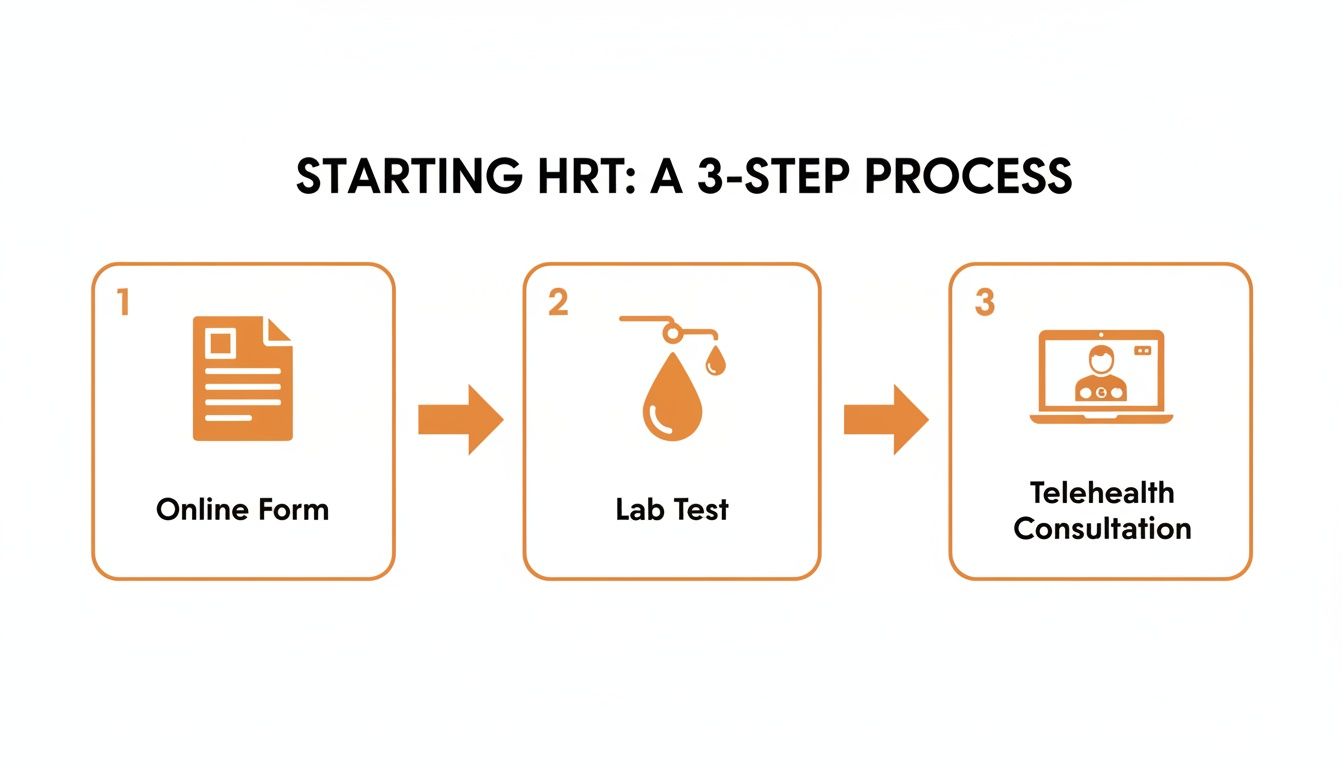
As you can see, technology has really broken down the old barriers to getting expert medical care. The journey is built around your schedule and your life, making the transition into a personalized therapy plan as smooth as possible.
The Growing Demand for Hormonal Health
It's not just you—more and more people are turning to HRT. The global market for hormone replacement therapy was valued at USD 39.64 billion in 2025 and is expected to climb to USD 66.98 billion by 2034. That's a compound annual growth rate of 6%, which is pretty significant.
This growth tells a story: people are more aware of their hormonal health and are actively seeking solutions, especially as the global population ages.
This rising demand is exactly why the medical field has innovated to make care more accessible. Telehealth has become a game-changer, connecting people with specialists no matter where they live. For men specifically considering their options, learning about the convenience of an online TRT clinic can shed light on just how easy this process has become.
To give you a clear overview, here's a quick checklist of what the journey looks like from start to finish.
Hormone Replacement Therapy Quick Start Checklist
This table breaks down the key phases of starting HRT, from your initial research to long-term management.
| Phase | Key Action | Primary Goal |
|---|---|---|
| 1. Initial Assessment | Complete an online health form and identify your symptoms and goals. | To provide your physician with a comprehensive health overview before lab work. |
| 2. Diagnostic Testing | Get comprehensive blood work done at a local lab. | To obtain precise data on your current hormone levels and overall health markers. |
| 3. Medical Consultation | Meet with a physician via a telehealth video call. | To review lab results, discuss your health history, and co-create a treatment plan. |
| 4. Treatment & Delivery | Receive your prescribed medication directly to your home. | To start your personalized therapy conveniently and discreetly. |
| 5. Ongoing Management | Follow up with your provider and complete periodic lab tests. | To monitor progress, adjust dosages as needed, and ensure optimal results. |
Each phase is a simple, logical step designed to get you the right treatment safely and effectively.
Ultimately, the most important thing to remember is that symptoms like constant fatigue, unpredictable moods, or a non-existent libido aren't things you just have to tolerate. They're often clear signals of a hormonal imbalance that can be addressed.
By taking that very first step—a simple online assessment—you’re not just treating a symptom. You're starting a proactive journey to get your energy, focus, and life back on track.
Are You a Candidate for HRT?
So, how do you know if hormone replacement therapy is even on the table for you? It really boils down to a simple, personal question: Do you still feel like yourself?
It's so easy to brush off the subtle (and sometimes not-so-subtle) signs of hormonal imbalance as just a normal part of getting older. But they don't have to be.
The first step is simply connecting the dots. It’s about realizing that the fatigue you can’t seem to shake, the brain fog that clouds your focus, or the unexpected mood swings might not just be random. They could be your body's way of telling you that something is out of balance.
What to Look For in Men
For men, the conversation almost always starts with low testosterone, or "Low T." This is so much more than just feeling a little tired after a long week. We're talking about a persistent, deep-seated fatigue that can make a normal workday feel like running a marathon, leaving you with nothing left in the tank for your family or hobbies.
Another huge red flag is a noticeable drop in libido. This isn't just a fleeting mood; it’s a sustained lack of interest that can really start to chip away at your confidence and your relationships. You might also find yourself feeling more irritable, anxious, or just plain down without any obvious reason.
These feelings often line up with real, measurable data. A clinical diagnosis of hypogonadism, for instance, typically requires a couple of separate morning blood tests showing total testosterone levels below 300 ng/dL. That number provides a clear, objective benchmark that connects how you're feeling to what's happening inside your body.
What to Look For in Women
For women, this journey often kicks into high gear during perimenopause or menopause. The wild hormonal fluctuations during this time can set off a whole cascade of frustrating symptoms. Hot flashes and night sweats are the classic ones everyone knows, but the reality is much broader.
Many women I've talked to describe a maddening "brain fog" that makes it tough to concentrate or remember things. You might walk into a room and completely forget why you went in there, or struggle to find the right word mid-conversation. Vaginal dryness is another common—and often unspoken—issue that can make intimacy painful and affect your day-to-day comfort.
These are direct results of hormonal shifts, especially the decline in estrogen. From a medical standpoint, a key indicator is an elevated Follicle-Stimulating Hormone (FSH) level, often greater than 30 IU/L. This shows that your body is working overtime, trying to get your ovaries to produce more estrogen.
There's a common misconception that you just have to power through these changes. The truth is, these symptoms are clinical signs of a treatable imbalance. Recognizing them for what they are is the first step toward getting back in the driver's seat.
It All Starts With a Proper Evaluation
While recognizing these symptoms is a crucial first step, it’s not the same as a diagnosis. The next move is to get a comprehensive medical evaluation to make sure HRT is a safe and smart option for your specific health situation.
A good doctor won't just look at one lab number and write a prescription. They’ll look at the whole picture: your personal and family medical history, your current symptoms, and a full panel of blood work to rule out other things. For example, thyroid problems can sometimes look a lot like low testosterone or menopause.
The demand for better solutions is growing fast. The global HRT market hit USD 24.75 billion in 2024 and is expected to soar to USD 47.29 billion by 2034. This isn't just a trend; it reflects a real need. For the 4 to 5 million U.S. men dealing with hypogonadism or the 75% of women struggling with severe menopausal symptoms, a thorough evaluation is the gateway to feeling better. You can find more hormonal replacement therapy market trends on novaoneadvisor.com.
Ultimately, deciding if you're a candidate for HRT is a team effort between you and your healthcare provider. But it always starts with you—recognizing the signs and having the courage to ask for answers.
Getting to the Root of It: Lab Tests and Consultations
Once you’ve filled out your health history, it’s time to see what’s really going on under the hood. This next part is crucial: we'll get a clear, data-driven picture of your hormone levels with a simple blood draw at a local lab. This isn't guesswork. It's about turning the symptoms you're feeling into hard numbers that we can use to build a truly personalized treatment plan.

The lab work is the foundation of effective HRT. We’re pinpointing exact deficiencies to create a plan that corrects them safely and effectively. The best part? This is all managed through a telehealth consultation, so you don’t have to waste time with multiple in-person clinic visits.
Your blood test results tell a story. They reveal the "why" behind your fatigue, brain fog, or low libido. Before you can start HRT, a comprehensive lab panel is non-negotiable for diagnosing the specific imbalances that are holding you back.
The table below breaks down the key markers we look at for both men and women to get a clear picture of your hormonal health.
| Hormone Marker | Why It's Tested in Men (TRT) | Why It's Tested in Women (HRT) |
|---|---|---|
| Total & Free Testosterone | This is the primary diagnostic for low T. We need to know not just the total amount, but how much is "free" and usable by your body. | While not the primary focus, it’s important for assessing libido, energy, and overall hormonal balance. |
| Estradiol (E2) | Crucial for balancing testosterone. Too high or too low can cause side effects and sabotage TRT results. | The main estrogen hormone. Low levels are a direct cause of many menopausal symptoms like hot flashes and vaginal dryness. |
| Prostate-Specific Antigen (PSA) | A vital safety check. We establish a baseline before starting TRT to monitor prostate health throughout treatment. | Not typically tested for female HRT unless other health concerns are present. |
| Follicle-Stimulating Hormone (FSH) | Not a primary marker for TRT diagnosis. | A key indicator of menopause. High levels show the ovaries are working harder to produce estrogen, signaling a decline. |
| Progesterone | Not typically monitored unless specific symptoms or conditions warrant it. | This hormone balances estrogen and is vital for sleep and mood. Levels drop significantly during menopause. |
Understanding these markers is the first step toward getting your life back. These tests aren't just a formality; they are the roadmap for your entire treatment.
If you want to get more comfortable with the numbers, our guide on how to read lab results is a great resource.
Your lab results are your body's story told in numbers. The physician’s job is to translate that story, connect it to your symptoms, and write the next chapter—the one where you start feeling like yourself again.
Tying It All Together: Your Consultation
With your lab results in hand, you'll meet one-on-one with your physician via a telehealth call. This is where the magic happens. Your doctor will walk you through your lab panel, explaining what each number means in the context of your health history and the symptoms you described.
This is a conversation, not a lecture. It’s your chance to discuss your goals—are you chasing more energy, a better mood, or relief from hot flashes? Based on this discussion and your lab work, the physician will recommend the right type of hormone, the precise dosage, and the best way to administer it. This is how you start hormone replacement therapy the right way, with a plan built from the ground up, just for you.
Awareness around hormonal health is surging, and the Hormone Therapy Market is growing to meet the demand. For men, a TRT plan often gets the green light when testosterone levels fall below 264 ng/dL. In fact, studies show that 35% of men on therapy report a significant improvement in their mood. For women, HRT is typically initiated when tests confirm low estradiol (under 30 pg/mL) combined with classic menopausal symptoms.
Choosing Your Therapy Doses and Delivery
Once your lab results are in and they confirm a hormone imbalance, the whole conversation changes. We're no longer talking about if you need therapy, but how we're going to approach it. This is where we get down to the nitty-gritty and build a treatment plan that's made just for you.
The goal is simple: find the right hormone, the best way to deliver it, and the perfect dose that matches your body's specific needs and what you want to accomplish.
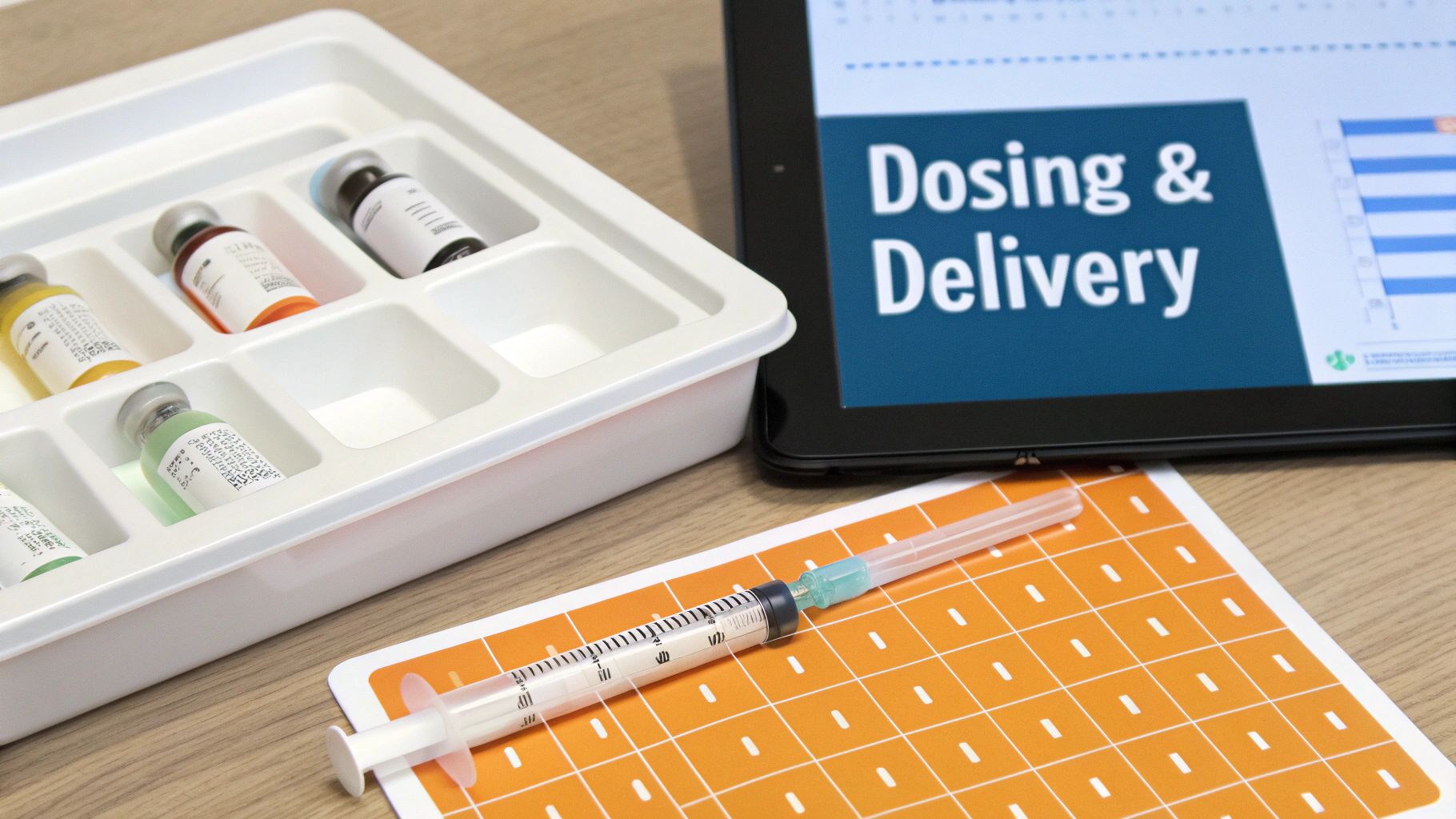
Think of this as a partnership. Your doctor brings the medical expertise to the table, interpreting your lab work and looking at your health history. But you bring something just as crucial: the deep knowledge of your own body. You know your symptoms, your lifestyle, and what feeling "good" again really means to you.
Together, we'll map out a plan for the best results and the highest level of safety. Honestly, this is the most important part of learning how to start hormone replacement therapy, because it lays the groundwork for everything that comes next.
Tailoring Doses For Men
For men diving into Testosterone Replacement Therapy (TRT), injections are often the go-to method. They're efficient, reliable, and help keep your hormone levels stable. Your doctor will typically choose from two main types of injectable testosterone:
- Testosterone Cypionate: This is one of the most common prescriptions you'll see. It has a slightly longer half-life, meaning it hangs around in your system a bit longer, which can make your injection schedule more flexible.
- Testosterone Enanthate: A very close cousin to cypionate, enanthate is another fantastic option. The choice between them often just comes down to the doctor’s experience and how you respond, as they are practically identical in effectiveness.
A common starting dose might be around 100 mg per week, but this is never set in stone. Your doctor will calculate your specific dose based on your baseline testosterone levels, body weight, and how severe your symptoms are. Some guys do better splitting that dose into two smaller shots each week to keep their blood levels extra smooth and sidestep potential side effects.
Crafting a Plan For Women
For women, hormone therapy isn't about replacing a single hormone; it's about restoring a delicate balance. A woman's treatment plan will almost always involve a combination of hormones, primarily estrogen and, if she still has her uterus, progesterone.
Estrogen is the heavy lifter when it comes to tackling symptoms like hot flashes, night sweats, and vaginal dryness. We add progesterone into the mix to protect the uterine lining, as taking estrogen by itself can pose risks.
It’s a huge misconception that HRT is a one-size-fits-all solution. The reality is that modern hormone therapy is incredibly precise. Your doctor isn’t just grabbing a standard dose off the shelf; they're calculating a unique starting point just for you, with a clear roadmap for adjustments based on your follow-up labs.
Your doctor might also talk to you about other therapies that can support your main goals. For example, if you're hoping to improve skin elasticity, they might suggest certain peptides that can be used alongside your HRT to boost collagen and give your skin an overall healthier glow. There are so many options out there. If you're curious about different approaches, it’s worth taking some time to understand what bioidentical hormone therapy is and how it stacks up against more traditional methods.
The Role of Personal Goals and Labs
Your starting dose is never just a guess. It's a strategic decision made after carefully reviewing all of your information.
Let's say we have a man whose total testosterone is 220 ng/dL and he's dealing with debilitating fatigue. He's probably going to start on a different protocol than another man whose level is 290 ng/dL and is mainly bothered by low libido.
The same goes for women. A woman whose sleep is completely wrecked by night sweats might get a different estrogen-to-progesterone ratio than someone who is more concerned with brain fog.
Your personal goals are a huge piece of the puzzle. Are you looking to build muscle, get your energy back, or just feel more like yourself again? The clearer you are about what you want, the better your doctor can fine-tune your plan right from the start. This first prescription is just the beginning—a carefully chosen starting line on your journey back to feeling balanced and revitalized.
Your Ongoing Journey With HRT
Think of starting hormone replacement therapy less like a quick fix and more like the beginning of a long-term partnership with your healthcare provider. Your first prescription isn't the final word; it's a carefully considered starting point. The real work—and the best results—come from the ongoing monitoring and adjustments that follow. This is what truly personalizes your treatment and ensures it's both effective and safe for the long haul.
This continuous process underscores a critical point: HRT is a medically supervised journey, not a set-it-and-forget-it prescription. The plan is designed to evolve right along with you, adapting to how your body responds and what you need over time.

The First Follow-Up: Your Initial Checkpoint
Your first and most important check-in will happen around 6 to 8 weeks after you start therapy. This timing is intentional. It gives your body enough time to adjust to the new hormone levels, which allows us to get a clear picture of your initial response.
At this point, you’ll have a follow-up consultation and get a new round of lab work done. This blood test is absolutely essential—it reveals exactly how your hormone levels have shifted and if they’re hitting the optimal range we're aiming for. For instance, a man on testosterone replacement might see his levels jump from 250 ng/dL to a much healthier 700 ng/dL.
This hard data, combined with how you're actually feeling, tells the whole story. Do you have more energy? Have the hot flashes stopped? This first follow-up is all about dialing in your dose to get the maximum benefit while minimizing any potential side effects.
Fine-Tuning Your Treatment Protocol
Based on the results from your first follow-up labs and your personal feedback, your doctor will almost certainly make a few tweaks. Don't worry, this is a completely normal and expected part of the process.
Here are a few common adjustments you might see:
- Dosage Modification: If your levels are still a bit low or have crept up too high, your doctor will adjust your dose. It's a simple change that can make a big difference.
- Frequency Changes: Some people feel much better with more frequent, smaller doses, which helps keep their hormone levels more stable. A good example is splitting a single 100 mg weekly testosterone injection into two separate 50 mg shots.
- Adding Ancillary Medications: For men, if estrogen (estradiol) levels climb too high as a side effect, a provider might temporarily prescribe a medication called an aromatase inhibitor to get things back in balance.
Think of your HRT plan as a living document. It's meant to be reviewed and revised based on new data—your lab results and your real-world experience. This iterative process is the key to achieving and maintaining hormonal balance.
Long-Term Monitoring And Side Effect Management
Once you’re through the initial adjustment phase, you can expect your follow-up appointments to become less frequent. They usually settle into a regular cadence of every six months to a year. These check-ins are crucial for ensuring your treatment stays effective and safe as your body and needs continue to change over time.
Most side effects, if they occur at all, are mild and often go away on their own as your body adapts. Sometimes a small dosage tweak is all that's needed. For minor issues like a bit of skin irritation from an injection, simple home care is usually enough. The key is to always maintain an open line of communication with your provider.
This dedicated support system is what makes modern HRT so successful. You're never left to navigate it alone. It’s a structured, medically guided process designed to help you feel your best, not just for a few months, but for years to come.
What Does Hormone Replacement Therapy Cost?
Let’s talk about one of the first questions on everyone's mind: what is this actually going to cost? It's a completely fair and practical question. Thinking through the financial side of HRT is a crucial step, so let's break down the expenses you can realistically expect.
This isn’t just about the price tag on the medication itself. You're really looking at a complete investment in your health, which includes a few different pieces: the doctor's consultations, the lab work, and of course, the hormones.
Breaking Down the Main Expenses
When you start digging in, you'll see a couple of different pricing models. Old-school clinics often bill for everything separately—a fee for the visit, another for the labs, another for the prescription. This can make it tough to predict your total monthly cost.
Thankfully, many telehealth providers have simplified things with a bundled monthly membership. This approach rolls everything into one predictable fee.
Here’s what a good all-inclusive plan usually covers:
- Doctor's Visits: Your initial video consultation and all your follow-up appointments are included. No co-pays for check-ins.
- All Your Lab Work: The necessary blood tests to establish your baseline and monitor your progress are covered. No surprise bills from the lab.
- Your Medications: The cost of your prescribed hormones and all the supplies you need (like syringes or alcohol pads) are part of the deal.
- Ongoing Support: You can message your medical team whenever questions pop up, without having to book and pay for a formal appointment.
This model is a game-changer for budgeting. You know exactly what you’re paying each month, which lets you focus on your well-being instead of stressing over confusing medical bills.
It helps to think of HRT as an investment in your quality of life. You're not just buying a product; you're paying for expert medical guidance, careful monitoring, and the confidence that comes from a professionally managed health plan.
A common question is whether health insurance will cover HRT. The short answer is: sometimes, but it can be a real headache. Many plans have strict requirements, high deductibles, and a frustrating approval process.
This is why a lot of people prefer the direct-to-patient model you find with telehealth clinics. It often ends up being simpler and, in many cases, more affordable than jumping through insurance hoops. You get to skip the red tape and take direct control of your health.
Got Questions About Starting HRT? You're Not Alone.
It's completely normal to have questions when you're thinking about starting a new health regimen, and HRT is no exception. Getting clear, honest answers is one of the most important first steps you can take. To help with that, I've put together some of the most common questions people ask when they're first looking into hormone therapy.
Knowing what to expect—the timeline, the safety measures, and the day-to-day practicalities—is key to feeling confident and prepared for a great outcome.
How Long Does It Take to Start Feeling Better?
This is usually the very first thing people want to know. While everyone's body is different, the benefits tend to roll out in phases. Interestingly, some of the first improvements you'll likely notice are in your head, not your body.
Many patients tell me they feel a real shift in their energy levels, less brain fog, and a more even-keeled mood within the first 2 to 4 weeks. It's often a huge relief and a great sign that your body is responding well.
The physical stuff? That takes a bit more time. For men on testosterone replacement therapy (TRT), seeing a real difference in muscle mass or a drop in body fat usually takes about 3 to 6 months of consistent treatment. For women, some physical symptoms like vaginal dryness can improve relatively quickly, but other benefits, like better skin elasticity or stronger bones, are more of a long game.
It’s all about setting realistic expectations. Think of it this way: some great changes happen fast, but the truly deep, lasting results build up over several months. This is a marathon, not a sprint.
Is It Safe to Be on Hormone Therapy Long-Term?
Your safety is, without question, the number one priority. For the vast majority of people who are good candidates and stick with their medical follow-ups, modern hormone therapy is considered very safe. In most cases, the benefits far outweigh the potential risks. What really makes it safe is the close working relationship you have with your medical provider.
Here's what a medically supervised, safe process looks like:
- Proper Screening Upfront: We don't guess. A deep dive into your medical history and a full lab panel right at the start tells us if HRT is a good fit for you.
- Dosing That's Just for You: This is not a one-size-fits-all situation. Your dose is calculated specifically for you, based on your individual needs and lab work.
- Ongoing Monitoring is a Must: Regular follow-up labs and check-in consultations are non-negotiable. This is how your doctor fine-tunes your treatment and spots any potential red flags before they become problems.
The best thing you can do is keep an open line of communication with your doctor. Be honest about how you're feeling and don't skip your follow-ups. That's how you become an active partner in making your therapy both safe and successful for the long haul.
Can I Travel With My HRT Medication?
Yes, absolutely. A little planning is all it takes to keep your treatment on track while you're away from home. Whether it's a quick weekend trip or a long vacation, you can easily bring your medications with you.
My advice for anyone on injectable therapy is to pack your supplies in your carry-on bag. You don't want to risk them getting lost in checked luggage or being exposed to extreme temperatures in the cargo hold. I also recommend carrying a doctor's note or a copy of your prescription. This small step can save you a lot of headaches with airport security by showing your supplies are for a legitimate medical need.
At Elite Bioscience, our goal is to make your path to hormonal balance as straightforward and supported as possible. From answering your first questions to providing ongoing guidance, our team is here for you. If you feel ready to get back in control of your health, we invite you to explore your personalized therapy options today.