In laboratory and cellular aging research settings, Epitalon has been investigated in relation to:
$ 100.00
Out of stock
Peptides are not ready to use. Must purchase BAC water for reconstitution.
Epitalon is a synthetic tetrapeptide composed of alanine, glutamic acid, aspartic acid, and glycine (AEDG). It is derived from Epithalamin, a peptide complex originally isolated from the pineal gland. Researchers utilize Epitalon in laboratory studies exploring mechanisms of cellular aging, circadian rhythm regulation, telomere maintenance, and gene-expression control associated with longevity-related biological processes.
Research suggests Epitalon is involved in several key biological processes related to aging and cellular regulation:
Telomere & Chromosomal Regulation
Experimental studies associate Epitalon with modulation of telomerase activity and telomere length, making it relevant for research into cellular lifespan and genomic stability.
Gene Expression Modulation
Epitalon has been shown to interact with DNA and chromatin structures, influencing transcriptional activity related to cell-cycle regulation, repair pathways, and cellular resilience.
Pineal Gland & Circadian Signaling
Epitalon is studied for its influence on pineal gland function and melatonin-associated signaling, supporting research into circadian rhythm regulation and neuroendocrine balance.
Cellular Senescence Research
Laboratory investigations link Epitalon to reduced markers of cellular senescence and improved maintenance of normal cell-division patterns in aging models.
Neuroendocrine & Immune Pathways
Epitalon has been explored in studies examining interactions between neuroendocrine signaling, immune regulation, and age-associated functional decline.
Elite Bioscience supplies Epitalon strictly for laboratory, analytical, and in-vitro research.

A controlled clinical study investigating Epitalon in patients with retinitis pigmentosa reported positive clinical responses in approximately 90% of participants, including improvements in visual acuity, expansion of visual-field borders, and reduction of scotomas. These findings support Epitalon’s relevance in research focused on retinal degeneration and pineal peptide signaling.
Read StudyA prospective observational study involving 266 elderly individuals receiving Epithalamin (the parent pineal extract from which Epitalon is derived) reported 1.6- to 4.1-fold reductions in mortality over a six-year observation period compared to controls. While this study did not directly administer synthetic Epitalon, it provides contextual evidence for the biological relevance of pineal-derived peptides in aging-related research.
Read StudyIn spontaneously hypertensive (SHR) mice, monthly Epitalon administration increased lifespan by approximately 12.3–13.3%, reduced chromosomal aberrations, and inhibited leukemia development without increasing overall tumor incidence. These findings position Epitalon as a compound of interest in experimental models of lifespan regulation and genomic stability.
Read StudyA comprehensive experimental study examining Epitalon across multiple animal models reported: Activation of telomerase in normal somatic cells, Reduction in oxidative-stress markers, Extension of lifespan in treated populations. Importantly, telomerase activation was observed in non-tumor cells, a distinction emphasized throughout the study’s analysis.
Read StudySupplier: Elite Bioscience®
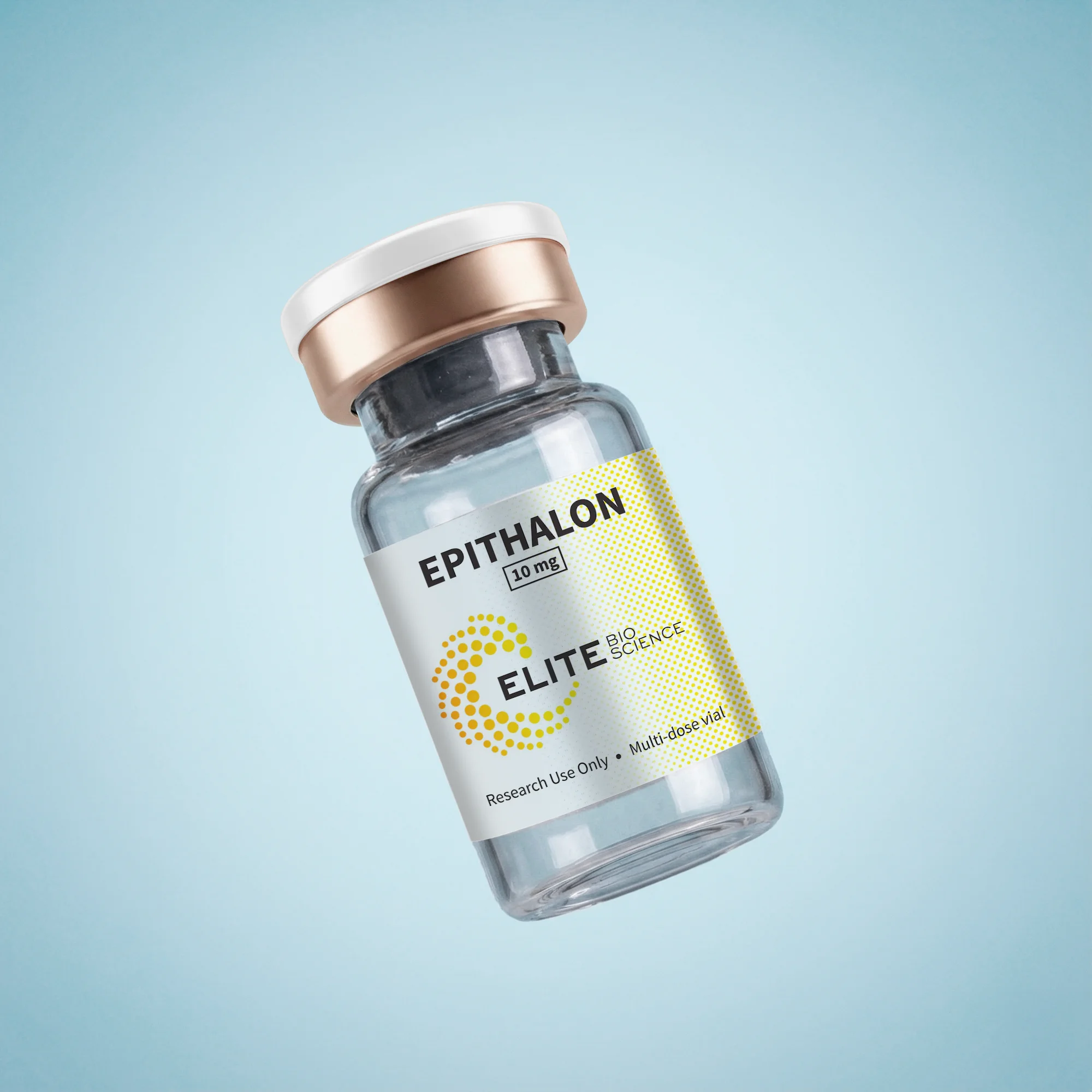
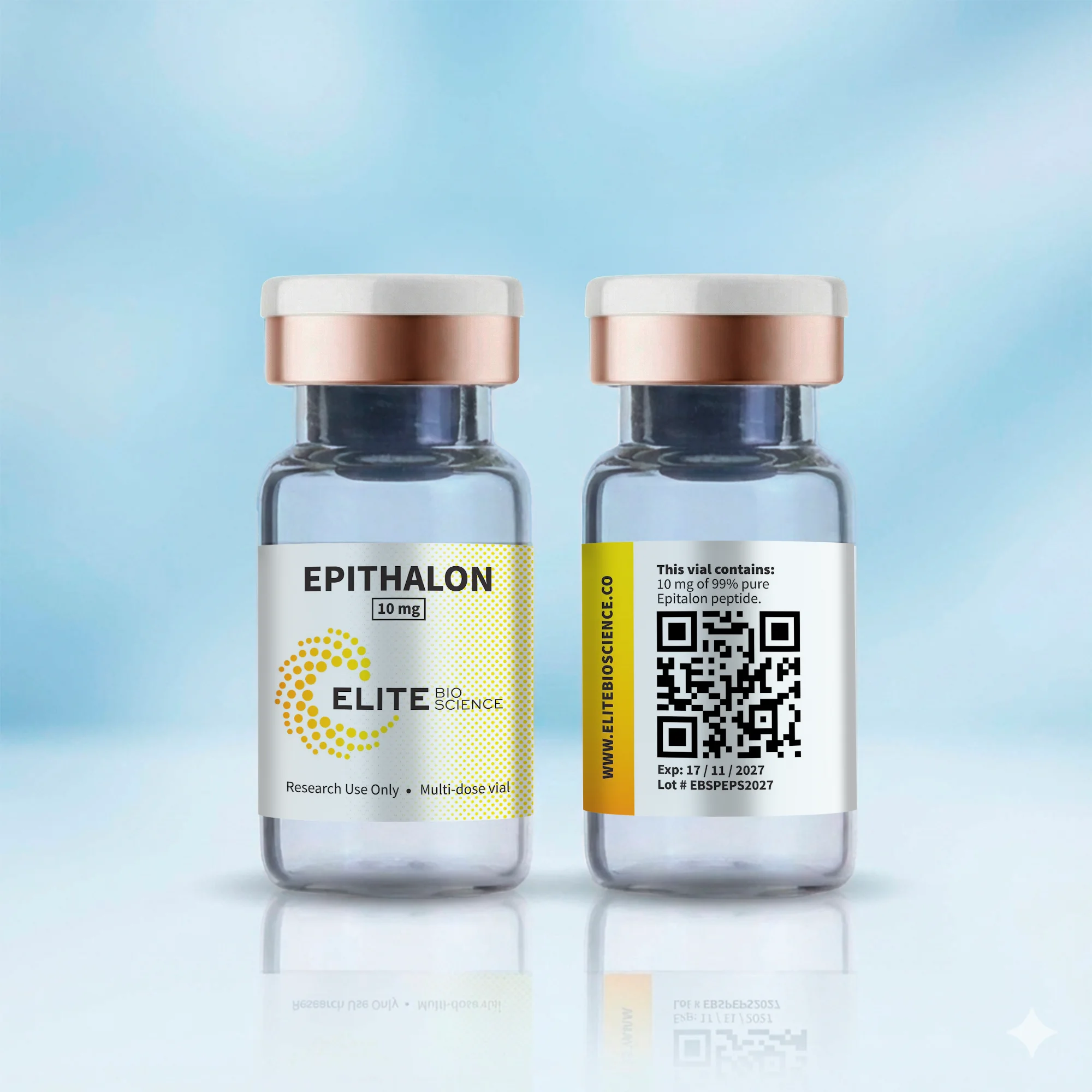
Product Form: 1 × 5 mg sterile, lyophilized peptide vial
Active Ingredient: Epitalon (Epithalon, AEDG)
Peptide Class: Synthetic tetrapeptide
Research Use: For laboratory, in-vitro, and analytical research only. Not for human or veterinary use.