Elite Bioscience

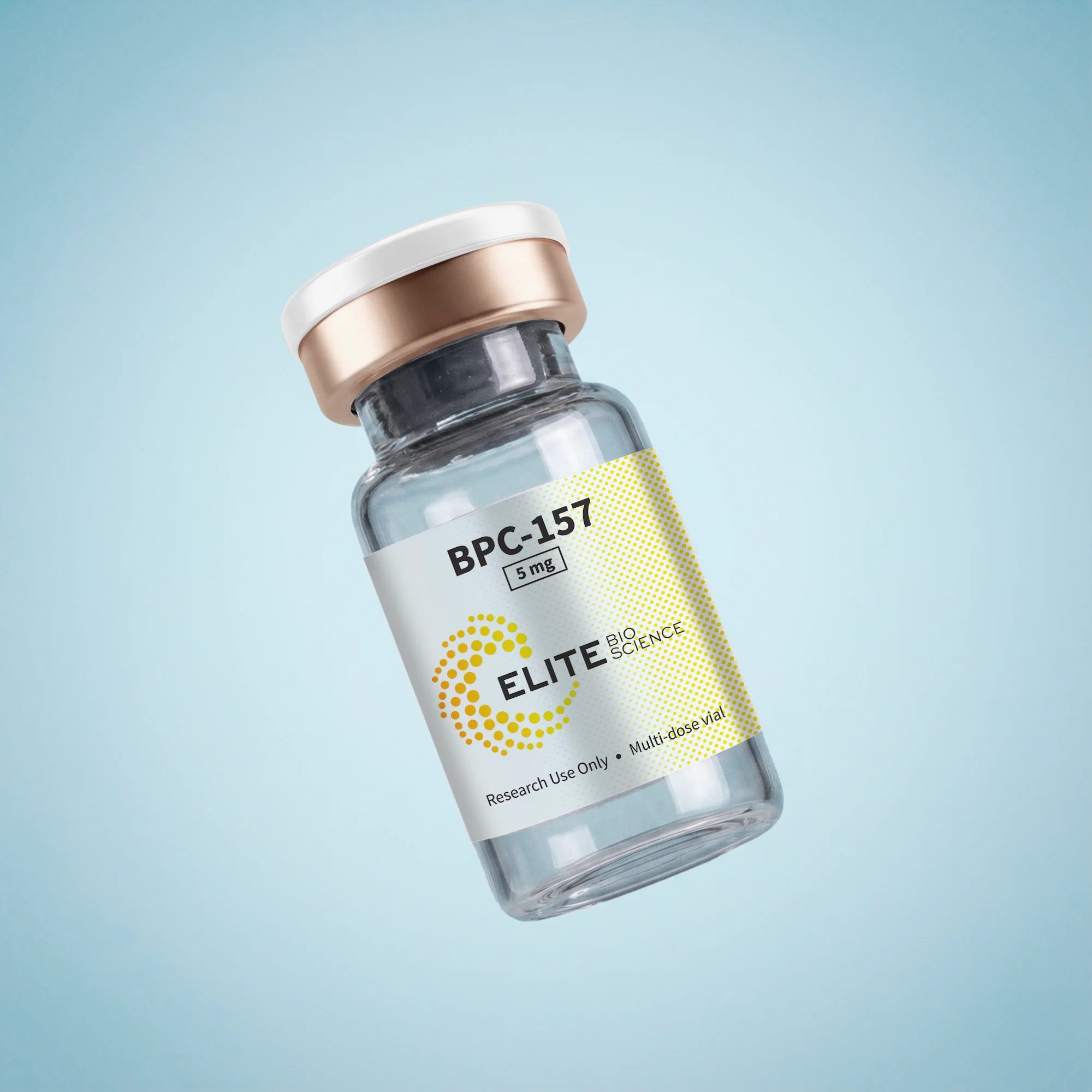
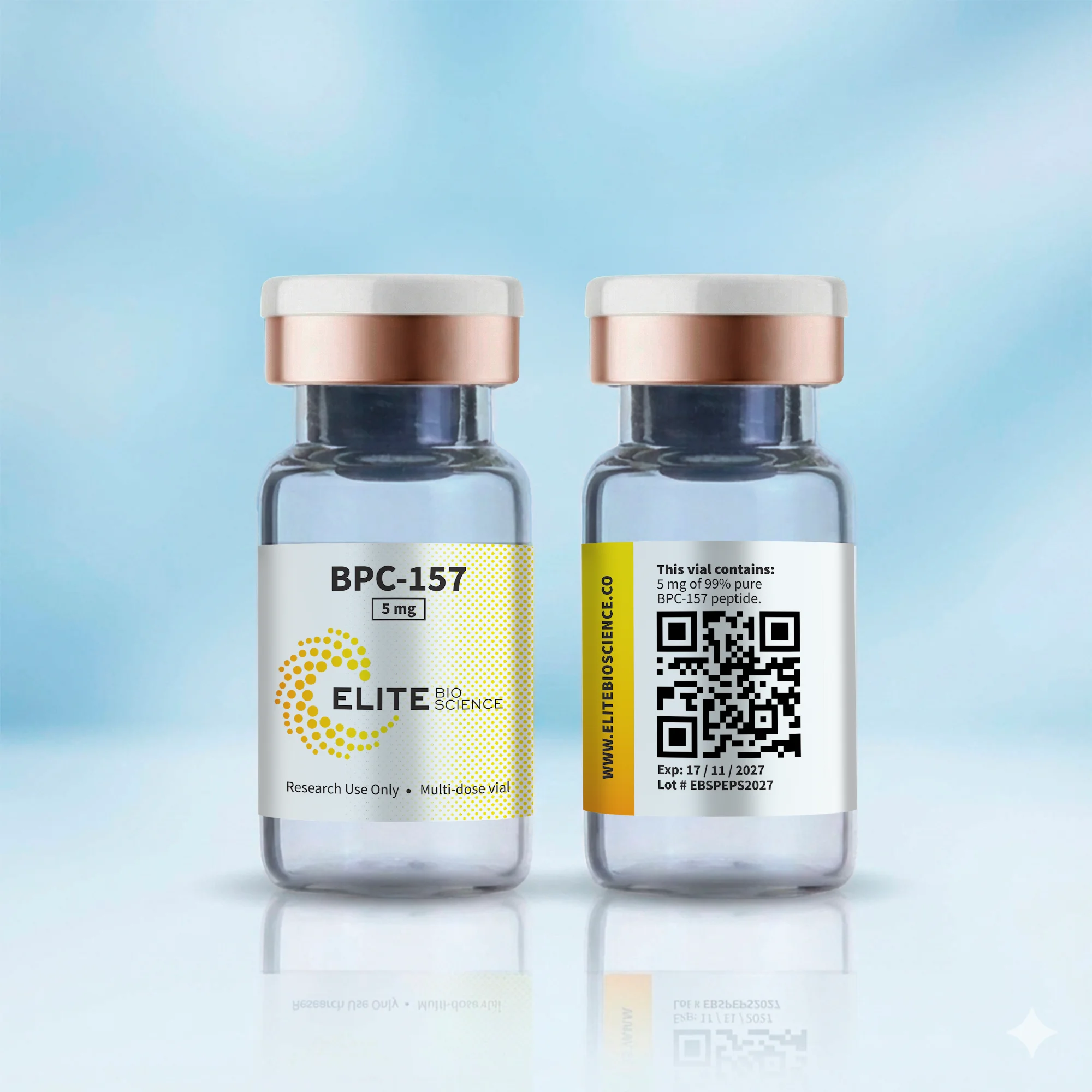
BPC-157 5mg

BPC-157 has shown the following in studies:

  • New blood vessel formation
  • Connective tissue repair
  • Inflammatory modulation
  • Increased blood flow to damaged tissues
  • Gut and organ protection / regeneration

$ 72.00

Out of stock


Pairs well with

Peptides are not ready to use. Must purchase BAC water for reconstitution.
FREE Shipping on orders over $200

BPC-157 is a peptide derived from a naturally occurring gastric protein fragment and is commonly investigated for its role in tissue repair, angiogenesis regulation (forming of new blood vessels), and gastrointestinal system support. Researchers utilise BPC-157 when exploring recovery mechanisms involving tendons, ligaments, nerves, and the gut because it interacts with multiple cellular pathways involved in inflammation, vascularisation, and collagen formation.

Current research suggests that BPC-157 may influence:

Angiogenesis & Microvascular Stability

Preclinical models show modulation of VEGF pathways and enhanced formation of stable microvessels.

Anti-inflammatory Signaling

Observed interactions with NF-κB and nitric-oxide–dependent pathways suggest potential use in inflammation-related research.

Cellular Migration & Repair

Animal and in-vitro studies indicate improved fibroblast migration, increased collagen expression, and faster tendon-to-bone integration.

Gastrointestinal System Research

BPC-157 has been widely studied for its potential effects on gastric mucosa, epithelial integrity, and experimental ulcer models.

Nitric Oxide System Modulation

Studies indicate BPC-157 may modulate NO pathways, promoting vasodilation and microcirculatory balance in various experimental settings.

Elite Bioscience supplies BPC-157 strictly for laboratory, analytical, or in-vitro research.


1. “Pentadecapeptide BPC 157 (PL 14736) improves ligament healing in the rat.”

This foundational ligament-transection study demonstrated that BPC-157 significantly accelerated ligament repair by stimulating early fibroblast migration, improving collagen fiber alignment, and restoring tensile strength. Researchers highlighted the peptide’s influence on growth-factor-related pathways and microvascular support.

Read Study
2. “Gastric pentadecapeptide BPC 157 as an effective therapy for muscle crush injury in the rat.”

In severe skeletal muscle crush injuries, BPC-157 markedly enhanced tissue regeneration, reduced necrosis, and improved structural organization. Findings suggest coordinated effects on angiogenesis, extracellular-matrix remodeling, and microcirculatory repair.

Read Study
3. “Stable gastric pentadecapeptide BPC 157: a novel therapy in gastrointestinal tract.”

This extensive review consolidates over two decades of GI-related research on BPC-157. In multiple preclinical models, the peptide preserved epithelial integrity, modulated nitric-oxide signaling, and stabilized gastric mucosa under chemical, inflammatory, and surgical stress.

Read Study
4. “Diclofenac, L-NAME, L-arginine, and pentadecapeptide BPC 157 therapy in gastrointestinal, liver, and brain lesions, failed anastomosis, and prolonged survival in rats.”

This complex short-bowel model demonstrated BPC-157’s ability to reduce lesion severity in GI, liver, and brain tissue, while supporting anastomotic healing and restoring microvascular stability through NO-dependent regulatory pathways.

Read Study
5. “The stable gastric pentadecapeptide BPC 157 improves the healing process of spinal cord injury and leads to functional recovery in rats.”

This study documented preserved neural tissue, reduced edema, and improved functional outcomes after spinal-cord injury, positioning BPC-157 as a relevant model compound for neuroregeneration and neurovascular coupling research.

Read Study

Chemistry

Supplier: Elite Bioscience®
Product Form: 1 x 5mg sterile, lyophilized peptide vial
Active Ingredient: BPC-157 (PL 14736, PL-10, Bepecin)
Chemical Formula: C₆₂H₉₈N₁₆O₂₂
Peptide Class: Synthetic pentadecapeptide (15 amino acids)
Research Use: For laboratory, in-vitro, and analytical research only. Not for human or veterinary use.

Have Questions?

Our team is ready to assist you with any inquiries regarding our catalogue of peptides and their applications.

Start Reseaching Now