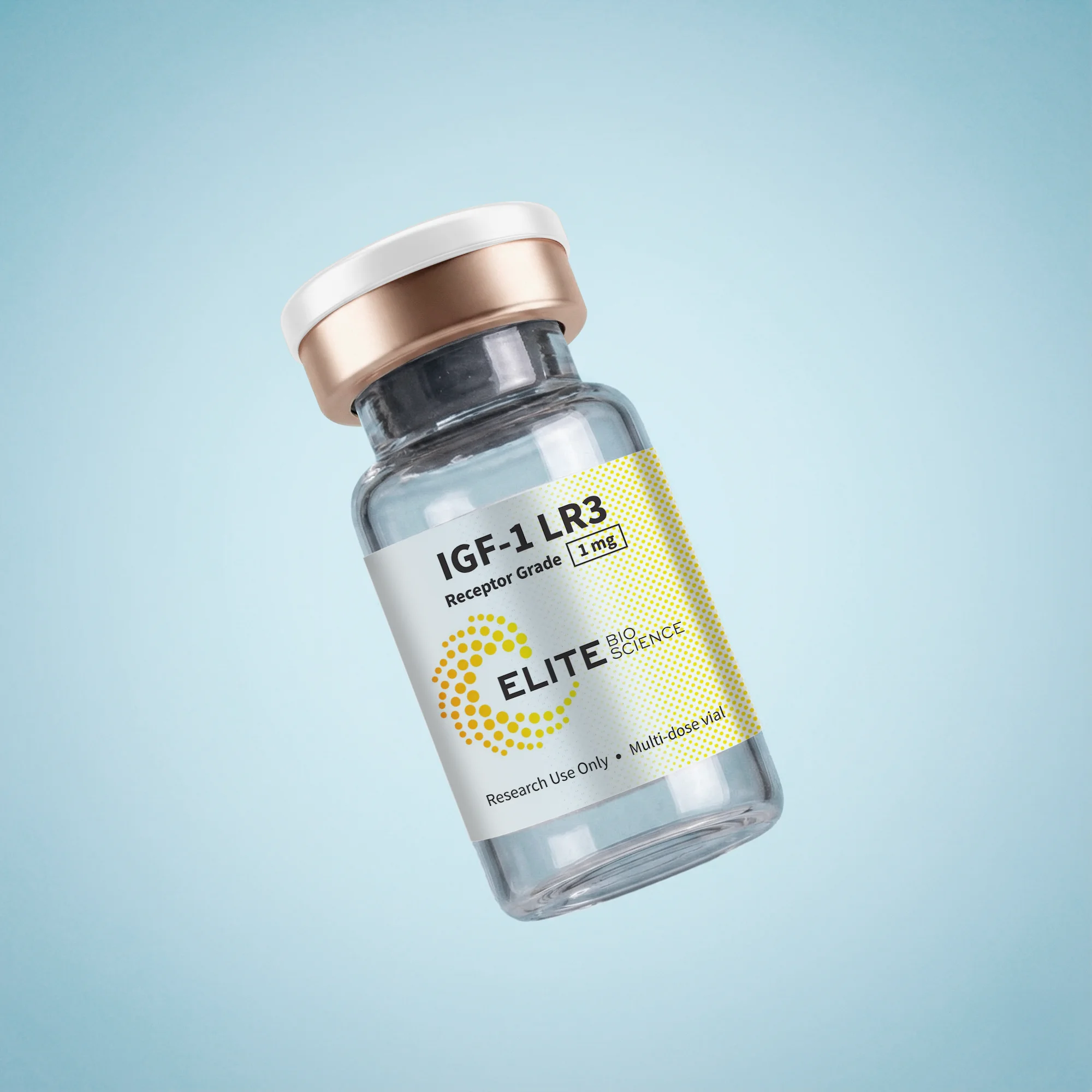
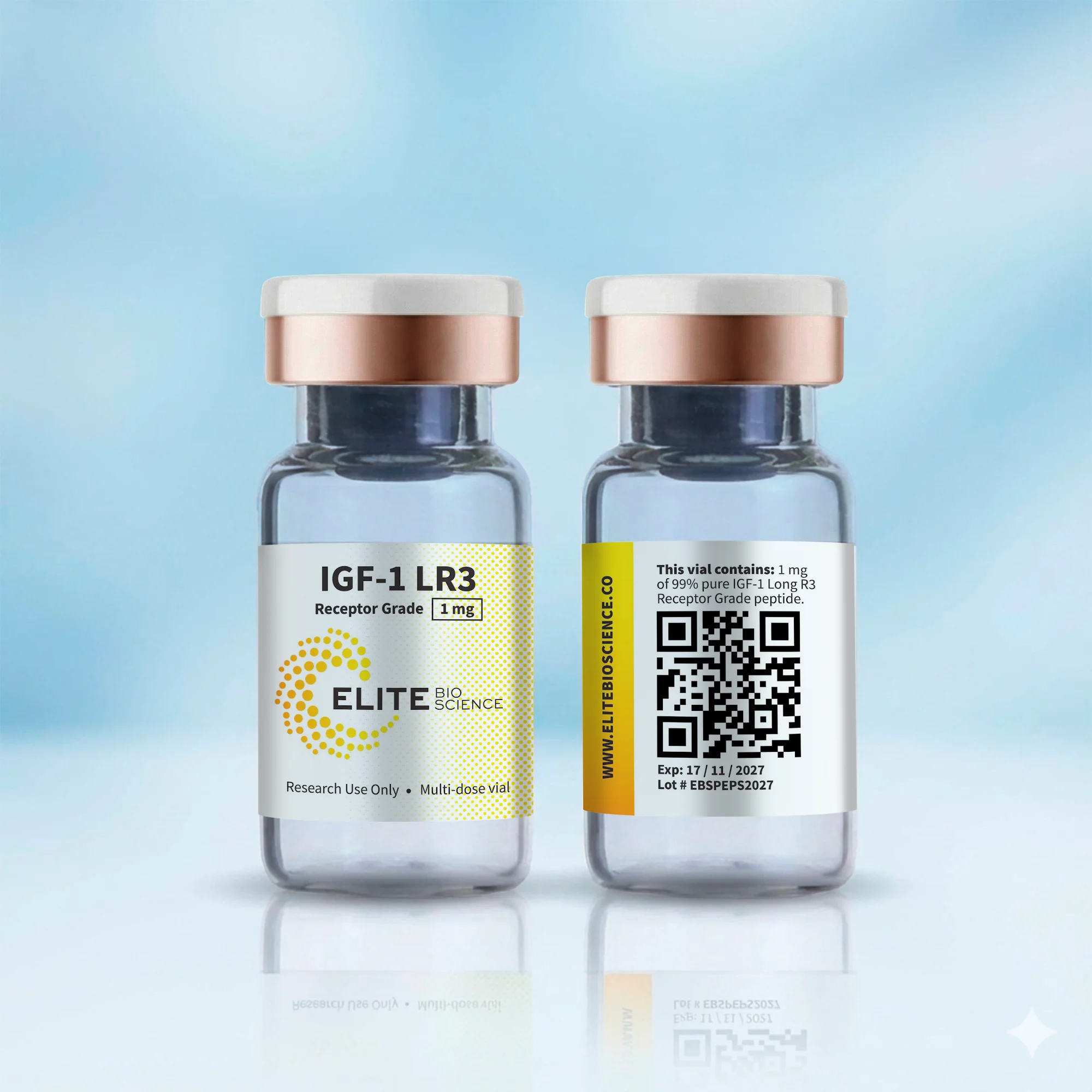
In laboratory and cellular growth-signaling research settings, IGF-1 LR3 has been investigated in relation to:
$ 250.00
Out of stock
Peptides are not ready to use. Must purchase BAC water for reconstitution.
Insulin-like growth factor-1 LR3 (IGF-1 LR3) is a modified analog of endogenous IGF-1 developed to improve molecular stability and reduce interaction with IGF-binding proteins in experimental systems. These modifications allow prolonged availability at the IGF-1 receptor compared to native IGF-1.
IGF-1 LR3 is used in laboratory research examining growth regulation, anabolic signaling pathways, skeletal and connective tissue biology, and metabolic processes downstream of growth hormone activity.
Research suggests IGF-1 LR3 is involved in several key biological processes related to growth and metabolism:
IGF-1 Receptor Activation
IGF-1 LR3 binds to the IGF-1 receptor (IGF-1R), activating intracellular signaling cascades associated with cellular growth, survival, and differentiation.
Anabolic & Growth Signaling
IGF-1 signaling plays a central role in postnatal growth, tissue accretion, and anabolic regulation across multiple organ systems.
Reduced IGF-Binding Protein Interaction
Structural modification limits sequestration by IGF-binding proteins, supporting extended receptor engagement in experimental environments.
Skeletal & Bone Biology
IGF-1 activity is essential for cortical thickness, trabecular bone development, and growth-plate signaling in preclinical models.
Metabolic Regulation
IGF-1 influences glucose uptake, nutrient partitioning, and metabolic efficiency at the cellular level, making it relevant for metabolic research models.
Elite Bioscience supplies IGF-1 LR3 strictly for laboratory, analytical, and in-vitro research.

Mouse models demonstrated that circulating IGF-1 accounts for a significant proportion of postnatal body growth, confirming IGF-1 as a non-redundant anabolic regulator.
Read StudyGlobal IGF-1 knockout studies revealed persistent deficits in bone mass, cortical thickness, and trabecular architecture, highlighting IGF-1’s systemic role in skeletal biology.
Read StudyReviews of Igf1-null models showed marked reductions in body weight, organ development, and fertility, underscoring IGF-1’s central role in growth and development.
Read StudyIntegrative reviews link IGF-1 signaling to metabolic regulation, tissue differentiation, and developmental timing across multiple organ systems.
Read StudySupplier: Elite Bioscience®
Product Form: 1 × 1 mg sterile, lyophilized peptide vial
Active Ingredient: Insulin-Like Growth Factor-1 LR3 (IGF-1 LR3)
Peptide Class: Recombinant IGF-1 analog (long-acting variant)
Molecular Modification: Arg³ substitution with N-terminal extension
Research Use: For laboratory, in-vitro, and analytical research only. Not for human or veterinary use.