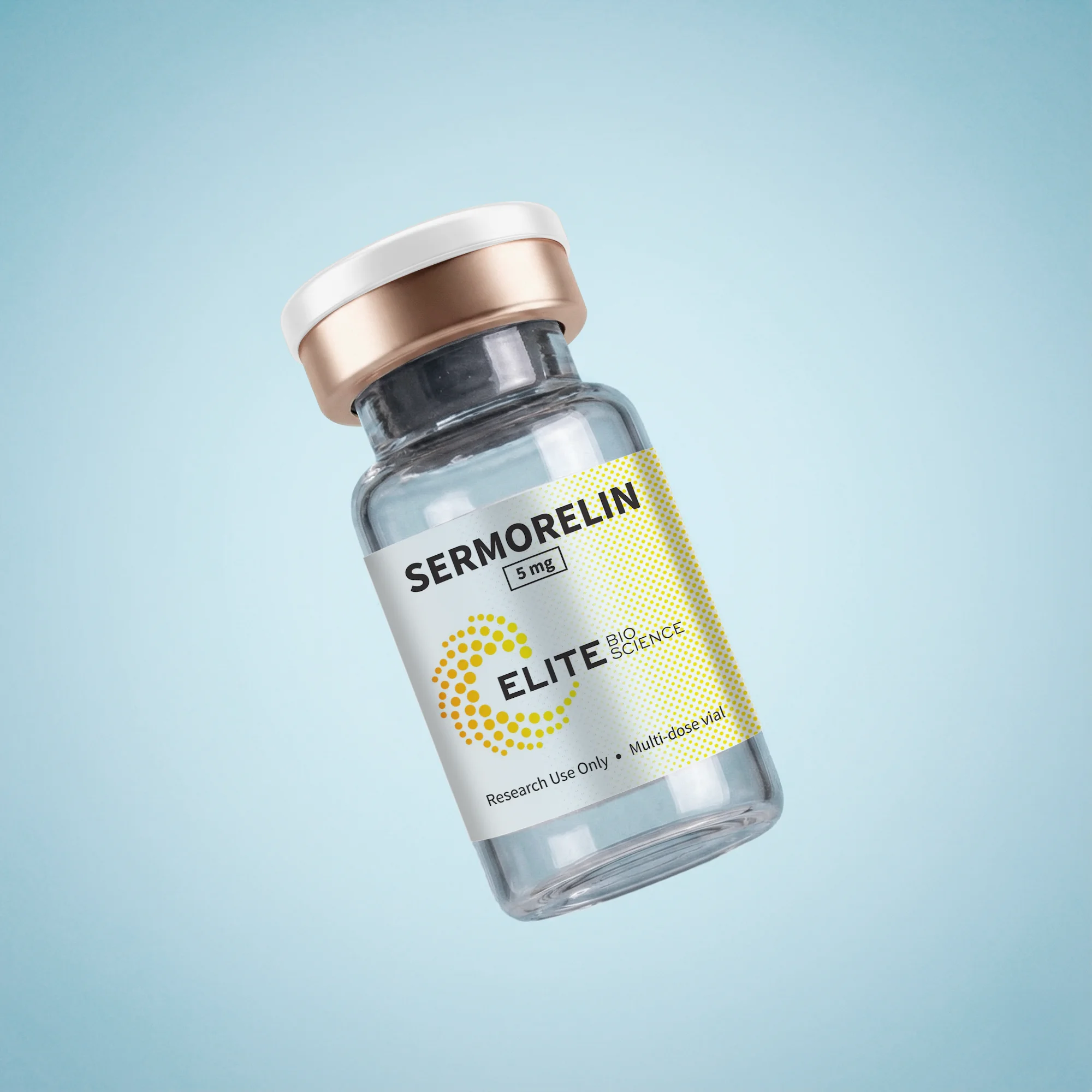
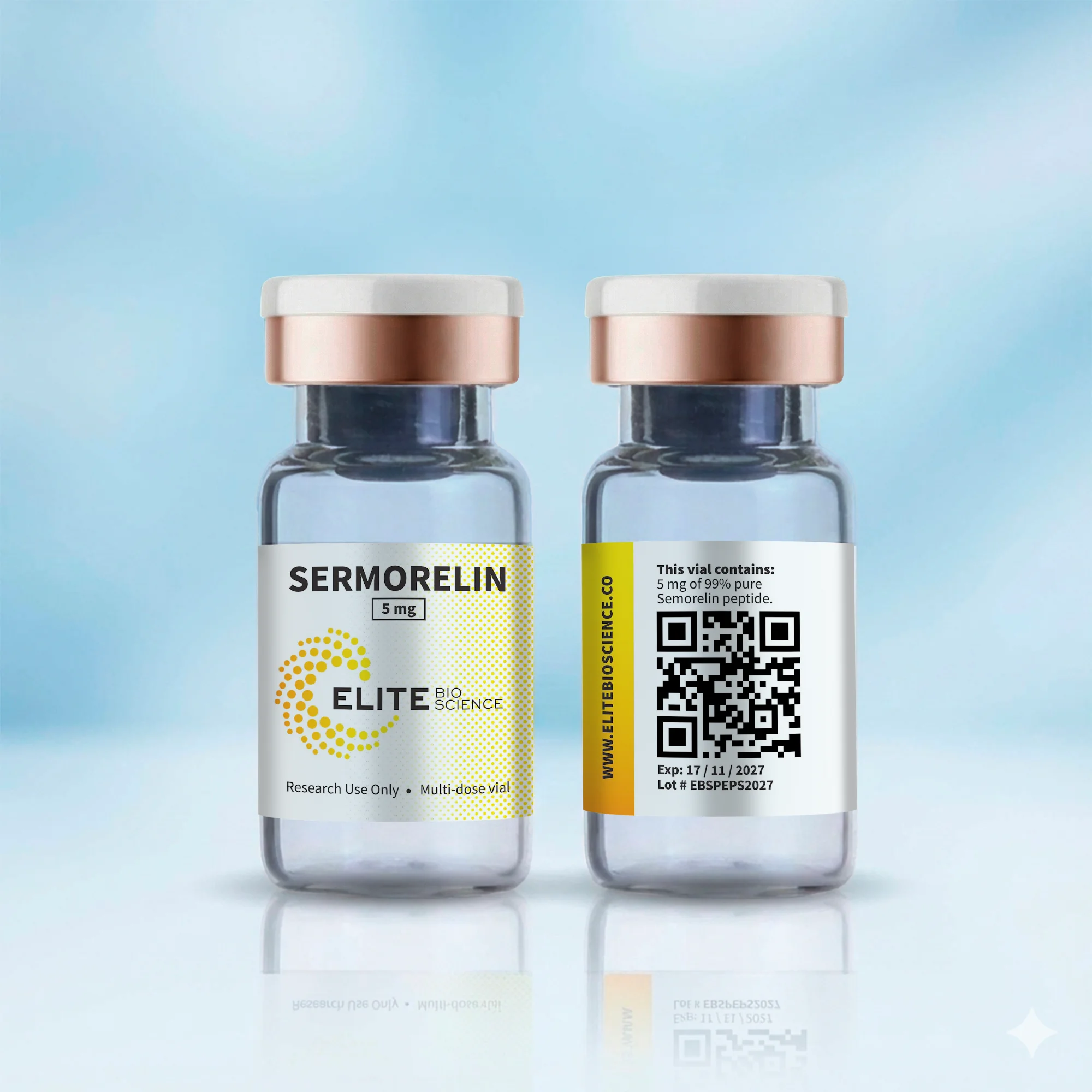
In laboratory and endocrine research settings, Sermorelin has been investigated in relation to:
$ 72.00
Out of stock
Peptides are not ready to use. Must purchase BAC water for reconstitution.
Sermorelin (GRF 1-29) is a synthetic analog of the bioactive fragment of endogenous growth hormone–releasing hormone (GHRH). It is commonly investigated for its role in stimulating physiological growth hormone release through activation of the GHRH receptor on pituitary somatotroph cells. Researchers utilize Sermorelin in laboratory studies examining endocrine rhythmicity, GH pulsatility, IGF-1 axis regulation, and age-related changes in somatotropic signaling while preserving native feedback mechanisms.
Current laboratory research and endocrine investigations suggest Sermorelin may influence several interconnected physiological pathways:
GHRH Receptor Activation
Sermorelin binds to the GHRH receptor on pituitary somatotrophs, activating Gs-protein signaling, increasing intracellular cAMP, and stimulating protein kinase A (PKA)–dependent GH synthesis and release.
Physiological GH Pulsatility
Unlike exogenous GH exposure, Sermorelin stimulates episodic GH secretion aligned with circadian and ultradian rhythms, making it valuable for research into endocrine timing and feedback regulation.
IGF-1 Axis Modulation
Experimental studies demonstrate downstream increases in IGF-1 following pituitary GH release, supporting investigations into GH–IGF-1 signaling relationships and metabolic integration.
Hypothalamic–Pituitary Feedback Regulation
Sermorelin enables examination of somatostatin-mediated negative feedback and GH-driven hypothalamic regulation, preserving intact endocrine control loops.
Sleep-Associated GH Release
Research indicates enhanced slow-wave sleep–linked GH bursts, positioning Sermorelin as a useful compound in neuroendocrine sleep research.
Metabolic & Body-Composition Research
Sermorelin is utilized in studies evaluating GH-mediated effects on substrate oxidation, lipolysis, muscle protein synthesis, and endocrine aging processes.
Elite Bioscience supplies Sermorelin strictly for laboratory, analytical, and in-vitro research.

The study documented sustained nocturnal GH pulses and IGF-1 increases without supraphysiologic GH exposure, supporting GHRH-based modeling of somatotropic aging.
Read StudyLong-term GHRH analog exposure activated the GH–IGF-1 axis while maintaining physiologic feedback, supporting metabolic and anabolic research applications.
Read StudyThis review compared GHRH analogs with exogenous GH, emphasizing preservation of physiologic pulsatility and adaptability in endocrine research contexts.
Read StudySupplier: Elite Bioscience®
Product Form: 1 × 5 mg sterile, lyophilized peptide vial
Active Ingredient: Sermorelin (Growth Hormone Releasing Factor 1-29)
Chemical Formula: C₁₄₉H₂₄₆N₄₄O₄₂S
Peptide Class: GHRH analog (GRF 1-29)
Research Use: For laboratory, in-vitro, and analytical research only. Not for human or veterinary use.