Elite Bioscience

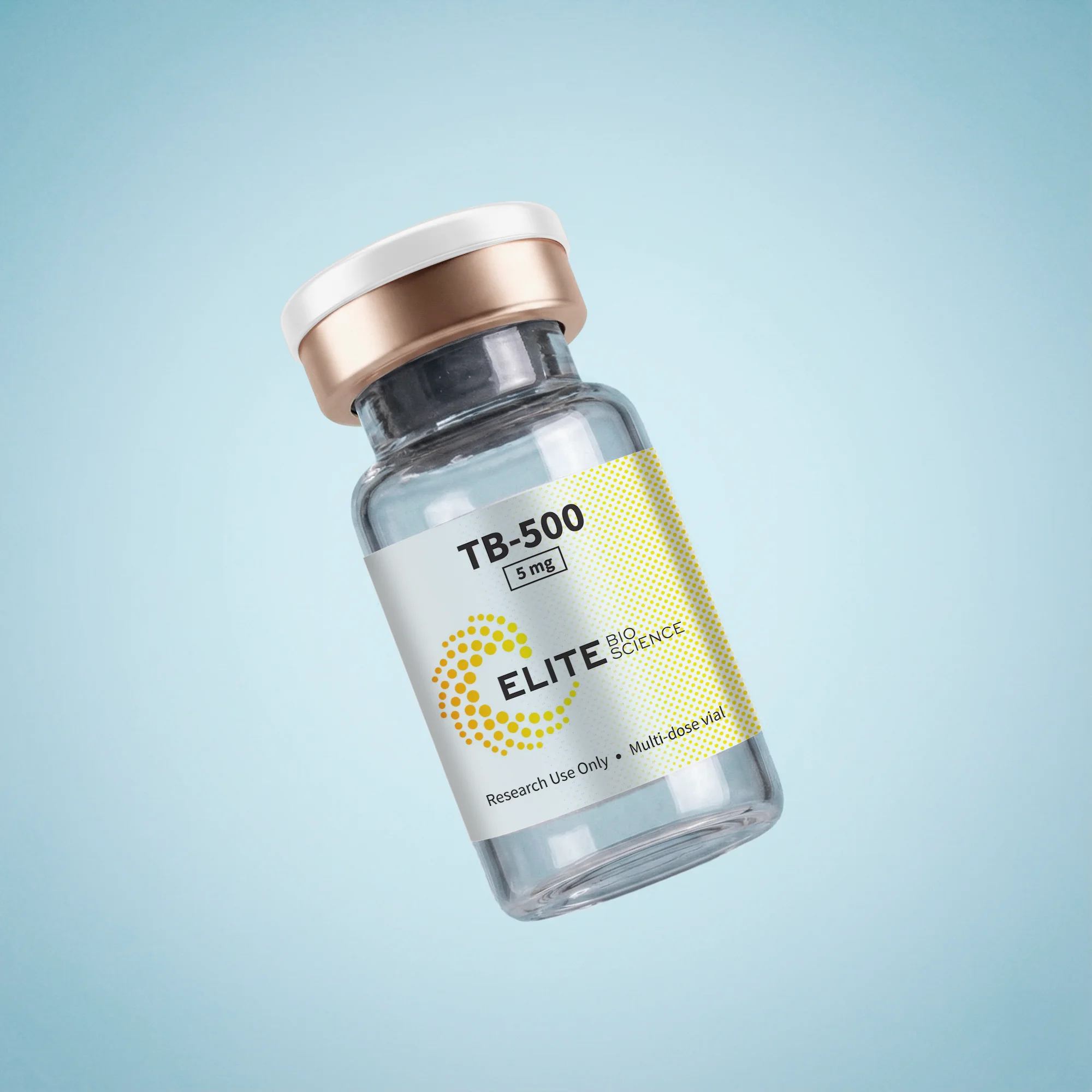
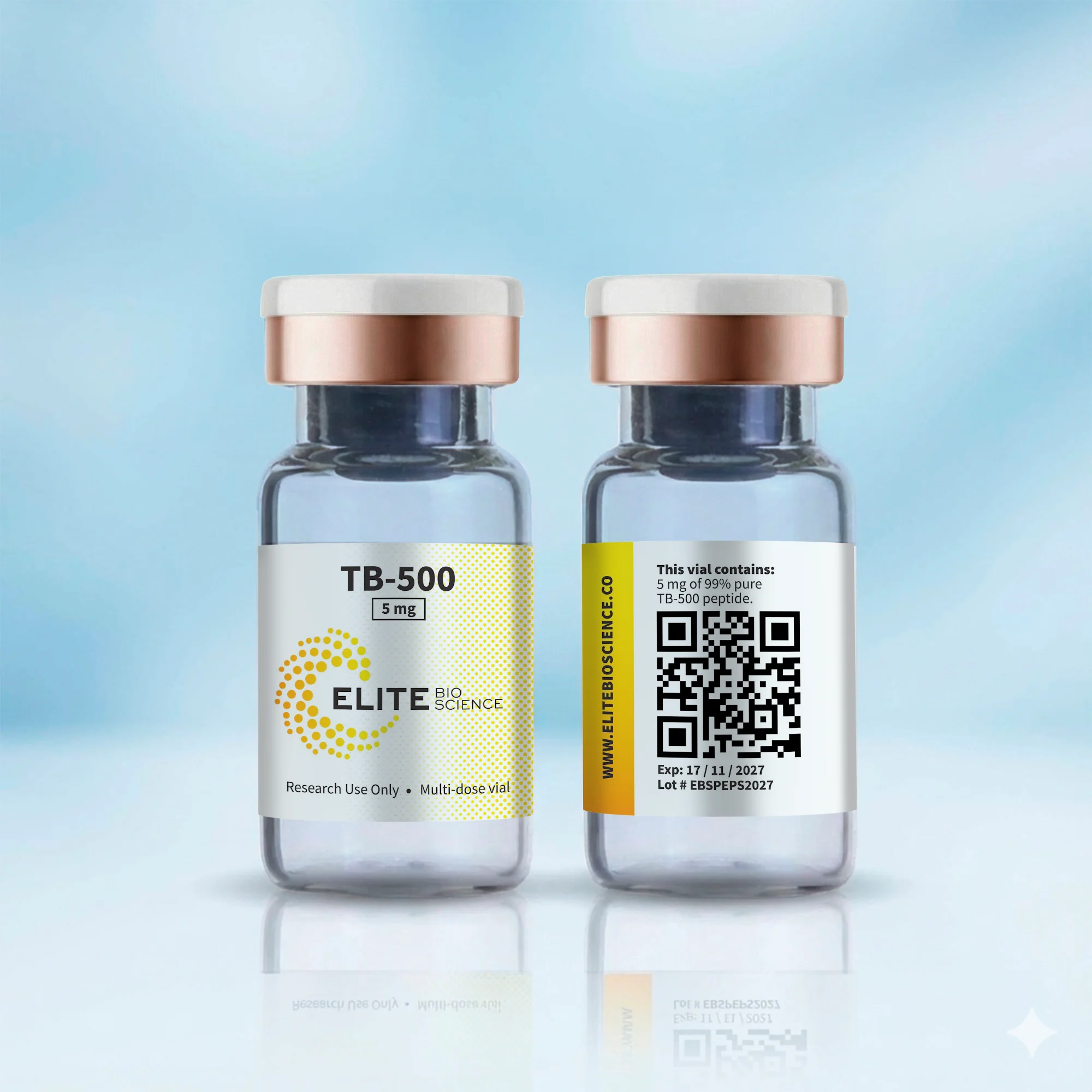
TB-500 5mg

In laboratory and experimental research settings, TB-500 has been investigated in relation to:

  • Cytoskeletal reorganization and cell migration
  • Angiogenesis and microvascular repair
  • Wound healing and tissue reconstruction pathways
  • Inflammatory and cytokine signaling modulation
  • Extracellular matrix (ECM) remodeling and fibrosis research
  • Neuroprotection and central nervous system injury studies

$ 72.00

Out of stock


Pairs well with

Peptides are not ready to use. Must purchase BAC water for reconstitution.

FREE Shipping on orders over $200

TB-500 is the synthetic research-grade form of Thymosin Beta-4, a naturally occurring intracellular peptide expressed in nearly all eukaryotic cells. It is commonly investigated for its role in actin regulation, cell migration, angiogenesis, and tissue remodeling. Researchers utilize TB-500 when exploring recovery-related mechanisms involving connective tissue, skeletal muscle, cardiovascular structures, and the central nervous system due to its interaction with cytoskeletal dynamics, inflammatory signaling, and extracellular matrix regulation.

Current laboratory research and animal studies suggest TB-500 may influence several interconnected biological pathways:

Actin Binding & Cytoskeletal Remodeling

TB-500 binds G-actin monomers, influencing actin polymerization, lamellipodia formation, and cellular motility—key processes in wound closure and fibroblast migration research.

Angiogenesis & Vascular Repair

Experimental studies demonstrate enhanced endothelial cell migration and upregulation of VEGF signaling, supporting investigations into microvascular regeneration and ischemic injury responses.

Inflammatory Signaling Modulation

Observed reductions in pro-inflammatory cytokines (including IL-1β and TNF-α) and modulation of NF-κB activity suggest relevance in inflammation-focused research contexts.

Extracellular Matrix Remodeling

TB-500 has been shown to influence MMP-2 and MMP-9 activity, collagen deposition, and fibroblast differentiation, making it a compound of interest in tendon, ligament, and dermal repair research.

Cardiovascular Research Applications

In ischemic heart research settings, TB-500 has been associated with cardiomyocyte protection, enhanced angiogenesis, and reduced fibrotic remodeling.

Neuroprotective & CNS Research

Scientific investigations report reduced lesion volume, enhanced neural regeneration, and improved functional recovery following spinal cord and traumatic brain injury.

Elite Bioscience supplies TB-500 strictly for laboratory, analytical, and in-vitro research.

“Thymosin beta-4 accelerates wound healing.”

This foundational mouse study demonstrated accelerated dermal wound closure, enhanced keratinocyte migration, and increased angiogenesis, establishing relevance in epithelial repair research.

Read Study
“Muscle injury-induced thymosin beta-4 acts as a chemo-attractant for myoblasts.”


Researchers observed increased TB-4 expression following muscle injury, guiding myoblast migration to damaged tissue through actin-regulated chemotaxis.

Read Study
“Thymosin beta-4 administration enhances fracture healing in mice.”


TB-4–treated models showed greater callus formation, improved mineralization, and increased biomechanical strength, supporting bone regeneration research.

Read Study
“Neuroprotective and neurorestorative effects of thymosin beta-4 following traumatic brain injury.”


Findings included reduced neuronal loss, increased angiogenesis, and improved functional outcomes following traumatic brain injury.

Read Study
“Beneficial effects of thymosin beta-4 on spinal cord injury in the rat.”


This study documented reduced lesion volume and improved motor recovery, supporting investigation into neurovascular and axonal repair pathways.

Read Study

Chemistry

Supplier: Elite Bioscience®
Product Form: 1 × 5 mg sterile, lyophilized peptide vial
Active Ingredient: TB-500 (Synthetic Thymosin Beta-4)
Chemical Formula: C₂₁₂H₃₅₀N₅₆O₇₈S
Peptide Class: Synthetic 43-amino-acid peptide
Research Use: For laboratory, in-vitro, and analytical research only. Not for human or veterinary use.

Have Questions?

Our team is ready to assist you with any inquiries regarding our catalogue of peptides and their applications.

Start Reseaching Now