The link between sleep apnea and testosterone is one of those frustrating health loops that can leave you feeling exhausted and defeated. If you’re dealing with untreated obstructive sleep apnea (OSA), it's almost a guarantee that it's dragging your testosterone levels down with it. The constant interruptions to your sleep and dips in oxygen sabotage your body’s natural hormone production, creating a vicious cycle of fatigue, low libido, and declining health.
The Vicious Cycle of Poor Sleep and Low Hormones
Many men who feel constantly tired, foggy, and uninterested in sex just assume it’s a normal part of getting older. But often, an undiagnosed sleep disorder like OSA is the real culprit, quietly wrecking your hormonal balance behind the scenes. This isn't a coincidence; it's a direct physiological consequence of what happens when your breathing stops overnight.
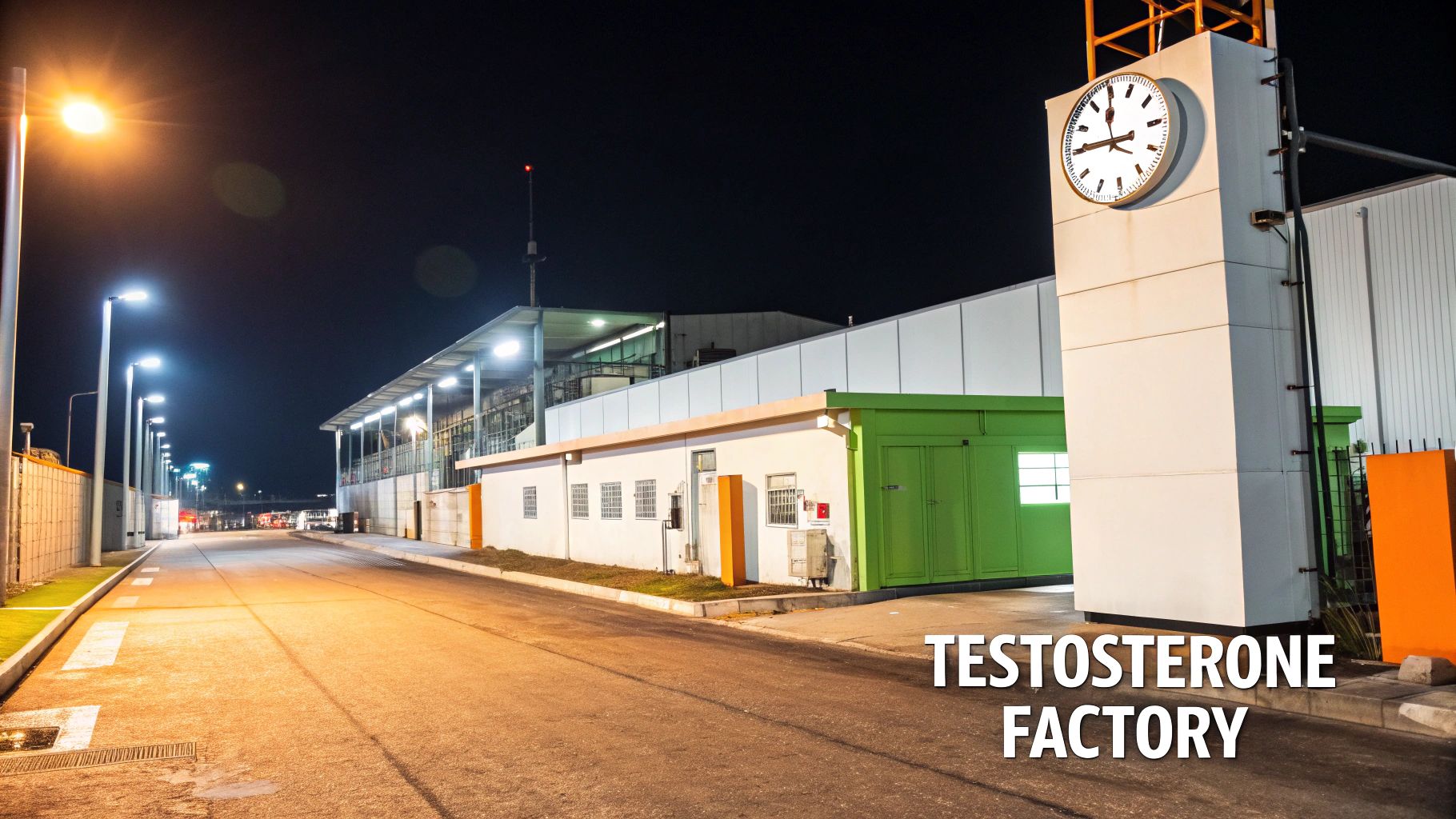
Think of your body as a sophisticated factory that runs its testosterone assembly line during the night shift, specifically during deep, restorative REM sleep. This is when your brain sends the crucial signals to the testes to ramp up production, stocking the shelves for the day ahead.
Obstructive sleep apnea is like a series of power outages hitting that factory. Each time you stop breathing, your body panics and jolts you partially awake, shutting down the assembly line and halting testosterone synthesis long before the final product is ready.
The Science Behind the Connection
This connection isn't just a theory; it's grounded in solid clinical science. The frequent awakenings caused by OSA—even the ones you don’t remember—prevent your brain from sinking into the deep sleep stages required for peak hormone production. This constant sleep fragmentation, combined with repeated drops in blood oxygen (a state called hypoxia), puts your entire body under immense stress.
This physiological stress triggers a flood of cortisol, the "stress hormone," which acts as a direct antagonist to testosterone. So you’re getting hit from two sides: not only is the testosterone factory being constantly interrupted, but a competing process is actively working to suppress it. The evidence is clear: the more severe the sleep apnea, the lower your testosterone is likely to fall.
What the Research Shows
Study after study confirms this inverse relationship. One major review that analyzed 18 separate studies involving over 1,800 men found a significant link between OSA severity and lower testosterone levels. This connection held true even after researchers accounted for other factors like age and body mass index, proving that sleep apnea independently damages hormone levels. You can find out more about the research on sleep apnea's hormonal impact to see the data for yourself.
This creates a self-perpetuating downward spiral:
- Sleep apnea tanks your testosterone.
- Low testosterone can lead to weight gain and reduced muscle tone in the airway, which in turn can make sleep apnea even worse.
Because the symptoms of low testosterone and sleep apnea can look so similar, it's easy to misdiagnose the root cause. Both conditions can leave you feeling drained and unmotivated.
Symptom Overlap Low Testosterone vs Sleep Apnea
This table highlights the overlapping symptoms between Low Testosterone and Obstructive Sleep Apnea to help you identify potential underlying issues.
| Symptom | Common in Low Testosterone | Common in Sleep Apnea | Key Differentiator |
|---|---|---|---|
| Daytime Fatigue | Yes | Yes | Apnea fatigue is often a profound, overwhelming sleepiness, whereas low T fatigue can feel more like persistent exhaustion and low motivation. |
| Low Libido | Yes | Yes | Both conditions significantly impact sex drive, making it a poor standalone indicator. |
| Mood Swings/Irritability | Yes | Yes | Sleep deprivation from apnea can cause intense irritability, while low T often contributes to a more depressive, low-mood state. |
| Morning Headaches | No | Yes | This is a hallmark symptom of sleep apnea, caused by low oxygen and high carbon dioxide levels overnight. |
| Loud Snoring/Gasping | No | Yes | These are the most obvious signs of an airway obstruction and are specific to sleep apnea. |
| Difficulty Concentrating | Yes | Yes | "Brain fog" is common in both due to hormonal imbalance (low T) and sleep fragmentation (apnea). |
As you can see, the crossover is significant. Breaking this cycle is absolutely essential for getting your energy, vitality, and overall health back on track. Recognizing that your daytime struggles might actually be starting with your nighttime breathing is the first, and most critical, step toward a real solution.
How Sleep Apnea Halts Testosterone Production
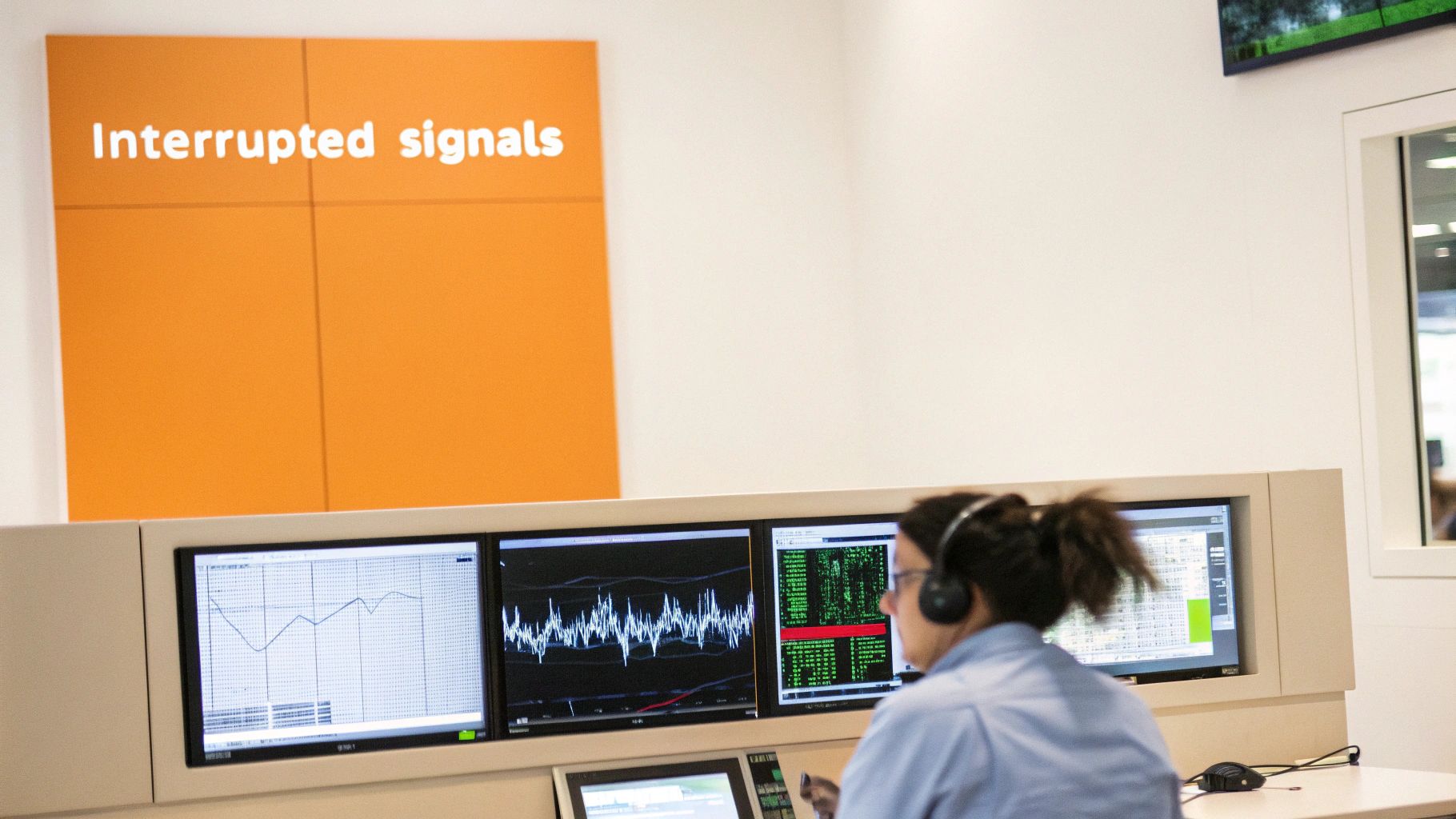
To really get the link between sleep apnea and testosterone, picture your body's hormone system as a highly coordinated factory. The brain is the command center, and the testes are the specialized production line responsible for making testosterone. On a good night, this system runs like clockwork, with clear orders sent and received during the quiet hours of deep sleep.
But testosterone production isn't a constant, 24/7 assembly line. It follows a powerful daily rhythm, surging during the deepest, most restorative stages of sleep—particularly REM sleep. This is the factory's main production shift. Obstructive sleep apnea (OSA) throws a massive wrench in the gears, disrupting this finely tuned process in three distinct ways.
The Problem of Sleep Fragmentation
The most direct way OSA sabotages testosterone is by shattering your sleep architecture into tiny pieces. Every time your airway collapses, your brain senses the oxygen dropping and sends out a panic signal, jolting you partially awake just long enough to gasp for air. These events, known as micro-awakenings, can happen hundreds of times a night without you ever consciously remembering them.
This constant disruption prevents you from ever reaching and staying in the deep REM sleep required for peak hormone synthesis. It’s like the command center (your brain) is trying to shout production orders to the factory floor (your testes), but the communication lines are full of static. The messages never get through clearly, and the factory remains idle.
Testosterone follows a clear circadian rhythm, with its peak secretion tightly linked to the REM phase of sleep. Because OSA sufferers experience less REM sleep, more sleep fragmentation, and lower sleep efficiency, this natural nighttime rise in testosterone gets blunted. You can explore the research on OSA’s neuroendocrine effects to learn more about this mechanism.
The Impact of Intermittent Hypoxia
Beyond just wrecking your sleep quality, OSA also repeatedly starves your body of oxygen. Each pause in breathing causes your blood oxygen levels to drop, a dangerous condition called intermittent hypoxia. This creates a state of severe physiological stress that directly poisons the testosterone-producing machinery.
The Leydig cells in the testes are the specific workers on the factory floor that manufacture testosterone. Repeated oxygen deprivation is toxic to these cells, damaging their function and slashing their output. It’s like trying to run a factory on a faulty power grid that keeps browning out—the equipment sputters, wears down, and simply can't do its job.
The severity of OSA often lines up perfectly with the degree of oxygen desaturation, which has been identified as a strong negative predictor of testosterone levels. The lower your oxygen drops at night, the bigger the hit your hormone production is likely to take.
The Sabotage of Hormonal Disruption
Finally, sleep apnea triggers a hormonal cascade that actively works against testosterone. Your body interprets the nightly cycle of choking and oxygen loss as a recurring life-or-death emergency. In response, it floods your system with cortisol, the primary stress hormone.
Cortisol and testosterone have an antagonistic relationship; when one is high, it tends to suppress the other. Think of cortisol as a crisis manager who storms into the factory and shuts down all non-essential production—including testosterone—to divert all resources to immediate survival. This chronic elevation of cortisol creates a hormonal environment where testosterone simply can't thrive.
This triple-threat attack creates a powerful and destructive cycle:
- Fragmented Sleep: Prevents the brain from sending the "make testosterone" signal.
- Low Oxygen: Directly damages the testosterone-producing cells in the testes.
- High Cortisol: Actively suppresses the entire hormonal system as a stress response.
Together, these mechanisms make it clear that the link between sleep apnea and testosterone isn't just a coincidence—it's a direct cause-and-effect relationship that needs to be addressed at its root.
The TRT Dilemma: Can Therapy Worsen Sleep Apnea?
For men struggling with the symptoms of low testosterone, Testosterone Replacement Therapy (TRT) can feel like the answer they’ve been searching for. But jumping straight to treatment without seeing the whole picture can create a serious dilemma, especially for men with undiagnosed sleep apnea. While TRT is a powerful tool for treating hypogonadism, it comes with a crucial catch: it can sometimes make obstructive sleep apnea (OSA) worse.
This isn’t a guaranteed outcome for everyone, but the risk is real enough that it should change how you think about treatment. The relationship is complicated, but the core issue is that adding external testosterone can subtly shift your body's physiology in ways that disrupt breathing while you sleep.
It forces a critical question: could the very treatment for your low energy and fatigue be pouring fuel on the fire that’s causing it?
How Testosterone Can Impact Your Airway
Researchers are still digging into the exact mechanisms, but a few key theories explain why TRT might make OSA more severe. These changes are often subtle, but they can have a major impact on how stable your airway is during sleep.
Two primary factors seem to be at play:
- Changes in Upper Airway Muscles: Testosterone influences muscle tone all over the body, including the delicate muscles responsible for holding your upper airway open at night. Introducing higher levels of testosterone may alter the stiffness of these tissues, making them more likely to collapse during sleep.
- Fluid Shifts in the Body: Testosterone can also affect how your body manages and retains fluid. Even minor fluid shifts can cause tissues in the neck and throat to swell, narrowing the airway. For someone already on the edge of OSA, this small reduction in space can be enough to trigger more frequent and severe breathing interruptions.
This creates a precarious situation, especially for men who already have risk factors for OSA, like a high BMI or a large neck size. For them, starting TRT without addressing sleep first can make a bad problem much worse.
The Evidence and Clinical Concern
This isn't just a theoretical concern; it’s backed by clinical data and real-world observation. While the risk isn't sky-high for every man on TRT, it's significant enough to warrant a major shift in how doctors approach low testosterone treatment.
A study of 6,405 men with low testosterone on TRT found that about 14% were diagnosed with OSA after starting therapy. Researchers noted that since OSA is driven by airway collapsibility—which is influenced by fat distribution and muscle tone—exogenous testosterone could directly alter respiratory control and airway anatomy. These findings, published by the American Urological Association, strongly encourage screening for OSA before and during TRT.
This evidence shows exactly why a "testosterone-first" approach can backfire. A clinician might prescribe TRT to fix symptoms like fatigue and brain fog, without realizing they’re worsening the very sleep disorder that’s causing those symptoms in the first place.
Prioritizing Safety Before Starting TRT
The takeaway here is simple but non-negotiable: you absolutely must be screened for sleep apnea before even considering TRT. This isn't just a best practice; it's a critical safety measure to ensure your treatment helps, not harms. Understanding the full picture of TRT benefits and risks is essential for making a truly informed decision about your health.
A responsible clinical approach always looks for the root cause first. If OSA is diagnosed, treating it with something like Continuous Positive Airway Pressure (CPAP) becomes the top priority. In many cases, successfully treating sleep apnea is enough to allow the body's natural testosterone production to recover on its own, sometimes eliminating the need for TRT entirely.
If you still need TRT after your sleep apnea is under control, it can be started much more safely. From that point on, ongoing monitoring is key to make sure the therapy isn't negatively impacting your breathing patterns. This careful, balanced approach respects the powerful effects of TRT while putting your safety above all else.
The Right Approach to Diagnosis and Treatment
Navigating the tangled symptoms of obstructive sleep apnea (OSA) and low testosterone demands a clear, methodical game plan. It’s not about guessing or just treating whatever feels worst; it's about digging down to the root cause. This means working with your doctor to follow a logical path that prioritizes your safety and delivers real, lasting results.
Your first step is having a productive conversation with your provider. Don't just say, "I'm tired." Get specific. Talk about the loud snoring, the morning headaches, the nonexistent libido, the brain fog, and that bone-deep exhaustion you feel during the day. This paints the full picture, letting your doctor connect the dots between your sleep quality and your hormonal health.
Getting the Right Diagnosis
To get a definitive answer, your doctor will likely order two completely different tests, each designed to investigate one side of the sleep apnea and testosterone puzzle.
- For Low Testosterone: The standard approach is a simple morning blood test. Your testosterone levels naturally hit their peak around 8 a.m., so getting your blood drawn early gives the most accurate snapshot. A single low reading might lead to a second test just to be sure.
- For Sleep Apnea: The gold standard is a sleep study, known as polysomnography. This can be done overnight in a specialized lab or, in many cases, with a convenient kit you use at home. It tracks your breathing, oxygen levels, heart rate, and brain activity to see just how often you're stopping breathing while you sleep.
These tests aren't an either/or situation. They work together to reveal what's really driving your symptoms and guide the next steps. You can even get a head start by gathering some initial data with a home testosterone test before your appointment.
Treat the Root Cause First
When a man is diagnosed with both low testosterone and sleep apnea, the medical consensus is crystal clear: treat the sleep apnea first. This "root cause" approach is essential because OSA is often the primary domino that knocks over your hormonal health.
Starting Testosterone Replacement Therapy (TRT) without fixing the underlying sleep disorder is like slapping a new coat of paint on a wall with a cracked foundation. It might look better for a little while, but you haven't solved the real problem.
This visual decision tree outlines the recommended clinical pathway, making sure any treatment is both safe and effective.
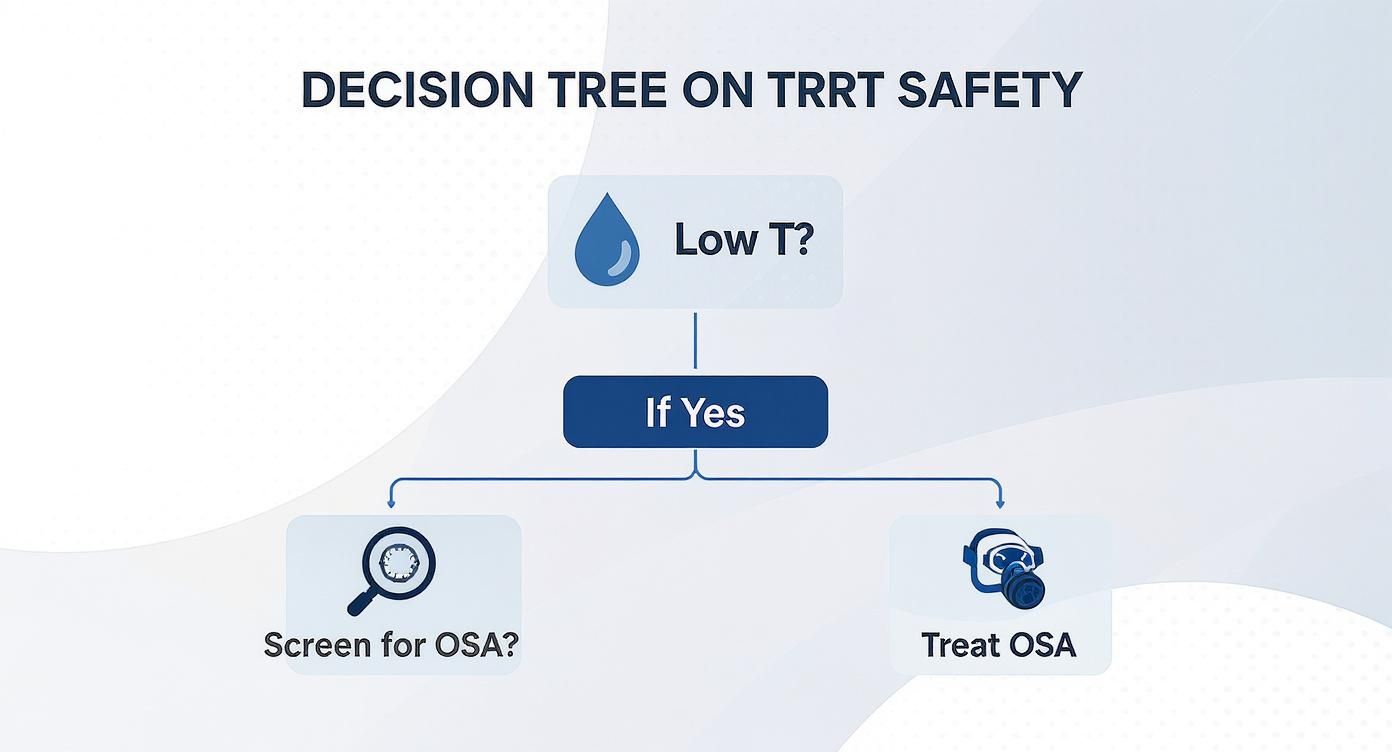
The key takeaway here is that screening for and treating OSA isn't optional—it's a mandatory safety check before even considering TRT.
For many guys, this is the only step they'll need. By correcting the constant sleep interruptions and oxygen drops with a therapy like Continuous Positive Airway Pressure (CPAP), you give your body a chance to reset. A CPAP machine provides a gentle, steady stream of air through a mask, acting like a splint to keep your airway open all night long.
This simple mechanical fix can have a profound biological impact. By restoring deep, uninterrupted sleep, CPAP allows your body's natural hormone production factory to get back to work.
Your Clinical Pathway for OSA and Low T
To make this process perfectly clear, we've outlined the step-by-step clinical pathway. This table breaks down what to expect from your initial symptoms all the way through to an integrated management plan, ensuring you're making informed decisions at every stage.
| Step | Action | Rationale | Patient Takeaway |
|---|---|---|---|
| 1. Symptom Reporting | Clearly articulate all symptoms to your doctor (fatigue, snoring, low libido, brain fog). | Overlapping symptoms require a comprehensive picture for accurate initial assessment. | Don't downplay your symptoms. Be specific and honest to help your doctor connect the dots. |
| 2. Initial Screening | Your doctor uses screening tools like the STOP-BANG questionnaire and orders initial bloodwork. | To quickly assess your risk for OSA and get a baseline for your testosterone levels. | This is a crucial first step. These simple tools help guide the diagnostic process efficiently. |
| 3. Definitive Testing | Undergo a formal sleep study (polysomnography) and a confirmatory morning testosterone test. | To get a conclusive diagnosis for both OSA and hypogonadism. Assumptions aren't enough. | These tests provide the objective data needed to move forward. The sleep study is the only way to confirm OSA. |
| 4. Prioritize Treatment | If diagnosed with both, start OSA treatment first (usually CPAP therapy). | OSA is often the root cause of low T. Treating it may resolve the hormonal issue naturally. | Fix the foundation first. Starting TRT without addressing OSA can be ineffective and potentially dangerous. |
| 5. Re-evaluation | After 3-6 months of consistent CPAP use, get your testosterone levels re-tested. | To determine if resolving the sleep apnea has allowed your natural testosterone production to recover. | Be patient and consistent with your CPAP. Your body needs time to heal and re-regulate hormone levels. |
| 6. Integrated Management | If testosterone remains low despite effective OSA treatment, discuss starting TRT with your doctor. | With the primary issue resolved, TRT can now be safely and effectively layered in to address the remaining hormonal deficiency. | If you still need TRT, you can now start it with confidence, knowing you've addressed the underlying risks. |
This structured approach ensures that you are treating the true cause of your health issues, not just masking the symptoms. It's the safest and most effective way to restore your vitality.
The Dual Benefits of CPAP Therapy
Consistent CPAP use is a game-changer because it tackles two problems at once. First and foremost, it stops the dangerous breathing interruptions of sleep apnea, which dramatically lowers your risk for serious cardiovascular events like a heart attack or stroke.
Secondly, it directly supports your hormonal health. Studies have shown that a significant number of men see their testosterone levels bounce back to normal after just a few months of effective CPAP therapy. Their bodies, no longer under constant stress, can finally resume the normal daily rhythm of hormone production.
For many, this means the symptoms of low T—the fatigue, low sex drive, and mood swings—fade away without ever having to start TRT. This step-by-step approach ensures you’re not just chasing symptoms. You're fixing the fundamental problem, leading to a much more sustainable and complete improvement in your energy, vitality, and overall quality of life.
Lifestyle Changes for Better Sleep and Hormones
While medical treatments like CPAP are powerful, think of them as just one part of the equation. To truly get ahead, you need to pair them with smart lifestyle adjustments. These habits act as amplifiers, boosting your body’s own ability to sleep deeply and produce the hormones it needs.
This isn’t about restriction. It’s about taking back control. The link between extra weight, sleep apnea, and testosterone is a vicious cycle: weight gain can worsen apnea, which tanks testosterone, and low T makes it easier to gain more weight. Breaking that cycle is your most powerful first move.
The Power of Weight Management
You don’t need to aim for a dramatic transformation to see a massive difference. Losing even a small amount of body weight can have an incredible impact on both your sleep and your hormones.
One study revealed that a 10% increase in weight was tied to a six-fold spike in the risk of developing OSA. On the flip side, even a modest weight reduction can dramatically reduce how severely your airway collapses at night.
Weight loss attacks the problem from two angles:
- It relieves pressure on your airway. Excess fat around the neck and throat physically squeezes your airway, making it prone to collapse. Losing that weight literally takes the pressure off, helping it stay open.
- It protects your testosterone. Fat tissue produces an enzyme called aromatase, which steals your testosterone and converts it into estrogen. By trimming down excess body fat, you slow this conversion process, helping you hold onto more of the testosterone you have.
A sustainable approach is far more effective than a crash diet. Losing just 5-10% of your body weight is often enough to produce a measurable improvement in both sleep apnea symptoms and hormonal balance, making it one of the most impactful changes you can make.
Strategic Exercise for Hormones and Sleep
When it comes to hormonal health, not all exercise is created equal. For a one-two punch that tackles both sleep and testosterone, your best bet is to combine resistance training with smart cardio.
Lifting weights or doing bodyweight exercises directly signals your body to produce more testosterone. It creates a demand for muscle repair and growth, a process that depends on anabolic hormones like testosterone.
Meanwhile, cardiovascular exercise—like a brisk walk, jog, or bike ride—is fantastic for improving sleep quality and heart health. It helps sync up your body’s internal clock (circadian rhythm), melts away stress, and supports your weight management goals.
Fuel Your Body with a Hormone-Supportive Diet
The food you eat provides the essential building blocks your body needs to manufacture hormones. Focusing on a few key nutrients can create an environment where testosterone can thrive.
- Zinc: This mineral is non-negotiable for testosterone synthesis. You can find it in red meat, shellfish (especially oysters), seeds, and nuts.
- Vitamin D: Often called the "sunshine vitamin," this nutrient acts more like a hormone in the body and is critical for reproductive health. Get it from sunlight, fatty fish, and fortified foods.
- Healthy Fats: Cholesterol is the raw material for all steroid hormones, including testosterone. Don't be afraid of healthy sources like avocados, olive oil, and nuts.
For a deeper dive, our guide on https://elitebioscience.co/how-to-increase-testosterone-naturally/ offers a complete roadmap of foods and supplements that can support your hormonal health.
By weaving these lifestyle changes into your daily routine alongside any medical treatments, you create a powerful synergy. You’re not just masking symptoms; you're fixing the underlying issues driving both sleep apnea and low testosterone. The result is a lasting improvement in your energy, vitality, and overall well-being.
Your Guide to Partnering with Your Doctor
Understanding the deep connection between sleep apnea and testosterone is a huge step, but the next one—talking to your doctor—is where real change begins. Let's be honest, navigating the healthcare system can feel intimidating, especially when you're dealing with complex, overlapping symptoms. The key is to walk into your appointment not just as a patient, but as an informed partner in your own health journey.
This means you’re coming in prepared for a real conversation. Instead of just saying you’re tired, you can now explain why you suspect a link between your sleep quality and your hormonal health. This proactive approach helps your doctor see the whole picture and gets you on the fast track to an accurate diagnosis and a treatment that actually works.
Questions to Ask Your Healthcare Provider
To advocate for yourself effectively, you have to ask the right questions. Getting specific helps guide the conversation and makes sure your concerns about both sleep apnea and testosterone are actually addressed. Don't be afraid to bring a list with you to your appointment; it shows you’re serious about getting to the root cause of your symptoms.
Here are a few essential questions to get the conversation started:
- Given my symptoms of fatigue and low libido, should I be screened for both low testosterone and sleep apnea?
- Should we investigate for sleep apnea before we even consider Testosterone Replacement Therapy (TRT)?
- If I'm diagnosed with sleep apnea, how will we monitor my hormone levels after I start CPAP therapy?
- What are the risks of starting TRT if my potential sleep apnea is left untreated?
- If my testosterone levels recover with CPAP, what's the long-term plan for monitoring both conditions?
These questions immediately position you as a knowledgeable participant in your own care, which helps foster a more collaborative relationship with your provider.
Your goal is a proactive partnership. By understanding this crucial link, you are taking the first and most important step toward a personalized treatment plan that can dramatically improve your quality of life.
Navigating Your Path to Comprehensive Care
Successfully managing these interconnected issues demands a coordinated approach. You'll likely start with your primary care physician, who can order the initial bloodwork and refer you to specialists. This could mean seeing a sleep medicine doctor for a formal sleep study or an endocrinologist for hormone-specific issues.
The most important piece of the puzzle is making sure communication flows between these providers. Your sleep doctor needs to know about your testosterone levels, and your endocrinologist has to be aware of your sleep apnea diagnosis. This kind of integrated care prevents one treatment from accidentally making another one worse.
Ultimately, taking charge of this process is empowering. By asking the right questions and making sure your healthcare team is on the same page, you are paving the way for a treatment strategy that addresses the true cause of your symptoms—leading to restored energy, better health, and a renewed sense of well-being.
Common Questions, Answered
When you're dealing with the crossover between sleep apnea and low testosterone, a lot of specific questions come up. Let's tackle some of the most common ones men ask.
Can CPAP Therapy Really Increase My Testosterone?
Yes, for many men, it absolutely can—and the results can be significant. By fixing the oxygen drops and fragmented sleep that define OSA, consistent CPAP use lets your body get back to its normal, healthy rhythm of producing hormones overnight.
The amount of improvement will vary from one person to the next, of course. But treating the underlying sleep disorder is always the right first step. It addresses the root cause of the problem instead of just papering over the symptoms with hormone therapy.
Should I Get Tested for Sleep Apnea if I Have Low T but No Obvious Symptoms?
It's highly recommended. A surprising number of people with sleep apnea have no idea they have it. You don't always get the classic, movie-style symptoms like loud snoring or waking up gasping for air, especially if you sleep alone.
Today, unexplained low testosterone is considered a major red flag that should automatically trigger a conversation about sleep apnea screening. A sleep study is a simple, non-invasive test that can either pinpoint a correctable cause of your low T or rule it out, potentially saving you from a lifetime of hormone therapy you might not even need.
Is TRT Safe if I Already Have a Sleep Apnea Diagnosis?
Testosterone Replacement Therapy (TRT) can be safe, but only if two critical conditions are met: your sleep apnea must be properly and effectively treated (usually with CPAP), and you must be under close medical supervision.
Because TRT can make untreated or poorly managed sleep apnea worse, the standard of care is to get your breathing stable first. Once you start TRT, your doctor has to keep a close eye on you to make sure the therapy isn't causing any new breathing problems during sleep. Regular follow-ups aren't just a suggestion—they're essential for your safety.
At Elite Bioscience, we take a foundational approach to men's health. That means we prioritize finding and treating the root causes behind your symptoms. If you're ready to take control of your hormonal health with expert guidance, explore our safe and effective therapy options today.