Testosterone replacement therapy (TRT) can bring back your energy and help you build muscle, but it’s not without its risks. Things like heart health and hormonal shifts need to be watched closely by a doctor. Deciding to start TRT means looking carefully at the potential benefits versus these serious health factors.
Weighing the Scales of TRT
Jumping into Testosterone Replacement Therapy is a significant medical decision, not just a quick fix for feeling off. It's a clinical treatment meant to correct a real hormonal shortfall, bringing your body’s testosterone back to a healthy, normal range.
Think of it less like popping a daily vitamin and more like fine-tuning a complex engine—your body's hormonal system. When that engine is low on a key fluid, you feel it everywhere, from your physical strength to your mental sharpness.
The reason TRT is such a hot topic is that many men are dealing with the real-world effects of low testosterone, a condition called hypogonadism. The symptoms can slowly chip away at your quality of life and often include:
- Feeling tired all the time, no matter how much you rest
- A major drop in sex drive and performance
- Struggling to build or even hold onto muscle
- Gaining body fat, especially around your stomach
- Brain fog, irritability, or even symptoms of depression
TRT tackles these problems head-on by supplementing the hormone your body isn't making enough of. The whole point is to get your levels back into an optimal range, which can help clear up these symptoms and bring back a sense of well-being. But it's not a magic bullet. It’s a careful balancing act that requires expert medical guidance and a solid understanding of what you’re signing up for—both the good and the bad.
A Balanced Look at the Pros and Cons
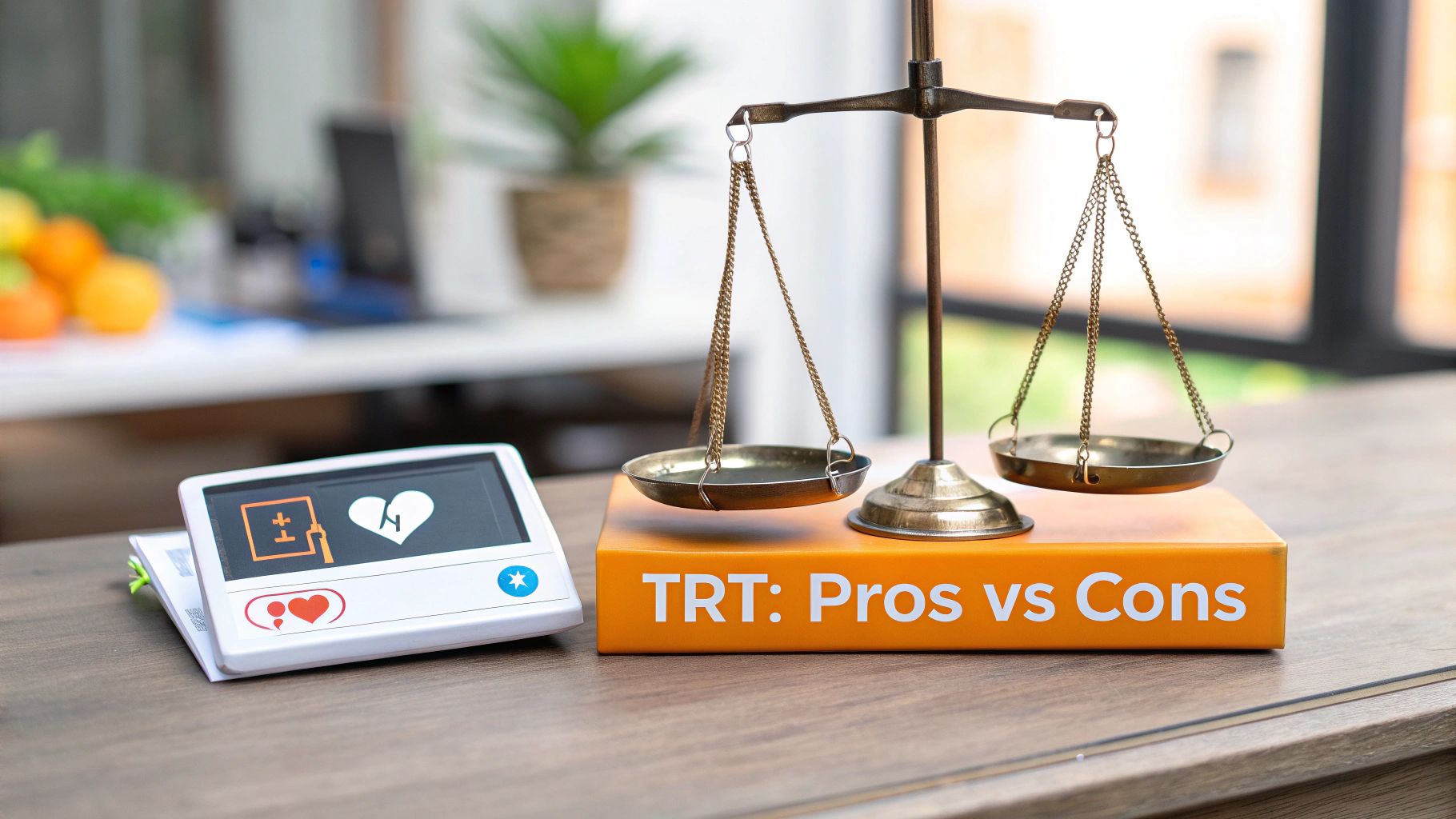
At the end of the day, the conversation about testosterone replacement therapy pros and cons comes down to a simple trade-off: better quality of life versus potential health risks.
On one side, the benefits can be life-changing. Many men feel like they've turned back the clock, reporting they feel mentally sharper, physically stronger, and more motivated than they have in years. On the flip side, adding external hormones to your system is a big deal for your body, and it has to be managed correctly to sidestep potential problems.
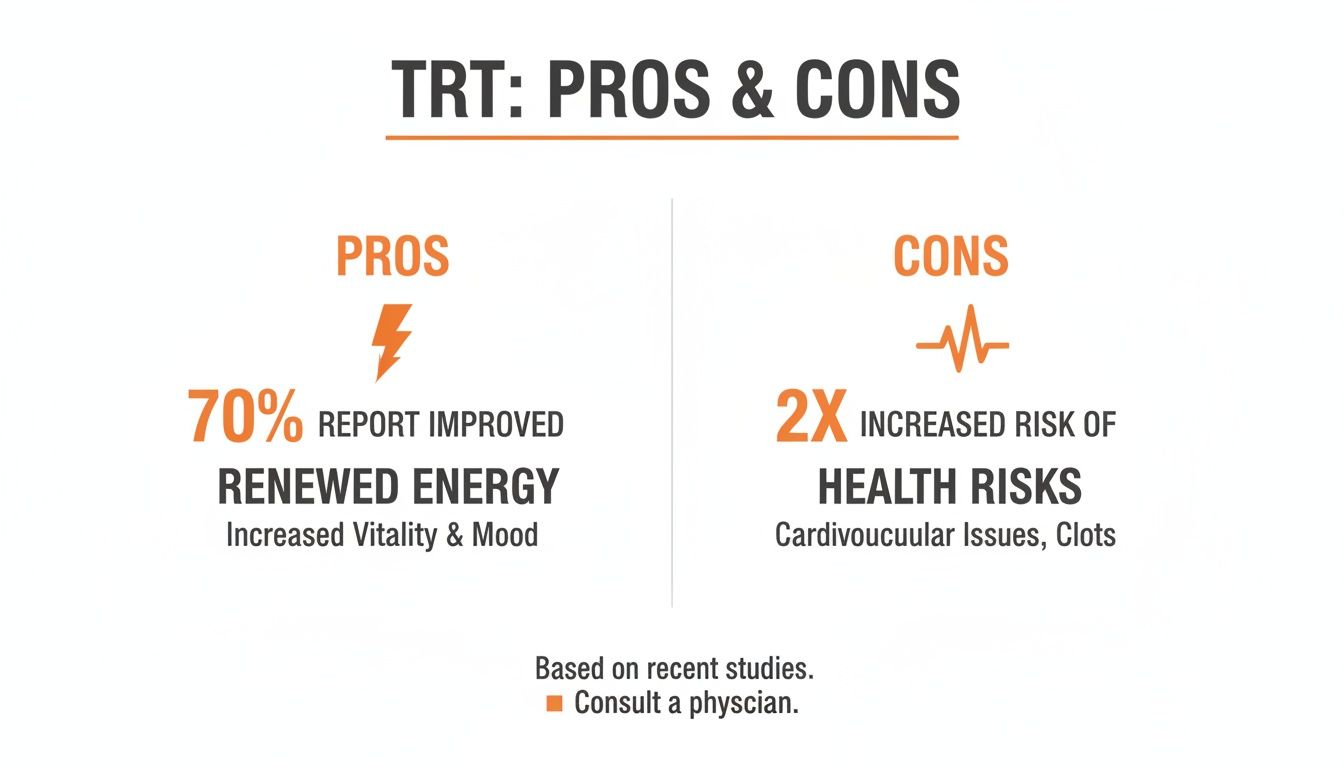
This quick visual gets right to the heart of the matter. The promise of feeling revitalized is a huge draw, but it has to be paired with a serious commitment to ongoing health monitoring.
To give you a clearer picture, here’s a simple breakdown of the two sides of the TRT coin.
TRT at a Glance A Quick Comparison
| Potential Benefit (Pro) | Potential Risk (Con) |
|---|---|
| Increased energy and reduced fatigue | May elevate red blood cell count, increasing clotting risk |
| Improved libido and sexual function | Can contribute to acne or oily skin |
| Enhanced mood and cognitive function | Potential for fluid retention |
| Greater muscle mass and strength | May accelerate male pattern baldness if predisposed |
| Decreased body fat | Can lower natural testosterone production |
| Increased bone density | Potential for mood swings if not properly dosed |
This table shows that for every exciting potential upside, there's a corresponding risk that needs to be managed with your doctor's help.
Hearing from people who have already walked this path can also be incredibly helpful. You can find a lot of different perspectives by reading through various testosterone replacement therapy reviews.
Our goal here is to give you a clear-eyed view of both sides, so you're fully equipped to have an informed conversation with your healthcare provider.
The Upside: How TRT Can Revitalize Your Life
Starting Testosterone Replacement Therapy (TRT) is often described as flipping a switch—like seeing life in color again after years of gray. For men with clinically diagnosed low testosterone, the benefits aren't just about fixing one symptom. They create a powerful ripple effect that can rebuild your physical health, sharpen your mind, and genuinely improve your quality of life.
Think of testosterone as the master blueprint for male physiology. When your levels are low, the entire structure starts to feel shaky. Bringing those levels back into an optimal range is like reinforcing the foundation, making everything built on it—your muscle, energy, and mood—stronger and more resilient.
Rebuilding Your Physical Foundation
One of the first things men notice is the dramatic impact on their body. If you've been struggling with low T, you know how frustrating it is to hit the gym and watch the scale barely budge. It can feel like you're fighting an uphill battle to build muscle or lose fat.
Restoring testosterone essentially rewrites your body's metabolic code, making it far more responsive to diet and exercise. This isn't just a feeling; the clinical data is compelling. A major pro of TRT is its proven ability to boost muscle mass and strength. We see men gain 2-5 kg in lean body mass within the first 6-12 months, along with a 10-20% jump in strength.
But it doesn't stop there. Energy levels can increase by 25-40%, libido often returns with a vengeance (restoring erectile function in 60-70% of cases), and mood stabilizes—with some meta-analyses showing depression symptoms reduced by up to 50%.
The physical benefits go much deeper than what you see in the mirror.
- Increased Bone Density: Testosterone is vital for bone health. TRT helps fortify your bones, cutting down the risk of osteoporosis and fractures as you age.
- Improved Body Composition: The therapy helps your body shed visceral fat—that stubborn, unhealthy fat wrapped around your organs—while promoting the growth of lean muscle.
This one-two punch of fat loss and muscle gain is why so many men feel stronger and more capable after starting a medically guided program. Learning how to maintain muscle mass and stay strong can also help you maximize these incredible results.
Restoring Mental Clarity and Drive
The mental shift is often just as profound as the physical one. Low testosterone is notorious for causing brain fog, a short temper, and a complete lack of motivation. It's that nagging feeling of being disconnected and running on empty.
Bringing your hormones back into balance helps clear that fog. Men consistently report:
- Sharper Focus: The ability to lock in on tasks at work or at home comes back, making you feel more present and effective.
- Elevated Mood: That cloud of apathy or low-grade depression often lifts, replaced by a more positive and even-keeled emotional state.
- Renewed Motivation: The drive to chase goals, take on challenges, and enjoy your hobbies comes roaring back.
This mental clarity is key. It’s not just about feeling stronger in the gym; it’s about reclaiming the mental edge and passion that make you you.
A Note on Vitality: The energy boost is one of the most celebrated benefits. This isn’t a jittery, caffeine-fueled high. It’s a deep, sustained energy that gets you through the entire day without that dreaded afternoon crash.
Reigniting Sexual Health and Libido
It’s not always easy to talk about, but a decline in sexual health is what brings many men to investigate their testosterone levels in the first place. A disappearing libido, trouble with erections, and a lack of interest in sex can put a real strain on your confidence and your relationships.
TRT gets right to the hormonal source of these problems. By bringing testosterone back to a healthy range, it can have a transformative effect on sexual function.
The key benefits usually include:
- Increased Libido: This is often one of the first and most welcome changes. Many men feel their sex drive return within just a few weeks of starting therapy.
- Improved Erectile Function: While ED has many potential causes, low T is a significant one. For many, TRT noticeably improves the quality and reliability of their erections.
- Enhanced Overall Satisfaction: When you combine renewed desire with better performance, the result is a much more confident and fulfilling sex life.
Ultimately, the pros of TRT paint a picture of total revitalization. From building a stronger body to clearing away mental fog and restoring your personal drive, a well-managed program does more than just fix a number on a lab report—it helps you feel like yourself again.
Navigating the Potential Downsides of TRT

While the benefits of TRT can be life-changing, a responsible approach always starts with a clear-eyed look at the potential risks. This isn't about fear-mongering; it's about being informed. Knowing the potential cons of TRT is the first step toward working with your doctor to manage them effectively.
These potential downsides aren't set in stone. Think of them as variables in a very personal health equation—factors that an experienced clinician can anticipate, monitor, and manage with a personalized treatment plan. A well-designed protocol is all about minimizing these risks while ensuring you get the positive effects you're looking for.
Common and Manageable Side Effects
When you first start TRT, your body needs time to adjust to the new hormone levels. During this phase, it’s not uncommon for some men to experience a few side effects, but they are typically mild and very manageable.
More often than not, these are just signs that your dosage needs a minor tweak, not a red flag that the therapy is wrong for you. The most common issues we see include:
- Skin Changes: You might notice a bit of acne or oily skin, especially right at the beginning. This happens because testosterone can ramp up oil production in your skin glands, much like what happens during puberty. It almost always settles down as your body adapts.
- Fluid Retention: Some guys notice a little puffiness in their ankles or feet when they first start. This is usually temporary, but it’s something you should definitely mention to your doctor so it can be monitored.
- Gynecomastia: This is the clinical term for the development of breast tissue, and it can happen in a small percentage of men. It’s caused by testosterone converting to estrogen in the body. Fortunately, this is a risk that can be carefully managed by adjusting your dose or sometimes using other medications to keep estrogen levels in check.
It's also worth noting that some men worry about how TRT will affect their weight. You can dive deeper into that topic by exploring our guide on if taking testosterone can make you gain weight.
Significant Health Considerations to Monitor
Beyond the more common, initial side effects, TRT demands diligent monitoring of a few key health markers. These are the more serious considerations in the testosterone replacement therapy pros and cons debate, and they highlight exactly why professional medical supervision is absolutely non-negotiable.
Cardiovascular health is a big one. While TRT has many benefits, there's an ongoing discussion about its potential to affect cardiovascular risk. For example, some research has pointed to a 29% increased risk of heart attack within 90 days of starting therapy in older men, underscoring the need for careful screening and ongoing monitoring.
The key to managing these risks is a proactive partnership with your physician.
The Cornerstone of Safety: Regular lab work isn't just a suggestion—it's the absolute foundation of a safe and effective TRT program. It gives your doctor the hard data needed to fine-tune your protocol and catch potential issues long before they become serious problems.
Here are the critical areas your medical team will keep a close eye on:
- Hematocrit Levels: Testosterone can tell your body to produce more red blood cells. While that sounds great, too many can thicken your blood (a condition called polycythemia). If your hematocrit level rises above 54%, which can happen in 10-20% of patients, it could increase the risk of blood clots. This is easily managed with regular blood tests and, if necessary, a simple blood donation.
- Prostate Health: For any man with a history of prostate issues, TRT requires careful consideration. Your doctor will track your Prostate-Specific Antigen (PSA) levels to make sure everything stays healthy and stable.
- Fertility and Sperm Production: Taking external testosterone signals your brain to stop making its own. A side effect of this is that it also shuts down sperm production. For men who are planning on having children, this is a major factor, as sperm count can drop by 90% or more.
- Sleep Apnea: In some men, TRT can make existing sleep apnea worse. If you already have this condition, your doctor will want to monitor your symptoms closely as you get started.
Are You a Good Candidate for TRT?
So, how do you know if Testosterone Replacement Therapy (TRT) is even worth looking into? It’s a common question, and the answer doesn’t start with a prescription. It starts with a hard look at your symptoms and a clear understanding of what a real diagnosis involves. Think of it as connecting the dots between how you feel day-to-day and what’s actually happening inside your body.
Feeling "off" is one thing. But the classic symptoms of low testosterone—what doctors call hypogonadism—are persistent and specific. We’re not talking about being tired after a long week at work. We're talking about ongoing issues that slowly chip away at your quality of life, leaving you feeling like a muted version of yourself.
Noticing these signs is the essential first step. It's the information you bring to the table when you finally decide it's time to talk to a doctor.
The Telltale Signs of Low Testosterone
The symptoms of low testosterone have a sneaky way of creeping up on you, which makes them easy to brush off as just "getting older." But when these issues stick around and form a consistent pattern, it’s a strong signal that something more is going on.
Common signs that you might be dealing with clinically low T include:
- Persistent Fatigue: This isn't just being tired. It's a deep, bone-weary exhaustion that a good night's sleep can't seem to touch.
- Decreased Libido: A noticeable nosedive in your sex drive is one of the most direct and common red flags of a hormone imbalance.
- Mental Fog: Many guys describe this as a kind of mental sludge—trouble concentrating, forgetting things, and just not feeling as sharp as you used to.
- Changes in Body Composition: You might notice you're gaining fat, especially around your middle, while losing muscle and strength at the same time, even if you’re still hitting the gym.
- Mood Swings or Irritability: Finding yourself unusually irritable, apathetic, or even down for no clear reason can be directly linked to low testosterone.
If that list feels a little too familiar, it's a good reason to take the next step. But remember, symptoms are only one piece of the puzzle.
Why Symptoms Alone Are Not Enough
Trying to diagnose yourself based on a symptom checklist is a classic mistake. The only way to know for sure if you have a clinical need for TRT is to get a proper medical diagnosis, and that absolutely requires comprehensive blood testing. This isn't an optional step; it's a crucial one for making sure therapy is both safe and necessary for you.
A diagnosis of hypogonadism really comes down to two things: having the clinical symptoms and lab results that confirm low testosterone. A doctor will typically look for a total testosterone level below 300 ng/dL on at least two different blood tests taken in the morning, which is when your T levels are naturally at their peak.
A proper diagnosis is the bedrock of safe and effective treatment. It ensures you’re fixing a real medical problem, not just chasing a feeling, and it helps rule out other health issues that could be causing your symptoms.
This process gives you the hard data you and your doctor need to have a real conversation about the testosterone replacement therapy pros and cons as they apply to your specific situation.
When TRT Is Not a Safe Option
It’s just as important to understand when TRT is the wrong move. Certain pre-existing health conditions, or contraindications, can make the therapy dangerous. Any thorough medical screening is designed to catch these red flags.
Generally, TRT is not recommended for men with:
- A Desire for Future Fertility: Standard TRT shuts down your body's natural sperm production, which almost always causes temporary infertility. Men who are planning on having children need to explore different options with their doctor.
- Certain Cancers: A history of prostate or breast cancer is typically a dealbreaker for TRT.
- Severe, Untreated Conditions: Uncontrolled sleep apnea, severe congestive heart failure, or a recent heart attack or stroke are all serious contraindications.
- Elevated Red Blood Cell Count: If your hematocrit level is already high, TRT can push it even higher, which increases the risk of blood clots.
Ultimately, figuring out if you're a candidate for TRT is a partnership between you and a qualified doctor. It begins with you being aware of your own body and how you feel, and it ends with a professional diagnosis based on objective data.
The Modern Approach to Safe and Effective TRT
A successful journey with Testosterone Replacement Therapy isn't just about getting a prescription. It's about building a partnership with your provider. The real goal is to create a managed health strategy that delivers life-changing benefits while actively heading off every potential risk. This modern, patient-focused approach elevates TRT from a simple medication to a precision-guided plan for optimizing your health.
The old model of infrequent office visits and one-size-fits-all dosing is a thing of the past. A quality TRT program uses technology to create a more responsive, personal, and private experience without ever cutting corners on medical rigor.
The Power of Telehealth and Privacy
Great medical care has to start with accessibility. A telehealth model knocks down the traditional barriers—like scheduling hassles and packed waiting rooms—and gives you a discreet, comfortable way to manage your health right from home.
This approach puts your privacy first at every turn. From the initial confidential health survey on a secure platform to the discreet delivery of your medication to your doorstep, the entire process is designed to fit into your life without broadcasting your personal health decisions.
And convenience doesn't mean less oversight. In fact, it often leads to more. A well-run telehealth program allows for more frequent and direct communication with your medical team, making it easier to ensure your treatment is always dialed in correctly.
Personalized Dosing: The Key to Success
When it comes to TRT, there's no such thing as a "standard" dose that works for everybody. Your body's hormonal needs are as unique as your fingerprint. That's why the absolute cornerstone of modern therapy is personalized dosing that’s based on comprehensive lab work.
Instead of just starting with a generic dose, a skilled clinician looks at your specific blood markers—including total testosterone, free testosterone, and estrogen levels—to build a protocol that’s made just for you.
This data-driven approach is what separates effective, responsible therapy from a shot in the dark. It ensures your testosterone levels are brought into an optimal, healthy range for your body, not just some average number pulled from a textbook.
This level of precision is crucial for balancing the testosterone replacement therapy pros and cons. An optimized dose amplifies all the good stuff, like better energy and muscle mass, while actively preventing side effects that can come from levels that are too high or too low.
The Critical Role of Ongoing Monitoring
Starting TRT is just that—the start. The real secret to long-term safety and success is consistent, proactive monitoring. This is a non-negotiable part of any reputable program.
Think of it like a pilot constantly checking their instruments during a flight. Your doctor uses regular blood tests to get a clear, real-time picture of how your body is responding. This allows for immediate adjustments to keep you in that optimal zone.
Effective monitoring always includes these three steps:
- Regular Blood Tests: Your provider will schedule routine lab work to check key health markers. This goes way beyond just testosterone, also looking at hematocrit (your red blood cell count), PSA (for prostate health), and estrogen levels.
- Physician Check-Ins: These consultations, which are easy to do via telehealth, are your time to talk about how you're feeling. This subjective feedback is just as valuable as the objective lab data.
- Proactive Dose Adjustments: Using your lab results and your personal feedback, your physician will fine-tune your dosage. This ensures your protocol evolves as your body's needs change, keeping you safe and feeling your best.
This continuous loop—testing, consulting, and adjusting—is what turns a simple prescription into a sophisticated, managed health strategy. It’s this deep commitment to safety and personalized care that truly defines the modern, effective approach to hormone optimization.
Your Common Questions About TRT Answered
When you start digging into Testosterone Replacement Therapy, the clinical details are just one part of the puzzle. The practical questions—about timelines, costs, and long-term commitments—are often what matter most in making a decision. Let's tackle some of the most common questions head-on to give you a clear, real-world picture of what this journey actually involves.
Getting straight answers on these points helps you move forward with confidence, without any surprises down the road.
How Long Until I See Results From TRT?
One of the first things guys want to know is, "When will I feel it?" It's important to understand that the benefits of TRT don't show up all at once. Think of it as a gradual restoration, not an overnight flip of a switch.
The first changes you'll likely notice are mental and emotional. Within the first 3 to 6 weeks, it’s common to feel a real shift in energy levels, a better mood, and a renewed interest in sex. That initial boost can be a huge encouragement.
The more visible, physical changes take a bit more patience.
- Muscle Mass and Fat Loss: You'll typically start seeing noticeable changes in your physique—gaining lean muscle and dropping body fat—after about 3 to 6 months of consistent therapy.
- Bone Density: Strengthening your bones is a long-term benefit. Measurable improvements in bone density often take a year or more to show up on scans.
The key takeaway here is that TRT is a marathon, not a sprint. Your personal timeline depends on your starting point, your lifestyle, and how closely you follow your doctor's plan. Consistency is everything.
What Is the Typical Cost of TRT?
The cost of TRT can be all over the map, so it's critical to know exactly what you're paying for. The final price tag depends on a few things, like whether you're using injections (usually the most affordable) or gels, what your insurance covers, and the level of medical oversight included.
Generally, you can expect out-of-pocket costs to run anywhere from $200 to $500 per month. When you're comparing providers, look for all-inclusive pricing. A quality program isn’t just shipping you a vial of testosterone; it's providing a comprehensive medical service.
A good, transparent plan should bundle all the essentials:
- Your prescribed testosterone medication
- All the necessary supplies (syringes, alcohol swabs, etc.)
- Regular telehealth consultations with your physician
- All required lab work to monitor your health
This bundled approach means no hidden fees or surprise bills, and it ensures your treatment is being managed safely from every angle.
Do I Have to Be on TRT for Life?
This is a big one, and the answer is usually yes. For men with a genuine medical need for TRT (diagnosed hypogonadism), therapy is almost always a long-term, often lifelong, commitment.
TRT works by supplementing the testosterone your body can no longer make in sufficient amounts. It's a management strategy, not a cure for the underlying cause of low production. If you stop treatment, your hormone levels will almost certainly drop back to their pre-treatment baseline.
When that happens, the very symptoms that led you to seek help—the fatigue, low libido, and brain fog—are likely to return. It’s best to think of it in the same way you’d manage any other chronic condition, like taking daily medication for high blood pressure or diabetes.
Any decision to stop or even pause TRT should be made carefully with your doctor, who can guide you on how to do it safely and what to expect as your body readjusts.
Can TRT Affect My Fertility?
Yes, it absolutely can, and this is non-negotiable information for any man who might want to have children in the future. Standard TRT protocols directly impact male fertility.
Here’s the mechanism: when you introduce testosterone from an outside source, your brain gets the signal to shut down its own hormone production line. This includes the hormones that tell the testes to make testosterone and sperm. This process is called suppression, and it often causes a steep drop in sperm count, sometimes to zero, leading to temporary infertility.
While this effect is usually reversible after you stop TRT, the recovery can take months or even longer. That's why it is absolutely critical to discuss your family-planning goals with your doctor before starting anything.
The good news is that there are solutions for men who need to maintain their fertility. A physician can co-prescribe medications like HCG (Human Chorionic Gonadotropin), which helps keep the testes functioning and producing sperm. This is a perfect example of why a personalized, medically supervised plan is the only safe way to approach TRT.
At Elite Bioscience, we believe in a transparent, patient-first approach. Our all-inclusive telehealth programs are designed to answer all your questions and provide a clear, safe, and effective path to hormone optimization. Start your confidential health assessment today.