
When you start digging into testosterone replacement therapy reviews, you quickly see a mix of everything—from guys calling it a complete game-changer to others dealing with frustrating side effects. Most men are looking to get their edge back. They want to restore the energy, focus, and drive they feel they've lost over time, and firsthand accounts from other patients offer a real-world preview of that journey.
What Patient Reviews Reveal About TRT
Testosterone Replacement Therapy (TRT) is a medical treatment, plain and simple. It’s for men who have been medically diagnosed with hypogonadism, meaning their bodies aren’t producing enough testosterone on their own. The goal isn’t to create a super-athlete; it's about getting your levels back into a healthy, normal range so your body can function properly.
While it’s natural for testosterone to dip as we get older, for some men, that decline is steep enough to cause some pretty disruptive symptoms.
Patient reviews almost always circle back to a few key reasons for starting therapy in the first place:
- Constant Fatigue: That bone-deep tired feeling that a good night's sleep just can't seem to shake.
- Brain Fog: A frustrating inability to concentrate or feel mentally sharp.
- Low Libido: A serious drop in sex drive that impacts their relationships and confidence.
- Mood Swings: Finding themselves more irritable, anxious, or just plain unmotivated.
These aren't minor inconveniences; they're quality-of-life issues that lead men to look for answers. And it's happening more and more. The TRT market is growing, partly because more people are aware of low T and diagnosis is becoming more common.
Consider this: an estimated 4 to 5 million men in the US have hypogonadism, and we’ve seen a 60% jump in prescriptions for men aged 35-44 in the last ten years alone. You can read more about these market trends and their drivers to see just how common this has become.
Common Themes in Patient Feedback
Sift through enough testosterone replacement therapy reviews, and you’ll start to see a few common threads. On one side, you have countless stories from men who feel like they’ve gotten a second wind. They talk about renewed confidence and tangible results, both in their personal lives and at work.
"Within a few weeks, the brain fog I'd been living with for years finally started to lift. It was like a switch flipped, and I could finally focus again."
But it's not all sunshine and personal bests. You’ll also find honest discussions about the downsides. This includes everything from managing potential side effects and the hassle of injections or creams to dealing with clinics that just don't measure up.
Seeing both sides—the good and the bad—is the only way to go into this with your eyes open and set expectations that make sense for you.
To give you a clearer picture, I've noticed that most patient feedback clusters around a few key areas. I’ve put them into a quick summary table so you can see the most common highlights and concerns at a glance.
Common Themes in TRT Patient Reviews At a Glance
| Positive Outcomes Mentioned | Potential Concerns Raised |
|---|---|
| Increased Energy & Stamina: Feeling less fatigued day-to-day. | Side Effects: Acne, mood swings, or changes in red blood cells. |
| Improved Mental Clarity: "Brain fog" lifting, better focus. | Administration Hassles: Discomfort or inconvenience of shots/gels. |
| Enhanced Libido & Performance: A return of sexual desire. | Cost & Insurance: Navigating treatment costs and coverage. |
| Better Mood & Well-being: Reduced irritability and anxiety. | Finding the Right Dose: The initial trial-and-error period. |
| Gains in Muscle Mass: Easier to build muscle and lose fat. | Inconsistent Clinic Care: Experiences vary wildly by provider. |
This table isn't exhaustive, of course, but it captures the main points you'll see repeated over and over again in patient forums and review sites. Understanding these common themes is the first step toward making a truly informed decision about your health.
What Real Patients Say About Different TRT Methods
When you’re trying to pick the “best” TRT method, clinical data only tells half the story. The real-world insights come from testosterone replacement therapy reviews, where you learn what it’s actually like to live with each option day in and day out. It really boils down to what fits your lifestyle, your comfort level, and what you can stick with long-term.
Let’s dig into what men are actually saying about the most common delivery systems.
Injections: The Gold Standard for a Reason
Injectable testosterone gets called the gold standard for a reason—it works, and it works well. Many guys praise how effective it is and the ability it gives their doctor to really dial in the dosage for precise results.
Sure, there's often an initial hesitation about the needle. But once they get past that, most men find the process surprisingly straightforward. A quick injection once or twice a week is a small price to pay for the benefits they feel. If you're curious about the process, our guide to self-injecting testosterone walks you through it.
Gels, Creams, and Oral Options
For those who just can't get past the idea of needles, transdermal gels and creams are a popular alternative. Their biggest selling point, based on user feedback, is how easy they are to use—just a quick application in the morning and you're done.
The main drawback you'll see mentioned in reviews is the risk of skin-to-skin transference. You have to be incredibly careful to avoid passing it to a partner or child, which means managing when and where you apply it and making sure it's covered.
Convenience is a huge driver here. Gels dominate with over 60% market share because they're simple and offer steady absorption. Still, injectables are a top choice for pure efficacy, and oral options are gaining ground. New oral capsules, for example, have been shown to restore normal testosterone levels in 96% of men in clinical trials.
This decision guide can help you map out the initial steps if you're considering TRT.
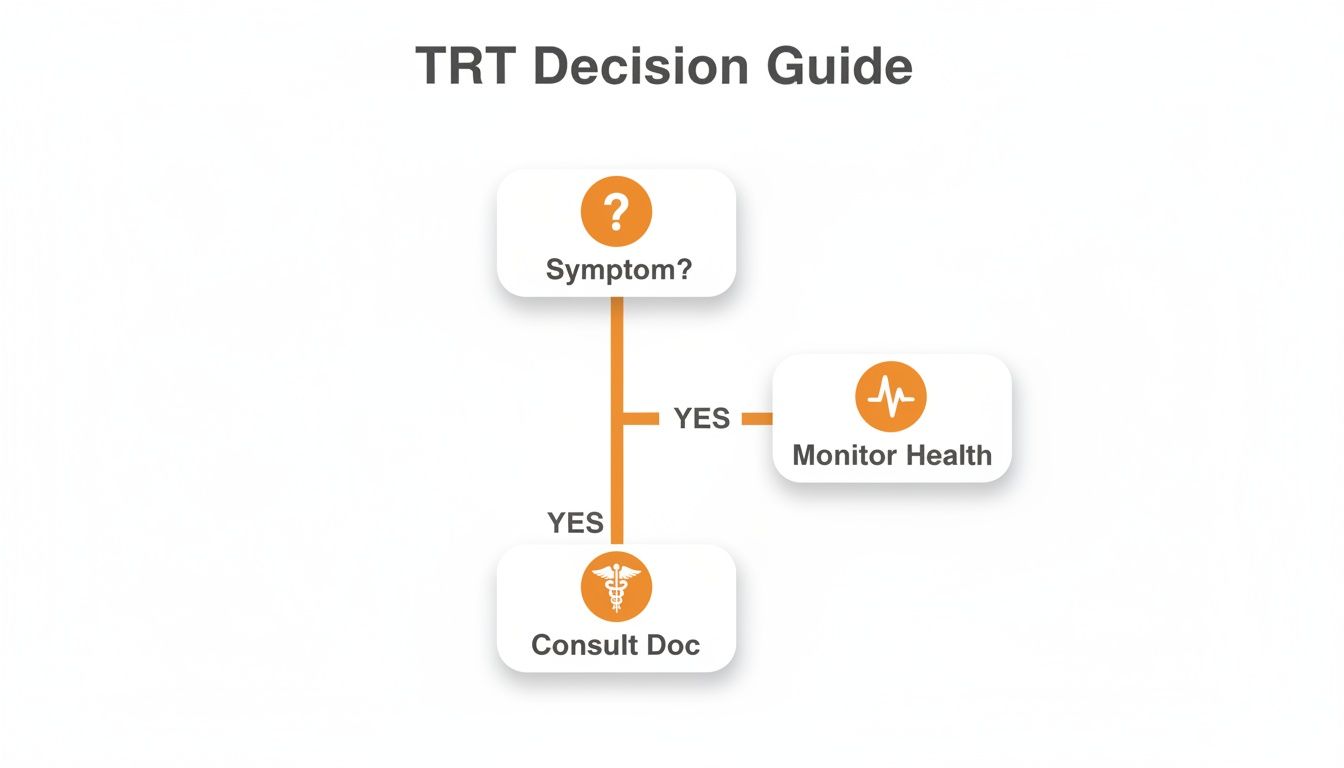
As the chart shows, no matter which path you're leaning toward, it all has to start with a conversation with a medical professional to get a proper diagnosis.
The Appeal of Simplicity
Finally, let's talk about oral capsules. They're quickly becoming a favorite for men who prioritize convenience above all else. Reviews consistently praise their discretion and ease of use—no messy creams, no injection schedules, just a pill. For many, this is the most sustainable and hassle-free solution for the long haul.
Ultimately, reading about these lived experiences is invaluable. Seeing the practical pros and cons through the eyes of others helps you find a delivery method that fits not just your medical needs, but your actual life.
The Reality of Using Online TRT Clinics
Telehealth has completely changed the game for men looking into testosterone replacement therapy. When you dig into patient reviews, one theme comes up again and again: convenience. Men are thrilled to skip the waiting rooms and pharmacy lines, opting for a process that feels more private and fits into their actual lives.

This isn't just a minor shift; it's a massive disruption in how men's health is handled. Direct-to-consumer spending on TRT has already blown past USD 400 million. A huge part of that growth comes from telehealth platforms that have torn down the old barriers to getting care. In fact, the subscription TRT model is now a billion-dollar market, with experts predicting a 9% annual growth rate as more men choose virtual care over traditional clinic visits.
Think about it: virtual consultations from your own home, at-home lab tests, and treatments delivered right to your door. It makes the entire journey feel so much less intimidating than it used to be.
What Patient Reviews Say Matters Most
Sifting through feedback on any online TRT clinic, you start to see a pattern. A few key things consistently separate the great clinics from the ones you want to avoid. These are the details that really shape your experience.
- Real Physician Oversight: The best clinics insist on a licensed physician reviewing your lab work, having a genuine consultation with you, and writing a prescription tailored to your needs. This is non-negotiable.
- Responsive Customer Support: How fast do they get back to you? Can you get a real person on the line? Positive reviews almost always mention a support team that's quick to answer questions about dosing, shipping, or anything else.
- Total Transparency: You should never have to guess about costs, where the medication comes from, or what the follow-up process looks like. Trustworthy providers lay it all out for you.
The best online clinics operate like specialized medical practices, not just subscription box services. Their first priority is always patient safety and getting you real results, not just shipping a product.
At the end of the day, the telehealth model offers incredible benefits, but the fundamentals of good medicine haven't changed. The trick is finding a provider that gives you modern convenience without cutting corners on medical standards. That's the key to a safe and successful TRT journey.
How to Spot a Trustworthy TRT Provider
With so many options popping up, from local clinics to telehealth platforms, choosing the right TRT provider is easily the most important decision you'll make on this journey. Sifting through testosterone replacement therapy reviews can be a real grind, but a truly reliable provider always leaves a trail of clues.

The first, non-negotiable sign of a legitimate clinic is their insistence on thorough bloodwork before a single prescription is written. A proper workup should, at a bare minimum, test for total testosterone, free testosterone, estradiol (E2), and a complete blood count (CBC). This data is the bedrock of a safe, effective treatment plan designed by a licensed doctor—not a sales rep.
Another big one is transparent pricing. You should know exactly what you’re paying for upfront, from consultations and lab work to the medication itself. No hidden fees, no surprises.
The Hallmarks of a Quality Clinic
When you're vetting a provider, look for one that is open about their process and puts your safety far ahead of making a quick sale. A reputable clinic will always prioritize a few key things:
- Personalized Treatment Plans: There's no such thing as a one-size-fits-all TRT protocol. Your dosage and delivery method should be specifically tailored to your lab results, your lifestyle, and what you want to achieve.
- Licensed Medical Doctors: Your care should always be managed by a qualified physician. This means a real consultation, even if it's over video call, where you can ask questions and discuss your health history.
- Third-Party Lab Testing: The best clinics aren't shy about quality. They'll readily provide certificates of analysis (COAs) for their medications, which verify that what you're getting is pure, potent, and safe.
- Ongoing Physician Follow-Up: TRT isn't a "set it and forget it" treatment. A good provider will schedule regular follow-up labs and check-ins to see how you're responding and make any necessary adjustments to your protocol.
A trustworthy provider acts as a long-term health partner, not just a prescription service. Their primary goal is to safely optimize your hormone levels for sustainable results, which requires ongoing medical supervision and care.
On the flip side, keep an eye out for the red flags you see in negative reviews. Clinics offering treatment without bloodwork, aggressively pushing supplements you don't need, or making it hard to speak with a medical professional are all signs to walk away. Making a safe, informed choice begins with holding them to these standards.
Understanding the Real Timeline for TRT Results
So, you're starting TRT. One of the first things guys always ask is, "When am I actually going to feel this stuff working?" It's a fair question, but it's vital to set the right expectations from day one. TRT isn't like flipping a switch; think of it more like your body slowly recalibrating its internal engine.
The first shifts you'll likely notice are subtle and happen inside your head, not in the mirror. Most men start feeling a difference in their mental and emotional state within the first 3 to 6 weeks.
The First Few Weeks: The Mental Shift
Don't expect to wake up looking like a bodybuilder after a month. The initial benefits are far more about how you feel day-to-day. You’ll probably start to notice a few things:
- A Brighter Outlook: That constant irritability or low mood might start to fade, replaced by a more stable, positive feeling.
- The Fog Lifts: Many men describe a frustrating "brain fog" that finally begins to clear, making it easier to concentrate and feel sharp.
- Libido Returns: For a lot of guys, one of the earliest and most welcome signs is a renewed interest in sex.
These psychological boosts are fantastic indicators that your body is responding well. This is also when your doctor will want to see you for your first follow-up labs to make sure your protocol is dialed in just right.
It's a marathon, not a sprint. The mental benefits often show up fast, but the bigger physical changes demand patience and sticking to your treatment plan.
Long-Term Physical Changes: The Real Transformation
The more dramatic, visible results take a bit longer to show up. Based on what we see with countless patients, it generally takes a solid 3 to 6 months to see significant changes in body composition.
This is when the consistent therapy really starts to pay off. You’ll begin to see increased muscle mass, a drop in body fat (especially that stubborn belly fat), and a real improvement in your gym performance and how quickly you recover.
Consistency is everything here. Sticking with your protocol is what gets you to the finish line. If you're just starting to explore your options, a good first step is understanding your baseline levels. Our guide on using an at-home testosterone test can give you a starting point for a conversation with your doctor.
Got Questions About TRT? We’ve Got Answers.
When you start looking into testosterone replacement therapy reviews, you'll notice the same questions come up again and again. To save you some time, I’ve pulled together the most common ones and answered them based on what we see with patients and what the clinical data shows.
This is your no-nonsense guide to get the essential info you need.
How Long Until I Actually Feel a Difference on TRT?
Look, everyone's body is different, but the good news is you won't be waiting forever to feel some initial changes. Most guys I've worked with start noticing a real improvement in their energy levels, mood, and sex drive within the first 3 to 6 weeks. That's usually the first sign that things are moving in the right direction.
Now, for the bigger physical shifts—like building more muscle and seeing a real drop in body fat—you’ll need to be a bit more patient. Those kinds of results typically start showing up after about 3 to 6 months of consistent treatment.
Are Online TRT Clinics Actually Safe?
Yes, the good ones are, but you absolutely have to do your homework. A legitimate online TRT clinic isn't just a website that ships you testosterone.
A trustworthy provider will always insist on:
- Comprehensive lab work before even thinking about a prescription.
- A real consultation with a licensed doctor to go over your results.
- Medications that are verified by third-party labs for quality.
If a service is willing to send you TRT without a proper medical workup, that's not just a red flag—it's a massive warning sign to stay away.
I see a lot of guys worry about side effects. The most common things mentioned in reviews are pretty manageable—think a bit of acne, oily skin, or some minor water retention. Serious risks are incredibly rare when you're under proper medical care, which is exactly why having a doctor monitoring you is non-negotiable for your long-term health.
Is TRT a Lifelong Thing?
For the vast majority of men, yes, TRT is a long-term commitment. Once you start therapy, your body gets the signal to slow down its own testosterone production. If you stop, your levels will almost certainly drop back to where they were before, and those old symptoms will come right back.
This is probably one of the most important things to talk through with your doctor. You need to be fully aware of the lifelong nature of this treatment before you decide to jump in.
Ready to explore a safe and effective path to hormone optimization? Elite Bioscience provides medically supervised therapies with the convenience of at-home care. Learn more and start your confidential health assessment today.