

Let's get one thing straight right away: TRT itself doesn't cause hair loss. That’s a common misconception. What it can do is speed up a genetic condition you might already have, even if you haven't noticed it yet—male pattern baldness.
Think of it this way: TRT doesn't create the problem, but it can absolutely hit the fast-forward button on your genetic predisposition.
Sorting Out the Connection Between TRT and Your Hair
To really grasp why Testosterone Replacement Therapy (TRT) gets blamed for thinning hair, we need to talk about a specific hormone conversion that happens in your body. When you introduce more testosterone, your system naturally converts a small portion of it into a much more powerful androgen called Dihydrotestosterone, or DHT. This conversion is the entire story.
Your genes are essentially a roadmap for your body. For some guys, that roadmap includes instructions for their hair follicles to be extremely sensitive to DHT. When DHT levels climb, it latches onto these sensitive follicles and tells them to shrink. Over time, they get smaller and smaller until they eventually stop producing hair altogether.
This process is called miniaturization, and it’s the real engine behind male pattern baldness. So, TRT doesn't cause the sensitivity; it just provides more DHT to trigger it. If you don't carry that genetic trait, you could be on TRT for years and never lose a single hair.
The Key Role of DHT Conversion
The big takeaway here is that TRT provides more raw material (testosterone) for your body to make DHT. Once you start therapy, the enzyme 5-alpha reductase gets to work, converting some of that new testosterone into DHT. Studies have shown this can push DHT levels 2 to 3 times higher than your baseline, depending on things like your dose and whether you're using injections, gels, or patches. You can get a deeper look into the benefits and drawbacks of TRT and how it impacts your hormone profile.
This spike in DHT is what can kickstart or accelerate hair thinning in men who are genetically programmed for it. It's not a guarantee—it's a risk that depends entirely on your DNA.
The core concept to grasp is this: TRT reveals or hastens a genetic destiny that was already there. It's not creating a new problem, but amplifying a pre-existing sensitivity.
Who Is at Risk?
So, should you be worried? Understanding your personal risk is the first step in creating a smart plan with your doctor. The factors that determine if you'll see more hair in the drain are pretty straightforward.
Before we dive into the details, let's summarize the main influencers in a quick table.
Key Factors in TRT-Related Hair Thinning
| Factor | Influence on Hair | What This Means for You |
|---|---|---|
| Genetics | High | This is the #1 predictor. A family history of baldness is a major red flag. |
| Existing Thinning | High | If your hair is already thinning, TRT will likely speed up the process. |
| DHT Sensitivity | High | Even without a family history, your follicles might just be extra sensitive to DHT. |
| TRT Dose & Type | Medium | Higher doses or certain delivery methods can lead to a greater DHT spike. |
As you can see, it really comes down to what you were born with. Let's break down those risk factors a bit more.
Key things to look out for include:
- A Genetic Predisposition: If your dad, grandfathers, or uncles have thinning hair, you’re at higher risk. This is the single biggest clue.
- Existing Hair Thinning: Have you already noticed your hairline creeping back or the spot on your crown getting a little wider? TRT will likely make it happen faster.
- High DHT Sensitivity: Some guys are just wired to have follicles that overreact to androgens, even if baldness doesn't run in the family.
For a lot of men, TRT poses zero threat to their hairline. And for those who are at risk, there are effective ways to manage and prevent it, which we'll get into next. This guide is all about giving you the clarity to navigate the pros and cons of testosterone replacement therapy and make the right call for you.
Meet DHT: The Real Culprit Behind Male Pattern Baldness
So, we've cleared testosterone's name—it's not the direct villain in your hair loss story. Now, let's turn the spotlight on the real culprit: Dihydrotestosterone, or DHT. While testosterone gets all the headlines, DHT is the heavy-hitter that actually dictates the fate of your hairline, but only if you're genetically wired for it.
Think of your hair follicles like tiny, intricate machines. DHT acts like a very specific key that can fit into the machine's control panel. For many men, this key doesn't do much. But for those with the genetic blueprint for male pattern baldness, when DHT turns that lock, it triggers a shutdown sequence.
This slow-motion shutdown is called miniaturization. Your hair follicle doesn't just die overnight. Instead, it shrinks over time, producing progressively thinner, weaker, and shorter strands with each growth cycle until it eventually stops producing visible hair at all.
How DHT Actually Works on Your Hair
It’s important to know that DHT isn’t some rogue "bad" hormone. It's a powerhouse androgen that plays a crucial role in male development, responsible for things like growing a beard and the deepening of your voice during puberty. In fact, it's significantly more potent than testosterone and binds to androgen receptors far more aggressively.
The problem starts when the hair follicles on your scalp are genetically programmed to overreact to its presence. This is where TRT enters the picture. Your body naturally converts a portion of testosterone into DHT using an enzyme called 5-alpha reductase. When you're on TRT, you're essentially providing more raw material (testosterone) for this conversion process, which can lead to higher circulating DHT levels.
Think of it this way: If your genetics for hair loss are a loaded gun, DHT is what pulls the trigger. TRT doesn't load the gun—your DNA already did that—but it can hand the shooter more ammunition, making it more likely the trigger gets pulled.
Why Your Genes Call All the Shots
This is the most critical piece of the puzzle: your genetics are the ultimate deciding factor. You could have sky-high DHT levels and still rock a thick, full head of hair if your follicles simply aren't sensitive to it. On the flip side, someone with lower DHT might see significant thinning if their follicles are hyper-sensitive.
This genetic lottery explains why the TRT and hair loss connection is a reality for some men and a non-issue for others. The therapy isn't causing a new problem; it's simply unmasking or speeding up a process that was already encoded in your DNA.
Here’s how the chain reaction typically unfolds:
- You Start TRT: Your testosterone levels are brought into a healthy, optimal range.
- Conversion Kicks In: The 5-alpha reductase enzyme gets to work, converting a percentage of that new testosterone into DHT.
- DHT Finds Its Target: This newly created DHT circulates through your body and latches onto receptors in your scalp's hair follicles.
- Genetics Trigger Miniaturization: If your follicles are genetically sensitive, this binding sends the signal for them to start shrinking.
- Thinning Becomes Visible: Over months or years, this gradual miniaturization leads to the classic signs of male pattern baldness.
Grasping this mechanism is the first step toward building a smart, proactive strategy. Since we can't rewrite our genetic code, the most effective solutions focus on interrupting this chain of events. By getting in the way of the testosterone-to-DHT conversion, we can shield those sensitive follicles from the shutdown signal—which is precisely how the best treatments work. With this foundation laid, we can now dive into the practical solutions you can use.
How Your TRT Delivery Method Affects Hair Loss Risk
When it comes to TRT, how you get testosterone into your system matters. A lot. The delivery method—whether it's an injection, a cream, or a gel—can significantly change how much of that testosterone turns into DHT, the main hormone behind male pattern baldness.
Getting this right is a crucial part of designing a TRT plan that helps you feel your best without sacrificing your hair.
Think of your skin as a major hub for an enzyme called 5-alpha reductase. Its job is to convert testosterone into the much more potent dihydrotestosterone (DHT). When you apply testosterone directly to the skin, you're essentially setting up a DHT conversion factory right on the surface.
This is the central process at play. More available testosterone can mean more DHT, which then goes to work on genetically susceptible hair follicles, causing them to shrink over time.
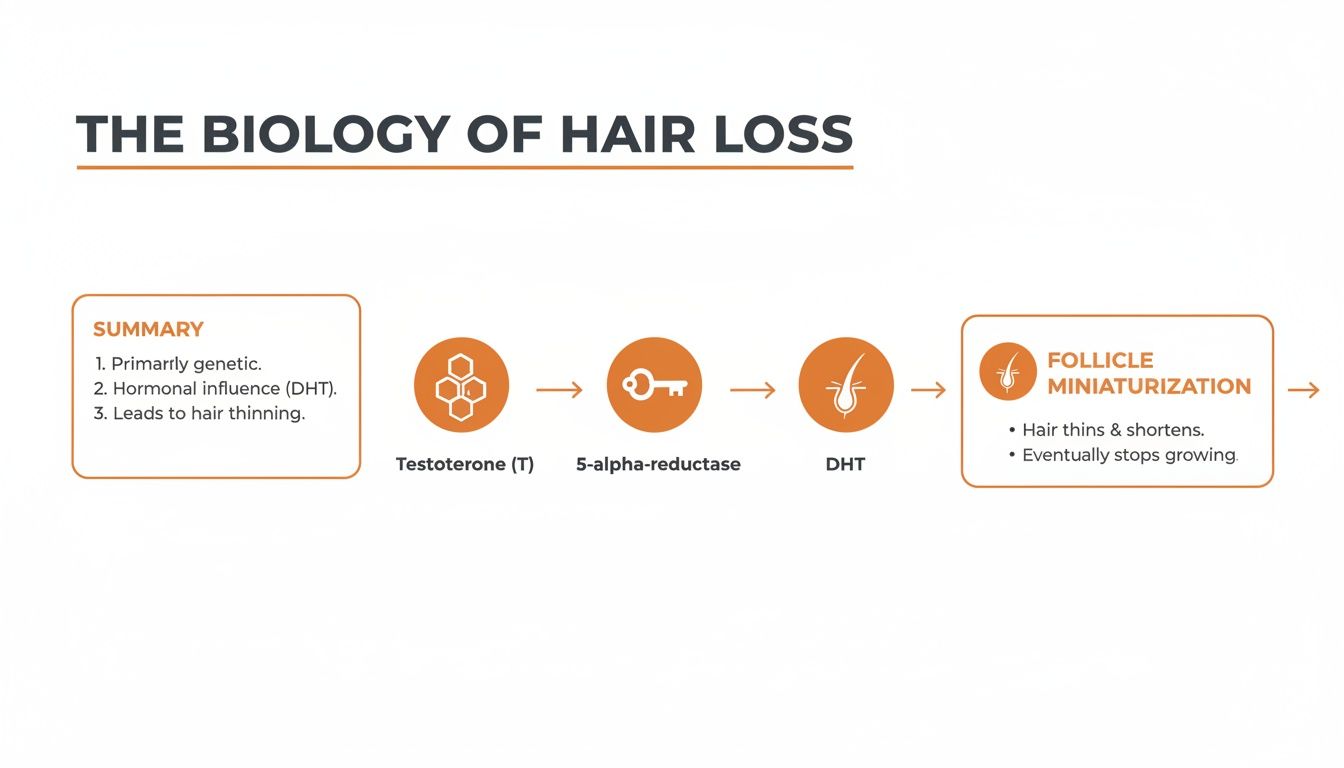
This simple chain reaction is why not all TRT is created equal for your hairline.
Gels and Creams: The Topical Route
Applying TRT gels or creams is undeniably convenient. You just rub it on your skin and go. But this direct skin contact means a large chunk of the testosterone converts to DHT before it even has a chance to enter your general circulation.
For men worried about hair loss, this creates a double-whammy:
- High Local DHT: The skin where you apply the gel can end up with extremely high DHT levels.
- Elevated Systemic DHT: That newly created DHT gets absorbed into your bloodstream, often raising your overall levels much higher than other methods would for the same testosterone dose.
Because of this, topical TRT is often considered a riskier choice for men who already have a family history of baldness.
Injections: The Direct Approach
Intramuscular (IM) injections work very differently. By delivering testosterone directly into the muscle, it bypasses that initial high-conversion party on the skin. Instead, the testosterone is absorbed slowly and steadily into your bloodstream.
This leads to a more stable hormonal environment with a much lower and more predictable testosterone-to-DHT conversion ratio. It’s no surprise that injections are often the go-to method for guys who want the benefits of TRT while actively managing their hair loss risk. If this sounds like the right path for you, our guide provides clear instructions on how to self-inject testosterone safely.
The delivery method you choose is a major factor in managing your hair health on TRT. The table below breaks down how each common approach stacks up.
Comparing TRT Delivery Methods and Their DHT Impact
| Delivery Method | Typical DHT Conversion | Key Advantages | Potential Downsides |
|---|---|---|---|
| Gels/Creams | Highest | Easy daily application, non-invasive | High DHT conversion, risk of transference |
| Injections (IM) | Lowest | Stable T levels, low DHT conversion | Requires self-injection, potential for peaks/troughs |
| Pellets | Moderate | "Set it and forget it" for months | Minor surgical procedure, dose can't be adjusted easily |
Ultimately, the goal is to find a method that gives you the hormonal benefits you need with a DHT profile you—and your hair—can live with.
Testosterone Pellets
Pellets are another option where small, rice-sized implants are placed under the skin. They're designed to release testosterone slowly over three to six months, offering a very hands-off approach.
However, the connection to hair loss can be a bit of a wild card. Because the dose is steady and long-lasting, it can create a sustained androgenic environment that may accelerate shedding in those who are predisposed. One case study noted a man in his 30s who developed significant balding just a year after starting pellets, directly linking the therapy to his hair follicle damage.
This reinforces a critical point: TRT doesn't cause baldness on its own. It speeds up the underlying genetic process.
Choosing the right TRT delivery system is a balancing act between lifestyle, convenience, and your personal risk factors. It's one of the most important conversations you'll have with your doctor when starting your journey.
Your Action Plan for Preventing Hair Loss on TRT

Alright, understanding the link between TRT and hair loss is half the battle. Now, let's get into the practical side of things—the "how." What can you actually do to protect your hair while getting your hormones optimized? This isn't about crossing your fingers and hoping for the best; it’s about building a proactive defense.
The most effective game plan is almost always a multi-pronged attack. By combining a few proven medical treatments, you can create a powerful shield for your hair follicles and turn worry into a manageable, long-term strategy.
Blocking DHT with 5-Alpha Reductase Inhibitors
The first and most direct line of defense is to stop the conversion of testosterone into DHT in the first place. This is where a class of medications called 5-alpha reductase inhibitors comes into play. Think of them as gatekeepers that prevent testosterone from morphing into its more aggressive, hair-thinning cousin.
There are two main players in this category you should know about:
Finasteride: This is the one most people have heard of. It works by targeting the Type II 5-alpha reductase enzyme, which is the primary culprit inside our hair follicles. By inhibiting this enzyme, it dramatically cuts down the DHT levels right where it matters most—the scalp.
Dutasteride: This is a more powerful option that blocks both Type I and Type II forms of the 5-alpha reductase enzyme. The result is a much more significant drop in DHT levels throughout the entire body. It’s often the next step for guys who don't get the results they want from Finasteride or are dealing with more aggressive hair loss.
The evidence for Finasteride is rock-solid. Studies have shown it can lead to a 48% increase in hair growth after one year and a 66% increase after two years. It also stabilizes hair loss in a staggering 83% of men. It works by simply cutting off the DHT signal that tells genetically sensitive follicles to shrink. You can find more details about testosterone's impact on hair at Hims.com.
It's absolutely crucial to talk these options over with your doctor. They'll help you weigh the pros and cons, including potential side effects, to decide which medication and dose make sense for you.
A smart, proactive strategy is to start a 5-alpha reductase inhibitor at the same time you begin TRT. Don't wait for thinning to appear. It's always easier to save the hair you have than to try and regrow what you've already lost.
Stimulating Growth with Minoxidil
While DHT blockers tackle the hormonal root cause, another powerhouse treatment works directly on the follicles themselves. Minoxidil, which you probably know by the brand name Rogaine, is a topical solution that acts as a vasodilator. In simple terms, it widens blood vessels.
When you apply it to your scalp, Minoxidil accomplishes two key things:
- It boosts blood flow, delivering more oxygen and nutrients to hungry hair follicles. This creates a much healthier environment for growth.
- It extends the growth phase of the hair cycle (the anagen phase), encouraging hair to grow thicker and stay on your head longer.
Here's an easy way to think about it: if Finasteride is the bodyguard protecting your follicles from a DHT attack, Minoxidil is the nutritionist and personal trainer keeping them well-fed, strong, and active.
Minoxidil is available over-the-counter in foam or liquid form. Your doctor can also prescribe stronger oral or topical versions for a more targeted approach. Using it alongside a DHT blocker gives you a comprehensive one-two punch—an offense-and-defense strategy for your hair.
Complementary Support Tactics
Beyond the "big two," you can add a few other supportive tactics to your routine. While they aren't miracle cures on their own, they can reinforce your primary treatments and help create the best possible conditions for hair health.
Specialized Shampoos: Look for shampoos with ingredients like ketoconazole. It has mild anti-androgenic effects and helps reduce scalp inflammation. Others containing saw palmetto or caffeine can also contribute to a healthier scalp.
Microneedling: This involves using a small device with tiny needles, like a dermaroller, to create micro-injuries on the scalp. This process stimulates collagen and increases blood flow. Even better, studies show it can significantly boost the absorption and effectiveness of topical treatments like Minoxidil.
By layering these strategies, you build a robust defense system. You start by blocking DHT at the source, then you actively stimulate growth at the follicle, and finally, you support it all with a healthy scalp routine. This actionable plan puts you back in the driver's seat, allowing you to enjoy the benefits of TRT without sacrificing your hair.
Monitoring Your Health and Hair for Long-Term Success
Starting on TRT isn't a "set it and forget it" kind of deal. Think of it more as an ongoing partnership between you and your doctor. A successful journey is one that's carefully monitored, using real data to keep your protocol perfectly dialed in to what your body needs. This proactive approach is your single best tool for getting all the benefits while keeping your hair safe.
The whole process kicks off before you even think about your first dose. Getting a comprehensive baseline through bloodwork is absolutely non-negotiable. This isn’t just about seeing your testosterone number; it's about getting a complete hormonal snapshot of where you're starting from.
Your Pre-TRT Bloodwork Checklist
Before you begin therapy, your doctor should be ordering a panel that covers several key markers. This baseline data is the bedrock of your entire treatment plan. Without it, you're just guessing.
Essential baseline tests should include:
- Total Testosterone: This gives you the big picture of how much testosterone is in your system.
- Free Testosterone: This is the really important number—it’s the "unbound" testosterone that your body can actually put to work.
- Estradiol (E2): Keeping an eye on estrogen is critical for managing everything from mood to libido.
- DHT (Dihydrotestosterone): If you're worried about TRT and hair loss, getting a starting number for this powerful androgen is a must.
This initial lab work shows you where you stand and helps set realistic expectations right from the start. To get a better handle on these numbers, check out our full guide on how to read your lab results.
Ongoing Monitoring and Adjustments
Once you start treatment, the real work of optimization begins. Regular follow-up blood tests are the only way to see exactly how your body is responding to the therapy. These check-ins make sure your levels are hitting that sweet spot—the therapeutic range—and that your DHT isn't creeping up to a point that puts your hair at risk.
Think of monitoring as the GPS for your TRT journey. Your baseline is your starting address, and regular lab work is the real-time traffic update. It lets your doctor make small steering corrections—like dose adjustments—to keep you on the best route to your destination.
This continuous stream of data allows for incredibly precise tweaks. For instance, if your DHT levels jump significantly, your doctor might talk to you about lowering your testosterone dose slightly or maybe introducing a protective medication like finasteride. This is how you stay in the driver's seat.
Practical At-Home Hair Monitoring
While blood tests give you the story on the inside, you can easily track what’s happening on the outside right at home. Don't just rely on your memory; it can play tricks on you. The key is to document your hair's condition methodically so you can catch subtle changes early on.
Here’s a simple, effective routine you can start today:
- Establish a Photo Schedule: Once a month, take a series of clear, well-lit photos of your hair.
- Use Consistent Angles: Make sure you get shots of your hairline from the front, both temples, and the crown of your head.
- Maintain Consistent Conditions: Always take the photos in the same room with the same lighting. It also helps to have your hair styled the same way each time, like right after a shower when it's still wet.
This simple visual log gives you hard evidence of whether your hairline is holding steady, improving, or maybe starting to recede. When you combine this at-home tracking with your regular lab work, you become a truly informed patient. You're no longer a passenger—you're an active partner in your own healthcare, making sure your TRT plan works for both your health and your hair for the long haul.
Putting It All Together: Your TRT and Hair Care Game Plan
Think of managing your health on TRT as a team sport, with you and your doctor as the key players. When it comes to the connection between TRT and hair loss, you need a solid strategy developed with a medical pro who truly gets the fine art of hormone optimization. This is where we create a plan that works for you.
This whole process is so much easier with a modern telehealth clinic. Forget juggling appointments and trying to find the right specialists on your own. You get direct access to expert advice and a treatment plan built around your specific health goals and even your genetic background. It’s the best of both worlds: top-tier medical knowledge combined with your personal priorities.
How to Prepare for Your Doctor’s Visit
To get the absolute most out of your consultation, you’ll want to walk in prepared. Doing a little homework beforehand helps your doctor craft the safest, most effective plan for you. The idea is to leave that conversation feeling like you're in the driver's seat.
Here’s a quick checklist to run through before your appointment:
- Family History: Jot down any history of male pattern baldness. Check both your mom's and dad's sides of the family.
- Your Hormone Levels: Have your baseline lab results handy, especially for testosterone, DHT, and estradiol.
- Your Hair Goals: Be upfront about what you want. Is keeping your hair a major priority? Let them know.
- Potential Treatments: Have you thought about preventative options like finasteride or minoxidil? It’s good to discuss your comfort level with these.
Bringing this information transforms a routine check-in into a powerful planning session for your health.
You don't have to pick between feeling your best on TRT and keeping a full head of hair. With the right personalized plan, you can absolutely have both.
It's fascinating to see that even in bodybuilding communities, where testosterone doses can be much higher, the effect on hair isn't a simple cause-and-effect story. While some guys report hair loss over a cycle, a small number actually notice more hair growth. This just goes to show how incredibly individual our bodies' responses to hormones really are. You can dive deeper into the full research on androgen use and hair changes if you're curious.
In the end, being proactive and informed is your strongest move. By working in close partnership with your doctor, you can dial in your TRT protocol to boost your vitality while keeping your hairline right where you want it.
Frequently Asked Questions About TRT and Hair Loss
It's completely normal to have a lot of questions when you're considering TRT, especially about how it might affect your hair. Let's break down some of the most common concerns with clear, straightforward answers to help you feel confident about your treatment path.
If I Stop TRT Will My Hair Grow Back?
Stopping TRT will definitely lower your DHT levels, which can put a stop to any further accelerated hair loss. Think of it as hitting the brakes on the process.
But here's the crucial part: it won't regrow hair from follicles that are already miniaturized. Once a follicle shrinks and weakens due to DHT sensitivity, that change is usually permanent. This is exactly why getting ahead of hair loss with a preventative strategy is always more effective than trying to reverse it once it's already started.
Can Women on Hormone Therapy Experience Hair Loss?
Yes, absolutely. Hormonal shifts are a major reason for hair thinning in women, just as they are in men. The pattern might look a little different, but the root cause is often the same.
Conditions like Polycystic Ovary Syndrome (PCOS), which elevate androgens, or even certain types of Hormone Replacement Therapy (HRT) can trigger female pattern hair loss in women who are genetically susceptible. It's vital for women to talk with their doctor about how any hormone therapy could specifically impact their hair.
Does the Dose of Testosterone Affect Hair Loss Rate?
It certainly does. The simplest way to think about it is that testosterone is the raw ingredient for DHT. The more testosterone you introduce, the more material the 5-alpha reductase enzyme has to work with, potentially creating more DHT—the main culprit in TRT and hair loss.
For someone with the genetic predisposition, higher circulating DHT can speed up the rate of hair thinning. This is a key reason why any good doctor will work with you to find the lowest dose that still gives you the benefits you're looking for. It's all about balancing the therapeutic effects with potential side effects like shedding.
The goal of a well-managed TRT protocol is to achieve hormonal balance, not just push testosterone to the highest possible number. This careful titration is key to protecting your hair.
Are Natural DHT Blockers Effective Alternatives?
You’ll often hear about natural supplements like saw palmetto and pumpkin seed oil for their supposed DHT-blocking effects. While they might offer some very mild support for overall hair health, they just don't pack the same punch as prescription medications.
For anyone with a strong genetic tendency for baldness, these natural options are almost certainly not going to be a strong enough defense against the DHT spike that comes with TRT. It's better to think of them as a complementary part of your hair care routine, not the primary solution.
At Elite Bioscience, our team of medical experts designs personalized TRT plans that balance your health goals with your aesthetic priorities, including hair preservation. Take control of your health journey by exploring our tailored therapy options at https://elitebioscience.co.