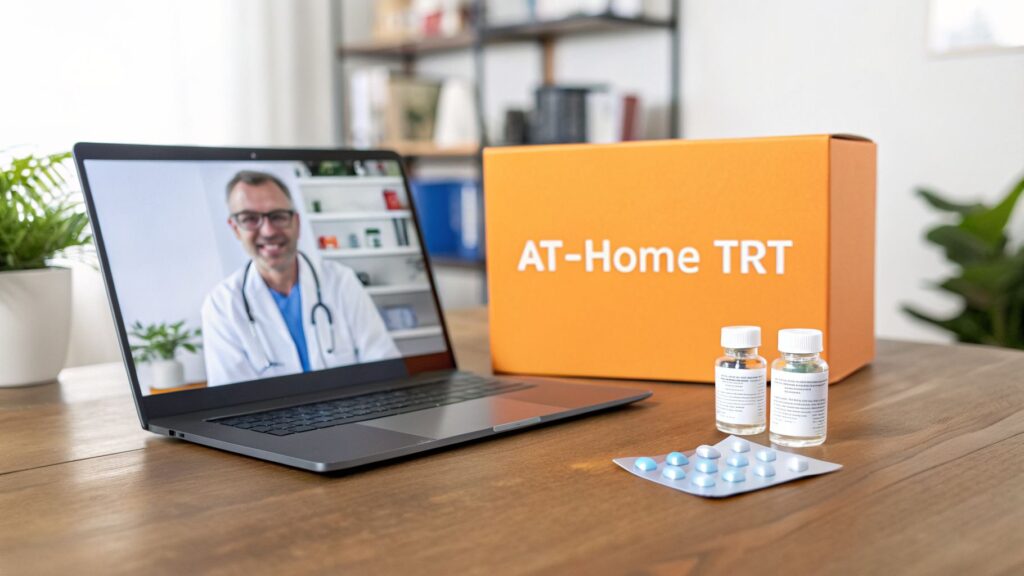
Yes, you absolutely can. TRT therapy at home is a fully-supervised medical program that lets you manage low testosterone from the comfort and privacy of your own home. Through telehealth, you can meet with a doctor virtually, get diagnosed, and have your prescription testosterone and all necessary supplies shipped directly to your door.
The Rise of At-Home TRT: A Modern Approach to Men's Health
Gone are the days when managing low testosterone meant weekly trips to a doctor's office for an injection. The move toward at-home TRT therapy is a huge shift in men's healthcare, born from a need for more convenience, privacy, and personal control over medical treatment. This modern model uses telehealth platforms to connect you with licensed physicians, creating a straightforward and secure way to manage low T.
Convenience and Privacy at the Forefront
Think of at-home TRT like a concierge service for your hormonal health. Instead of blocking off half your day for a clinic visit, you can consult with doctors, get your lab work done, and receive your treatment entirely on your own schedule. This approach completely cuts out waiting room time and the potential discomfort of discussing personal health matters in a busy clinic. Everything is designed around your life, right down to the discreetly packaged medication that shows up at your home.
This level of convenience has led to a massive spike in demand. In the U.S., testosterone prescriptions jumped from 7.3 million in 2019 to over 11 million by 2024—a remarkable 50% increase in just five years. This boom is primarily fueled by men looking for an easier way to tackle symptoms like fatigue and low libido without the logistical nightmare of traditional appointments. You can find more detail on this trend in many recent men's health guides.
At-home TRT is really about removing the frustrating barriers to getting legitimate medical care. It puts you in control, allowing you to manage your health proactively with professional oversight but without the old-school headaches.
Traditional vs. At-Home TRT Therapy
So, how does this new telehealth model really stack up against the old way of doing things? When you look at the patient experience, the differences become pretty stark. While both paths lead to the same goal—optimizing your testosterone levels—how you get there is worlds apart.
The table below breaks down the key differences between the two approaches.
Traditional TRT vs At-Home TRT Therapy
| Feature | Traditional In-Clinic TRT | TRT Therapy at Home (Telehealth) |
|---|---|---|
| Convenience | Requires regular travel to a clinic for appointments and injections. | Consultations are virtual; medication is delivered to your home. |
| Privacy | Discussions and treatments happen in a shared medical facility. | All interactions and deliveries are private and discreet. |
| Scheduling | Patients must schedule around the clinic’s operating hours. | Flexible scheduling for consultations; no travel time required. |
| Cost Structure | Often involves co-pays, facility fees, and separate pharmacy costs. | Typically an all-inclusive subscription model with transparent pricing. |
| Patient Control | Relies on a nurse or doctor for every administration. | Empowers you to self-administer treatment on your own schedule. |
Ultimately, the telehealth model for TRT empowers you by giving you direct control over the logistics of your treatment while keeping you connected to expert medical supervision.
How At-Home TRT Works: From Your Couch to Your Doorstep
So, you’re looking into testosterone therapy, but the thought of constant clinic visits feels like a major roadblock. You're not alone. The old way of doing things—scheduling appointments, sitting in waiting rooms, and taking time off work—is quickly being replaced by a much simpler, patient-focused approach.
Think of modern at-home TRT as bringing the specialist's office to you, but without the hassle. It's a structured, doctor-led process that's built around your life, not the other way around. Let's walk through exactly what that looks like, step-by-step.
The First Steps: Your Health Story and Lab Work
Everything starts with you. The journey begins with a detailed online health survey. This isn't just busywork; it's a confidential questionnaire where you'll share your symptoms, medical history, and what you're hoping to achieve. This initial intake gives the medical team a solid picture of your health before you even speak with them.
Next comes the most crucial part of the entire process: blood work. No legitimate TRT provider will ever skip this. You'll receive a lab order to take to a partner clinic near you for a comprehensive blood panel. Some services even offer kits for at-home sample collection. These results provide the hard data needed to see if you have a clinical need for testosterone therapy.
The infographic below shows just how much this process has changed, moving from the traditional clinic model to the more efficient system we have today.

It’s a clear shift from relying on in-person visits to a smarter, direct-to-you model where technology connects the patient, doctor, and pharmacy seamlessly.
The Consultation and Getting Your Medication
Once your lab results are in, you'll sit down for a one-on-one telehealth consultation with a licensed physician. This video or phone call is where the real conversation happens. You'll go over your lab report together, talk through your symptoms, and get straight answers to all your questions. Based on this thorough review, the doctor will determine if TRT is the right and safe path for you.
This telehealth meeting is the heart of responsible care. It ensures your treatment isn't just a random prescription, but a diagnosis and plan from a qualified medical expert who understands your unique health situation—just as they would in a physical clinic.
If you’re a good candidate for therapy, the doctor won't just hand you a standard script. They'll develop a specific treatment plan that matches your body's needs, outlining the precise medication, dosage, and frequency.
Finally, your prescription is sent to a compounding pharmacy. Everything you need is then bundled into a discreet package and shipped directly to your home. This includes your testosterone, syringes, alcohol swabs, and all other necessary supplies. Many clinics provide excellent instructions, and our guide on how to properly self-inject testosterone is a great place to start learning the technique.
This convenient model is more than just a trend; it's the future of hormone therapy. Market projections show the TRT industry is expected to hit $2.57 billion by 2030. More importantly, the safe, prescription-based segment is leading this expansion with a 4.1% CAGR as more men become aware of legitimate, doctor-guided options for treating low testosterone.
Determining If At-Home TRT Is Right for You
Deciding to start at-home TRT is a major health decision, and it’s one that needs to be made carefully with your doctor. This isn't a lifestyle hack or a quick-fix for feeling run-down. It's a legitimate medical treatment for a diagnosed condition: hypogonadism, or clinically low testosterone.
The first step is learning to listen to your body. So many men dismiss persistent, nagging symptoms as just "getting older," but that’s not always the case. If the signs below have become your new normal, it’s probably time to get a professional opinion.
Recognizing the Key Symptoms of Low Testosterone
The symptoms of low testosterone can creep up on you. At first, they're subtle, but over time, they can seriously impact your quality of life. Think of it like a car engine slowly losing oil—it still runs, but it gets sluggish, makes weird noises, and eventually, you're headed for a major breakdown if you ignore it.
Some of the most common red flags include:
- Persistent Fatigue: This isn't just being tired from a long day. It’s a bone-deep exhaustion that sleep doesn’t seem to fix.
- Diminished Libido: A significant drop in your sex drive is one of the classic, hard-to-ignore signs.
- Brain Fog or Poor Concentration: You might find yourself struggling to focus, forgetting things, or just not feeling as mentally sharp as you used to.
- Irritability and Mood Swings: If you're snapping for no reason or feeling down, it might not be stress—it could be your hormones.
- Reduced Muscle Mass and Strength: Finding it tougher to build muscle or even just hold onto it, despite putting in the work at the gym, is a common complaint.
If this list feels a little too familiar, the next move isn't to guess—it's to get hard data.
The Critical Role of Comprehensive Blood Work
Relying on symptoms alone is just guesswork. The only way to know for sure if you have low testosterone is through a comprehensive blood test. Any legitimate at-home TRT clinic will insist on this before a prescription is even on the table. These labs are non-negotiable; they provide the objective proof needed for a real diagnosis.
A doctor can’t just guess your hormone levels; they need to see the numbers. A full blood panel is the diagnostic foundation of safe and effective TRT, distinguishing legitimate medical treatment from reckless guesswork.
Your doctor will be looking at several key biomarkers to get the full story. The two most important are:
- Total Testosterone: This tells you the total amount of testosterone in your bloodstream. It’s a good starting point, but it's not the whole picture.
- Free Testosterone: This measures the "unbound" and active testosterone that your body can actually use. You can have "normal" total T but still have symptoms if your free T is in the tank.
If you’re ready to take that first step, you can learn more about how an at-home testosterone test works. This is what separates suspecting you have a problem from knowing for sure.
Who Should Not Use TRT Therapy
It's just as important to know who TRT is for as it is to know who should absolutely avoid it. Testosterone therapy is a powerful treatment, and it comes with specific contraindications—medical reasons why it could be dangerous for certain people.
TRT is generally not recommended if you have any of the following conditions:
- Prostate or Breast Cancer: Testosterone can fuel the growth of these specific cancers, so it's a firm no for anyone with a current or previous diagnosis.
- Elevated Red Blood Cell Count (Polycythemia): TRT can thicken your blood by increasing red blood cell production. If your count is already high, this raises the risk of blood clots.
- Severe, Untreated Sleep Apnea: Testosterone can sometimes make sleep apnea worse. Your doctor will want to see this condition managed before even considering TRT.
- Severe Congestive Heart Failure: Because TRT can cause fluid retention, it poses a risk for individuals with serious heart problems.
A thorough medical screening and a completely honest conversation with your doctor are the only ways to ensure that at-home TRT is a safe and appropriate choice for you.
Understanding the Benefits, Risks, and Safety Protocols

Starting TRT therapy at home is a big step, and it’s completely normal to feel a mix of excitement and caution. On one hand, it offers a real path to getting your vitality back. On the other, it’s a serious medical treatment. Making the right choice means going in with your eyes wide open, understanding both the incredible benefits and the potential risks.
Let’s be clear: optimizing your testosterone isn't a single magic bullet. Think of it more like restoring a key ingredient your body has been missing. When that ingredient is back, a whole host of positive changes can follow, touching nearly every corner of your life.
The Real-World Benefits of Optimized Testosterone
When a doctor helps you bring your hormone levels back into a healthy range, the effects are often profound. It’s not about becoming a different person, but about feeling like yourself again—the version of you that may have slowly faded without you even realizing it.
Men on medically supervised TRT often report:
- Renewed Energy and Stamina: That constant, nagging fatigue that sinks into your bones? It often gives way to a steadier, more reliable source of energy that lasts the whole day.
- Improved Libido and Sexual Function: A flagging sex drive is one of the first things many men notice with low T, and its return is one of the most welcome benefits of treatment. This often comes with better overall performance and satisfaction.
- Enhanced Mental Clarity and Mood: The "brain fog" finally lifts. Many guys find their focus sharpens, concentration improves, and their mood becomes more stable and positive, with less of that trademark low-T irritability.
- Noticeable Body Composition Changes: With optimized testosterone, your body is primed to build and hold onto lean muscle. At the same time, it becomes easier to shed stubborn body fat, especially the kind that collects around your middle.
These life-changing results are why at-home TRT is becoming so common. In fact, U.S. testosterone prescriptions skyrocketed from 7.3 million in 2019 to 11 million in 2024. This massive growth is partly thanks to a better understanding of the therapy’s safety and new, FDA-approved delivery methods, as detailed in recent analyses on modern therapeutic care delivery.
Acknowledging the Potential Risks
Now for the other side of the coin. An honest discussion about TRT has to include the risks. These aren’t things that will happen, but they are possibilities that you and your doctor must watch for and manage together. A good treatment plan is all about staying ahead of these issues.
The goal of TRT isn't to push your testosterone to superhuman levels. It’s to restore your levels to a healthy, optimal physiological range. This balance is the secret to getting the benefits while keeping risks low.
Here are the most common risks that your doctor will help you manage:
- Increased Red Blood Cell Count (Polycythemia): Testosterone can tell your bone marrow to make more red blood cells. While this can be good for endurance, too many can thicken your blood, increasing the risk of clots. Regular blood tests keep this in check.
- Fertility Impacts: When you introduce testosterone from an outside source, your body's natural production—including sperm production—shuts down. This causes temporary infertility, a crucial factor for any man who might want to have children in the future.
- Estrogen Management: Your body naturally converts some testosterone into estrogen. If this conversion happens too quickly and estrogen levels climb too high, you might experience side effects like water retention, mood swings, or even gynecomastia (enlarged male breast tissue).
- Hair Loss: If you're already genetically prone to male pattern baldness, TRT can sometimes speed it up. This is because some testosterone converts to DHT, a hormone that can shrink hair follicles on the scalp.
The Foundation of Safe TRT: Ongoing Medical Supervision
This brings us to the most critical part of the entire process: consistent medical supervision. At-home TRT is absolutely not a "set it and forget it" deal. It's a dynamic medical partnership between you and your physician.
Any reputable clinic will insist on regular monitoring. This means follow-up blood work every few months to see exactly how your body is responding. These lab results give your doctor the data they need to fine-tune your dosage, keeping you in that sweet spot where benefits are maximized and risks are carefully controlled. This disciplined, data-first approach is what makes at-home TRT a safe and effective long-term strategy for your health.
Choosing a Reputable Provider and Understanding the Costs

When you start looking into TRT therapy at home, two questions almost always come up first: "How much is this going to cost?" and "How do I know who to trust?" Getting clear answers to both is fundamental to moving forward with confidence.
Let's unpack what you should expect to pay and, more importantly, the non-negotiables for vetting a safe and legitimate online TRT clinic.
What to Expect on the Bill: Breaking Down At-Home TRT Costs
One of the biggest shifts with telehealth TRT is the move toward simple, all-in-one pricing. Forget juggling separate bills from your doctor's office, the lab, and the pharmacy. Most online clinics bundle everything into a single, predictable subscription.
A typical all-inclusive plan for TRT therapy at home will run you somewhere between $199 and $299 per month. That fee usually covers every piece of the puzzle.
So, what does that monthly payment get you?
- Initial Physician Consultation: Your one-on-one telehealth appointment with a licensed doctor who will go over your lab results and map out your treatment.
- Ongoing Medical Support: Direct access to the medical team for any questions, concerns, or adjustments you need along the way.
- Medication and Supplies: Your prescribed testosterone, plus all the necessary syringes, alcohol swabs, and a sharps container for safe disposal.
- Follow-Up Lab Work: The crucial blood tests needed to monitor your hormone levels and make sure the treatment is working safely and effectively.
It’s best to think of it as a comprehensive subscription for your health. You pay one flat fee and get everything you need, which takes all the guesswork out of budgeting for your care.
A transparent, all-in-one price isn't just about convenience—it's a huge green flag. Good clinics are upfront about their costs because they're providing a complete medical service, not just selling a product.
A quick word on insurance: the leading telehealth TRT providers generally operate on a cash-pay model. While that might sound like a negative, it often means you can bypass the frustrating delays and red tape common with insurance approvals, getting you a much more direct and faster path to treatment.
Your Vetting Checklist: How to Spot a Trustworthy Online TRT Clinic
The internet is flooded with companies claiming to offer TRT, but your health is far too important for a gamble. A legitimate clinic provides ongoing medical care, not just a quick prescription. For an in-depth comparison, you can read our online TRT clinic reviews.
Use this checklist to tell the legitimate medical practices from the sketchy operators.
- Comprehensive Blood Work Is a Must: A clinic must require a full blood panel before you ever speak to a doctor. Any provider willing to skip this step is cutting dangerous corners. This is a deal-breaker.
- You Speak Directly with a Licensed Physician: You have to have a real consultation with a licensed MD, DO, or another qualified provider. If the process is automated or you're just talking to a "coach," it's not a real medical practice.
- They Insist on Follow-Up Monitoring: Proper TRT isn't "set it and forget it." A safe clinic will have a clear schedule for follow-up blood work to track your levels and ensure your long-term health is protected.
- Pricing Is Transparent and All-Inclusive: All costs should be laid out clearly from the start. There should be no surprise fees for consultations, shipping, or basic supplies.
- Treatment Is Personalized, Not One-Size-Fits-All: Your dosage and protocol must be tailored specifically to your lab results, symptoms, and health history. If they offer everyone the same starting plan, walk away.
Think of your provider as your partner on this journey. Taking the time to find a clinic that puts safety, transparency, and expert medical oversight first is the single best investment you can make in your health.
Your Questions About At-Home TRT Answered
If you're seriously considering at-home TRT, you probably have a lot of questions. That’s not just normal; it’s a good sign you’re taking your health seriously. Getting solid, straight-up answers is the first step toward making a confident decision.
This section is all about clearing things up. We'll tackle the most common questions men ask before—and during—their treatment, covering everything from how long it takes to feel a difference to what happens if you ever decide to stop.
How Long Until I Notice the Effects of TRT?
This is usually the first thing men want to know, and the simple answer is that results don't happen all at once. TRT isn't a magic bullet; it's a gradual process of rebalancing your body's chemistry. Think of it less like flipping a switch and more like slowly turning up a dimmer—the light comes back steadily over time.
Most men report feeling the first hints of improvement within a few weeks. Here's a realistic look at what that timeline often looks like:
- Weeks 1-4: The initial changes are often mental and emotional. A renewed interest in sex, a better mood, and a general sense of well-being are typically the first things to come back online. You might just feel more like your old self.
- Months 1-3: This is where you’ll likely notice a real surge in energy and mental sharpness. That frustrating brain fog begins to clear out, and your motivation for work, hobbies, and life in general often comes roaring back.
- Months 3-6+: Now the more visible, physical changes start to set in. With consistent diet and exercise, you'll see noticeable improvements in your body composition—think more lean muscle and less body fat.
It's important to keep in mind that this is a general guide, not a guarantee. Your personal health, starting hormone levels, and the exact protocol prescribed by your doctor all play a huge role in how your body responds.
Can I Travel with My TRT Supplies?
Absolutely, but you can't just throw it in your bag and go. Because testosterone is a controlled substance, you need to do a little prep work to avoid any headaches with the TSA or customs.
Follow these essential steps for smooth traveling:
- Keep Medication in Original Packaging: This is non-negotiable. Always travel with your testosterone in the pharmacy-labeled container it came in. That label has your name, the doctor's info, and the prescription, which proves it's yours.
- Carry a Doctor's Note: Ask your clinic for a signed letter from your physician. It should state that you're under their care and the medication is medically necessary. It’s a simple piece of paper that can save you a lot of trouble.
- Pack in Your Carry-On: Never, ever put your testosterone in a checked bag. Luggage gets lost, and the temperature swings in the cargo hold can ruin the medication. Keep it with you at all times.
- Declare It at Security: Don’t be shy. As you approach the security checkpoint, simply inform the TSA agent that you have prescription medication and syringes in your carry-on. Being upfront makes the whole process faster and easier.
Following these steps means you can travel without worrying about interrupting your TRT therapy at home protocol.
What Happens If I Stop TRT?
Stopping testosterone therapy is a major medical decision you should never make on your own. When you start TRT, your body senses the external testosterone and shuts down its own natural production. If you quit cold turkey, you'll be left with almost no testosterone at all—neither from the medication nor from your own body.
This can trigger a hormonal "crash" that leaves you feeling significantly worse than before you even started treatment. You could be facing crushing fatigue, depression, zero libido, and severe irritability. It's a miserable experience you want to avoid.
If for any reason you need to stop TRT, it must be done under your doctor's supervision. They will create a "post-cycle therapy" (PCT) plan for you, which uses other medications to help restart your body's own hormone production. This guided approach is the only way to safely taper off the therapy and minimize the brutal withdrawal symptoms.
Is At-Home TRT Legal and Safe?
This is the big one. The answer is a clear yes, but only when it's prescribed and managed by a licensed physician through a legitimate telehealth clinic.
The entire system of at-home TRT is built on a foundation of professional medical oversight. Here's what makes it both legal and safe:
- It’s Prescription-Based: Legal TRT is never sold over the counter. It always starts with a real diagnosis from a licensed doctor, based on comprehensive lab work.
- It’s Medically Supervised: A good clinic doesn't just send you medication and disappear. They provide continuous medical supervision with regular follow-ups and blood tests to make sure your treatment is working correctly and safely.
- It’s Regulated: The doctors and pharmacies involved in telehealth are held to the same strict professional and legal standards as any traditional medical practice in the United States.
When you work with a reputable provider, TRT therapy at home is an incredibly safe and effective way to treat low testosterone, offering the best of both worlds: rigorous medical care and the convenience of treatment from home.
Ready to take control of your health with a plan designed just for you? At Elite Bioscience, we provide safe, medically supervised hormone and peptide therapies delivered directly to your door. Learn more and start your confidential health assessment today at https://elitebioscience.co.