Think of your body's hormone system as a high-performance engine. Hormones like cortisol, estrogen, and testosterone are the pistons, driving everything from your energy and mood to your metabolism. But for that engine to run smoothly, it needs high-quality fuel and oil. That's where vitamins and minerals come in.
Vitamins are the essential cofactors—the spark plugs and lubricants—that allow your hormonal engine to fire on all cylinders. When you're running low on a key nutrient, it's like trying to run the engine with dirty oil or a faulty spark plug. The whole system starts to sputter.
This isn't just a theoretical problem; you feel it in your daily life. That persistent fatigue you can't shake, the mood swings that come out of nowhere, or the stubborn weight that won't budge—these are often the check engine lights for a nutritional shortfall that's throwing your hormones out of whack.
For instance, not having enough B vitamins can bog down your liver's ability to clear out old, used-up hormones, creating a hormonal traffic jam. A magnesium deficiency can mess with your body's stress response, leaving your cortisol levels stuck in the red.
It's a simple but powerful concept: you can't fix your hormones without first giving your body the raw materials it needs to build, regulate, and detoxify them. Without that nutritional foundation, you're just spinning your wheels.
This guide will break down the science, connecting the dots between specific nutrients and your hormonal well-being. We’ll explore:
- The most important vitamins for hormone production and balance.
- How to spot the subtle signs of a deficiency before it becomes a bigger problem.
- Smart, practical ways to approach testing and supplementation safely.
Consider this your roadmap for having a more informed, productive conversation with your doctor about getting your hormonal health back on track for good.
Which Vitamin Is Best for Balancing Hormones?
While a full spectrum of nutrients is non-negotiable for hormonal health, if we had to pick just one foundational player, it would be Vitamin D. It functions less like a typical vitamin and more like a steroid pro-hormone, directly signaling the production of sex hormones like testosterone and estrogen.
Here's a quick look at its starring role alongside a few key supporting actors.
| Nutrient | Primary Role in Hormone Balance | Impacts |
|---|---|---|
| Vitamin D | Acts as a pro-hormone, directly regulating the synthesis of sex hormones like testosterone and estrogen. | Thyroid function, insulin sensitivity, mood regulation, and immune response. |
| B Vitamins | Essential for energy production and the liver’s detoxification pathways, helping to clear excess hormones. | Stress response (cortisol), estrogen metabolism, and neurotransmitter synthesis. |
| Magnesium | Calms the nervous system, supports insulin sensitivity, and is crucial for converting Vitamin D into its active form. | Cortisol regulation, sleep quality, and thyroid hormone production. |
| Zinc | A key building block for producing testosterone, progesterone, and thyroid hormones. | Fertility, immune health, and proper pituitary gland function. |
Ultimately, a synergistic approach is best. Vitamin D might be the star quarterback, but it can't win the game without a solid team supporting it. Addressing a deficiency in any of these can be a game-changer for restoring your body's natural rhythm.
How Nutrients Conduct Your Hormonal Orchestra
Think of your body’s complex endocrine system as a finely tuned symphony orchestra. Every hormone—testosterone, estrogen, cortisol, you name it—is a different instrument. When they all play together in harmony, the result is the beautiful music of good health. But who’s conducting this orchestra? The answer lies in your nutritional status.
Vitamins and minerals are the silent conductors, sending signals that tell each instrument when to play, how loudly, and for how long. They aren't just background noise; they're giving the commands. Without them, the entire symphony can fall into chaos. A missing B vitamin, for instance, might cause your adrenal glands (the percussion section) to beat the stress drum relentlessly. Low vitamin D can practically mute the sex hormones (your strings and woodwinds), leaving them unable to play their part.
The Feedback Loop: Your Body's Thermostat
So, how does your body manage this complex performance? Through hormonal feedback loops. The best way to picture this is like the thermostat in your house. When the temperature gets too low (a hormone level drops), the thermostat signals the furnace to kick on. Once the room reaches the right temperature (hormone levels are restored), it signals the furnace to shut off again. Simple, right?
Vitamins are the nuts and bolts that keep this internal thermostat working correctly. They often act as cofactors—think of them as essential "helper molecules" for the enzymes that build, activate, and clear out hormones. If a key cofactor is missing, the thermostat's signals get scrambled. Your body might keep screaming for more testosterone, but if you lack the zinc or vitamin D needed to actually produce it, the furnace never really fires up. The result? You’re left feeling off-kilter and fatigued.
The Vitamin D and Hormone Connection
Vitamin D is a fantastic example of a nutrient that acts more like a hormone itself than a simple vitamin. Its influence is massive, stretching across the entire endocrine system. It plays a particularly critical role in the hypothalamic-pituitary-gonadal (HPG) axis—the central command center for your reproductive health.
This concept map shows just how interconnected key nutrients like Vitamin D, B Vitamins, and Magnesium are to your overall hormonal function.
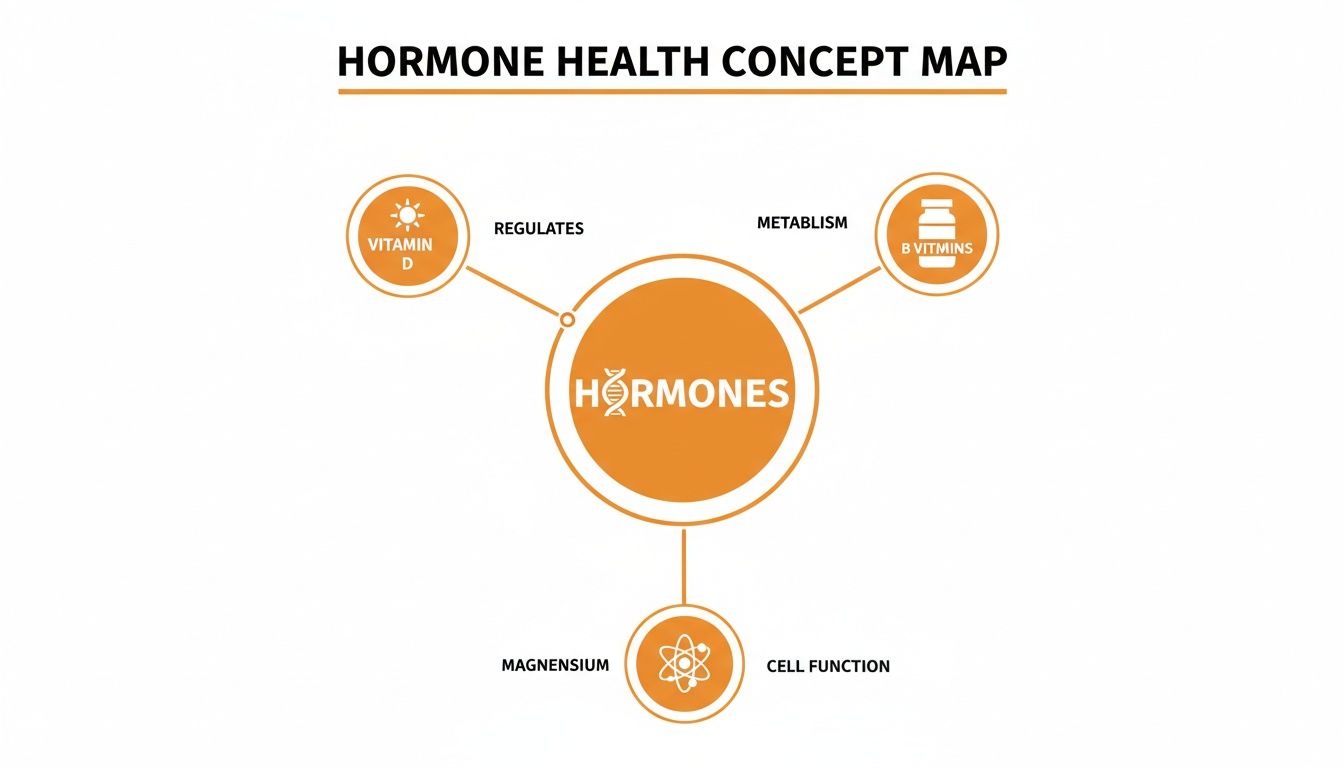
As you can see, hormone production isn't a one-man show. It relies on a whole network of nutrients working in concert to keep things balanced.
Hard science backs this up. We see a clear inverse relationship between Vitamin D levels and several key hormones in women. One study involving 351 women found that lower Vitamin D levels were directly linked to higher levels of testosterone and luteinizing hormone (LH). This suggests that getting enough Vitamin D is absolutely crucial for keeping the entire HPG axis running smoothly. For those interested in the details, you can explore the full study about Vitamin D and its hormonal regulatory role.
In essence, giving your body the right vitamins is like making sure every musician in your orchestra has their sheet music. Without those fundamental instructions, your body simply can’t produce the balanced hormonal melody required for you to feel and function at your best.
The Vitamins That Pull the Levers on Your Hormones
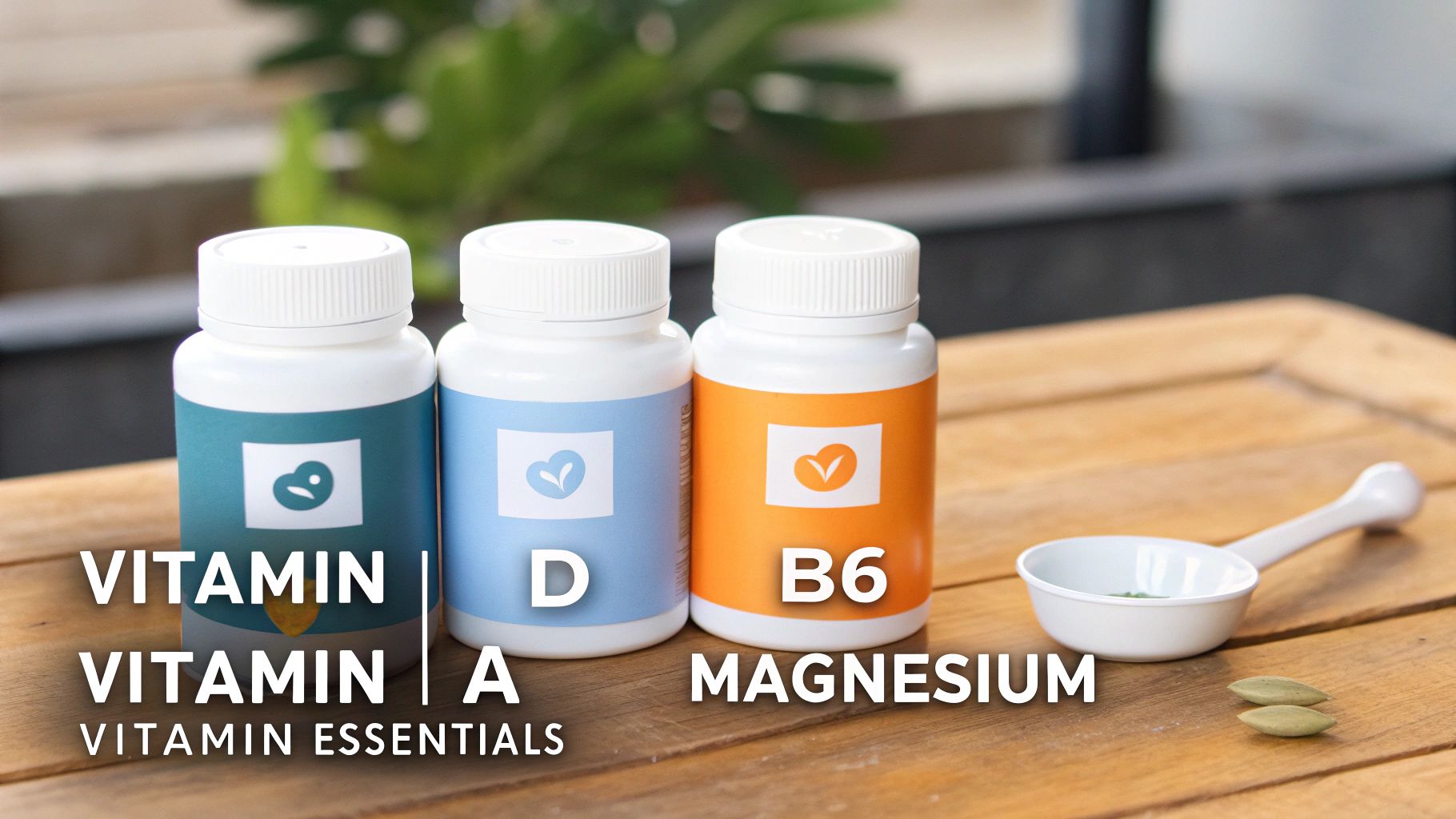
While your body needs a whole orchestra of nutrients to function, a few key vitamins and minerals are the true conductors of your hormonal symphony. They are the ones doing the heavy lifting, directly influencing how hormones are made, used, and cleared from your system.
Getting to know these star players is the first step toward figuring out how to support your body's natural balance. We'll zero in on Vitamin D, the B-vitamin family, Vitamin A, and the powerhouse mineral, Magnesium, exploring what they do and why having the right levels can be a game-changer.
Vitamin D: The Master Hormone Regulator
We call it the "sunshine vitamin," but Vitamin D acts much more like a powerful steroid hormone in the body. Its main job is to send signals that tell your body when to ramp up or tone down the production of key sex hormones like testosterone and estrogen.
Think of it as the master switch for your endocrine system. When your Vitamin D levels are where they should be, your hormonal messages get sent and received loud and clear. This is precisely why a deficiency can throw so much out of whack, leading to everything from low libido and fatigue to mood swings. The science is clear: Vitamin D is essential for the proper function of the entire hypothalamic-pituitary-gonadal axis—the command center for all things reproductive health.
A fascinating study from the Fred Hutchinson Cancer Research Center really brought this to life. They found that postmenopausal women taking 2,000 IUs of Vitamin D daily had significantly lower circulating estrogen levels, an effect that happened even without any weight loss. You can read more about their findings on Vitamin D and estrogen regulation here.
The B Vitamin Family: Your Hormonal Support Crew
If Vitamin D is the conductor, the B vitamins are the diligent crew working backstage to make sure the show runs smoothly. This group of nutrients, especially Vitamin B6, is absolutely vital for a process called methylation—a fancy term for the biochemical work your liver does to break down and safely remove old hormones, particularly estrogen.
When you're low on B vitamins, these detox pathways can get clogged up. This can lead to a buildup of "used" hormones that recirculate and cause problems like PMS, irritability, and bloating. They're also your adrenal glands' best friends, helping your body manage the production of the stress hormone cortisol.
Key Roles of B Vitamins:
- Vitamin B6: Directly involved in producing progesterone and helps the liver process excess estrogen.
- Folate (B9): Crucial for healthy cell growth and overall hormone metabolism.
- Vitamin B12: A must-have for energy and brain function, both of which can take a hit when hormones are out of sync.
For a much deeper look into how these and other nutrients specifically support female hormonal health, we’ve put together a comprehensive guide on the best vitamins for women's health.
Vitamin A and Magnesium: The Essential Cofactors
Vitamin D may get most of the attention, but it doesn't work in a vacuum. It needs support from other key players, and that's where Vitamin A and Magnesium come in. They are critical "cofactors," meaning they help other vitamins and hormones do their jobs correctly.
Vitamin A, for instance, is essential for healthy thyroid function, which helps keep your body’s metabolic "thermostat" properly set. It also plays a key role in the very first steps of producing sex hormones in both men and women.
Magnesium is another unsung hero. Your body absolutely requires it to convert Vitamin D from its stored form into its active, usable form. It’s also a powerhouse for calming the nervous system, which helps keep cortisol in check and improves how your body responds to insulin. If you're taking Vitamin D but are low on Magnesium, you might be missing out on the full benefits.
To help you connect these concepts, the table below provides a quick-glance summary of these crucial nutrients.
Comparing the Top Vitamins for Hormonal Support
| Vitamin | Hormone Target | Daily Dose | Food Sources | Deficiency Signs |
|---|---|---|---|---|
| Vitamin D | Testosterone, Estrogen, Progesterone | 1,000-4,000 IU | Fatty fish (salmon), fortified milk, sunlight, egg yolks | Fatigue, low mood, bone loss, frequent illness |
| Vitamin B6 | Progesterone, Estrogen (metabolism), Cortisol | 25-100 mg | Chickpeas, tuna, salmon, potatoes, bananas | Mood swings, irritability, skin rashes, cracked lips |
| Vitamin A | Thyroid Hormones, Testosterone, Estrogen | 700-900 mcg RAE | Liver, carrots, sweet potatoes, spinach, dairy | Dry skin, poor night vision, impaired immunity |
| Magnesium | Insulin, Cortisol, active Vitamin D conversion | 300-420 mg | Leafy greens, nuts, seeds, dark chocolate, avocados | Muscle cramps, anxiety, poor sleep, fatigue |
This table is a great starting point, but remember that individual needs can vary widely based on your diet, lifestyle, and unique health status. It’s always best to discuss supplementation with your clinician to determine what’s right for you.
Turning Your Symptoms Into a Roadmap for Health

Your body doesn't usually keep secrets. When a nutritional gap starts throwing your hormones out of whack, it sends out signals. You just need to learn its language. Things like persistent fatigue, mood swings that come out of nowhere, or a libido that's gone missing aren't just signs of a stressful week—they can be your body's "check engine" light flashing for a deeper imbalance.
Learning to connect these dots is your first, most powerful step toward regaining control. When you start recognizing the patterns in how you feel, you can begin to pinpoint which specific vitamins might be missing. This turns vague complaints into a focused starting point for a meaningful conversation with your doctor.
You'll go from saying, "I just feel off," to asking, "Could my constant fatigue be related to low Vitamin D or B12?" That simple shift moves you from being a passive passenger to an active driver of your own health.
Decoding Your Body's Warning Signs
It's easy to dismiss seemingly random symptoms, but they often trace back to a few core nutritional deficits. Understanding these connections helps you see the whole picture.
Let's look at some common signs and the nutrient deficiencies that could be behind them:
- Dragging Fatigue and Low Mood: This classic one-two punch often points to a lack of Vitamin D or the B vitamins. They are absolutely fundamental for cellular energy and for creating the neurotransmitters that keep your mood stable.
- Irregular Cycles or Crushing PMS: For women, a chaotic menstrual cycle can be a cry for more Vitamin B6, which is vital for producing progesterone and helping the body process excess estrogen. Magnesium is another hero here, known for its ability to ease cramps and irritability.
- Tanking Libido and Muscle Weakness: When sex drive dips in men or women, low Vitamin D or Zinc are often culprits. Think of them as essential raw materials for producing testosterone.
- Brain Fog and Trouble Concentrating: Feeling mentally sluggish can be a sign of a struggling thyroid, which depends on a steady supply of nutrients like Vitamin A, Zinc, and Selenium to function correctly.
Think of yourself as a detective. By paying close attention to these signals, you're not just guessing—you're gathering clues. This data is what you and your clinician will use to decide on the right tests and create a truly targeted plan.
A Real-World Gut Check
The link between a single vitamin and your physical well-being can be startlingly direct. Take the trio of Vitamin D, parathyroid hormone (PTH), and your ability to simply stay upright. When your Vitamin D levels fall, your body tries to compensate by ramping up PTH production to steal calcium from your bones. This domino effect can disrupt both muscle and nerve function.
This isn't just theory. Researchers have found a powerful link between low serum Vitamin D and poor balance in women during midlife, which directly increases their fall risk. An observational study involving 122 women discovered that those with the lowest Vitamin D also had elevated parathyroid hormone and performed worse on dynamic balance tests. It’s a clear demonstration of how keeping a key vitamin in its optimal range is crucial for something as basic as neuromuscular stability. You can read more about the link between hormones and physical health.
This connection drives home a critical point: a simple vitamin deficiency can ripple through your entire system, impacting everything from your mood to your motor skills. Catching these early warnings is your best defense against letting a small imbalance snowball into a much bigger problem.
Putting It All Together: Your Personalized Vitamin Strategy
Figuring out which vitamins you need for hormone balance shouldn't feel like a random guessing game. A truly effective plan is built on a smart, personalized strategy, and it all starts with one core principle: test, don't guess. This simple shift in thinking is what separates a shot-in-the-dark approach from one that gives your body exactly what it needs to thrive.
Without objective data, you're flying blind. The very first step is to get a clear picture of your baseline nutrient levels. This gives you and your clinician a starting point to build a targeted protocol that addresses your unique biochemistry.
A straightforward blood test can reveal your current status for all the key hormonal players, providing the roadmap for your entire strategy. It's the most direct way to connect the symptoms you're feeling to a potential root cause.
Starting With the Right Lab Tests
To get insights you can actually use, you need to ask for the right tests. While a massive, comprehensive panel can be helpful, there are a few key markers that provide the most critical information for anyone looking for a vitamin to help balance hormones.
Talk with your doctor about ordering these specific tests:
- 25-Hydroxy Vitamin D (25(OH)D): This is the gold standard for measuring your body’s true Vitamin D reserves. The goal here isn't just to be in the "normal" lab range; it's to hit an optimal range for hormonal function.
- Serum B12 and Folate: These two B vitamins are absolute workhorses for your energy levels, mood, and the crucial detoxification pathways that clear out old hormones.
- Red Blood Cell (RBC) Magnesium: This is a much more accurate way to see your body's true magnesium stores compared to a standard serum test, which often doesn't tell the whole story.
- Full Thyroid Panel with Antibodies: Don't let them get away with just testing your TSH. A full panel is essential for a complete picture of your thyroid health, which is deeply tied to every other hormone in your body.
Getting the labs done is only half the battle; understanding the results is just as important. We put together a detailed guide that explains more about testing for vitamin deficiency and how to make sense of your lab work.
Remember, the goal of testing isn't just to see if you're deficient. It's to find your optimal range—the level where you feel and function at your absolute best.
Beyond the Bottle: Essential Lifestyle Cofactors
Supplements can be incredibly powerful, but they don't work in a vacuum. Your daily habits are what create the environment that determines how well your body can actually absorb and use these nutrients.
Think of it like planting a garden. You can have the best seeds in the world, but they simply won't grow in poor, depleted soil. These lifestyle cofactors are the "soil" that will make your vitamin strategy flourish.
Critical Lifestyle Cofactors:
- Gut Health and Absorption: It’s not just what you eat; it’s what you absorb. A healthy gut lining is absolutely essential for pulling nutrients out of your food and supplements. If you have chronic inflammation or other gut issues, even the most expensive protocol can be rendered useless.
- Strategic Sun Exposure: When it comes to Vitamin D, nothing beats the sun. Aim for 10-20 minutes of midday sun exposure on your arms and legs a few times a week—without sunscreen—to kickstart your body's own natural production.
- Stress Management and Adrenal Support: Chronic stress is a nutrient thief. It burns through your B vitamins and magnesium stores as your body constantly pumps out the stress hormone cortisol. Practices like meditation, deep breathing, and getting enough quality sleep are non-negotiable for preserving these nutrients.
By weaving these foundational habits into your daily life, you create a powerful synergistic effect. Your vitamin protocol becomes exponentially more effective, building a resilient foundation for lasting hormonal balance and genuine vitality.
Putting Your Hormone Health Plan into Action
Knowing is one thing, but doing is where the real change happens. You've just learned how vital certain vitamins are for keeping your hormones in sync, but that knowledge only becomes powerful when you put it to use. It’s time to take what you’ve learned and create a practical strategy for your own health.
This all starts with having a productive, informed conversation with your doctor. Instead of just saying you feel "off," you can now steer the conversation toward specific, testable ideas. This is how you go from being a passenger in your healthcare journey to being the one in the driver's seat.
Preparing for Your Doctor's Visit
To get the most out of your time with your clinician, you need to show up prepared. Bringing organized information helps them connect the dots between how you're feeling and what might be happening on a nutritional level. Think of it as building a clear, concise case for your own well-being.
Here’s a simple checklist to prepare before you go:
- Symptom Log: For a couple of weeks, keep a log of your main symptoms. Note how often they pop up, how intense they are, and if you see any patterns. For example, maybe your fatigue always hits a wall at 3 PM, or your mood shifts at a certain point in your cycle.
- Current Supplements & Medications: Make a complete list of everything you take, including the exact dosages. This is non-negotiable, as it helps flag potential interactions and gives a clear picture of what you’re already doing.
- Recent Lab Work: If you have any recent blood test results, bring a copy. Even if they don't include the specific markers you want to check now, they provide a valuable baseline.
- Your Health Story: Jot down any major life events, periods of high stress, or changes in your diet and exercise that happened around the time your symptoms began. Context is everything.
Asking the Right Questions
Once you’re in the appointment, the goal is to work with your doctor to map out a clear plan. Your questions should be specific and focused on testing, safe supplementation, and what to do next. This way, you leave with a strategy, not just more confusion.
The goal is to build a partnership. You bring the day-to-day expertise on your own body, and your doctor brings the clinical expertise to interpret that information and guide the next steps.
Here are a few key questions to get the conversation started:
- Given the symptoms I’ve described, which vitamin and hormone levels do you think we should test first?
- Can we talk about the optimal range for these results, not just the standard "normal" range?
- If we start a new vitamin to help balance hormones, how soon should we plan on re-testing to see if it's working?
- Are there any potential interactions between these supplements and the medications I'm currently taking?
- Beyond supplements, what lifestyle changes—like diet or sleep—should I focus on to support this plan?
A smart strategy also means paying attention to the details of supplementation. For example, the timing of when you take certain nutrients can make a huge difference in how well your body absorbs them. To get this right, it's worth reading up on the best time to take vitamins. This is how you take control, turning this guide into your personal blueprint for feeling good again.
Your Top Questions Answered
Let's tackle some of the most common questions people have when they start thinking about using vitamins to support their hormone health.
What's the Single Most Important Vitamin for Hormones?
If you had to pick just one, it would have to be Vitamin D. It’s so crucial that it acts more like a hormone itself than a simple vitamin.
Think of it as the master switch. Vitamin D directly influences the production of key hormones like testosterone and estrogen and plays a foundational role in the pituitary gland—the body's hormonal command center. While other nutrients like B vitamins and magnesium are vital, they often work as the "support crew," helping Vitamin D and other pathways do their jobs effectively.
How Long Until I Actually Feel a Difference?
This really depends on how deficient you are to begin with and your unique body chemistry, but a good rule of thumb is 4-6 weeks. That's when many people start to notice a real shift in their energy, mood, and overall sense of well-being.
For the bigger, more stable changes—like more regular menstrual cycles or improvements in symptoms related to low testosterone—you'll want to give it more time. It can take 3-6 months for your body to fully replenish its nutrient stores and get all its hormonal systems back in sync.
Remember: Slow and steady wins the race here. Consistent daily intake is far more effective than taking massive doses sporadically. This allows your body to build up and maintain the levels it needs for lasting hormonal balance.
Can I Take These Vitamins If I'm on TRT or HRT?
Yes, and in many cases, you absolutely should. Foundational nutrients like Vitamin D, B vitamins, and magnesium are not only safe to take with Testosterone Replacement Therapy (TRT) or Hormone Replacement Therapy (HRT), but they can actually make your treatment more effective. They give your body the essential building blocks it needs to properly use the hormones you're taking.
But this comes with a critical caveat: you must talk to your doctor about everything you're taking. High doses of certain supplements can interfere with medications or even skew your lab results. A conversation with your clinician ensures your entire health plan is working together safely to help you reach your goals.
At Elite Bioscience, we see a strong nutritional base as non-negotiable for achieving your health goals. Our expertly crafted vitamin therapies are designed to complement our hormone and peptide treatments, helping you find optimal balance and vitality.
Ready to build your foundation? Explore Our Vitamin Therapies at elitebioscience.co and start your personalized wellness journey.