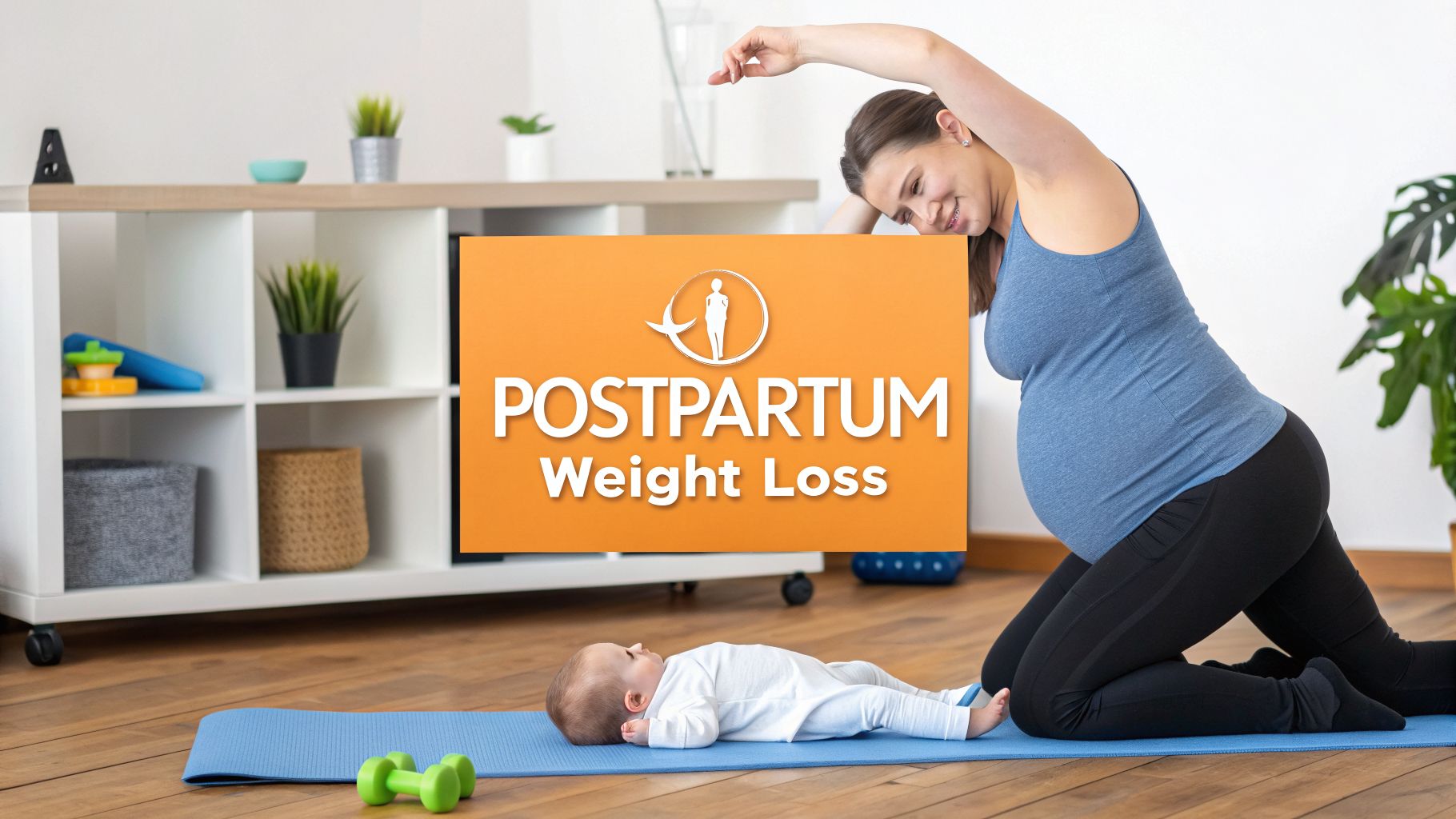
Let's be honest: the whole conversation around postpartum weight loss is broken. It’s far more about healing and rebuilding your body than it is about “bouncing back.” While creating a slight caloric deficit through good nutrition and gentle movement is the foundation for losing weight, that can only happen after your body has had a real chance to recover from childbirth.
A realistic approach puts your long-term health first, not a race to a number on the scale.
Embracing Your Postpartum Body and Setting Realistic Goals
Before we talk about timelines or numbers, we need to completely reframe how we think about the postpartum body. Your body just did something incredible. Pregnancy and childbirth are major physiological events, and they demand a significant recovery period.
Your body is navigating a sea of changes—hormones are shifting, you're shedding excess fluids, your abdominal muscles have stretched, and your pelvic floor needs to heal. Acknowledging this isn't an excuse; it's the critical first step toward a healthy, compassionate, and effective wellness plan.
Dismantling the “Bounce Back” Myth
The idea that you can "bounce back" to your pre-baby body in just a few weeks is a damaging myth, mostly fueled by celebrity stories and curated social media feeds. This narrative creates an unrealistic standard that completely ignores the biological reality of postpartum recovery.
The real goal is to feel strong, energized, and healthy as you step into your new role as a mom—not to squeeze back into your old jeans by a certain date.
Your body isn't something to be "fixed." It's something to be honored. The focus should be on rebuilding strength, nourishing yourself properly, and giving yourself the same grace and patience you give your new baby.
Understanding Realistic Postpartum Timelines
Patience is your best friend here. While the "9 months on, 9 months off" mantra is catchy, it doesn't really line up with what most women experience. Medically-backed data shows a much more gradual process, and that’s completely normal.
Right after delivery, you’ll lose about 13 pounds on average. This is the weight of the baby, the placenta, and amniotic fluid. The weight that remains is a combination of stored body fat, extra blood volume, and fluids, which your body will shed over time with a healthy, sustainable approach.
This timeline gives you a bird's-eye view of what a typical postpartum weight journey looks like, emphasizing slow and steady progress over the course of a full year.

As you can see, significant changes happen over many months, not just in the first few weeks. This is why a long-term perspective is so important for your mental and physical health.
To give you a clearer picture, here’s a breakdown of what you might expect at different stages.
| Realistic Postpartum Weight Loss Timeline |
| :— | :— |
| Timeframe | What to Expect |
| First 6 Weeks | Focus is on recovery, not weight loss. Your body is healing from delivery, managing hormonal shifts, and (if breastfeeding) establishing milk supply. You'll lose significant water weight during this time. |
| 3 Months Postpartum | A slow, gradual loss begins. A safe goal is around 1 pound per week, but this varies. Most women (around 80%) have not returned to their pre-pregnancy weight at this point. |
| 6-9 Months Postpartum | More consistent progress. With a routine of gentle exercise and balanced nutrition, you may see more steady weight loss. Hormones begin to stabilize further. |
| 1 Year Postpartum | Nearing your new normal. Many women are close to their pre-pregnancy weight, but it's also common to be a few pounds heavier. This is a new baseline for your body. |
Remember, this table shows averages. Your journey is unique, and factors like your delivery, genetics, and lifestyle all play a role.
What the Research Says About Your Timeline
If you feel like your progress is slow, you're not alone—you're in the majority. One large study found that only 20% of women get back to their pre-pregnancy weight within the first three months. That means a full 80% of new moms take longer.
Even a year after giving birth, about 24% of women are still holding onto 10 pounds or more of their pregnancy weight. These numbers aren't meant to be discouraging; they're meant to be freeing. A slower pace isn't a sign of failure—it's the norm. You can dig deeper into the research on postpartum recovery timelines to better understand why your body needs this time to heal and recalibrate.
With this in mind, here’s how to set goals that actually support your body:
- Heal First, Diet Later. Don't even think about restricting calories for at least the first six weeks. Your body’s only job is to recover from birth and, if you’re nursing, to build a healthy milk supply.
- Aim for Slow and Steady. A safe rate of weight loss is about 1 pound per week, but even half of that is great progress, especially in the beginning.
- Celebrate Non-Scale Victories. Focus on wins that have nothing to do with the scale. Are you feeling more energetic? Can you carry the car seat without your back aching? Are you able to enjoy a longer walk with the stroller? These are the things that matter.
- Talk to Your Doctor. Always get the green light from your OB-GYN or midwife before starting any new diet or exercise plan. They’ll give you advice tailored to your specific delivery and recovery needs.
Building Your Postpartum Nutrition Foundation

After you've had a baby, your body's nutritional demands go through the roof. You're healing from a major physical event, your hormones are on a rollercoaster, and if you’re breastfeeding, you're literally creating a perfect food source from scratch. The most important mindset shift you can make right now is to see food as fuel for recovery, not a tool for restriction.
This is exactly why aggressive, low-calorie diets are a terrible idea postpartum. Your body is working overtime and needs a steady stream of energy to heal properly. In fact, if you're breastfeeding, your body requires an extra 300-500 calories a day just to keep up with milk production. Slashing calories too drastically will only sabotage your energy, your mood, and potentially your milk supply.
Focusing on Nutrient-Dense Foods
Instead of getting bogged down in calorie counting, let's shift the focus to making every calorie count. A nutrient-dense diet is packed with the vitamins, minerals, and macronutrients your body is crying out for to heal and give you sustained energy. The goal for weight loss postpartum isn't about deprivation; it's about creating a small, sustainable calorie deficit without sacrificing food quality.
Here’s a look at what should be on your plate:
- Lean Protein: This is crucial for repairing tissues and rebuilding muscle. Think chicken, fish, eggs, beans, lentils, and tofu. Try to get a source of protein in at every meal to help you feel full and keep your blood sugar stable.
- Healthy Fats: Absolutely essential for hormone regulation and brain health—both for you and your baby. Load up on things like avocado, nuts, seeds, and olive oil.
- Complex Carbohydrates: These are your body's preferred energy source. Opt for whole grains like oats, quinoa, and brown rice, along with starchy veggies like sweet potatoes. They’re also full of fiber, which helps with digestion and keeps you feeling satisfied.
Micronutrients are just as critical. Pregnancy can deplete your body's stores of key vitamins and minerals, and postpartum depletion is a very real phenomenon. If you're feeling unusually exhausted or run-down, it might be worth investigating. You can get a much clearer picture of your specific needs by testing for vitamin deficiency.
Must-Have Nutrients for Postpartum Recovery
Certain nutrients are VIPs in the postpartum period. Getting enough of these can make a world of difference in your energy levels and how quickly you bounce back.
- Iron: Many women become iron-deficient after delivery because of blood loss, leading to that bone-deep fatigue and weakness. Make a conscious effort to include iron-rich foods like red meat, poultry, fish, beans, and fortified cereals.
- Calcium: If you're breastfeeding, your body will borrow calcium from your own bones to put into your breast milk. You need to replenish it by aiming for at least 1,000 mg per day from dairy, fortified plant milks, leafy greens, and tofu.
- Vitamin D: This vitamin is a team player, helping your body absorb all that calcium while also supporting your immune system. You’ll find it in fatty fish like salmon, fortified foods, and of course, a little bit of sunshine.
Your plate should be a colorful mix of these key components. Think of it as building a foundation—the stronger your nutritional base, the more resilient your body will be.
Practical Tips for the Exhausted New Mom
Knowing what to eat is one thing. Finding the time and energy to prepare it with a newborn in your arms is a whole different ballgame. The secret is to keep things incredibly simple.
One-Handed Snack Ideas:
- Hard-boiled eggs
- Apple slices with peanut butter
- Greek yogurt cups
- A handful of almonds
- Cheese sticks
- Protein bars (just check the label for low sugar content)
Meal Prep That Actually Works:
- Batch Cook Grains: Make a big pot of quinoa or brown rice at the start of the week.
- Prep Smoothie Packs: Toss fruit, spinach, and protein powder into freezer bags. When you're ready, just add your liquid of choice and blend.
- Roast a Big Tray of Veggies: These are perfect for adding to salads and bowls or just eating as a quick side.
- Embrace Your Freezer: When you make soups, stews, or chilis, double the recipe and freeze half. Your future, exhausted self will thank you.
Finally, a word on cravings. Those intense desires for sugar are often a distress signal from your body, pointing to exhaustion and unstable blood sugar. Eating regular, balanced meals that include protein and healthy fat is your best defense. And remember, a realistic plan for weight loss postpartum has room for grace. If you have the cookie, enjoy every bite and move on. No guilt allowed.
Safely Reintroducing Exercise and Movement

After weeks of recovery, you’re probably itching to start moving again. That’s a great feeling, but jumping back in too quickly can do more harm than good. Before you even think about your old workout routine, the absolute first step is getting clearance from your doctor, which usually happens at the six-week postpartum checkup.
This appointment is non-negotiable. Your provider will check how you’ve healed—whether from a vaginal delivery or a C-section—and give you the green light for activity. Think of it as the official go-ahead for this next phase of recovery.
The Foundation: Your First 6 Weeks
Let's be clear: the first six weeks postpartum are for healing, not "working out." Your initial focus should be on gentle, restorative movements that target the very areas hit hardest by pregnancy and childbirth.
This early phase is all about your deep core and pelvic floor. These muscles have been through a lot, and they form the foundation for all other strength. Diving into high-impact exercise without shoring up this base is a recipe for long-term issues.
Your first moves should be:
- Pelvic Floor Work: Kegels are famous for a reason. These exercises involve gently squeezing and lifting the muscles that support your bladder and uterus. The trick is to focus just as much on the release as the contraction. Aim for a few short sets throughout the day.
- Diaphragmatic Breathing: Also known as deep belly breathing, this simple practice is incredibly powerful. It helps reconnect your brain to your core and gently activates the transverse abdominis—your body's built-in corset.
- Checking for Diastasis Recti: This common condition is a separation of the abdominal muscles. You can do a quick self-check by lying on your back with knees bent. As you lift your head slightly, feel along your midline. If you notice a gap wider than two finger-widths, you’ll need to focus on specific exercises to help it close.
Gently Adding More Movement
Once your doctor gives you the all-clear and you’ve spent a few weeks on those foundational exercises, you can start incorporating more activity. The key word here is gentle. Your body is still in a state of major readjustment.
Walking is, without a doubt, one of the best postpartum exercises. It's low-impact, a fantastic mood-booster, and a great way to get you and your baby some fresh air. Start with short 10-15 minute walks and see how you feel. If all is well, you can gradually go a bit longer or pick up the pace.
Other great options at this stage include:
- Gentle Stretching: Zero in on the spots that get tight from constant holding, rocking, and feeding—your neck, shoulders, and upper back will thank you.
- Postnatal Yoga: Seek out classes designed specifically for postpartum bodies. A good instructor will emphasize core stability and pelvic floor health while avoiding any movements that could worsen diastasis recti.
- Swimming: As soon as you're fully healed and cleared to be in the water, swimming offers a wonderful, no-impact, full-body workout.
Key Takeaway: Your body is your best guide. If you feel any sharp pain, see an increase in bleeding, or experience urinary leakage, that's a signal to pull back. These aren't signs of weakness—they're important messages that you need to slow down.
Research confirms that a structured approach is highly effective. Meta-analyses show that programs combining diet and exercise lead to an average weight loss of about 2.49 kilograms more than control groups. Safely reintroducing exercise is a critical piece of that puzzle. For a deeper dive into the science, you can explore the findings on postpartum lifestyle interventions here.
Building Back to Strength and Cardio
As you feel your strength returning—usually around 3-4 months postpartum—you can begin to reintroduce more traditional forms of exercise. Many new moms find it incredibly helpful to work with a pelvic floor physical therapist or a certified postnatal fitness specialist at this stage to ensure they’re rebuilding strength safely. As you ramp up, you'll also want to know how to maintain muscle mass to keep your metabolism humming.
The ultimate goal is to rebuild your fitness, support your goals for weight loss postpartum, and feel strong and capable as you navigate the demands of motherhood.
Managing the Impact of Sleep and Stress
We can talk about nutrition and exercise all day, but for new moms, those are often side acts to the two main events: crushing sleep deprivation and sky-high stress. These aren't just minor hurdles; they are powerful biological forces that can bring your weight loss postpartum to a screeching halt.
When you’re consistently getting less than seven hours of sleep—which is basically the job description for a new parent—your body flips into survival mode. This causes a surge in cortisol, the famous stress hormone. Chronically high cortisol essentially tells your body to prepare for a crisis by storing energy, and its favorite place to stash it is right around your abdomen.
This isn't your body betraying you; it's an ancient survival mechanism at work. It thinks you're in danger and needs to hang onto every last calorie. So, even if your diet is on point and you're making time for gentle movement, high cortisol can make losing fat feel nearly impossible.
How Exhaustion Messes With Your Hunger
On top of the cortisol issue, a lack of sleep directly sabotages the hormones that regulate your appetite. Ghrelin, the hormone that screams, "I'm hungry," goes into overdrive. At the same time, leptin, the hormone that calmly says, "You're full," takes a nosedive.
This hormonal one-two punch is a recipe for overeating and craving the exact things you're trying to limit—namely, high-sugar and high-fat foods. It’s not a failure of willpower. It's your biology, hard-wired to seek out the quickest possible energy source when you're running on empty.
When you're sleep-deprived, your body isn't just tired; it's hormonally primed to gain and retain weight. Prioritizing rest isn't a luxury—it's a core component of your physical recovery and weight management strategy.
Practical Ways to Get More Rest
Let's be honest, the classic advice to "sleep when the baby sleeps" often feels like a joke. Instead of chasing the myth of a perfect eight hours, the goal should be to grab every possible moment of rest you can.
- Work in Shifts: This is a game-changer if you have a partner. Create a schedule where one of you is "on duty" while the other gets a solid, guaranteed block of sleep. Even just 3-4 hours of uninterrupted rest can make you feel human again.
- Build Your Sleep Cave: Make your bedroom a true sanctuary. Think blackout curtains to make it pitch-dark, a white noise machine to drown out sounds, and a cool temperature. When it’s your turn to sleep, put your phone on silent and far away from the bed.
- Lower Your Standards (Seriously): The laundry pile can grow. The dishes can wait. In the early postpartum months, your only priorities are your baby and your own recovery. Letting go of a spotless house in exchange for a nap is a trade you should make every single time.
Improving your sleep is a slow process, but small wins add up. For more ideas, our guide on how to improve energy levels naturally has some great tips that go hand-in-hand with getting better rest.
Taming Postpartum Stress
The stress of becoming a mother is a unique and potent brew. You're learning a brand-new, high-stakes job with no training, all while feeling exhausted and navigating a massive identity shift. This persistent, low-grade stress is a major contributor to the same high cortisol levels that stall weight loss.
Finding small pockets of time to decompress is non-negotiable. It’s not about finding an hour for a yoga class; it's about micro-dosing calm throughout your day to lower cortisol and build resilience.
Simple Ways to Lower Stress:
- Try a 5-Minute Reset: You don't need a long meditation. Just find a quiet corner, close your eyes, and focus on your breathing. A simple box-breathing pattern works wonders: inhale for four counts, hold for four, exhale for six. This can instantly soothe your nervous system.
- Step Outside: A quick, 10-minute walk around the block is incredibly effective. The combination of fresh air, natural light, and gentle movement is a proven formula for boosting your mood and cutting through stress.
- Ask for Help (and Actually Accept It): This is the ultimate sign of strength. Ask a friend to hold the baby so you can take a long shower. Have your partner handle a feeding. Tell someone what you need. You were never meant to do this alone.
By actively managing your sleep and stress, you're creating the right internal environment for your body to heal and let go of weight. It allows all your hard work with nutrition and exercise to finally pay off, instead of feeling like you're fighting an uphill battle against your own hormones.
When It's Time for Advanced Medical Support
You're doing everything "right." You’re eating nourishing foods, moving your body when you can, and trying your best to get some sleep. But the scale just isn't budging, and frankly, you feel like you’re fighting your own body.
If this is you, please hear this: it’s not a personal failure. Sometimes, no matter how much effort you put in, there are underlying medical hurdles that can make postpartum weight loss feel impossible. Knowing when to look beyond lifestyle changes and bring in a medical professional is one of the most powerful steps you can take.
Uncovering Potential Medical Roadblocks
Your body has performed a miracle, and sometimes the intricate systems that managed it all don't quite reset on their own. The first step is to work with your doctor to rule out some common culprits that can sabotage your progress. Many of these conditions have symptoms—like exhaustion and mood swings—that are easily mistaken for normal new-mom life.
Your doctor will likely want to investigate a few key areas:
- Postpartum Thyroiditis: This is a surprisingly common inflammation of the thyroid gland. It can swing from overactive (hyperthyroidism) to underactive (hypothyroidism), and it’s the underactive phase that really stalls weight loss by slowing your metabolism to a crawl.
- Hormonal Imbalances: It’s not just your thyroid. The symphony of hormones like estrogen, progesterone, and the stress hormone cortisol can stay out of tune long after you've given birth. This can directly impact how and where your body stores fat, not to mention your energy and mood.
- Nutrient Deficiencies: Growing a baby can seriously deplete your body's reserves of iron, vitamin D, and B12. Being low on any of these can cause a deep, persistent fatigue that makes it incredibly hard to find the energy for a walk, let alone a workout.
If you've been consistent with a healthy routine for several months and are seeing zero results, it's time to book that doctor's appointment. A few simple blood tests can often pinpoint these hidden issues.
This isn't just an anecdotal problem; it's a well-documented challenge. One study that followed 774 women found that one year after giving birth, they held onto an average of 5 kilograms (about 11 pounds). A staggering 75% of them weighed more than they did before pregnancy. Worse, the research showed that women who were still overweight at the one-year mark were far more likely to continue gaining weight. You can see the data for yourself by reviewing the full findings on postpartum weight patterns.
What Medically Supervised Therapies Can Offer
So, what happens if you've addressed those underlying conditions but still feel stuck? This is where specialized medical clinics can come in, offering advanced, supervised therapies to give your body the extra support it needs. These are never a first-line approach, but they can be a game-changer when combined with your healthy lifestyle.
Typically, this process starts with a thorough consultation, often via telehealth, where a doctor reviews your entire health picture. From there, they might suggest specific treatments designed to overcome your unique biological barriers.
Here are a few therapies that can provide targeted help:
- Peptide Therapies: Peptides are simply short chains of amino acids that send signals in your body. Specific peptides can be used to support wellness goals—for example, some help regulate how your body metabolizes fat, while others can support collagen production to improve skin elasticity after pregnancy.
- Vitamin Injections: If you have a significant nutrient deficiency, oral supplements sometimes aren't enough. Injections of vitamins like B12 can deliver a direct, powerful dose that bypasses the digestive system, giving you a noticeable boost in energy.
- Hormone-Regulating Medications: For a diagnosed and persistent hormonal imbalance, a doctor might discuss specific medications. For instance, GLP-1 agonists—a class of drugs that help regulate appetite and blood sugar—are sometimes considered for postpartum women. This is a serious medical decision, typically reserved for those who are not breastfeeding and meet specific criteria (like a BMI of 27+ with a related health condition), and requires a deep conversation with your provider.
It is so important to understand that these are not magic wands. Think of them as medical tools that help your body respond better to all the hard work you’re already doing with your nutrition, exercise, and stress management. They give you a biological assist. If you feel like you’ve hit a wall, seeking this next level of support might just be the key to finally feeling like yourself again.
Answering Your Postpartum Weight Loss Questions
As you settle into life with your new baby, it's completely normal to have a ton of questions about your body and what comes next. Let’s tackle some of the most common things new moms wonder about when it comes to postpartum weight loss.
How Much Weight Will I Lose Right After Giving Birth?
You'll notice a big drop on the scale almost immediately after delivery. Most women lose about 13 pounds right away.
This isn't fat loss, of course. That initial drop comes from the weight of your baby, the placenta, and the amniotic fluid. The weight that’s left over is a mix of extra body fat stored for energy, increased blood volume, and other fluids that your body will naturally get rid of over the next few weeks.
Does Breastfeeding Actually Help You Lose Weight?
It certainly can, but it’s not a given. Your body burns a surprising amount of energy to produce milk—somewhere between an extra 300 to 500 calories a day. For some women, this creates just the right gentle calorie deficit to help the weight come off gradually.
The catch? Breastfeeding can also make you incredibly hungry. Your body is smart, and it will send strong signals to make up for those lost calories. The real key is to focus on what you're eating, not just how much. Listening to those hunger cues and choosing nutrient-dense foods will support your milk supply and your recovery.
Think of it this way: the main goal of your nutrition right now is to fuel you and your baby. Let weight loss be a happy side effect of eating well, not the primary focus.
When Is It Safe to Start Exercising Again?
I know you might be antsy to get back to your old routine, but this is where patience really pays off. The standard medical advice is to wait until you get the all-clear at your six-week postpartum checkup. That appointment is critical for making sure you’ve healed properly, whether you had a vaginal birth or a C-section.
Before that six-week mark, "exercise" should look very different. Think gentle movements. Pelvic floor exercises (like Kegels) are a great start, as are short, slow walks around the block as you feel ready. Jumping back into high-impact workouts too soon can do more harm than good, potentially causing injury and setting your recovery back.
What Should I Do If I Hit a Weight Loss Plateau?
First off, don't panic. Hitting a plateau where the scale won't budge is an incredibly common part of the process. If you feel like you're doing all the right things but the number hasn't moved in a few weeks, it's time to play detective.
- Check Your Sleep: Are you getting any? I know it's tough with a newborn, but chronic sleep deprivation spikes cortisol, a stress hormone that tells your body to hang onto weight, especially around your middle.
- Take a Look at Your Plate: Try keeping a simple food journal for a few days. You might be surprised where hidden calories are coming from—that extra splash of creamer, a handful of crackers here and there. It all adds up.
- Switch Up Your Movement: Could you add another 10-minute walk to your day? Or maybe try a new, low-impact activity like swimming or a postpartum-specific yoga class?
- Rethink the Scale: If you've started strength training, you could be building lean muscle while losing fat. Muscle is denser than fat, so the scale might not move, but your clothes will start to fit better. Pay attention to how you feel and how your body is changing, not just the number.
If you’ve been stuck for more than a month and feel you’ve tried everything, it might be a good idea to talk to your doctor. They can run some simple tests to rule out underlying hormonal issues, like a thyroid imbalance, that can sometimes pop up after pregnancy.
If you've addressed lifestyle factors and still feel stuck, it may be time for advanced medical support. Elite Bioscience provides medically supervised therapies that can help address the biological hurdles hindering your progress. Find out how our tailored peptide and vitamin protocols can support your postpartum wellness journey.