
Ever hear the term "bioidentical hormones" and wonder what it really means? It's a simple but powerful concept.
Think of it this way: your body’s cells have specific docking stations, called receptors. These receptors are designed to receive messages from hormones, but only if the hormone has the exact right shape—like a key fitting perfectly into a lock. The hormones your body makes naturally are the master keys.
Bioidentical hormones are designed in a lab to be exact, molecular copies of those master keys. They share the same chemical structure as your own estrogen, progesterone, or testosterone. This perfect match is what sets them apart. Because your body recognizes them as its own, the interaction is seamless.
What Are Bioidentical Hormones, Really?
Let's dive a little deeper than the textbook definition. The whole point of using a bioidentical hormone is to give your body something it can use without any confusion.
When a hormone that isn't a perfect match tries to connect with a receptor, it's like using a slightly different key. It might jiggle the lock open, but it might also get stuck, not work at all, or trigger unintended side effects. Bioidentical hormones are crafted to avoid that problem entirely by being a perfect structural match.
Where Do They Come From?
This is a common question, and there's a bit of a misconception. While many bioidentical hormones start with compounds found in plants like wild yams or soy, your body can't just convert a yam into progesterone.
Instead, specific plant sterols are taken into a lab where they undergo a sophisticated process to be converted into the final hormone. The end product is molecularly identical to the hormones in your body, even though the starting point was a plant.
The core principle of bioidentical hormone replacement therapy (BHRT) is to restore hormonal balance by replenishing what your body is no longer making in sufficient amounts. It's about giving back what was lost, in the most natural form possible.
This approach is becoming incredibly popular for managing the symptoms that come with hormonal shifts, like menopause in women and andropause in men. It’s not just about replacing what’s missing; it’s about doing so in a way that works with your body’s natural design.
The desire for more personalized healthcare is driving major interest in this field. The global bioidentical hormones market was valued at USD 3.42 billion in 2025 and is expected to climb to USD 5.51 billion by 2033. This isn't just a trend; it's a significant shift away from one-size-fits-all treatments. You can read the full market analysis to see just how much the demand for personalized menopausal care is growing.
Bioidentical Hormones at a Glance
For a quick overview, this table breaks down the essential characteristics of bioidentical hormones.
| Characteristic | Description |
|---|---|
| Molecular Structure | Chemically identical to the hormones produced by the human body (e.g., estradiol, progesterone). |
| Origin | Synthesized from plant-based sources (like yams and soy) in a laboratory setting. |
| Receptor Interaction | Binds to hormone receptors in the same way as endogenous (naturally produced) hormones. |
| Personalization | Can be custom-compounded to match an individual's specific hormonal needs. |
| Forms of Delivery | Available in various forms, including creams, gels, patches, pellets, and oral capsules. |
Essentially, the goal is to provide a hormone therapy that your body can't distinguish from its own natural output.
Comparing Bioidentical and Synthetic Hormones
Trying to grasp the difference between bioidentical and synthetic hormones can seem complicated, but it really comes down to a simple idea: how well a key fits into a lock. While both are made in a lab, their basic design at the molecular level is where they split ways. This single difference has a ripple effect on everything, from how your body accepts them to the way they’re prescribed.
Think of your body’s hormone receptors as little locks, each designed for a very specific key. Bioidentical hormones are engineered to be that perfectly cut key—an exact molecular copy of the hormones your body makes on its own. On the other hand, synthetic hormones are more like a master key; they're similar enough to get the job done but aren't a perfect match.
That structural difference is the whole ballgame. Because bioidentical hormones are identical to your body’s own—like estradiol and progesterone—your cells recognize and use them just as they would their own. Synthetic hormones have a slightly altered chemical structure, which means your body might process them differently, leading to different effects and byproducts.
A Side-by-Side Look at the Differences
The easiest way to see how they stack up is to put them next to each other. Both are designed to help with the symptoms of hormonal imbalance, but their sources, structures, and how they’re used can be worlds apart.
To make things crystal clear, here’s a breakdown of the key distinctions.
Key Differences Bioidentical vs Synthetic Hormones
| Feature | Bioidentical Hormones | Synthetic Hormones |
|---|---|---|
| Chemical Structure | Molecularly identical to the hormones naturally produced by the human body. | Structurally different from human hormones to allow for patenting. |
| Source Material | Derived from plant compounds (like wild yams or soy) and then modified in a lab. | Often derived from animal sources (e.g., conjugated equine estrogen from horse urine) or completely synthesized. |
| Receptor Fit | Binds to hormone receptors in the body just like endogenous hormones, acting as a "perfect key." | Binds to receptors but may activate them differently, acting as a "master key." |
| Customization | Can be custom-compounded by a pharmacy to match a patient's specific hormonal needs based on lab testing. | Typically available in standardized, mass-produced doses determined by pharmaceutical companies. |
| Metabolism | Metabolized and broken down by the body through the same pathways as its natural hormones. | May produce different metabolites or byproducts that the body does not recognize. |
As you can see, the main draw for many people exploring what bioidentical hormones are is the potential for a more natural interaction with the body and the ability to get a truly personalized treatment.
"Bioidentical hormones are defined… as hormones that are the exact replicas of the hormones your body makes… Synthetic hormones have a different chemical structure." – Dr. Sara Gottfried, The Hormone Cure
This quote really gets to the heart of the matter. It's this core difference that leads many to feel that bioidentical options offer a more harmonious way to get back in balance.
Personalization and Your Body
One of the biggest practical differences is the ability to personalize treatment. Synthetic hormones usually come in a few standard doses, which might not be the right fit for everyone's unique body chemistry. This one-size-fits-all model can sometimes make it tough to hit that sweet spot.
This is where bioidentical hormones really shine. A provider can order detailed lab work to see exactly where your hormone levels are off. With those results, a compounding pharmacy can create a unique formula with the precise dosages you need.
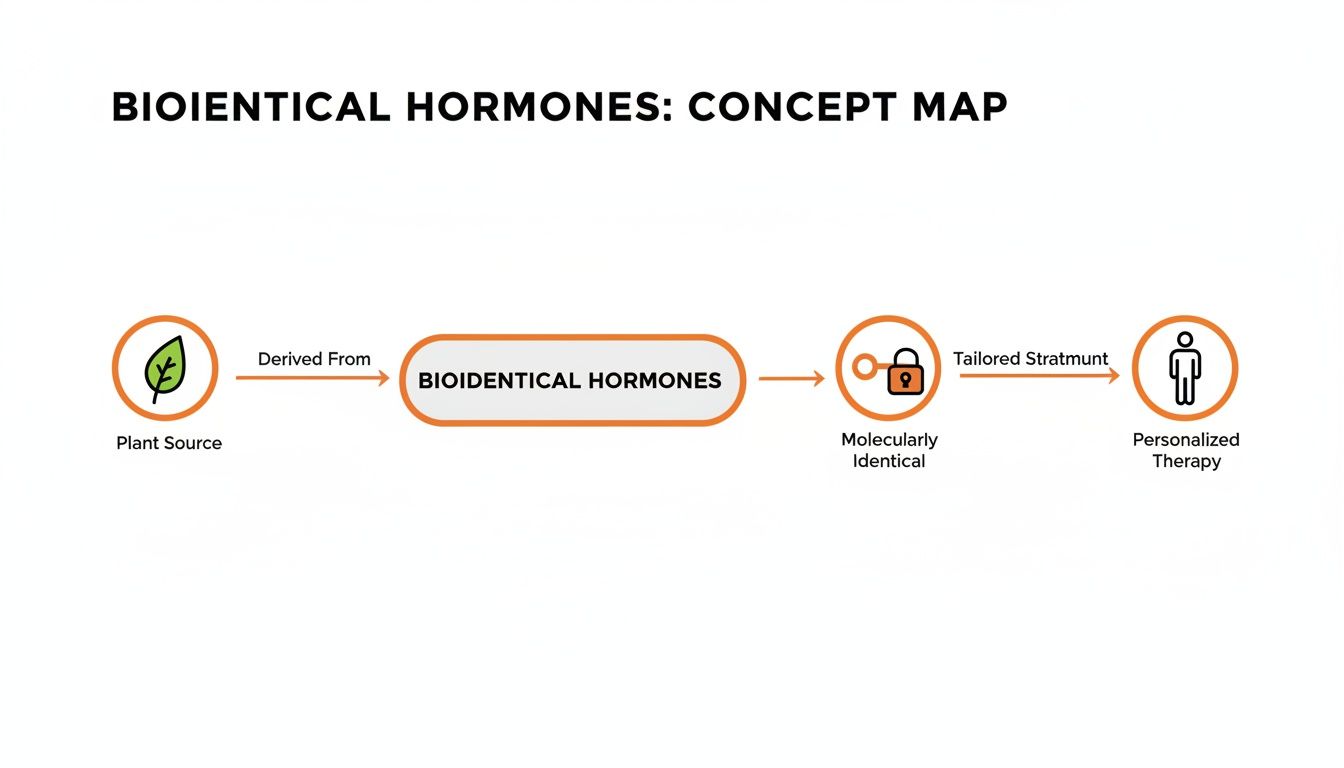
The journey—from a natural plant source to a personalized treatment—is all about mimicking nature as closely as possible, both in structure and in practice.
Ultimately, choosing between bioidentical and synthetic hormones comes down to your individual health, your medical history, and what you want to achieve. Knowing these fundamental differences helps you have a much more informed conversation with your doctor about which path is the best for your long-term wellness. They are both powerful tools, but they work in very different ways.
How Bioidentical Hormones Work Inside Your Body
To really get a handle on how bioidentical hormones can restore your body’s balance, it helps to think of it like a massive, intricate communication network. Your hormones are the messages, and your cells have specific "mailboxes"—or receptors—built to receive them.
When a hormone message is sent out, it travels through your bloodstream searching for its perfectly matched mailbox. If the message and the mailbox are a perfect fit, the box opens, and the cell gets the exact instructions it needs to do its job. This is your endocrine system in action, and it’s the master regulator of everything from your mood and energy to your metabolism and sleep.
The trouble starts when your body stops producing enough of these critical messages. The mailboxes sit empty, and important cellular functions start to lag or shut down completely. This is what you feel as fatigue, brain fog, weight gain, and all the other frustrating symptoms of hormonal imbalance.
The Perfect Fit Principle
This is precisely where the design of bioidentical hormones makes all the difference. Because their molecular structure is an exact match to the hormones your own body produces, they are shaped perfectly to fit into those cellular mailboxes.
Your body literally can't tell the difference between a bioidentical hormone and one it made itself. The receptor accepts the message without a second thought, allowing cellular communication to get back on track. This seamless fit is the secret behind why bioidentical hormone replacement therapy (BHRT) can be so effective.
Because the body recognizes bioidentical hormones as its own, it can metabolize and use them through its natural pathways. This avoids the potential confusion that can occur when a cell receives a message from a hormone with an unfamiliar molecular structure.
This direct, recognizable action is fundamental to restoring the delicate hormonal symphony that keeps you feeling your best. When you learn how to read lab results for your hormone levels, you're essentially getting an inventory of which messages are in short supply.
The Key Players in Hormonal Balance
While your body makes dozens of hormones, BHRT usually focuses on the major players that tend to decline as we age. Each one has a critical set of responsibilities for your overall well-being.
Estrogen: Often thought of as the primary female hormone (though men have it too), estrogen is a powerhouse. It protects bone density, regulates mood, keeps skin elastic, and supports heart health. Replenishing estrogen is key to relieving symptoms like hot flashes, night sweats, and vaginal dryness.
Progesterone: This hormone is estrogen’s essential partner. It's best known for its calming effects—it promotes deep sleep and can help reduce anxiety. For women, it's also vital for protecting the uterine lining.
Testosterone: While it gets the most attention in men, testosterone is absolutely crucial for both sexes. It drives libido, maintains muscle mass and bone density, and fuels our energy and cognitive focus. Low testosterone often shows up as fatigue, muscle loss, and a general drop in vitality.
By replenishing these key hormones with bioidentical versions, BHRT aims to refill your body’s empty mailboxes with the exact messages they were designed to receive. It isn't about adding something foreign; it's about giving your body back what it's missing to restore function and, in turn, dramatically improve your quality of life.
How Bioidentical Hormones Work in the Real World
The science is one thing, but how does hormone therapy actually feel? That’s where the conversation gets interesting. For most people, a hormone imbalance isn't just a number on a lab test—it’s a daily struggle with frustrating symptoms that can throw everything off, from your focus at work to your relationships at home. Bioidentical Hormone Replacement Therapy (BHRT) gets right to the root of these problems, aiming to restore balance and give you back your quality of life.
The most common use for BHRT is managing the hormonal shifts that come with age, especially menopause for women and andropause for men. These changes can bring on a wave of symptoms that many people just assume are a non-negotiable part of getting older. But with a personalized plan, you can take control and start feeling like yourself again.

Alleviating Menopause Symptoms in Women
For many women, the transition into menopause can be a rocky road. The steep drop in estrogen and progesterone triggers a whole host of physical and emotional symptoms. By replenishing these hormones with their bioidentical counterparts, BHRT helps smooth out this natural—but often very disruptive—phase of life.
Here's where women often see the biggest difference:
- Taming Hot Flashes and Night Sweats: Those sudden, intense waves of heat are the hallmark symptom of menopause, impacting up to 75% of women. Stabilizing estrogen levels with BHRT can dramatically cut down how often they happen and how intense they are, which means more comfort and, finally, a good night's sleep.
- Balancing Mood and Clearing Brain Fog: Hormonal chaos can wreak havoc on your emotions, leading to mood swings, anxiety, and that frustrating feeling of "brain fog." Bringing estrogen and progesterone back into balance can have a powerful stabilizing effect, helping you feel more clear-headed and emotionally centered.
- Restoring Vaginal Health: Low estrogen is the main culprit behind vaginal dryness and discomfort, a problem for more than half of postmenopausal women. Bioidentical estrogen can restore natural lubrication and tissue health, making intimacy comfortable again.
The goal of BHRT isn't just to put a band-aid on symptoms. It’s about restoring the body's natural hormonal environment to support everything from your bone density to your heart health.
Beyond these common issues, getting your hormones back in sync can also lead to deeper sleep, more energy, and even help protect against long-term health problems like osteoporosis, a condition where bone loss speeds up dramatically after menopause.
Addressing Andropause in Men
Men go through their own version of hormonal decline, often called andropause, as testosterone levels gradually drop over time. This slow-and-steady change can quietly chip away at a man's energy, strength, and overall sense of vitality. Bioidentical Testosterone Replacement Therapy (TRT) offers a direct way to push back.
The aim is to bring testosterone back to an optimal, healthy range. When that happens, men often report significant improvements:
- Renewed Energy and Vitality: One of the first things men usually notice is that persistent fatigue starts to lift. That newfound stamina makes a difference in everything from productivity at work to having the motivation to hit the gym.
- Improved Muscle Mass and Strength: Testosterone is essential for building and maintaining muscle. BHRT can help men fight the age-related loss of lean muscle while also helping to shed stubborn body fat.
- A Stronger Libido and Better Sexual Function: A flagging sex drive is one of the most common complaints linked to low testosterone. Getting hormone levels back on track can directly boost libido and improve sexual performance.
- Sharper Mental Focus: Just like in women, hormones and brain function are closely linked. Optimal testosterone levels can help cut through brain fog, improving concentration and memory.
At the end of the day, the real-world impact of bioidentical hormones is deeply personal. It’s about giving you the ability to actively manage the biological shifts of aging, so you can hold onto your health, energy, and zest for life for years to come.
Weighing the Benefits Against the Potential Risks
When you're thinking about something like Bioidentical Hormone Replacement Therapy (BHRT), it’s crucial to look at the whole picture. It's not just about chasing benefits; it's about making a smart, informed choice. That means understanding the incredible quality-of-life improvements it can offer, while also being clear-eyed about the potential side effects—which, with the right expert care, are usually quite manageable.
The whole point of BHRT is to get your body’s hormones back into a state of harmony. When we get that right, the positive ripple effects can touch almost every part of your life. You're not just masking symptoms; you're restoring what your body is missing.
The Upside: What Hormonal Balance Feels Like
For anyone wrestling with the daily frustrations of menopause or andropause, the benefits of bioidentical hormones are very real and tangible. We're talking about a genuine improvement in how you feel, day in and day out, because you're finally addressing the root cause of the problem.
People often report a significant boost in:
- Mood and Mental Clarity: Stabilizing your hormones can feel like a fog has lifted. That frustrating brain fog, the unpredictable mood swings, and the undercurrent of anxiety often ease up considerably.
- Energy and Stamina: Feeling constantly drained is one of the biggest complaints I hear. Getting key hormones like testosterone back to optimal levels can bring back a sense of energy and drive you thought was long gone.
- Physical Resilience: BHRT is a powerful tool for healthy aging. It’s instrumental in protecting bone density to lower the risk of osteoporosis and helps maintain the lean muscle mass you need to stay strong and keep your metabolism humming.
- Deeper, More Restful Sleep: Hormones are deeply connected to our sleep-wake cycles. Progesterone, in particular, is incredibly calming. Restoring it can help put an end to night sweats and lead to sleep that actually leaves you feeling refreshed.
Think of it this way: the benefits of BHRT are all connected. When you start sleeping better, you have more energy. More energy lifts your mood and sharpens your mind. It creates a positive upward spiral of well-being.
Navigating the Potential Downsides
Let’s be realistic: no medical treatment comes with zero risks. It's important to have an open conversation about them. The good news is that the side effects tied to BHRT are typically mild and, more often than not, are simply a sign that your dosage needs a small tweak. They aren't something you just have to live with.
Some of the things that might pop up include:
- Bloating or a bit of water retention
- Breast tenderness
- Acne or suddenly oily skin
- Moodiness
- Headaches
Here's the critical thing to understand: these issues almost always happen when the hormone levels in the prescription aren't quite the right fit for your unique body. This is exactly why a cookie-cutter approach is a terrible idea and why working with an experienced professional is absolutely essential.
You can dramatically lower the risk of side effects by following a structured, medically supervised plan. This means comprehensive initial testing to see where you're starting from, a truly personalized treatment plan built around your results, and consistent follow-up monitoring to make small, precise adjustments along the way. When you work closely with a provider who knows what they're doing, your therapy is fine-tuned to your body, pushing the benefits to the forefront while keeping any risks in the background.
How to Start Your Journey with BHRT
Deciding to explore hormone therapy is a big step, but getting started is often more straightforward than people imagine. Your journey doesn’t begin with a prescription pad; it starts with a simple conversation. The most critical decision you'll make is finding a qualified provider who truly specializes in hormone therapy. This choice is the foundation for a safe and effective experience.
Think of it like hiring an expert guide for a trek into new territory. You wouldn't want just anyone—you'd want a seasoned specialist who knows the terrain inside and out. This professional becomes your partner, guiding you from that first evaluation all the way to feeling like yourself again.
Finding the Right Hormone Specialist
The right provider does far more than just write prescriptions. They're an expert in hormone optimization who understands the delicate dance between bioidentical hormones and your unique body chemistry.
So, what should you look for? You'll want a healthcare professional with specific, relevant experience.
- Specialized Training: Look for providers who have advanced certifications or training in hormone replacement therapy, functional medicine, or endocrinology.
- A Whole-Person Approach: A top-tier specialist won't just look at your hormone levels. They’ll want to understand your lifestyle, diet, stress, and overall sense of well-being to see the complete picture.
- A Commitment to Testing: They should insist on comprehensive lab work—whether it's blood, saliva, or urine testing—before even suggesting a treatment. There's no room for guesswork when it comes to your hormones.
What to Expect from Your First Consultation
Your first appointment is all about discovery, for both you and your provider. It's your opportunity to talk through your symptoms, ask every question you have, and get a feel for whether you've found the right partner for your health journey. It’s a great idea to come with a list of questions to make sure you cover everything.
A provider’s willingness to listen is a key indicator of quality care. Your journey should be a collaborative effort, with your experiences and goals driving the creation of a personalized treatment plan.
A good BHRT program follows a clear, structured path designed for the best possible results. For a more detailed walkthrough, take a look at our guide on how to start hormone replacement therapy.
- Initial Assessment and Lab Work: It all begins with a deep dive into your medical history and symptoms. This is followed by comprehensive lab tests to establish a clear baseline of where your hormone levels are right now.
- Creating Your Custom Plan: Once the lab results are back, your provider will sit down with you to review them and design a BHRT plan that is 100% yours. This plan will specify the exact hormones, dosages, and the best delivery method for your body—be it creams, injections, or pellets.
- Ongoing Monitoring and Adjustments: Your journey doesn't stop after the first prescription. Regular follow-ups are crucial for tracking your progress and making tiny, precise tweaks to your protocol. This fine-tuning is what helps you not only reach but also maintain your optimal hormonal balance, ensuring you feel your absolute best.
Got Questions About Bioidentical Hormones? We've Got Answers.
Deciding to explore hormone therapy is a big step, and it's completely normal to have a lot of questions. Getting clear, honest answers is the best way to feel confident about your health choices.
Let's walk through some of the most common things people ask when considering Bioidentical Hormone Replacement Therapy (BHRT).
Are Bioidentical Hormones Actually Safer Than Synthetic Ones?
It’s a great question, and the answer isn't a simple yes or no. The term "bioidentical" means the hormone's molecular structure is an exact match to what your body produces. Because of this, they often fit into your body's cellular receptors like a perfect key in a lock, which can mean fewer side effects for many people.
However, safety isn't just about the hormone itself—it's about the entire approach. True safety comes from personalized dosing based on your unique lab results, the right administration method for you, and ongoing monitoring by a skilled provider. A practitioner who insists on detailed testing from the start is your biggest asset for a safe and successful outcome.
How Long Until I Start Feeling Better?
Everyone's body is different, so the timeline varies. Some people are pleasantly surprised to feel a shift within just a few weeks—better sleep, a more stable mood, and a little more pep in their step are often the first things to improve.
Deeper, more structural changes take a bit more time. For things like improved body composition, skin elasticity, or bone density, you’ll want to give it about three to six months. During this period, your hormone levels are stabilizing, and your body is getting used to its new normal. Your provider will be with you every step of the way, fine-tuning your plan as needed.
The real magic of BHRT lies in patience and consistency. Think of it as giving your body the time and tools it needs to recalibrate. Small, expert adjustments over time are what lead to lasting results.
What Are the Different Ways to Take Bioidentical Hormones?
One of the best parts of modern BHRT is how flexible it is. There’s no one-size-fits-all method, so you and your doctor can choose what works best for your body and your lifestyle.
Here are the most common options:
- Topical Creams or Gels: You apply these to your skin daily for a steady, slow absorption.
- Injections: A common choice for testosterone, administered on a regular schedule.
- Oral Capsules: A straightforward pill you take each day.
- Patches: These stick to your skin and are replaced every few days.
- Subcutaneous Pellets: A tiny pellet is placed just under the skin, where it releases a consistent dose of hormones over several months.
The right choice depends on which hormones you need, your lab work, and what your provider recommends. To truly understand your body’s needs, advanced testing can provide a detailed roadmap. For instance, you can learn more about the comprehensive insights offered by the DUTCH test for hormones.
At Elite Bioscience, our entire focus is on creating a personalized plan that helps you feel like yourself again. Our team is here to guide you through your journey to hormonal balance and renewed vitality. Explore our tailored therapy options today.