
If you've noticed your sex drive isn't what it used to be, you're not alone. It's a frustrating and often confusing experience, but it’s rarely a sign of a single, isolated problem. Instead, think of low libido as a complex signal your body is sending—a result of interconnected hormonal, psychological, and lifestyle factors all playing a part.
Figuring out the root cause is the first step toward getting things back on track.
Unpacking the Causes of Low Libido in Men

A healthy sex drive is a vital part of your overall well-being, influencing everything from your mood to your relationship. When that desire starts to fade, it's easy to feel like it’s a personal failing, but a persistent lack of interest in sex is far more common than most men think—and it almost always points to an underlying issue that can be addressed.
Your libido is like an indicator light on a car's dashboard. When it starts blinking, the light itself isn't the problem. It's a warning that something under the hood—the engine, the electronics, the fuel—needs attention. Similarly, low libido is a sign that one or more of your body's interconnected systems are out of balance.
This isn't just an occasional issue. A 2023 study highlighted that 30% of middle-aged men reported at least one form of sexual dysfunction. Within that group, low libido affected 7.2% of men and often showed up alongside other health concerns, proving it’s a significant issue that deserves a closer look.
To help simplify this complex topic, we can group the causes into four main categories. Think of them as the four pillars supporting a healthy sex drive. If one pillar starts to crumble, the entire structure is at risk.
To give you a clearer picture, here's a quick summary of the primary factors that can impact a man's sex drive.
Primary Causes of Low Libido in Men at a Glance
| Cause Category | Key Factors | Common Examples |
|---|---|---|
| Hormonal Health | Imbalances in key sex and stress hormones. | Low testosterone, high cortisol, thyroid problems. |
| Mental & Emotional State | Psychological and relationship-based issues. | Chronic stress, depression, anxiety, relationship conflict. |
| Physical Health & Lifestyle | Daily habits and overall physical condition. | Poor diet, lack of exercise, insufficient sleep, excessive alcohol. |
| Medical Factors | Underlying illnesses and their treatments. | Diabetes, heart disease, obesity, side effects from medication. |
Each of these categories plays a crucial role, and they often overlap, making it important to look at the whole picture.
The Four Pillars of Male Libido
Let's break down those four pillars to see how they connect.
- Hormonal Health: This is the biological bedrock of your sex drive. Testosterone is the main player, but other hormones like cortisol (the stress hormone) and thyroid hormones are also critical. An imbalance in any of these can throw your desire off course.
- Mental and Emotional State: Your brain is your biggest sex organ. If it's preoccupied with stress, anxiety, or depression, there's simply no mental or emotional energy left for sexual thoughts. Relationship problems can also shut down desire in a hurry.
- Physical Health and Lifestyle: What you do every day matters. A poor diet, a sedentary lifestyle, not getting enough sleep, and drinking too much alcohol can all tank your energy levels, mess with your hormones, and reduce blood flow—all of which are essential for a healthy libido.
- Medical Factors: Chronic illnesses like diabetes, heart disease, and obesity are well-known culprits. On top of that, the medications used to treat these and other conditions can come with side effects that directly impact your sex drive.
When tackling low libido, it's crucial to look at the whole picture. Just focusing on hormones without considering stress or your daily habits often leads to an incomplete and frustrating solution.
Of all these factors, testosterone is often the first thing that comes to mind. As the primary driver of male sexual function, even a small dip can have a noticeable impact. Understanding the signs of low free testosterone and how it’s properly diagnosed is a critical piece of the puzzle.
The Critical Role Hormones Play in Male Libido
When we start digging into the causes of low libido in men, the conversation almost always lands on hormones—and for good reason. Think of your endocrine system as a finely tuned control panel for your body. If one of the main dials, especially testosterone, is set too low, the entire system that drives sexual desire can sputter and stall.
Testosterone is the primary male sex hormone, the main fuel for your libido. But its job doesn’t stop there. It also plays a huge part in regulating your mood, keeping your muscle mass up, and maintaining your overall energy.
Imagine your sex drive is like the throttle on an engine. Testosterone is the foot on the gas pedal. When T-levels are where they should be, the engine roars. But when they dip, that foot comes off the pedal, and your drive slows to a crawl.
The Impact of Low Testosterone
Low testosterone, known in medical circles as hypogonadism, is one of the most frequent biological culprits behind a lagging sex drive. It's a state where your body simply isn't producing enough of this vital hormone. While it's perfectly normal for testosterone to taper off as you get older, a steep or premature drop can throw a major wrench in the works.
This isn't just a minor blip. Research confirms that while a man’s sexual interest generally holds steady until about age 60, it often takes a sharper dive after that. A major driver is testosterone deficiency, which is often clinically defined as having total serum testosterone levels below 3.0 ng/mL. The connection between libido and hormonal changes with age is well-documented and worth understanding.
It’s crucial to know the difference between a normal, age-related slide and a clinically significant problem. A slow, gradual decline over decades is expected. A faster drop that brings on clear symptoms is a signal to talk to a doctor.
The fallout from low testosterone isn't confined to the bedroom. Men often struggle with fatigue, moodiness, muscle loss, and an increase in body fat—all of which can pour more cold water on a dwindling sex drive.
Getting a handle on how these levels change throughout a man's life is key. You can check out our detailed guide that breaks down normal testosterone levels by age to see how you might stack up.
More Than Just Testosterone
While testosterone grabs the spotlight, it’s not the only player on the hormonal stage. Other hormones can throw your libido off course, often by getting in the way of testosterone or by causing other problems that kill your desire.
- Thyroid Hormones: Your thyroid is your body’s metabolism manager. If it’s underactive (hypothyroidism), you can feel exhausted and depressed. If it’s overactive (hyperthyroidism), you might be anxious and irritable. Either way, your energy and mood are shot, and your sex drive often goes down with them.
- Cortisol: This is your "stress hormone." When you’re under chronic stress, your body pumps out cortisol nonstop. Persistently high cortisol levels can actually suppress testosterone production. In a very real sense, long-term stress robs your body of the resources it needs to fuel your libido.
- Prolactin: Though mainly linked to lactation in women, men produce small amounts of this hormone. If levels get abnormally high—often due to a small tumor or certain medications—it can directly interfere with testosterone production and tank your sex drive.
These interactions show just how connected everything is. A problem with your thyroid can create a domino effect that ends with a low libido. That’s why a thorough look at your complete hormonal picture is a must when trying to find the root cause of a diminished sex drive.
How Your Mind and Mood Shape Your Sex Drive

While hormones are the biological fuel for your libido, your brain is the command center that gives the final green light for desire. Sexual interest doesn’t start in the body; it originates in the mind. If your mental and emotional state is under strain, your sex drive is often one of the first things to take a hit.
Think of it like having a finite amount of mental bandwidth. Every deadline, worry, and emotional conflict consumes a piece of that bandwidth. When financial stress, work pressure, or personal anxieties pile up, they can quickly hog all your available resources, leaving zero room for sexual thoughts or feelings.
This is exactly what causes low libido in men even when their hormone levels look perfectly normal. The brain is simply too preoccupied with managing perceived threats to waste any energy on something non-essential like desire. It’s a survival mechanism—when you’re in a state of high alert, sex is not a priority.
The Overload of Stress and Anxiety
Chronic stress is one of the most powerful libido killers out there. When you're constantly on edge, your body is flooded with cortisol, the primary stress hormone. Not only does cortisol suppress testosterone production, but it also locks your nervous system into "fight-or-flight" mode, which is the complete opposite of the relaxed "rest-and-digest" state needed for arousal.
Anxiety works in a similar way, often creating a vicious feedback loop. You might feel anxious about work, which kills your libido. Then, you start getting anxious about your low libido, which creates performance anxiety and makes you avoid intimacy altogether. This cycle just reinforces the problem, making sex feel like another chore instead of a source of pleasure.
Mental wellness isn't separate from sexual health; it's the foundation of it. A mind consumed by stress, anxiety, or depression has little room left for intimacy and desire.
For many men, the link between their mental state and physical symptoms can be surprising. You can learn more about the intricate connection between low testosterone and anxiety to see how these two issues often go hand-in-hand, creating a challenging cycle that affects both mind and body.
Depression and Emotional Disconnect
Depression is far more than just feeling sad; it’s a clinical condition that can drain the color from every part of your life, especially sex. In fact, one of the key symptoms clinicians look for when diagnosing depression is a significant loss of interest in activities you once enjoyed—and sex is frequently at the top of that list.
This condition casts a heavy fog over the brain, dampening the neural circuits responsible for pleasure and motivation. To make matters worse, some of the most common medications used to treat depression, particularly SSRIs (Selective Serotonin Reuptake Inhibitors), can have the unfortunate side effect of further crushing libido.
Beyond your own mental health, the dynamics within your relationship play a massive role.
- Unresolved Conflict: Lingering arguments and resentment create an emotional distance that makes physical intimacy feel impossible.
- Poor Communication: When partners can’t talk openly about their needs, desires, or frustrations, a disconnect inevitably grows.
- Lack of Intimacy: If the non-sexual parts of your relationship—like affection, deep conversation, and shared experiences—are missing, sexual desire often fades right along with them.
These relationship issues can extinguish desire just as effectively as any biological problem. If the emotional connection isn't there, the physical one is unlikely to follow. Addressing these psychological and interpersonal factors is often a crucial first step in rediscovering a healthy and satisfying sex drive.
The Impact of Lifestyle on Your Libido
While hormones and mental health are massive players, your daily habits are the bedrock your sex drive is built on. Think of your body as a high-performance engine. It doesn't matter how powerful the engine (your hormones) is or how skilled the driver (your mind) is if you're filling the tank with low-grade fuel and skipping all the maintenance.
The choices you make every day directly impact your energy levels, blood flow, and hormone balance—all of which dictate your libido. The good news? These are the factors you have the most direct control over. Small, consistent tweaks to your daily routine can lead to huge improvements in your sex drive and overall vitality.
How Diet and Exercise Fuel Desire
What you put on your plate and how you move your body have a profound effect on your sexual health. A diet loaded with processed foods, sugar, and unhealthy fats is a recipe for inflammation, fatigue, and weight gain—all notorious libido killers. On the flip side, a nutrient-dense diet gives your body the raw materials it needs to produce hormones and generate energy.
Obesity is a particularly powerful disruptor of male libido. Excess body fat, especially around your middle, cranks up the activity of an enzyme called aromatase. This enzyme literally converts your testosterone into estrogen, torpedoing your levels of the primary male sex hormone and tanking your desire.
Regular exercise does the exact opposite, acting as a potent libido booster. Here’s how:
- Boosts Testosterone: Strength training and high-intensity interval training (HIIT) are both proven to naturally ramp up testosterone production.
- Improves Blood Flow: Cardio strengthens your heart and improves circulation everywhere in your body, which is non-negotiable for arousal and sexual function.
- Reduces Stress: Getting active is one of the best ways to slash your cortisol levels, freeing up mental space and reducing the hormonal suppression of your sex drive.
- Enhances Mood and Confidence: Exercise triggers the release of endorphins, improves your body image, and boosts self-esteem—all of which put you in a much better headspace for intimacy.
Your lifestyle is a collection of daily decisions, each one either building up or tearing down your sexual vitality. Below is a straightforward comparison of common habits and how they can tip the scales for or against a healthy libido.
Lifestyle Choices and Their Impact on Male Libido
A comparison of common lifestyle habits and how they can either support or suppress a healthy sex drive.
| Lifestyle Factor | Libido-Boosting Habit | Libido-Suppressing Habit |
|---|---|---|
| Diet | Eating a balanced diet rich in whole foods, lean proteins, healthy fats, and vegetables. | Consuming a diet high in processed foods, sugar, and unhealthy fats. |
| Exercise | Engaging in regular physical activity, including both cardio and strength training. | Living a sedentary lifestyle with little to no consistent physical movement. |
| Sleep | Prioritizing 7-9 hours of quality, uninterrupted sleep per night. | Consistently getting less than 7 hours of sleep or having poor sleep quality. |
| Alcohol | Consuming alcohol in moderation (e.g., one to two drinks on occasion). | Engaging in heavy or binge drinking, or daily excessive alcohol consumption. |
| Stress | Actively managing stress through techniques like mindfulness, hobbies, or exercise. | Allowing chronic stress to go unmanaged, leading to high cortisol levels. |
| Body Weight | Maintaining a healthy body weight and lean body composition. | Being overweight or obese, which can disrupt hormonal balance. |
As the table shows, the path to a healthier libido often runs through fundamental wellness practices. Small, positive changes in these areas can create a powerful cumulative effect on your sex drive.
The Consequences of Poor Sleep and Excess Alcohol
Sleep isn't a luxury; it's a critical biological function where your body repairs itself and manages hormones. The vast majority of your daily testosterone production happens while you sleep. Consistently shorting yourself on the recommended 7-9 hours per night throws a wrench in this process, leading to lower T-levels and daytime fatigue that leaves zero energy for sex.
Think of sleep as your body's nightly reset button for hormone production. Pushing "snooze" on quality rest is like asking your body to run on an empty hormonal tank the next day.
In the same way, while a drink might feel like it helps you unwind, excessive alcohol is a well-known depressant that wreaks havoc on your libido. It messes with testosterone production, disrupts your sleep, and decreases blood flow, creating a triple threat to your sex drive. Over time, heavy drinking can cause both immediate performance problems and long-term hormonal imbalances.
Chronic Illness and Its Connection to Libido
Your overall health and your sexual health are two sides of the same coin. Many of today's most common chronic conditions are directly linked to the very lifestyle habits we've been talking about—poor diet, inactivity, and being overweight. These illnesses can crush libido through a few different mechanisms.
- Diabetes: High blood sugar can damage nerves and blood vessels over time, impairing the blood flow and sensation needed for arousal.
- Heart Disease: Conditions like atherosclerosis (hardening of the arteries) restrict blood flow throughout the entire body, including to the pelvic region.
- High Blood Pressure: Hypertension can damage blood vessels, and to make matters worse, many of the medications used to treat it can have side effects that lower sex drive.
These connections underscore just how far-reaching the impact of your lifestyle really is. It’s no coincidence that modern sedentary, urbanized lifestyles tied to obesity and poor nutrition are known to diminish libido. This is a global pattern, where lifestyle factors and chronic diseases heavily influence low sex drive in men. To understand the scale of this issue, you can explore the global health impact of these factors. Taking charge of your lifestyle isn't just about your general health; it's a direct investment in your sexual vitality.
Finding Solutions and Effective Treatments
Figuring out what’s causing your low libido is a huge first step, but it’s only half the battle. Now, we shift from the why to the what’s next—and the good news is, there’s a hopeful and actionable path to reclaiming your sex drive. The key is to match the solution to the root cause, because a one-size-fits-all approach almost never works.
Whether the problem stems from your daily habits, mental stress, or an underlying medical issue, a personalized and effective plan is absolutely within reach. Let's walk through the strategies, from simple lifestyle tweaks to targeted medical therapies.
This decision tree gives you a clear visual of how your daily choices—healthy vs. unhealthy—can directly push your libido up or down.
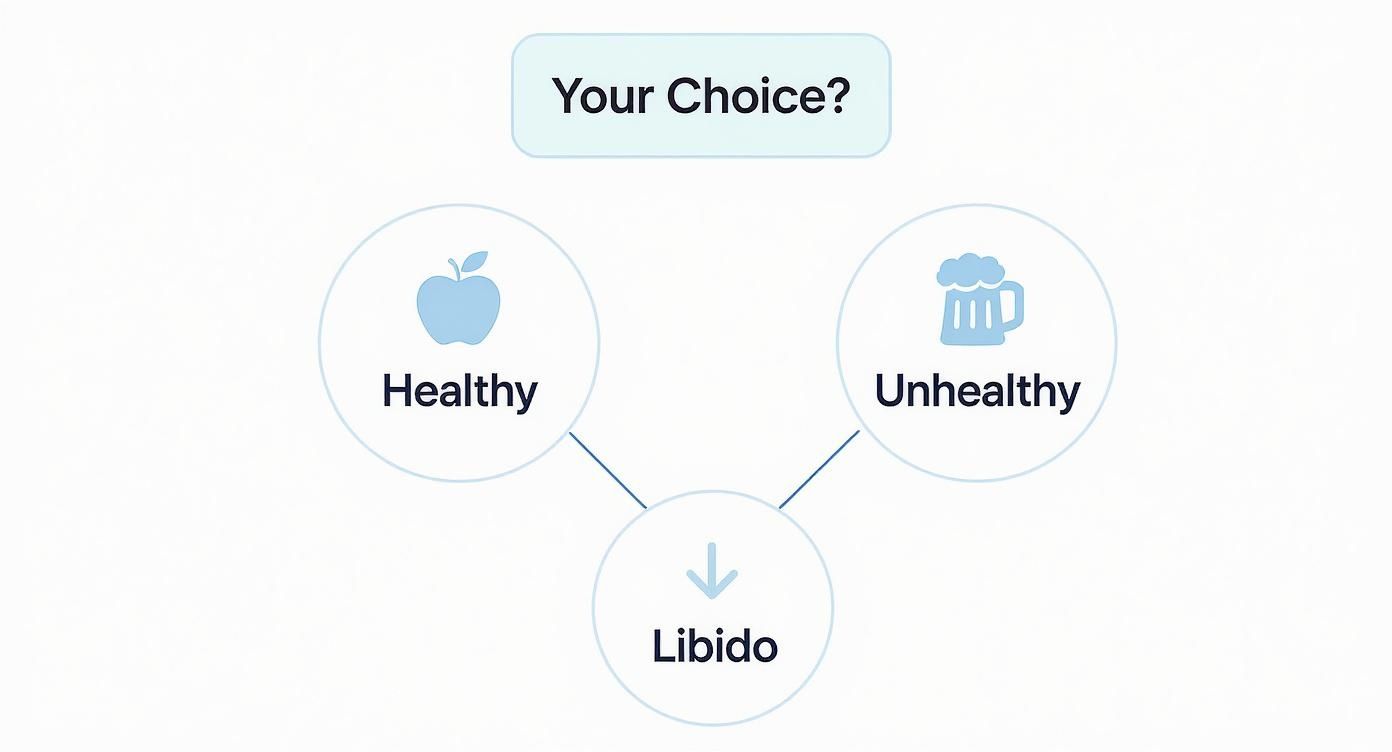
It’s pretty straightforward: consistent healthy choices, like a balanced diet, build a stronger sex drive. On the flip side, habits like excessive drinking will actively work against it.
Lifestyle Changes as a First Line of Defense
For a lot of men, the most powerful treatments don't come in a prescription bottle—they come from daily habits. Before you even think about medical options, making some targeted lifestyle adjustments can bring about significant improvements.
Start by making sleep a priority. Aim for 7-9 hours of quality rest every night, since this is when your body does the heavy lifting of testosterone production. Pair this with a diet rich in zinc, vitamin D, and healthy fats from foods like fish, nuts, and avocados to give your body the raw materials for hormone health.
Finally, get moving. A solid mix of strength training and cardio does more than just boost testosterone and improve blood flow; it’s also one of the most potent stress-busters out there.
Psychological and Relational Approaches
If stress, anxiety, or relationship troubles are at the heart of your low libido, then addressing your mental and emotional health is non-negotiable. Your brain is your biggest sex organ, after all. When it's overloaded with stress, desire is often the first thing to get shut down.
Consider these powerful strategies:
- Individual Therapy: A good therapist can give you the tools to manage stress, anxiety, or depression that might be draining your mental energy and tanking your sex drive.
- Couples Counseling: If unresolved conflicts or a lack of intimacy are the real issue, working with a professional can help you and your partner reconnect and improve communication.
- Mindfulness and Stress Reduction: Practices like meditation or yoga are excellent for lowering cortisol levels. This pulls your body out of a constant "fight-or-flight" state and creates the relaxed headspace needed for arousal.
Addressing the mind is not a "soft" approach; it's a direct and powerful way to treat a key cause of low libido. A healthy mental state is the foundation for a healthy sex drive.
Medical Treatments and Professional Guidance
When lifestyle changes and psychological support aren’t quite enough, or when there's a clear biological issue, medical treatments can be incredibly effective. This is where getting a proper diagnosis from a healthcare professional becomes absolutely essential.
Sometimes the fix is as simple as reviewing your current medications with your doctor. Many common prescriptions for things like blood pressure or depression are known libido-killers, and there’s often a suitable alternative available.
For issues directly linked to low testosterone, Testosterone Replacement Therapy (TRT) is the primary treatment. A doctor will first confirm low T through blood tests. If you're a candidate, a personalized TRT program can restore your hormone levels, often leading to noticeable improvements in libido, energy, and mood within just a few weeks.
If erectile dysfunction is part of the picture, medications like PDE5 inhibitors (think Viagra or Cialis) may be prescribed. While these don’t directly ramp up desire, they can help break the frustrating cycle of performance anxiety, making intimacy feel less stressful and more enjoyable again. The right solution always starts with an accurate diagnosis.
When and How to Talk to Your Doctor
Taking that first step to get professional help for a sex drive that’s gone missing is a big deal. It's also an incredibly empowering one. I get it—bringing up such a personal issue can feel awkward or intimidating, but knowing what to expect can take a lot of the mystery out of it and help you walk into that appointment feeling confident.
This conversation is your starting point for getting clear answers and a real plan. Remember, doctors talk about sensitive health topics all day, every day. For them, low libido is just another medical symptom, and they’re trained to handle it with total professionalism. The more you can share, the better they can help you figure out what’s really going on.
Preparing for Your Appointment
Going in prepared can make the whole process feel smoother and way more productive. Instead of just saying you have a low sex drive, try to gather some specific details that paint a clearer picture of your experience. This homework helps your doctor connect the dots between your symptoms and the potential causes of low libido in men.
Before your visit, take a few minutes to think through the following points. Seriously, jotting down a few notes on your phone can make a huge difference.
- Symptom Timeline: When did you first notice your sex drive wasn't what it used to be? Did it drop off a cliff, or was it more of a slow fade?
- Other Symptoms: Have you been dealing with anything else? Think fatigue, mood swings, weight gain, or issues with erections.
- Lifestyle Factors: Be ready to chat about your typical diet, how often you exercise, your sleep habits, and how much alcohol you drink.
- Stress Levels: What’s your stress like these days, both at work and at home? Any major life changes or ongoing pressures weighing on you?
- Medication List: Make a complete list of everything you're taking—prescriptions, over-the-counter stuff, and even supplements.
Your health history provides critical clues. Information that seems totally unrelated, like a recent change in your sleep schedule or a new medication, could be a key piece of the puzzle.
What to Expect During the Visit
During the appointment, your doctor will steer the conversation to get a handle on your overall health. They'll likely ask a series of questions to explore the hormonal, psychological, and physical factors that could be at play.
Be ready for questions about:
- Your Medical History: This includes any long-term conditions like diabetes, heart disease, or high blood pressure.
- Your Mental Health: They’ll probably ask about feelings of depression, anxiety, or high stress.
- Your Relationship: Questions about how things are going with your partner might come up, since relationship satisfaction can directly impact desire.
- Your Sexual Function: This covers topics like arousal, erections, and any performance anxiety you might be feeling.
Based on that conversation, your doctor will probably recommend a few diagnostic tests to get a better look at what’s happening biologically. The most common and important one is a simple blood draw.
This blood work will check key health markers directly linked to libido, including your total and free testosterone levels, thyroid function, and blood sugar. These results give you hard data that can either confirm or rule out many of the most common physical causes of low sex drive in men.
Common Questions About Low Libido in Men
When you start digging into what causes a low sex drive, a few key questions almost always come up. Let's tackle some of the most common ones to give you some clarity and help you figure out your next steps.
Is It Normal for My Libido to Fluctuate?
Yes, it's completely normal. Think of your sex drive like your appetite or your energy levels—it’s not always going to be at a 10/10. Some days you’re raring to go, and other days, not so much.
Daily life throws a lot at us. Stress from work, feeling exhausted, or just being in a bad mood can all temporarily put your libido on the back burner. An occasional dip is absolutely nothing to worry about. The time to pay closer attention is when that "dip" becomes your new normal, lasting for weeks or months and starting to affect your happiness or your relationship.
Can Certain Foods Really Boost My Sex Drive?
While no single food is a magic pill for libido, your overall diet makes a huge difference. You can't expect to run a high-performance engine on low-quality fuel, and your hormonal health is no different.
A diet that supports healthy hormone production is rich in key nutrients. We're talking zinc (found in shellfish and nuts), vitamin D (in fatty fish like salmon), and healthy fats (from avocados and olive oil). On the flip side, a diet loaded with processed junk, sugar, and unhealthy fats can lead to weight gain and throw your hormones out of whack, which is a surefire way to kill desire.
How Quickly Can I Expect to See Changes with Treatment?
This really depends on what’s causing the issue in the first place and which path you take to fix it. There’s no universal timeline, but here’s a general idea of what to expect:
- Lifestyle Changes: If you clean up your diet and start exercising regularly, you could start feeling a noticeable difference in your energy and desire within a few weeks.
- TRT: For men with clinically low testosterone, Testosterone Replacement Therapy can work surprisingly fast. Many guys report feeling a renewed sense of desire in as little as 3-4 weeks.
- Therapy: If the root cause is psychological—like stress, anxiety, or relationship issues—the timeline is more gradual. It takes time to build new coping skills and healthier thought patterns.
No matter the approach, consistency is what truly matters. Sticking with the plan is the key to not just regaining your sex drive, but keeping it strong for the long haul.
At Elite Bioscience, we provide clear paths to understanding and addressing your hormonal health. Our direct-to-you therapies are designed to help you regain your vitality with professional guidance every step of the way. Explore our personalized treatment options today.