At its core, collagen synthesis is your body's own cellular construction project. It’s the natural process for creating collagen, the most abundant protein you have, which forms the structural framework for just about everything—your skin, bones, tendons, and ligaments. This is what gives them their strength and elasticity.
Your Body's Blueprint for Strength and Vitality
Think of collagen as the steel framework in a skyscraper. Without it, the building would lack the strength and flexibility to stand tall against the elements. Understanding what is collagen synthesis is like getting a look at the architectural blueprints for your own body's resilience.
This process is nothing short of amazing. Your cells act like a highly skilled construction crew, using amino acids as bricks and essential nutrients like vitamin C as the mortar. They work tirelessly, assembling these raw materials into the tough, fibrous cables that give us everything from smooth, youthful skin to strong, pain-free joints.
Why Collagen Production Declines
Unfortunately, this internal construction site doesn't run at full capacity forever. It works beautifully in our youth but naturally starts to slow down as we get older. This slowdown is one of the main reasons we see and feel the common signs of aging.
- Slowing Cellular Machinery: As we age, the fibroblast cells that produce collagen simply become less active and don't work as efficiently as they used to.
- Hormonal Shifts: Major hormonal changes, especially the drop in estrogen during menopause, can put the brakes on collagen production, directly impacting skin thickness and elasticity.
- Environmental Damage: Things we're exposed to every day, like UV radiation from the sun, and lifestyle habits like smoking, actively break down existing collagen and hinder our body's ability to make more.
This isn't just a gentle slowdown—it's a significant drop. After you turn 25, your body's natural collagen production rate falls by about 1-1.5% every single year. By the time you're 40, you could have a cumulative loss of nearly 30%. This reality has fueled a massive global interest in collagen, with Europe alone accounting for a 35.34% market share as people look for ways to offset these effects. You can see more on this trend in the latest market analysis from PrecedenceResearch.com.
Knowing how this vital process works—and why it falters—is the first step toward supporting your body's foundational health. When you understand the key players involved, you can make smarter choices about your diet, supplements, and lifestyle to protect the collagen you have and encourage your body to make more. For a closer look at the nutrients that are absolutely crucial, check out our guide on the best vitamins for skin health.
Inside the Collagen Factory Step by Step
So, how does your body actually build collagen? It's not as simple as mixing a few ingredients. Instead, think of it as a sophisticated assembly line running inside your cells—a biological factory that works 24/7 to produce the strong, flexible protein that literally holds you together.
Imagine you're manufacturing a high-tech cable. You wouldn't just find a finished cable; you'd start with individual fibers, twist them into sturdier strands, and then braid those strands into the final, resilient product. Your body’s process for making collagen is remarkably similar, with careful steps happening both inside and outside the cell.
Stage 1: The Blueprint and Raw Materials
It all begins with a blueprint. This master plan is stored deep inside specialized cells, most often fibroblasts, which act as our main collagen factories.
Inside the cell’s nucleus (the command center), a process called transcription takes place. A specific gene—the one holding the collagen blueprint—is copied into a temporary message called messenger RNA (mRNA). This mRNA is like a detailed work order, listing the exact sequence of amino acids needed.
This work order then leaves the nucleus and heads out to the factory floor, where machines called ribosomes get to work. During translation, the ribosomes read the mRNA's instructions and start linking amino acids into a long, basic chain. This initial, unfinished strand is known as a pre-procollagen molecule.
Stage 2: Upgrades and Assembly in the Workshop
This raw amino acid chain is still a long way from being collagen. It now moves into a special compartment called the endoplasmic reticulum (ER), which you can think of as the factory's finishing and quality control department.
Here, the chain undergoes a series of critical upgrades called post-translational modifications. These chemical tweaks are absolutely essential for giving the final collagen molecule its strength and stability.
Two of the most important modifications are:
- Hydroxylation: Special enzymes attach hydroxyl groups (-OH) to two key amino acids, proline and lysine. This step is the secret to collagen's stability.
- Glycosylation: Sugar molecules are added to specific points on the chain, helping it fold correctly and function properly.
This diagram helps visualize these early steps, showing how the DNA blueprint directs the assembly of amino acid "bricks," with vitamin C acting as the "mortar" that holds it all together.

As the visual shows, if you're missing the blueprint, the right materials, or key helpers like vitamin C, the whole production line grinds to a halt.
The Vitamin C Connection: That hydroxylation step—adding the hydroxyl groups—is completely dependent on vitamin C. Without enough of it, the enzymes that perform this task can’t do their job. This is exactly why a severe vitamin C deficiency causes scurvy, a disease where faulty collagen synthesis makes your tissues, from gums to skin, literally fall apart.
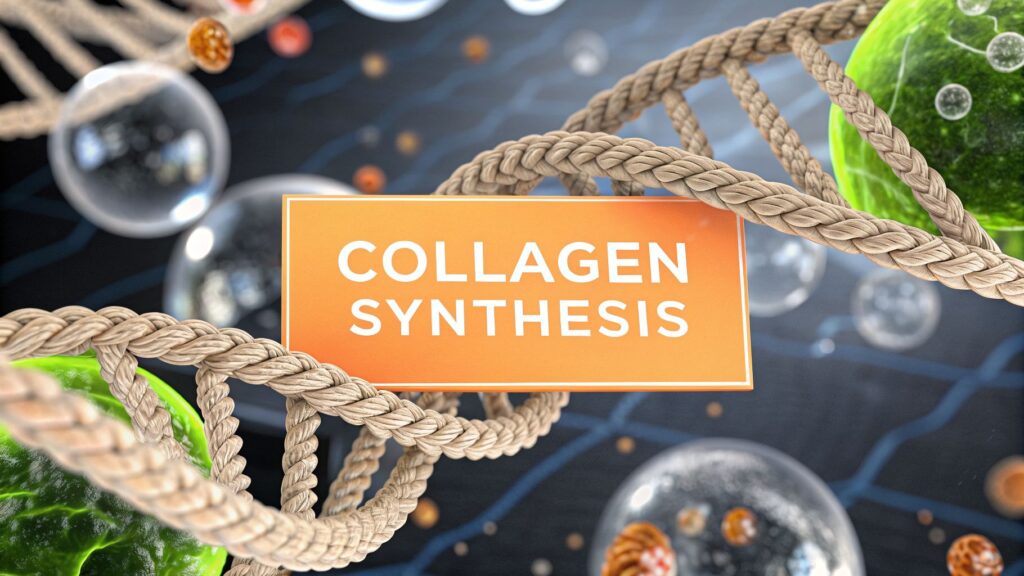
Once these upgrades are finished, three of these modified chains (now called pro-alpha chains) find each other. They spontaneously wrap around one another, forming the famous procollagen triple helix. This iconic twisted structure is the source of collagen's incredible tensile strength—just like braiding three ropes into one much stronger cable.
Stage 3: Final Packaging and Export
The newly formed procollagen triple helix is almost complete. It’s carefully packaged into a transport vesicle, which serves as a tiny molecular delivery truck. This vesicle carries the procollagen to the cell's outer membrane and releases it into the space outside the cell.
But there’s one last, crucial step. Once outside, special enzymes act like molecular scissors, snipping off the loose, dangly ends of the procollagen molecule. This final trim converts it into its mature form, now officially called a tropocollagen molecule.
These finished tropocollagen molecules then begin to assemble themselves into larger structures called collagen fibrils. To lock everything together for good, another enzyme, lysyl oxidase, creates strong chemical bonds (cross-links) between neighboring tropocollagen molecules. These cross-links act like rivets, permanently binding the fibrils into the tough, resilient collagen fibers that give structural integrity to your skin, bones, and tendons.
Meet the Different Types of Collagen

It helps to think of collagen not as a single material, but as a diverse toolkit. Your body is a master builder, and it uses different types of collagen for very specific jobs—strong cables for tendons, flexible mesh for skin, and springy cushions for joints. While scientists have identified at least 28 different types of collagen, a handful of them do the vast majority of the work in our bodies.
Knowing which type does what is key. It’s the reason a supplement aimed at joint health has a different formulation than a cream designed to improve skin texture. Let's break down the main players you’ll encounter.
Common Collagen Types and Their Functions
Each of the major collagen types has a unique structure that dictates where it's found and what it does. Here's a quick look at the most common ones.
| Collagen Type | Primary Location in the Body | Main Function |
|---|---|---|
| Type I | Skin, bones, tendons, ligaments, teeth | Provides rigid structure and tensile strength; the body's main "scaffolding." |
| Type II | Elastic cartilage (joints, ears, nose) | Cushions joints and provides shock absorption and flexibility. |
| Type III | Skin, muscles, blood vessels, organs | Creates a fine, flexible mesh that supports soft tissues and organs. |
Understanding these distinctions is the first step toward any targeted therapeutic strategy, whether it's through diet, supplements, or other clinical interventions.
Type I: The Master Builder
When people talk about collagen, they're almost always talking about Type I. It's the undisputed king, making up a staggering 90% of the collagen in your body. This is your body's primary structural protein, providing the incredible tensile strength that holds everything together.
You'll find Type I everywhere, forming the fundamental matrix of:
- Skin: It’s the dense fiber network that gives your skin its firmness and resilience.
- Bones: It creates the flexible framework that minerals like calcium bind to, creating strong, yet not brittle, bone.
- Tendons and Ligaments: It forms the tough, rope-like cords that anchor muscles to bones and connect bones to each other.
- Teeth (Dentin): It’s a key part of the hard tissue that makes up the bulk of your teeth under the enamel.
Its structure is all about strength—tightly packed, thick fibers organized in a way that can withstand enormous pulling forces.
Type II: The Joint Cushion
Where Type I is all about rigid strength, Type II is built for flexibility and shock absorption. Its fibers are organized into a much looser, mesh-like network. This structure allows it to compress under pressure and then spring back, making it the perfect material for cushioning our hardworking joints.
You’ll find Type II collagen almost exclusively in elastic cartilage. It's what lines your joint surfaces, gives structure to your ears and nose, and connects your ribs to your sternum. Its main job is to ensure movement is smooth, easy, and pain-free. So, when we talk about supporting joint health, we’re really talking about preserving this crucial type of collagen.
The distinction between collagen types is critical for targeted therapies. For instance, supplements designed for joint support often focus on providing the building blocks for Type II collagen, whereas skincare and anti-aging protocols prioritize boosting Types I and III.
Type III: The Flexible Framework
Type III collagen is often found working right alongside Type I, acting as a supportive partner. It forms what are known as reticular fibers—a much finer, more delicate mesh that provides a flexible framework for our hollow organs, blood vessels, and muscles.
This type is particularly abundant in young skin, contributing to its softness and plumpness. One of the hallmarks of aging is that Type III levels tend to decrease while Type I remains, which is a key reason skin becomes less supple and more fragile over time.
What Helps or Harms Your Collagen Production

The complex biological factory that builds your body’s collagen is incredibly sensitive. It doesn't operate in isolation; your daily habits, diet, and internal chemistry are constantly influencing its output. Some factors act as powerful accelerators, while others bring the entire operation to a grinding halt.
Think of it like this: your body has an internal construction crew dedicated to building and maintaining its structural framework. To keep this crew working at peak efficiency, you need to know what helps them do their job and what gets in their way.
Promoters: The Green Lights for Collagen Synthesis
To build anything well, you need two things: the right raw materials and a clear signal to start working. For collagen, certain nutrients and hormones provide exactly that, acting as essential green lights for the production line.
A few of the most critical promoters include:
- Vitamin C: This isn't just for your immune system. Vitamin C is a mandatory supervisor for collagen synthesis. It activates key enzymes that stabilize the collagen molecule, a step so crucial that the entire process fails without it.
- Amino Acids: The building blocks themselves. Specifically, glycine, proline, and hydroxyproline are the bricks and mortar of every collagen fiber. A diet low in quality protein can starve your body of these essential components.
- Key Hormones: Acting as powerful messengers, hormones can signal your cells to ramp up or slow down production. Growth hormone and certain sex hormones, for instance, play a significant role in how much collagen your body produces.
Inhibitors: Collagen's Wrecking Crew
Just as some factors build your collagen reserves, others can tear them down with alarming efficiency. These inhibitors act like a wrecking crew on the construction site, actively degrading existing collagen and putting the brakes on new production.
The most common culprits are often tied to lifestyle choices and the natural aging process itself.
Glycation: Sabotage by Sugar
When excess sugar circulates in your bloodstream, it can latch onto proteins like collagen in a destructive process called glycation. This creates harmful molecules that make collagen fibers stiff, brittle, and weak—leading directly to a loss of skin elasticity and the accelerated appearance of wrinkles.
Chronic stress is another major saboteur. It floods your body with the hormone cortisol, which is known to directly inhibit fibroblast function and dial down collagen production. Over time, high stress levels can visibly impact the health of your skin and the integrity of your joints.
The Impact of Age and Lifestyle
Aging is the most famous inhibitor. Starting in our late 20s, our fibroblast cells become less productive, and the rate of collagen synthesis slows by about 1% per year. This gradual decline is a primary driver behind wrinkles, sagging skin, and stiffer joints.
Unfortunately, certain lifestyle choices can hit the fast-forward button on this process.
- UV Sun Exposure: Unprotected time in the sun is arguably the single greatest external cause of collagen breakdown. UV rays trigger the release of enzymes that literally chew up the collagen fibers in your skin.
- Smoking: The chemicals in tobacco smoke deliver a one-two punch. They cause oxidative stress that damages existing collagen and also constrict blood flow, robbing your skin of the oxygen and nutrients it needs to repair itself.
These external factors compound the natural, internal slowdown caused by aging. In fact, after age 30, production can plummet by 25-30% each decade. For men, optimizing hormones can be a powerful countermeasure. Testosterone, for example, has been shown to boost collagen synthesis by 15-20% by directly stimulating fibroblast cells, which can significantly aid in recovery and tissue maintenance.
By minimizing these inhibitors and ensuring your body has a steady supply of promoters, you can take meaningful control over your collagen health. To get started, you can learn more about how to boost collagen production naturally in our detailed guide.
Actionable Ways to Boost Collagen Synthesis
Knowing how collagen is made is one thing, but putting that knowledge to work is where you’ll see real results. The good news is that supporting your body's natural collagen production isn't about some secret formula. It comes down to a smart combination of diet, targeted supplements, lifestyle habits, and, for some, more advanced therapies.
Think of it like this: your body has an internal construction crew ready to build and repair. Your job is to make sure they have the best raw materials, the right tools, and a safe work environment. Let's walk through the most effective, evidence-backed ways to get your internal collagen factory humming.
Fuel Your Factory with a Collagen-Boosting Diet
First things first: nutrition is the bedrock of collagen synthesis. Your body simply can't build these crucial proteins from thin air. Without the right building blocks from your diet, any other effort will fall short.
To get started, focus on foods that supply the core components your body needs:
- Vitamin C-Rich Foods: This one is non-negotiable. Vitamin C is a critical helper for the enzymes that give the collagen helix its strength and stability. Fill your plate with citrus fruits, bell peppers, strawberries, kiwi, and broccoli.
- Amino Acid Powerhouses: Collagen is built primarily from the amino acids glycine, proline, and hydroxyproline. You can find these in high-quality protein sources like lean meat, poultry, fish, eggs, dairy, and bone broth.
- Essential Mineral Partners: Zinc and copper are key players in the final steps of cross-linking collagen fibers together. Shellfish, nuts, and seeds are great sources of zinc, while you can find copper in leafy greens, organ meats, and shiitake mushrooms.
A well-rounded diet ensures your cells are never waiting on a shipment of raw materials. It’s the foundation upon which everything else is built.
Enhance Production with Supplements and Peptides
While diet is fundamental, supplements can give your body a more concentrated and direct supply of what it needs. This is particularly true for hydrolyzed collagen peptides, which have become a game-changer for supporting collagen production.
The science here is compelling. For example, we know vitamin C is essential for an enzyme that works within collagen's complex 28-step assembly line—without it, production grinds to a halt. On the other hand, certain peptides that mimic the body’s natural signals have been shown in some studies to boost synthesis by 22% in athletes. The European market, a leader in this space, is projected to see hydrolyzed collagen grow at 11.5% annually, largely because its 95% bioavailability far surpasses the 27% of regular gelatin. For more market data, you can read the analysis from Grand View Research.
Hydrolyzed collagen, which is broken down into small, easy-to-absorb peptides, works in two distinct ways:
- It provides the building blocks by delivering a direct rush of the exact amino acids needed to construct new collagen fibers.
- It signals your cells to get to work. These peptides can act like a false alarm, tricking your fibroblasts into thinking existing collagen is breaking down, which prompts them to ramp up new production.
When choosing a supplement, the specific form matters. Look for hydrolyzed collagen peptides (sometimes called collagen hydrolysate) from a brand you trust. This ensures the molecules are small enough to be absorbed effectively.
For those looking for an even more targeted approach, specific peptide therapies can act as a direct command to your cells. Our guide on using peptides for collagen production takes a much deeper look into how these advanced protocols can deliver powerful, directed results.
Protect Your Investment with Smart Lifestyle Habits
Ramping up collagen synthesis is only half the equation. You also have to actively protect the collagen you already have, because certain lifestyle factors can quickly undo all your hard work.
Two of the most impactful habits you can build are shielding yourself from the sun and managing your stress levels.
- Make Sunscreen a Daily Habit: UV radiation is collagen's number one external enemy. It literally activates enzymes that chew up your skin's supportive matrix. Using a broad-spectrum sunscreen with at least SPF 30 every single day—no exceptions—is the most powerful defensive move you can make.
- Keep Cortisol in Check: Chronic stress floods your system with cortisol, a hormone that directly puts the brakes on fibroblast activity and slows collagen synthesis. Simple stress-management techniques like regular exercise, mindfulness, or just getting enough quality sleep can help keep cortisol under control, letting your collagen factory operate without interference.
By combining these offensive (boosting) and defensive (protecting) strategies, you create a powerful, holistic approach to maintaining a strong and healthy collagen framework for years to come.
Common Questions About Collagen Synthesis
Once you start to grasp the science behind what is collagen synthesis, it’s only natural to have a few practical questions. Let's break down some of the most common ones I hear from people trying to apply this knowledge to their own health.
How Long Does It Take to Boost Collagen?
That's the big question, isn't it? The honest answer is: it depends entirely on your approach. If you’re focusing on dietary changes alone, think of it as a long-term investment. You're providing your body with the necessary building blocks, but it can take several months to see a noticeable difference.
On the other hand, a targeted, high-quality hydrolyzed collagen peptide supplement can speed things up. Because these peptides are designed for easy absorption and signaling, many people report improvements in their skin's hydration and feel within 8 to 12 weeks of consistent daily use. More intensive therapies can yield even faster results for both tissue repair and skin health.
Is Bone Broth Enough to Increase Collagen?
While bone broth is a wonderful, nutrient-dense food, relying on it as your primary collagen source is often a shot in the dark. The actual amount of usable collagen in any given batch—whether homemade or from a store—can be wildly inconsistent.
Think of it this way: a hydrolyzed peptide supplement is engineered for a specific job. It doesn't just deliver the raw materials; it actively signals your cells to fire up new collagen production. This makes it a far more reliable and efficient strategy.
Do Men and Women Have Different Collagen Needs?
While the core process of making collagen is identical for everyone, our hormones create very different landscapes. For men, healthy testosterone levels are a huge asset, naturally supporting robust collagen production in muscles, tendons, and skin.
Women, however, face a different challenge, especially after menopause. The steep drop in estrogen that occurs during this time can significantly speed up collagen degradation. This is why targeted interventions, like specific peptide protocols, can be so effective for women looking to preserve the strength and integrity of their tissues as they age.