Peptide therapy is a sophisticated medical treatment that uses short chains of amino acids—known as peptides—to give very specific instructions to your body’s cells. You can think of them as highly targeted biological text messages that direct everything from tissue repair and hormone production to metabolic function, all in the name of optimizing your health.
Decoding Peptide Therapy and Its Purpose
At its heart, peptide therapy taps into your body's own powerful communication system. Peptides are naturally occurring molecules that act like super-specific messengers, telling your cells and tissues precisely what to do. The therapy itself involves introducing specific peptides to enhance or restore these natural signals, correcting deficiencies or boosting certain functions.
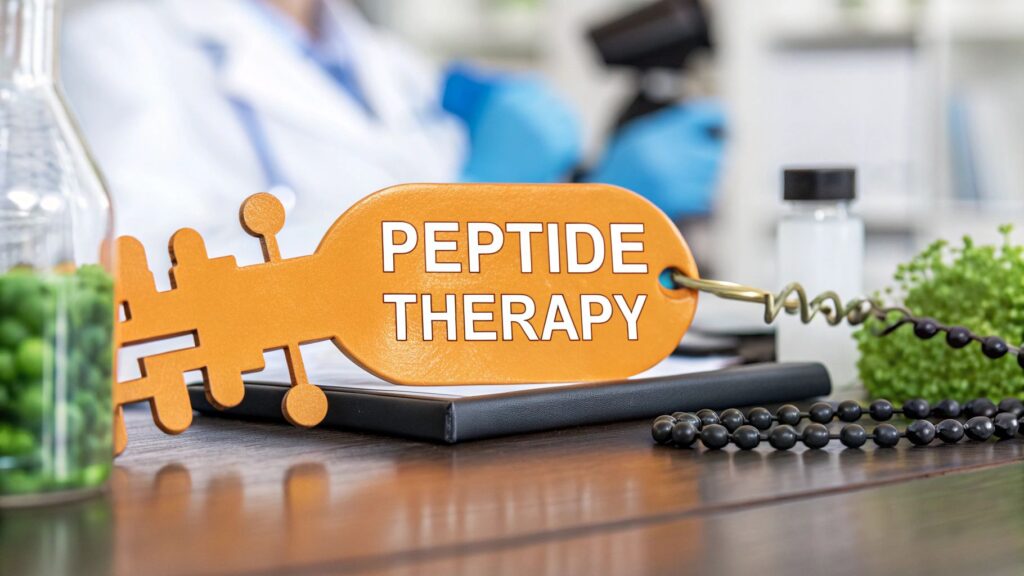
Here’s a simple analogy: imagine your body has countless locks (cellular receptors), and each one controls a different biological process. Peptides are the unique keys, designed to fit only one specific lock. When the right peptide key clicks into its receptor lock, it triggers a precise action—nothing more, nothing less. This incredible specificity is what makes the therapy so effective.
The Goal of Targeted Cellular Instruction
Unlike conventional medications that can have a "shotgun" effect and cause widespread side effects, peptides work with surgical precision. This allows for a much more efficient and personalized treatment strategy designed around your unique health goals. The primary objectives often include:
- Accelerating Recovery: Peptides can signal cells to fast-track the repair of muscles, tendons, and other tissues after an injury or intense workout.
- Optimizing Hormones: Certain peptides gently nudge the body's glands to produce and release their own hormones, helping to restore balance naturally without introducing synthetic versions.
- Enhancing Anti-Aging Processes: By promoting collagen production and supporting cellular regeneration, peptides can improve skin elasticity, reduce inflammation, and boost overall vitality.
- Supporting Body Composition: Some peptides help fine-tune metabolism, encouraging fat loss while preserving or building lean muscle mass.
To give you a quick, digestible overview, here's a simple breakdown of the core concepts.
Peptide Therapy at a Glance
| Concept | Simple Explanation | Primary Goal |
|---|---|---|
| Peptides | Short chains of amino acids, the building blocks of proteins, that act as natural signaling molecules in the body. | To act as keys that unlock specific cellular functions. |
| Mechanism of Action | Peptides bind to specific receptors on cell surfaces, triggering a targeted biological response. | To send precise instructions to cells for repair, growth, or metabolic regulation. |
| Therapeutic Use | Administering specific peptides to enhance or restore the body's natural communication and healing processes. | To address health concerns with high precision and minimal side effects. |
This table helps illustrate just how targeted and foundational this therapy really is.
While it might sound futuristic, this field isn't new; it's a refined evolution in how we approach treatment. This powerful approach in modern medicine has roots tracing back to the 1920s with the isolation of insulin. That peptide hormone became the first commercial peptide therapeutic in 1923, completely changing the lives of people with diabetes. You can read more about the history of peptide therapeutics to appreciate its profound impact.
The beauty of peptide therapy lies in its ability to work with your body’s innate systems, rather than simply suppressing symptoms or introducing foreign substances. It’s about restoring and optimizing your natural biological blueprint.
How Peptides Work as Cellular Messengers
To really get what peptide therapy is all about, you have to zoom in and see what these molecules are doing inside your body. Think of peptides as your body's internal text messaging system, sending very specific instructions directly to the cells that need to hear them. Their secret lies in a beautifully simple biological concept: the lock and key.
Picture every cell in your body as having thousands of tiny, specific "locks" on its surface. These are called receptors. Each one is shaped to accept only one type of "key." In this case, peptides are those keys, perfectly cut by your body to fit a single, matching lock.
When a peptide key slides into its receptor lock, it's not just opening a door—it's delivering a direct order. That command could be anything from "start repairing this torn muscle" to "ramp up collagen production" or "release more growth hormone."
The Power of Specificity
This lock-and-key system is exactly why peptide therapy can be so targeted and effective. A peptide meant to heal a tendon won't accidentally dock onto a brain cell and tell it to do something strange. This precision is a huge advantage, ensuring the therapy works right where you need it. It’s also a major reason peptides tend to have fewer side effects than systemic drugs that affect the whole body, often leading to unintended consequences.
The specificity of peptides is their greatest strength. They don't shout instructions at your whole body; they whisper a precise command directly to the intended cell, ensuring the message is received loud and clear without causing chaos elsewhere.
This targeted communication is what allows a knowledgeable provider to create truly personalized treatments. By choosing the right peptide, we can send a very specific signal to achieve a clear, desired result.
Different Peptides, Different Messages
Just like you have different keys for your car, house, and office, your body uses thousands of unique peptides to run its countless operations. Each one carries a different message for a specific cellular audience, and this incredible diversity is what makes peptide therapy so versatile.
Here’s a look at how different peptide "messages" can be used to hit specific health goals:
- For Accelerated Healing: A peptide like BPC-157 essentially carries a message that says, "Emergency! Send in the repair crew." It tells cells to build new blood vessels and create collagen, which is absolutely vital for healing injuries in muscles, tendons, and even the gut.
- For Anti-Aging: A growth hormone secretagogue like Ipamorelin delivers a polite but firm request to the pituitary gland: "Please release more of our own natural growth hormone." This, in turn, signals other cells to improve skin elasticity, calm inflammation, and boost overall vitality.
- For Body Composition: Some peptides send signals that help fine-tune your metabolism. They might instruct cells to start burning fat for fuel while protecting lean muscle, helping you achieve a healthier body composition.
Being able to match the right "message" to a person's specific goal is the foundation of modern peptide therapy. It’s not about blasting the system with a foreign substance. It’s about restoring or amplifying the natural biological conversations that have weakened over time due to age, injury, or stress. Once you grasp this, it’s easy to see how peptide therapy works with your body’s own blueprint, not against it.
Exploring Popular Peptides and Their Benefits
We've covered how peptides act as precise cellular messengers. Now, let's meet some of the most popular and effective peptides used in therapy today.
Think of them as specialists. Each one is a unique key designed to unlock a specific benefit, whether it's for faster recovery, renewed vitality, or overall wellness. By understanding what each one does, it becomes much clearer how peptide therapy can be matched to your personal health goals.
The diagram below shows this simple but powerful process: a peptide (the key) finds its specific cellular receptor (the lock) and triggers a highly targeted action (the gears start turning).
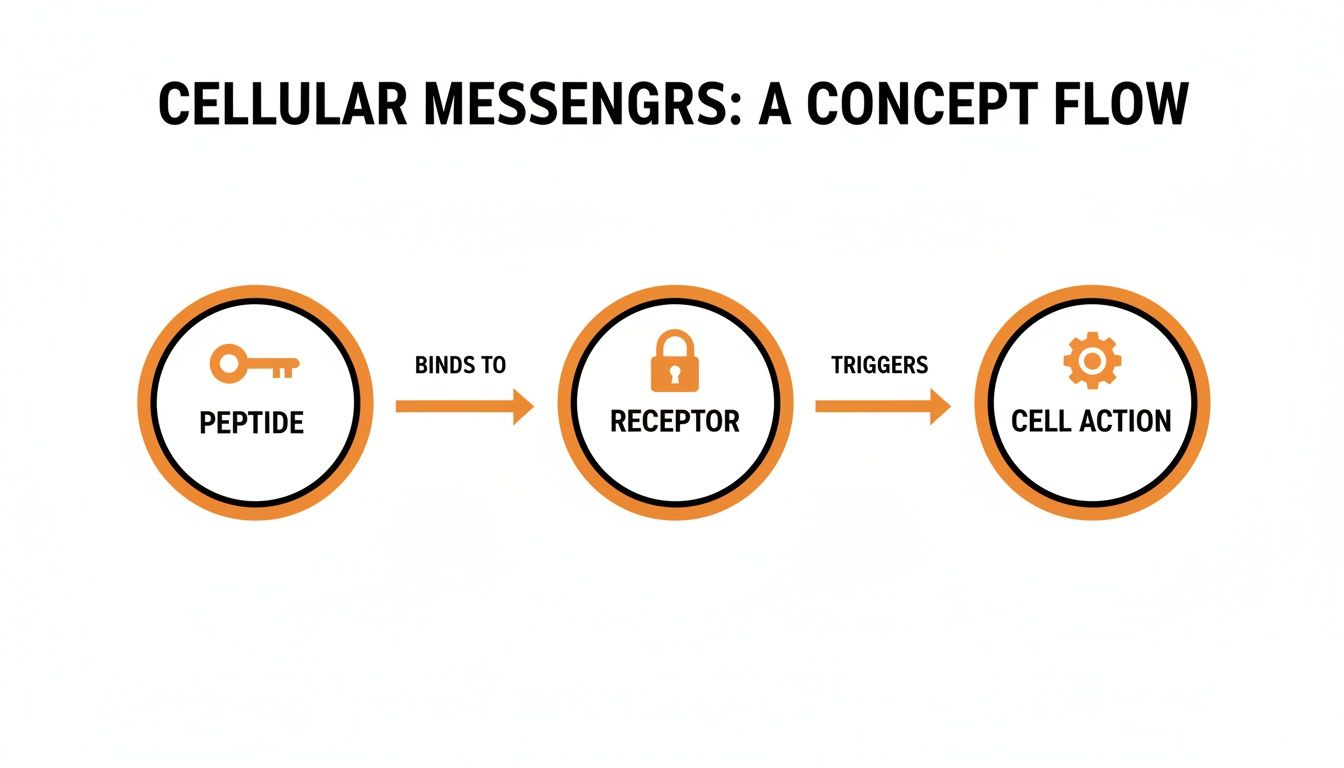
This direct line of communication is what allows different peptides to achieve such distinct and predictable results.
Meet the Peptides: A Closer Look
While there are hundreds of peptides, a few stand out for their well-documented results and wide range of applications. They are some of the most requested tools for healing, anti-aging, and performance enhancement.
Here's a quick comparison of the peptides we'll cover in this section, highlighting what they do and who they're for.
Common Peptides and Their Primary Uses
| Peptide Name | Primary Function | Ideal For (Health Goal) |
|---|---|---|
| BPC-157 | Promotes rapid tissue repair and reduces inflammation | Athletes with injuries, post-surgical recovery, gut health |
| Ipamorelin | Stimulates natural growth hormone (GH) release | Anti-aging, lean muscle gain, fat loss, improved sleep |
| PT-141 | Activates nervous system pathways for sexual arousal | Men and women with low libido or sexual dysfunction |
This table gives you a snapshot, but let's dive into what makes each one so effective.
BPC-157: The Healing Peptide
There's a reason BPC-157 is often called "the healing peptide." Short for Body Protection Compound-157, this peptide was first identified in human gastric juice and has a stunning ability to accelerate the repair of almost any tissue—muscle, tendons, ligaments, and even the gut lining.
It works its magic by promoting angiogenesis, which is just a fancy term for the creation of new blood vessels. More blood flow means more oxygen and nutrients can get to an injured area, dramatically speeding up the healing process. This makes BPC-157 a game-changer for athletes nursing a nagging sprain or anyone trying to bounce back faster from surgery.
Ipamorelin: The Key to Youthful Vitality
Ipamorelin is in a class of peptides known as growth hormone secretagogues. Instead of pumping your body with synthetic hormones, Ipamorelin gently signals your pituitary gland to produce and release more of its own natural growth hormone (GH).
This is a critical difference. It supports your body's own systems rather than overriding them. This natural GH boost leads to a whole host of anti-aging and wellness benefits. People often report better skin elasticity, deeper sleep, more energy, and an easier time building lean muscle while shedding stubborn body fat.
Ipamorelin offers a truly restorative approach. It encourages your body to produce the hormones of its youth, helping to turn back the clock from the inside out. It's about systemic wellness, not just masking symptoms.
The market certainly reflects this interest. The peptide therapeutics field is projected to hold a 66.25% market share by 2026, largely driven by hormone-related therapies. For those specifically focused on rejuvenation, our guide on the best peptides for anti-aging is a great next step.
PT-141: For Enhancing Sexual Function
PT-141, also known as Bremelanotide, takes a completely different approach to sexual wellness. While many treatments focus on blood flow, PT-141 works directly on the nervous system.
It activates pathways in the brain associated with sexual arousal, making it a powerful option for both men and women who feel their libido has declined. By targeting the source of desire in the brain, PT-141 can help restore intimacy and satisfaction in a way other medications can't.
Understanding these specialized tools is central to understanding peptide therapy. Whether you want to heal an injury, restore youthful energy, or improve your personal wellness, there's likely a peptide that can send the right signals to your cells to help you get there.
The Science and Real-World Evidence Behind Peptides
The buzz around peptide therapy isn't just hype. It’s built on a solid foundation of scientific research and, just as importantly, a track record of real-world results. To really get why this field is so exciting, you have to connect the dots between the lab and the tangible outcomes people see every day.
Clinical studies are constantly showing how these tiny proteins can create big changes. For instance, research on peptides like BPC-157 has demonstrated a remarkable ability to speed up healing. It works by encouraging the growth of new blood vessels, a process that is absolutely essential for repairing torn muscles and damaged tendons. This isn't just theory; it's a measurable biological function that gets people back on their feet faster after an injury.
Then you have peptides known as growth hormone secretagogues, like Ipamorelin. Clinical trials have confirmed that they can gently prompt the body to produce more of its own growth hormone. The result? People often see significant drops in body fat and noticeable gains in lean muscle. These aren't vague wellness promises but concrete, evidence-backed outcomes that help people with body recomposition and anti-aging goals.
From Clinical Trials to Market Demand
The proof isn’t just in the petri dish; it's also in the numbers. The explosive growth of the peptide market directly reflects how effective it is for helping people manage chronic conditions and improve their health.
In fact, the global peptide therapeutics market is projected to hit $49.68 billion in 2026 and is on track to reach $70.20 billion by 2031. That kind of growth is fueled by the rising prevalence of metabolic disorders and other health issues where peptides offer a highly targeted and effective solution.
This isn't just a fleeting trend. A massive financial investment like this signals serious confidence from both the medical and scientific communities. It’s a direct response to real patient demand from people who are finally achieving their goals—whether that’s a quicker recovery, a more youthful body, or just feeling more energetic day-to-day.
The connection is clear: positive patient outcomes create demand, and that demand drives market growth. This cycle is a powerful indicator of a therapy that delivers on its promises, moving from clinical research to widespread real-world application.
Translating Evidence into Tangible Goals
At the end of the day, science is most compelling when you can see how it helps real people. The evidence consistently points to clear benefits in a few key areas, showing the practical power of peptide therapy.
Enhanced Recovery and Healing: Peptides are proven to slash downtime after an injury or surgery. By sending direct signals to your cells to start repairing tissue, they help you get back to your life faster and with stronger, more resilient results. For a closer look, you might be interested in our article on BPC-157 and its role in recovery.
Effective Body Recomposition: The unique ability of certain peptides to fine-tune metabolism helps people shed stubborn fat while holding onto—or even building—lean muscle. This leads to lasting changes in body composition that can be incredibly difficult to get through diet and exercise alone.
Proactive Anti-Aging: By supporting the body’s own production of vital compounds like hormones and collagen, peptides can improve skin elasticity, sharpen mental clarity, and promote deeper, more restorative sleep. It’s about creating a true sense of vitality from the inside out.
When you put it all together, the science and the market data tell one cohesive story. Peptide therapy is a precise, evidence-based strategy that uses the body’s own communication system to optimize health. The robust research and undeniable patient success stories confirm its place as a cornerstone of modern restorative medicine, helping people achieve concrete, life-improving results.
When you’re considering any new health treatment, the first question is always: “Is it safe?”
With peptide therapy, the answer is overwhelmingly positive, and it comes down to one key concept: precision. Unlike many traditional drugs that can feel like a blunt instrument, affecting systems all over your body, peptides are incredibly specific. They're designed to deliver a single, clear instruction to a particular set of cells.
Think of it like this: a conventional drug can be like a mass email sent to an entire company, causing all sorts of unintended chaos. A peptide, on the other hand, is like a direct message sent to just one person. It delivers its instructions only where needed, which is why the risk of widespread, unwanted side effects is so much lower. This targeted action allows peptides to work with your body, not against it.
Understanding Common Side Effects
While peptide therapy has a fantastic safety record, especially under a doctor's care, it's good to know what to expect. The good news is that most side effects are minor, temporary, and easy to manage.
Since most peptides are administered with a small subcutaneous injection, the most common reactions happen right at the injection site. You might notice:
- Temporary redness or swelling: A little pink spot is normal and usually disappears within a few hours.
- Mild irritation or itching: Some people feel a bit of itchiness right after the injection.
- Minor bruising: Just like with any shot, a small bruise can occasionally form.
Systemic, or body-wide, side effects are quite rare when a medical professional calculates the right dose for you. If they do pop up, they’re typically very mild—things like temporary light-headedness or a bit of water retention. Following proper peptide handling guidelines is also a great way to ensure you have a safe and smooth experience from start to finish.
Why Medical Supervision Is Non-Negotiable
Here’s the single most important rule of peptide therapy: always work with a qualified medical professional. Trying to buy peptides from unregulated websites is a huge gamble with your health. You have no idea what you’re actually getting—it could be contaminated, incorrectly dosed, or a completely different substance altogether.
Working with a qualified medical provider isn't just a suggestion; it's the bedrock of safe and effective peptide therapy. They'll review your health history, run the right lab tests, and create a plan that's tailored specifically to your body and your goals.
This professional oversight ensures three critical things:
- Authenticity and Purity: You get peptides that are pure, potent, and verified for safety by third-party labs. No guesswork.
- Correct Dosing: Your protocol is designed for you. This prevents taking too much or too little and keeps potential side effects to an absolute minimum.
- Ongoing Monitoring: Your clinician will track your progress, see how you’re feeling, and adjust your protocol as needed to make sure you’re getting the best results safely.
In the end, navigating safety in peptide therapy is simple when you have the right partner. When you prioritize expert guidance and only use prescribed, lab-tested products, you can confidently explore all the benefits this therapy has to offer.
How to Start Peptide Therapy the Right Way
So, you're ready to explore peptide therapy. Getting started is actually much simpler than most people think, especially with modern telehealth making expert medical care accessible from your own home. The key is to follow a process that puts your safety and specific health goals first.
This isn't about guesswork or buying from questionable online sources. It’s a professional, medically supervised approach designed to make sure your treatment is both effective and perfectly suited to your body's unique chemistry.
The Modern Telehealth Process
It all kicks off with a detailed online health assessment. This is where you lay the groundwork, sharing your health history, current concerns, and what you’re hoping to accomplish. This gives the medical team a complete picture before you even speak with a doctor.
Next comes the most important part: a private, one-on-one consultation with a licensed physician. During this video call, you'll have the chance to dive deep into your goals, ask any questions you have, and get a real medical evaluation. Based on this conversation, the doctor might order specific lab work to get a precise look at your hormonal and metabolic markers.
This physician-led consultation is non-negotiable. It’s what separates a safe, effective protocol from a risky guess. Having an expert design your plan based on your unique biology and goals is the cornerstone of successful therapy.
With all this information in hand, the doctor can then write a personalized prescription just for you.
Your Personalized Prescription and Support System
After your prescription is finalized, your specific peptide therapy is compounded and shipped directly to your door. It arrives in discreet packaging, so your privacy is always protected. Convenience and confidentiality are built right into the process.
Your package will include everything you need to get started, along with simple, clear instructions on how to administer the therapy. But you're not just left to your own devices. Professional support is always just a call or message away to help you feel confident and answer any questions that pop up.
The world of peptide therapy is moving fast. We already have over 25 approved drugs on the market, with an incredible 280 more in development for everything from metabolic disorders to cancer. A huge breakthrough is the rise of oral peptides, which is set to make treatment even easier. In fact, that market alone is projected to reach $9.36 billion in 2025. You can explore the latest peptide market trends and forecasts to see just how quickly this field is growing.
Following this professional telehealth model ensures you're getting high-quality care that is safe, effective, and backed by real medical expertise every step of the way.
Your Questions About Peptide Therapy, Answered
Let's dig into some of the most common questions we hear from people who are just starting to explore peptide therapy. Think of this as the practical, need-to-know section that will help you feel confident and informed as you consider what's next for your health.
How Long Does It Take to See Results?
This is probably the number one question, and the honest answer is: it depends. The timeline for seeing results hinges on which peptide you’re using, your current health, and what you’re trying to achieve. It’s less about a quick fix and more about working with your body’s natural pace.
For instance, someone using BPC-157 to recover from an acute injury might feel a difference in pain and mobility within just a few weeks. But for peptides that aim for broader, more systemic changes—like the fat loss and anti-aging benefits of Ipamorelin—you’re looking at a longer game. It can often take 3 to 6 months of consistent use to see significant changes because these peptides work by gradually re-optimizing your body’s own hormone production and cellular health. Your doctor will help you map out a realistic timeline based on your specific protocol.
Are Peptides Legal? Do I Need a Prescription?
Absolutely, yes. Therapeutic peptides are legal in the United States, but only when prescribed by a licensed medical professional. They are prescription medications, not supplements you can just grab off a shelf, and that's a good thing for your safety.
The only safe and legal way to get peptides is through a legitimate clinic that requires a consultation with a doctor. This ensures the product you receive is pure, potent, and dosed correctly for your specific needs.
Be very careful with unregulated online sellers. Buying "research" peptides online is a huge risk. You have no idea if the product is pure, contaminated, or even the right substance, which can be dangerous. A prescription is your guarantee of quality and safety.
What’s the Difference Between Peptides and Steroids?
This is a great question because they can both influence the body, but they work in completely different ways. Anabolic steroids are synthetic hormones that flood your system, often overwhelming and shutting down your body's natural production.
Peptides, on the other hand, are much more subtle. Many of them, known as secretagogues, act as precise signaling molecules. Instead of replacing your hormones, they gently encourage your body to produce more of its own. It's a more restorative approach that aims to rebalance and support your natural systems, which is a key reason for their excellent safety profile.
How Are Peptides Usually Taken?
The most effective and common way to administer peptides is through a subcutaneous injection. This involves using a tiny needle—very similar to an insulin pen—to inject the peptide into the fatty tissue just under the skin.
This method allows the peptide to be absorbed directly into the bloodstream, giving it maximum bioavailability. If you were to swallow most peptides, your stomach acid would simply destroy them before they ever had a chance to work. While the thought of an injection might sound a bit daunting at first, it's a quick, nearly painless process, and you’ll get clear, simple instructions on how to do it safely at home.
Ready to discover how peptide therapy can help you achieve your wellness goals? At Elite Bioscience, we provide a secure, physician-led telehealth platform to create a personalized treatment plan just for you. Get started by exploring our goal-oriented solutions today at https://elitebioscience.co.