Think of Thymosin beta 4 (TB-4) as your body's on-call, master repair crew chief. It's a naturally produced peptide that acts as the primary signal to kickstart healing wherever it's needed, orchestrating cellular repair and regeneration. Simply put, it's the first responder that shows up at an injury, calms things down, and gets the rebuilding process moving.
Decoding Thymosin Beta 4: The Body's Repair Signal
Let's use an analogy. Imagine your body is a major city. When a building gets damaged—whether from an injury or illness—the city needs an emergency supervisor to get to the scene, assess the damage, and coordinate all the different repair crews. Thymosin beta 4 is that supervisor.
It doesn't lay the new bricks itself. Instead, it directs the construction workers (your cells), calls for new supply lines (blood vessels), and manages the initial chaos and cleanup (inflammation). This tiny but powerful protein is found in nearly every cell in the human body. While it was first isolated from the thymus gland—a key organ for immune function—we now know its job is far more widespread. It's a fundamental player in the complex dance of healing and tissue maintenance.
Why Is It a Focus in Modern Medicine?
The medical community is so interested in TB-4 because it’s incredibly versatile. Instead of just targeting one symptom or pathway, it works at the very foundation of the healing process. This broad action makes it a fascinating candidate for a huge range of applications.
Here are the key areas where it really shines:
- Accelerated Wound Healing: From a simple cut to a major surgical incision, TB-4 helps marshal the cells needed to close wounds much faster.
- Powerful Anti-Inflammatory Action: It helps keep the body’s inflammatory response in check, preventing the excessive swelling and pain that can often hinder recovery.
- Tissue Regeneration: It actively promotes the growth of new blood vessels (a process called angiogenesis) and supports the rebuilding of damaged muscle, tendons, and even vital organ tissues.
- Cardiovascular Support: Emerging research has shown its potential to protect and even repair heart tissue after an injury, like a heart attack.
To give you an idea of its importance, Thymosin beta 4 is one of the most abundant peptides in our cells. Concentrations can reach as high as 0.5 mM inside the cells of many tissues, making it a major player in our day-to-day biology. You can find more details about its molecular significance by reading the full research on Tβ4.
Its widespread presence and multi-faceted role are precisely why TB-4 is so central to the field of regenerative medicine. By amplifying the body's own innate repair systems, it offers a path to more efficient and complete healing.
Here's a quick overview of TB-4's core attributes:
Thymosin Beta 4 At a Glance
| Attribute | Description |
|---|---|
| Peptide Name | Thymosin Beta 4 (TB-4) |
| Primary Function | Cell migration, tissue repair, and wound healing |
| Key Actions | Promotes angiogenesis (new blood vessel growth), reduces inflammation, and protects cells from damage. |
| Natural Source | Found in high concentrations in platelets and white blood cells; present in nearly all human tissues. |
| Molecular Role | Binds to actin, a key protein in the cellular skeleton, to regulate cell structure and movement. |
Understanding this peptide helps you appreciate its foundational role in our health.
Getting a handle on what TB-4 is provides a great starting point for exploring the broader world of peptide therapy. This entire field is dedicated to using these targeted signaling molecules to optimize health and wellness. For a deeper dive, check out our guide on what is peptide therapy.
How TB-4 Orchestrates Healing in Your Body
To really get what Thymosin Beta 4 is all about, you have to look at how it works inside the body. Imagine it’s the general contractor on a massive and complex rebuilding project. It doesn't swing the hammer itself, but it’s the one coordinating the entire crew, making sure materials and specialized workers show up exactly when and where they’re needed.
TB-4’s main job is to manage a vital protein called actin.
Think of actin as the internal scaffolding and highway system for our cells. It gives them shape and, crucially, lets them move. By binding to actin, TB-4 basically becomes the cells' GPS, telling them where to go and what to do. When you get injured, TB-4 levels naturally rise, signaling specific cells to start moving toward the damaged site to kickstart the repair process.
This is what makes TB-4 so special. It’s not just a passive healing ingredient; it's an active director. It ensures that the right cells—like fibroblasts for rebuilding tissue and endothelial cells for creating new blood supply lines—get to the scene and get to work.
Directing the Cellular Repair Crew
Thymosin Beta 4’s influence can be broken down into three main jobs, all of which work together to turn a chaotic injury site into a highly organized zone of recovery.
First, it champions cell migration. By controlling actin, it essentially paves the way for repair cells to travel directly to the source of the injury. This is the critical first step for healing anything, whether it’s a minor cut or a major muscle tear.
Next up is angiogenesis, which is just the technical term for the creation of new blood vessels. Any damaged tissue is desperate for a fresh supply of oxygen and nutrients to rebuild properly. TB-4 is fantastic at encouraging the growth of these new vessels, ensuring the new tissue gets everything it needs to recover and thrive.
Finally, TB-4 has a powerful anti-apoptotic effect. This means it protects cells from programmed death. After an injury, surrounding cells can die off from stress and inflammation. TB-4 steps in like a bodyguard, helping to save healthy tissue that might otherwise be lost.
This diagram shows how TB-4’s key functions—repair, regeneration, and modulation—all work in concert.
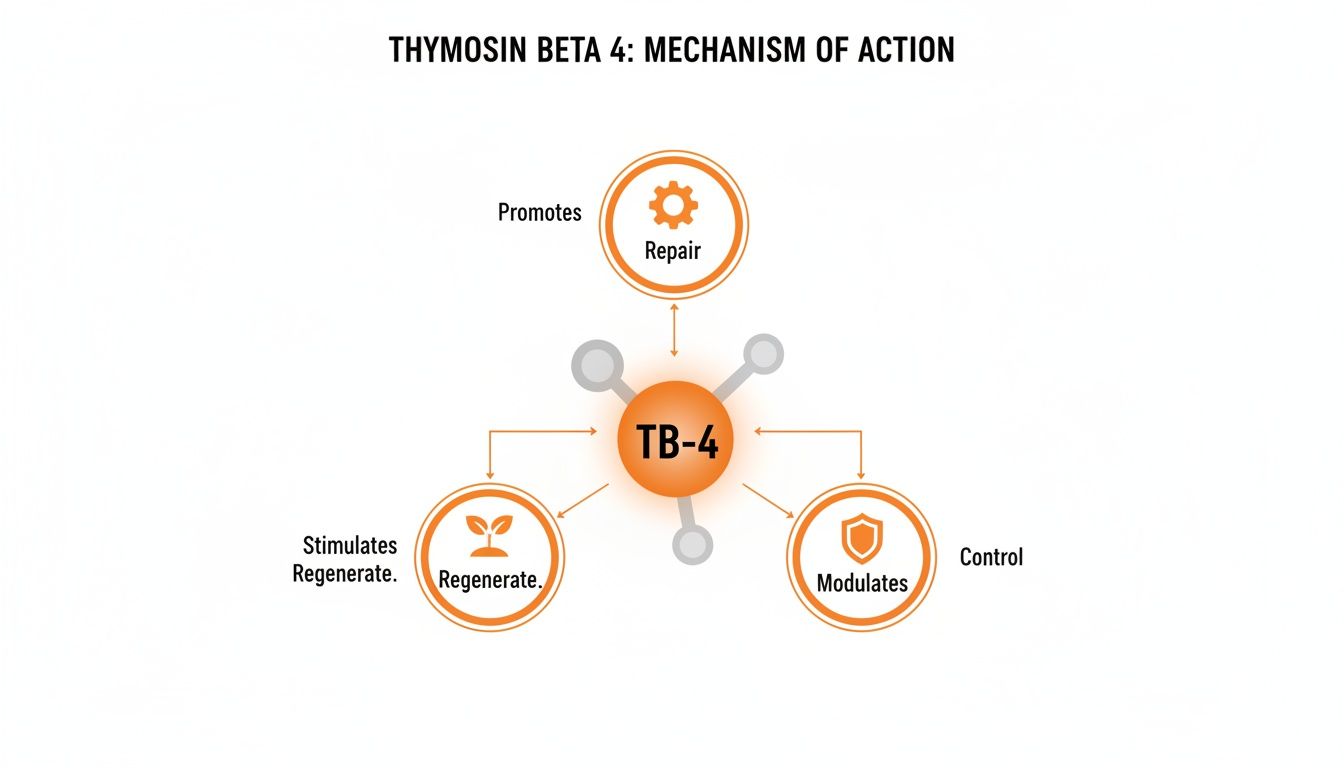
As you can see, TB-4 acts as a central hub, connecting all the essential processes required for a fast and full recovery.
By orchestrating these multiple pathways simultaneously, Thymosin Beta 4 doesn't just patch up damage—it facilitates a comprehensive, multi-layered healing response that is both efficient and thorough.
This multifaceted approach is what makes it stand out from other compounds. If you're curious how its systemic action compares to another popular peptide, you might want to read our guide on BPC-157 and TB-500, which dives into another major player in regenerative science. Ultimately, once you understand how TB-4 works, it's easy to see why it's considered a cornerstone of modern healing and recovery therapies.
The Evidence Behind TB-4's Healing Power
Knowing how Thymosin Beta 4 works on a molecular level is one thing, but the real story is what it can actually do. Researchers have been putting TB-4 to the test for years, and the evidence piling up paints a clear picture: this is a remarkably versatile and powerful tool for regeneration.
From mending skin to repairing our most vital organs, the data shows that TB-4 has a knack for jump-starting and accelerating the body's own recovery systems.
The most solid evidence we have for TB-4 is in wound healing. Its talent for orchestrating cell movement and building new blood vessels makes it a perfect fit for treating just about any kind of physical damage. We're talking about everything from simple cuts and scrapes to more complex situations like surgical wounds and stubborn, non-healing ulcers.
Studies consistently show it can make tissue close up faster and, just as importantly, reduce the amount of scar tissue that forms. This means you don't just heal; you get back more of the original function.

A Protector for the Heart
One of the most compelling frontiers for TB-4 research is in cardiovascular health. The heart isn't great at fixing itself after it's been damaged, which is why a heart attack can leave behind so much permanent harm. But TB-4 is showing real promise as an agent that can both protect the heart and help it repair.
It works on multiple fronts. It helps stop cardiac cells from dying in the first place, encourages the growth of new blood vessels to get blood flowing again, and dials back the inflammation that often makes a bad situation worse. It's this one-two-three punch that offers a powerful strategy for improving recovery after a cardiac event.
When it comes to the heart, Thymosin beta 4 has shown some incredible potential, especially after a myocardial infarction (heart attack). In a really compelling animal study, researchers injected mesenchymal stem cells (MSCs) that were "supercharged" with Tβ4 into damaged heart muscle. The results were dramatic: blood flow to the heart improved significantly, more of the stem cells survived, and overall heart function was better restored. You can dive into the specifics by reading the full study on Tβ4's cardiac benefits.
By intervening at multiple stages of the injury and repair cycle, TB-4 doesn’t just patch the damage; it helps create a healthier, more resilient environment within the heart tissue itself.
This potential for cardiac repair shows just how far TB-4's capabilities go beyond simple wound healing, hinting at truly systemic, life-saving applications.
Support for Ocular and Neurological Health
The benefits don't stop at the skin and heart. TB-4 has also shown it can do some impressive work in the worlds of ophthalmology and neurology. Its healing touch extends to the very delicate tissues of the eye, where studies have explored its ability to:
- Heal Corneal Injuries: It helps speed up the repair of scratches, abrasions, and ulcers on the eye's surface.
- Alleviate Dry Eye Syndrome: By calming inflammation and promoting cell health, it gets at the root causes of chronic dry eye.
- Protect Ocular Tissues: Its anti-inflammatory effects act as a shield, helping to protect the eye from different kinds of damage.
On top of that, early research is pointing toward neuroprotective qualities. Scientists are now looking into whether TB-4 could help shield brain cells from damage after a stroke or a traumatic brain injury. By tamping down inflammation and helping neurons survive, it might one day play a key role in limiting long-term neurological problems. This incredible range of uses really highlights just how fundamental this peptide is to our body's core repair systems.
Beyond Local Repair: Systemic and Anti-Inflammatory Benefits
While Thymosin Beta 4 is a powerhouse for localized repair, its influence doesn't just stop at the site of an injury. The benefits actually ripple throughout the entire body, creating a systemic effect that promotes overall wellness and resilience. One of its most impressive functions is managing inflammation—a critical factor in healing from acute injuries and dealing with chronic health conditions.
Think of inflammation like a fire. A small, controlled burn is useful; it clears out damaged cells and signals for help after an injury. But when that fire spirals out of control, it starts causing widespread damage to healthy tissue. TB-4 acts like the body's own expert firefighter, calming this inflammatory blaze before it gets out of hand. This helps maintain a balanced internal environment, which is fundamental for long-term health.

Preventing Scarring and Fibrosis
Beyond just calming inflammation, TB-4 is exceptional at preventing the formation of excessive scar tissue, a process known as fibrosis. When organs like the heart, liver, or kidneys get damaged, their default healing mechanism is often to lay down thick, fibrous tissue instead of regenerating healthy, functional cells. This stiff scarring can seriously compromise how well an organ works over time.
TB-4 steps in to regulate the signaling that triggers fibrosis. It essentially encourages the body to regenerate proper tissue instead of just slapping a scar tissue "patch" on the damage. This is a game-changer for long-term health, helping preserve the function and integrity of our most vital organs.
By minimizing fibrosis and controlling inflammation, Thymosin Beta 4 supports the body's ability to not just heal, but to restore its original function. This systemic support is fundamental to true recovery and sustained wellness.
The research really brings home how important this is. By suppressing key inflammatory pathways, TB-4 has been shown to reduce the fibrosis that makes the heart stiff after an injury. Its potential goes even further; in one sepsis study, 92 patients developed acute kidney injury, and tragically, 53 of them died within 28 days. This highlights the desperate need for therapies like TB-4 that can fight back against these systemic inflammatory crises. You can dive deeper into these findings on Tβ4's anti-fibrotic potential. This ability to shield organs from lasting damage is a testament to its role in supporting holistic health.
Navigating Safety, Side Effects, and Regulations
Before exploring any new therapy, it's critical to understand the practical side of things—namely, its safety profile and legal standing. When it comes to Thymosin Beta-4, the good news is that clinical studies have generally found it to be very well-tolerated.
Most reported side effects are minor and temporary, usually just some redness, mild pain, or irritation right at the injection site. Serious adverse effects are rarely seen in controlled research environments.
This strong safety profile is a big reason why TB-4 is being investigated for so many different uses. In ophthalmology, for instance, it's shown real promise for treating conditions like severe dry eye syndrome. Clinical trials have demonstrated that TB-4 can significantly reduce dryness and discomfort, with patients often feeling the benefits long after they've finished the treatment. You can find more details on Tβ4's role in eye health over at innerbody.com.
Regulatory Status and What Athletes Need to Know
It's crucial to be clear on this point: TB-4 isn't a supplement you can just buy off the shelf. In the United States, the Food and Drug Administration (FDA) has not approved it for general medical use.
Instead, it's classified as a research chemical. This means it can sometimes be prescribed by physicians in specialized clinics for specific therapeutic uses, but it's not a mainstream, FDA-sanctioned treatment.
This distinction is especially important for athletes. Because of its powerful ability to speed up healing and tissue repair, Thymosin Beta-4 is on the banned list for nearly every major anti-doping agency.
Key Takeaway: For any competitive athlete, using Thymosin Beta-4 is out of the question. It is explicitly named under the S2 category of "Peptide Hormones, Growth Factors, Related Substances, and Mimetics" on the World Anti-Doping Agency (WADA) Prohibited List.
WADA's list is designed to ban any substance that could artificially boost performance, recovery, or an athlete's physiological limits. TB-4 falls squarely into that category.
This screenshot from the official WADA list confirms that TB-4 and similar growth factors are prohibited at all times—both during competition and in the off-season. This makes it a serious risk for any athlete subject to drug testing. For anyone who is prescribed this peptide for therapeutic reasons, knowing how to handle it correctly is non-negotiable. You can find essential peptide handling guidelines to ensure you're following the right safety protocols.
Is Thymosin Beta 4 Right for You?
So, you've learned about what Thymosin Beta 4 is and what it can potentially do. The next logical question is, "Should I be using it?"
The only way to answer that question responsibly is to talk with a qualified doctor. While this guide gives you the foundational knowledge, it’s no replacement for a one-on-one conversation with a healthcare professional who knows your specific medical history and health status.
Think of starting any peptide therapy as a partnership with your clinician. They're the ones who can take the full picture into account—your past health issues, current medications, and what you're actually trying to achieve—to see if TB-4 is even a good fit.
Preparing for Your Consultation
To get the most out of your appointment, it helps to show up prepared. Walking in with a good understanding and a list of questions will lead to a much more productive discussion.
Your health journey is unique. The goal of a medical consultation is to align the potential benefits of a therapy like Thymosin Beta 4 with your personal objectives, ensuring any treatment plan is both safe and effective for you.
Here are a few questions you might want to bring up with your doctor:
- Given my specific health goals, do you think I'm a good candidate for TB-4?
- What kind of results can I realistically expect, and in what timeframe?
- What would a typical treatment plan look like for someone like me in terms of dose and duration?
- How will we track progress and watch for any potential side effects?
- Are there any conflicts with the medications or supplements I'm already taking?
Taking this kind of collaborative approach helps you move forward with confidence, knowing you've made a well-informed decision about your health.
Your TB-4 Questions, Answered
When you're exploring any new therapy, it's natural to have questions. Let's tackle some of the most common ones that come up when people first start learning about Thymosin Beta 4 and how it works.
What's the Difference Between Thymosin Beta 4 and TB-500?
This is probably the most frequent question we hear, and it’s a great one. The two are closely related, but there's a key distinction.
Thymosin Beta 4 is the full-length, naturally occurring peptide. It's the complete molecule your body produces on its own to manage injury and repair.
TB-500, on the other hand, is a synthetic fragment of that natural molecule. It was specifically designed to contain the most active region of TB-4—the part that drives most of the healing and regenerative activity.
A good analogy is to think of TB-4 as an entire toolkit. TB-500 is like taking the single most useful and versatile tool from that kit. Because it's smaller and simpler to produce while still delivering the core benefits, TB-500 is what’s most commonly used in research and clinical settings. That's why you'll often see the terms used almost interchangeably, but now you know the science behind it.
The bottom line: TB-500 is a targeted, active piece of the natural Thymosin Beta 4 peptide, engineered to deliver its primary healing power.
How Is Thymosin Beta 4 Administered?
For the vast majority of protocols, Thymosin Beta 4 is delivered via a subcutaneous injection. If that sounds intimidating, it’s actually quite simple—it’s an injection into the fatty tissue just under the skin, using a tiny needle much like those used for insulin.
This approach allows the peptide to absorb slowly and steadily into your system, creating a systemic effect throughout the body. The most common spots for these injections are places with a bit of fatty tissue, such as:
- The stomach area
- The thighs
- The upper arms
There is no one-size-fits-all dose or schedule. The right protocol depends entirely on your specific health goals, the condition you're addressing, and what a qualified healthcare provider recommends. Sticking to professional medical guidance is absolutely critical for getting the results you want safely.
How Quickly Will I See Results with TB-4?
Patience is key here, as everyone's body responds differently. The timeline for seeing results from TB-4 really depends on your starting point, the dose you're on, and what you're trying to heal—a recent injury is very different from a long-term, chronic issue.
Some people dealing with acute injuries, like a fresh muscle tear or post-surgical recovery, might start to notice less inflammation and discomfort within the first one to two weeks.
For more stubborn, chronic conditions or for general tissue repair goals, it’s more realistic to expect a longer timeline. You might need several weeks, or even a few months, of consistent use before the improvements become obvious. Remember, TB-4 isn't a painkiller or a quick fix; it works by supporting your body's own gradual healing mechanisms. Consistency and following your prescribed plan are what will ultimately lead to the best outcome.
At Elite Bioscience, we provide access to high-quality, third-party lab-tested peptide therapies prescribed by qualified medical professionals. To learn more about how our services can support your wellness journey, visit us at elitebioscience.co.