
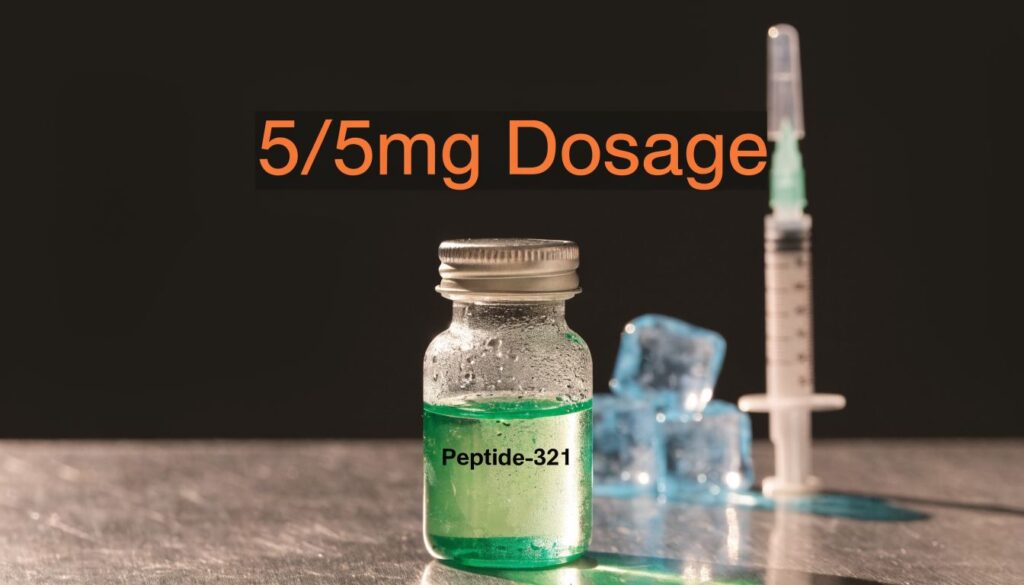
You’ve probably seen the same problem across clinic sites, forum threads, and peptide videos. Everyone tells you the microgram range, but almost nobody shows you how that translates to a specific 5/5mg vial, a specific amount of bacteriostatic water, and the actual units on a U-100 insulin syringe.
That gap is where most dosing mistakes happen.
A patient thinks “200 mcg” sounds simple, then stares at a reconstituted vial and a 100-unit syringe with no confidence that the draw volume is correct. Another person copies a protocol meant for a different vial strength. Someone else assumes “5/5mg” means 5 mg total, not 5 mg of CJC-1295 plus 5 mg of Ipamorelin. Those errors matter. With peptides, sloppy math creates inconsistent results and avoidable side effects.
The practical version of cjc 1295 ipamorelin blend 5 5mg dosage starts with one rule. Know exactly what’s in the vial, exactly how much liquid was added, and exactly how many syringe units match your prescribed dose. If you can’t answer all three, don’t inject yet.
Understanding the CJC-1295 and Ipamorelin Synergy
The blend works because the two peptides push on the same system from different directions.
CJC-1295 is a growth hormone releasing hormone analogue. In plain language, it helps signal the pituitary to release more growth hormone in a more sustained way. Ipamorelin is a growth hormone secretagogue. It promotes a cleaner pulse of growth hormone release and is commonly used because it’s valued for selective signaling.
That combination is why many protocols pair them instead of using either one alone. One peptide helps create the upstream signal. The other helps create the downstream pulse. Used together, they’re intended to support a more physiologic growth hormone pattern than a random high dose taken at the wrong time.

What CJC-1295 contributes
The most important clinical point is durability. A significant 2005 clinical study showed CJC-1295 increased mean plasma growth hormone concentrations by 2- to 10-fold for 6 days or more and increased mean plasma IGF-I concentrations by 1.5- to 3-fold for 9-11 days from a single injection, with IGF-I remaining increased for up to 28 days after multiple doses, as summarized by Anderson Longevity Clinic’s review of the study.
That doesn’t mean every patient should chase a stronger dose. It means CJC-1295 is potent enough that timing, schedule, and restraint matter.
What Ipamorelin adds
Ipamorelin is the pulse component in the blend. In practice, that matters because many patients aren’t looking for brute force. They want better recovery, leaner body composition, support during fat loss, or a protocol that fits into a nightly routine without becoming a burden.
The best outcomes usually come from consistency, not hero dosing.
Clinical reality: Patients do better when they understand the mechanism well enough to respect the timing. These aren’t “more is better” compounds.
A useful way to think about the pairing is this:
- CJC-1295 sets the stage
- Ipamorelin sharpens the pulse
- Good timing protects the effect
- Correct dosing protects the patient
If you want a patient-focused overview of expected response patterns, CJC-1295 and Ipamorelin results can help frame what people typically watch for over time.
Decoding Your 5/5mg Vial Reconstitution and Math
A 5/5mg vial means exactly this. It contains 5 mg of CJC-1295 and 5 mg of Ipamorelin in the same vial.
That is not 5 mg total. It is 10 mg total active peptide content, split evenly between the two compounds.
This is the point where patients either get confident or get lost.

The simplest math for a 2 mL reconstitution
For a 5mg/5mg vial reconstituted with 2ml of bacteriostatic water, the concentration becomes 2500mcg/ml for each peptide. A standard 100mcg dose of each peptide therefore requires drawing 0.04ml, or 4 units, on a standard U-100 insulin syringe, as outlined in Tulsi’s vial math breakdown.
That single line clears up most of the confusion.
Here’s what it means in plain English. A U-100 insulin syringe measures 100 units per 1 mL. So:
- 1 mL = 100 units
- 0.1 mL = 10 units
- 0.04 mL = 4 units
- 0.08 mL = 8 units
Step by step syringe conversion
If your vial was mixed with 2 mL of bacteriostatic water, use this logic:
- Each peptide concentration is 2500 mcg per mL
- Your syringe shows units, not micrograms
- On a U-100 syringe, 100 units = 1 mL
- Convert the needed mL into syringe units
A practical quick-reference table helps:
| Desired dose per peptide | Volume to draw | U-100 syringe units |
|---|---|---|
| 100 mcg | 0.04 mL | 4 units |
| 200 mcg | 0.08 mL | 8 units |
That’s why patients often accidentally overdo it. The injection volume is small. If someone assumes they need “20 units” for a modest dose, they may be drawing much more than intended.
A tiny volume doesn’t mean a tiny dose. With a concentrated peptide vial, small measurement errors matter.
Reconstitution habits that work
The mechanics are simple, but technique still matters.
- Use bacteriostatic water because that’s the standard diluent referenced in practical peptide reconstitution guidance.
- Add the liquid gently against the inside wall of the vial rather than blasting the powder directly.
- Let the powder dissolve naturally. Swirl gently if needed. Don’t shake aggressively.
- Label the vial clearly with the reconstitution date and the exact amount of diluent used.
If you need a separate walkthrough on converting peptide amounts into milliliters, Ipamorelin dosage in mL is useful because it's a common point where many otherwise careful patients get tripped up.
Recommended Dosing Protocols by Experience Level
A common clinic scenario looks like this. Someone has a 5/5 mg vial, understands that 4 units equals 100 mcg of each peptide after a 2 mL reconstitution, then asks whether jumping straight to 8 or 12 units will speed results. In practice, dosing works better when it is tied to tolerance, symptom response, and follow-up labs rather than impatience.
For a CJC-1295 and Ipamorelin blend, conservative titration is usually the safer starting point. Published clinical work on CJC-1295 has shown growth hormone and IGF-1 effects at relatively low doses, but those studies do not justify copying high-dose forum advice into a mixed 5/5 mg vial at home. A more useful reference for patients and clinicians is the peer-reviewed dose-ranging literature on CJC-1295, including work indexed by the National Center for Biotechnology Information, because it gives real human data rather than anecdotal stack recommendations.
CJC-1295 and Ipamorelin 5/5mg dosing protocol examples
The examples below assume the vial was reconstituted with 2 mL of bacteriostatic water. That means each peptide sits at 2500 mcg/mL, and the small syringe volumes matter.
| Experience Level | Daily Dose (mcg) | Syringe Units (U-100) | Frequency | Primary Goal |
|---|---|---|---|---|
| Beginner | 100 mcg of each peptide | 4 units | Once daily | Check tolerance and build consistency |
| Intermediate | 200 mcg of each peptide | 8 units | Once daily | Increase support for recovery and body composition |
| Advanced | 300 mcg of each peptide | 12 units | Once daily, or split only if clinician-directed | Higher-dose protocol with closer supervision |
The advanced row is where calculation errors show up most often. On this specific 5/5 mg vial reconstituted with 2 mL, 12 units delivers 300 mcg of CJC-1295 plus 300 mcg of Ipamorelin. Patients who guess instead of calculate can overshoot quickly because the injection volume still looks small.
Starting at 100 mcg of each peptide is a practical choice for many first-time users. It keeps the math clean, limits the chance of overreacting to early water retention or appetite changes, and makes it easier to tell whether any symptom is dose-related.
The intermediate dose of 200 mcg each is often where patients report a more noticeable effect. That does not mean everyone should move up. If sleep worsens, hands feel puffy, hunger becomes disruptive, or fasting glucose trends in the wrong direction, increasing the dose is the wrong move.
Higher-dose use has trade-offs. A patient may want faster body composition changes or more recovery support, but the downside is less room to identify the minimum effective dose and a greater chance of side effects becoming the main story.
Practical dosing habits that reduce mistakes
Patients usually do better with a steady protocol than with constant tinkering.
- Hold the same dose long enough to judge response clearly.
- Increase only one variable at a time, dose or schedule, not both.
- Match the syringe units to your own reconstitution volume, not someone else’s vial.
- Treat online bodybuilding protocols cautiously because many assume different concentrations, different peptide forms, or multiple daily injections.
A structured schedule can help with adherence. Some clinicians use a 5 days on, 2 days off pattern, while others keep dosing daily for a defined treatment block and reassess based on symptoms and labs. The right plan depends on treatment goals, age, metabolic risk, and how the patient responds, not on copying a generic cycle length.
A simple rule works well here. Start with the lowest dose that fits the goal, verify the math on the exact 5/5 mg vial in hand, and adjust only after the response is clear.
Injection Timing and Best Practices for Efficacy
A common real-world problem looks like this. The dose is calculated correctly from the 5/5 mg vial, the syringe units are right, but the patient injects at inconsistent times, too close to dinner, or into the same irritated spot every night. Results then look weaker than expected, and the dose gets blamed when the schedule or technique is the actual problem.
For most once-daily protocols, the practical default is a bedtime subcutaneous injection taken in a fasted state. The reason is straightforward. Growth hormone secretion is tied to normal sleep physiology, and large mixed meals, especially those containing carbohydrates, can work against that response. Clinical guidance on growth hormone secretagogues commonly advises separating dosing from food. For example, the prescribing information for sermorelin, another GH-axis peptide, recommends administration at bedtime and after a period without food, which supports the same timing logic used in peptide clinics for CJC-1295 and ipamorelin (DailyMed, sermorelin acetate for injection).

A simple routine works well for many patients: finish the last meal, wait long enough for the stomach to be reasonably empty, inject near bedtime, then avoid eating again afterward. Exact timing varies by clinician and by the patient’s evening schedule, but consistency matters more than chasing a perfect minute on the clock.
Timing checklist that improves consistency
Use this as the baseline routine:
- Keep a food-free window before the injection, especially after a larger evening meal
- Use the same general bedtime slot each night if the prescription is once daily
- Avoid post-injection snacks unless your clinician has told you otherwise
- Keep the schedule stable for at least several weeks before judging whether the protocol is helping
- Write down the time, dose, and syringe units used so the response can be interpreted correctly later
That last point matters more than patients expect. If someone says, “I’m taking 200 mcg nightly,” but one night that means 8 units before bed and another night it means 12 units after a late meal, the protocol is not consistent. Timing errors and math errors often show up together.
Where and how to inject
This blend is usually given subcutaneously, not into muscle. The lower abdomen is a common choice because it is easy to access, easy to rotate, and usually predictable in terms of absorption.
Use a boring, repeatable method:
- Wash your hands and clean the skin
- Use a new insulin syringe each time
- Pinch subcutaneous fat and inject into that layer
- Rotate sites across the abdomen or other approved areas
- Do not repeatedly use the exact same point
- Dispose of sharps in a proper container
In clinic, poor site rotation is one of the easiest preventable mistakes to spot. Reusing one favorite spot can lead to irritation, small lumps, or enough discomfort that patients start skipping doses.
For a visual demonstration of general injection handling, this short video can help reinforce the basics:
The best routine is simple: correct syringe units from your own 5/5 mg vial math, bedtime dosing, a food-free window, and clean subcutaneous technique with regular site rotation.
Navigating Potential Side Effects and Contraindications
Most side effects with this blend are manageable, but that doesn’t mean they should be brushed off.
The biggest practical mistake is assuming that “mild” means “ignore it.” Mild side effects are often useful signals. They may tell you the dose is too high for your current tolerance, your injection technique is poor, or your product quality is inconsistent.
What patients commonly notice first
The usual early complaints are local or short-lived. Patients may report things like transient flushing, headache, or injection-site irritation. Those issues are often easier to solve than people expect.
Common fixes include:
- Reduce the dose if symptoms began right after an increase
- Review reconstitution technique if the injection burns or stings more than expected
- Rotate injection sites if one area becomes repeatedly irritated
- Use a consistent nightly routine instead of erratic timing
If a symptom starts after a dose jump, the first response usually shouldn’t be “push through it.” The better response is to step back and identify what changed.
The non-negotiable contraindication
This therapy is contraindicated in patients with active cancer due to the mitogenic potential of IGF-1, and protocols should be discontinued 4 weeks prior to bloodwork for accurate baseline readings, according to Perfect Body’s protocol review.
That point matters. Patients sometimes treat peptides like wellness add-ons. They aren’t. Anything that influences the GH and IGF-1 axis deserves proper screening and real medical judgment.
Special caution with TRT
The same review notes that, for advanced users on TRT, combining with this peptide blend can increase strength by 12-18% more than TRT alone, but it requires careful monitoring of IGF-1/CBC panels. That doesn’t mean every TRT patient should add the blend. It means combination protocols can be more powerful and therefore need tighter oversight.
If a patient is on TRT and adds peptides without lab follow-up, the issue isn’t ambition. It’s loss of control over the plan.
Product quality changes the risk profile
A lot of “side effect” stories are really quality-control stories.
Untested products can contain the wrong concentration, poor sterility, or inconsistent fill. When that happens, patients blame the peptide category when the actual problem is sourcing. If you want predictable outcomes, purity and accurate compounding matter as much as the written protocol.
The Role of Lab Monitoring for Long-Term Safety
Peptide therapy works best when it’s managed like medicine, not like a supplement experiment.
That starts before the first injection. Baseline labs tell you whether the therapy is appropriate, what you’re trying to change, and how aggressively you should dose. Without baseline data, it’s easy to misread progress and harder to know whether a side effect is new.
What the labs are actually doing
For this category of therapy, the most important marker to watch is IGF-1. In practical terms, IGF-1 gives you a usable read on how strongly the body is responding to growth hormone signaling over time.
That matters for two reasons:
- Too little response may mean the protocol isn’t doing much
- Too much response may mean the dose or combination needs to be reevaluated
Why monitoring protects good results
Monitoring isn’t there to “catch problems” only after they appear. It helps preserve the benefits patients want in the first place. If sleep improves, recovery improves, and body composition starts moving in the right direction, the next job is to keep those benefits without drifting into unnecessary exposure.
A sensible monitoring plan also helps answer questions that symptoms alone can’t answer. Better pumps in the gym or a change in sleep depth may feel meaningful, but they don’t replace objective tracking.
The best peptide protocol is the one you can explain with both symptoms and labs. If those two stories don’t match, the plan needs adjustment.
For patients on more complex hormone programs, lab monitoring becomes even more important because interactions, overlap, and baseline suppression can make guesswork especially unreliable.
How to Legally and Safely Obtain Peptide Therapy in 2026
The safest way to obtain peptide therapy is also the least exciting. Go through a licensed medical pathway.
That means a real health intake, a clinician review, a prescription when appropriate, and a product stream that prioritizes identity, purity, and handling quality. These measures are essential because the peptide market is crowded with research-use products, mislabeled blends, and vials that don’t give patients any confidence that the label matches the contents.
What a legitimate pathway looks like
A proper process usually includes:
- A confidential health assessment
- Review by a licensed clinician
- Screening for contraindications and current medications
- A written protocol with vial-specific instructions
- Follow-up access for questions, side effects, and lab review
That structure solves the exact problems that drive most bad outcomes. It catches people who shouldn’t be using the therapy. It gives appropriate candidates a clear dosing plan. It reduces the chance that someone improvises based on social media comments or a forum post from a user with a completely different product.
Why telehealth can work well
For many patients, telehealth is a practical fit because peptide therapy requires planning more than it requires a waiting room. What matters is the quality of the clinical review, the clarity of the instructions, and the integrity of the product.
A legitimate clinic should make the dose math clear, not vague. It should also be able to explain what to stop before bloodwork, when to ask for follow-up labs, and when a patient should not start treatment at all.
If you’re comparing providers, use a simple filter. Ask whether they offer physician oversight, clear vial-specific instructions, and quality standards that reduce avoidable risk. If you’re evaluating options online, peptide therapy clinics near me is a useful starting point for understanding what a structured clinic pathway looks like.
The right provider doesn’t just ship a vial. They help prevent the predictable mistakes that happen between the vial and the syringe.
If you want medically guided peptide therapy with clear dosing instructions, prescription oversight, and third-party tested products, Elite Bioscience offers an efficient telehealth process for patients across the USA, CA, and AU. You can complete a confidential health assessment, speak with a licensed clinician, and receive discreet delivery of personalized hormone, peptide, and vitamin therapies designed around safety, accuracy, and ongoing support.