NAD+: The Cellular Battery Every Cell in Your Body Needs
NAD+ is having a moment. You will see it in longevity blogs, supplement aisles, and anti-aging conferences. Behind the hype is a molecule your body genuinely cannot function without. Here is what the research shows, in plain English.
NAD+ is having a moment. You will see it in longevity blogs, in supplement aisles, at anti-aging conferences. Most of what you will read is hype. But behind the hype is a molecule your body genuinely cannot function without, and the published research on it is some of the most solid in the longevity field.
Think of NAD+ like a rechargeable battery that every cell in your body uses. When it is charged, it carries energy from the food you eat into your mitochondria — the little power plants that keep you running. When it is spent, it gets recharged and used again. Without enough of it, the power plants slow down. That is the whole story in one image.
NAD+ has a second job, too, and that second job is what ties it to aging. It is also a required ingredient for a family of enzymes called sirtuins, which are involved in cellular stress response and metabolic regulation. So NAD+ is not just the battery — it is also the signal that tells the cell how to handle stress. This article walks through what the published research actually shows, no jargon, no hype.
One honest framing before we start. NAD+ is one of the most-studied molecules in the longevity field, and the basic biochemistry is genuinely well understood — it has been for decades. What is newer and less settled is what raising NAD+ actually does to outcomes in humans over time. The marker research is solid. The outcome research is still being written. We will keep those two apart throughout, because most of the bad coverage of NAD+ comes from blurring them together.
What NAD+ actually is
StudyNAD+ — nicotinamide adenine dinucleotide — is a coenzyme found in every living cell. 'Coenzyme' means it is a helper molecule that enzymes need to do their work. NAD+ is one of the most important helpers in the body, and it has been studied for the better part of a century, which is why the biochemistry is so well understood.
It has two main jobs in the literature. The first is carrying electrons in redox reactions — that is the battery job, the energy-chain work. The second is serving as a substrate — a required ingredient — for a family of enzymes called sirtuins, PARPs, and CD38. Those enzymes consume NAD+ as part of their signaling work.
Those two roles matter because they put NAD+ at the intersection of energy metabolism and stress-response signaling. That is why it shows up in both the energy conversation and the longevity conversation, and why so many researchers care about it.
A useful way to hold this: most molecules in the body have one job. NAD+ has two, and both are load-bearing. That is rare, and it is the reason a molecule discovered in 1906 is still on the cover of aging journals a century later. When a single molecule sits at the intersection of energy and stress response, everything about how a cell ages runs through it. That is the whole reason this field exists.
The energy engine: how NAD+ powers your cells
StudyIn the mitochondrial energy chain, NAD+ accepts electrons and becomes NADH. NADH then feeds those electrons forward, and the chain uses that flow to make ATP — the usable energy currency of the cell. That electron transfer is the core of how cells turn fuel into energy you can spend.
This is why NAD+ is described as central to cellular energy metabolism. It is literally on the main path. A cell without enough NAD+ cannot run that chain at full capacity, and a cell that cannot run its energy chain at capacity is a cell that is struggling.
If you have ever felt the difference between a phone at 100% battery and a phone at 5%, you have the right image. NAD+ is what keeps the cell charged. When it is plentiful, the cell runs. When it is scarce, the cell slows.
There is a subtlety worth knowing here, because it comes back later. NAD+ and NADH are two forms of the same molecule — charged and spent. The cell does not just use NAD+ and throw it away; it cycles between the two. So 'low NAD+' in the aging literature often really means the ratio between the charged and spent forms has shifted, not that the molecule has vanished. The battery is not gone. It is just more discharged, more of the time, and the cell has a harder time keeping it topped up. Hold onto that — it matters for how you read the decline section.
The sirtuin connection: why NAD+ is tied to aging
StudyHere is the second job, and it is the one that ties NAD+ to aging. Sirtuins are a family of enzymes that modify other proteins in ways tied to cellular stress response and metabolic regulation. They are some of the most-studied enzymes in aging research.
The catch is that sirtuins require NAD+ to function. They do not just use it; they depend on it. When NAD+ is plentiful, sirtuin activity is healthy. When NAD+ is low, sirtuin activity drops. That dependency is the link — and it is the reason NAD+ status and sirtuin activity are studied together, and the reason NAD+ shows up in every serious conversation about aging.
So NAD+ is not just the battery. It is also the signal that tells the cell how to handle stress, through the sirtuins it powers. Two jobs, both central, both dependent on the same molecule. That is a lot of eggs in one basket — which is why researchers care so much about what happens to that basket with age.
This is also where the sirtuin story gets oversold in popular coverage. Sirtuins are real, they are important, and the NAD+ dependency is real. What is not settled is how much of the benefit people attribute to 'raising NAD+' actually comes through sirtuins versus through the energy-chain job versus through other NAD+-consuming enzymes like PARPs and CD38. The honest read is: sirtuins are one channel, plausibly an important one, and the literature is still untangling which channel matters most for which outcome. Anyone who tells you sirtuins are the whole story is ahead of the evidence.
The age decline: why NAD+ drops over time
StudyHere is the finding that drives most of the interest in NAD+ for aging. Across the studied tissues, NAD+ levels decline with age. That decline parallels measurable changes in metabolic function markers — the cell's energy handling shifts as NAD+ drops.
The phone-battery image still works. Over time, the battery holds less charge, and the phone slows down. Roughly that, at the cellular level, is what the data describe. It is a consistent, replicated observation — a description of a trend, not proof that raising NAD+ reverses anything. But it is one of the most reliable observations in aging research, and it is the reason so much work is aimed at this molecule.
What the decline tells you, plainly, is that the thing every cell needs is the thing that fades. That is a useful framework. What it does not tell you is that refilling it changes the outcome — that is the next section.
It is also worth being honest, as with glutathione, about what 'declines with age' means. It is a population trend, measured across groups, with wide individual variation. Some older adults have NAD+ status that looks like a much younger person's. Some younger adults, for various reasons, look older than their years biochemically. The trend is real and replicated. The application to you specifically is not something a population average can hand you. That is the difference between an epidemiological observation and a personal claim, and it is exactly the line popular coverage loves to blur.
Can you recharge the battery? What the research shows
StudyThis is the section that gets over-claimed the most, so it is where we are most careful. In research models, strategies that raised NAD+ — through precursors or direct NAD+ — shifted markers of cellular energy and stress response in the studied direction. The input moved the readouts.
That is a marker-response result, and it is a real one. It says the input moves the things you would want it to move. What it does not, by itself, say is what a sustained approach does to long-term outcomes in specific applications. The gap between 'moves a marker' and 'changes an outcome' is the single biggest gap in this field, and the honest version of this section is that the markers move and the outcomes are still being studied.
There is also a strategy question the popular coverage skips over. 'Raise NAD+' is not one thing — there are several distinct approaches in the literature, and they do not all behave the same way. Some aim to give the cell more of the raw materials to make NAD+ (the precursor route). Some aim to deliver NAD+ itself. Some aim to slow the rate at which NAD+ gets consumed. These are different levers on the same machine, and the published research treats them as different — different effects, different timelines, different open questions. Anyone who talks about 'NAD+' as if it were one knob you turn up is flattening a real and ongoing scientific conversation.
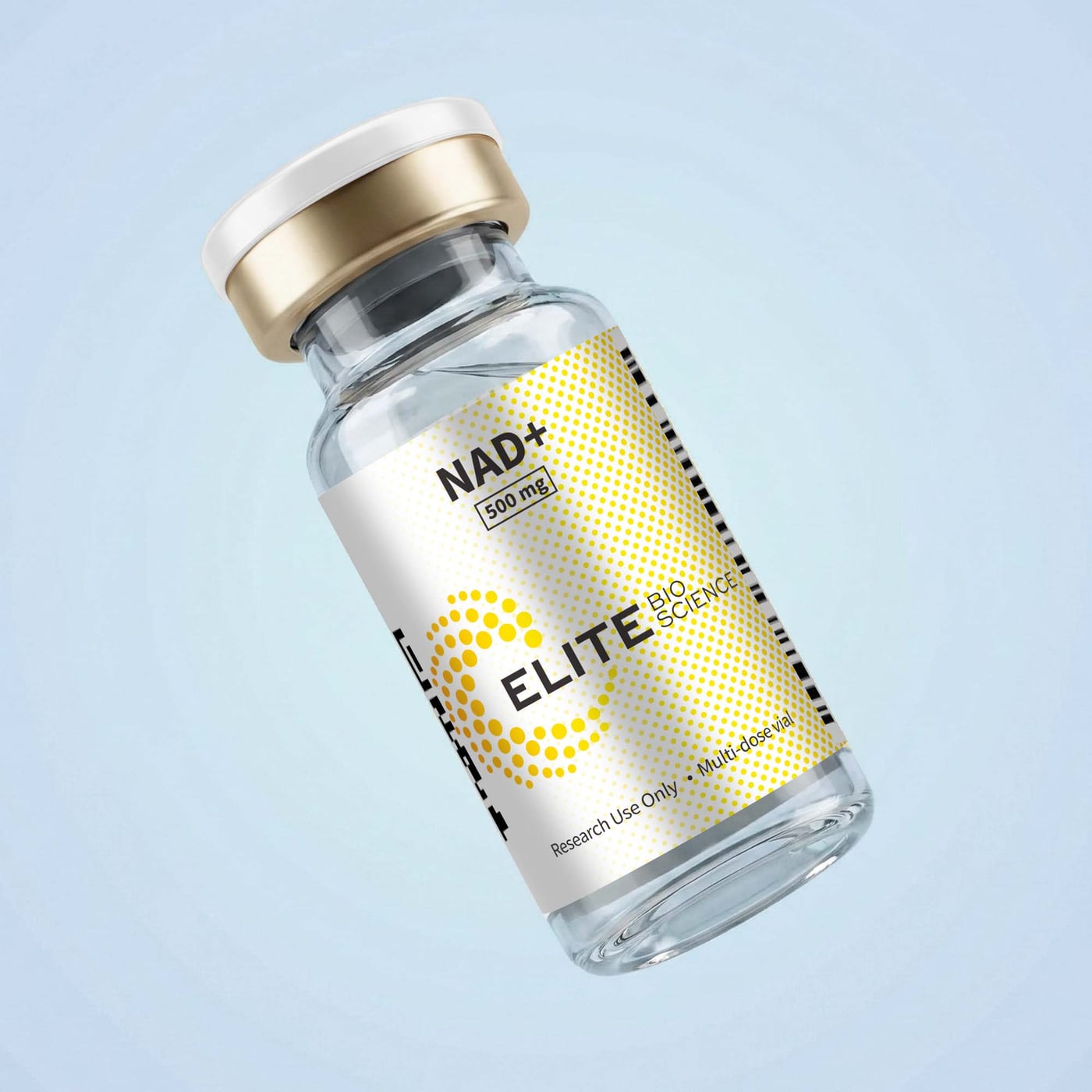
If you want to look at the lab-tested form of the compound researchers study, you can browse NAD+ below. If you want to talk through what this research does and does not mean for your specific situation, start a private chat with our team. The honest conversation is the point — we would rather help you think clearly than sell you something on a stretch.

Talk it through with a specialist
Private, written, no commitment. A research specialist replies on your timeline.
This article is provided for educational purposes only and does not constitute medical advice. These statements have not been evaluated by the FDA and are not intended to diagnose, treat, cure, or prevent any disease. For research use only.