The Biology of Aging
Aging is not a single process but a convergence of multiple interconnected mechanisms that progressively degrade cellular function over time. In 2013, Lopez-Otin et al. published the landmark paper "The Hallmarks of Aging" identifying nine fundamental mechanisms that drive the aging process. Understanding these hallmarks is essential context for evaluating which peptides target which aspects of aging.
The nine hallmarks include: genomic instability, telomere attrition, epigenetic alterations, loss of proteostasis, deregulated nutrient sensing, mitochondrial dysfunction, cellular senescence, stem cell exhaustion, and altered intercellular communication. No single intervention can address all nine simultaneously, but several peptides have shown promise in targeting multiple hallmarks.
Epithalon (Epitalon): Telomere Maintenance
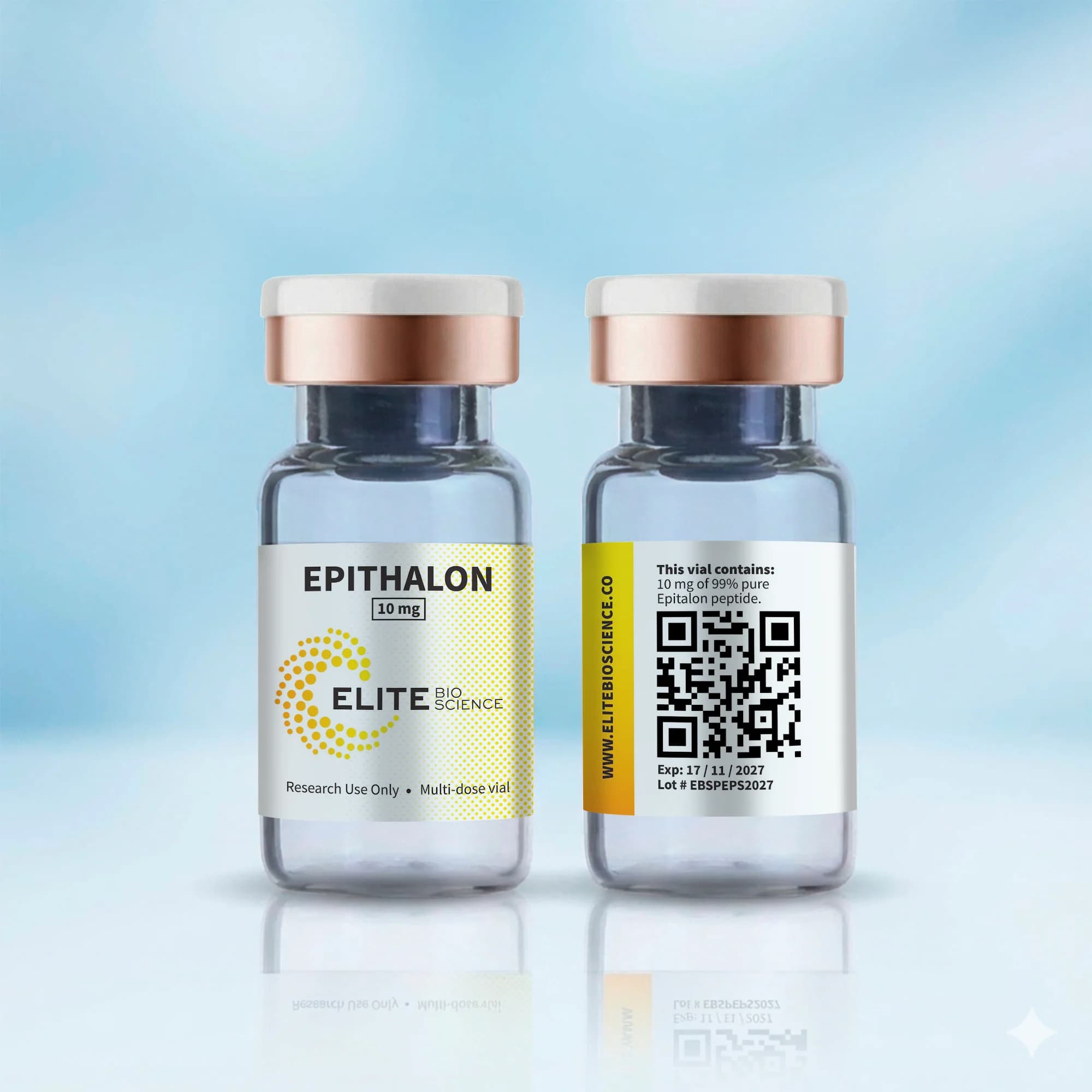
Epithalon is a synthetic tetrapeptide (Ala-Glu-Asp-Gly) based on Epithalamin, a peptide complex originally extracted from the pineal gland by Professor Vladimir Khavinson at the Saint Petersburg Institute of Bioregulation and Gerontology in Russia. It is the most extensively studied peptide in the context of telomere biology and aging.
Mechanism of Action
Epithalon's primary mechanism involves activation of telomerase, the enzyme responsible for maintaining telomere length. Telomeres are the protective caps at the ends of chromosomes that shorten with each cell division. When telomeres become critically short, cells enter senescence (permanent growth arrest) or undergo apoptosis (programmed cell death). Telomerase adds nucleotide sequences back to shortened telomeres, effectively extending the cell's replicative capacity.
Beyond telomerase activation, Epithalon has been shown to:
- Regulate melatonin production by the pineal gland, supporting circadian rhythm function
- Modulate chromatin structure in aged cells (Khavinson et al., Neuro Endocrinol Lett. 2003)
- Reduce lipid peroxidation and oxidative stress markers
- Influence neuroendocrine regulation through pineal-hypothalamic pathways
Research Evidence
The most significant longevity study on Epithalon was conducted by Anisimov et al. (Biogerontology, 2003) in female SHR mice. Treatment with Epithalon resulted in a 13.3% increase in mean lifespan and a significant reduction in spontaneous tumor incidence. The treated mice also showed improved biomarkers of aging including better estrous function and reduced chromosomal aberrations.
In human cell culture studies, Epithalon activated telomerase in human somatic cells, increasing telomere length and extending the number of cell divisions beyond the normal Hayflick limit. These findings provide a clear mechanistic basis for its anti-aging effects.
GHK-Cu: Tissue Remodeling and Gene Expression
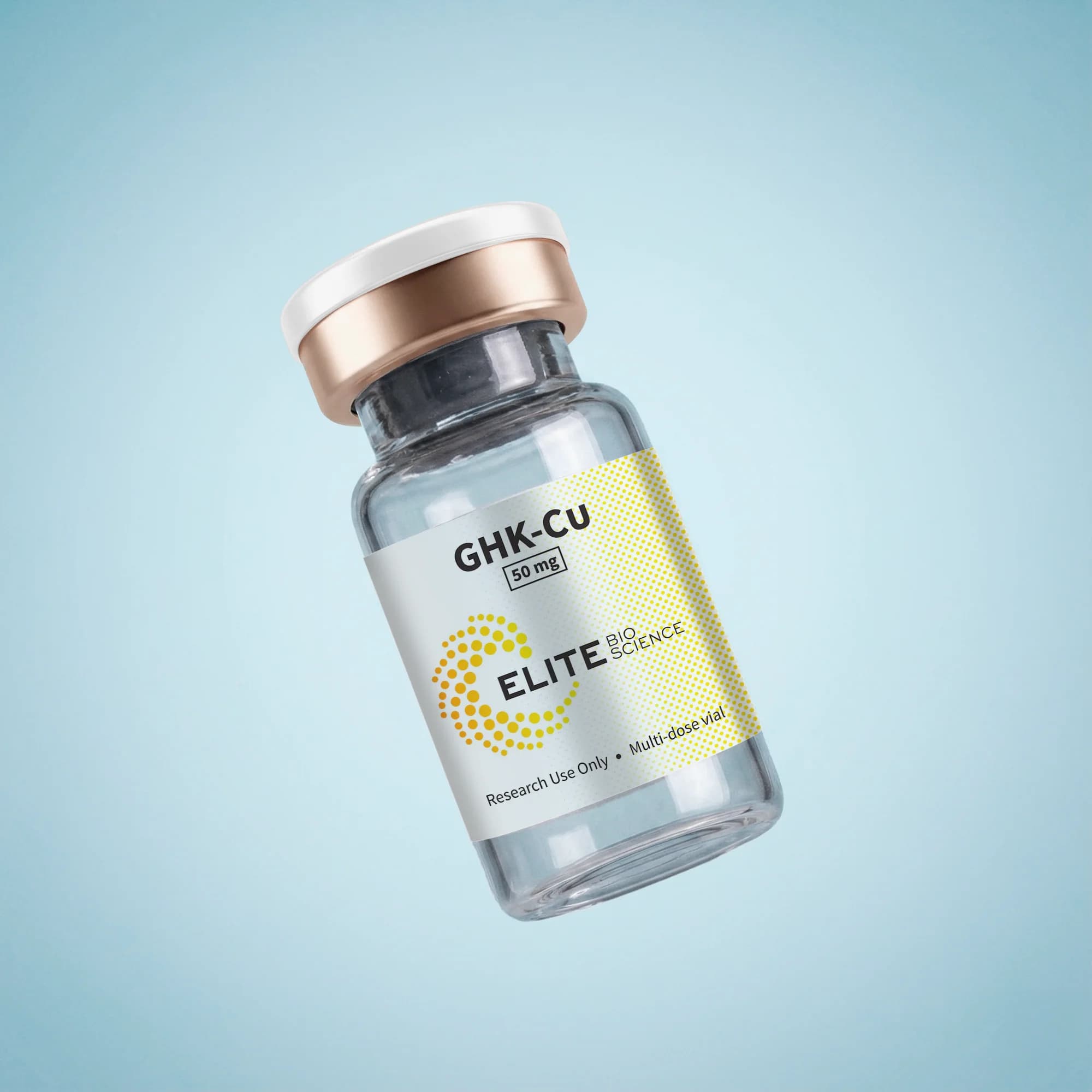
GHK-Cu (glycyl-L-histidyl-L-lysine copper complex) is a naturally occurring tripeptide-copper complex found in human plasma, saliva, and urine. Plasma GHK-Cu levels are approximately 200 ng/mL at age 20 but decline to approximately 80 ng/mL by age 60 — a 60% reduction that correlates with visible signs of aging.
Mechanism of Action
GHK-Cu is remarkable for the breadth of its biological activity, which stems from its ability to modulate gene expression on a genomic scale:
- Collagen Synthesis: GHK-Cu stimulates the production of collagen types I, III, and V, as well as glycosaminoglycans and decorin. This directly addresses the structural deterioration of skin and connective tissue that occurs with aging.
- Gene Expression Reversal: A landmark study by Pickart et al. used the Broad Institute's Connectivity Map to analyze GHK-Cu's effects on gene expression. They found that GHK-Cu modulated 4,000+ human genes, with the overall expression pattern shifting from an "aged" profile toward a "youthful" one. Specifically, it upregulated 1,584 genes and downregulated 917 genes associated with aging.
- Antioxidant Defense: GHK-Cu upregulates the expression of superoxide dismutases (SOD1, SOD2, SOD3) and other antioxidant enzymes, strengthening the cell's defense against oxidative damage.
- Anti-Inflammatory: The peptide suppresses fibrinogen and several pro-inflammatory cytokines, reducing the chronic low-grade inflammation associated with aging.
- Wound Healing: GHK-Cu accelerates wound healing by recruiting immune cells, promoting angiogenesis, and stimulating tissue remodeling at injury sites.
Research Evidence
Pickart et al. (Biomed Res Int, 2015) published a comprehensive review of GHK peptide's role in skin regeneration, demonstrating improvements in skin firmness, elasticity, clarity, and appearance in human studies. The review also documented GHK-Cu's ability to stimulate synthesis of metalloproteinases that remodel damaged collagen, and to activate stem cells that contribute to skin and tissue renewal.
MOTS-c: Mitochondrial Rejuvenation
MOTS-c addresses aging through the mitochondrial dysfunction hallmark. As a mitochondrial-derived peptide that activates the AMPK pathway, it improves mitochondrial biogenesis, enhances metabolic flexibility, and acts as an exercise mimetic — potentially counteracting the metabolic decline that accompanies aging.
Research has shown that MOTS-c levels decline with age, particularly in tissues with high metabolic demand. Supplementation in aged mice improved glucose tolerance, increased insulin sensitivity, and enhanced physical performance. The peptide's role as a retrograde signal from mitochondria to the nucleus represents a novel mechanism for addressing age-related metabolic dysfunction.
SS-31 (Elamipretide): Inner Mitochondrial Membrane
SS-31 targets mitochondrial aging from the inside out. This cell-permeable tetrapeptide concentrates in the inner mitochondrial membrane where it binds to cardiolipin, a phospholipid essential for electron transport chain function. With aging, cardiolipin undergoes oxidative modification that impairs its ability to interact with the respiratory chain complexes.
By stabilizing the cardiolipin-cytochrome c interaction, SS-31 optimizes electron transport chain efficiency, reduces reactive oxygen species production at the source, and improves overall mitochondrial energy output. Studies in aged animals have shown improvements in cardiac function, skeletal muscle performance, and renal function with SS-31 treatment.
NAD+ Precursors: Cellular Energy Substrate
While NAD+ is technically a coenzyme rather than a peptide, its central role in the anti-aging research landscape warrants inclusion. NAD+ decline is implicated in multiple hallmarks of aging — mitochondrial dysfunction, genomic instability, deregulated nutrient sensing, and cellular senescence. By serving as the essential substrate for sirtuins and PARPs, NAD+ directly links cellular energy metabolism to longevity pathways.
Restoring NAD+ levels through IV supplementation has shown promise in preclinical models for improving mitochondrial function, activating sirtuins, enhancing DNA repair, and restoring circadian gene expression patterns disrupted by aging.
BPC-157: Systemic Protection
While BPC-157 is primarily known for tissue repair, its broad cytoprotective properties have implications for anti-aging research. The peptide's ability to protect against oxidative damage, maintain blood vessel integrity, support gastrointestinal health, and modulate the nitric oxide system contributes to systemic resilience — the body's overall ability to resist and recover from damage over time.
The concept of "healthspan" — the period of life spent in good health — depends not just on targeting specific aging mechanisms but on maintaining the body's overall repair and defense capacity. BPC-157's multi-system protective effects make it a relevant compound in this broader context.
Combining Anti-Aging Peptides
Because aging is a multi-factorial process, researchers increasingly study peptides in combination protocols that address multiple hallmarks simultaneously:
- Epithalon + NAD+: Targets telomere maintenance (Epithalon) alongside cellular energy and DNA repair (NAD+).
- GHK-Cu + BPC-157: Combines tissue remodeling and gene expression reversal (GHK-Cu) with broad cytoprotection and growth factor modulation (BPC-157).
- MOTS-c + SS-31: Addresses mitochondrial dysfunction from two angles — metabolic pathway activation (MOTS-c) and structural membrane stabilization (SS-31).
The Future of Anti-Aging Peptide Research
The anti-aging peptide field is advancing rapidly. As our understanding of the hallmarks of aging deepens, the ability to design targeted interventions for specific mechanisms improves. The peptides discussed in this article represent some of the most promising current approaches, but new candidates continue to emerge from both natural product discovery and rational peptide design.
Key research priorities include establishing long-term safety profiles, determining optimal dosing and timing, understanding interactions between peptides and other longevity interventions, and translating promising preclinical findings into human clinical data.
Measuring Anti-Aging Outcomes
One of the challenges in anti-aging research is defining and measuring outcomes. Unlike disease treatment, where endpoints are often clear (tumor shrinkage, blood glucose reduction), aging is a gradual process requiring longitudinal assessment and composite biomarkers.
Emerging metrics for anti-aging research include:
- Epigenetic Clocks: Algorithms like the Horvath clock and GrimAge use DNA methylation patterns to estimate biological age, which may differ from chronological age. Changes in epigenetic age after an intervention provide a quantitative measure of aging trajectory modification.
- Telomere Length: Measured by quantitative PCR (qPCR) or flow-FISH (fluorescence in situ hybridization), telomere length provides a direct measure of replicative aging and is the primary endpoint for Epithalon research.
- Mitochondrial Function: Assessed through oxygen consumption rate (OCR), ATP production, membrane potential, and mtDNA copy number. These metrics are particularly relevant for evaluating MOTS-c, SS-31, and NAD+ interventions.
- Inflammatory Markers: C-reactive protein (CRP), interleukin-6 (IL-6), and TNF-alpha provide measures of the chronic low-grade inflammation ("inflammaging") that accelerates biological aging.
- Functional Assessments: Grip strength, walking speed, cognitive testing (reaction time, memory), and cardiovascular fitness testing provide practical measures of physiological function that correlate with biological age.
The ideal anti-aging research protocol tracks multiple biomarkers across different hallmarks of aging, providing a comprehensive picture of how an intervention affects the overall aging trajectory rather than a single mechanism in isolation.
Protocol Design for Longevity Research
Designing research protocols for anti-aging peptides requires careful consideration of duration, endpoints, and controls. Because aging is a slow process, study durations for meaningful outcomes are typically measured in months to years rather than weeks. Short-term studies can assess biomarker changes (telomere length, epigenetic age, mitochondrial function), but functional outcomes and health span effects require longer observation periods.
Control conditions in anti-aging research should account for the powerful effects of lifestyle factors — exercise, diet, sleep, and stress management — that independently influence aging biomarkers. Randomization, blinding, and lifestyle standardization (or at least monitoring) are essential for isolating the specific effects of peptide interventions from confounding variables.
Conclusion
Anti-aging peptide research addresses the fundamental biological mechanisms that drive the aging process. From telomere maintenance (Epithalon) to gene expression reversal (GHK-Cu) to mitochondrial rejuvenation (MOTS-c, SS-31), these peptides offer researchers precision tools for investigating and potentially modulating the aging trajectory.
As the field advances, the integration of multiple biomarkers, longer study durations, and more sophisticated protocol designs will continue to refine our understanding of how peptide-based interventions can influence the complex, multifactorial process of biological aging. The peptides discussed here represent the current vanguard of this research — but the field is dynamic, and new candidates and approaches continue to emerge.
All compounds discussed are for research purposes only. Consult the primary scientific literature for detailed protocols and safety data.