What Is NAD+?
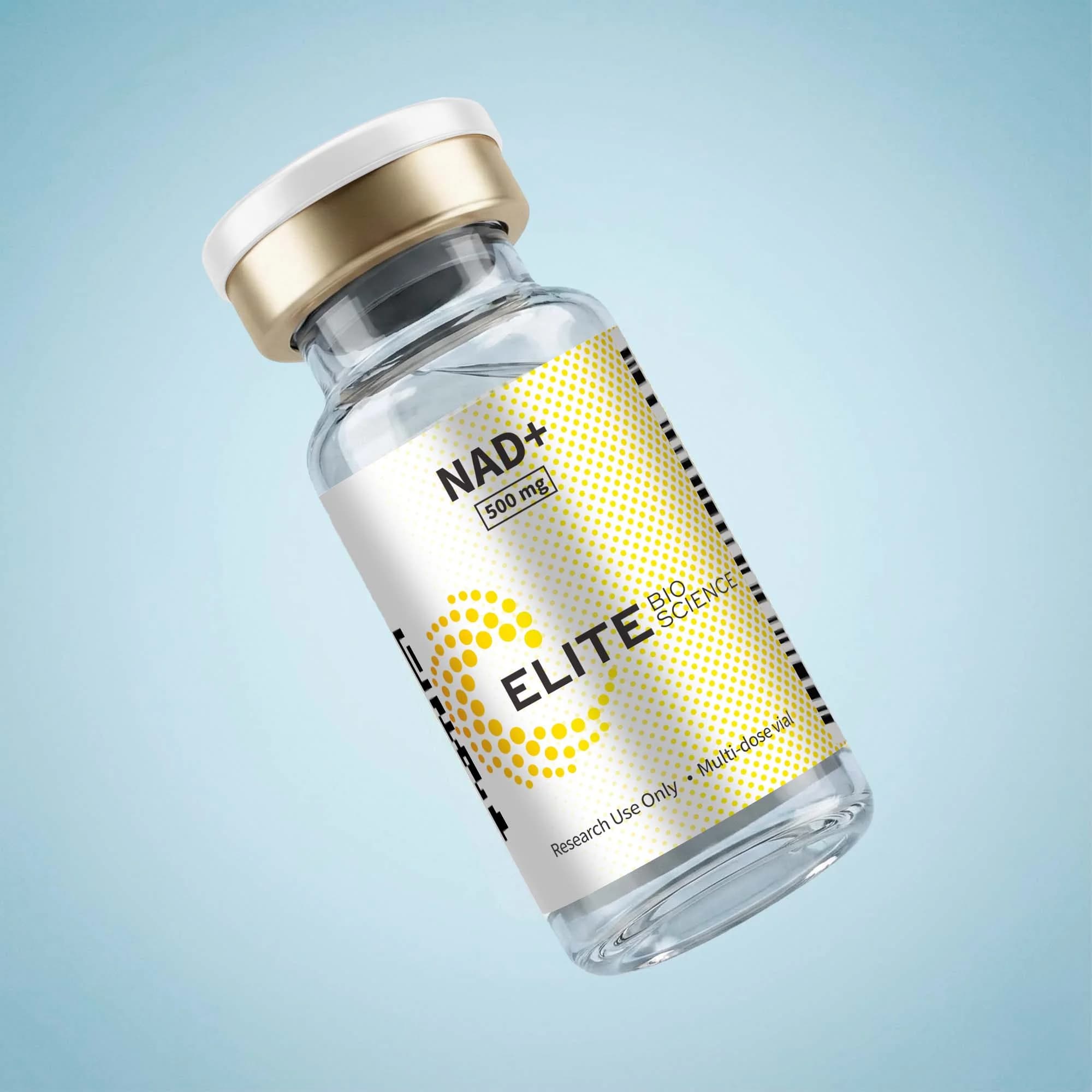
Nicotinamide adenine dinucleotide (NAD+) is a coenzyme found in every living cell. It is one of the most abundant molecules in the human body and is absolutely essential for life. NAD+ participates in more than 500 enzymatic reactions and plays a central role in the fundamental processes that keep cells alive and functioning: energy metabolism, DNA repair, gene expression regulation, and cellular stress responses.
At its most basic level, NAD+ functions as an electron carrier in metabolic reactions. It shuttles electrons between enzymes in the mitochondria during oxidative phosphorylation — the process by which cells convert nutrients into ATP, the universal energy currency of life. Without adequate NAD+ levels, cells simply cannot produce energy efficiently.
The Age-Related Decline of NAD+
One of the most significant findings in aging research over the past two decades is that NAD+ levels decline substantially with age. Studies in both animal models and humans have documented a progressive decrease in tissue NAD+ concentrations beginning in middle age, with some estimates suggesting a 50% reduction by age 60 compared to young adult levels.
This decline occurs through multiple mechanisms:
- Increased NAD+ Consumption: Enzymes that consume NAD+ — particularly PARPs (poly-ADP-ribose polymerases) involved in DNA repair and CD38, an ectoenzyme that degrades NAD+ — become more active with age as DNA damage accumulates and chronic inflammation increases.
- Decreased NAD+ Biosynthesis: The enzymes responsible for NAD+ production, particularly NAMPT (nicotinamide phosphoribosyltransferase), decline in expression and activity with age.
- Chronic Inflammation: Age-related chronic inflammation ("inflammaging") upregulates CD38 expression, accelerating NAD+ degradation.
The consequences of NAD+ depletion are far-reaching because of the coenzyme's involvement in so many critical pathways. Reduced NAD+ availability impairs mitochondrial function, compromises DNA repair capacity, disrupts circadian rhythms, and deactivates sirtuins — the family of proteins often called "longevity genes."
NAD+ and Sirtuins: The Longevity Connection
Sirtuins (SIRT1-7) are a family of NAD+-dependent deacetylase enzymes that regulate numerous cellular processes linked to aging and longevity. They require NAD+ as an obligate co-substrate — meaning they literally cannot function without it.
Each sirtuin has distinct but overlapping roles:
- SIRT1: Regulates gene expression, metabolism, and stress resistance. It deacetylates transcription factors including p53, FOXO, and PGC-1alpha, promoting cell survival and metabolic efficiency.
- SIRT3: Located in the mitochondria, SIRT3 directly regulates oxidative phosphorylation, fatty acid oxidation, and the mitochondrial antioxidant defense system.
- SIRT6: Plays a critical role in DNA repair and telomere maintenance. SIRT6-deficient mice exhibit dramatically accelerated aging phenotypes.
When NAD+ levels decline, sirtuin activity decreases proportionally, compromising the cell's ability to maintain genomic stability, manage metabolic stress, and resist age-related deterioration. Restoring NAD+ levels, therefore, has the potential to reactivate these protective pathways.
NAD+ and DNA Repair
DNA damage occurs continuously in all cells — estimated at 10,000 to 100,000 lesions per cell per day from normal metabolic processes, environmental exposures, and replication errors. The cell's DNA repair machinery depends heavily on PARP enzymes, which consume NAD+ to add poly-ADP-ribose chains to damaged sites, recruiting repair proteins to the lesion.
As organisms age, accumulated DNA damage increases PARP activity, consuming more NAD+. This creates a vicious cycle: more DNA damage leads to more NAD+ consumption, which reduces sirtuin-mediated protection, which leads to more cellular dysfunction and damage. Supplementing NAD+ may help break this cycle by ensuring adequate substrate availability for both PARPs (DNA repair) and sirtuins (cellular protection) simultaneously.
NAD+ and Mitochondrial Function
Mitochondria are the powerhouses of the cell, generating approximately 90% of the ATP required for cellular function. NAD+ is the primary electron carrier in the mitochondrial electron transport chain (ETC), accepting electrons from metabolic substrates and passing them through the chain to drive ATP synthesis.
Mitochondrial dysfunction is considered one of the hallmarks of aging. As NAD+ levels decline, ETC efficiency decreases, leading to reduced ATP production and increased generation of reactive oxygen species (ROS). This oxidative stress further damages mitochondrial DNA and proteins, creating another self-reinforcing cycle of dysfunction.
Research by Verdin (Science, 2015) and others has demonstrated that restoring NAD+ levels in aged animal models improves mitochondrial function, increases ATP production, and reduces oxidative stress markers — effectively reversing some aspects of mitochondrial aging.
NAD+ and Circadian Rhythm Regulation
A lesser-known but significant role of NAD+ is its influence on circadian rhythm biology. The cellular clock machinery relies on a transcription-translation feedback loop involving the CLOCK and BMAL1 proteins. SIRT1, which requires NAD+ as a co-substrate, deacetylates BMAL1 and PER2, directly linking cellular NAD+ status to circadian gene expression. As NAD+ levels decline with age, circadian rhythm disruption becomes more pronounced — manifesting as irregular sleep-wake cycles, disrupted hormone secretion patterns, and impaired metabolic rhythmicity.
Research in aged mice has demonstrated that NAD+ repletion restores circadian gene expression patterns toward youthful profiles, with corresponding improvements in sleep architecture, metabolic function, and physical activity patterns. This circadian connection adds another mechanistic dimension to NAD+'s role in aging biology and suggests that the timing of NAD+ supplementation may itself be a relevant experimental variable.
Routes of NAD+ Administration
NAD+ can be administered through several routes, each with distinct pharmacokinetic properties:
- Intravenous (IV): Direct IV infusion provides 100% bioavailability, delivering NAD+ directly to the bloodstream. This bypasses first-pass metabolism and achieves rapid tissue distribution. IV protocols typically involve slow infusion over 1-4 hours, as rapid administration can cause temporary side effects including flushing, nausea, and chest tightness.
- Intramuscular (IM): IM injection provides high bioavailability with a slower absorption profile than IV. It is more practical for repeated administration and avoids the need for prolonged infusion sessions.
- Subcutaneous (SubQ): SubQ injection offers a convenient self-administration route with good bioavailability and a sustained absorption profile.
The choice of administration route depends on the research protocol's goals, including the desired peak plasma concentration, duration of effect, and practical considerations of the study design.
Research Evidence for NAD+ Supplementation
The evidence base for NAD+ supplementation comes primarily from preclinical studies, with a growing body of human data:
- Yoshino et al. (Cell Metabolism, 2018): This landmark review synthesized the evidence for NAD+ intermediates (NMN and NR) in aging and metabolism, establishing the theoretical framework for NAD+ repletion as a therapeutic strategy.
- Animal Models: Studies in aged mice have demonstrated that NAD+ repletion improves mitochondrial function, enhances physical endurance, restores circadian rhythm gene expression, improves cognitive function, and extends health span.
- Human Studies: Early-phase human studies have shown that NAD+ precursor supplementation safely increases blood NAD+ levels and is well-tolerated. Longer-term efficacy studies are ongoing.
NAD+ in Combination Protocols
NAD+ is increasingly studied as part of multi-component longevity research protocols. Complementary compounds include:
- Resveratrol: A SIRT1 activator that works synergistically with NAD+ — NAD+ provides the substrate while resveratrol enhances the enzyme's activity.
- SS-31 (Elamipretide): A mitochondria-targeted peptide that stabilizes the electron transport chain from the inside while NAD+ supports it from the metabolic substrate side.
- Epithalon: A telomerase-activating peptide that addresses a different hallmark of aging (telomere attrition) complementary to NAD+'s role in DNA repair and cellular energy.
Dosing Considerations and Protocol Design
NAD+ dosing in research protocols varies considerably depending on the route of administration, study objectives, and subject population. IV protocols typically range from 250mg to 1000mg per infusion, administered over 1-4 hours. The infusion rate is a critical variable because rapid administration is associated with temporary side effects including flushing, nausea, abdominal cramping, and chest tightness — collectively attributed to a rapid release of histamine and other vasoactive mediators. Slow, controlled infusion rates minimize these effects.
IM and SubQ protocols use smaller individual doses (typically 50-200mg) administered more frequently. These routes avoid the acute side effects associated with rapid IV infusion while still achieving meaningful increases in tissue NAD+ levels over time. The choice between routes depends on the research question: IV may be preferred for studies investigating acute cellular responses, while IM/SubQ may be more appropriate for longer-duration protocols requiring repeated administration.
Frequency of administration ranges from daily to weekly depending on the protocol. Some research designs employ a loading phase of more frequent dosing followed by a maintenance phase at reduced frequency. Duration of study periods in the published literature ranges from single-dose pharmacokinetic studies to multi-month efficacy protocols.
Measuring NAD+ Status
Accurately measuring intracellular NAD+ levels in research subjects presents technical challenges. Blood NAD+ levels (measured in whole blood, plasma, or peripheral blood mononuclear cells) serve as accessible surrogate markers, but may not perfectly reflect NAD+ concentrations in the tissues of primary interest (brain, liver, muscle). Emerging metabolomic techniques including liquid chromatography-mass spectrometry (LC-MS) are improving the accuracy and specificity of NAD+ measurement, and tissue-specific imaging modalities are under development.
Beyond NAD+ itself, researchers monitor downstream biomarkers including sirtuin activity markers, PARP activity, mitochondrial function tests (oxygen consumption rate, ATP production), and oxidative stress markers (8-OHdG, F2-isoprostanes). These provide functional readouts of whether NAD+ repletion is translating into the expected downstream biological effects.
Conclusion
NAD+ occupies a uniquely central position in cellular metabolism and aging biology. Its decline with age is implicated in mitochondrial dysfunction, compromised DNA repair, sirtuin deactivation, and metabolic deterioration — all hallmarks of the aging process. Research into NAD+ repletion continues to advance our understanding of how cellular energy homeostasis can be maintained and potentially restored.
The convergence of NAD+ biology with sirtuin research, mitochondrial medicine, and epigenetic regulation positions NAD+ supplementation as a foundational intervention in the emerging field of longevity research. As measurement techniques improve and longer-term human data accumulates, the clinical significance of NAD+ repletion strategies will become increasingly clear.
All compounds discussed are for research purposes only. Refer to the cited literature for detailed protocols and safety information.