Understanding Growth Hormone Signaling
Growth hormone (GH) is a 191-amino-acid protein produced by the anterior pituitary gland. Its release is governed by two opposing hypothalamic peptides: Growth Hormone Releasing Hormone (GHRH), which stimulates GH production and secretion, and somatostatin, which inhibits it. GH is released in a pulsatile pattern, with the largest pulses occurring during deep sleep.
GH exerts its effects both directly and indirectly through insulin-like growth factor 1 (IGF-1), which is produced primarily in the liver in response to GH stimulation. Together, the GH/IGF-1 axis regulates body composition, bone density, muscle mass, fat metabolism, sleep quality, and tissue repair throughout life.
GH production peaks during adolescence and begins a steady decline after age 30, decreasing by approximately 14% per decade. This age-related decline — sometimes called somatopause — has driven significant research interest in peptides that can safely stimulate endogenous GH production.
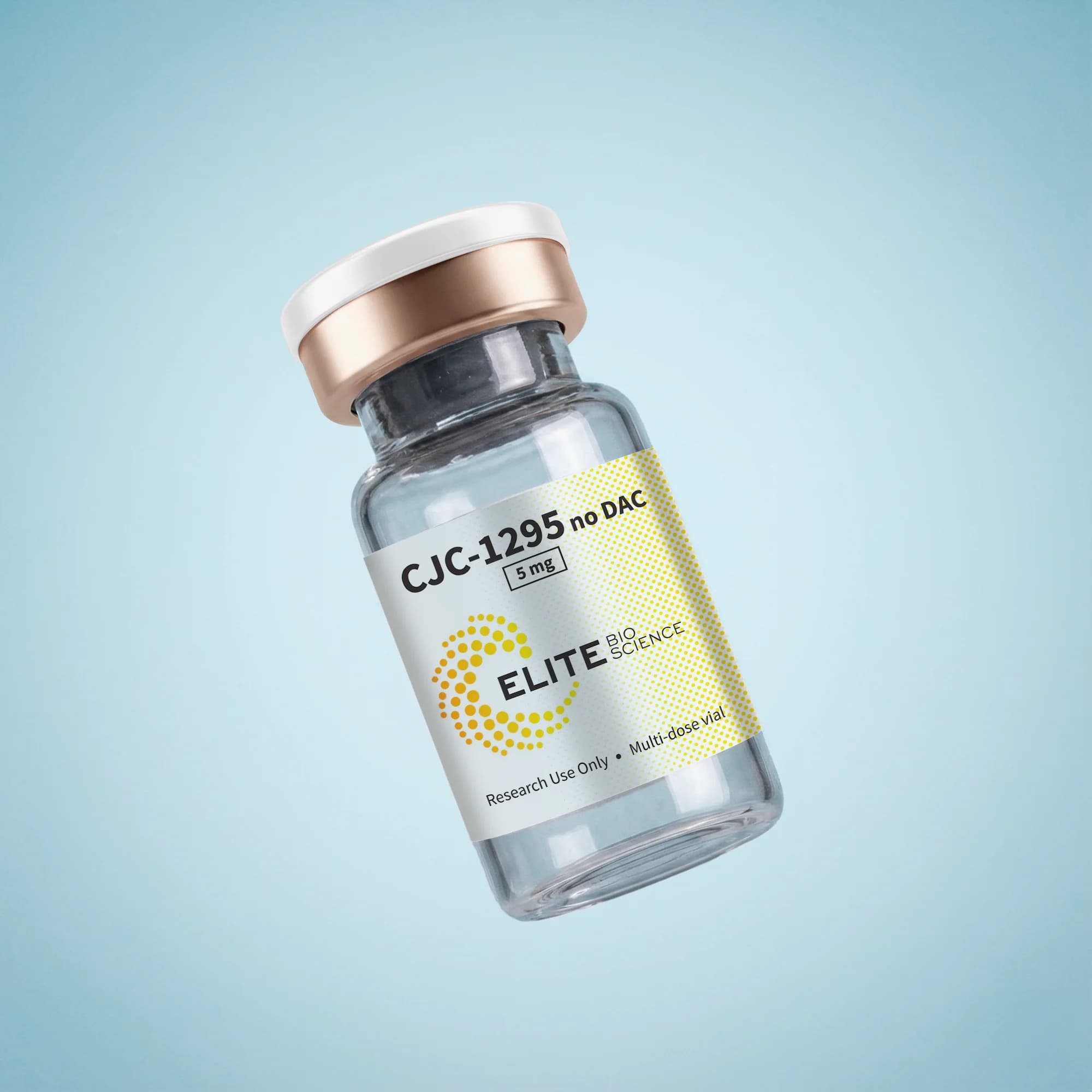
CJC-1295: The GHRH Pathway
CJC-1295 is a synthetic 29-amino-acid analog of GHRH that stimulates GH release by binding to GHRH receptors on somatotroph cells in the anterior pituitary gland. It exists in two forms:
- CJC-1295 with DAC (Drug Affinity Complex): The DAC modification allows the peptide to bind to albumin in the bloodstream, dramatically extending its half-life to approximately 6-8 days. This results in sustained, elevated baseline GH levels.
- CJC-1295 without DAC (also called Modified GRF 1-29): Without the albumin-binding modification, this form has a shorter half-life of approximately 30 minutes. It produces sharper, more defined GH pulses that more closely mimic natural physiology.
The research by Teichman et al. (JCEM, 2006) demonstrated that CJC-1295 with DAC produced a 2- to 10-fold increase in GH concentrations that was sustained for up to 6 days after a single injection, with corresponding increases in IGF-1 levels.
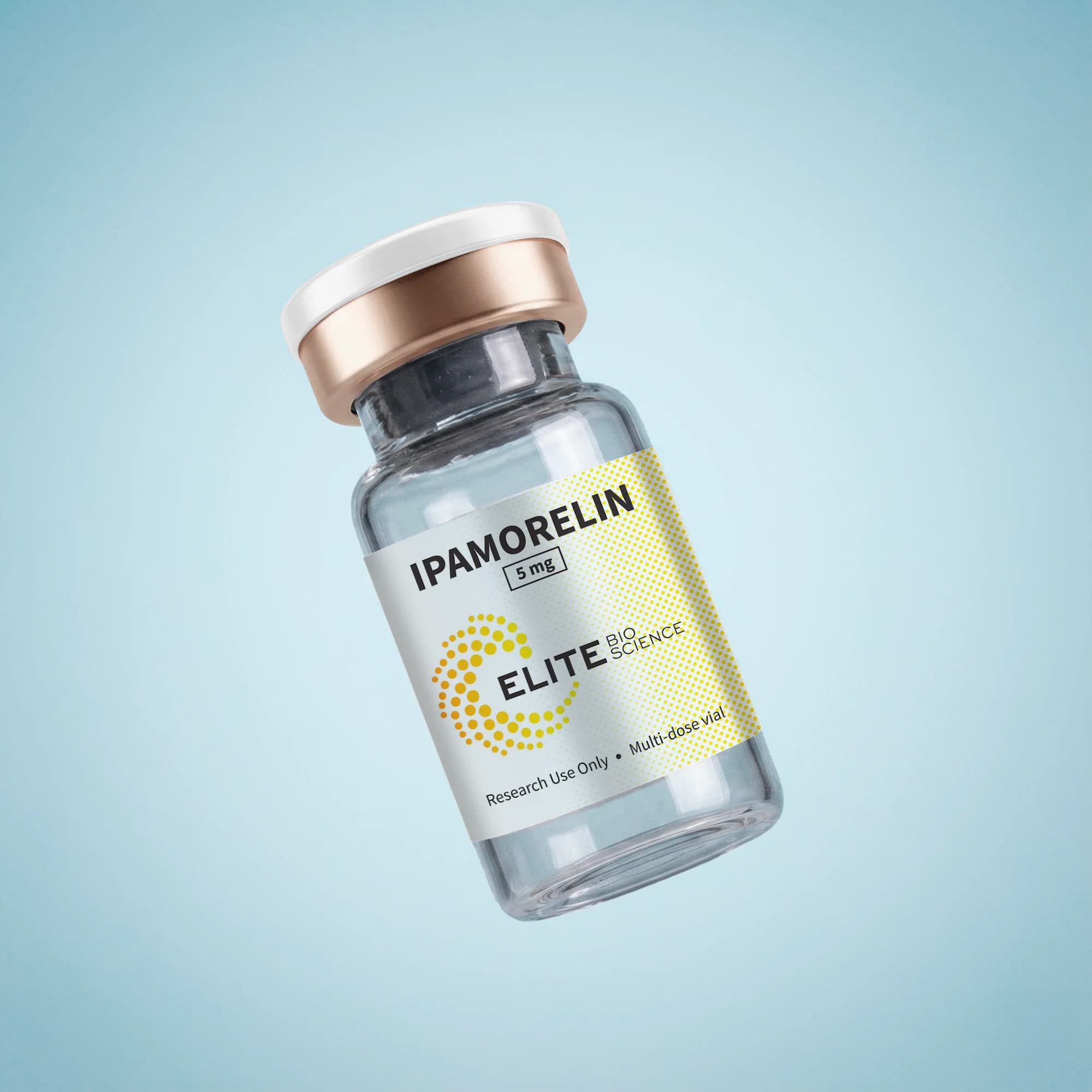
Ipamorelin: The Ghrelin Pathway
Ipamorelin is a pentapeptide growth hormone secretagogue that acts through an entirely different receptor — the ghrelin receptor (GHS-R1a) on anterior pituitary cells. It was characterized by Raun et al. (Eur J Endocrinol, 1998) as the first truly selective growth hormone secretagogue.
What distinguishes Ipamorelin from other GH secretagogues is its high selectivity. While other compounds in this class (like GHRP-6 or GHRP-2) also stimulate the release of cortisol, prolactin, and ACTH, Ipamorelin stimulates GH release without significantly elevating these other hormones. This selectivity profile is important because elevated cortisol can be catabolic (breaking down tissue) and elevated prolactin can have undesirable endocrine effects.
Ipamorelin produces a dose-dependent GH release that mimics the natural pulsatile pattern, with peak GH levels occurring approximately 40 minutes after administration and returning to baseline within 2-3 hours.
The Synergy: Why Two Pathways Are Better Than One
The rationale for combining CJC-1295 and Ipamorelin is rooted in the physiology of GH regulation. The pituitary gland receives two simultaneous inputs that determine GH release: the stimulatory signal from GHRH and the permissive signal from ghrelin pathway activation.
When both pathways are activated simultaneously:
- Amplified GH Pulse: The combined stimulation produces a GH pulse that is greater than the sum of either peptide alone. GHRH drives the synthesis and release of GH, while ghrelin pathway activation amplifies the magnitude of each pulse.
- Preserved Pulsatility: Using CJC-1295 without DAC (with its shorter half-life) alongside Ipamorelin maintains the natural pulsatile release pattern rather than creating a sustained, non-physiological elevation in GH levels.
- Maintained Feedback: Both peptides work through the body's own regulatory mechanisms, so the hypothalamic-pituitary feedback loop remains intact. Somatostatin still functions normally to prevent excessive GH elevation.
- Selective Profile: Because Ipamorelin does not significantly elevate cortisol or prolactin, and CJC-1295 acts specifically on GHRH receptors, the combination produces a clean GH response without unwanted hormonal perturbations.
Research Outcomes
Studies investigating GH secretagogue combinations have reported several consistent findings:
IGF-1 Elevation
The primary biomarker for GH axis activation is serum IGF-1 levels. Research has shown that the CJC-1295 and Ipamorelin combination produces sustained IGF-1 elevation within the physiological range. The magnitude of increase depends on dosing, frequency, and individual baseline levels, but typical research reports indicate IGF-1 increases of 50-150% from baseline over 4-12 weeks of administration.
Body Composition
GH and IGF-1 are powerful regulators of body composition. GH promotes lipolysis (fat breakdown) while preserving and promoting lean tissue. Research into GH secretagogue combinations has shown improvements in body composition markers including reduced body fat percentage, increased lean mass, and improved waist-to-hip ratios in study subjects.
Sleep Quality
Growth hormone is predominantly released during slow-wave (deep) sleep, and there is a bidirectional relationship between GH and sleep architecture. Subjects in GH secretagogue studies frequently report improvements in sleep quality, including faster onset, deeper sleep, and more vivid dreaming — consistent with enhanced slow-wave sleep activity.
Recovery Markers
Elevated GH and IGF-1 support tissue repair and regeneration. Research protocols examining recovery markers have reported improvements in recovery time from physical stress, enhanced tissue remodeling, and improved collagen synthesis in subjects receiving GH secretagogue combinations.
Dosing and Timing Considerations in Research
Research protocols for the CJC-1295/Ipamorelin combination vary, but several principles are consistently observed:
- Evening Administration: Many protocols time administration to coincide with the natural nocturnal GH surge, typically 30-60 minutes before sleep. This capitalizes on the synergy between exogenous stimulation and the body's endogenous GH release cycle.
- Fasting State: GH release is blunted by elevated blood glucose and insulin. Research protocols typically require subjects to be in a fasted state (at least 2 hours after eating) at the time of administration.
- Cycling: To prevent desensitization of GHRH and ghrelin receptors, many protocols incorporate cycling patterns — for example, 5 days on and 2 days off, or 4-8 week treatment periods followed by rest periods.
- Pulse Frequency: Some protocols employ multiple daily administrations (e.g., morning and evening) to create additional GH pulses, while others use a single daily dose.
CJC-1295 with DAC vs. Without DAC
The choice between CJC-1295 with and without DAC has significant implications for research protocol design:
- With DAC: The extended half-life means less frequent dosing (typically 1-2 times per week). However, the sustained GH elevation blurs the natural pulsatile pattern. This variant may be preferred for protocols focused on maintaining elevated baseline GH/IGF-1 levels.
- Without DAC (Modified GRF 1-29): The shorter half-life requires more frequent dosing but produces sharper, more physiological GH pulses. This is the preferred form for combination with Ipamorelin when the goal is to preserve natural pulsatility.
Safety Considerations in Research
Published research on CJC-1295 and Ipamorelin individually has reported generally favorable safety profiles when used at research-appropriate doses. The most commonly reported effects include transient injection-site reactions, mild water retention, and temporary tingling or numbness in the extremities. The selective nature of Ipamorelin, in particular, contributes to a cleaner side-effect profile compared to less selective GH secretagogues.
Long-term safety data is more limited, and researchers should monitor IGF-1 levels to ensure they remain within the desired range throughout the study period.
Monitoring and Biomarkers
Effective research protocols involving GH secretagogues require robust biomarker monitoring to assess both efficacy and safety. The primary efficacy biomarker is serum IGF-1, which provides an integrated measure of GH axis activity over time (unlike GH itself, which fluctuates rapidly due to pulsatile release). IGF-1 levels should be measured at baseline and at regular intervals throughout the study period, ideally using the same assay and laboratory for consistency.
Additional biomarkers of interest include IGFBP-3 (the primary binding protein for IGF-1), fasting glucose and insulin (to monitor metabolic effects), body composition measurements (DEXA or BIA), and sleep quality assessments (polysomnography or validated questionnaires). For safety monitoring, complete blood count, comprehensive metabolic panel, and hormone panels (including cortisol and prolactin to confirm Ipamorelin's selective profile) should be included.
The timing of blood draws is important. IGF-1 can be measured at any time of day since it has minimal diurnal variation, but GH levels should be measured at standardized times relative to peptide administration if acute GH response is being assessed. Morning fasting samples are generally preferred for metabolic markers.
Comparison with Exogenous Growth Hormone
A common question in GH signaling research is how secretagogue-stimulated GH compares to direct exogenous GH administration. The key differences include preservation of pulsatility (secretagogues maintain natural GH pulse patterns while exogenous GH creates non-physiological steady-state levels), maintenance of feedback regulation (the HPG axis remains intact with secretagogues but is overridden by exogenous GH), and a more balanced GH/IGF-1 ratio. Secretagogue protocols also tend to produce lower peak GH levels than high-dose exogenous GH, which may contribute to a more favorable side-effect profile at the cost of somewhat less dramatic acute effects.
Conclusion
The combination of CJC-1295 and Ipamorelin represents a well-characterized approach to stimulating endogenous growth hormone production through complementary receptor pathways. The published evidence supports synergistic GH release, preserved pulsatility, and a selective hormonal response. As research into the GH/IGF-1 axis continues, this combination remains one of the most studied protocols in the growth hormone signaling field.
The dual-pathway approach exemplified by this combination reflects a broader principle in peptide research: engaging complementary mechanisms through multiple specific targets often produces superior outcomes compared to maximizing stimulation through a single pathway. This principle guides ongoing protocol refinement and the exploration of novel peptide combinations in GH signaling research.
All compounds discussed are for research purposes only. Consult the primary literature for detailed safety, dosing, and methodology information.