From Amino Acids to Biological Signals
To understand how peptides work, we need to start with their building blocks. Amino acids are organic molecules containing an amino group (-NH2), a carboxyl group (-COOH), and a variable side chain (R group) that gives each amino acid its unique chemical properties. There are 20 standard amino acids encoded in the human genome, and they combine in specific sequences to form peptides and proteins.
When two amino acids join together, a condensation reaction eliminates a water molecule and forms a peptide bond — a covalent bond between the carboxyl group of one amino acid and the amino group of the next. Chains of 2-50 amino acids are classified as peptides, while longer chains (50+ amino acids) are classified as proteins.
The critical insight is that the specific sequence of amino acids determines everything about a peptide's function: its three-dimensional shape, its electrical charge distribution, its affinity for particular receptors, and ultimately its biological activity. Even a single amino acid substitution can dramatically alter a peptide's properties.
The Lock-and-Key Model of Receptor Binding
Most peptides exert their biological effects by binding to specific receptors — proteins embedded in cell membranes or located inside cells. The interaction between a peptide and its receptor follows the lock-and-key principle: the peptide's three-dimensional shape must precisely complement the receptor's binding site for activation to occur.
This specificity is what makes peptides such valuable research tools. Unlike many pharmaceutical compounds that interact with multiple receptor types (causing "off-target" effects), peptides tend to be highly selective for their target receptors. A growth hormone secretagogue like Ipamorelin, for example, binds specifically to the ghrelin receptor (GHS-R1a) without significantly activating other receptor types.
When a peptide binds to its receptor, the receptor undergoes a conformational change — a shift in its three-dimensional structure — that triggers a cascade of intracellular events. This process is called signal transduction, and it is the mechanism through which an extracellular signal (the peptide) is converted into an intracellular response.
Signal Transduction Cascades
The intracellular events that follow receptor activation vary depending on the receptor type, but several major signal transduction pathways are particularly relevant to peptide biology:
G-Protein Coupled Receptor (GPCR) Signaling
GPCRs are the largest family of membrane receptors and the targets of many research peptides. When a peptide binds to a GPCR, it activates an associated G-protein (a molecular switch) on the inside of the cell membrane. The activated G-protein then modulates effector enzymes that produce second messengers — small molecules like cyclic AMP (cAMP), inositol trisphosphate (IP3), and calcium ions (Ca2+) that amplify the signal throughout the cell.
Examples of peptides acting through GPCRs include:
- GLP-1 receptor agonists (Semaglutide, Tirzepatide): Bind to GLP-1R on pancreatic beta cells and hypothalamic neurons, activating the cAMP/PKA pathway to enhance insulin secretion and reduce appetite.
- Ipamorelin: Activates the ghrelin receptor GHS-R1a on pituitary somatotrophs, triggering GH release through IP3/calcium signaling.
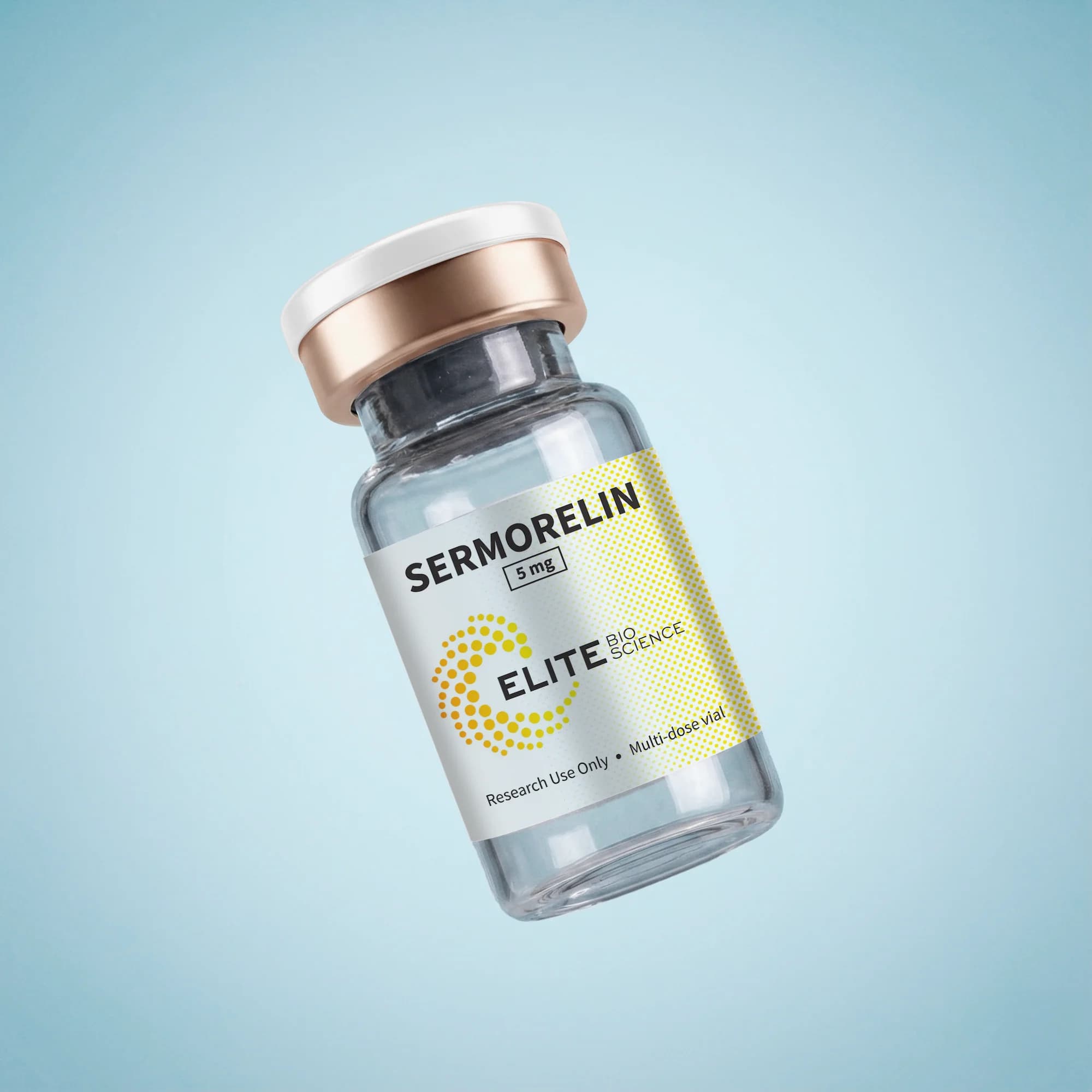
- GHRH analogs (CJC-1295, Sermorelin): Bind to GHRH receptors, activating the cAMP pathway to stimulate GH gene transcription and hormone release.
Receptor Tyrosine Kinase (RTK) Signaling
Some peptides activate RTKs, which are receptors that function as enzymes. When a peptide binds to an RTK, the receptor dimerizes (two receptor molecules pair together) and cross-phosphorylates tyrosine residues on its intracellular domain. These phosphorylated tyrosines serve as docking sites for signaling proteins that activate downstream pathways including the MAPK/ERK pathway (cell growth and differentiation) and the PI3K/Akt pathway (cell survival and metabolism).
IGF-1, which acts through the IGF-1 receptor (a receptor tyrosine kinase), is a key example. When GH stimulates IGF-1 production in the liver, IGF-1 circulates to target tissues and activates RTK signaling to promote cell growth, protein synthesis, and tissue repair.
Intracellular Signaling
Some peptides are small enough and sufficiently membrane-permeable to enter cells directly and interact with intracellular targets. SS-31 (Elamipretide), for example, is a cell-permeable tetrapeptide that crosses both the outer and inner mitochondrial membranes to bind directly to cardiolipin — a phospholipid on the inner mitochondrial membrane. This direct intracellular action bypasses the need for surface receptor binding entirely.
Amplification and Specificity
One of the most important concepts in peptide signaling is signal amplification. A single peptide molecule binding to a single receptor can trigger the production of thousands of second messenger molecules, which in turn activate thousands of downstream effector proteins. This cascade amplification means that even very small quantities of a peptide can produce significant biological effects.
At the same time, specificity is maintained because each step in the cascade involves specific molecular interactions. The receptor only responds to the correct peptide, the G-protein only activates the correct effector enzyme, and the second messenger only activates the correct downstream kinases. This specificity-with-amplification architecture is fundamental to how biological signaling systems work.
Peptide Metabolism and Half-Life
Understanding how the body processes peptides is essential for designing research protocols. After administration, peptides undergo several processes:
- Absorption: Depending on the route of administration, peptides are absorbed into the bloodstream at different rates. Subcutaneous and intramuscular injection bypass the gastrointestinal tract, avoiding degradation by digestive enzymes.
- Distribution: Once in the bloodstream, peptides distribute to tissues based on blood flow and receptor density. Some peptides bind to carrier proteins (like albumin) that extend their circulation time.
- Metabolism: Peptides are broken down by peptidases — enzymes that cleave peptide bonds. This degradation occurs in the blood, liver, kidneys, and at the cell surface. The rate of degradation determines the peptide's half-life.
- Excretion: The resulting amino acids and peptide fragments are recycled or excreted by the kidneys.
Different peptides have vastly different half-lives. Natural GH-releasing hormone has a half-life of just 7-10 minutes (rapidly degraded by dipeptidyl peptidase IV), while CJC-1295 with DAC has a half-life of approximately 6-8 days (protected by albumin binding). These pharmacokinetic differences dictate dosing frequency and protocol design.
Peptide Modifications and Engineering
Many research peptides are modified versions of natural peptides, engineered to improve specific properties:
- Amino Acid Substitution: Replacing specific amino acids can improve receptor binding affinity, alter selectivity, or increase resistance to enzymatic degradation. Semaglutide, for example, includes amino acid substitutions and a fatty acid side chain that dramatically extend its half-life compared to native GLP-1.
- Cyclization: Forming a circular structure by linking the peptide's ends or side chains can increase stability and receptor binding. Melanotan II is a cyclic heptapeptide that is far more stable than its linear counterpart.
- PEGylation and Lipidation: Attaching polyethylene glycol chains (PEGylation) or fatty acid chains (lipidation) increases molecular size, reduces renal clearance, and extends half-life. The DAC modification on CJC-1295 is a form of albumin-binding lipidation.
- D-Amino Acid Substitution: Natural amino acids exist in the L-configuration. Substituting D-amino acids at specific positions can dramatically increase resistance to proteolytic degradation because peptidases typically cannot cleave bonds involving D-amino acids.
From Target to Effect: Tracing a Complete Signaling Pathway
To illustrate how peptide signaling works in practice, let us trace the complete pathway from Ipamorelin administration to growth hormone release:
- Ipamorelin is administered subcutaneously and absorbed into the bloodstream.
- It circulates to the anterior pituitary gland and binds to ghrelin receptors (GHS-R1a) on somatotroph cells.
- Receptor activation triggers the IP3/calcium signaling cascade inside the somatotroph.
- Elevated intracellular calcium triggers the fusion of GH-containing secretory vesicles with the cell membrane.
- Growth hormone is released into the bloodstream in a pulsatile burst.
- GH circulates to the liver and stimulates IGF-1 production.
- Both GH and IGF-1 act on target tissues (muscle, bone, fat, etc.) to produce their biological effects.
- Rising GH levels trigger negative feedback through somatostatin release, which inhibits further GH secretion and prevents excessive elevation.
Each step in this pathway involves specific molecular interactions, illustrating the precision of peptide-mediated signaling.
Why Peptide Research Matters
Peptides represent a bridge between the precision of small-molecule drugs and the biological complexity of full-length proteins. Their highly specific receptor interactions make them ideal tools for studying individual signaling pathways in isolation, while their relatively straightforward synthesis allows for rapid iteration and optimization of structures.
As our understanding of peptide biology deepens, new applications continue to emerge — from metabolic regulation and tissue repair to longevity and neuroprotection. The fundamental principles of receptor binding, signal transduction, and cascade amplification described in this article underlie all of these applications.
Peptide Stability and Degradation Pathways
Understanding peptide degradation is essential for proper experimental design and storage protocols. Peptides are susceptible to several forms of degradation that can compromise their biological activity:
- Proteolytic Degradation: Peptidases in the blood, tissues, and cell surfaces cleave peptide bonds. The specific bonds targeted depend on the peptidase (endopeptidases cleave internal bonds, exopeptidases remove terminal amino acids). Modifications like D-amino acid substitution and cyclization protect against proteolytic attack.
- Oxidation: Amino acids containing sulfur (methionine, cysteine) or aromatic rings (tryptophan, tyrosine) are susceptible to oxidation, which can alter peptide structure and activity. Storage under inert gas (nitrogen or argon) and protection from light minimize oxidative degradation.
- Deamidation: Asparagine and glutamine residues can undergo non-enzymatic deamidation, converting to aspartate and glutamate respectively. This changes the peptide's charge and can affect receptor binding. Deamidation rates increase at higher temperatures and pH.
- Aggregation: At high concentrations, some peptides form aggregates that reduce solubility and bioavailability. Proper reconstitution technique and storage at appropriate concentrations minimize aggregation.
These degradation pathways inform storage recommendations for research peptides: lyophilized form for long-term stability, cold storage temperatures, protection from light and moisture, and appropriate reconstitution concentrations for the intended use period.
Emerging Frontiers in Peptide Science
Several cutting-edge areas are expanding the boundaries of peptide research. Peptide-drug conjugates (PDCs) combine a receptor-targeting peptide with a therapeutic payload, enabling precise delivery to specific cell types. Cell-penetrating peptides (CPPs) can transport cargo molecules across cell membranes, opening new avenues for intracellular delivery. Stapled peptides use chemical cross-links to lock helical structures in place, dramatically increasing stability and membrane permeability. These innovations are extending peptide capabilities beyond traditional receptor agonism into areas like gene therapy, targeted drug delivery, and intracellular protein modulation.
The convergence of peptide science with artificial intelligence is also accelerating discovery. Machine learning models trained on peptide-receptor interaction data can predict binding affinities and activity profiles for novel sequences, reducing the time and cost of lead optimization. This computational approach promises to expand the peptide toolkit far beyond what empirical screening alone could achieve.
Conclusion
Peptides work by leveraging the body's own signaling architecture — binding to specific receptors, triggering defined signal transduction cascades, and producing amplified biological responses. This precision, combined with the ability to engineer modifications that optimize pharmacokinetic and pharmacodynamic properties, makes peptides uniquely valuable research tools in modern biomedical science.
From the fundamental principles of amino acid chemistry and receptor pharmacology to the sophisticated engineering of modified peptide analogs, the science of how peptides work continues to deepen and expand. This foundational knowledge empowers researchers to design more effective protocols, interpret results more accurately, and contribute to the advancing frontier of peptide-based biomedical research.
All information in this article is for educational and research purposes only.